Article Contributed by L. Paul Mann
Published on 2025-12-13
On a crisp evening in Santa Barbara, the iconic Arlington Theatre set the stage for an electrifying performance by Queens of the Stone Age, with rising star Paris Jackson opening the night. The venue’s nostalgic charm, adorned with stunning Moorish architecture, created an intimate atmosphere that resonated with a crowd eager for a night of rock music.
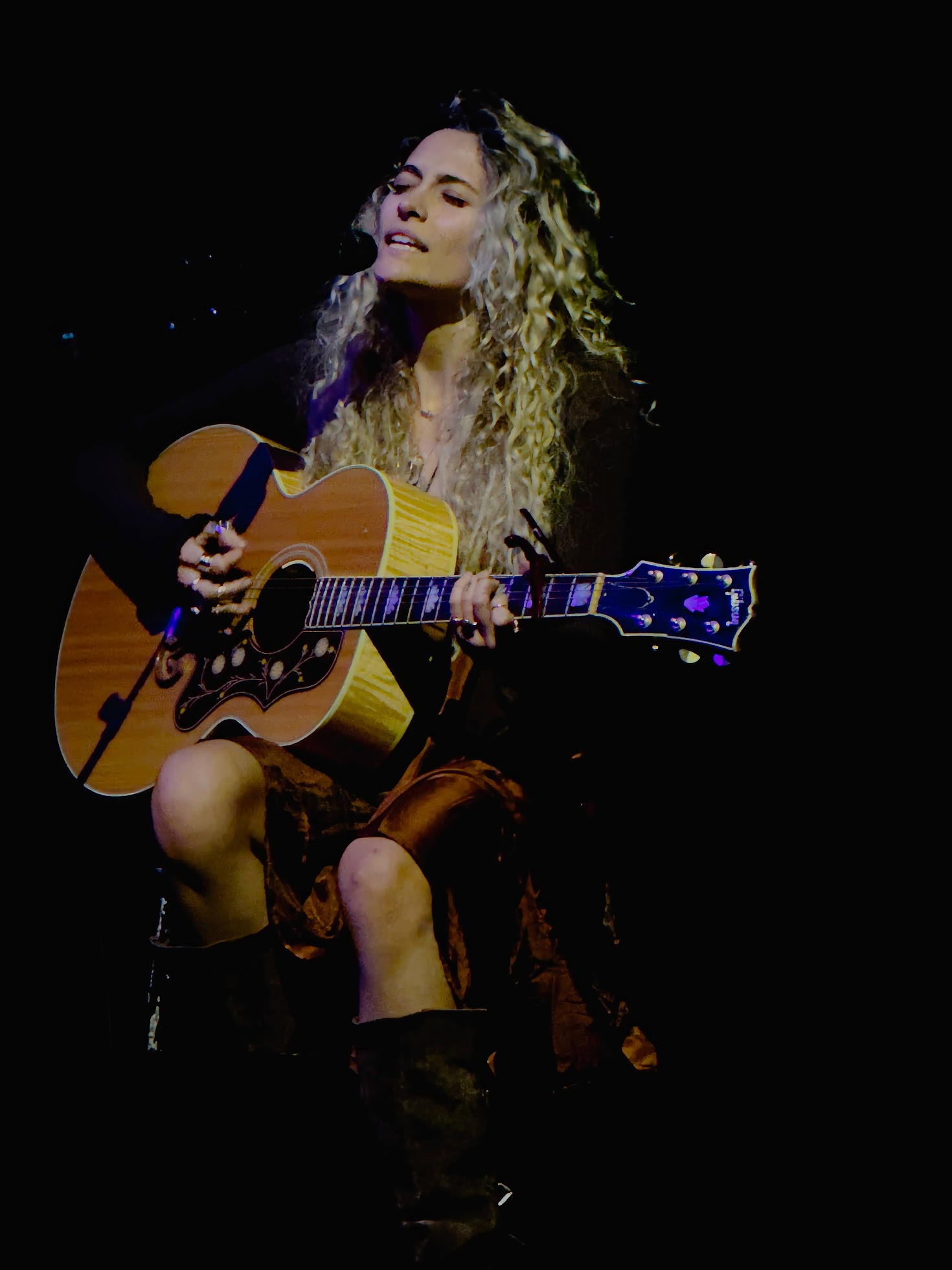
The evening commenced with Paris Jackson, a singer-songwriter and actress known for her soulful voice and compelling stage presence. Jackson stepped into the spotlight, captivating the audience with an authenticity that spoke to her artistry. Clad in a flowing black ensemble, her look was both chic and rock ’n’ roll—a fitting precursor to the headlining band. Jackson’s songwriting has matured as she has moved through different phases, from folk rock to a post-grunge sound, but this performance was her most intimate yet, with a vulnerability that made her tunes feel fresh and authentic.
Opening with her new track “Maker,” Jackson showcased her vocal range, smoothly transitioning from soft, contemplative melodies to powerful, emotive choruses. The audience was visibly engaged, swaying and cheering as she performed nine songs from different points in her musical journey. Jackson’s folk-rock style shone through in songs like “Gaslight” and the introspective “Drain,” where her lyrics reflected themes of vulnerability and resilience.
Throughout her set, Jackson’s connection with the audience was palpable. Between songs, she shared personal anecdotes, inviting listeners into her world. Her between-song banter reflected her affection for Santa Barbara. Paris Jackson’s set ended on a high note with a rousing rendition of “My Buckling Knees,” leaving the crowd buzzing with anticipation for the headliners.
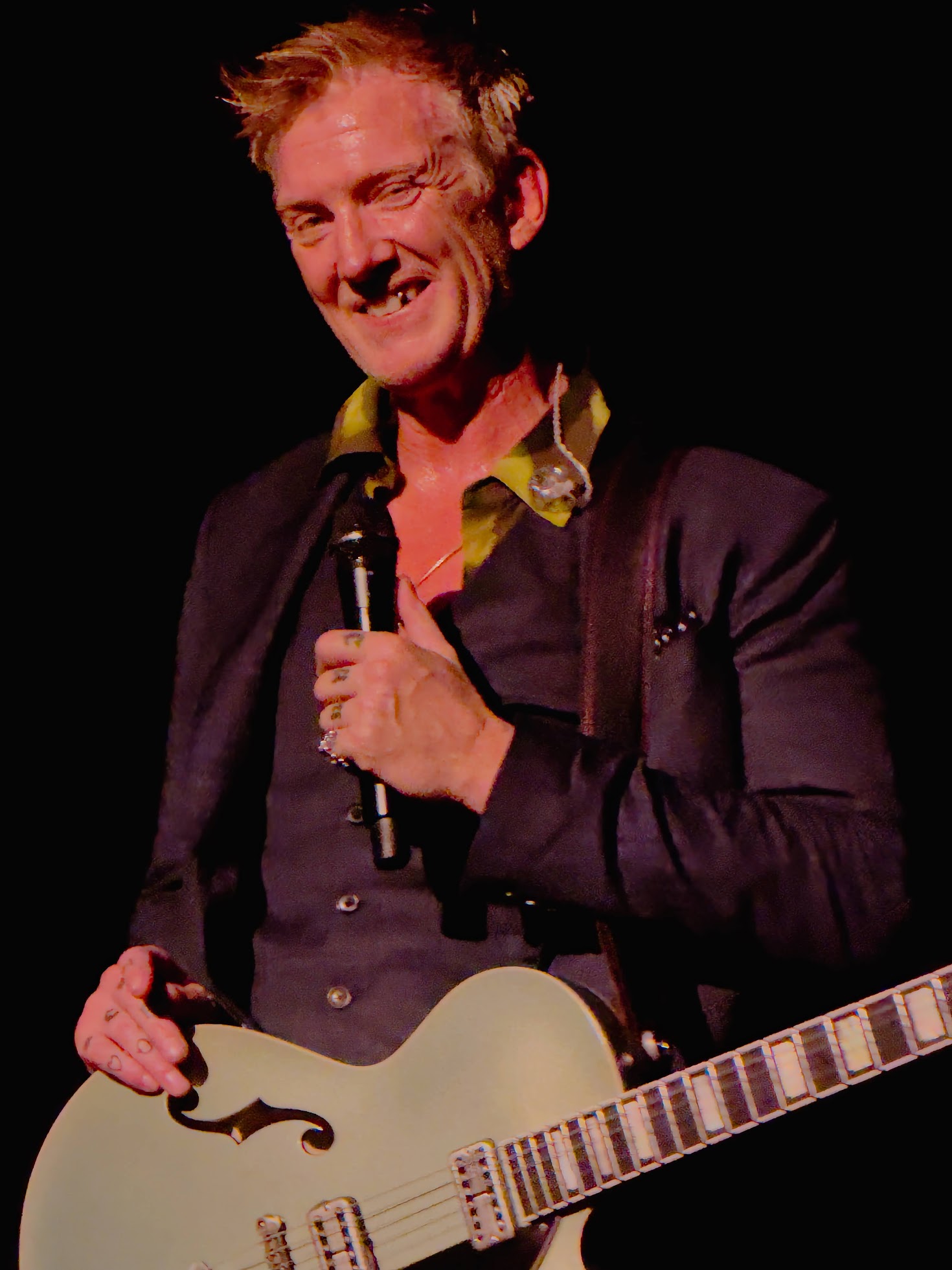
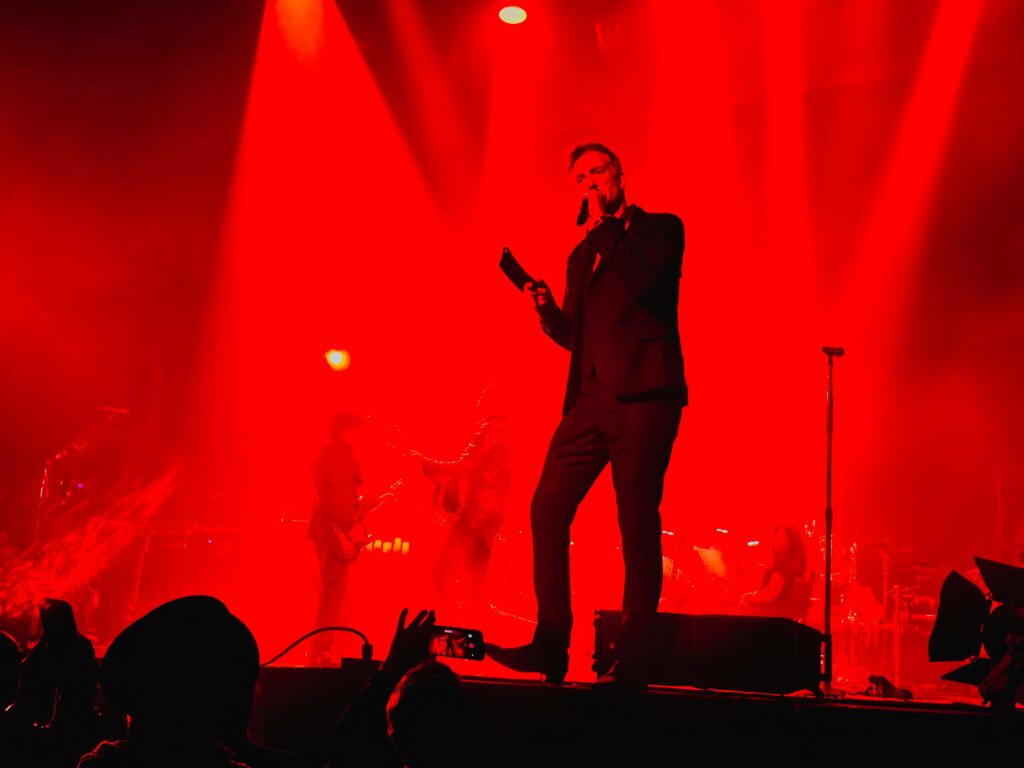
QOTSA appeared on stage next, acoustic instruments accompanied by a few classical musicians, dimly lit in front of a closed curtain. Lead singer Josh Homme—the charismatic and darkly wry architect of QOTSA’s sound—embodied the role of a snarky, dusky crooner. Clad in a sleek black suit, the exuberant singer seemed to relish living in the moment after several recent brushes with death. Homme blended musical prowess with an avant-garde performance-art flair, constantly venturing into the crowd.
From the very beginning, Homme’s interaction with the audience was anything but conventional. He spent substantial moments wandering through the aisles, singing while engaging directly with fans. Yet, in a twist of humor and defiance toward overly friendly, phone-ready concertgoers, he brought an unexpected edge of mischief.
In one memorable encounter, when an eager fan reached out for a handshake, Homme cheekily responded by playfully knocking the fan’s head and grabbing his hair—delivering a different kind of “shake” that echoed his theatricality. When he spotted a drunken fan arguing with an usher, he called him out: “Hey, no fighting. I almost died a hundred times. There’s no time for that.” When the fan shouted back, Homme dryly answered, “Don’t tell me what to do,” remaining in complete control of a mesmerized audience.
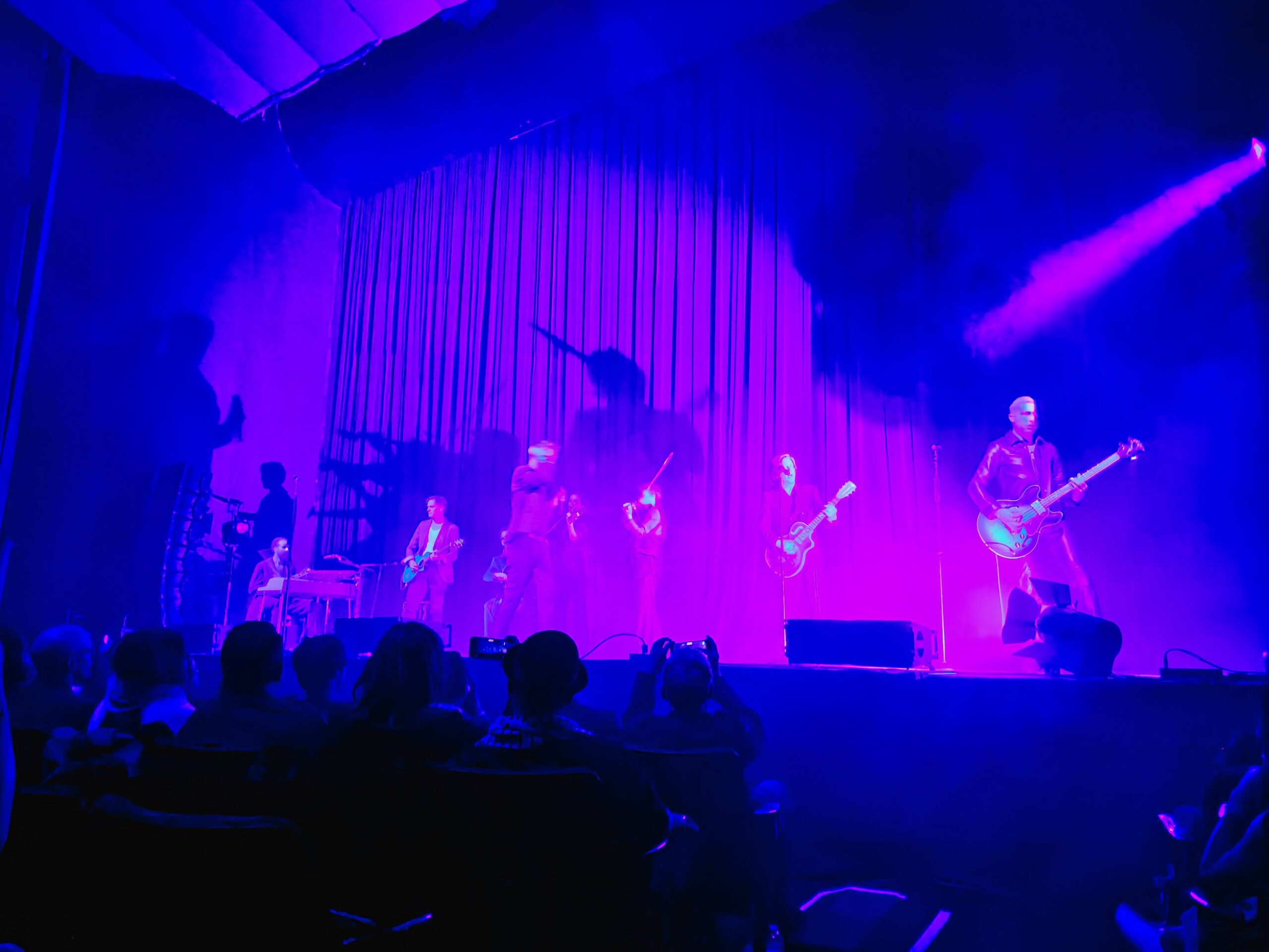
This was not a typical QOTSA show. Instead, it was a dramatic reinterpretation of their music, infused with a unique, chamber-esque quality. The concert opened with an intimate feel, spotlighting a string quartet and subtle keyboards, crafting a soundscape that diverged sharply from their usual hard-hitting rock aesthetic.
As the lights dimmed, the audience was transported into a dark-horse cabaret atmosphere as Homme introduced the evening, drifting down the aisle and easing into a medley of “Running Joke” and “Paper Machete.” His performance oozed an ominous charm reminiscent of characters from the Weimar Republic or Sondheim’s Sweeney Todd, even brandishing a menacing meat cleaver as a prop—further enhancing his persona as the demon troubadour of State Street.
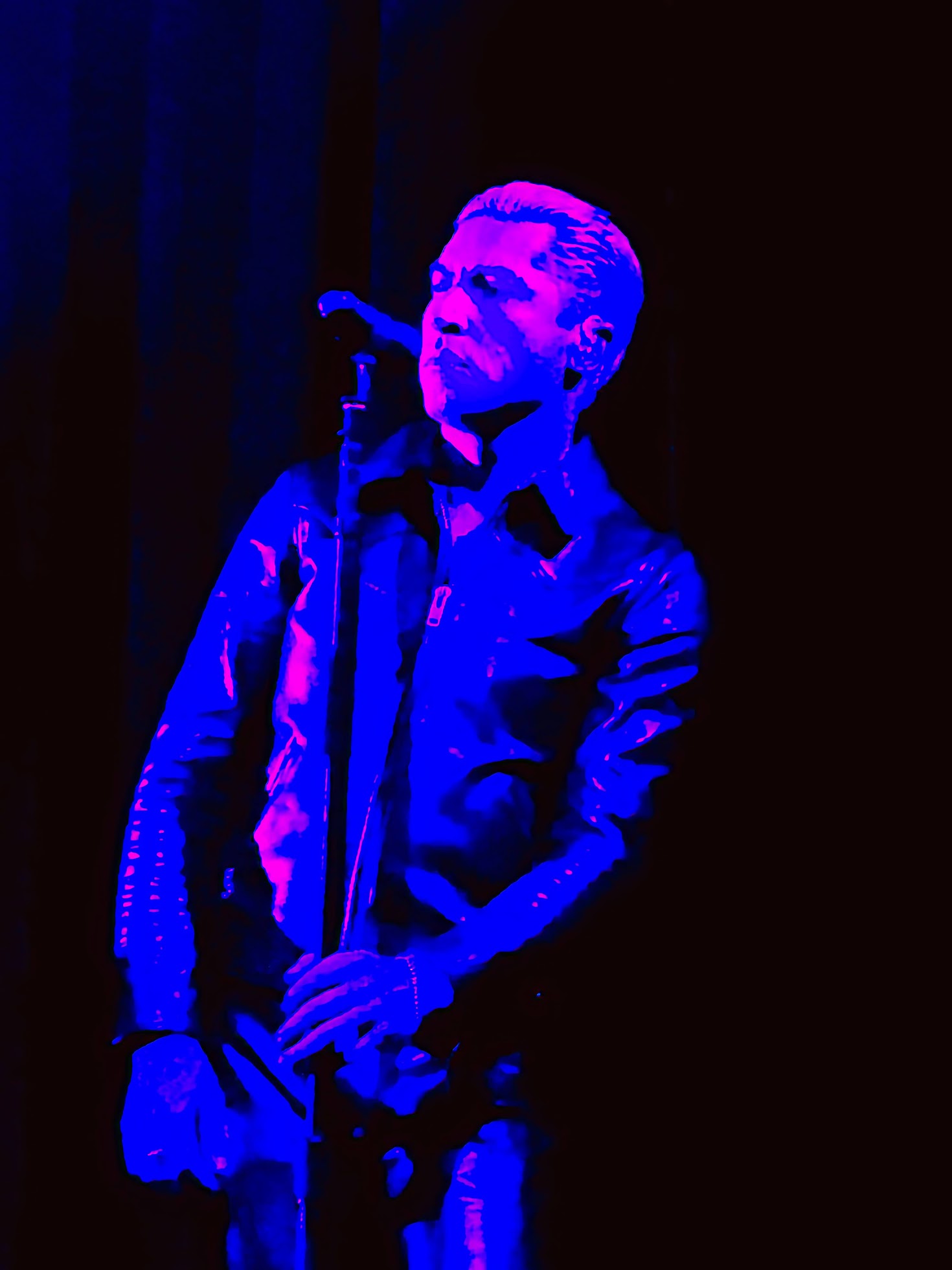
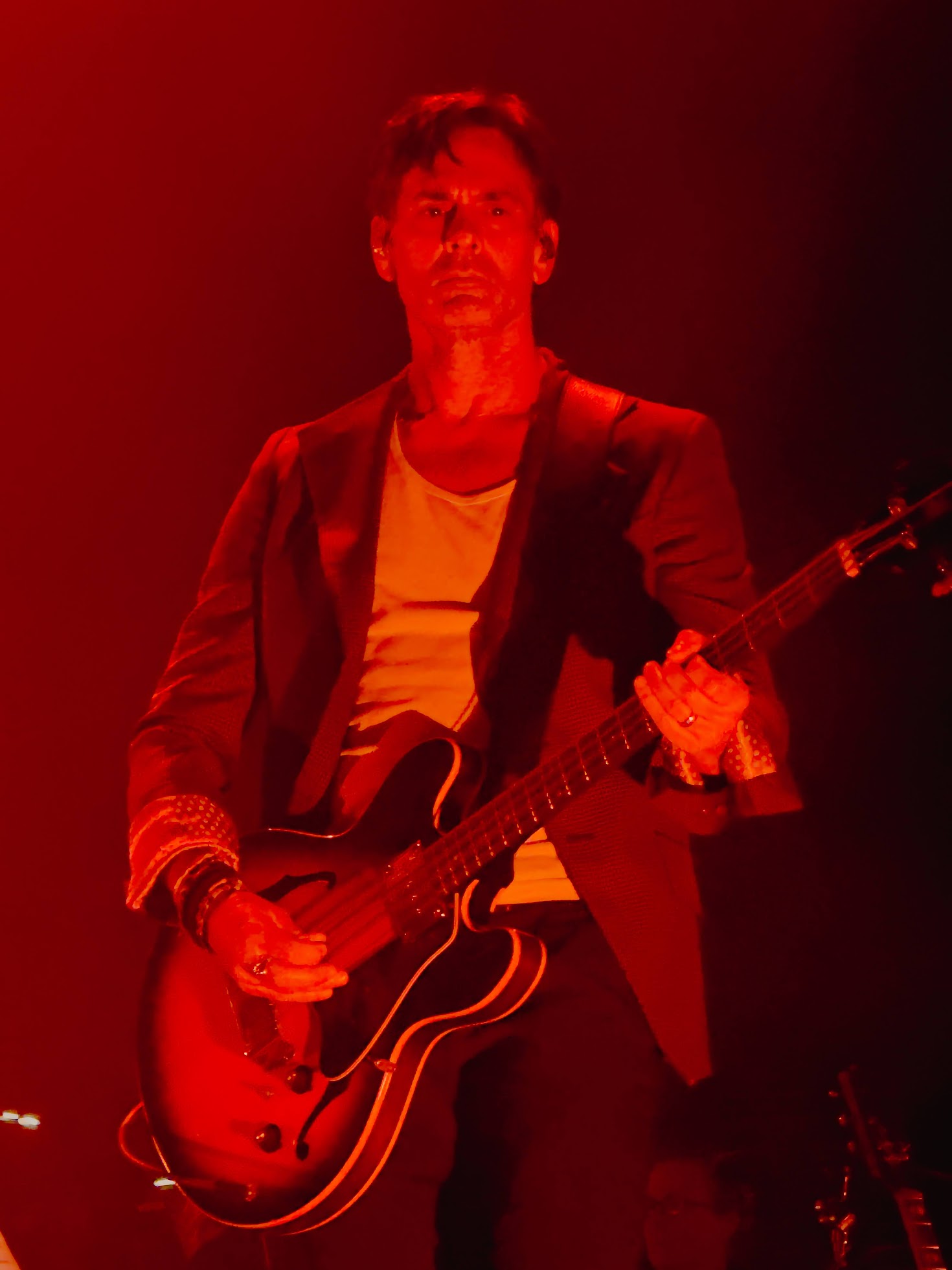
While Homme loomed large over the evening, it would be impossible to overlook the musical talent exhibited by the entire band. From multi-instrumentalist showmanship to exquisite backing vocals, Troy Van Leeuwen, Michael Shuman, Dean Fertita, and Jon Theodore delivered at every turn.
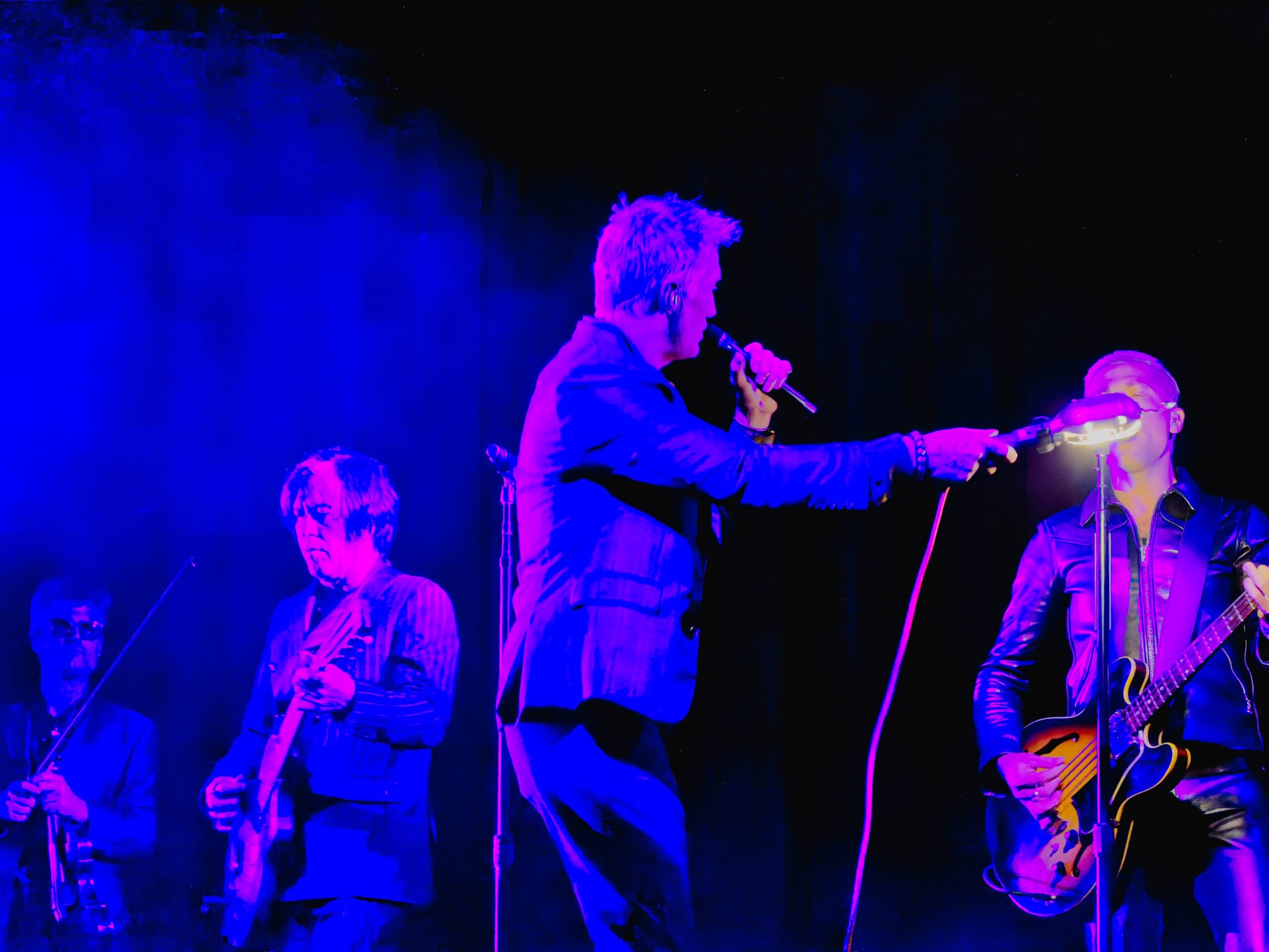
The second act marked a transition toward a more modern QOTSA sound, introducing expanded percussion and synth elements. The stage erupted with a medley of staples like “Someone’s in the Wolf,” “A Song for the Deaf,” and the whimsically dark “Straight Jacket Fitting Mosquito Song.” As the night progressed, the familiar drums-and-guitars persona emerged with vigor, launching into “You Got a Killer Scene There, Man…” and gracefully concluding with “…Like Clockwork.”
While a stunning array of their catalogue was featured, the absence of major hits like “No One Knows” and “Go with the Flow” was a conscious decision that allowed for a deeper exploration of their expansive body of work. A notable detour included a rendition of “Spinning in Daffodils,” a cut from one of the finest supergroups ever assembled—Them Crooked Vultures—in which Mikey Shuman, Homme’s right-hand ally, took the lead and showcased his strong vocal prowess.
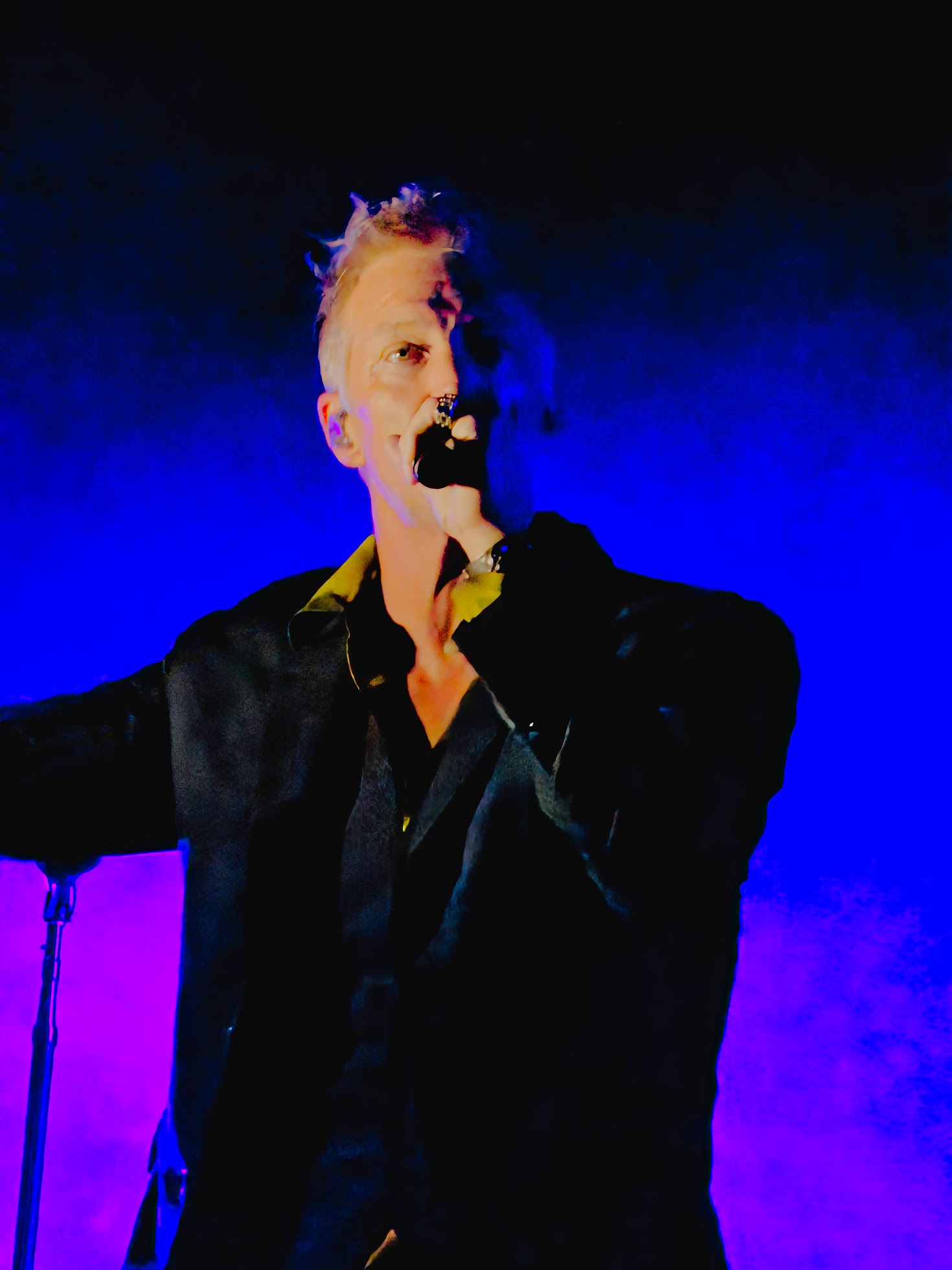
As the evening unfolded, Homme shifted from his sinister façade to express a heartfelt connection to the Arlington Theatre itself. He shared stories of his childhood admiration for vintage movie palaces and how he recently discovered the Arlington, with its rich history dating back to 1934. The venue, with its charming aesthetic, became a character in its own right, having hosted legendary performances by rock stars who once swung from the balconies or pranced through the aisles—from Peter Gabriel to Marilyn Manson.
In a meditative conclusion to the concert, Homme praised the venues encompassed in the Catacombs Tour, describing them as portals to “made-up worlds” that transport audiences to “something beautiful.” This sentiment resonated deeply, framing the concert not just as a show but as a transcendent experience—one that many fans honored by dressing semi-formally as the band had suggested.
As QOTSA closed out the night with a haunting encore of “Long Slow Goodbye,” the layers of modern interpretation and homage to classic rock made for a compelling, emotionally resonant evening. They may be a veteran rock band, but the Arlington offered a refreshing perspective, intertwining their music with the theatrical grace of a concert crafted with distinct attention to detail—one that ventured into hauntingly beautiful dimensions rather than simply revisiting the past.