Article Contributed by Craft Recordings
Published on 2026-04-16
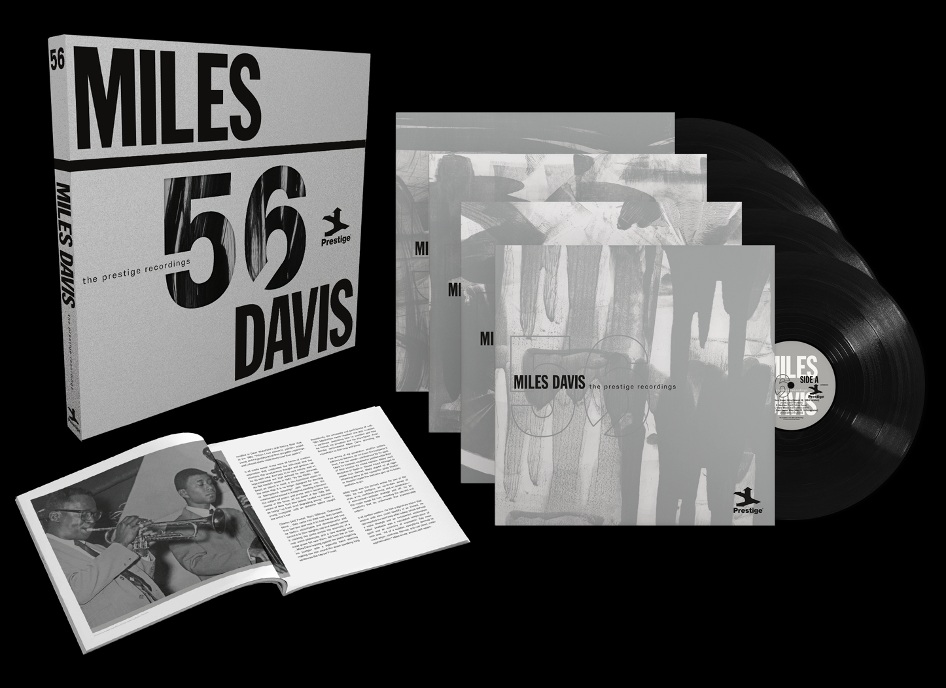
Craft Recordings continues its year-long centennial celebration of one of the 20th century’s most important cultural icons—trumpeter, bandleader, and composer Miles Davis—with a brand-new box set, Miles ’56: The Prestige Recordings. Building upon Craft’s GRAMMY® Award-winning Miles ‘55 release, this latest collection focuses on Davis’ 1956 sessions for Prestige Records, which resulted in such landmark albums as Cookin’, Relaxin’, Workin’, and Steamin’, and features an all-star line-up of talent, including John Coltrane, Sonny Rollins, Red Garland, Art Taylor, Paul Chambers, Tommy Flanagan, and Philly Joe Jones.
Arriving on June 19, Miles ‘56 will be available as a limited-edition 4-LP box set, a 3-CD set, and in Hi-Res digital. All audio was transferred from the original analog tapes and meticulously restored by Plangent Processes. The collection was remastered by GRAMMY Award-winning engineer Paul Blakemore and lacquers were cut for the 180-gram vinyl LP edition by Kevin Gray at Cohearent Audio. Produced by Nick Phillips, both physical editions include a new essay by GRAMMY Award-winning music historian Ashley Kahn. Track notes by the late Dan Morgenstern, a GRAMMY Award-winning jazz historian and archivist, add additional insight into the 70-year-old recordings. Additionally, a limited run of merchandise featuring the iconic artwork from Workin', Cookin', Relaxin', and Steamin' with the Miles Davis Quintet will be available exclusively through the Craft store.
For trailblazing trumpeter, bandleader, and composer Miles Davis (1926 – 1991), 1956 was a pivotal year, centered around his first consistent group, The Miles Davis Quintet. Formed just a few months earlier, the band—known as the “First Great Quintet”—featured a who’s who of rising stars, including tenor saxophonist John Coltrane, pianist Red Garland, bassist Paul Chambers, and drummer Philly Joe Jones. Together, they would become a defining force of the hard bop era.
“The group simply had so much to offer,” writes Ashley Kahn. “Depending on what tune they were engaging, and who was soloing, the group’s sound could change energy and effect, such was the flexibility and contrasting styles of its members…. Collectively, the band was able to breathe as one, in a natural, imprecise way. The group could deliver fire and, just as effectively, stillness—which Miles was famously responsible for.”
After recording their debut album in November 1955 (Miles: The New Miles Davis Quintet), the quintet further honed their sound through non-stop touring, playing packed residencies across North America, while, at home in New York, they maintained a regular presence at the West Village hotspot, Café Bohemia. Their setlists, Kahn shares, “reflected a ‘ballads, burners and blues’ mix of material,” including standards like “My Funny Valentine” and “Surrey With the Fringe on Top;” bebop mainstays, such as “Woody’N You” and “Salt Peanuts;” and tunes by contemporaries, including Sonny Rollins’ “Oleo,” Thelonious Monk’s “Well You Needn’t” and Ahmad Jamal’s “Ahmad’s Blues.” Davis’ originals were also regularly sprinkled into the mix, including “Half Nelson” and “Four.”
By now, Davis’ profile had grown significantly, attracting attention from the press, his peers, and record labels. While still under contract with Prestige, Davis signed to Columbia Records, with the full blessing of the independent label’s founder, Bob Weinstock. To fulfill his contractual obligations with Prestige, he scheduled two marathon sessions at Rudy Van Gelder’s storied Hackensack studio, where he would record enough material for several years’ worth of albums. The sessions, which took place on May 11 and October 26, were treated by the quintet as live gigs, as they performed the set lists that they had perfected over the preceding months, including the aforementioned selections. The subsequent recordings captured the quintet’s on-stage magic with a palpable sense of immediacy.
Kahn writes, “Most tunes feature the quintet, but as they would onstage, they stretched to include the bands-within-the-band idea; for example, Coltrane laying out as Miles led the rhythm section on ‘My Funny Valentine,’ and Garland taking over with a piano trio version of ‘Ahmad’s Blues.’” He adds, “Other than a second try at ‘The Theme,’ these were all first takes. Like the final set on a Tuesday night, they hit it, quit it, and went home.”
The tracks they recorded in May and October would be released as four iconic albums: Cookin’ (1957), Relaxin’ (1958), Workin’ (1960), and Steamin’ (1961)—each with a full title that includes “with the Miles Davis Quintet.” One outlier, the Thelonious Monk-penned “’Round Midnight”—which would become a signature tune for Davis—appeared on 1959’s Miles Davis and the Modern Jazz Giants.
Additionally, Miles ’56 includes the trumpeter’s other Prestige session that year, captured on March 16th and featuring Sonny Rollins (tenor saxophone), Tommy Flanagan (piano), Paul Chambers (bass), and Art Taylor (drums). The session—which marked the bandleader’s final studio date with Rollins and his sole recorded collaboration with Flanagan—includes two Davis originals (“Vierd Blues,” “No Line”) plus the Dave Brubeck-penned “In Your Own Sweet Way,” all of which appeared on the 1956 LP, Collectors’ Items.
The impact of the 1956 quintet recordings could be felt immediately upon release, as critics welcomed them with open arms and young jazz musicians sought to emulate Davis’ approach to improvisation. Their lasting influence, however, still reverberates. “Many of the tunes and arrangements from the quintet’s 1956 sessions can be heard in the repertoire of contemporary jazz ensembles,” notes Kahn. “In approach and attitude, this music…continues to inspire and build student improvisers, providing them a solid foundation to take a leap and find their own way to push the music forward.”
While this iteration of the quintet would only spend a brief time together, they played a crucial role in shaping Davis as an artist, helping him come into his own as a bandleader and find his voice as a musician. As 1956 closed, Davis was primed to embark on a new chapter—one that would find his star ascending to unbelievable heights. He would continue to innovate for decades, shaping the sounds of post-bop and fusion, while experimenting with electronic elements, funk, rock, pop, and African rhythms well into the late 1980s. Today, his vast catalog continues to resonate far beyond the world of jazz.
Click here to pre-order/pre-save Miles ’56.