Article Contributed by Gabriel David Barkin
Published on 2026-04-20
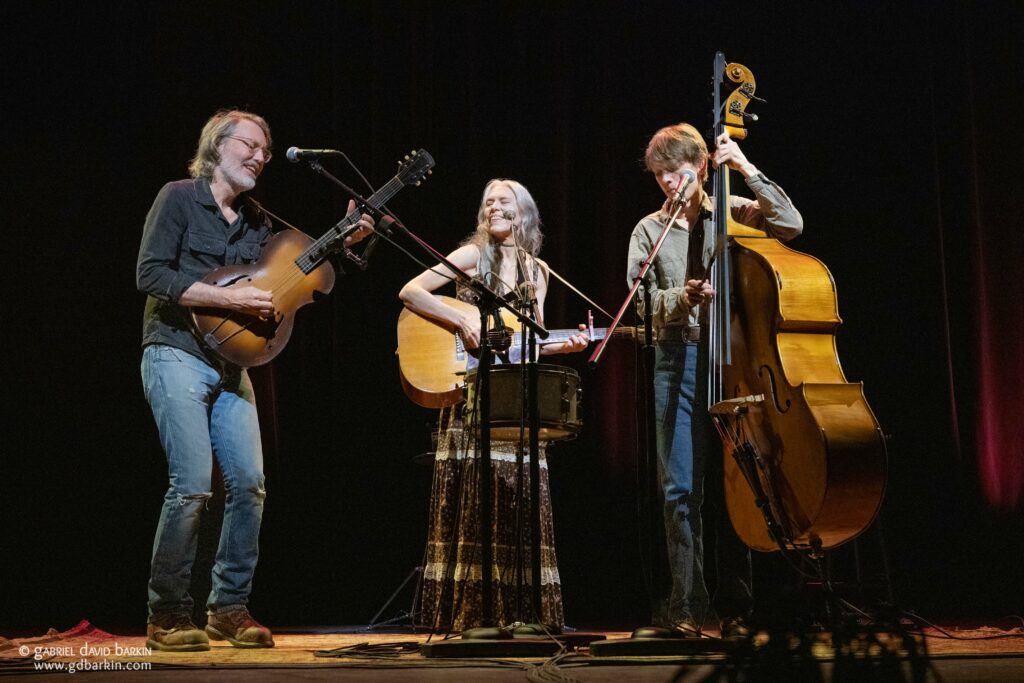
David Rawlings, Gillian Welch and Paul Kowert | Fox Theater - Oakland, CA | April 17th, 2026 - photos by Gabriel David Barkin
I spent a lot of time in the 1980s at Grateful Dead shows. One of those shows was at Park West Ski Resort in Utah in 1987. I ended up on the front rail right in front of Phil Lesh with David and Gillian, two friends of mine from Santa Cruz.
Gillian Welch, that is. Yes, that Gillian. (But not Dave Rawlings; this was another “David.”)
Earlier on the same tour, Welch and the “other” David had given me a ride from Red Rocks to Telluride. We spent the night between those shows at some rando Deadhead’s house in Colorado Springs. I was new at playing guitar, and I remember learning a basic blues lick by watching Welch’s fingers while we were sitting around the living room passing the evening covering Dead, Dylan, and Beatles tunes.
Back home in Santa Cruz, Welch was a regular weeknight performer at Sluggo’s, a collectively run hippie café on the college campus where I worked for several years after dropping out. She was a skinny undergrad with a shy demeanor and a big guitar. I can’t swear to it, but she may have played her very first live show right there at our café.
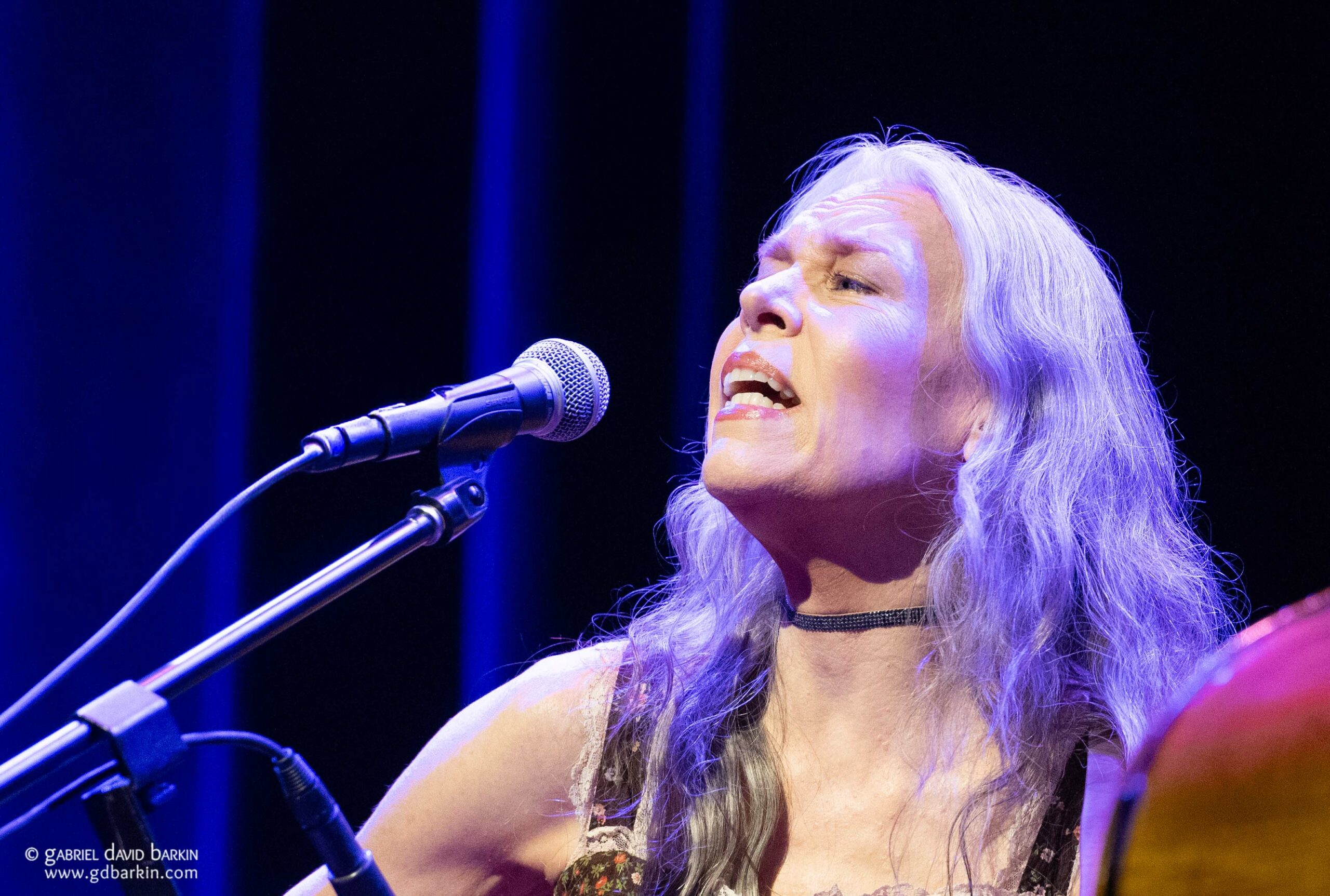
Even then, Welch’s voice captivated attention with an Appalachian twang and heartfelt delivery of traditional lyrics, albeit with a sometimes-shaky voice that was still in its performative infancy. She played old-timey stuff, mostly on the slower side of bluegrass and what we later started calling “Americana.”
“I was still pretty shy about performing in front of people,” she later told a reporter about those early years at Sluggo’s.
Now, with several decades in the rearview mirror since those days playing at Sluggo’s—and with a slew of accolades under her belt too, including a few Grammy Awards—it’s probably safe to say Welch is not so seriously shy anymore. But she’s still a Deadhead.
There’s no independently verifiable report I can find (yet) that confirms Dave Rawlings likewise spent any of his formative musical years following the Dead. But he’s clearly a fan too.
So it’s no surprise to find Welch and Rawlings on tour this year playing acoustic covers of Grateful Dead music. Some might say it’s long overdue. The tour, Gillian Welch & David Rawlings Play Grateful Dead Acoustic Reckoning, honors the 45th anniversary of the Grateful Dead’s 1981 live, all-acoustic album. (That double-disc set was recorded in 1980 at shows in New York City’s Radio City Music Hall and San Francisco’s Warfield Theater.)
At the Fox Theater in Oakland on both Friday and Saturday, Deadheads and American folk music fans alike (with ample crossover) were treated to over three hours of Grateful Dead music performed by well-loved American folk heroes. On each evening, two full sets were followed by a lengthy encore that essentially constituted the “third set” we always hoped for at Grateful Dead shows (and rarely got in the ’80s and ’90s, other than on New Year’s Eve).
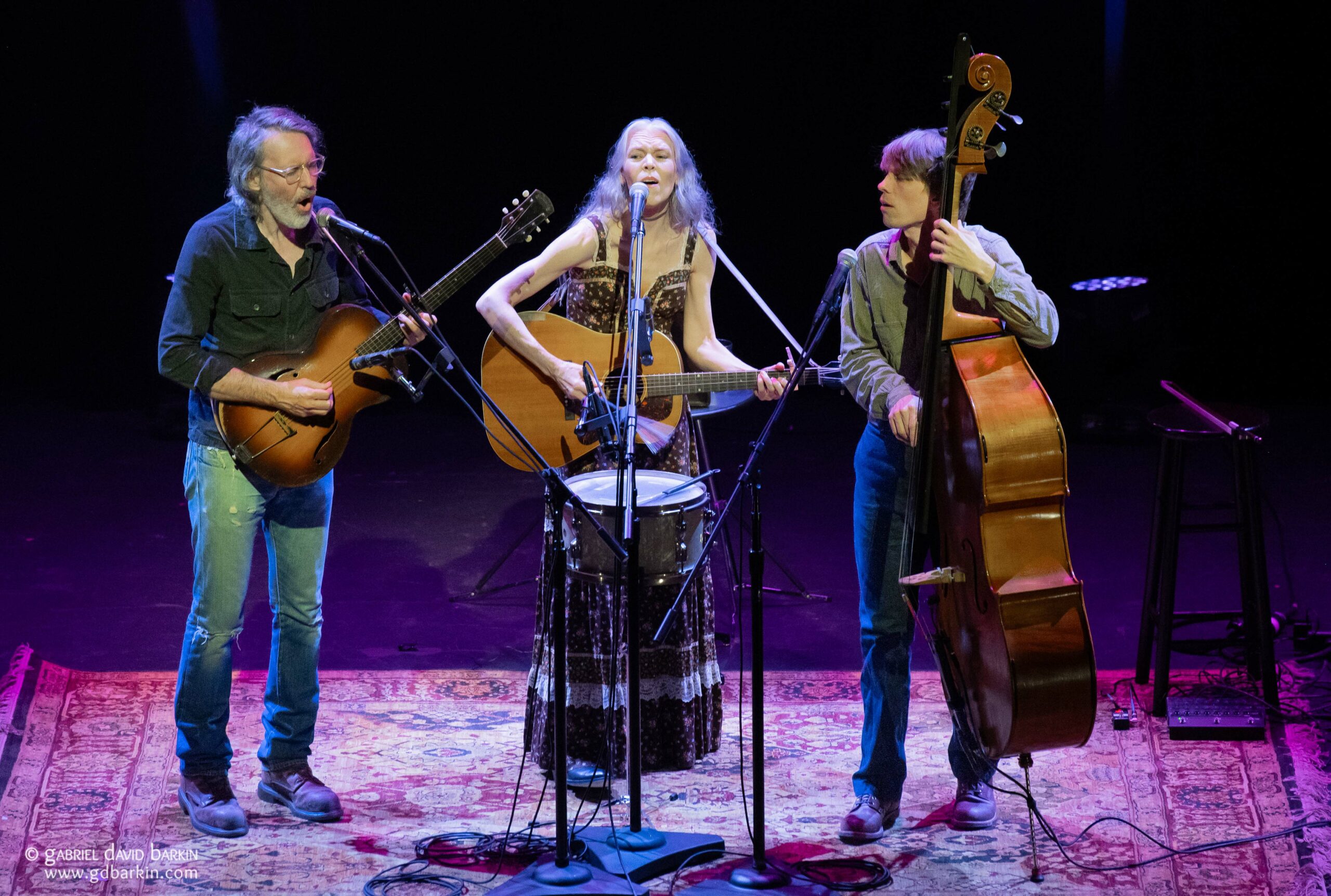
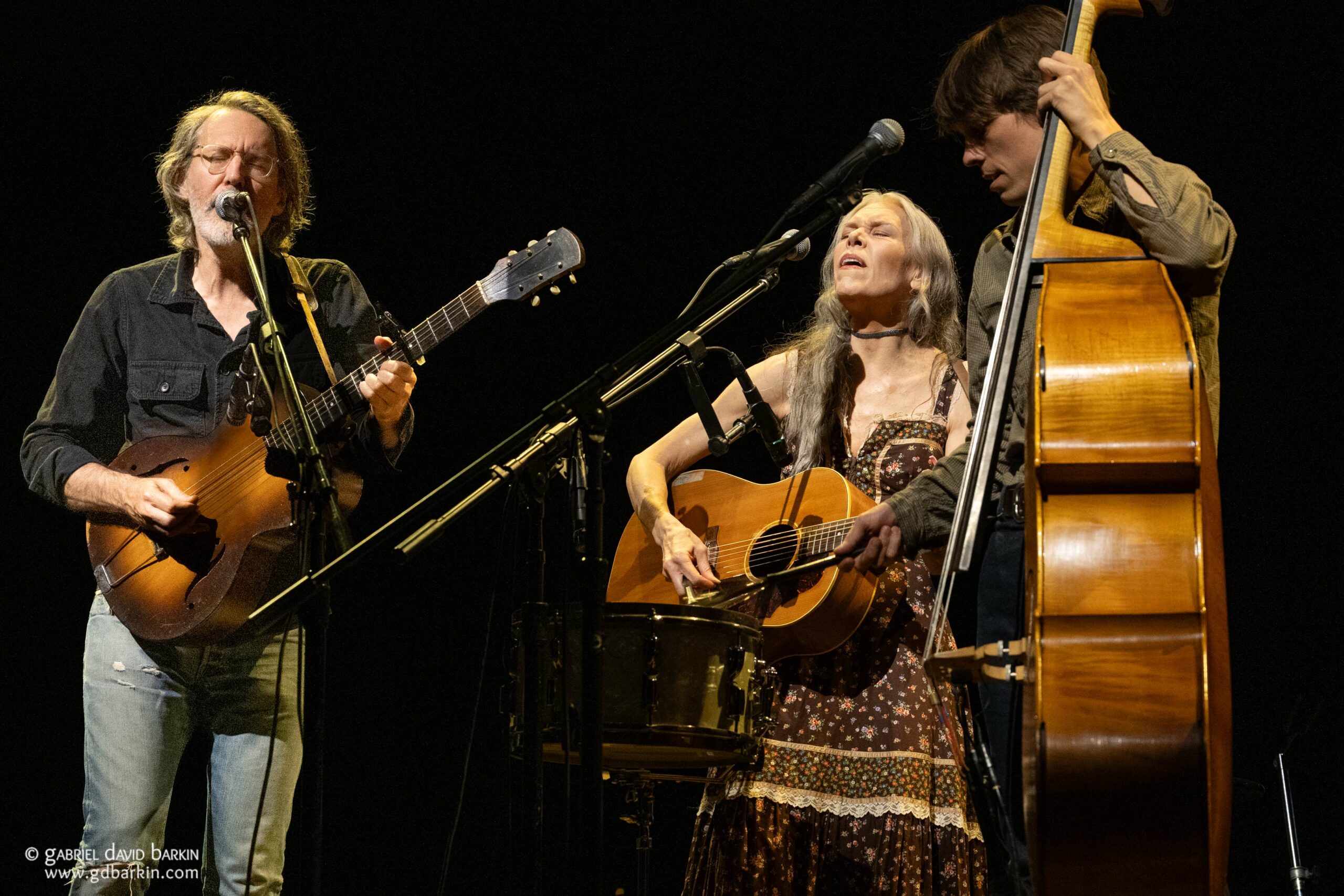
The big Fox Theater stage was sparsely filled, just a huddle of mics, a snare drum, and a small table in the middle of a wide expanse. Welch, playing her 1956 Gibson J-50 flattop acoustic guitar, and Rawlings, with his well-worn 1935 Epiphone Olympic archtop, were accompanied by Paul Kowert (The Punch Brothers) on upright bass. Occasionally, Welch or Kowert (and sometimes both of them at the same time) picked up a brush to keep the beat on the snare drum. Spare lighting alternated between flat reds, yellows, and purples.
Over the course of two nights, the trio covered 11 of the 16 songs on Reckoning. They also played many other Grateful Dead songs, and they mixed up the set lists so each audience got to hear something a bit different. Only 14 of the 24 songs played each night were repeated.
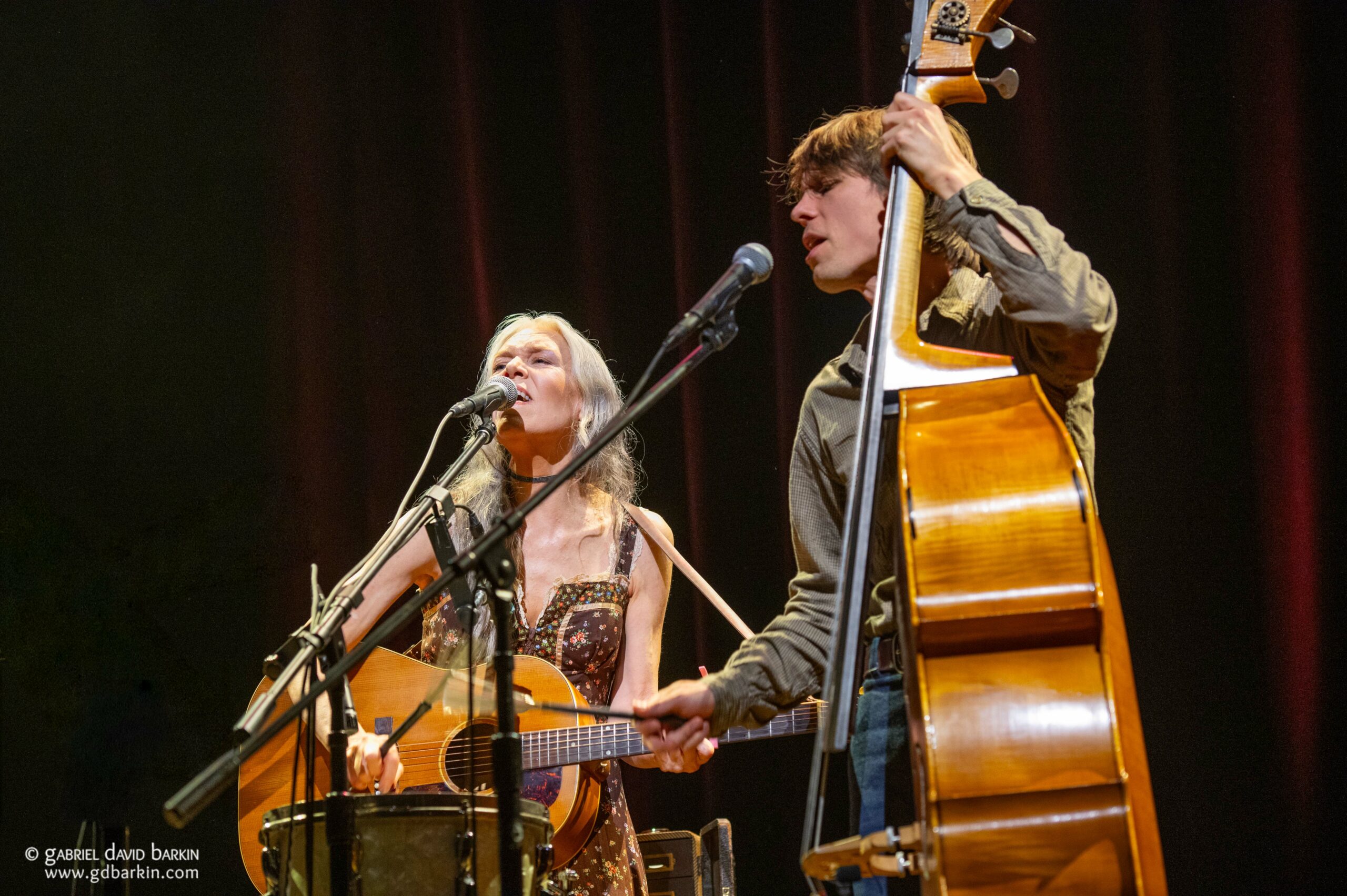
The pacing of song rhythms shifted amenably throughout each show (and often even within one song) from boisterous to mellow. For instance, Friday’s show opened with Welch taking the vocal lead on “Bertha,” a rocker during which the crowd “had to move” as the lyrics say. But next up was Rawlings telling the tale of “Black Peter,” a noticeably mellower vibe. The crowd was (mostly) devotedly attentive and quiet during the slower songs and often sang along during the louder ones.
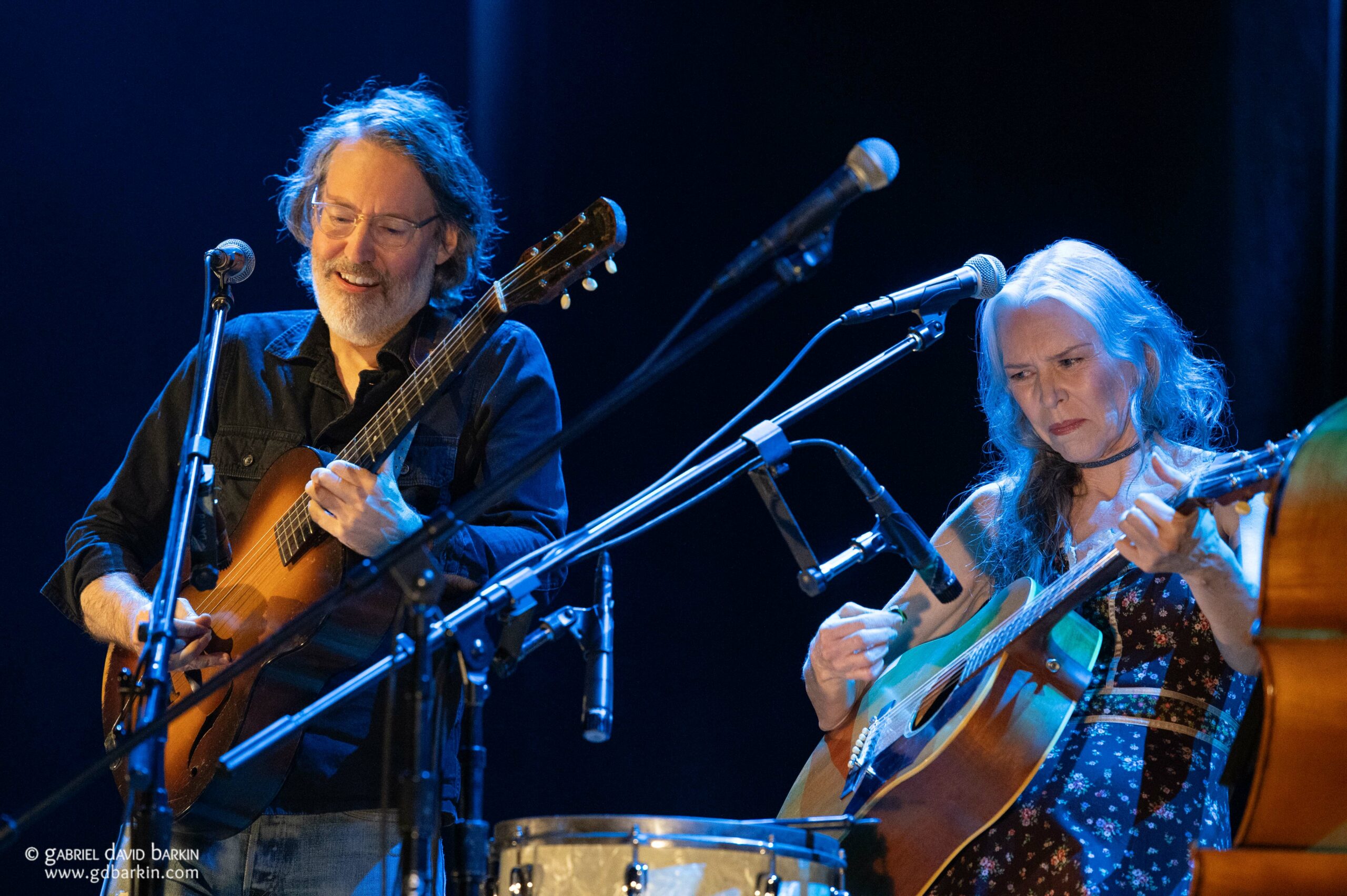
Welch and Rawlings each sang leads, joined each other with harmonies, and sometimes traded verses too. After many years on the road and in the studio together, the duo knows how to find sweet spots to accompany each other. There were a few rough patches on songs they may not have rehearsed as much, but those blips were rare.
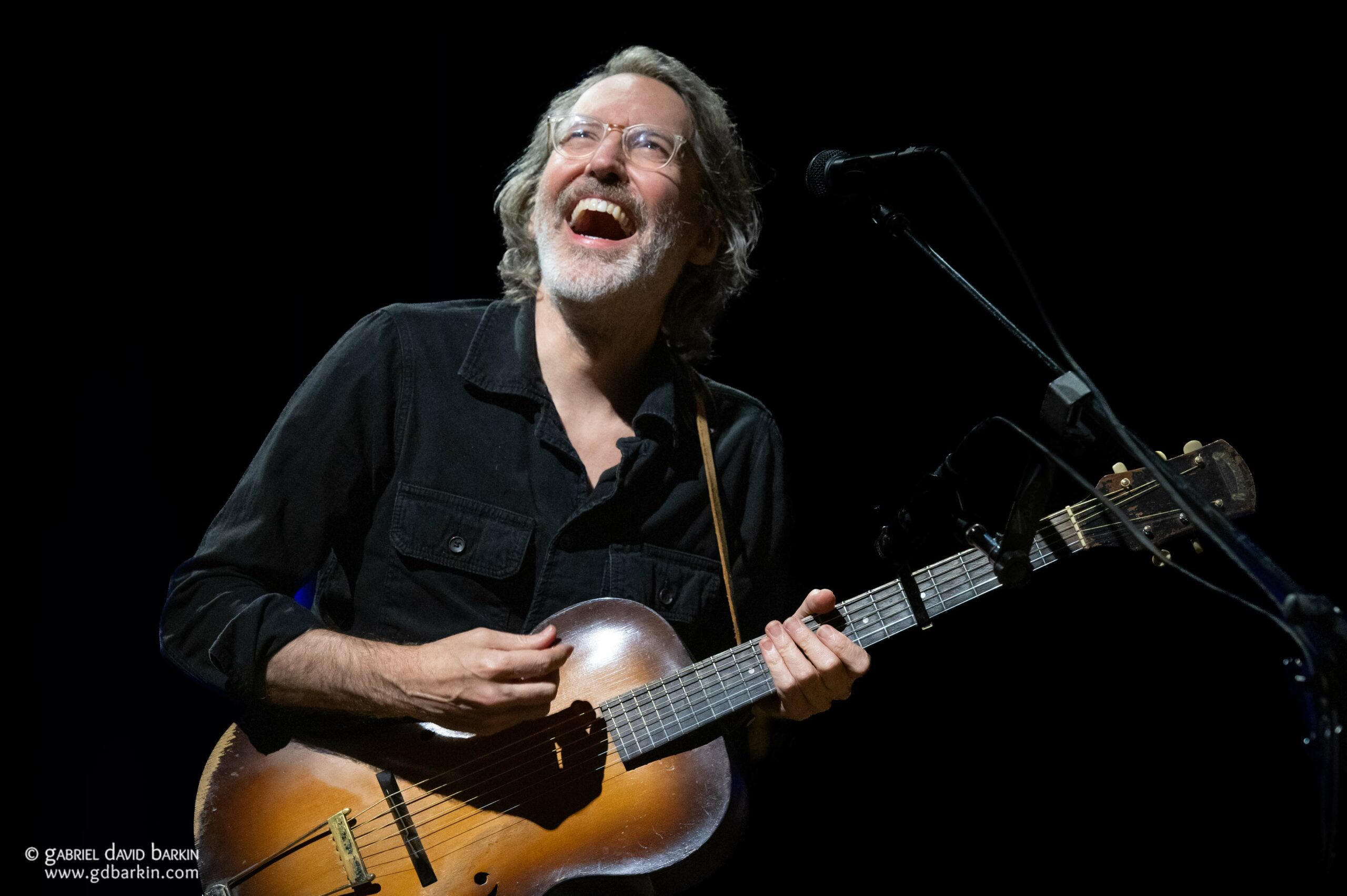
Rawlings’ guitar playing is always fascinating. His solos never go where one might expect. (His dancing bears march to a different drummer, one might say.) Some of his notes and scales go up where most players would go down, and vice versa. Rawlings has endless imagination and oodles of creativity, often taking three or more lead turns in one song, each take heading off in different directions. Rawlings’ two-string rhythmic picking during solos is a particularly distinctive, crowd-pleasing component of his repertoire.
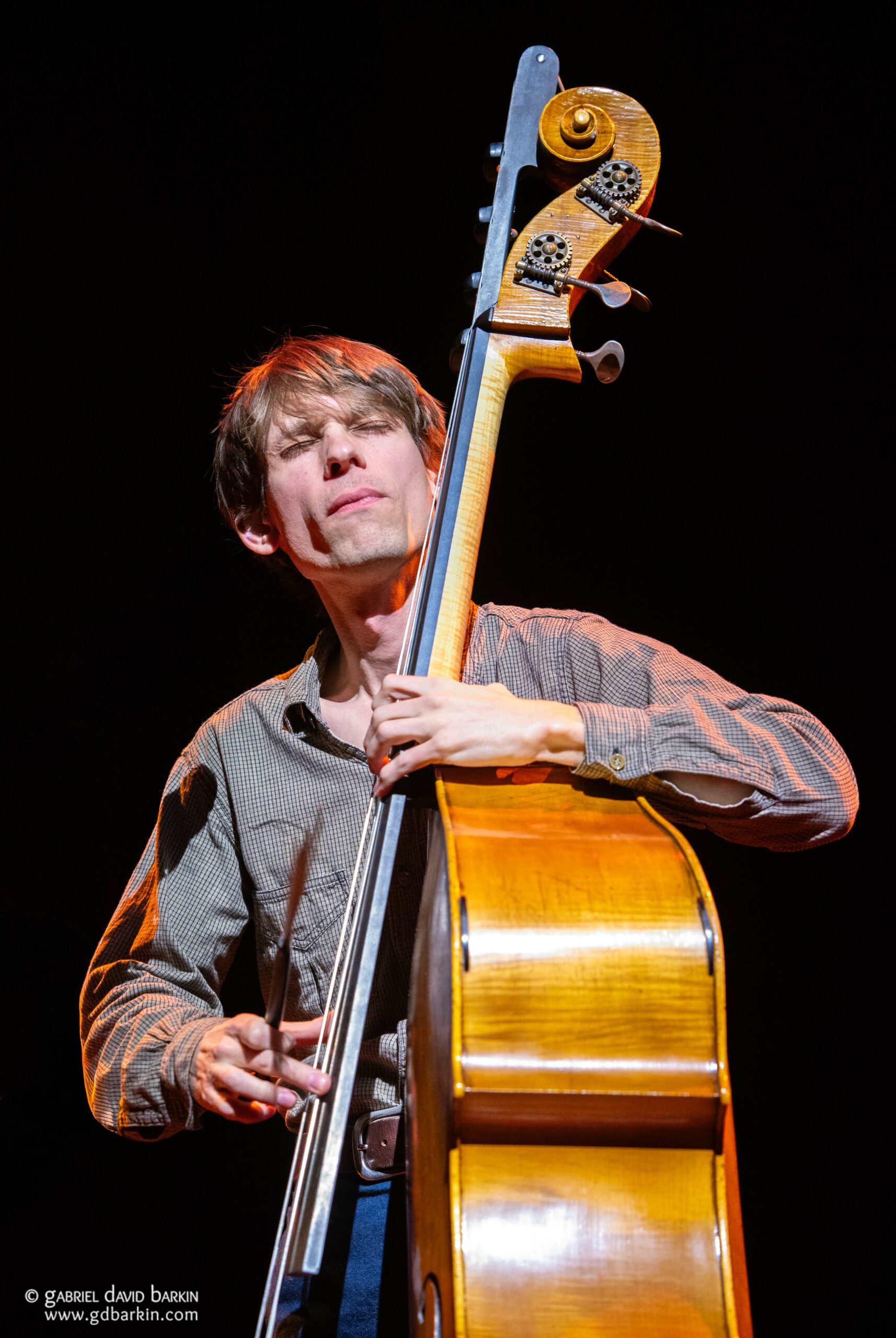
Kowert was given the spotlight on many songs for a solo too. On Saturday, three of the first four songs gave space to the bass, including a brilliant lead in Elizabeth Cotten’s “Oh Babe It Ain’t No Lie.” Even still, he mostly kept his talent reined in. With the Punch Brothers, Kowert often shreds his heavy strings with jazzy bluegrass virtuosity. But in this lineup, he laid low, keeping the beats simple and occasionally picking up the snare brush to intersperse a tap on the drum between each pluck on a string.
Friday’s crowd was treated to a special guest for the “third set.” Grahame Lesh joined the trio, first singing his father’s well-loved “Box of Rain.” Next was a measured, somewhat mellow “St. Stephen,” a sublime version that segued into an inspirational, anthemic “Not Fade Away.” The latter was accompanied by, as one would expect, audience clapping to the beat before Rawlings’ guitar solo led the way back into “St. Stephen.” As if that wasn’t enough, an extensive, emotional exploration of Bonnie Dobson’s “Morning Dew” wasted no space during the breadth of its 14-minute run time.
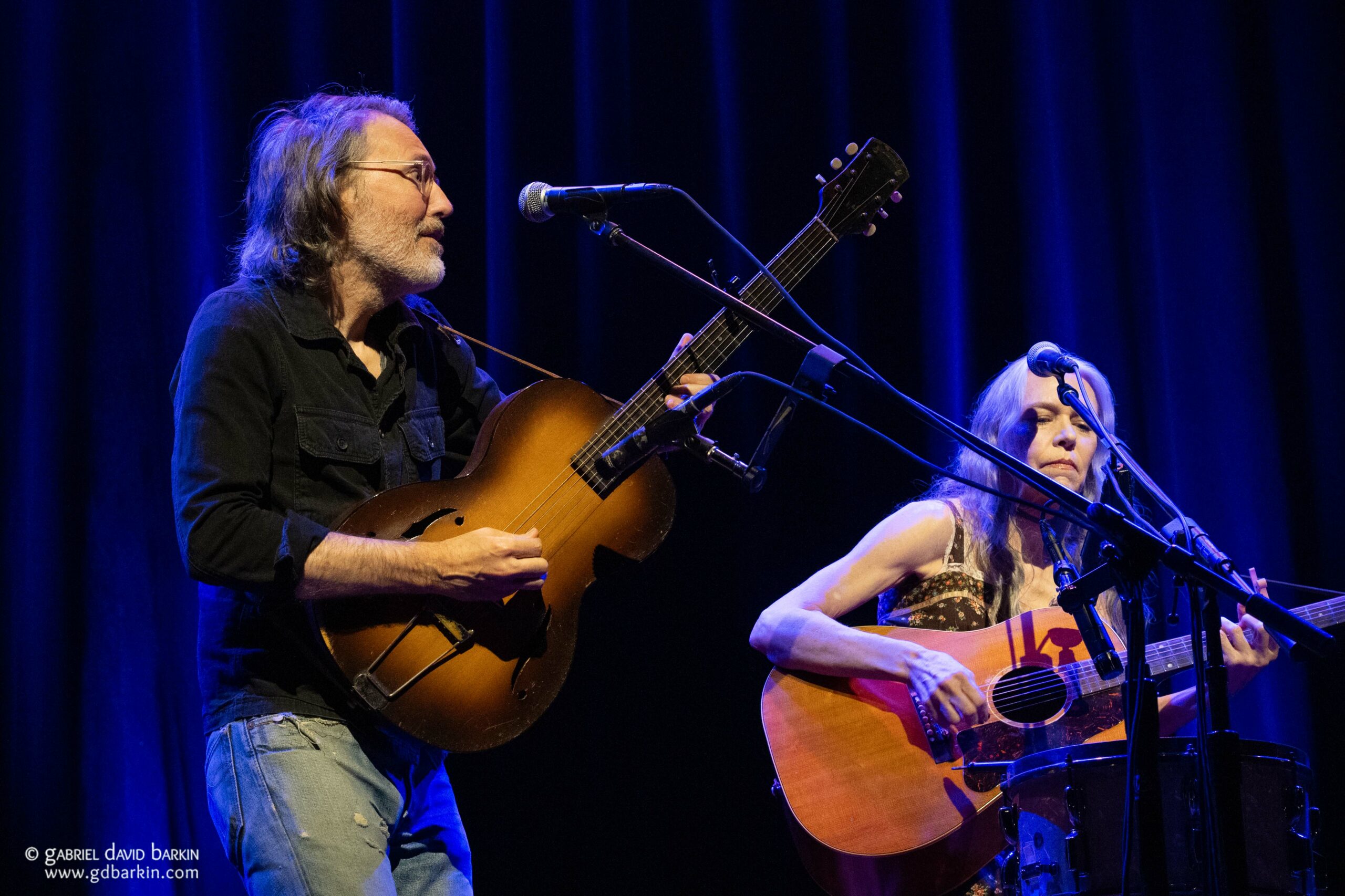
Saturday’s show opened with Welch singing a spirited version of “Dark Hollow.” I’m pretty sure that was one of those songs Welch and I played together sitting on a beat-up couch all those years ago in Colorado Springs. At the Fox, “Dark Hollow” had a lively bounce, like we were sitting in a carriage bouncing down a dirt road with its lead horse in a trot.
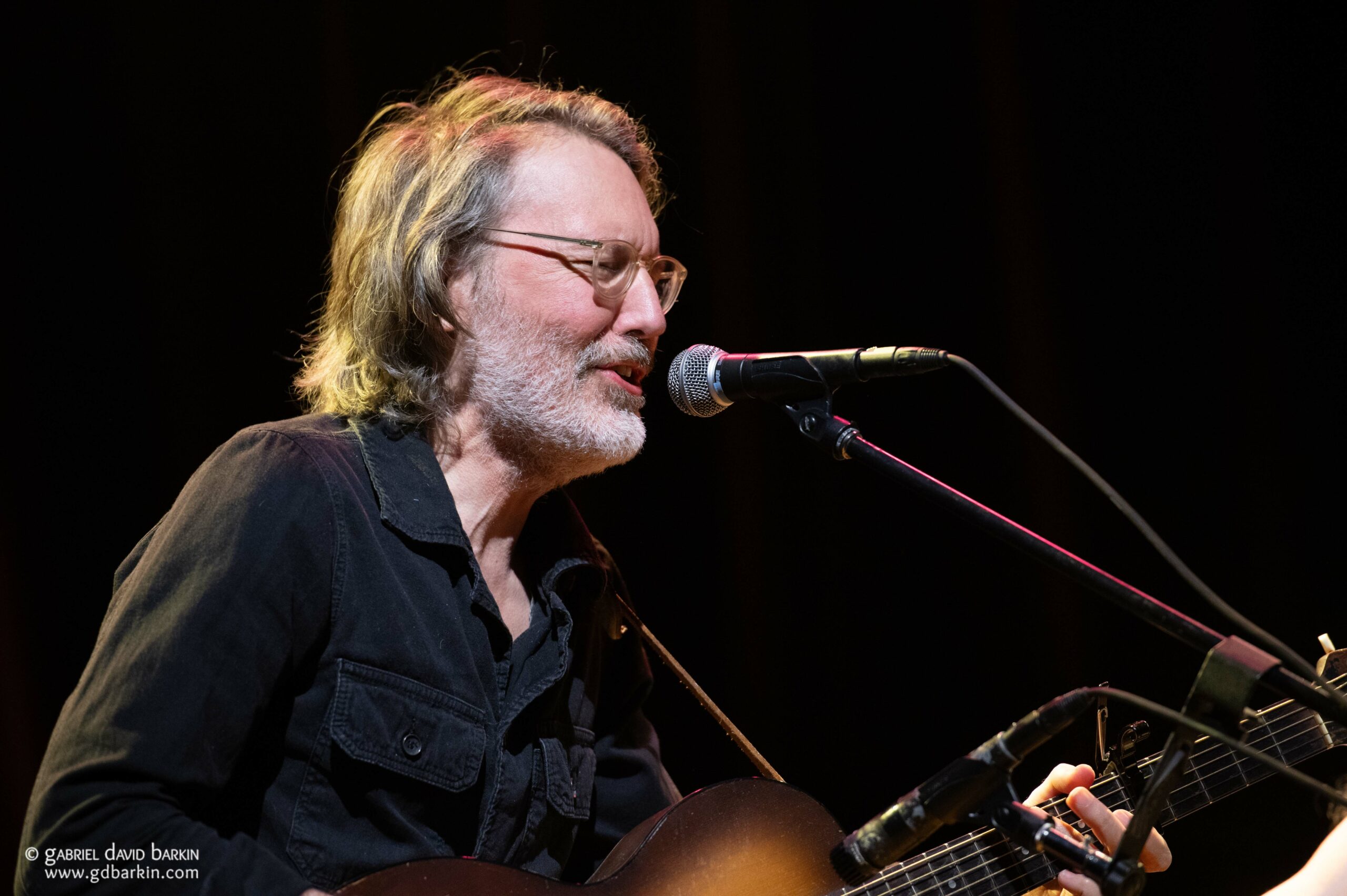
Rawlings came to the mic next to sing “Monkey and the Engineer,” acknowledging afterwards that it was written right here in Oakland. Indeed, its author Jesse Fuller is worth a digression here. He penned that silly ditty at some point between stints on the railroad, loading wares on shipyard docks, and a few gigs as a Hollywood extra. Fuller only recorded a few dozen songs in his career—and most of them were traditional blues—but the Grateful Dead covered three of his originals (“Monkey,” “Beat It on Down the Line,” and “San Francisco Bay Blues.”) Fuller is also notable for his creation of the Fotdella (short for “foot-operated bass fiddle”), a unique one-man-band invention that lives today in the Smithsonian. The dude is worth a shoutout for sure. Now you know!
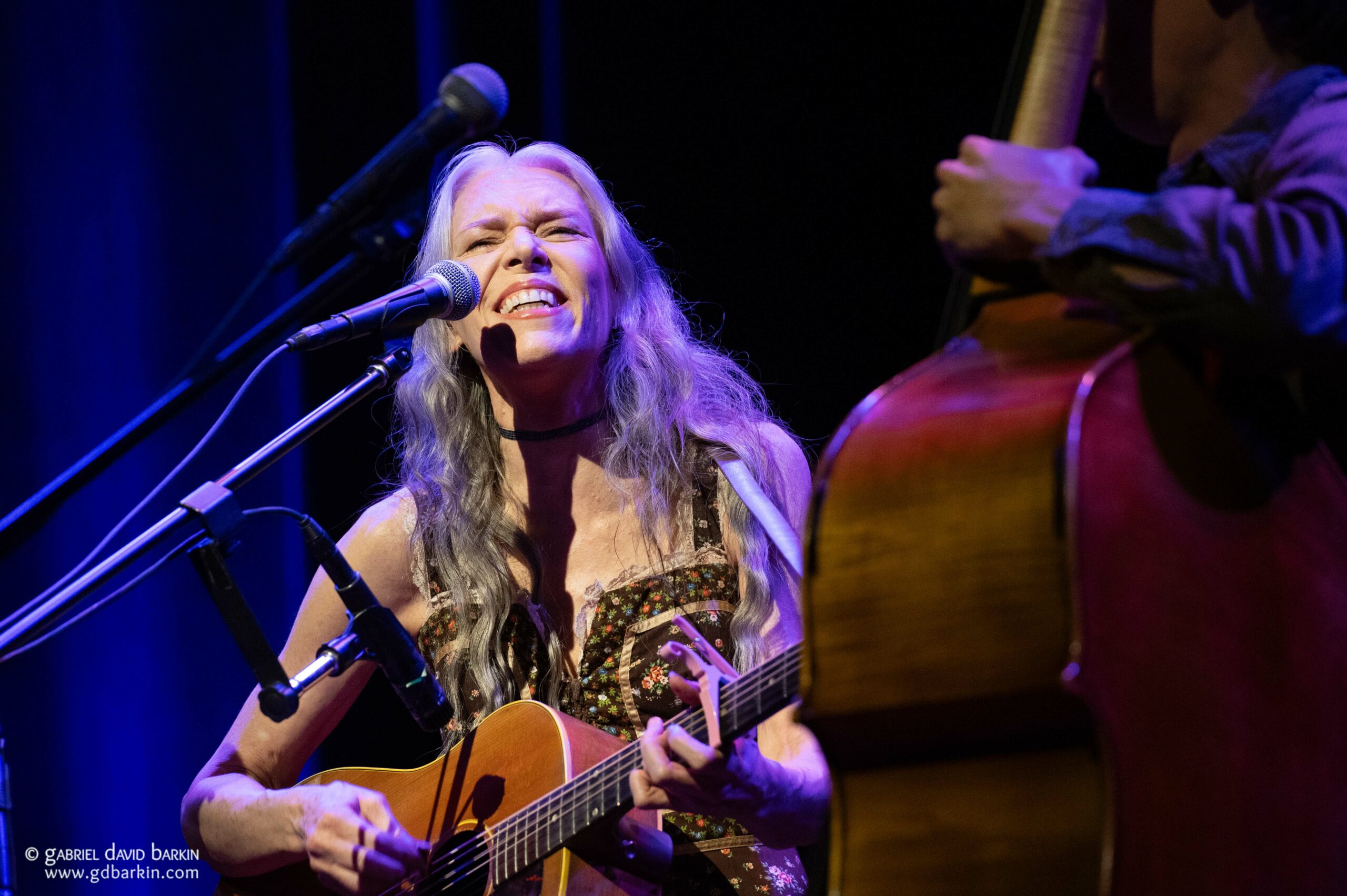
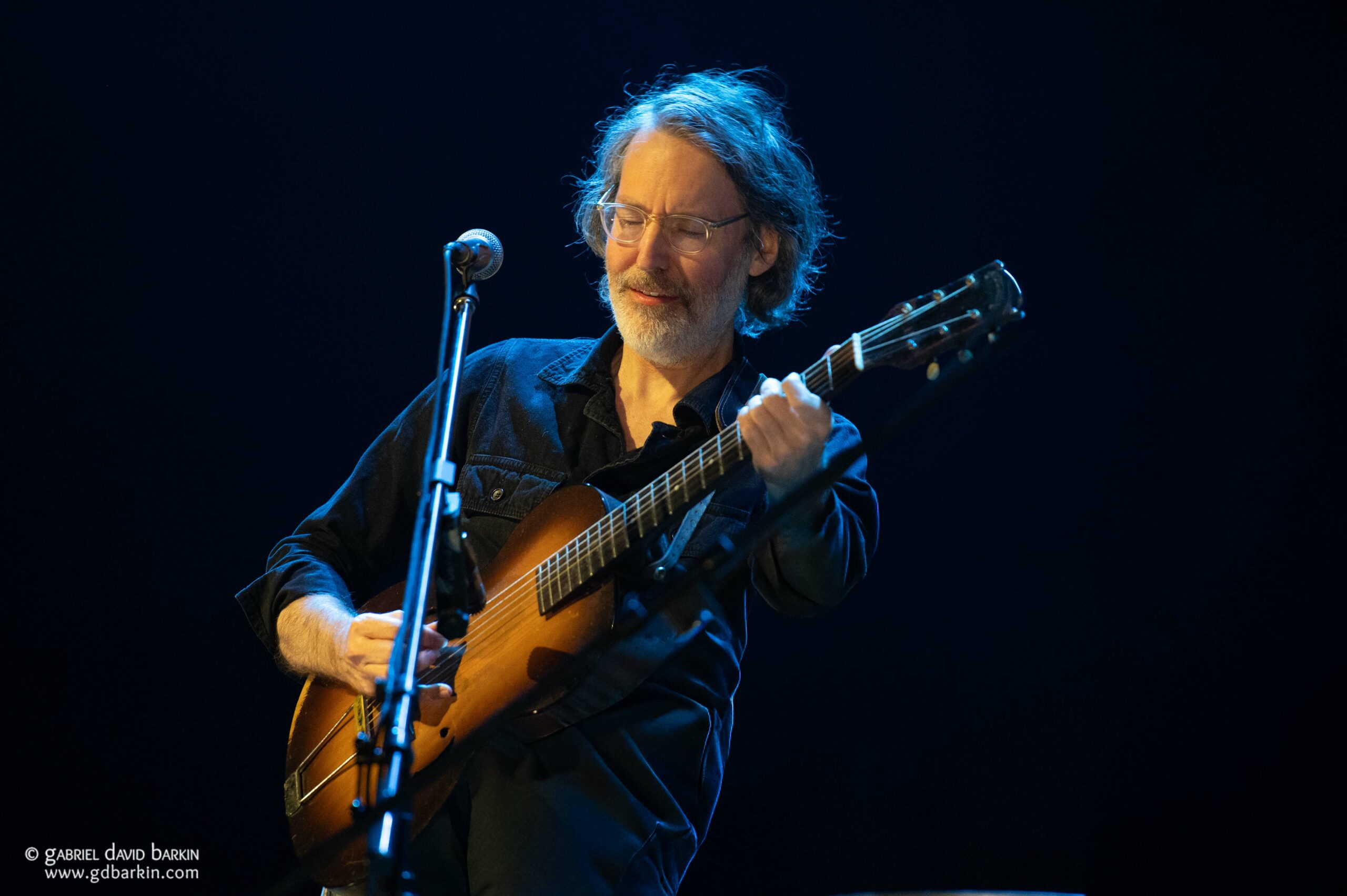
A highlight of the first set on Saturday was the one-two punch of a raucous “New Speedway Boogie” (from Workingman’s Dead) leading into Rawlings’ retelling of “Wharf Rat.” Kowert picked up a bow for his bass in the slowed-down middle section, crafting a pleasing solo with classical music influences before the vocals returned to “I’ll get up and fly away.”
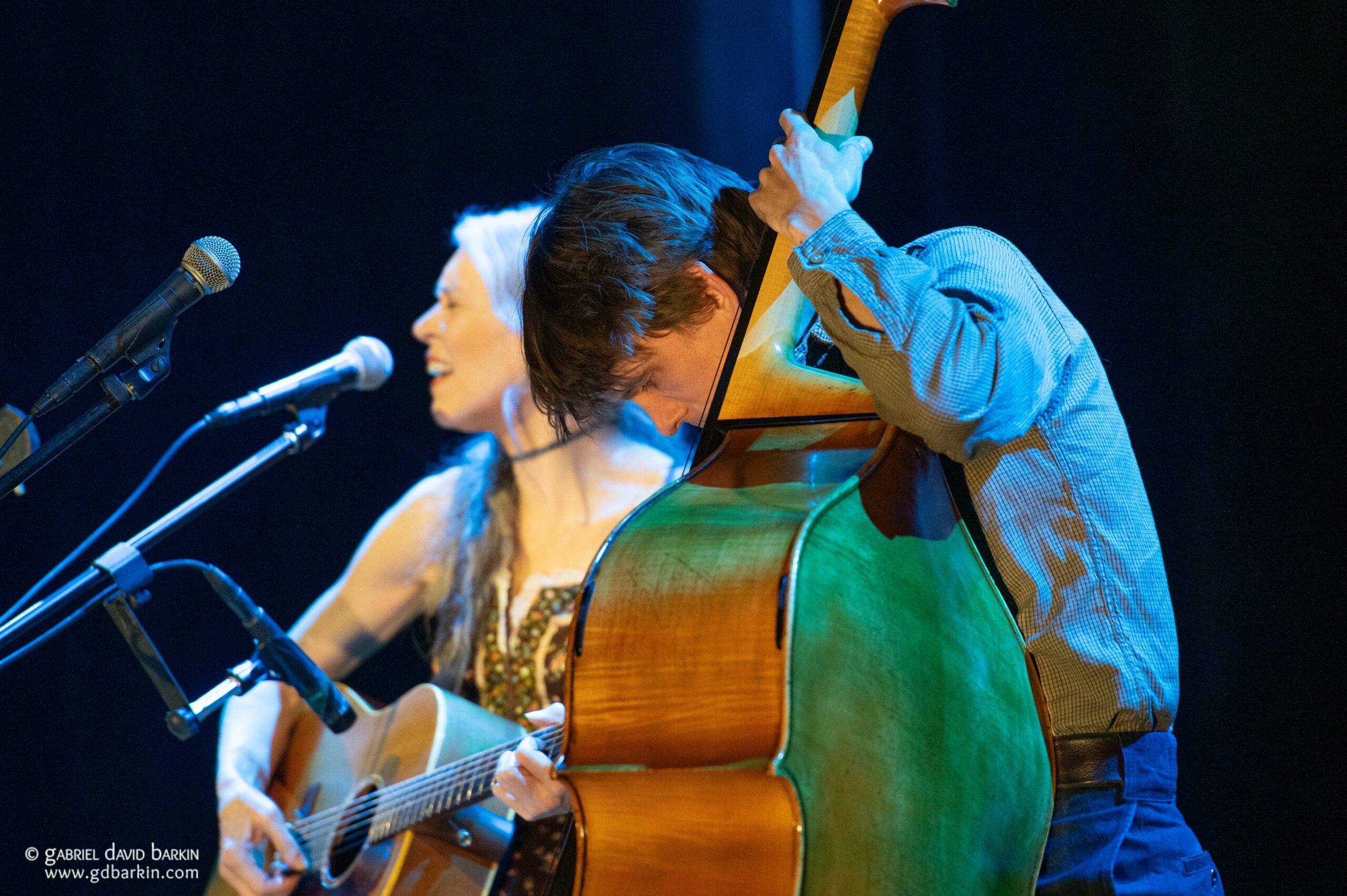
The second set included a “Jack Straw” that picked up steam as it moved through each of the song’s three sections, with the crowd chiming in to sing along in the choruses. Later, a stretch that included “Brokedown Palace,” “He’s Gone,” and “China Doll” (with “Cold Rain and Snow” in the midst as an upbeat salve) provided emotional and cathartic moments. Perhaps for some, these were opportunities to reflect upon the recent losses of Phil Lesh, Bob Weir, and Donna Godchaux. For others who may have suffered more personal losses, whether recent or long ago, these songs evoke strong feelings of love and loss. It speaks to the strength of the source material by Robert Hunter and Jerry Garcia, and equally to the delivery by Welch and Rawlings, that these songs have such power.
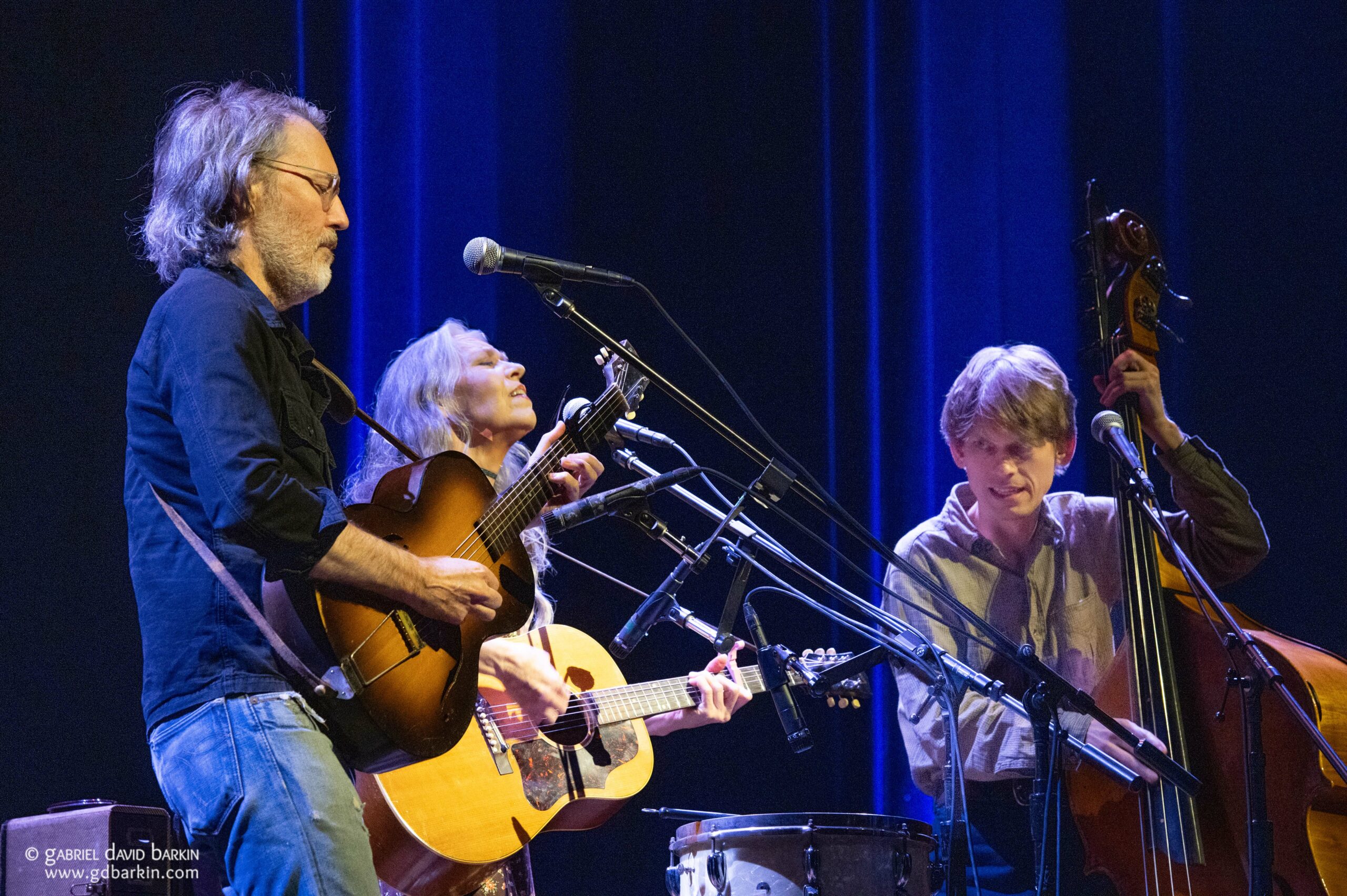
During Saturday’s encore set, “Cassidy” led into a spacey, slow jam with teases of “Dark Star.” But then, after reaching deep and low into near silence, the music emerged with the familiar chords of “Uncle John’s Band.” The audience sang along heartily throughout. Soon after, Welch, Rawlings, and Kowert were trading verses on “And We Bid You Goodnight,” again with ample help on the refrain from a crowd that dearly loves both the music and the musicians they came to hear.
And there we were, over 2,000 of us all sitting on one big comfy old couch singing our songs.
SET LISTS
FRIDAY, APRIL 17
Set 1
Bertha
Black Peter
Dire Wolf
Oh Babe It Ain’t No Lie
It Must Have Been the Roses
Dark Hollow
Loser
Cassidy
Cumberland Blues
Set 2
Brown-Eyed Women
I’ve Been All Around This World
Cold Rain and Snow
Deep Elem Blues
Brokedown Palace
Jack-a-Roe
Bird Song
Stella Blue
Ripple
Encore (with Grahame Lesh)
Box of Rain
Sugar Magnolia
St. Stephen
Not Fade Away
Morning Dew
And We Bid You Goodnight
SATURDAY, APRIL 18
Set 1
Dark Hollow
The Monkey and the Engineer
Oh Babe It Ain’t No Lie
Dire Wolf
Brown-Eyed Women
It Must Have Been the Roses
New Speedway Boogie
Wharf Rat
Bertha
Set 2
Loser
I’ve Been All Around This World
Jack Straw
Deep Elem Blues
Brokedown Palace
He’s Gone
Cold Rain and Snow
China Doll
Ripple
Encore
Althea
Cassidy
Uncle John’s Band
To Lay Me Down
Deal
And We Bid You Goodnight