Article Contributed by Gabriel David Barkin
Published on 2026-05-14
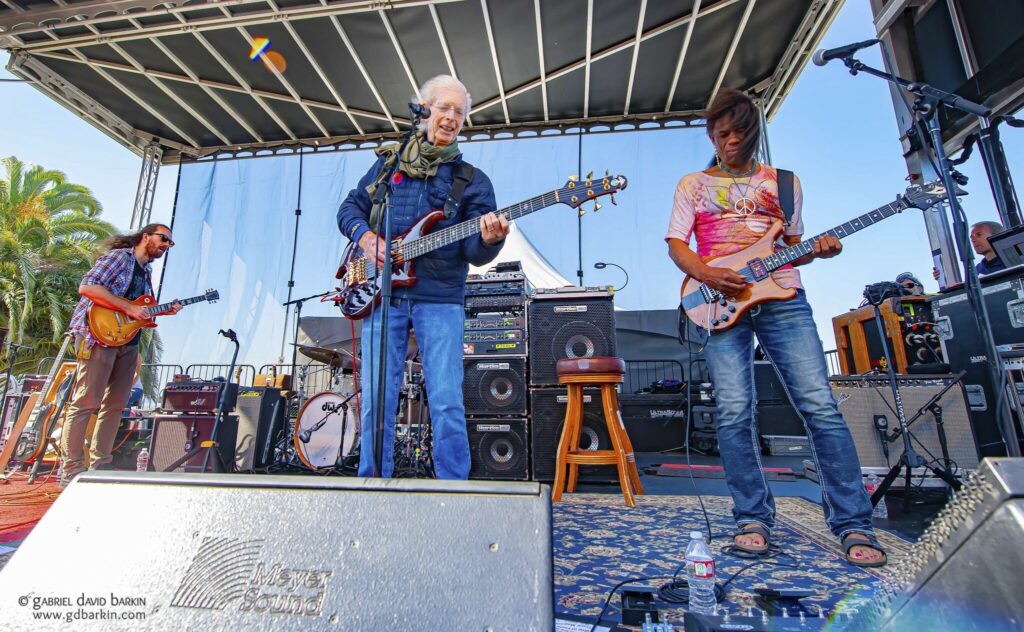
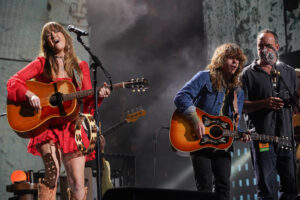
Grahame Lesh, Phil Lesh, and Stanley Jordan | Sunday Daydream | July 21st, 2024 - photos by Gabriel David Barkin
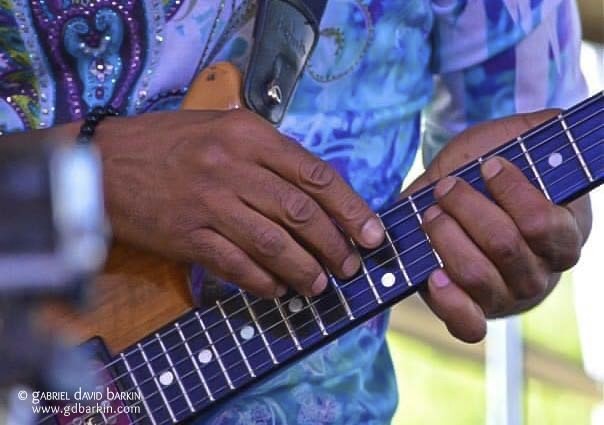
Stanley Jordan is one of the premier jazz guitar players in the United States today, known largely for his distinctive two-handed finger-tapping technique. His oeuvre includes modern and Latin jazz, fusion, and instrumental takes on classic rock and pop music. Over the past few decades, Jordan has performed live sets of music by Jimi Hendrix and the Grateful Dead on numerous occasions, and he was a frequent onstage collaborator with Phil Lesh as part of various Phil & Friends and other ensembles.
On May 15, Jordan is dropping “Meditation,” the first cut from his upcoming album Feather in the Wind (which will be released in full in Fall 2026). “Meditation” was written by the late Brazilian composer Antônio Carlos Jobim. On his version, Jordan plays the guitar conventionally with a pick instead of his familiar touch style. He explains, “I played mainly with a pick before developing the touch technique, so this takes me back to my roots as a guitarist.” His melodic inspiration for his approach to this song springs from listening to a recording by Joe Pass many years ago. "Joe was one of my favorite guitarists," he says. "I hope you can hear the influence and my loving regard for his playing on this track."
This track was recorded over a decade ago with vocals contributed by world-renowned Brazilian singer-songwriter Milton Nascimento. Jordan’s fellow musicians for that session included his "Brazilian dream team," Dudu Lima (bass), Ricardo Itaborahy (piano), and the late Ivan Conti, known widely as Mamão (drums and percussion). Mamão died in 2023. “We had a lot of history together, having traveled and performed throughout Brazil,” Jordan recalls fondly.
Jordan met with me on Zoom last week for a wide-ranging conversation about topics including how his forthcoming album reflects the influence of death, loss, and other transitions; how he learned to play Grateful Dead music; and his ongoing interest and education in music therapy.
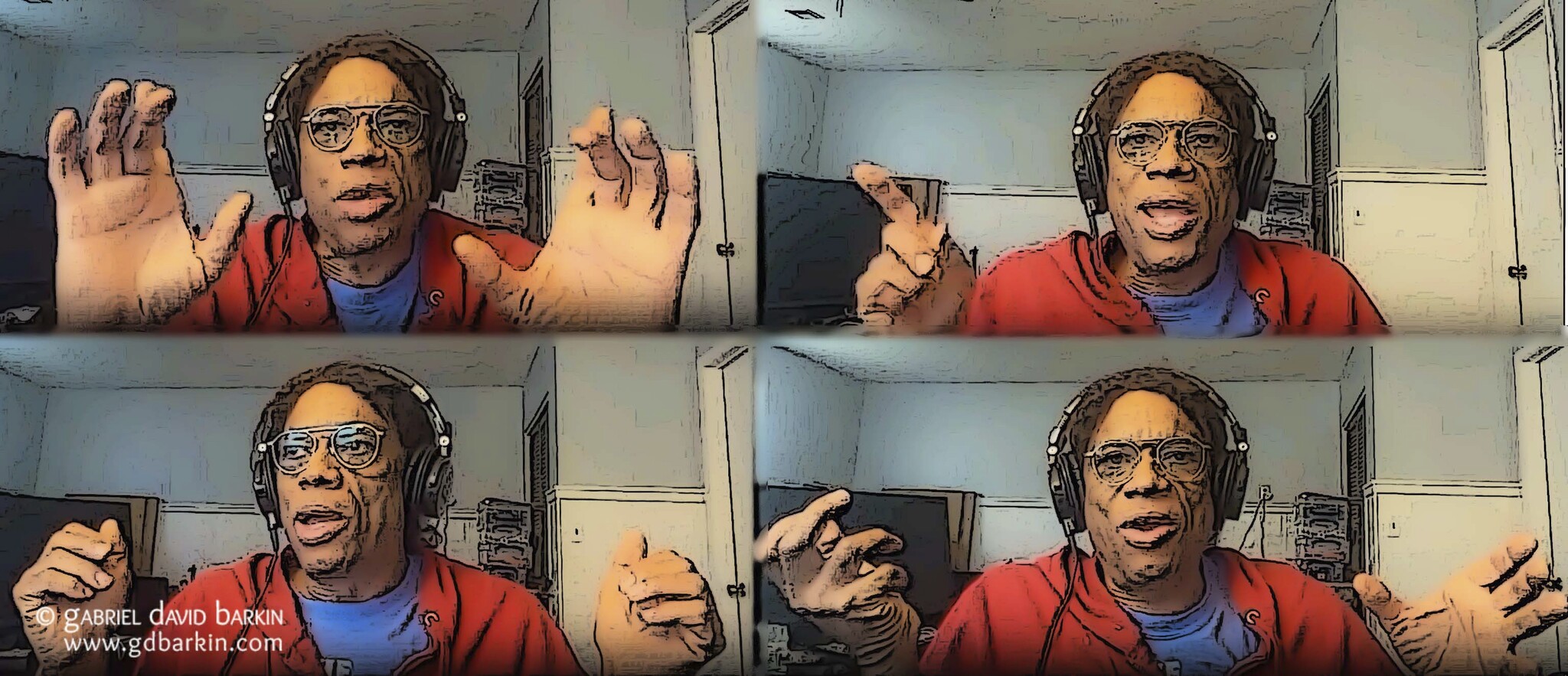
(The transcript below has been edited for clarity and brevity.)
Gabriel David Barkin (GDB): Where are you at right now? Are you at home?
Stanley Jordan (SJ): I'm in the Midwest, yeah. I live part-time in Kansas and part-time in Arizona.
I've been actually on the road much more than I've been home these days. I haven't been doing any really long tours, but I'm usually out for weeks at a time. It gives me a chance to get a rhythm going when I'm on the road. Even though it's always different everywhere, there's enough sameness – so I can kind of lock into a groove with that.
I used to have a big conflict between home and road, and the road basically won.
GDB: That's true for a lot of musicians, I'm sure. I wanted to start this conversation somewhere else, so to speak, but the road is a good place to start. I looked at your tour list just before this call, and I see that over the next few months you're playing a bunch of shows with your trio, with Kenwood [Dennard, on drums] and Wes [Wirth, on bass]. And you’ve got some solo gigs, and you've got some gigs doing the Jimi Hendrix and the Dead things.
So you’re switching gears all throughout the summer instead of doing a tour where you're playing the same thing night after night. Is that something you prefer, or is that just how it shakes out given the demand for things that you do?
SJ: It just shakes out that way. I have two different agents. One books my solo and my jazz trio stuff, then another agent books my Hendrix tribute and my Grateful Dead tribute.
I've actually put another band together. We had a week of rehearsals recently and we're going to do our first gig at my 45-year college reunion. The band is called Big Party, and it's going to be a band for festivals and big parties. We're going to be doing nostalgia music with a twist. We're not doing all the old songs the way they have been done a million times, but we're definitely basing it on the repertory of the 60s and 70s, that’s kind of our core era that we're drawing from.
GDB: So maybe a little funk, a little Sly, stuff like that?
SJ: Yeah, yeah. And I love some of the late 60s stuff. We're doing some Herb Alpert, for example, “This Guy’s In Love with You.” [Here, Jordan mimicked Alpert’s signature horn style, “Da-da-dah-dah-dum.”] You know, that Herb Alpert phrasing? Our trumpeter Satish [Robertson], he does all that, he nails the phrasing. But then he does a jazz solo. So that's exactly what we're doing, we're taking the old music but expanding on it.
Because nostalgia on one level is entertaining – and on another level, it can actually have healing power. The endorphins can help our immune system. This is something I'm aware of from my studies in music therapy. There’s a level where we not only recover some of the memories we had when we were younger, but also, we sometimes recover some of the resources that we had. So the younger person who's still within us starts to kind of come back. And then, on another level, we've evolved since then. So that's why we don't do the old music exactly the way it used to be. We honor the fact that people have evolved.
And then I've got another project that is still in the works. I've kind of worked it in to some of my other shows, but I've only done one concert that was basically based on just this. It's called Stanley Jordan's Livetronica. It's basically electronic dance music, but it's not just your average EDM stuff. I put a lot more interesting and sophisticated harmonies in there, and I have a rig where I'm able to DJ with my feet while I'm playing guitar with my hands.
So I can go from one thing to another. I love all the diversity of the projects. Sometimes it's a little bit like whiplash in the middle of a tour, switching from one thing to another. That can be a little challenging, to be honest.
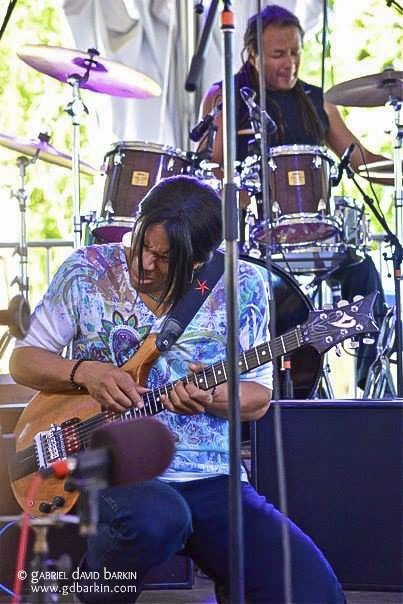
GDB: I love that bit about playing the same old music but playing it new ways. Which brings to mind your approach to playing Grateful Dead music. I was talking with Grahame Lesh this week about how he and his father [Phil Lesh, bassist for the Grateful Dead] and all the many different Grateful Dead cover bands have approached that music since Jerry Garcia died. One of the things Grahame and I talked about is how it's already been played the way it was played – and now, a lot of the fun is finding all these new ways to play it.
The so-to-speak original music triggers us with its familiarity, triggers connections between our hemispheres and different parts of our brain. We can call that “nostalgia,” or whatever. But then, playing and hearing that music played differently opens up new pathways in our brains that allow us to grow and evolve.
SJ: Grateful Dead music, it's already primed for that. Because it's already in a kind of creative space, and people go in knowing that. So there's a lot to build on there.
GDB: Absolutely. And we’ll come back to the Dead music soon. But let's talk about your new stuff first. In advance of the record, you released “Meditation,” which you recorded over a decade ago. So it’s not exactly new. What made you want to put this material out now?
SJ: The record was originally made for Mack Avenue Records, and it was supposed to come out about ten years ago or so. But something I've dealt with through the years is not having an easily describable approach to things. Some of my records have been specialized in one thing – but other records have been more eclectic. This record is definitely on the eclectic side. It didn't really fit the catalog concept of Mack Avenue.
So it was in limbo for a little while, and then we worked it out and I acquired the rights to the record. I'm putting it out as an independent.
In a way, it's good that it's coming out now because a lot of what the album is about is needed now more than ever. The album is basically about the things we do to maintain constancy in the face of loss, change, death, and all the things that life throws at us. How do we keep our equilibrium in the face of all that?
When I was making the record, I experienced a lot of loss, and a lot of the people I worked with on the record have since passed away. I lost my dad while I was making the record. B.B. King was supposed to play on it, I was waiting for him and he passed away. So the record ended up being like, How did I manage to overcome the disappointments just in making the record?
To give you an example, one of my favorite Pink Floyd songs was always “A Pillow of Winds.” I had this idea come to me. I imagined John Lucien singing it. Then on a tour somewhere, I met his nephew, and he said, “I can totally make this happen.” I was so excited! Then I got the news that [Lucien] had passed away. Well, what do I do? I still want to do the song. But I'm not gonna find somebody else and then be yelling at them in the studio, No, you don't sound enough like John Lucien! I decided that I should sing the song. Even though I'm not going to sound like John Lucien either, whatever it was that I heard in my head that made me want him on the track, that inspiration came to me and I've got that concept in me.
So this is the first album I think I've done where I've got full on lead vocals on three tracks or something.
GDB: What song was B.B. King going to play with you?
SJ: One of the best ideas I ever had in my life was to do a track with B.B. King doing “Riders on the Storm.” I had been talking with him for years and years trying to find a song that we could do. I finally suggested that and he agreed to do it. It was just a few weeks after that when he had a concert where he had to leave the stage, he wasn't feeling well. So I didn't want to bother him right then. Maybe seven months or so later, I just had this feeling, I better check in just to see what's going on. I texted his assistant and I said, Hey, how's B.B. doing? And he texted me back, He died tonight.
GDB: So you knew! You felt it!
SJ: Yeah, I totally felt it.
I did the song anyway and I turned it into a tribute to my first guitar hero. I played his part, and I imagined that it was the two of us playing together. There's a dialogue there. I think people can hear the love that went into it.
That's what we do. We find ways to keep moving forward. And in today's world, there's so much chaos, so much difficulty that people are experiencing. It's even worse than it was ten years ago. So I feel now, more than ever, is a good time to put out some music that's reassuring, that says, I understand your pain.
I'm feeling my own version of this, too. But there's a silver lining. I agree with Marianne Williamson, she says that there's this world that's dying and there's a new world that's struggling to be born. It's both. And it’s clear to see the world that's dying, really easy to focus on that side of it. Whereas the world that's struggling to be born is not so obvious. And in fact, it's up to us to create what that is. But we're not going to get about the business of creating that if we're focused on lamenting the things that are falling away. That's why Marianne says we have to be death duelists to the old and birth duelists to the new at the same time.
So there's this thing that we do a lot on the album, technically called the Picardy third, where you have a whole song or a whole section that's in minor – and then you don't change key, but you turn the minor into a major. There's that feeling like the clouds move out and here's the sun. That feeling like, I can see the other side. I may not even be there yet, but I'm okay. I can get through this. We do that probably in a good five or six of the songs on the album.
GDB: Yeah, that is a very classic emotional twist. I can think of so many songs like that.
[Some notable instances of a Picardy third in rock music, for example, include the final chord of the chorus in Bob Dylan’s “This Wheel’s On Fire” and the very last chord at the end of the Beatles’ “And I Love Her.”]
I have to ask about this – on the YouTube video posted for “Meditation,” there’s a picture of you standing in a field next to a horse. Is that your horse?
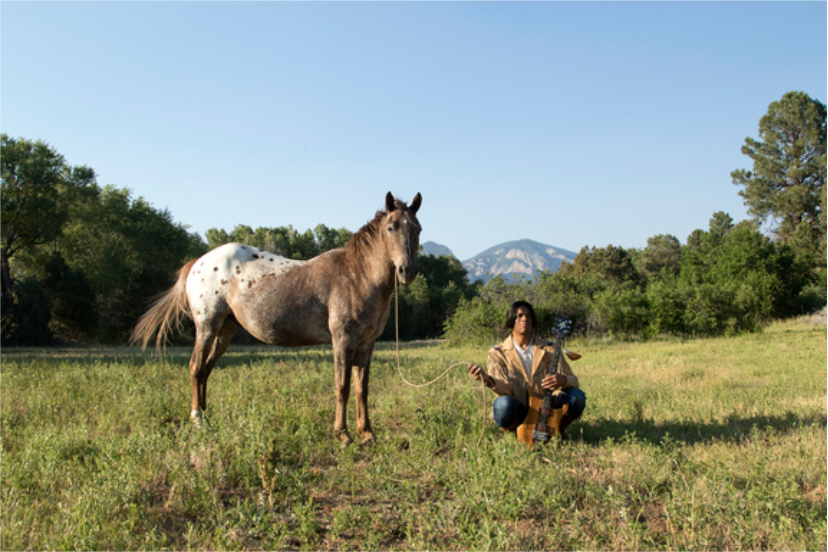
SJ: No, that's Robert's horse, Native American musician Robert Mirabal. I was on his land in Taos, New Mexico.
I feel a strong connection to the Native American piece of our heritage. A lot of Black folks believe that we have Native American blood, in particular Cherokee. When I took a DNA test, it didn't really show up. But there's a lot of Native American people who are saying that [the test] doesn't mean you don't have the heritage because a lot of Native people haven't put their DNA into the database.
So we don't necessarily know, but there's a belief that my family did have that heritage. And I can show you pictures of old ancestors of mine that you could swear were total Indian. So I've always had a strong feeling of connection to that part of our culture in America.
I think all of us as Americans need to embrace and feel more pride in that part of our heritage rather than pushing it off, either out of derision or guilt or whatever. This is America, and it's a melting pot. We’ve all influenced each other. That's part of why American music is so loved in the world. So with this album, there's some things where I really connected with the Native American part of who I am – whether it's blood or not. The song “Ancestors’ Dream” reflects that.
GDB: Let’s talk more about “who you are.” I think I had heard of you and heard your music in 1985 before I saw you on The Tonight Show – but for some reason I've always held onto a memory of that brief interview with you and Johnny Carson. I think it was your first time on Johnny. I actually went back and watched it this week on YouTube. You were talking about how you came up with your fingerboard tapping style of playing after initially learning piano and then switching to guitar. You said, “I really wanted the possibility of the piano … I’m thinking about the music dancing around the neck, and I’m just following it around.”
You were 25 at that time. I'm just about your age, and I know that when I think back on me at that age, part of it is like I'm the same person and part of it is I'm a completely different person. How has your playing and your relationship with music evolved since that age? Are you the same person?
SJ: I really feel that [my relationship with music] has deepened. Like, you know, there’s B.B. King and John McLaughlin, right? Both are really talented musicians with different skills. B.B. could say with just a few notes what John maybe needed more notes to say. Or like Miles Davis and Wynton Marsalis. Same thing.
I think that I've become more able to say more with less.
I think it's something that happens anyway – because as time goes on and the aging process moves forward, we realize that we have to transcend the physical. It's not like athletics, but it's not that different either. You have a certain physical prime. And even when you're not in your physical prime, you can still evolve, but you have to evolve on deeper levels. That's what I think is going on with me.
I also think there's stuff that was kind of in my way that's not in my way so much anymore. Like, I used to worry about how well I was doing, and I used to get really disappointed when I didn't do as well as I thought I should do. Now I'm just so grateful to be playing music, to be able to share what I love with other people. So if it doesn't come off like I envisioned it, I just try again. And I'm grateful for the moments I have. So I feel like I'm less worried, I'm less stressed over it.
Like on “Meditation,” my approach to my solo was easygoing and melodic. I was basically riding the hills and valleys of the band, not trying to push it, not trying to do anything harmonically groundbreaking.
So I think my music has deepened. The melodic quality, I think, is better. And the ineffable spiritual quality comes through more.
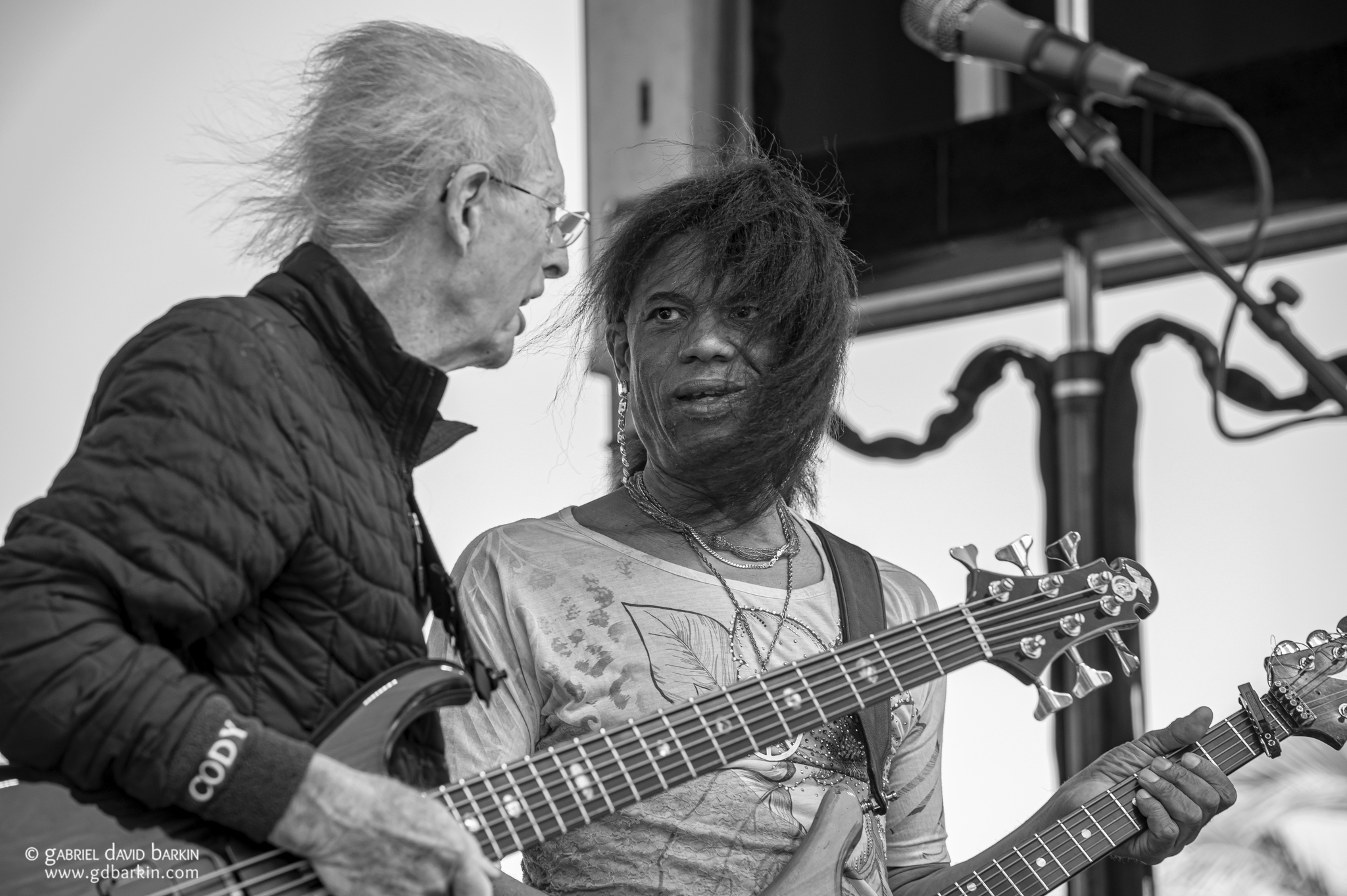
GDB: That's the perfect segue for me to ask you about your experience playing Grateful Dead music, the focus on melody and not flashy solos. I’ve had the pleasure of seeing you play with Phil Lesh several times, including his last live performance in July, 2024, in San Rafael. I was honored to be a photographer at that show, so I was right up front in the pit. I could tell you were so happy to be playing with him and be part of that scene, you had a big grin on your face all day.
What is your approach to playing the Dead’s music? And what did you want to bring to the table at those Phil & Friends shows? At that last Phil show, and all the times I saw you on stage with Phil at Terrapin Crossroads and Stern Grove, I felt that you often took a textured, layered approach to the music. You didn't solo as much as the other guitarists on stage at those gigs, like Lebo and Grahame and Stu Allen. Was that part of your mindset, to add more texture rather than jump out on leads?
SJ: Yeah, definitely. I was kind of struggling a little bit at first, because Grateful Dead music is deceptively simple. It's mostly major and minor chords. It's not like jazz. But then again, there's a lot of subtleties. And there's moments when everybody knows to go bop! Like, how do they all know that?! There's a lot of intricacies. It's like a rabbit hole the deeper you go into it. A lot of odd meters, and chords change at unexpected times.
There were a couple of things that helped me to get over that. I was focused on trying to learn all these details. One thing is that I read somewhere that a lot of the music was composed with the lyrics first, and the music was built around the lyrics. That helped me to understand that if I focus on the lyrics, that'll help me understand why the music does what it does.
But the thing that really pulled it together for me was when Phil told me, “If you want to understand Grateful Dead music, just think Dixieland. Because in Dixieland, every instrument is off playing a different melody. But it all fits together.”
For jazz, the main glue that holds people together (other than the groove and the tempo and the general style) is the chord progression. That's the thing that locks us in, and we could all improvise. So [with Grateful Dead music], I'm focusing on trying to remember to go to this chord and go to that chord. But after Phil told me that, I realized I don't have to play all these chords. Everybody in the band knows the chords.
The chord is going to come through.
I could just sit there and listen, and people are going to hear the chords. So that freed me up, and then I could take more of a melodic approach. Phil already does that. He’s one of the more melodic bass players around. He would play his bass like a low melody, right? That's when things really started to come together for me. I could approach it more melodically, and then I could approach it more intuitively.
This is also coming from my music therapy studies. In one of my classes, we did a unit on the ear. The professor said that studies showed that melody is processed more in the right hemisphere. So melody is very holistic. So thinking of my role as a melodic player allowed me to play more intuitively and just sort of play by ear and not even look at the sheet music. Just listen to my note. Is my note too high? Is it too low? I hear a phrase coming up next in my mind, so I play that phrase, and it perfectly fits with what everyone else is doing.
Sometimes, I would solo for a while and then hand it to someone else. But I didn't really see it so much as, Hey, here's my chance to step out and shine as a soloist. I thought of it more of just being a part of the band. I like your word. Texture. It's one of my favorite words for musical elements that people don't talk about enough. I'm all about the texture. You're a man after my own heart. That was a lot of my role, to help to support that complex but interwoven Dixielandish texture.
GDB: Is that still how you approach the Dead in your own Dead tribute shows? How is that the same or different as when you played with Phil?
SJ: When we do my tribute band, Stanley Plays the Dead, we don't change the music a lot. I know that there's some bands who do a whole different thing with the music and I think that's great. Our thing is to stay within the general style and arrangement of the original music, but to expand on that. So we're constantly doing things a little different. For example, frequently there's a thing that Kenwood and I will do in “The Other One” where, in the middle, we'll go into this furious up-tempo swing jazz improv. Like he's Elvin Jones and I'm John Coltrane. We just go nuts. And it totally fits the song. Then we come back into the song and it's like, Well, have they left the song or what? We only do that because it fits within the vibe of the song. We try to be very conscious of the original spirit of every song.
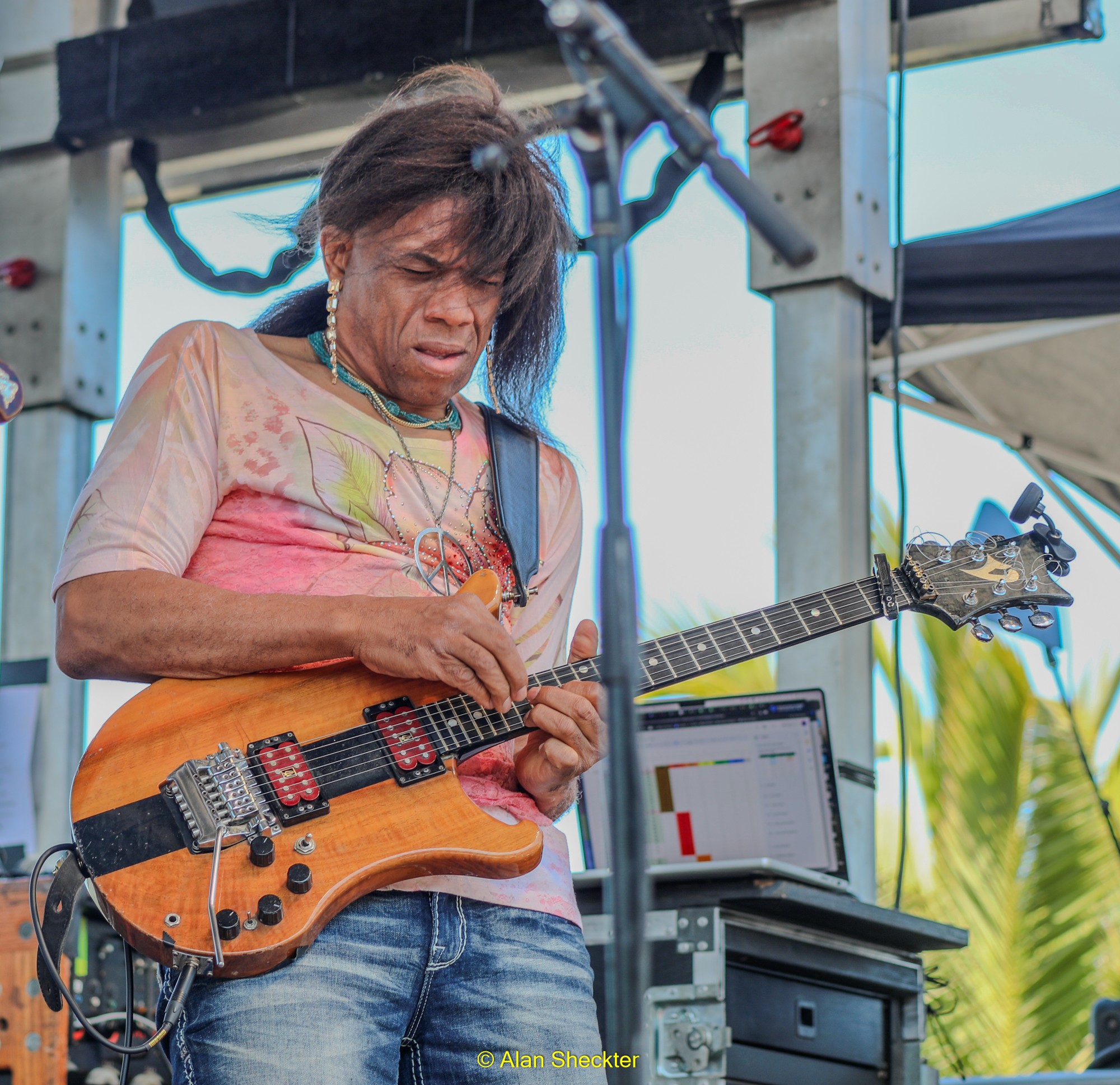
GDB: And yet inevitably it's going to sound like you and Kenwood and Wes too. That’s one of the amazing things about all the Dead tribute and cover band stuff. There are Grateful Dead cover bands like Dark Star Orchestra that hew pretty close to the bone, albeit with some variances and personality. But then on the flipside, Joe Russo's Almost Dead – you'll always recognize the songs, but they play them their own way, their own pacing and flair. That’s something you don't see as much with other music. In jazz, of course, that’s common. But on the other hand, we're still playing Bach almost 300 years after he died, and for the most part people try to play it the way they think Bach intended it. I’ll also go out on a limb and say that most Elvis impersonators and Rolling Stones cover bands want to sound like the original. So it's a really different approach in Grateful Deadland.
For our last few minutes together, I’d like to thank you for this interview and ask sort of a meta-question. Do you like talking about your work and your music, or are sessions like these a bit of a chore?
SJ: To be honest, it can be challenging to schedule [interviews] because I'm doing all this other stuff – and then I have to stop and do the interview! But the thing I like about it is that I feel there's a lot more to me than just the sound that's on my records. Who I actually am, the person behind the music, I have thoughts about a lot of other things, like the approach and the philosophy behind it. So I love being able to talk about that. And since I've been doing more interviews lately, I feel the tide starting to shift to where I feel more understood. I love the fact that the audience loves all these other topics, like the inner mind/body game of How do you get to the music? How do you achieve your best? How do you stay in balance? People are hungry for that.
GDB: And obviously, there’s a lot more to Stanley Jordan than just your records and shows. For one thing, you’re studying for an advanced degree in Music Therapy [at Arizona State University]. I love knowing that about you. I’m fascinated in general by the connections and impact music has on humans. There’ve been so many good books about this stuff, like This Is Your Brain on Music [by Daniel J. Levitin] and the books written by Oliver Sacks. We know that music itself has an effect on us – but then it adds something more when we learn what it means to the person who wrote it, or who played it. It gives us more color and (I'll use that word again) texture to what we're listening to.
SJ: You mentioned Oliver Sacks. He wrote an article about the movie Awakenings with Robin Williams [based on Sacks’ book about treatment of patients with encephalitis lethargica, a.k.a. the "sleeping sickness," with the drug L-DOPA]. He wrote that it's basically true what the movie depicts, but he was surprised they didn't put in the movie that [his studies] were actually getting even better results with music. I thought that was an even more interesting story.
GDB: Absolutely. There are videos of people who are completely withdrawn and noncommunicative because of Alzheimer's and other issues, and someone plays them a recording of a song they once knew, and they start to sing along, sometimes even tell a story, a memory.
SJ: Or they get up and they dance. So there's all this stuff about the power of music that I think still has yet to fully be appreciated.
FOR TOUR DATES AND MORE INFORMATION visit https://www.stanleyjordan.com/