Article Contributed by Gratefulweb
Published on 2026-05-26
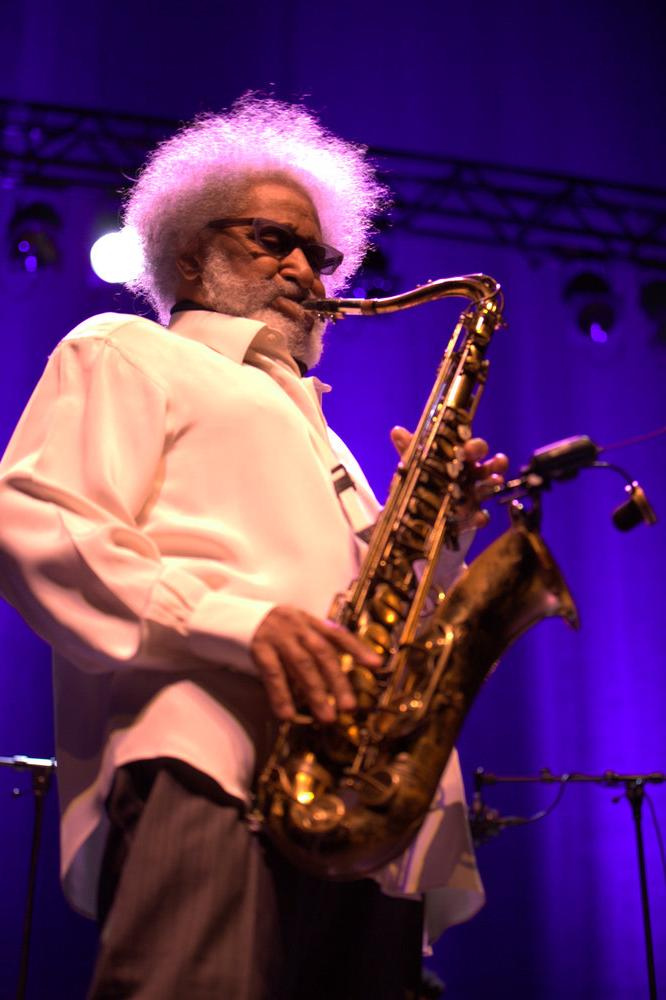
Photo: Sonny Rollins in 2011 by Tom Beetz, CC BY 2.0, via Wikimedia Commons
Sonny Rollins, the towering tenor saxophonist whose sound could move like thunder through a city street and then curl into a whisper as intimate as a late-night confession, has passed away at the age of 95. Known to the world as the Saxophone Colossus, Rollins leaves behind more than recordings, awards, and stories. He leaves behind a way of listening, a way of searching, and a way of standing inside a song until the song reveals something larger than itself.
Born Walter Theodore Rollins in Harlem on September 7, 1930, Rollins grew up near the pulse points of Black American music: the Savoy Ballroom, the Apollo Theater, the endless education of neighborhood sound. By his teens, he had moved from piano to alto saxophone and then to the tenor, drawn toward the deep, commanding voice of Coleman Hawkins while absorbing the bebop revolution around him. He came of age in a city full of giants and quickly became one himself.
Rollins played with Miles Davis, Thelonious Monk, Bud Powell, Clifford Brown, Max Roach, Charlie Parker, and so many others who helped shape modern jazz into a language of speed, soul, intellect, and danger. But even among that company, Rollins stood apart. His tone was huge, warm, biting, elastic, and alive. He could turn a melody inside out without losing its center. He could make a simple phrase sound like a philosophical argument, a joke, a prayer, and a street parade all at once.
His 1956 album Saxophone Colossus gave the world “St. Thomas,” a calypso-rooted joy ride that became one of his signature compositions, along with “Blue 7,” a blues that seemed to invent itself in real time. Tenor Madness, Way Out West, A Night at the Village Vanguard, Freedom Suite, and The Bridge would follow, each adding another room to the house Rollins was building. He was not merely recording albums; he was mapping possibility.
Part of the Sonny Rollins story is the courage to disappear. At the height of his powers, when most artists would have held tight to the spotlight, Rollins stepped away. Dissatisfied with his own playing, he left the stage and began practicing on the Williamsburg Bridge, alone above the East River, surrounded by traffic, wind, and steel. The image has become mythic because it is true in a deeper sense: an artist already considered great still chasing the note he had not yet found.
When he returned with The Bridge in 1962, the title carried more than geography. It was a passage from one self to another. Rollins was always crossing something: from bebop to hard bop, from standards to calypso, from structure to freedom, from public applause to private discipline, from mastery to humility.
That humility may be the most beautiful part of his long journey. Sonny Rollins never acted like the work was finished. He carried the burden and blessing of the true improviser: the knowledge that every performance begins again at zero. Every night, the tune must be found. Every solo must earn its breath. Every phrase must answer the question of the moment.
His great compositions — “Oleo,” “Airegin,” “Doxy,” “St. Thomas,” “Sonnymoon for Two,” “Pent-Up House,” and “Blue 7” among them — became standards not because they were frozen in time, but because they gave musicians room to roam. Rollins wrote tunes that opened doors. Players walked through them and discovered whole neighborhoods of sound.
Rollins was also a moral force in jazz. Freedom Suite, released in 1958, addressed the contradictions of American life with clarity and fire. Its message still rings: the music that gave America so much beauty was born from people still fighting to be fully seen, fully heard, and fully free. Rollins understood that sound could carry history, protest, joy, grief, wit, and resistance without ever needing to flatten itself into slogan.
For listeners just discovering him, start anywhere and the road will still lead deep. “St. Thomas” will get the room moving. “Blue 7” will show how a blues can become architecture. Way Out West reveals his humor and wide-open imagination. A Night at the Village Vanguard catches him in the heat of invention. The Bridge hears a master returning from solitude with something new in his hands.
And then there is the sound itself. Sonny Rollins did not merely play the tenor saxophone. He inhabited it. He made it laugh, growl, testify, question, dance, and shout. His horn carried the street and the sky. It had muscle, but never just muscle. It had intellect, but never just intellect. It had soul without sentimentality, discipline without stiffness, freedom without chaos.
In later years, as health issues kept him from performing, Rollins remained a figure of rare wisdom and reflection. He spoke often of practice, spirit, compassion, and the unfinished nature of the artistic life. For all the grand titles attached to him — legend, master, colossus — he seemed most devoted to the idea that music was a lifelong path rather than a trophy case.
Sonny Rollins is gone now, but gone is not the right word for a musician whose sound still walks into the room the second the needle drops. He is there in the opening lift of “St. Thomas.” He is there in the fearless sweep of Freedom Suite. He is there on the bridge, practicing into the wind. He is there in every young saxophonist who discovers that a solo can be more than notes — it can be a search for truth in real time.
The Saxophone Colossus has stepped offstage, but the echo is enormous. It rolls down Harlem streets, across the Williamsburg Bridge, through club doors, festival fields, record shops, practice rooms, and midnight apartments where somebody, somewhere, is hearing that horn for the first time and realizing the world just got bigger.
Rest easy, Sonny Rollins. The road you carved still swings.