Article Contributed by Nick Gumas
Published on 2026-05-29

A definitive force in the global independent music landscape for the last several decades, Toronto-based powerhouse Bedouin Soundclash has written a legacy that demands attention as they constantly evolve with every era. A mix of reggae, ska, world music, and indie rock narratives, their work refuses to fit into a pre-packaged genre, rather has built its own scene and community around their style and message.
Grateful Web got to sit down with the band’s founding duo, Jay Malinowski and Eon Sinclair shortly after their performance at this year’s Cali Roots festival to speak with them about the fulfillment they feel from both their musical and non-musical creative expression, their relationship with expression and sense of self, and why they believe their music and message has found a home in so many different communities.
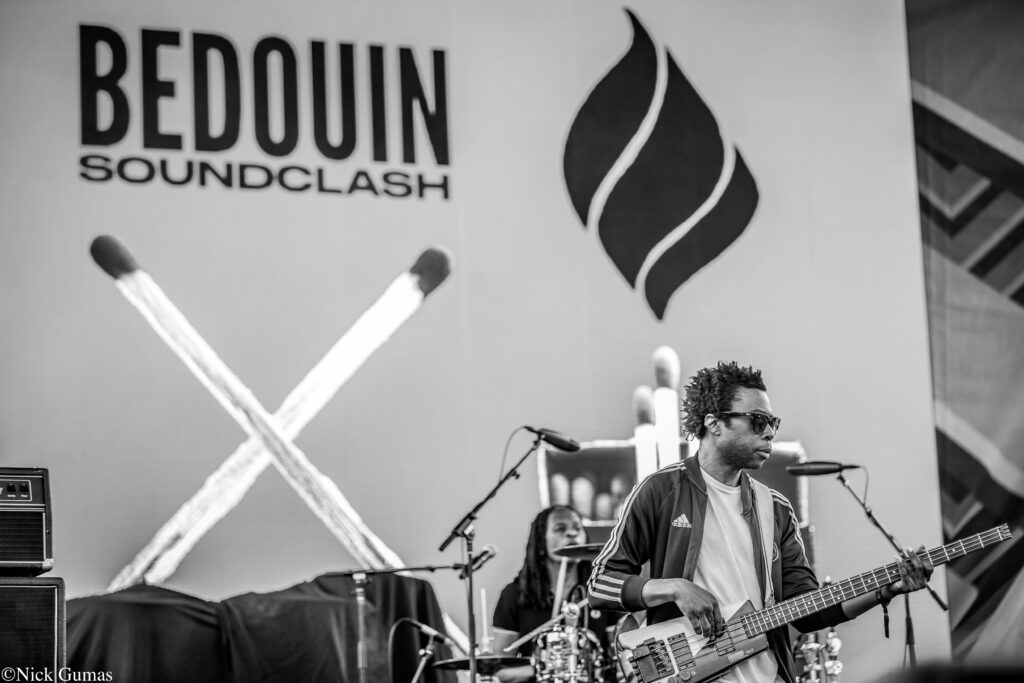
Grateful Web: You traveled internationally to get here. What has the legacy of this festival meant to you and what does it mean to play on this stage?
Jay Malinowski: So we’ve heard about this festival for a very long time. This is our first time playing it, and we were super honored to be asked to play here because we wanted to for so long. I think the thing for us too is that we would have loved it if this festival was around when we first started in 2005, because it’s such a cool community. Just seeing it today, and unfortunately we went on a hiatus about 15 years ago, and then we came back maybe five years ago, so all that to say is that we are absolutely pumped to be here. We’ve heard so much about it. So many of our friends’ bands have played here, from “The Interrupters,” who we went on tour with a couple of years ago, to “The Skints,” obviously “The Movement,” and now we get to see what everybody is talking about, because the community is so cool.
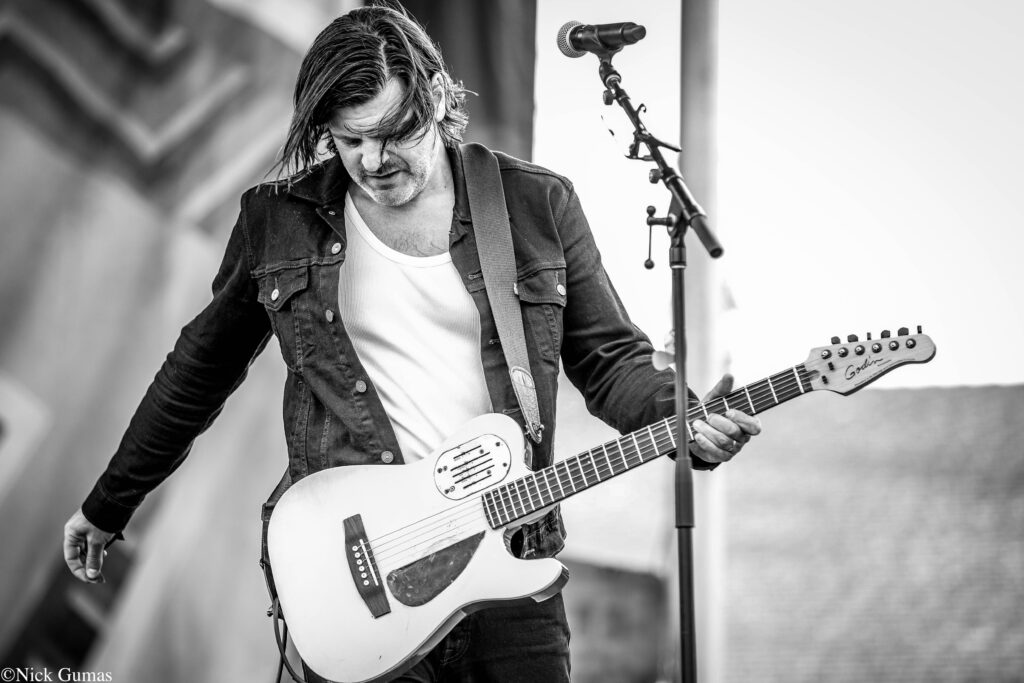
GW: So you hold the distinction of being one of the only bands to play both Cali Roots and Warped Tour. Two very different worlds that your music has found a home in. What is it about your work that you believe says so much to such a diverse group of people and do you feel like genres and labels are becoming increasingly irrelevant and restrictive as a way to see your own work?
JM: First, when it comes to the label thing, I think that it's more what the vibe of something is. If you go to Warped Tour, what is the vibe and the emotion of what those kids are feeling? Some of them are very young, but generally speaking, its unrest, its agitation, the music is about being agitated, and kind of being on the edge, and here at Cali Roots, I’d say it's a lot more about feeling mellow. I think the reason that we fit into both of those camps is the same reason why I would listen to The Clash, and especially their later work, I would consider them more of a punk-ethic world group doing world music. It was really beautiful, and to my ear, exotic stuff that I didn’t know what it was, but it brought this real world edge to it lyrically with Joe Strummer, and I love that. But I feel that way in my earliest memories with my parents playing me Paul Simon’s Graceland and hearing something different where you’re bringing two things together. And I think to your initial question, that is what we’re trying to do with this band. Lyrically, we are sort of agitating, not in an overtly political way, but maybe in a human way, so there’s that energy. I love Joe Strummer, and I hope we bring that energy to whatever we do with the music, but really, ultimately it's a groove-oriented thing. What’s nice for us, though, being here, is usually we are in the category of “You’re the token band that’s bringing some sort of groove element to a punk or rock festival” and so we have to really struggle and go “Do we take out a lot of the reggae stuff that we have?” Where here, it's the opposite, where we can include all the reggae stuff that we do and people really understand where we’re coming from. It’s been really nice.
Eon Sinclair: I also think part of the reason why we’ve kind of been accepted by both genres is because a lot of people don’t really think about the connection between punk and reggae. They’re pretty closely connected, and they have been since the 70s. I think we do a good job of expressing the feeling of that era and people can relate to that, and it's been really nice.

GW: Jay, you’ve seen success in so many creative avenues other than music. You designed many of the band’s album covers, your novella Skulls and Bones has been making people think for over a decade. How do you feel being a multidisciplinary artist has informed your music and is it important for artists to extend themselves past just one concentration of creativity?
JM: Honestly, I don’t know the answer to that. I know for me it is. I don’t think that everyone needs to be doing everything, in fact, I would say that sometimes I look at artists who do the same thing really well, and they’re very good at doing the same thing really well, and people get it and it just keeps getting bigger and bigger because if you want people to feel this emotion, you go to that person. They are the person that does that really well. And you know those bands where you might say that their songs sound really similar, but it's kind of genius because they are so good at making that emotion project through their music. That’s something that I’ve come to think about later in life, because our music is so varied. But for me, it is. I originally went to art school. That's what I was going to do, I love painting. Music was just something I always thought I would do on the side, but I think all of them fit together for me. I think you want to create a world through your work. I know the bands that I’ve loved, it was like a world where you would step inside, and there was a visual component, and you felt just the music, and I think for Bedouin that’s really important, and for me it is as well, to give people something bigger to step inside.
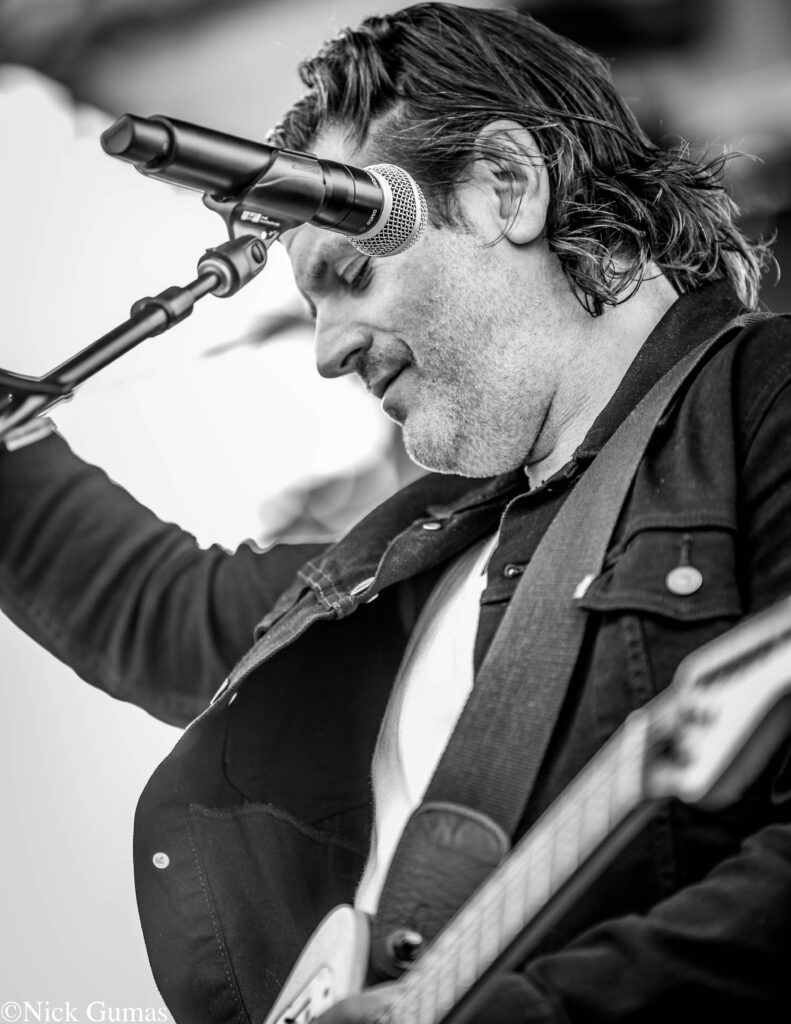
GW: Do you think being a well rounded individual outside of your concentration is a prerequisite for being a good artist?
JM: No, I would consider most artists I know to be non-rounded. You don’t have to be a good person if that’s what you mean. And I think we’re having a reckoning with that, but I don’t think that matters. Do I care what Picasso was like? We can have that debate, but that’s not a debate about art. Here’s what I will say. You can be a good artist, and it depends on what you’re messing with. You can be a good artist and be using drugs and alcohol, and its going to work for you for a while, and it's going to carry you for a bit, but if you don’t make a choice at some point in your life to stop using that as fossil fuel and use a bigger spiritual calling for your music that actually brings you to your realizations, no, I don’t think you’ll be a good artist.

GW: Aside from morality, what about well rounded in the sense of knowing about and experiencing more than your specific niche of the world.
JM: Well, to paraphrase Ernest Hemingway, he said you gotta write from your truth. Well, you could write what you know about a place you’ve never experienced, the setting could be on Mars, but you write what you know. I think that’s true because you can see right through authenticity when someone hasn’t experienced some sort of human engagement. So yes, you do have to go through some stuff. But at the same time, for example, a band that I was listening to, the lead singer of “Cigarettes After Sex” was talking about the fact that he knows love, and he wants to create that emotion every time with every song, and so it can be really small, it doesn’t have to be really big, you don’t have to be a war journalist to create and have a variety of experience, but what I think you do need to do is to be truthful and to write from what you know.

GW: You’ve both spent more of your lives working as professional creatives than not, and seen every end of this field. How does being in an infrastructure motivated by a sense of ambition affect your sense of self and what has it taught you?
JM: I think that you can carry that to a lot of places, but yes, music is filled with people who are extremely ambitious and good behavior doesn’t always bring you success, and people who are badly behaved actually sometimes get ahead. So you do have to reconcile, I think when you figure out this isn’t a meritocracy, and that’s a really deep question about what this world is about, and you have to find your validation within. Also, as an artist, you are probably prone to needing validation outside of yourself because you create something and then go “What do you think?” And it's a really strange balance between those two things, and I think the powerful moment comes when you go “It doesn’t matter.” For me, there were a few moments where that happened. Choosing a different path in life and realizing it was all about my wife and my son, those are the two people who I really care what they think, and that just gives you this ultimate freedom to create without fear of rejection at all.
ES: I think for me, and for both of us, the ambition has always been to just make something that we really love, and something that we think is cool. It is a very competitive space, but we haven’t really looked at it that way. It’s always been about trying to make something that we thought was good, but the fact that all these people have supported us this far to have a career has been a real blessing. We do good work, of course, and Jay is a real driving force for all of it. It’s been trying to fill a hole in the world that we knew we could fill. We were hearing these things in our heads, but we weren’t finding it anywhere else. So we’re trying to just put it out there for people to maybe join us in that journey has been a real blessing.

GW: You’ve been championing this project for decades and traveled around the world many times in pursuit of it. How do you balance time on the road with making sure your family back home gets the attention you want to give them?
ES: We’re in different family situations now, I don’t have kids or anything like that, but I’m a really big family person and I have a big family. I think, quite honestly, I don’t think they have a choice. My family has always been pretty grounded overall, and the traveling can be really tough, especially in the early days of our career. We played a lot of shows, a lot of bands have not played as much as we have, there was one year we played over 250 shows. So we played a lot, and that means a lot of time away from the people you really care about and the home that you have. But that was when we were also realizing that we have an opportunity to share our art in the biggest way possible, and when you get that opportunity, you want to take it. Luckily we got to the point where we got a little more control over when and how we do things, and with that in mind now, we are definitely very conscious about balancing how much we play, how much time we spend at home, where we go, how far we go, how long we go for, and its kind of one of those things you kind of earn over time. Especially compared to a lot of other artists that we meet, we’ve always been very balanced in terms of home life and the road, I think.
JM: Well, I don’t know if anyone can. My wife is also a musician, she doesn’t tour anymore, but maybe will once our son is a little bit older, but she's very understanding of this being what I do, and she’s happy to not have to do it by herself. The nice part is, when you’re home you’re home. When I’m home, I’m home, and I know Dads who will be at work until 7:00, and I can be at home, take Finn to school, and pick him up, and do all the stuff on the weekend, but the trade off is when I’m gone, I’m gone. But luckily, since Covid, nobody's doing these big ass dead head tours where we’re out for like four or five months. We do fly-ins, two weeks, one week, its sort of like the landscape has changed, so we’re able to sort of pick and choose, and say after 10 days, I need to be able to get home for a couple days.
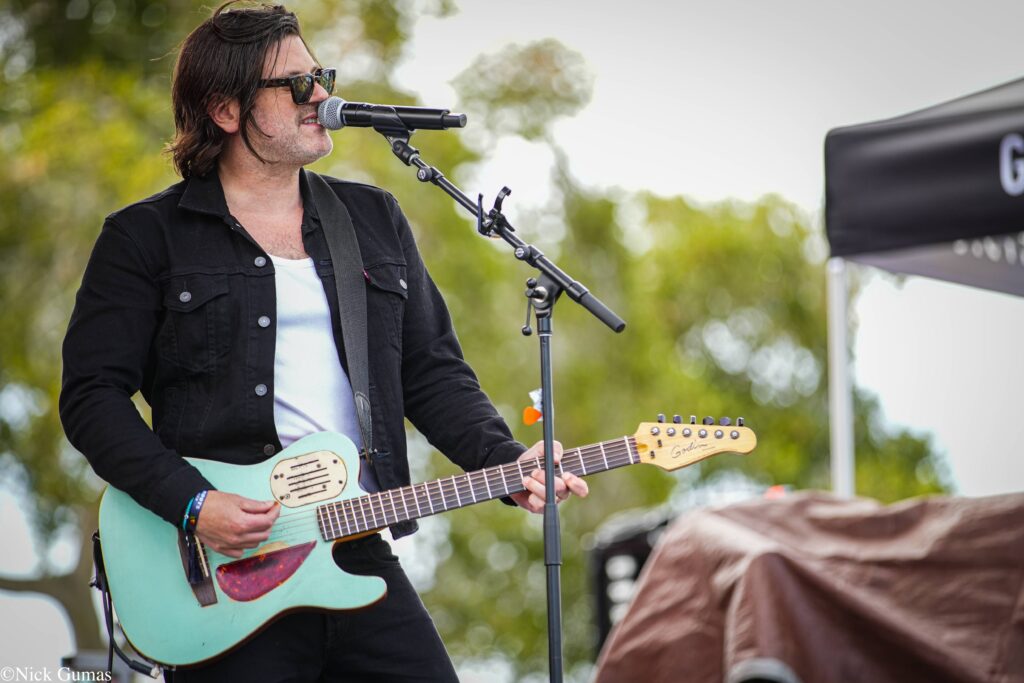
GW: We’re all eager to hear more from you since the hiatus. What do you have coming out soon?
JM: We have a single with Collie Buddz coming out on May 27th called Bang-A-Lang.
ES: We’ve known him for a long time, it’s been exciting to do that.
JM: But that’s been exciting.
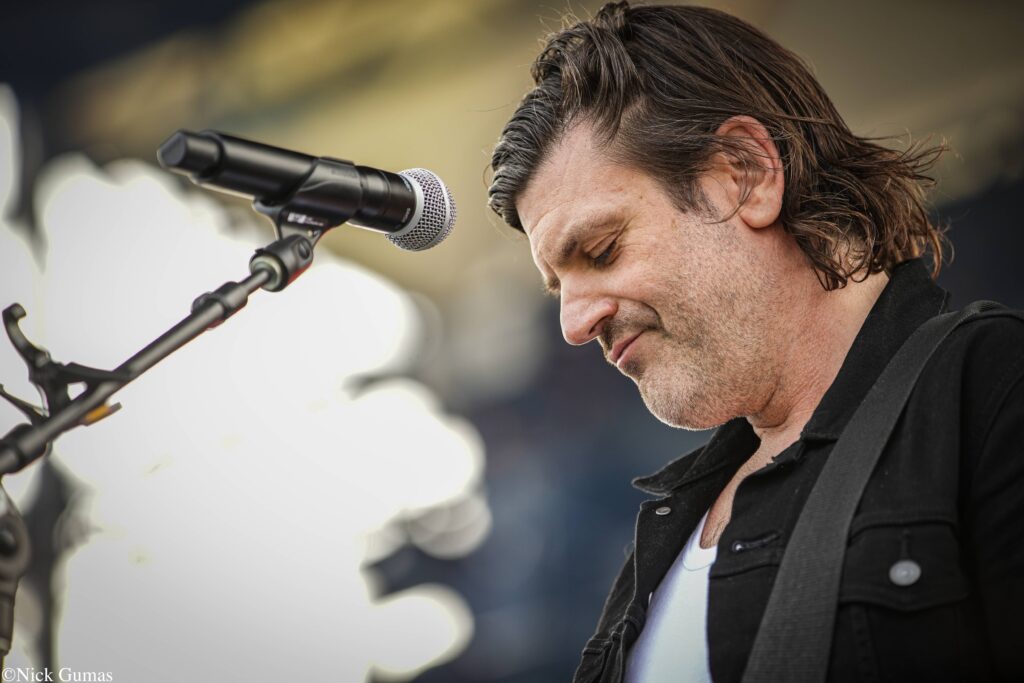
GW: You’ve been interviewed probably over 1,000 times, but what is one question you have never gotten in an interview?
JM: Oh my God. What would be your last meal?
ES: Like what did I just eat?
JM: No, your prisoner’s last meal. Your choice. Like, you’re going to die.
ES: Oh, it would be a crazy meal. I would probably have some chicken in the oven, I love chicken in the oven, probably some fried rice, curried chicken, too, some roti, and maybe some plantain on the side.
JM: Final meal, having just gone to Greece, I think I would start off with the fresh goat milk cheese they have there, I guess like a burrata and tomato from Crete with some olive oil and bread. Then I would definitely have a ribeye, Chicago black but rare, it has to be Chicago blackened, garlic butter, don’t need anything else. Then I would have a sticky toffee pudding.