Article Contributed by Norm Kittleson
Published on 2026-10-19
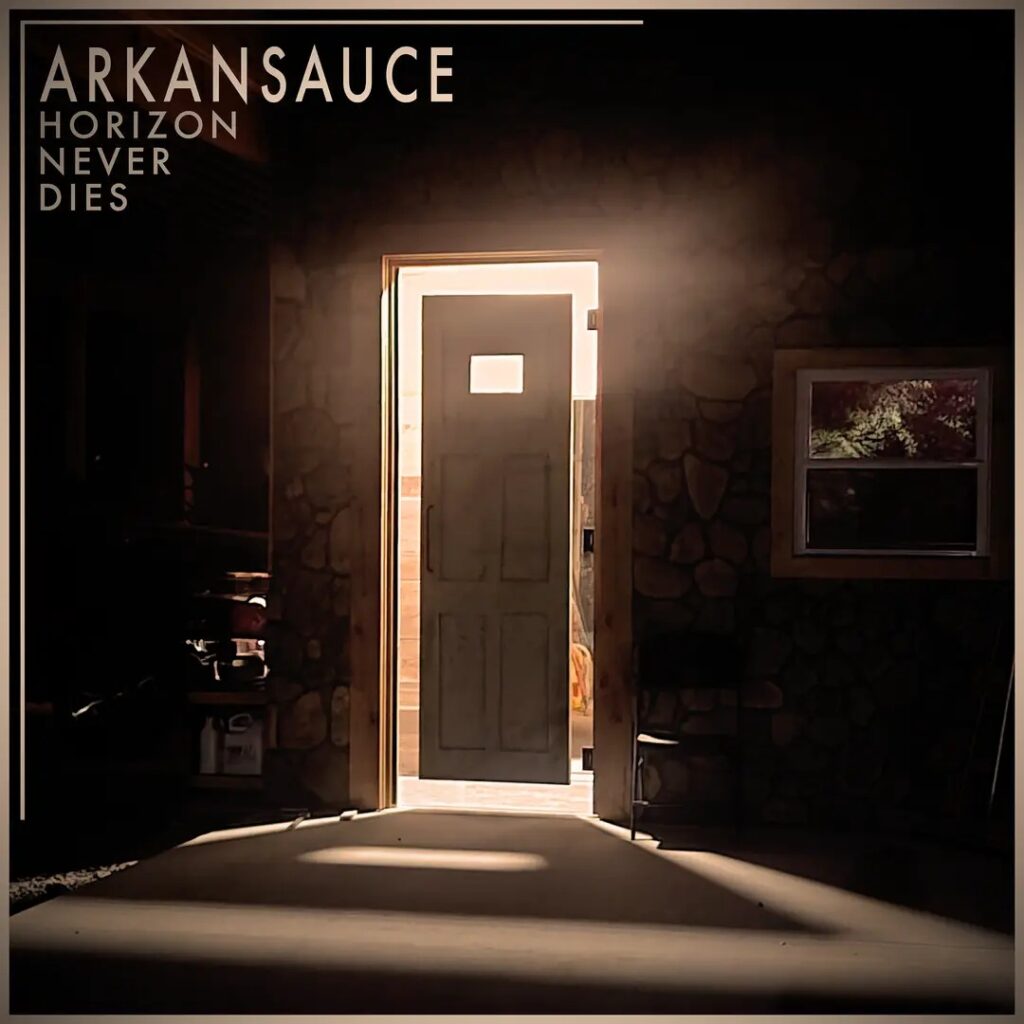
On Horizon Never Dies, the sixth album by the Fayetteville, Arkansas-based band Arkansauce, the ensemble expands its sound and explores new rhythms and instrumentation to create a recording that is distinct from its previous efforts. The addition of drums, marimba, other percussion, accordion, and dobro creates a broader palette that produces some compelling moments, particularly when the arrangements support a strong hook or an engaging story.
Arkansauce’s core lineup consists of mandolinist Ethan Bush, guitarist Zac Archuleta, banjoist Adams Collins and bassist Tom Andersen. The band formed in 2013 and cut its teeth playing bars around Fayetteville. Its first five albums were recorded close to home, and for this album, the group headed to Southern Ground Studio in Nashville to collaborate with producer Dan Davis and additional musicians who helped expand the album's sound.
The best example of the unexpected sounds on Horizon Never Dies is “Escape from Morgan Mountain.” When was the last time you heard marimba on a bluegrass album? Adams Collins, who plays marimba in addition to banjo, says the instrumental was inspired by playing banjo along with Afro-beat records. Its syncopated rhythms give the piece a pronounced Afro-beat feel. The arrangement begins with mandolin chop, marimba, dobro and bass. Fiddle and drums enter after several bars, followed by the banjo. This is the most unusual and interesting composition on the album.
The title track, “Horizon Never Dies,” is a song about self-discovery, taking chances and living in the moment. Its lyrics were inspired by notes written by a friend of the band while hiking the Pacific Crest Trail. “Cut ties, cut loose and improvise” captures both the spirit of that journey and Arkansauce’s approach to making this album: traveling to Nashville, enlisting additional musicians and going places musically they had not gone before. Built on a straightforward folk-song structure, the track features lively interplay between banjo and dobro. Its forward motion and open-road perspective make it a natural road-trip song. The image of a horizon that never dies turns movement into a philosophy: take life day by day and keep going, because there is always more ground ahead.
“Arch Rival” also features marimba, which complements the song’s Bossa nova-like sway and adds another layer to the instrumental interplay. The background vocals sound like an echo from the back of the mind. The song reflects on how striving can poison us, and how changing our perspective can lead to greater happiness. The lyrics evolve from “Trying so hard to win the race when the only opponent is you” early in the song to “Know that you've already won the race and the only opponent is you.”

The opening track, “Soda Pop,” begins with a catchy instrumental hook and quickly settles into a funky groove beneath a story of romantic uncertainty. “I’ve got 10 reasons to follow, but only nine to leave” represents a cost-benefit analysis of a relationship, and “You’re stuck between a rock and a hard place, a lover and a friend” shows the difficulty of defining a relationship. The banjo has reverb on it that makes it sound like it's playing in a hallway next to the studio, but it works because it adds a distinctive depth to the mix.
The most traditional-sounding bluegrass song on the album, “Flying Goose Feathers in Three Quarter Time,” is an old-school bluegrass waltz number about a couple attending a street fair where Del McCoury is playing. A misunderstanding between the lovers resolves happily, underscored by a key change during the final verse and chorus.
“Katydid” is an uptempo, traditionally styled bluegrass song built around clever wordplay involving a femme fatale named Katy and the katydid insect. “Bad Italian” is a travelogue love song about a couple wandering through Italy and mangling the language. The accordion accompaniment on the tune adds an “Italian” touch.
“Weather” is an exploration of a troubled relationship. It starts off uptempo and moves along nicely, but the second half takes a sharp rhythmic turn, with the bass becoming heavy and ponderous. The transition feels imposed rather than developed, diminishing the momentum established in the song’s first half.
The recording is clean, with a stereo mix that separates the instruments nicely. Notably, Zac Archuleta’s six-string acoustic guitar occupies a largely supporting rhythmic position, emerging for occasional fills and a solo on “Bad Italian.” Compared with the band’s earlier albums, where the guitar plays a more prominent role, it sits noticeably farther back in both the arrangements and the mix. The extra instrumentation and explorations of different musical styles on Horizon Never Dies set it apart from Arkansauce’s 2023 release, OK to Wonder, and provide the foundation for the strongest material on this recording.
Horizon Never Dies shows Arkansauce continuing to evolve beyond the conventional boundaries of bluegrass without abandoning the instrumental foundation that established its identity. The album is strongest when its expanded palette reinforces a memorable melody, groove or story, and its best moments suggest that the band’s willingness to improvise extends well beyond the title track’s lyrics.