Article Contributed by Gratefulweb
Published on 2026-10-25
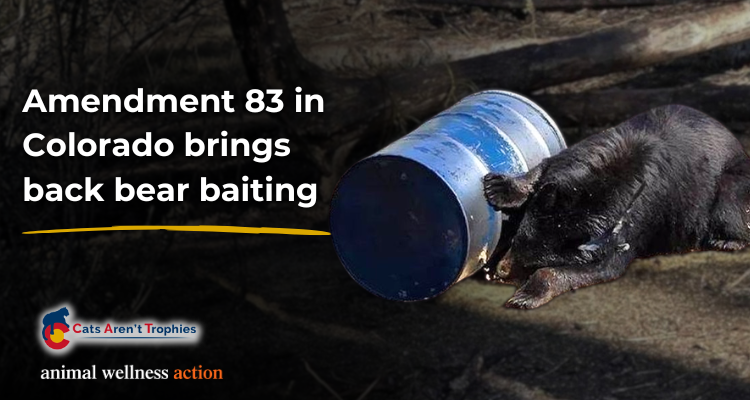
Colorado’s wildlife deserves protection, and the people who share this state deserve a meaningful voice in its future. Grateful Web strongly opposes Amendment 83 and supports the efforts of Animal Wellness Action, the Center for a Humane Economy and the Vote No on 83 campaign to defend humane wildlife protections.
Marketed as a constitutional right to hunt and fish, Amendment 83 carries consequences that deserve more scrutiny than its reassuring title suggests. It would protect hunting and fishing through “traditional methods” and establish those activities as the preferred means of managing fish and wildlife populations. For us, elevating one approach to wildlife management in the state constitution is the wrong direction.
Hunting and fishing are already legal in Colorado. A no vote preserves those activities under existing law. Voters do not need to approve this amendment to keep fishing a mountain stream or participating in a regulated hunting season.
The amendment would retain state regulatory authority for scientific wildlife management, public safety and future hunting and fishing opportunities. Supporters argue that constitutional protection would safeguard Colorado’s outdoor heritage against future restrictions. We believe the state can respect that heritage while preserving its ability to strengthen animal protections and respond to changing conditions.
The uncertainty surrounding “traditional methods” is a serious concern. Opponents warn that the undefined phrase could become a vehicle for challenging restrictions on practices such as bear baiting and certain traps. Supporters dispute that interpretation and maintain that existing prohibitions would remain intact.
Precision matters here: passage would not automatically repeal Colorado’s bear-hunting restrictions or immediately bring back prohibited traps. The danger is the legal opening that opponents identify—one that could put established safeguards through years of litigation. Colorado’s official Blue Book acknowledges that the amendment could affect future wildlife policy depending on how courts interpret it.
We see no compelling reason to put those protections at risk.
Colorado voters made an important decision in 1992, when approximately 70 percent supported prohibiting spring bear hunting, bear baiting and hunting bears with hounds. In 1996, voters approved constitutional restrictions on leghold traps, certain body-gripping traps, poisons and snares, with specified exceptions. Those decisions deserve respect.
On October 22, 21 bear biologists, wildlife scientists and conservation professionals released an open letter to Colorado voters warning about Amendment 83. Their concerns include potential challenges to existing protections, the welfare of dependent cubs and the consequences of conditioning bears to human-supplied food.
The signatories include former U.S. Fish and Wildlife Service Director Dan Ashe, University of Colorado Boulder conservation biologist Daniel Doak and former federal grizzly bear recovery coordinator Christopher Servheen. Their warning deserves attention.
Bear baiting also raises a straightforward ethical question: should people deliberately attract wild bears with food so they can shoot them? Our answer is no.
Colorado Parks and Wildlife urges residents and visitors to keep food and garbage away from bears. The agency explains that easy access to human food can overcome a bear’s natural wariness of people, creating dangerous situations for animals and communities alike. Deliberately encouraging that association is difficult to reconcile with the responsibility we ask everyone else to practice.
At Grateful Web, our connection to Colorado extends beyond its concert halls and festival grounds. It includes the forests, rivers, foothills and wild places that make living here meaningful. Caring for those places means caring about the animals that inhabit them—and recognizing that their value extends beyond what people can harvest.
Wildlife policy should leave room for habitat protection, coexistence, public safety, animal welfare and sound science. Future generations should inherit the ability to improve those policies, rather than a constitutional preference that could make necessary changes harder.
We support Animal Wellness Action and the Center for a Humane Economy in bringing these concerns before voters. Readers can learn about their work, share campaign information, volunteer or explore ways to contribute through the organizations’ official websites.
Vote no on Amendment 83 on November 3. Protect Colorado’s wildlife and preserve the safeguards its voters have already fought to establish.
Learn more and get involved:
Vote No on 83
Animal Wellness Action
Center for a Humane Economy
Colorado’s Official Amendment 83 Blue Book Analysis