Article Contributed by Mike
Published on 2026-07-27
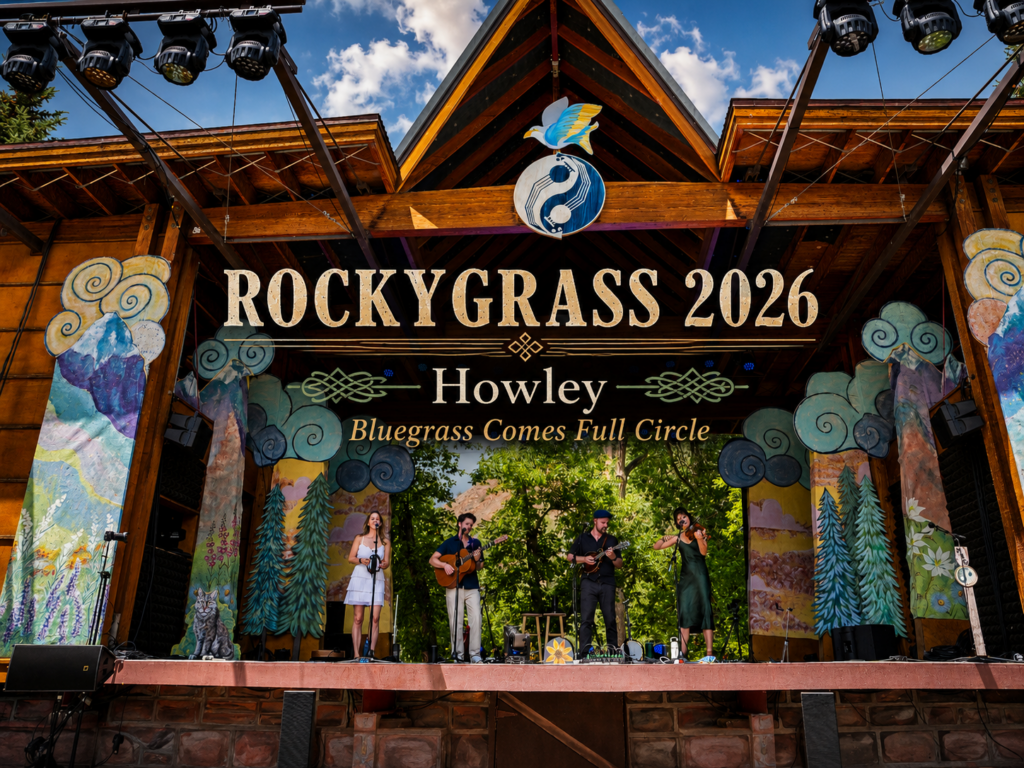
Bluegrass has always been traveling music. Its lineage reaches across the Atlantic to the fiddle tunes, ballads and dance music of Ireland and Scotland, sounds carried into Appalachia and reshaped over generations before Bill Monroe and others helped forge them into a distinctly American form.
On Sunday at RockyGrass, that long journey seemed to complete another circle.
Musicians from Ireland, Canada, Germany, Colorado and across the United States gathered beside the North St. Vrain River in Lyons, each bringing a different perspective to music whose roots have never truly recognized borders. The international character of the day was a reminder that bluegrass did not emerge in isolation. It was formed through migration, adaptation and the meeting of cultures, and it continues to evolve through that same exchange.
My own RockyGrass weekend was considerably shorter than usual. I am still recovering from a recent total hip replacement, so I limited myself to Sunday rather than attempting all three days. I arrived around 10:30 in the morning and stayed until shortly after 6 p.m., moving repeatedly between the main stage and Wildflower Pavilion and walking close to five miles in the process.
By the end, I was sore and limping badly enough that I had to make the painful decision to leave before Tim O’Brien and Punch Brothers closed the festival. Missing those two performances was certainly not how I wanted the day to end, but my newly replaced hip had made the decision for me.
Before reaching that point, however, I caught at least part of every other performance on both stages.
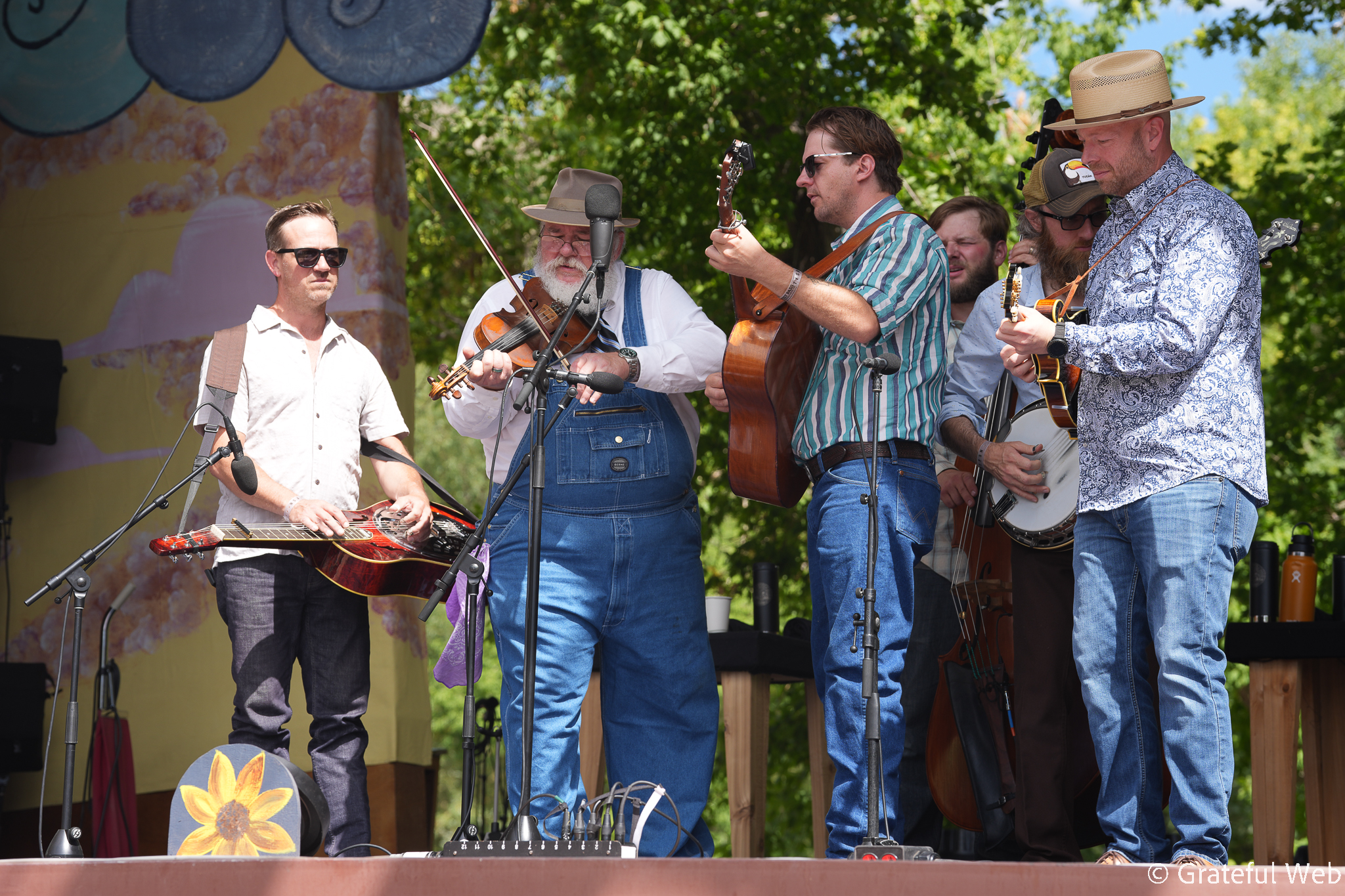
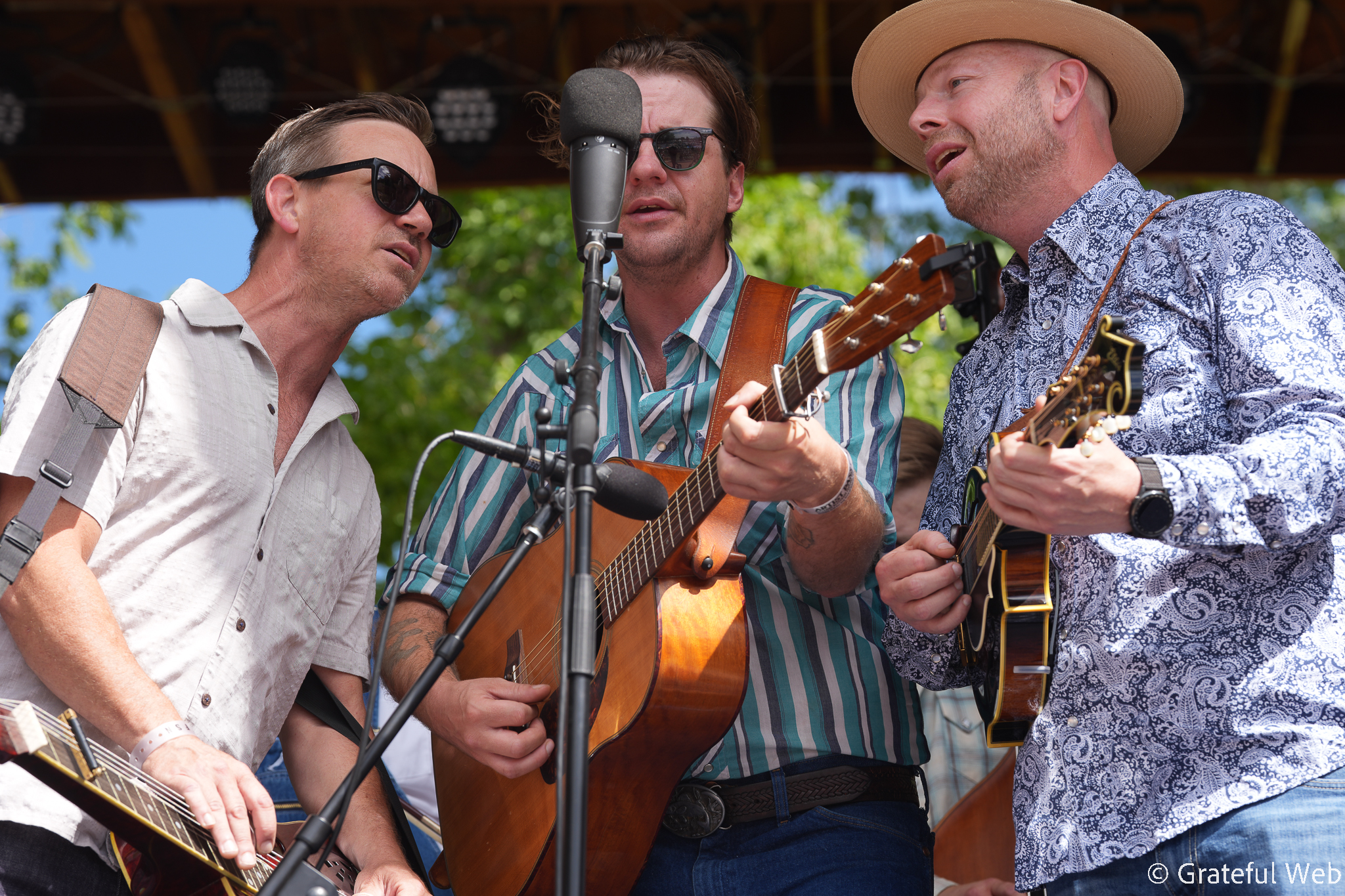
The Tom Knowlton Bluegrass Band opened the main stage with RockyGrass’ traditional Sunday morning gospel set. Knowlton grew up as the son of a pastor, and the band delivered familiar gospel songs through the harmonies and acoustic instrumentation of traditional bluegrass.
As an atheist, I may approach the lyrics differently than many listeners, but that has never prevented me from appreciating great gospel music. Gospel has long been woven into bluegrass, country, folk and American roots music. Jerry Garcia performed plenty of it himself, and some of the most moving songs in the American catalog emerged from that tradition.
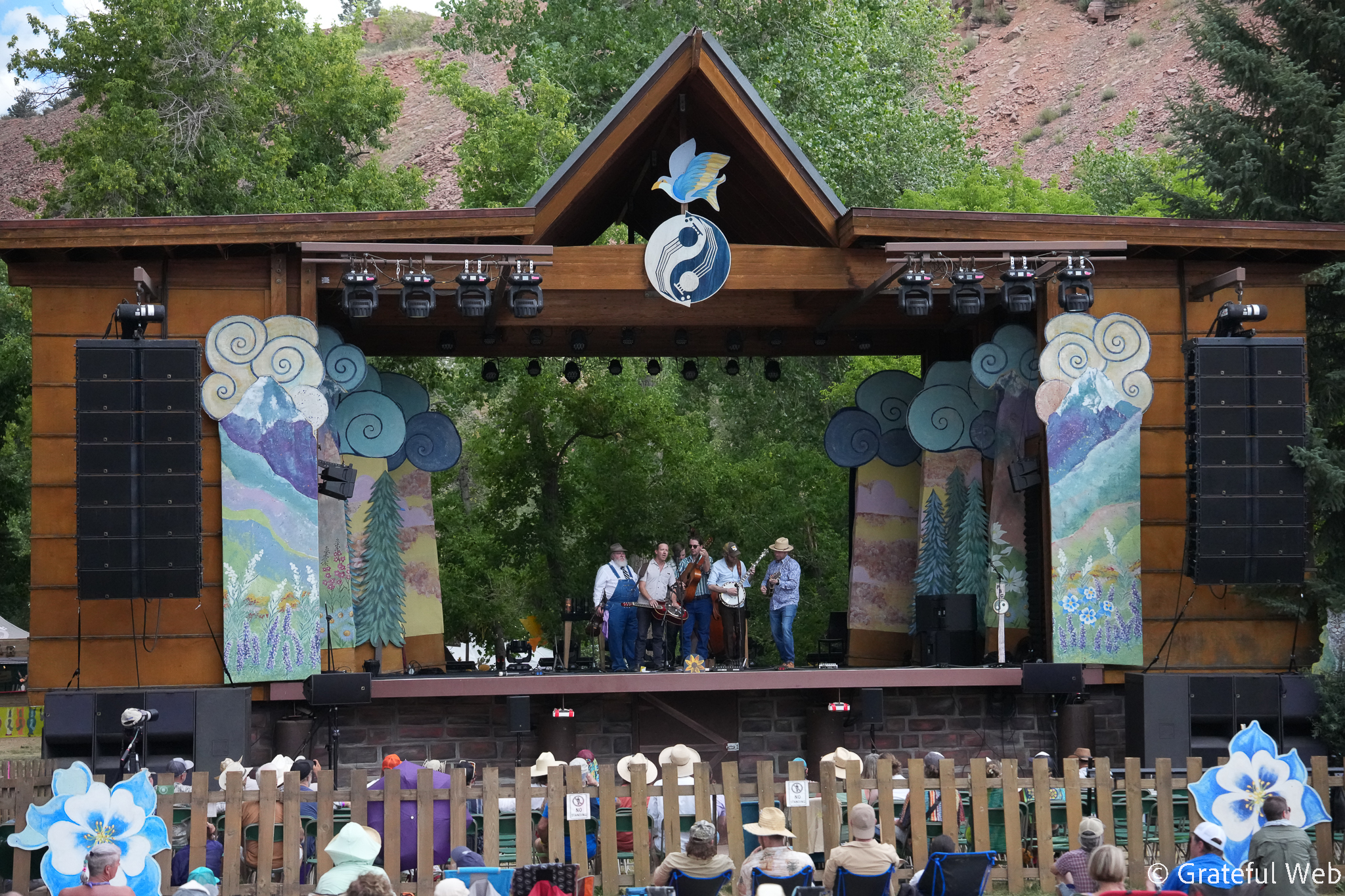
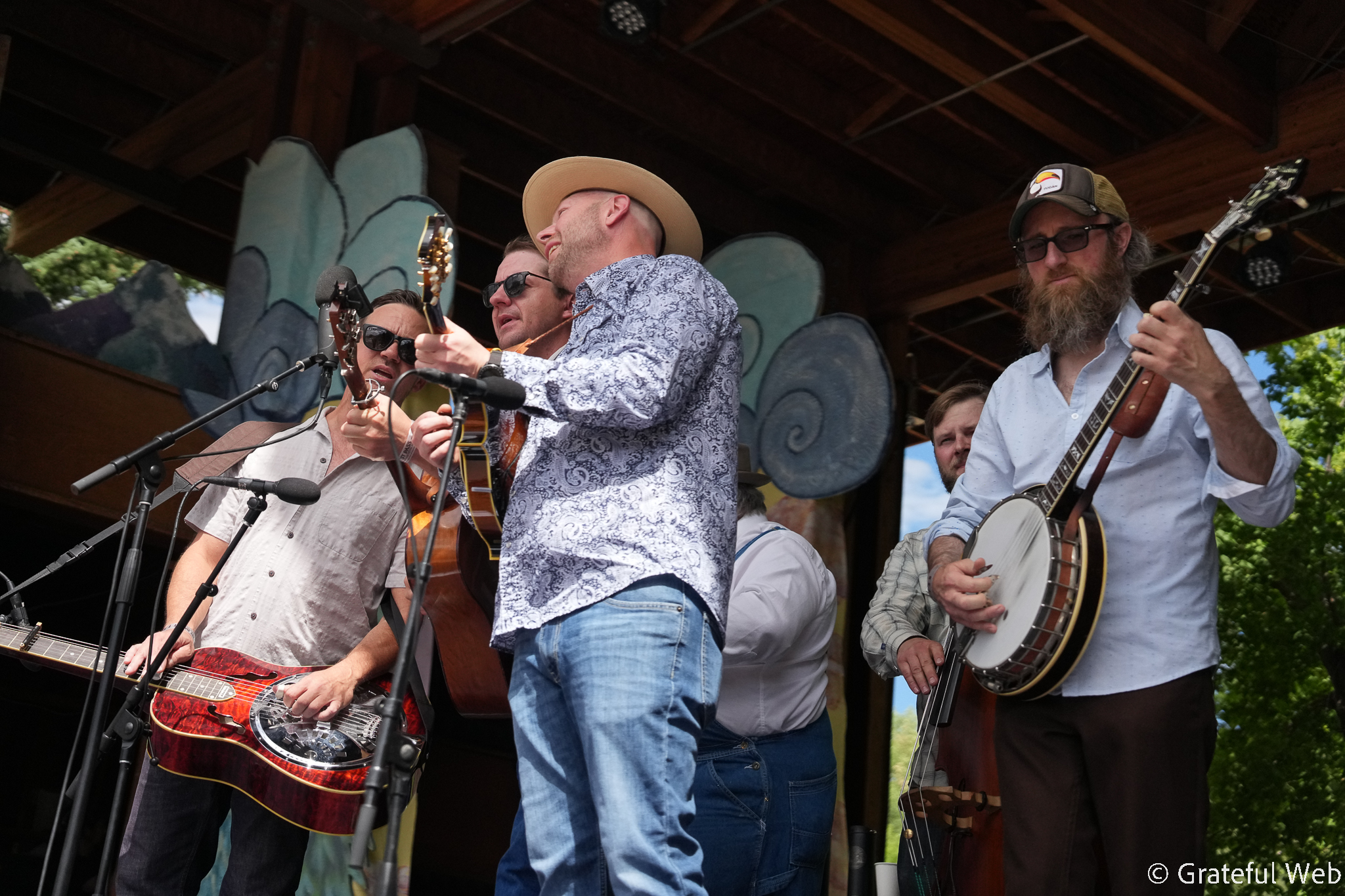
The Tom Knowlton Bluegrass Band gave the audience a warm and fitting start to the final day, honoring the Sunday morning custom without making the performance feel stiff or ceremonial.
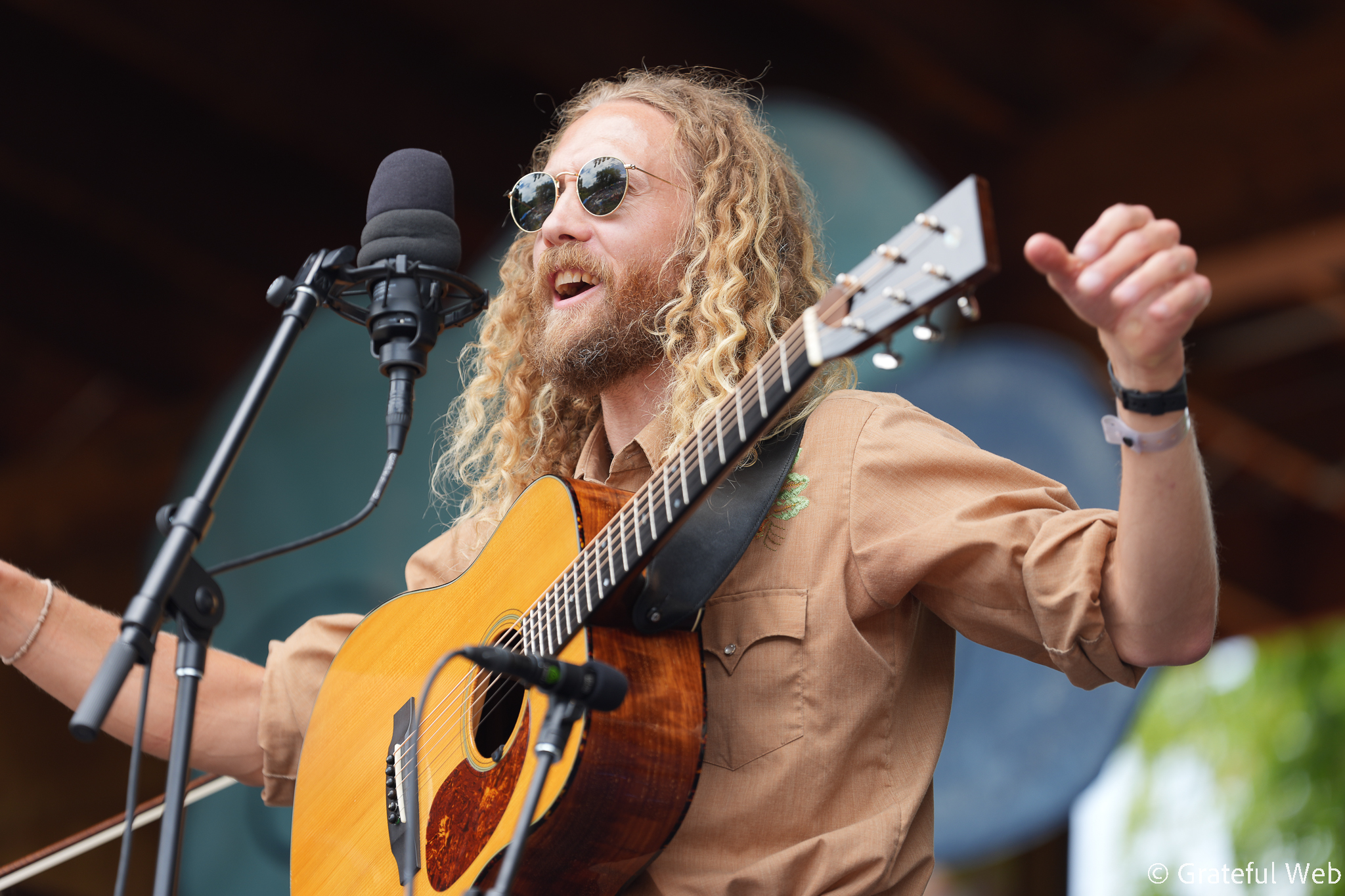
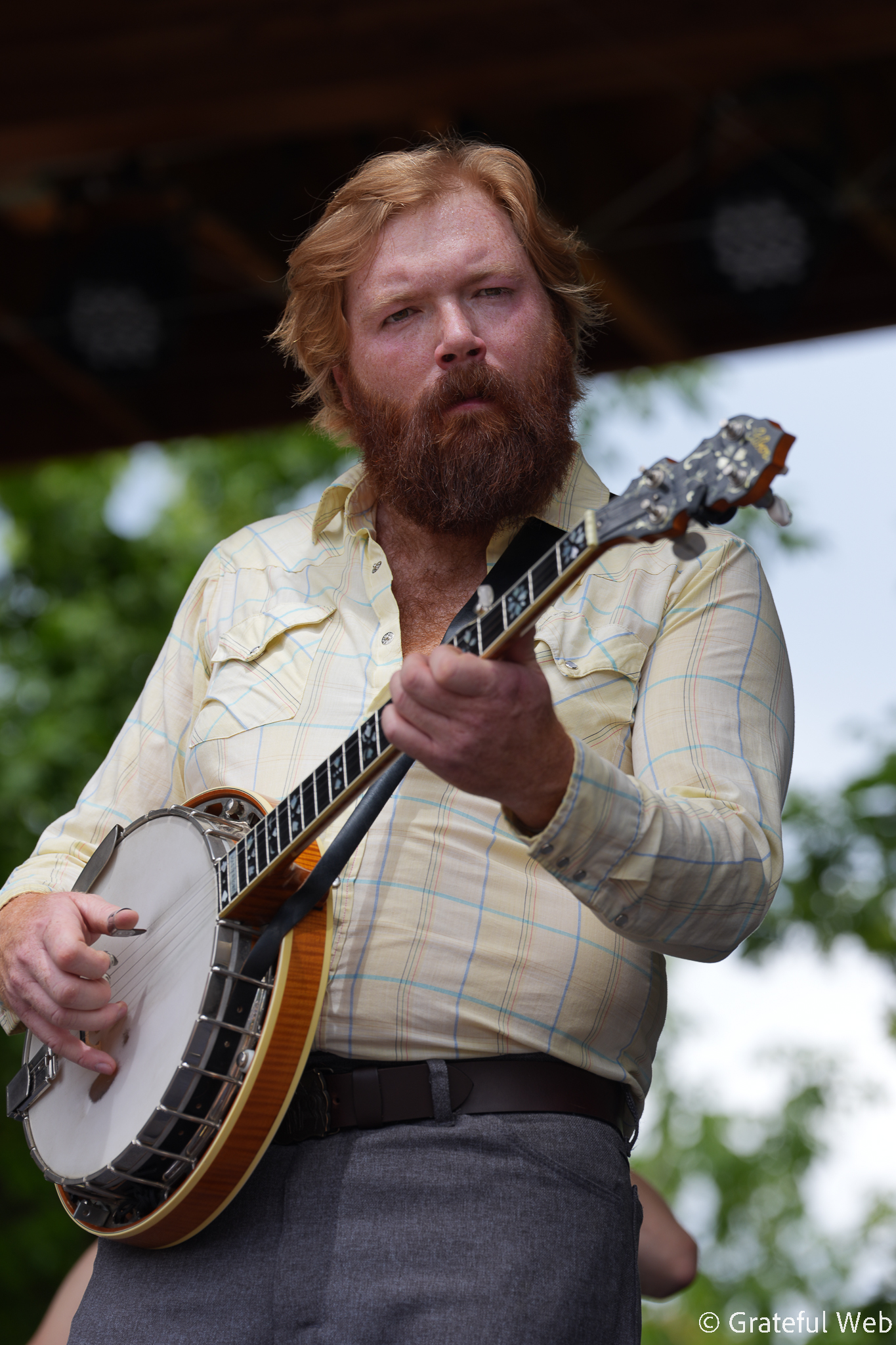
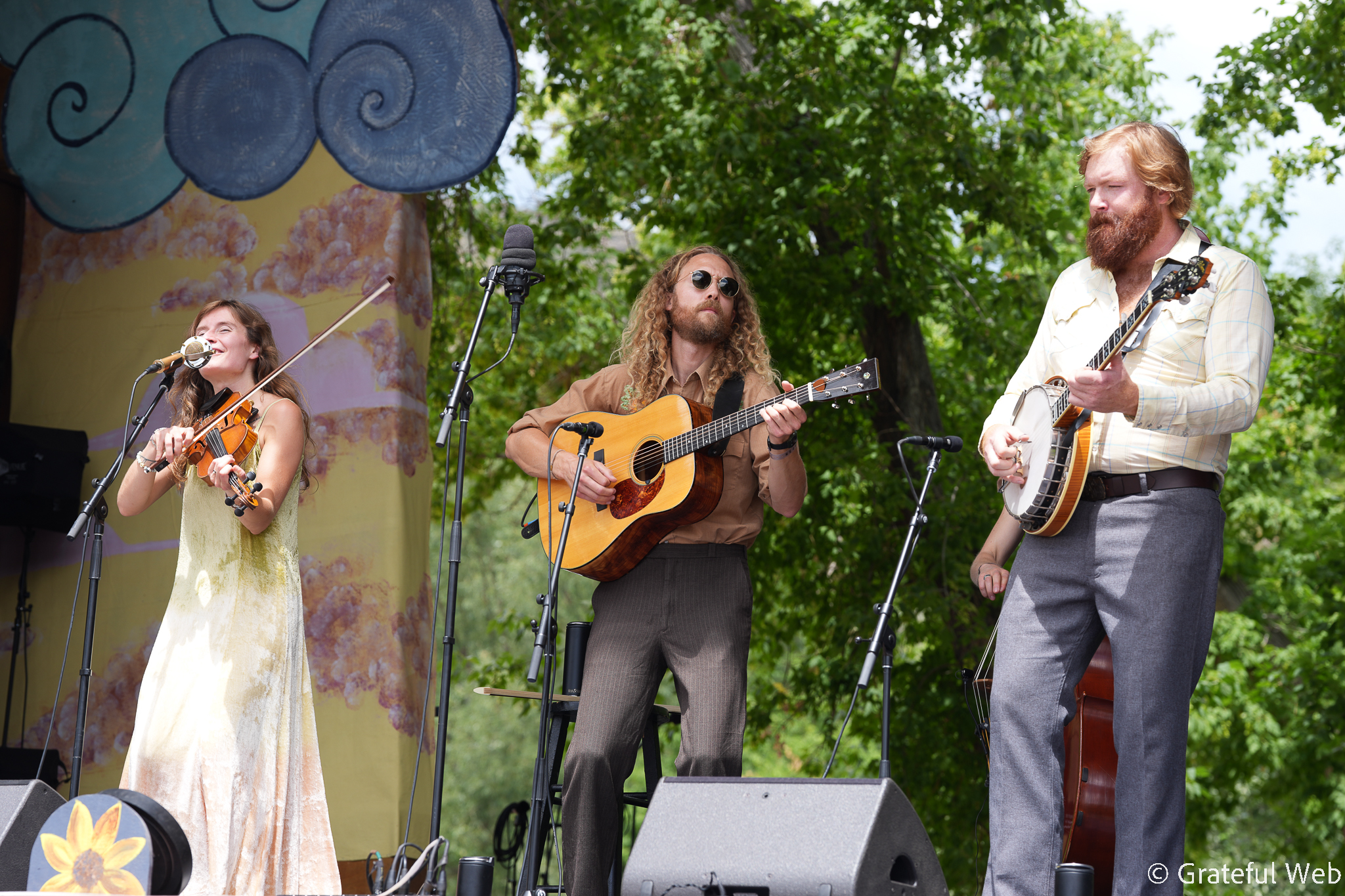
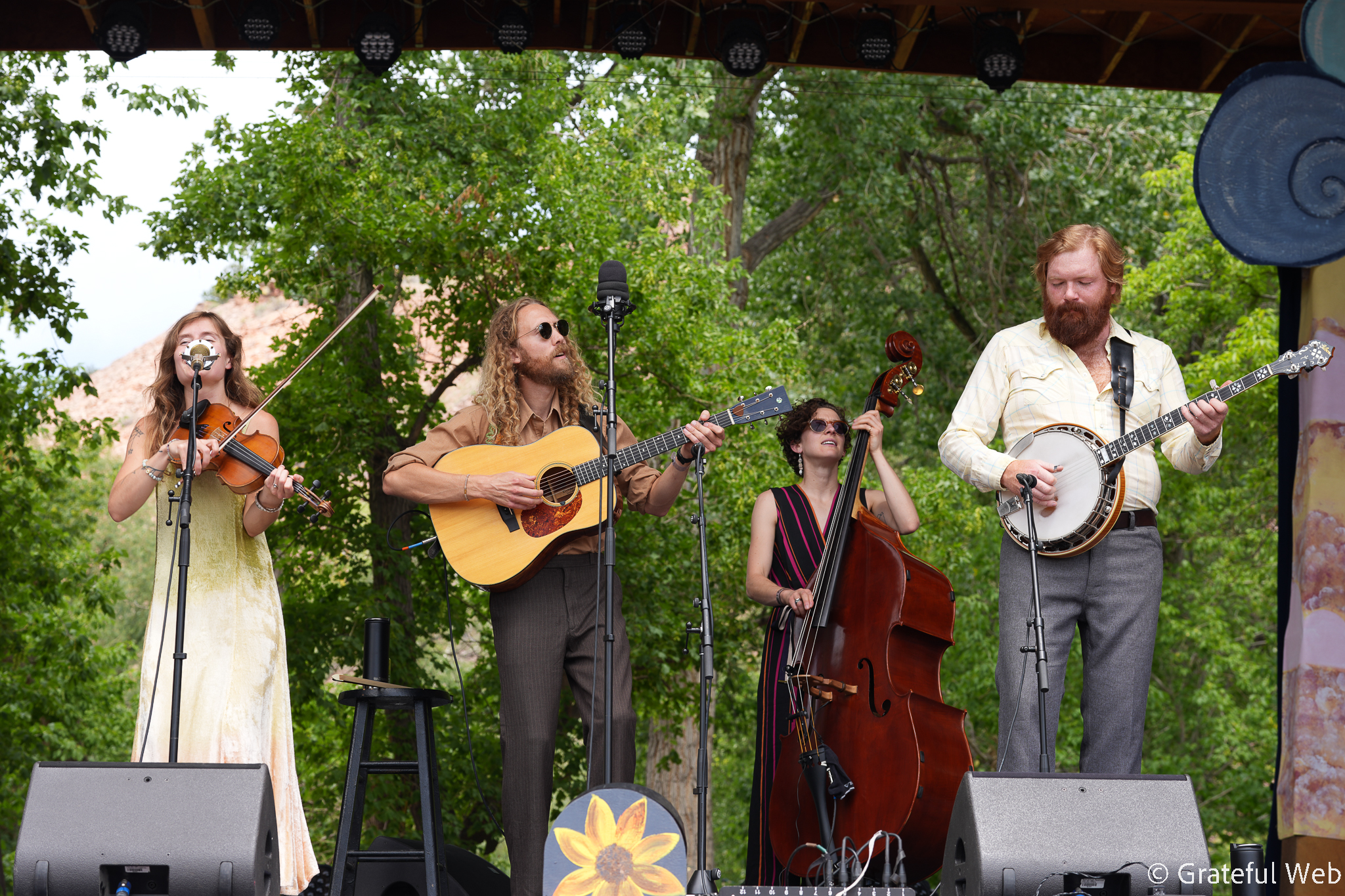
Under the Rocks followed from Kelowna, British Columbia, bringing the first pronounced international element to the main stage. The Canadian group mixed traditional bluegrass foundations with original material, vocal harmonies and a relaxed sense of humor.
One of the musicians recalled an earlier trip to Colorado with friends, when they slept tightly packed into a small Mazda in a Walmart parking lot. Space became so limited that they removed the spare tire to make room for themselves, only to leave Colorado without it.
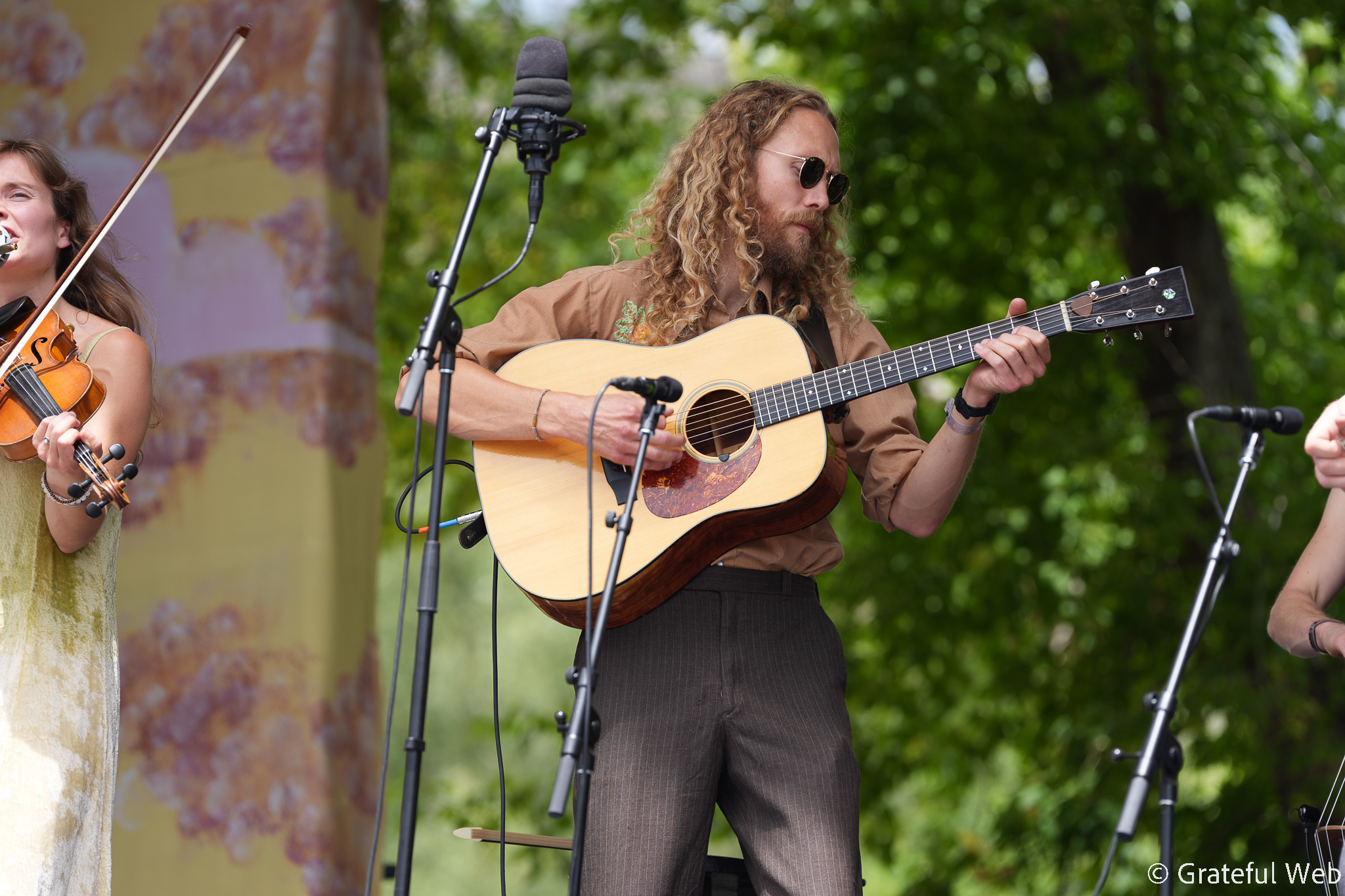
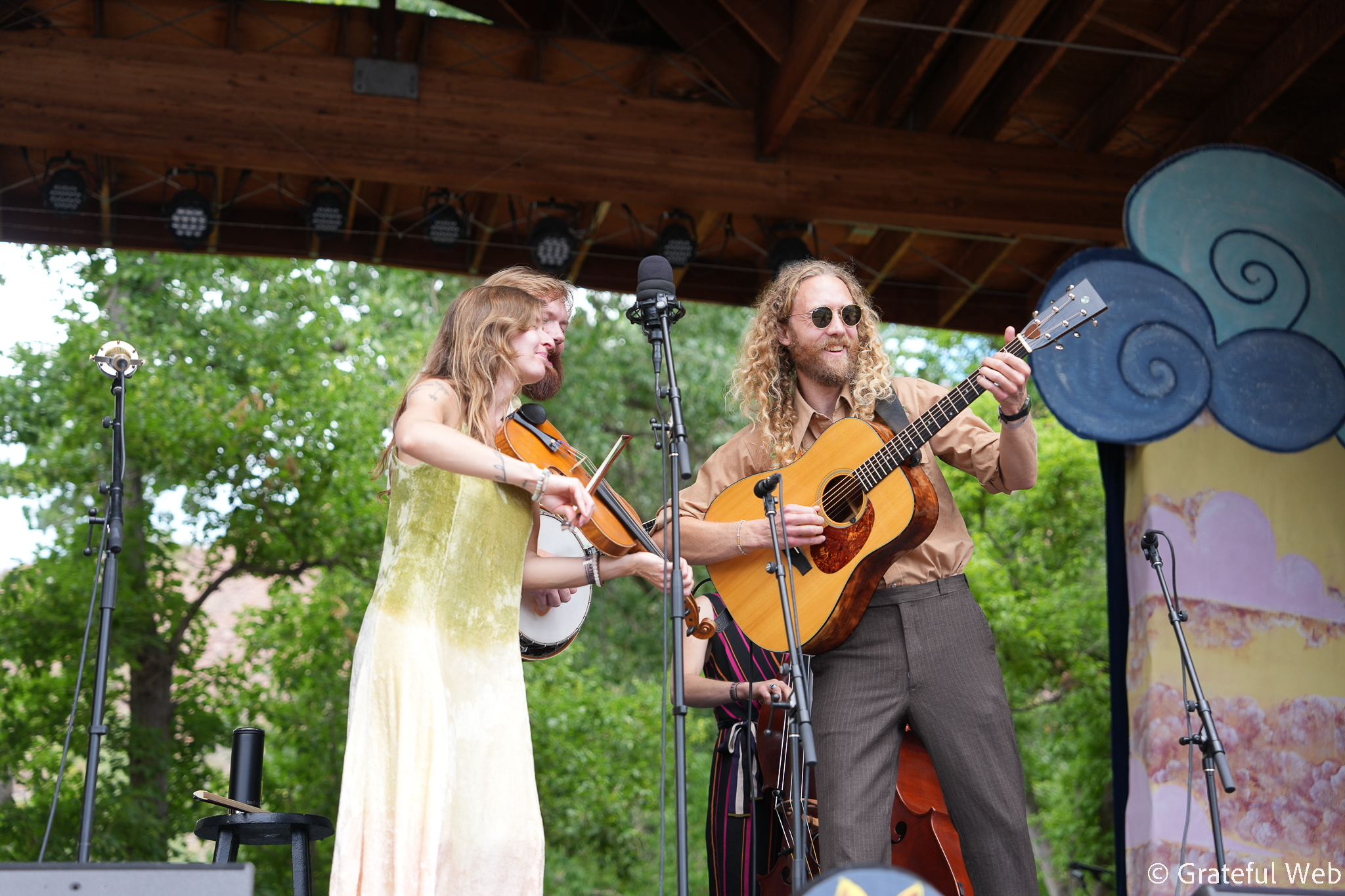
It was a funny story, but it also reflected the long drives, cramped vehicles and less-than-glamorous conditions that so often accompany musicians trying to bring their songs to new audiences.
The international thread grew even stronger with Howley, led by Irish brothers David and Martin Howley, founding members of We Banjo 3. Joined by Kiana June and Caitlin Leahy, the group carried forward the brothers’ blend of Irish traditional music, bluegrass and Americana—a combination We Banjo 3 famously described as “Celtgrass.”
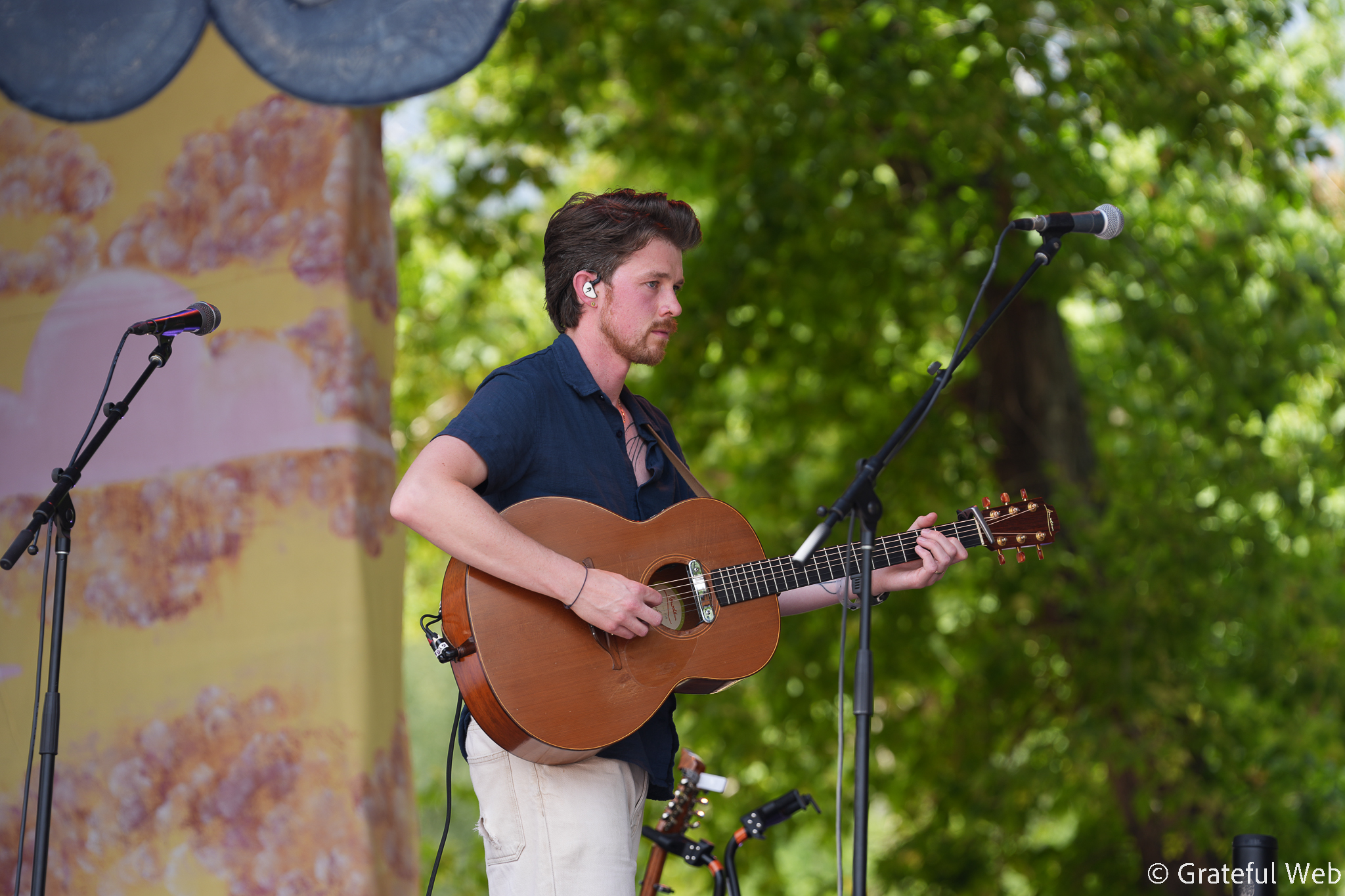
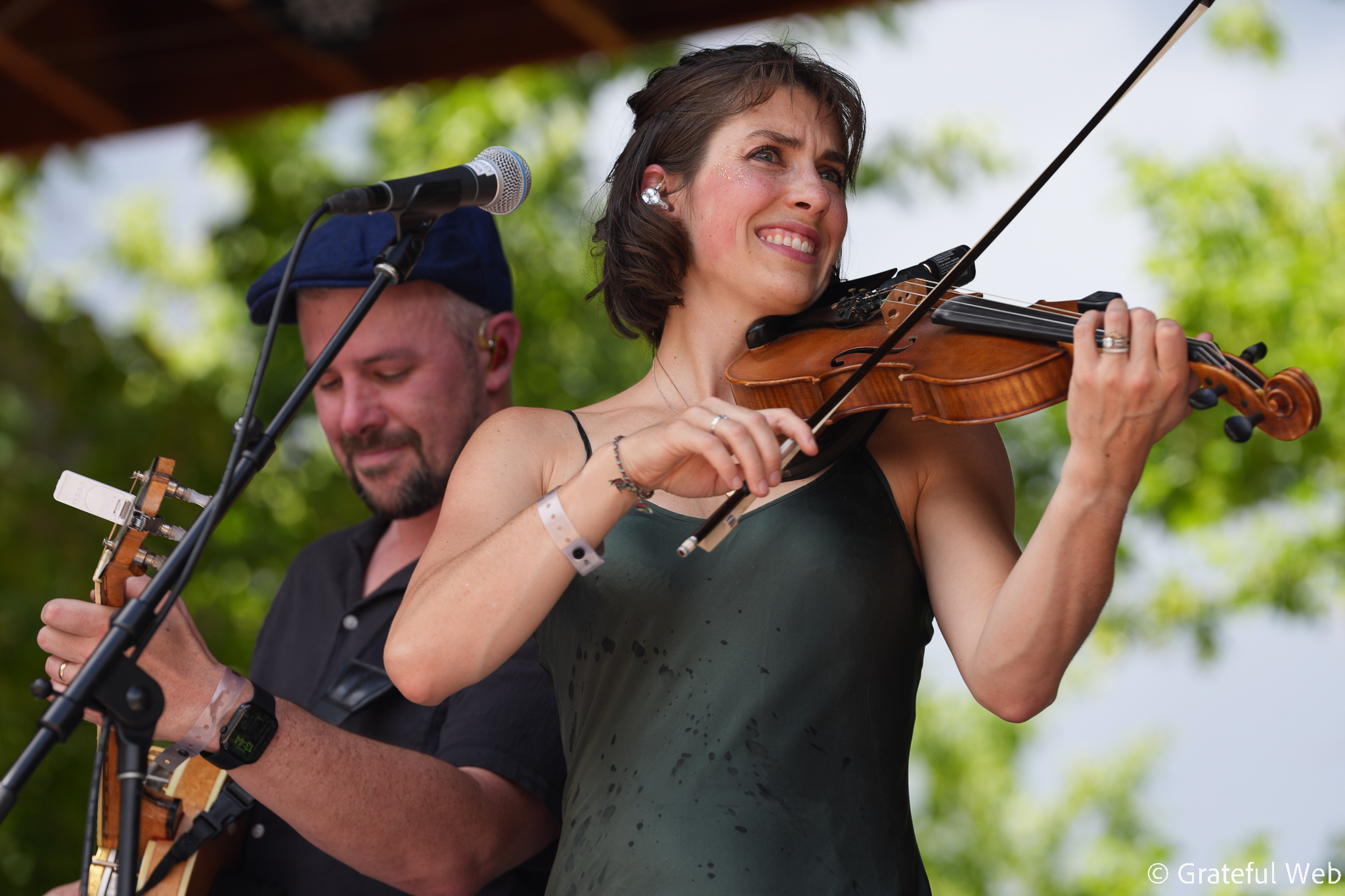
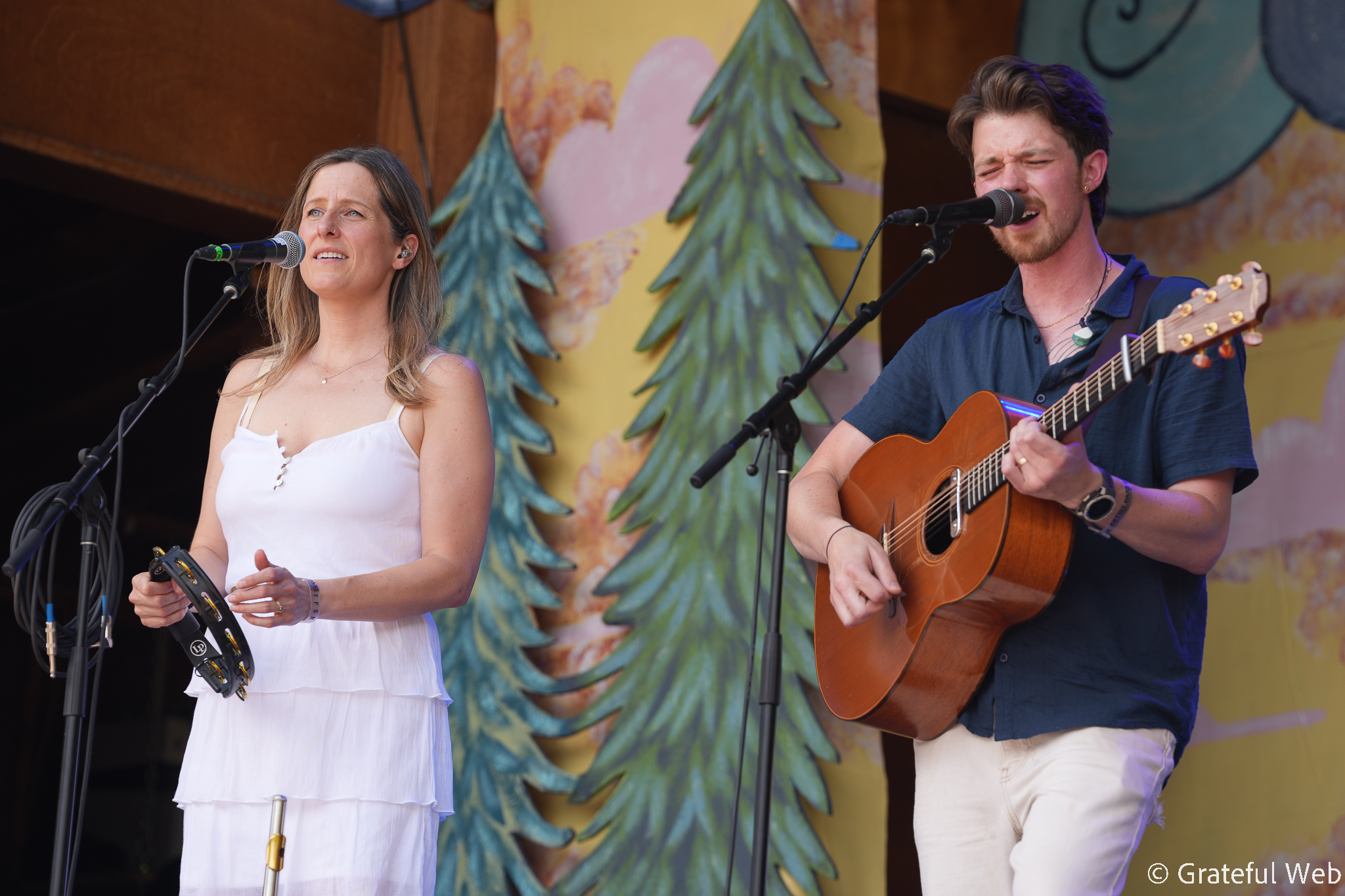
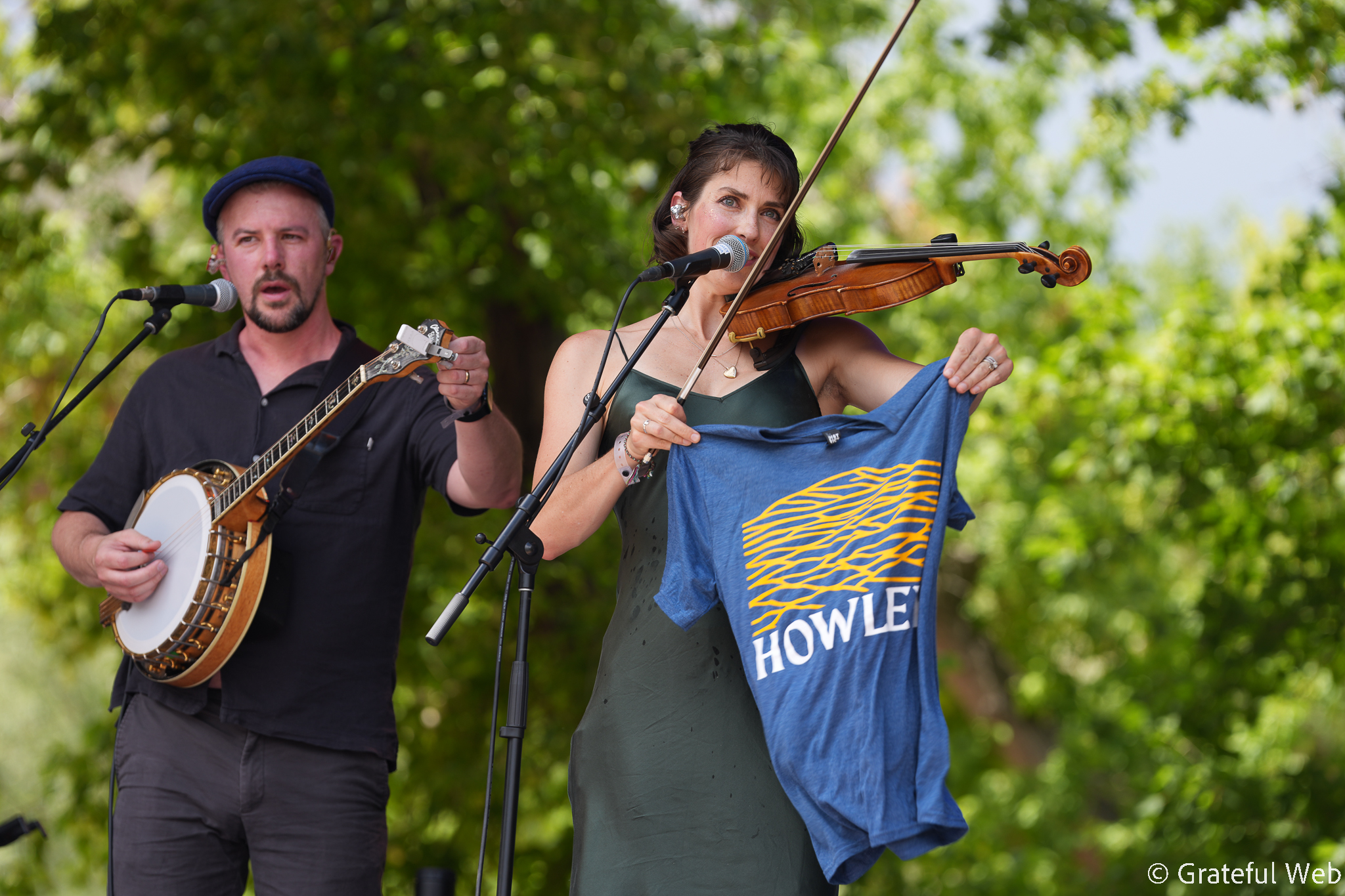
David Howley, who now lives in Colorado, spoke about western Ireland and the ways its hills and mountains can recall the Colorado landscape, even without an ocean anywhere nearby. The comparison felt appropriate. The music itself connected places separated by thousands of miles yet joined by familiar melodies, instruments and stories.
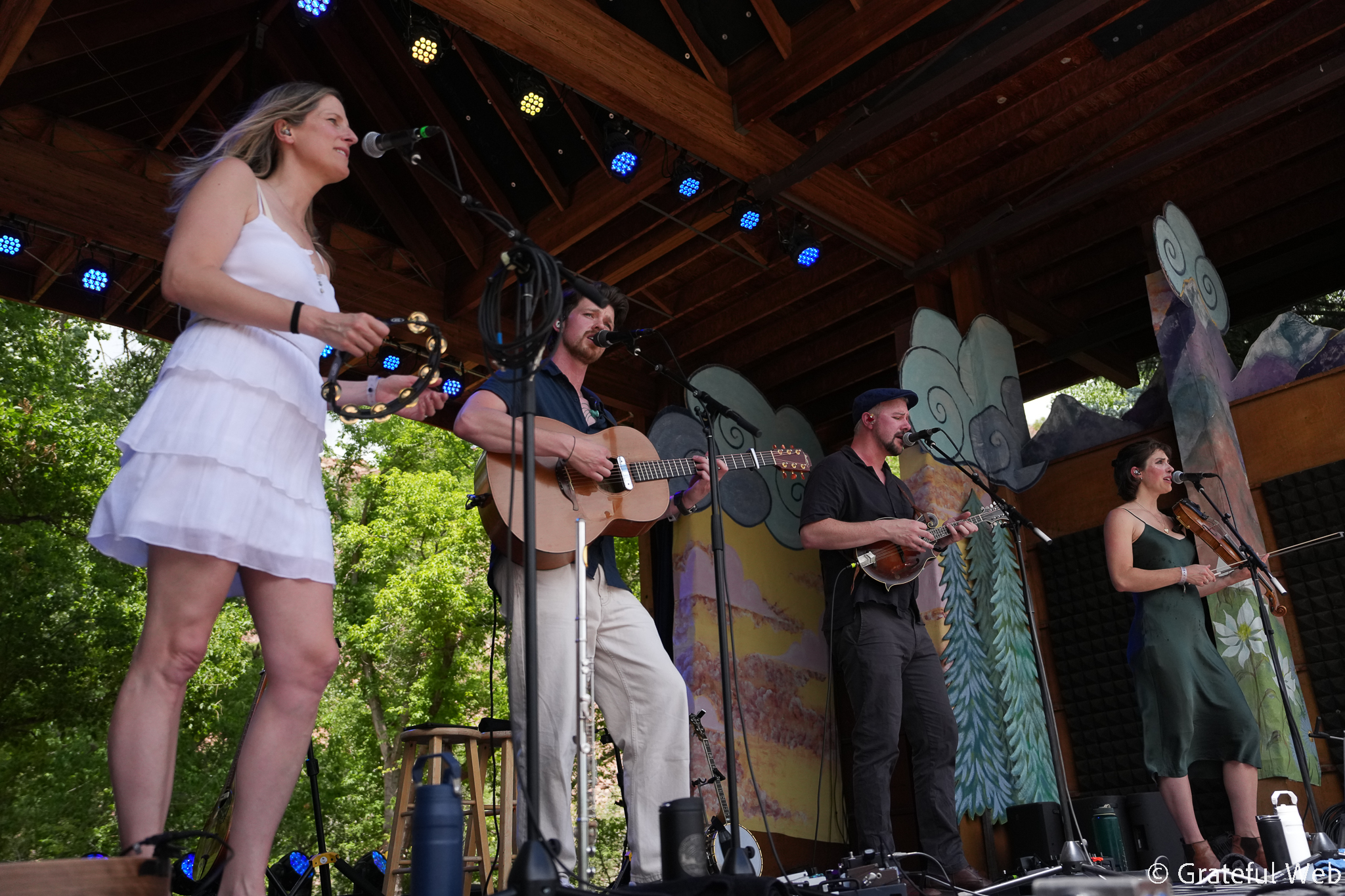
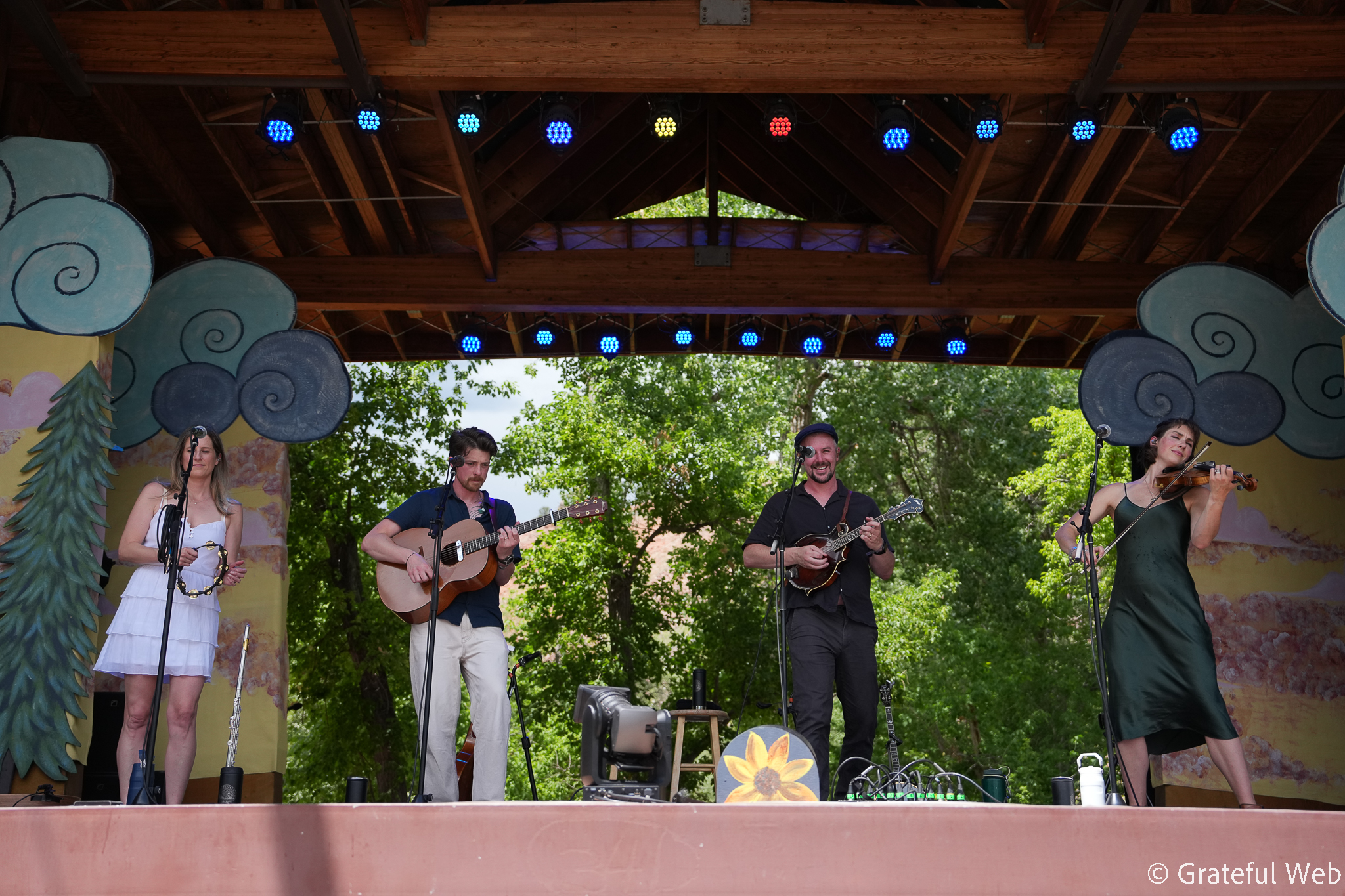
There was something especially satisfying about hearing Irish musicians perform bluegrass-influenced music in the Rocky Mountains. So much of what became Appalachian music drew from Irish and Scottish traditions. Now musicians from Ireland are absorbing the American forms that grew from those traditions and carrying them forward again.
The Kody Norris Show brought a completely different kind of energy.
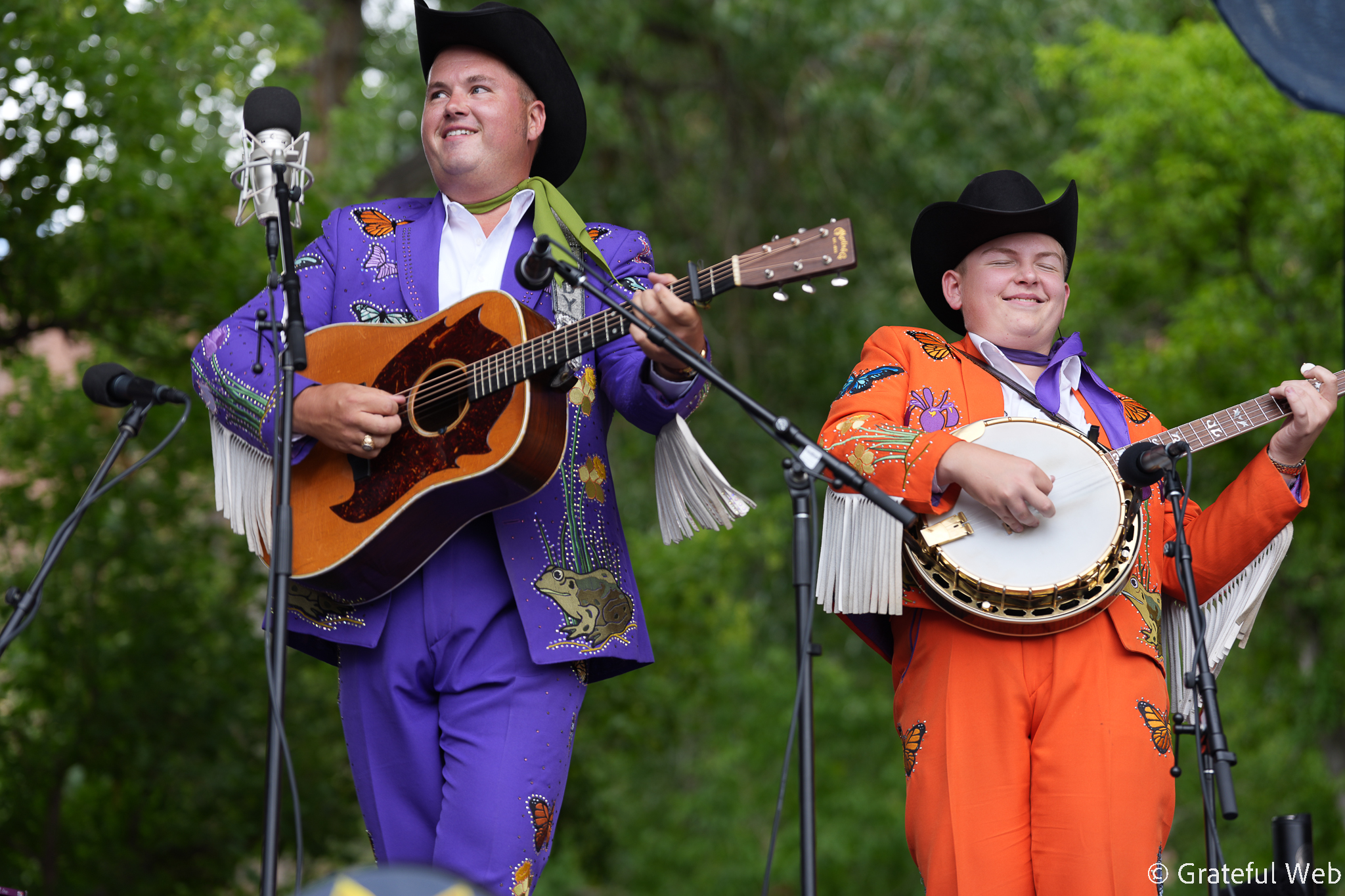
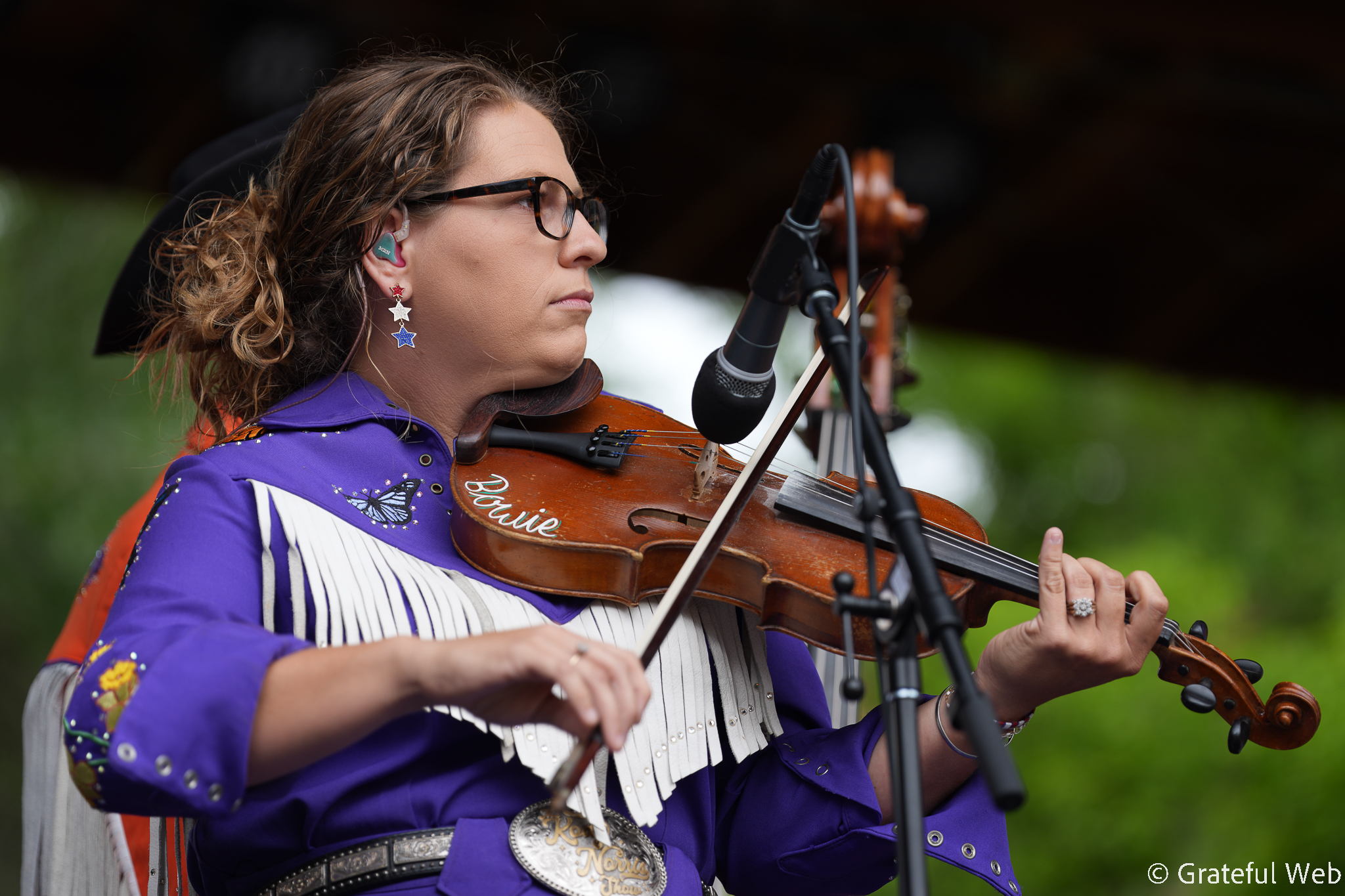
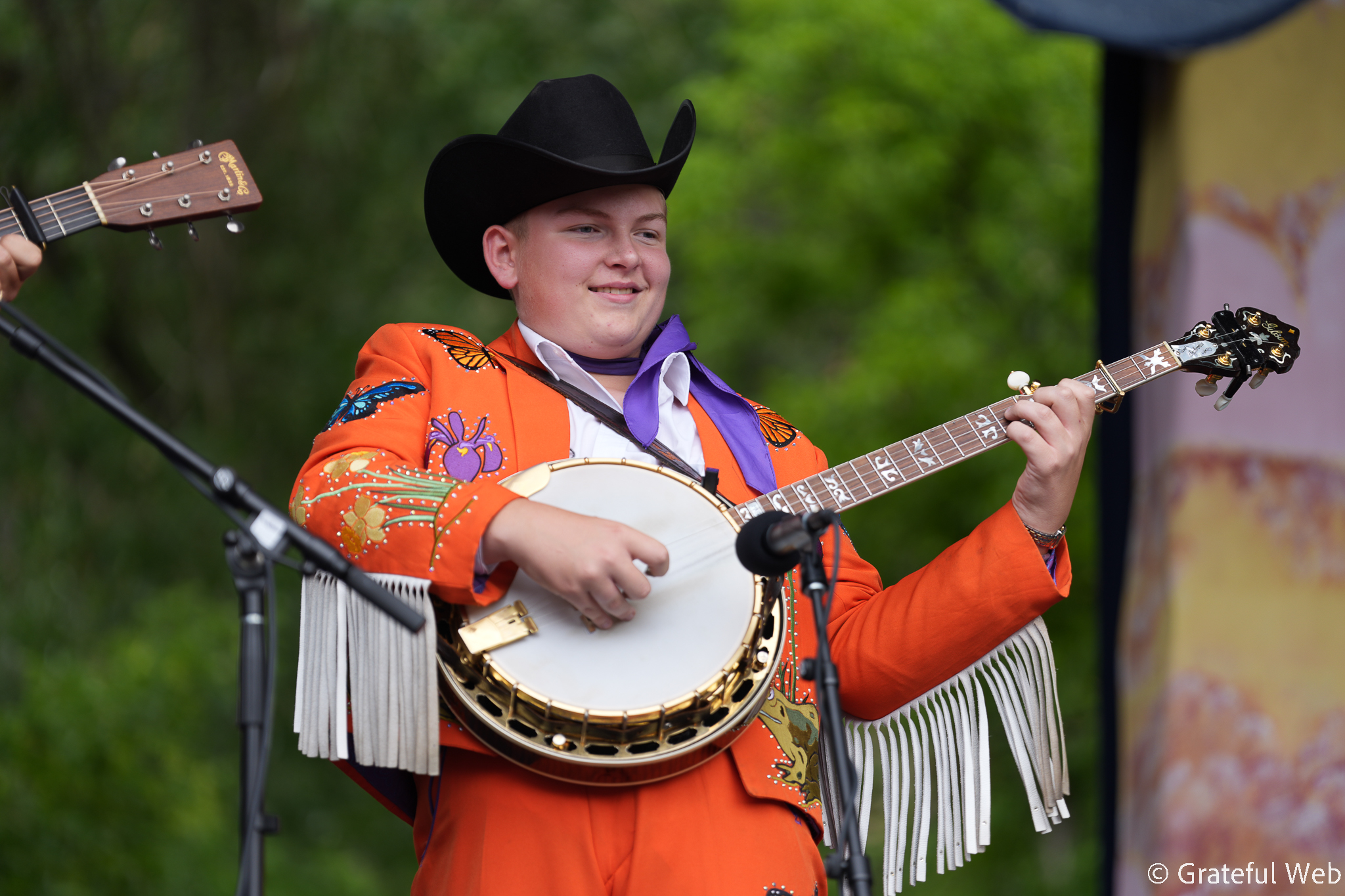
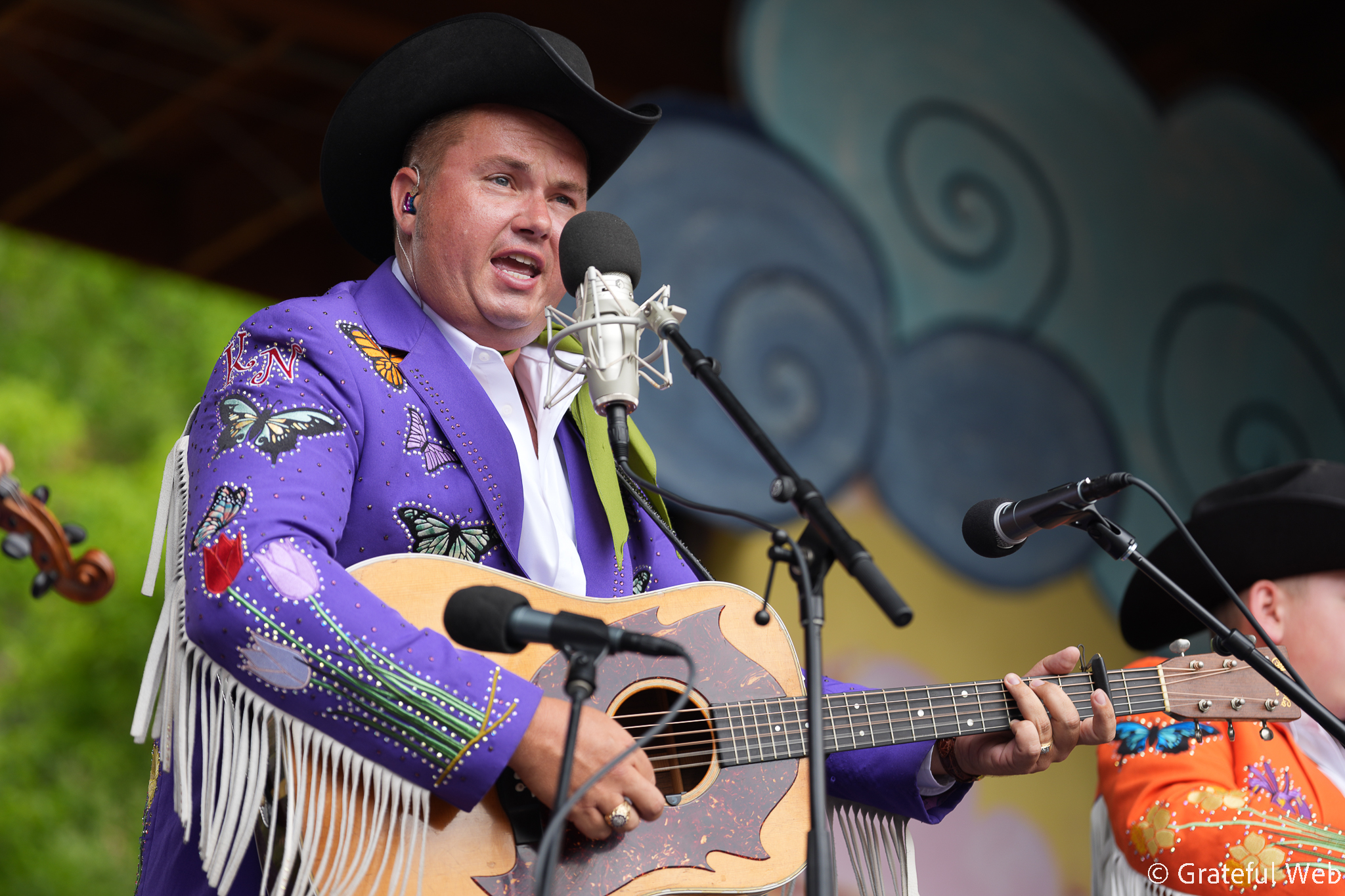
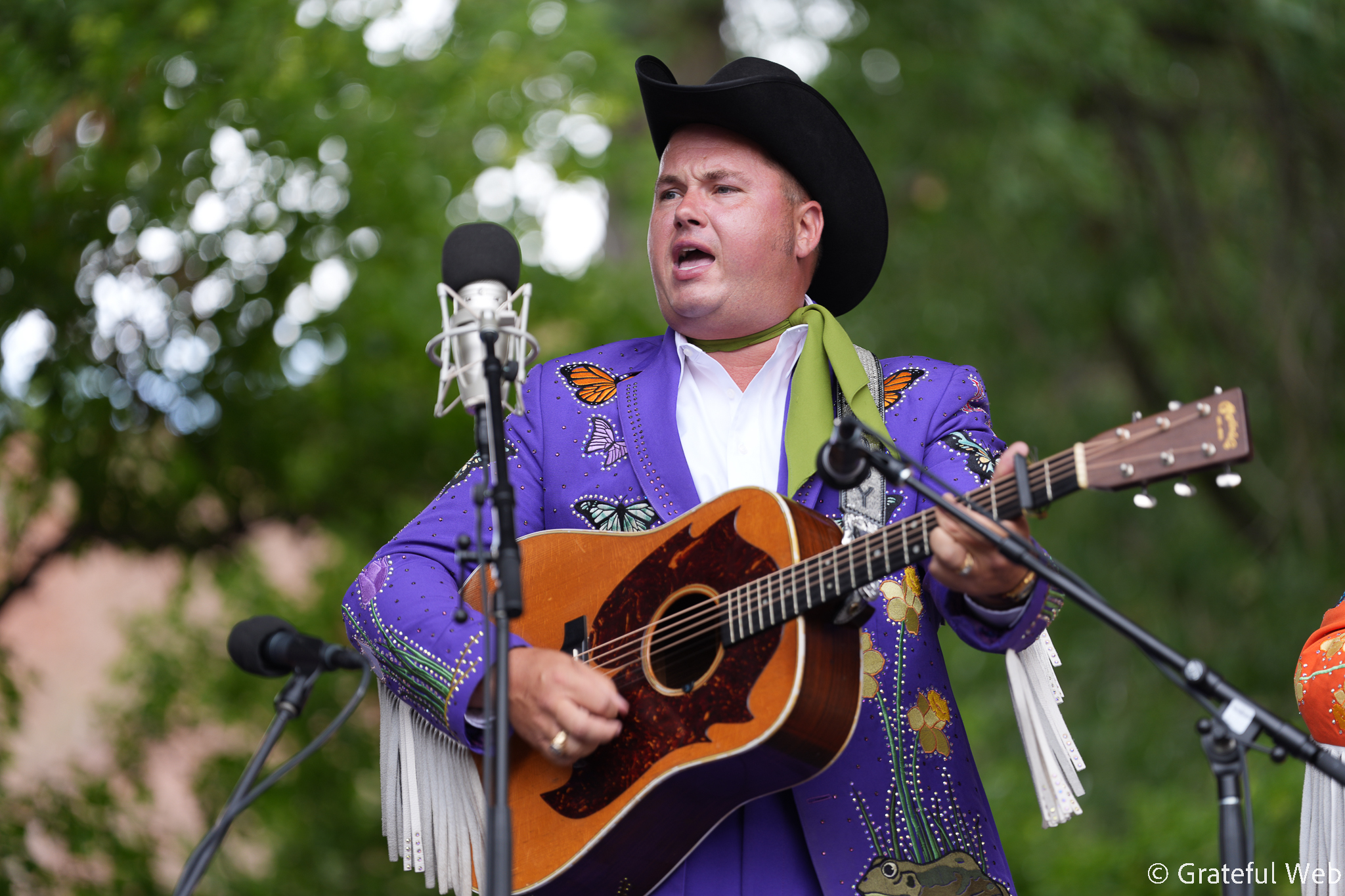
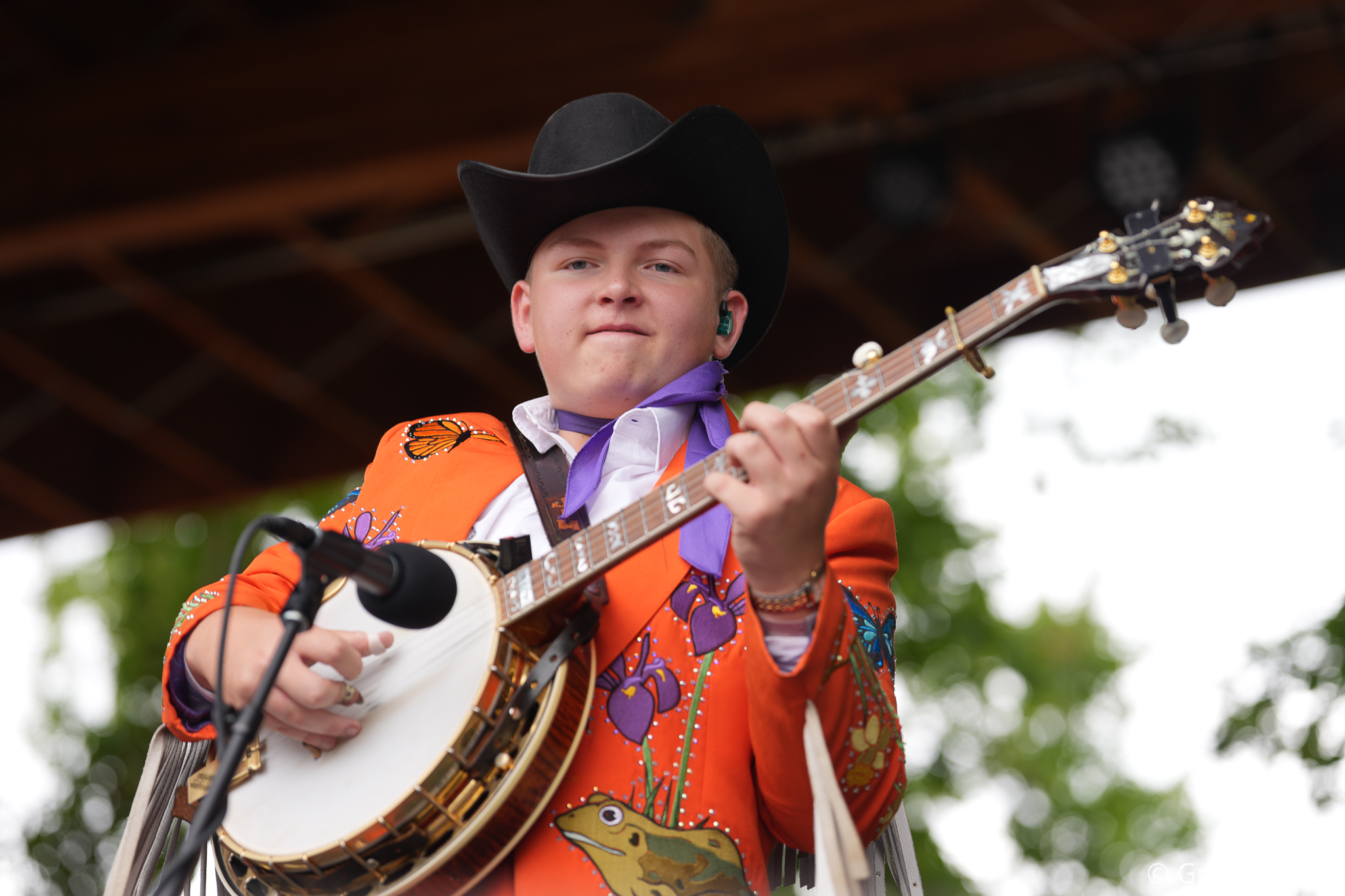
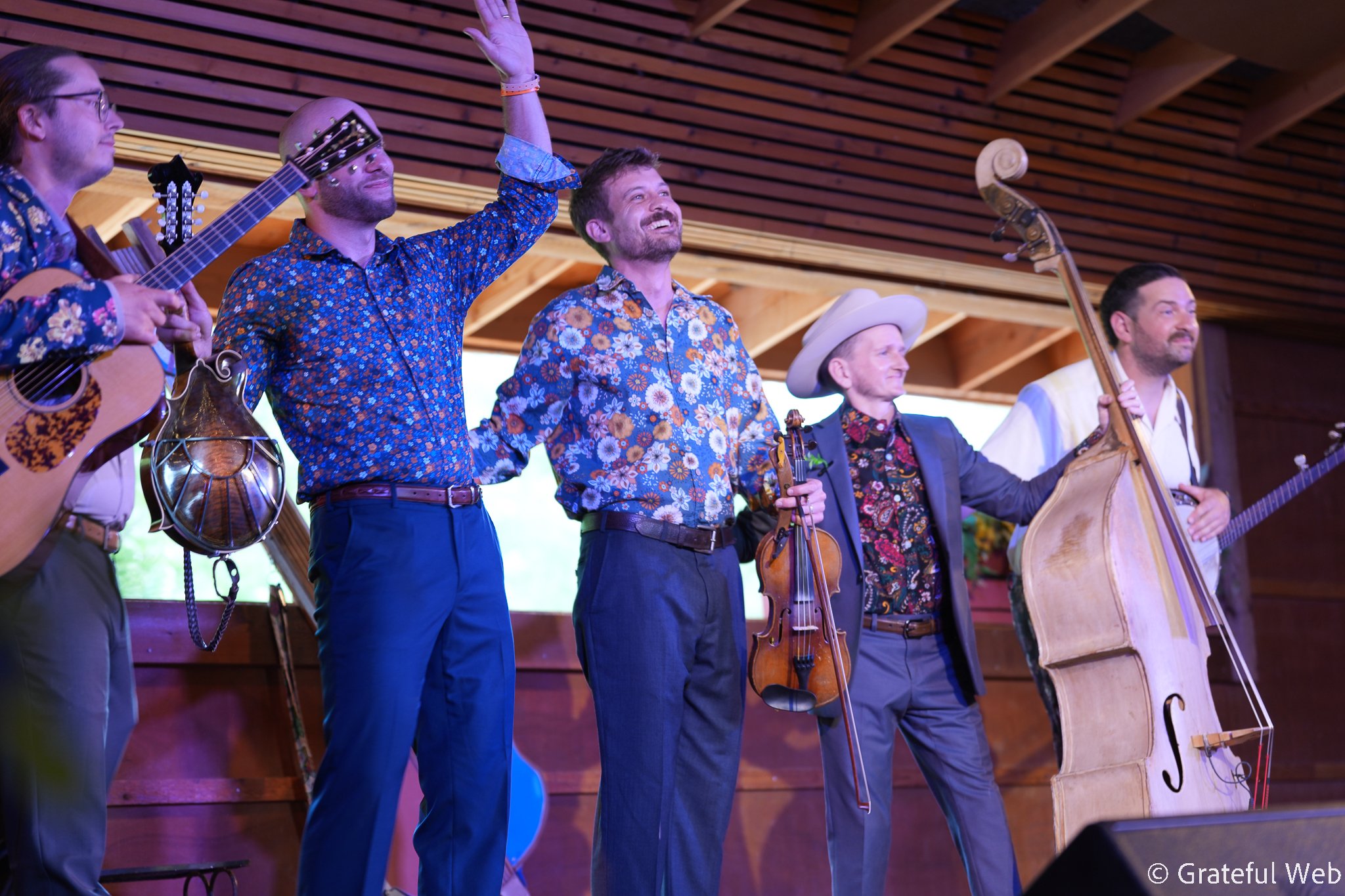
The young four-piece band arrived dressed in brilliantly colored, carefully coordinated suits that recalled the days when country and bluegrass performers understood that the word “show” carried real meaning. Their appearance suggested vintage Grand Ole Opry showmanship, old country stars and perhaps just a touch of Elvis, but the presentation would not have mattered without the musicianship to support it.
They opened with Bill Monroe’s “Uncle Pen” and quickly demonstrated that they were far more than a visual novelty. The playing was tight, spirited and respectful of tradition without feeling like a museum recreation.
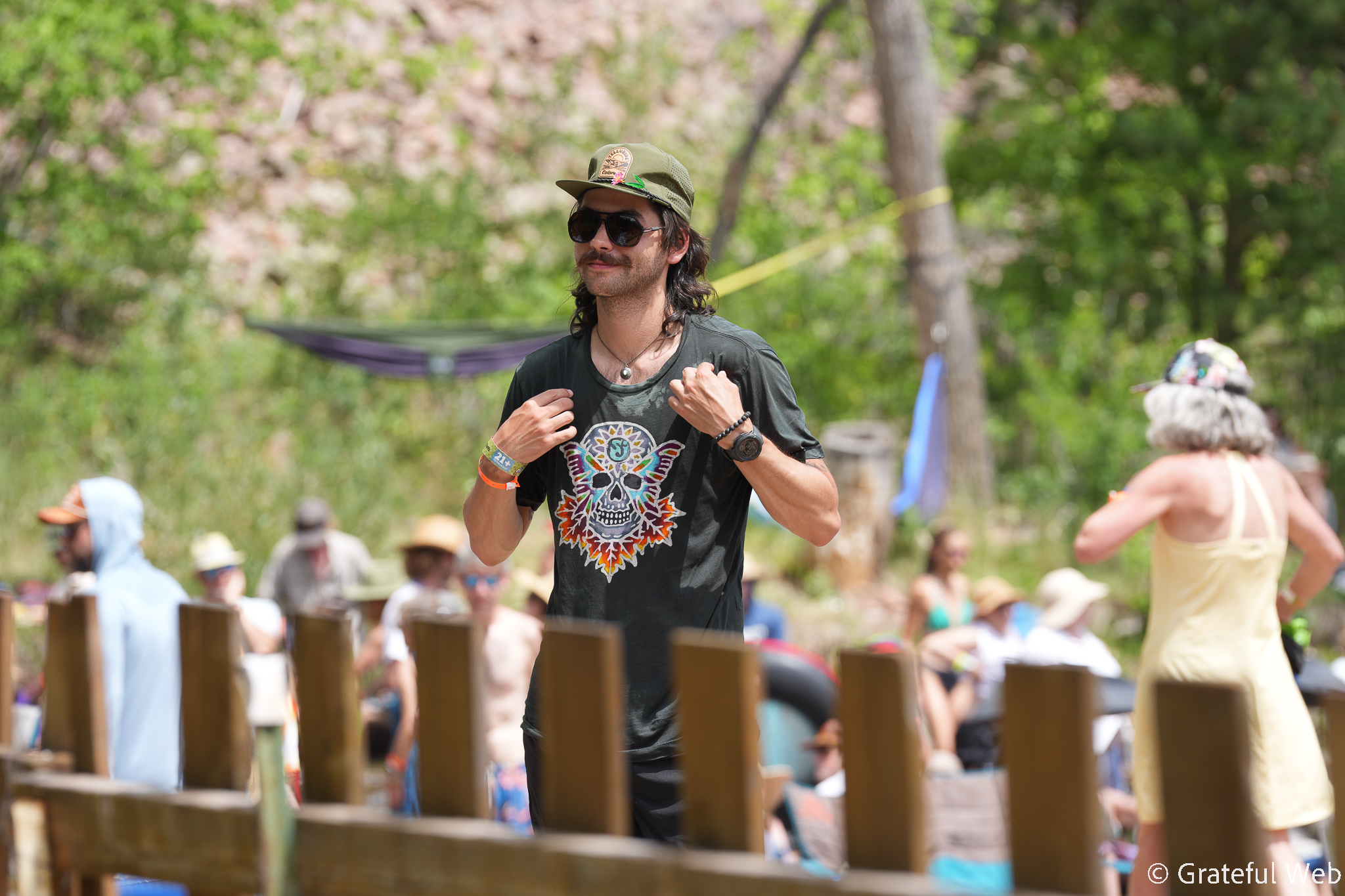
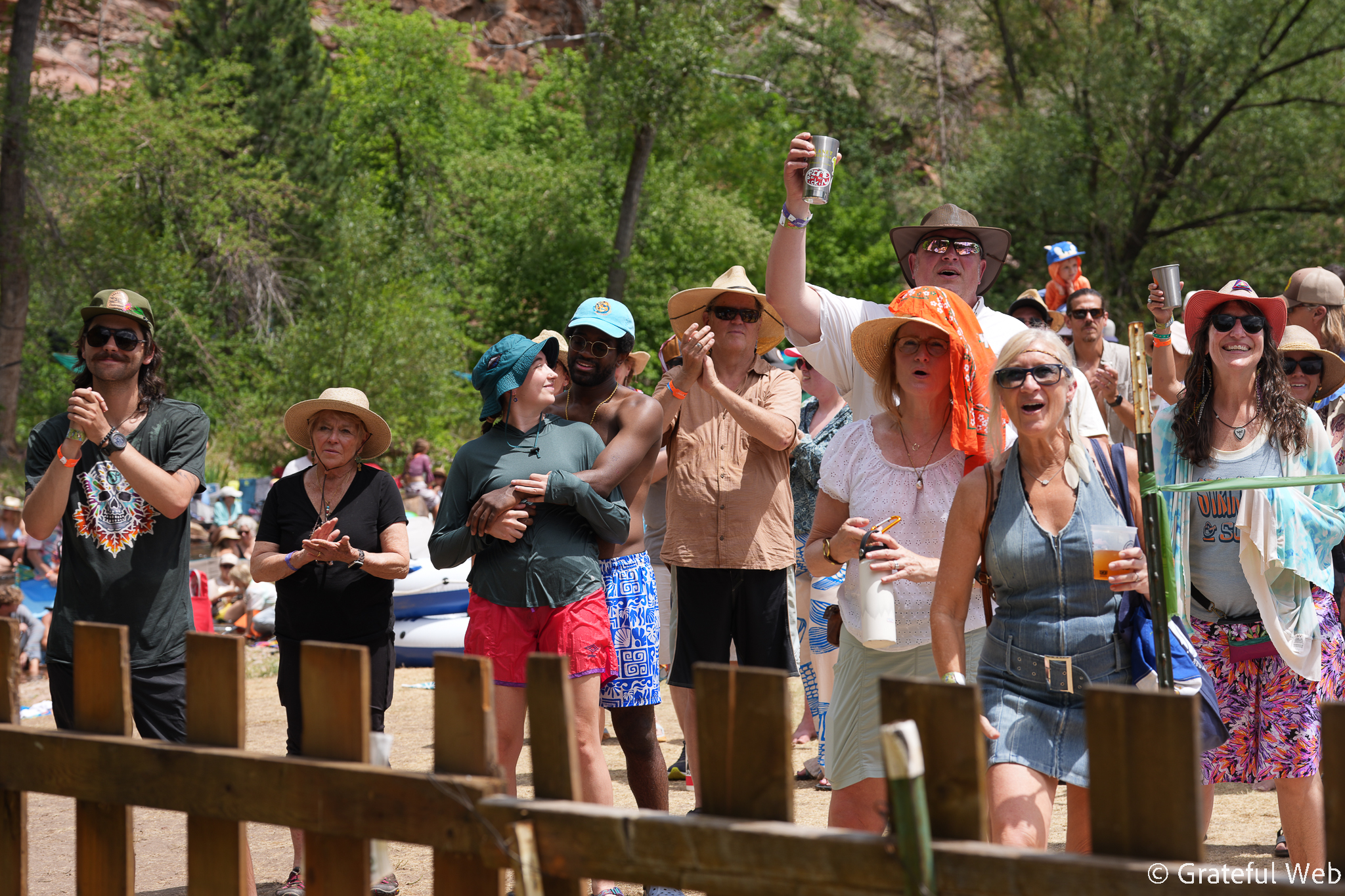
Kody Norris spoke about dreaming of performing at RockyGrass since he was a boy. That enthusiasm was easy to see throughout the set. For a band built around preserving the sound and visual character of an earlier era, the musicians brought a youthful energy that made the tradition feel very much alive.
Between the main-stage performances, the Wildflower Pavilion offered some of Sunday’s most memorable moments.
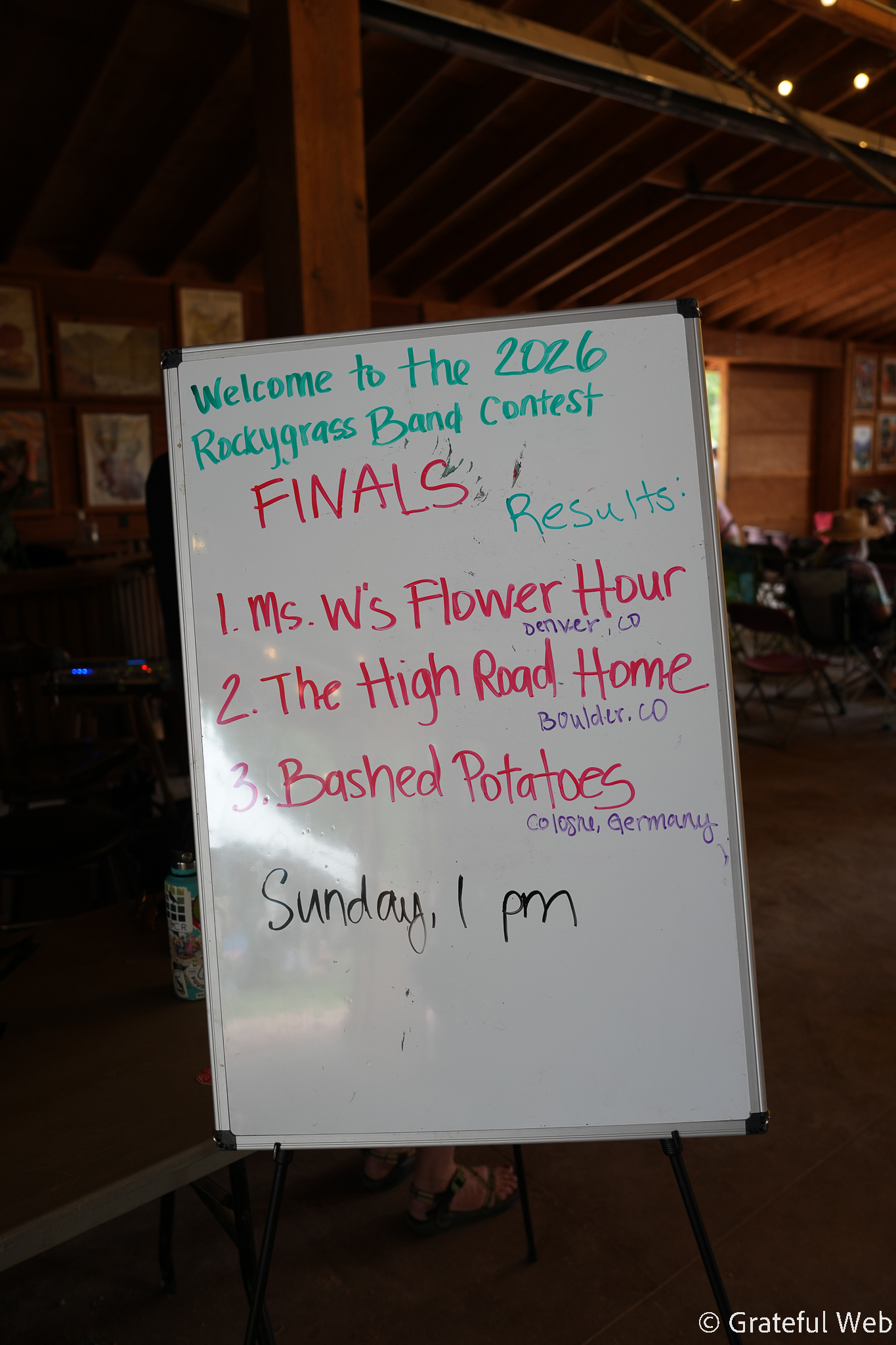
The annual RockyGrass Band Contest finals remain one of my favorite parts of the weekend. The pavilion fills quickly before the 1 p.m. start, with listeners crowding around as three finalists perform around a single microphone.
This year’s final again underscored the increasingly international reach of bluegrass. Bashed Potatoes traveled from Cologne, Germany, to compete against two Colorado groups: Boulder’s The High Road Home and Denver’s Ms. W’s Flower Hour.
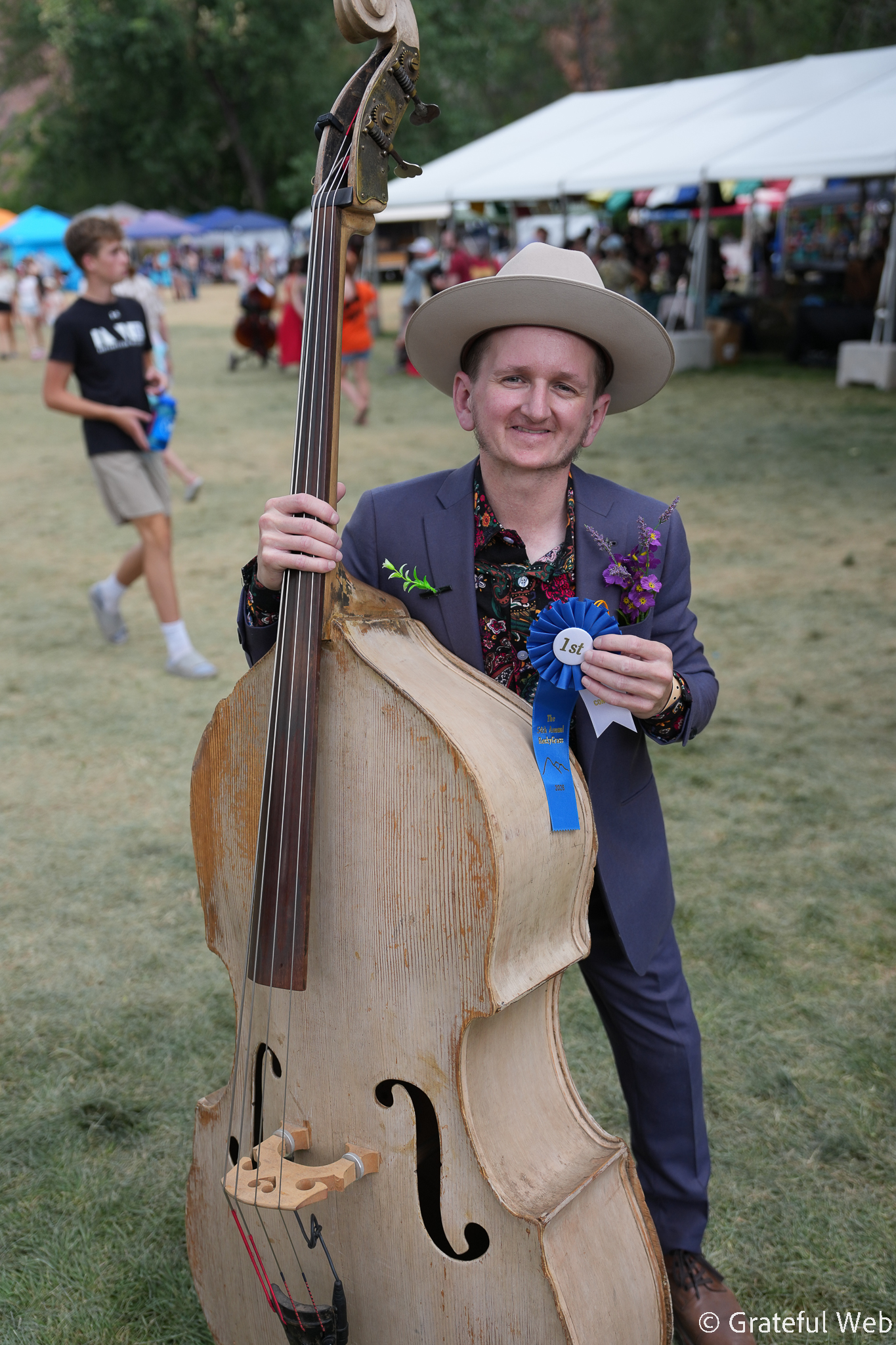
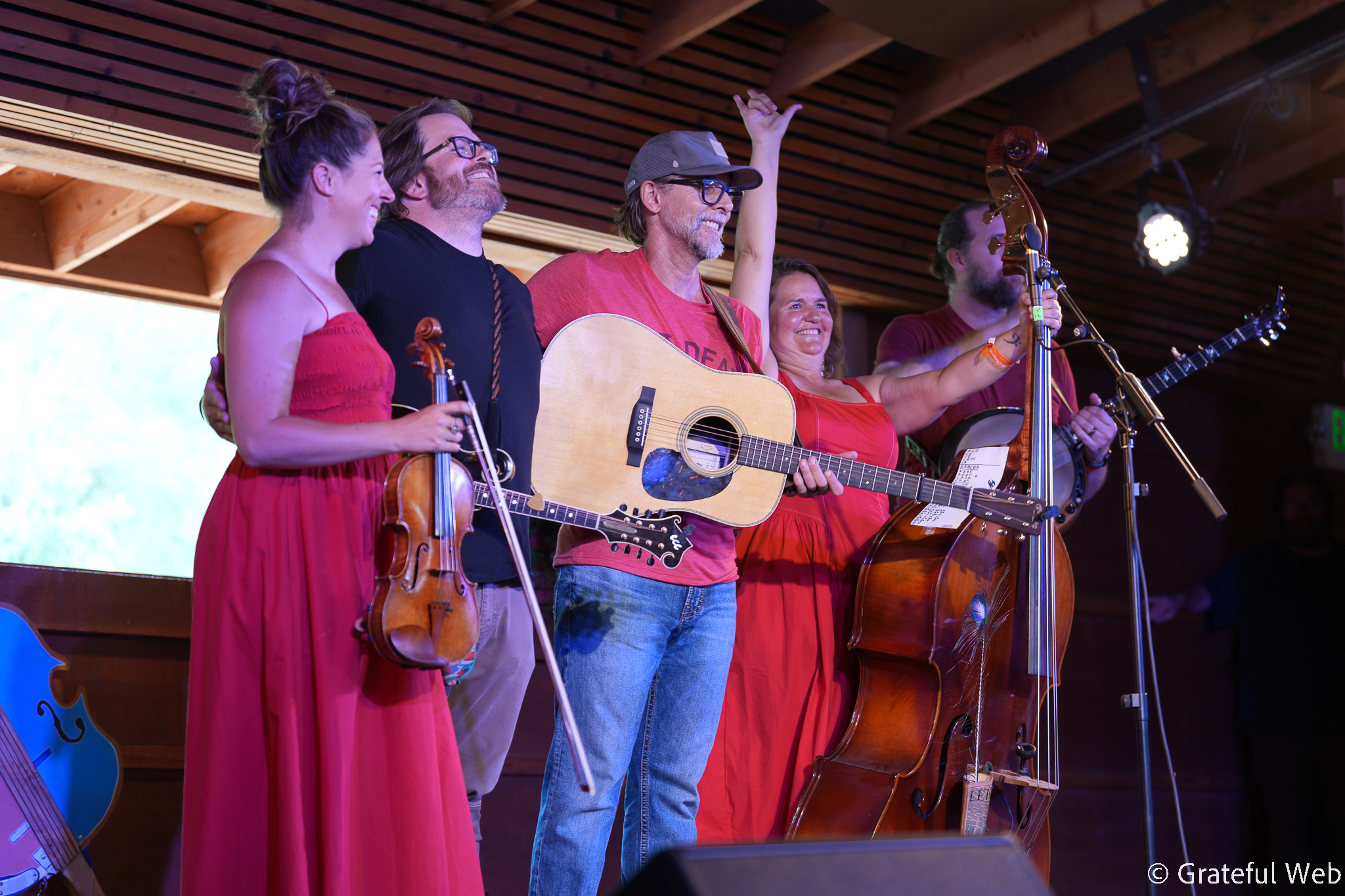
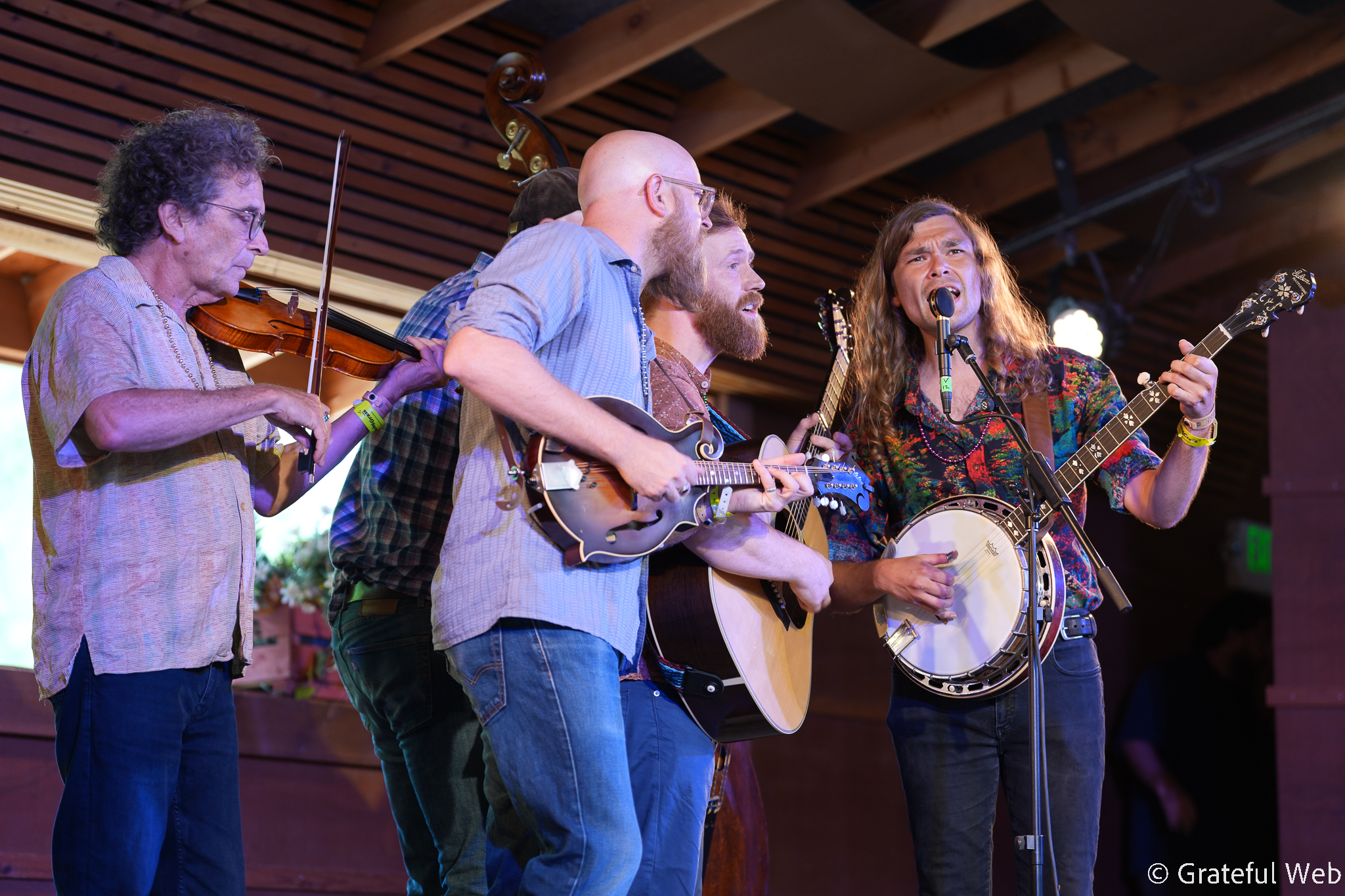
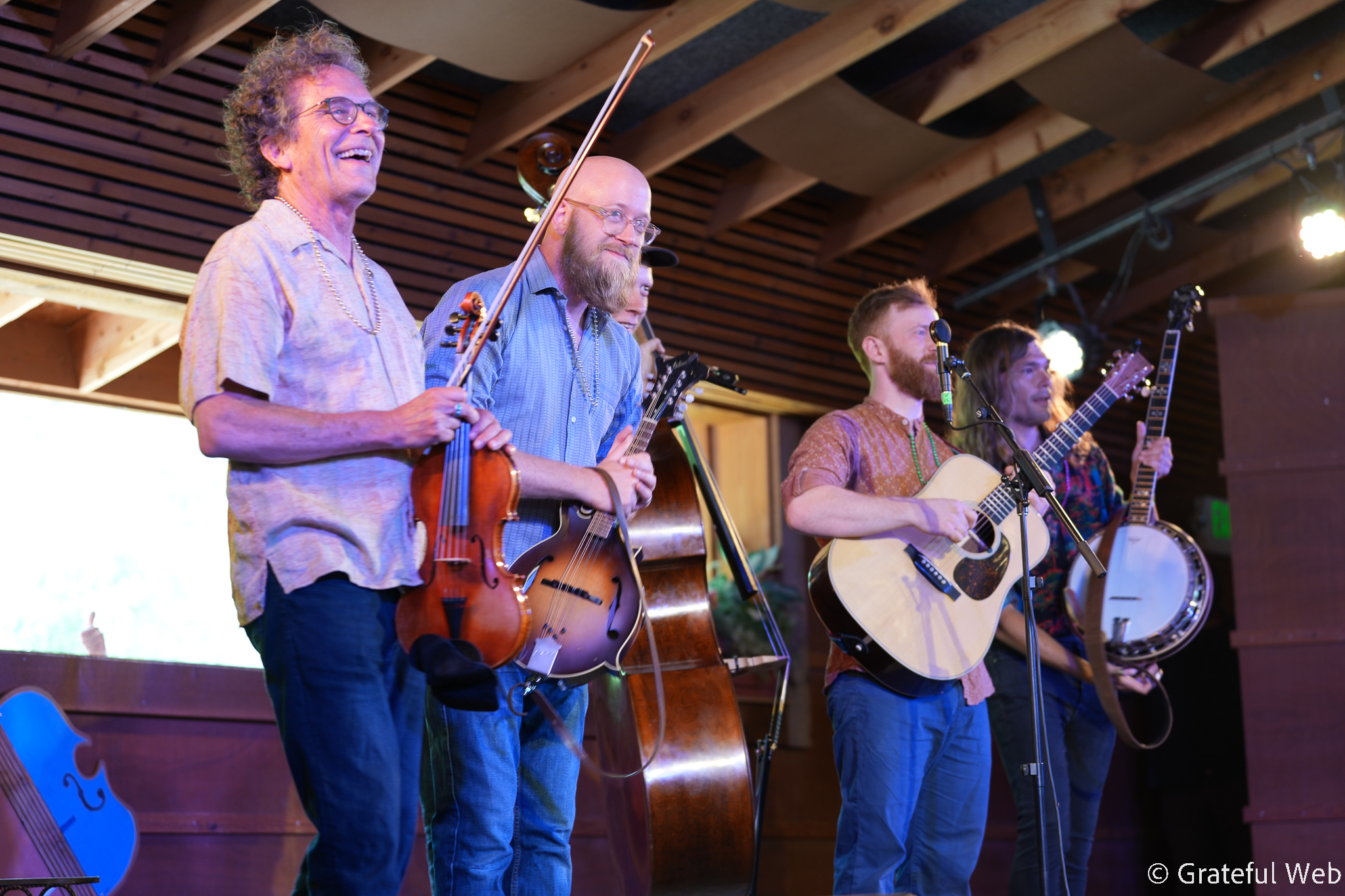
Ms. W’s Flower Hour ultimately took first place, earning a main-stage appearance at RockyGrass in 2027. The High Road Home finished second, with Bashed Potatoes taking third. All three demonstrated why the band contest has become such a reliable place to discover emerging acoustic talent.
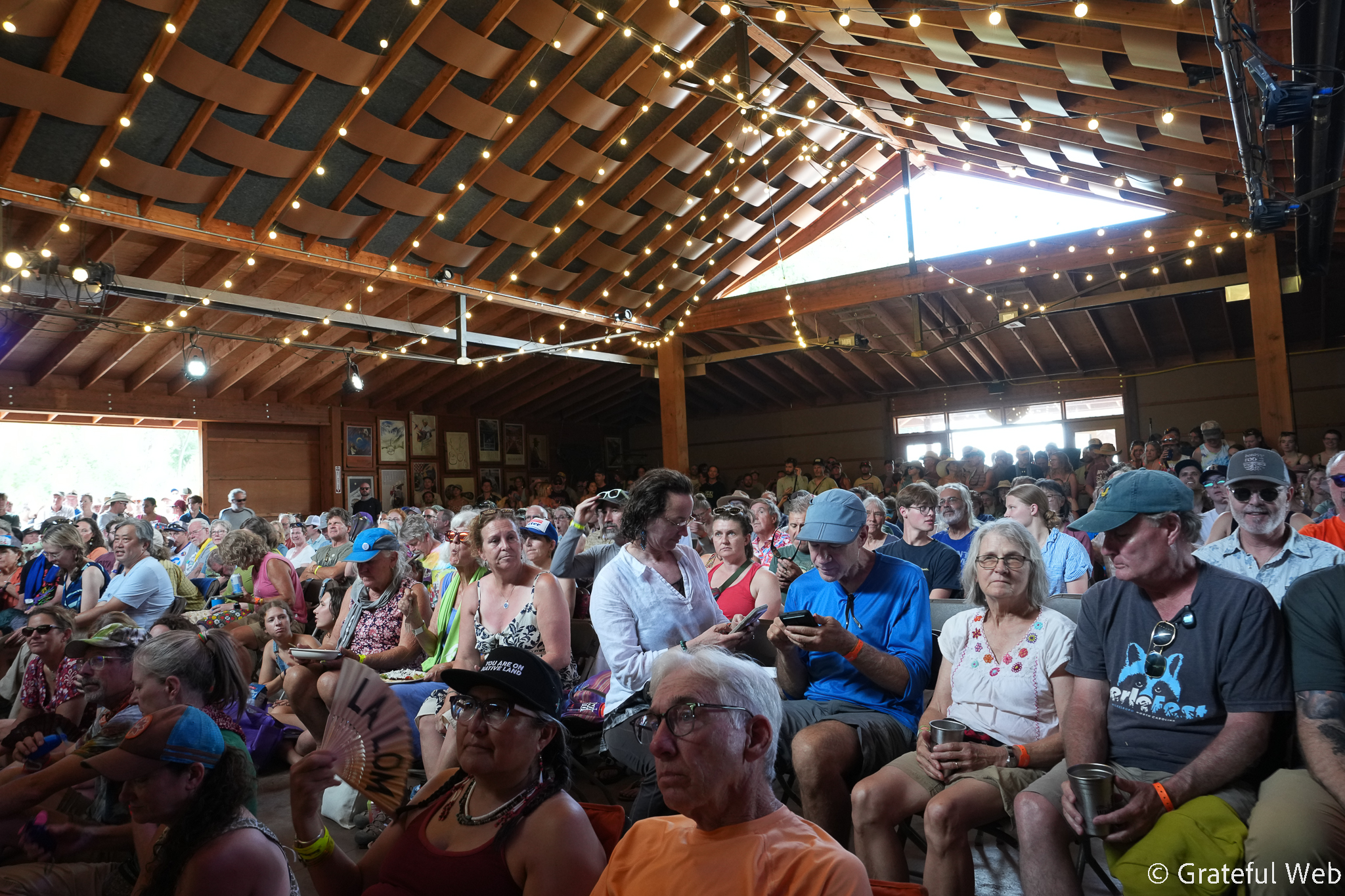
Seeing a German bluegrass group reach the finals added another chapter to the day’s larger story. Music that developed in the American South has traveled far beyond the regions that first shaped it. Players around the world are no longer merely copying bluegrass from a distance; they are learning its vocabulary, adding their own experiences and becoming part of its future.
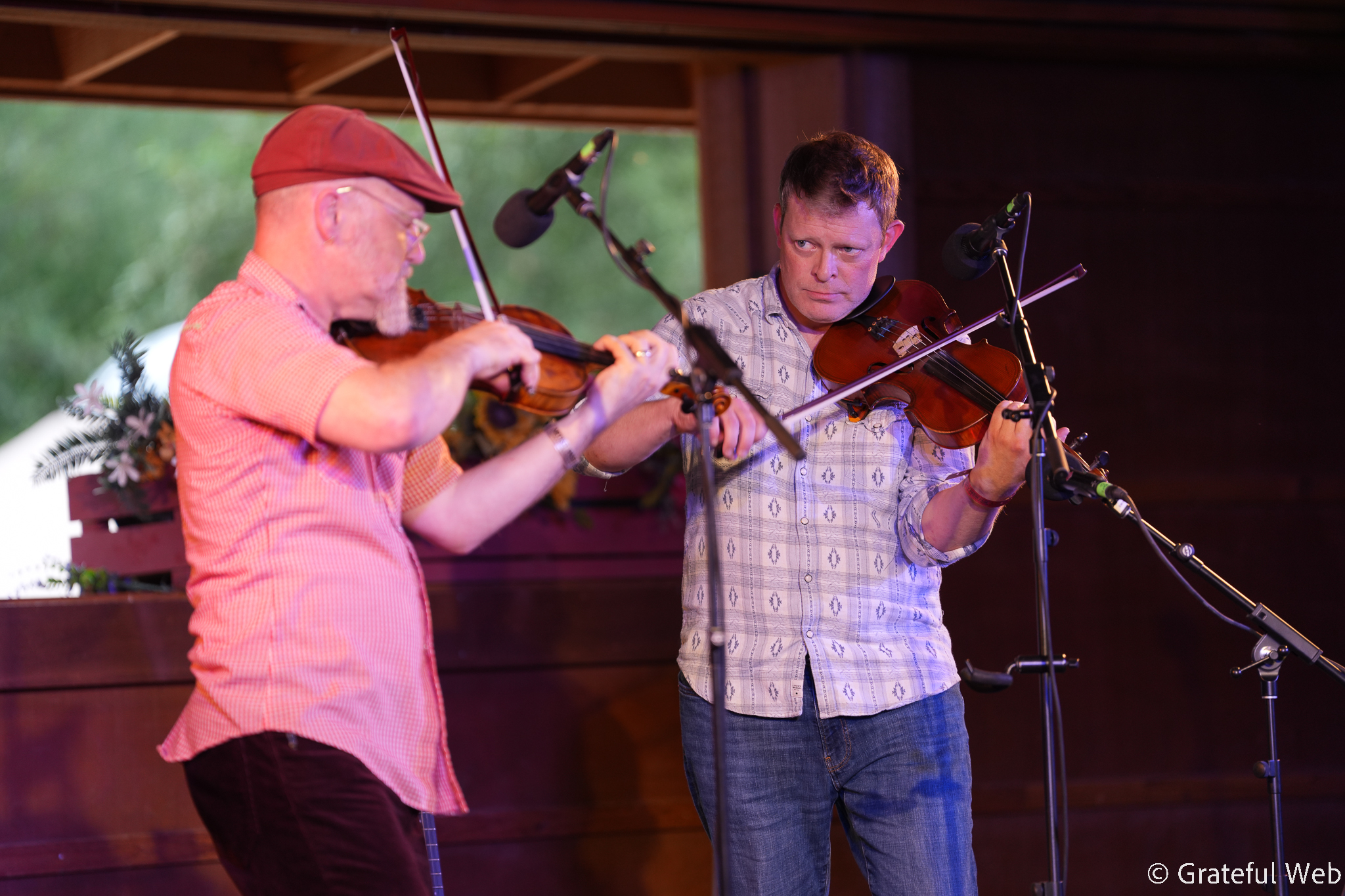
Luke Bulla and Casey Driessen followed with a conversation between two fiddles and two longtime friends. I was only able to catch part of the performance, but even briefly, their familiarity with one another was apparent. Rather than simply taking turns playing, they listened and responded, using the fiddles almost as voices in an ongoing exchange.
Dominic Leslie, known for his work with Molly Tuttle and Golden Highway, joined them on mandolin for a couple of tunes, adding another layer to the intimate pavilion performance.
The most fascinating set of my day came from Abigail Washburn.
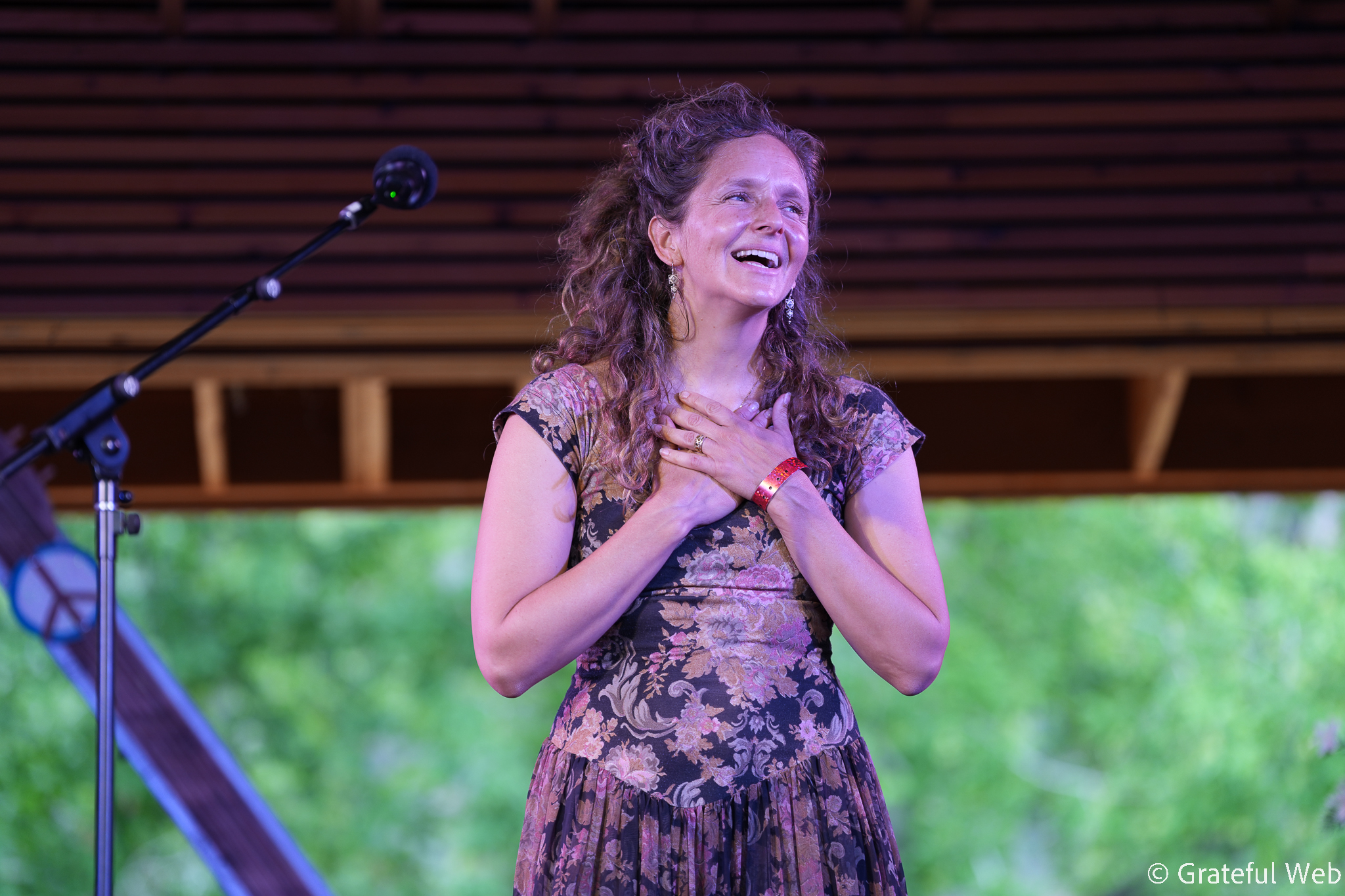
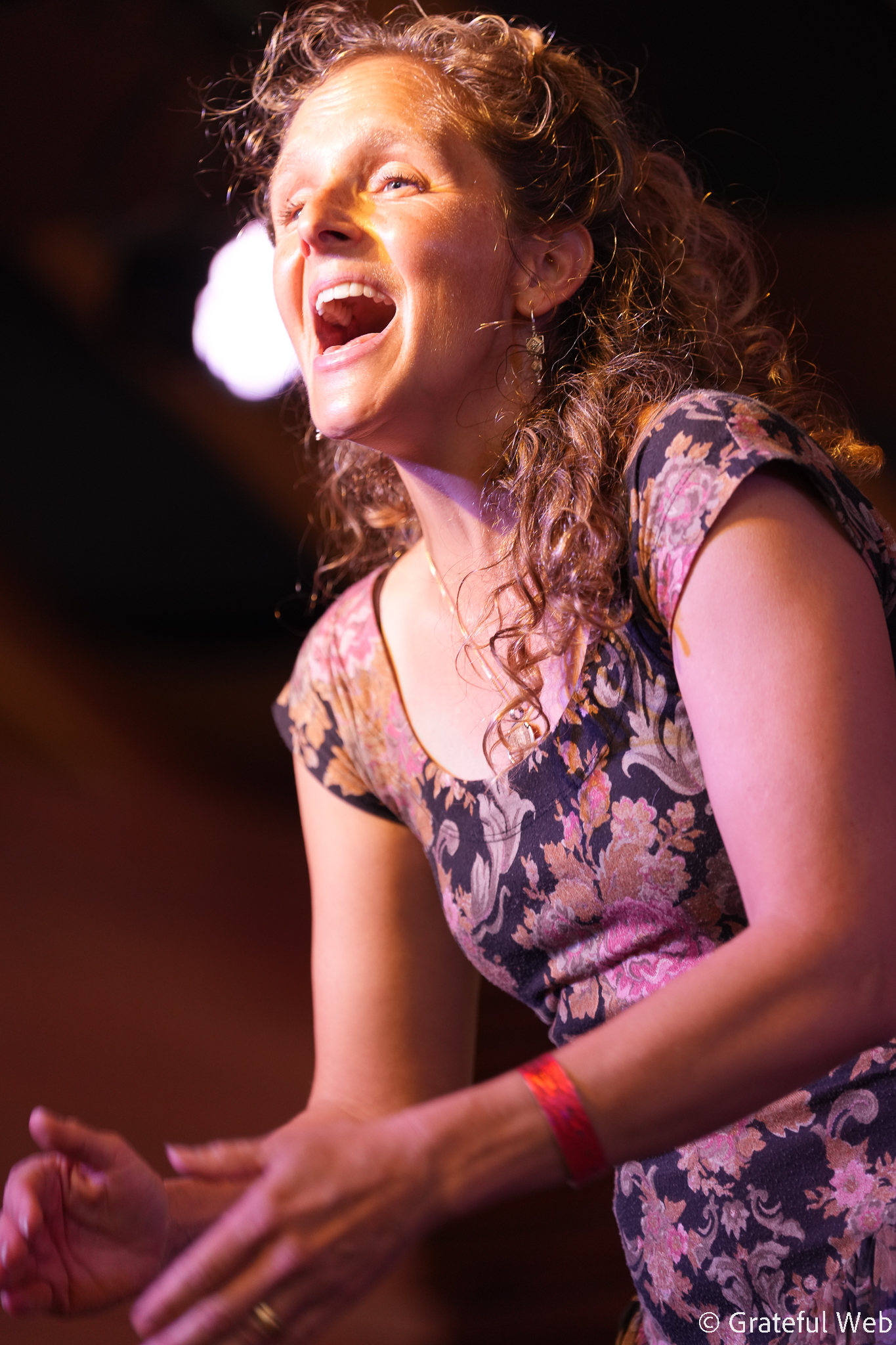
Washburn is, of course, an accomplished banjo player, singer, songwriter and the wife of Béla Fleck, but referring to her only through that relationship would sell her artistry and intellect far short. She is remarkably articulate, deeply curious and seemingly always looking for ways to connect music with language, history and culture.
Fleck sat quietly off to the side of the pavilion throughout her set, tucked into a chair near stage left and watching without drawing attention away from her performance.
Washburn had a banjo resting near her but explained that she would not actually be playing it during the set. Instead, she occasionally leaned toward it and used its notes to find or confirm her vocal pitch before singing unaccompanied.
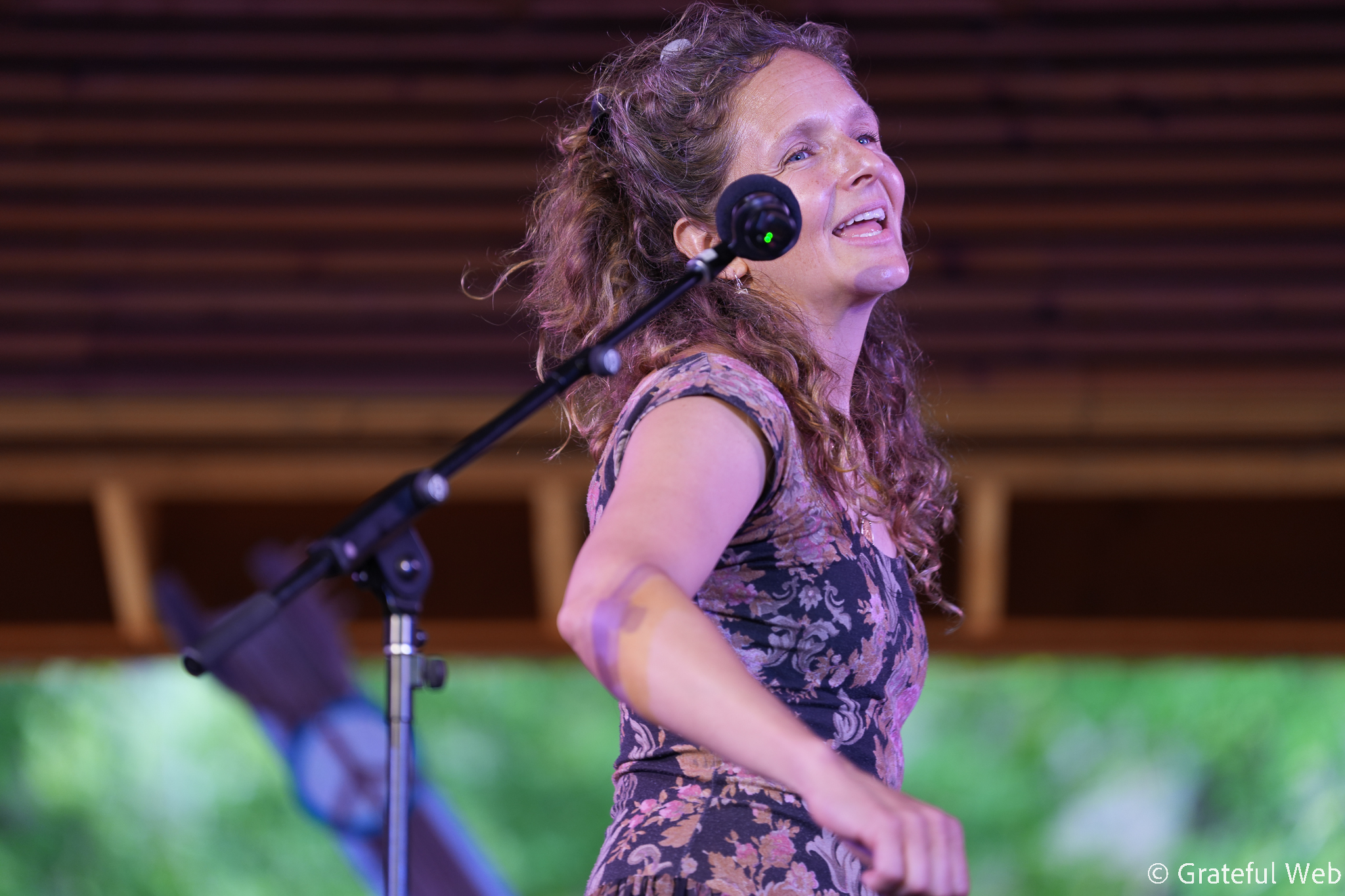
Exactly how she was doing it was well beyond my limited musical abilities. I can barely manage three guitar chords, and even those tend to sound questionable. Watching someone use a banjo simply as a reference point before launching into intricate vocal passages was both mysterious and impressive.
Much of the set revolved around participation, with Washburn leading the audience through call-and-response singing. “Amazing Grace” offered one familiar point of entry, but much of the material reached further into traditional songs, languages and histories that many in the pavilion were likely encountering for the first time.
Washburn spoke about her efforts to study Indigenous languages, openly acknowledging how difficult the process has been. She discussed the names several Native peoples use for themselves in their own languages, rather than relying entirely on the names applied to them by outsiders.
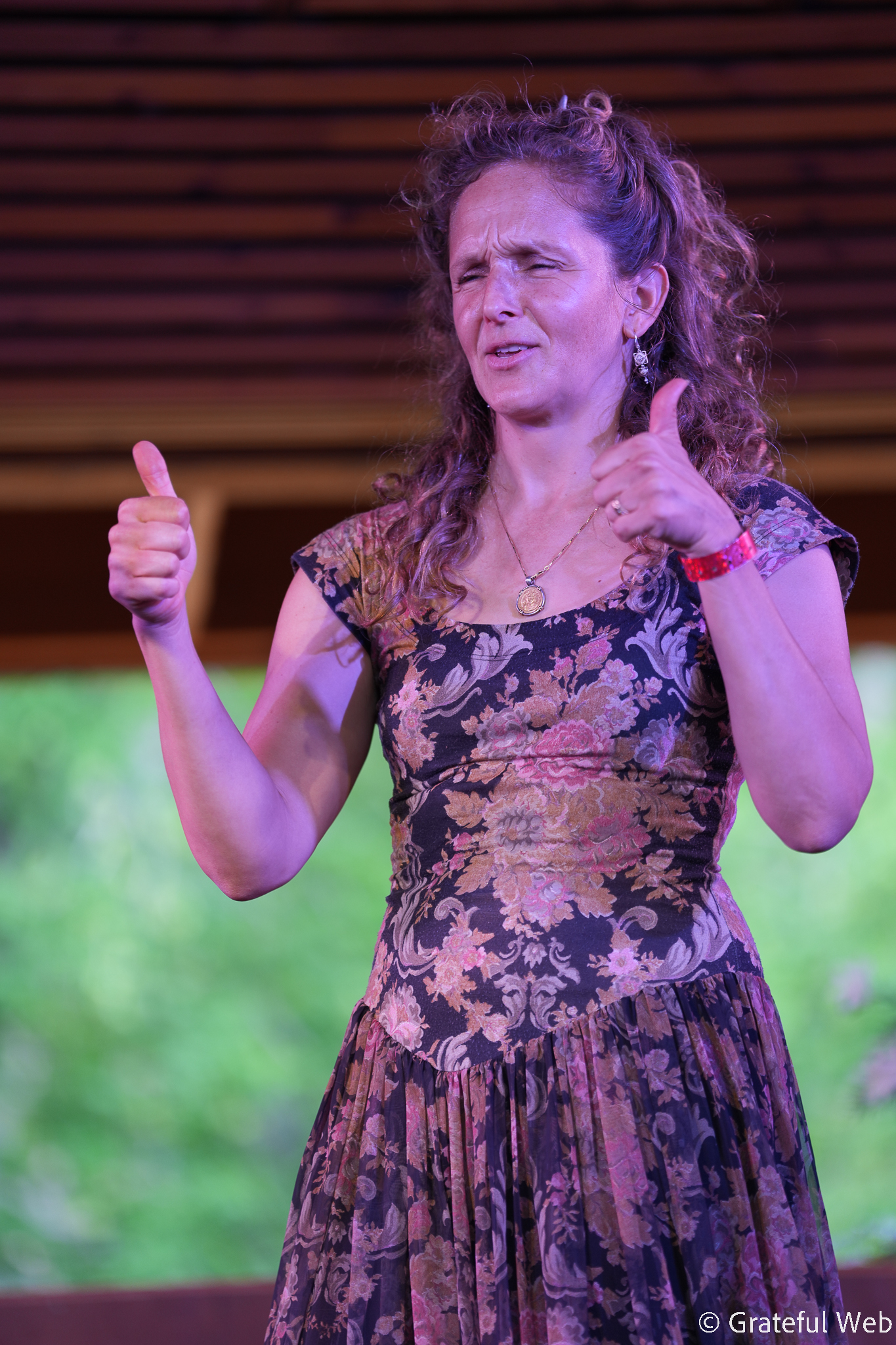
Her approach did not feel like a lecture inserted between songs. The history, language and music were part of the same exploration.
One particularly memorable passage addressed the workers who built railroads through the American West, including Chinese, Irish and Native laborers who endured dangerous and brutally demanding conditions. Songs and repeated rhythms helped groups maintain a working cadence while laying track, sometimes amid competition over which crew could progress the fastest.
Washburn had the pavilion audience stomp its feet to recreate that rhythmic pulse. For a few minutes, the floor itself became part of the performance.
It was engaging, but it also carried weight. The communal rhythm connected the audience to a history shaped by migration, exploitation, endurance and cultures meeting under difficult circumstances. In a festival setting where instrumental virtuosity can understandably command much of the attention, Washburn demonstrated how traditional music can also preserve stories that might otherwise be neglected.
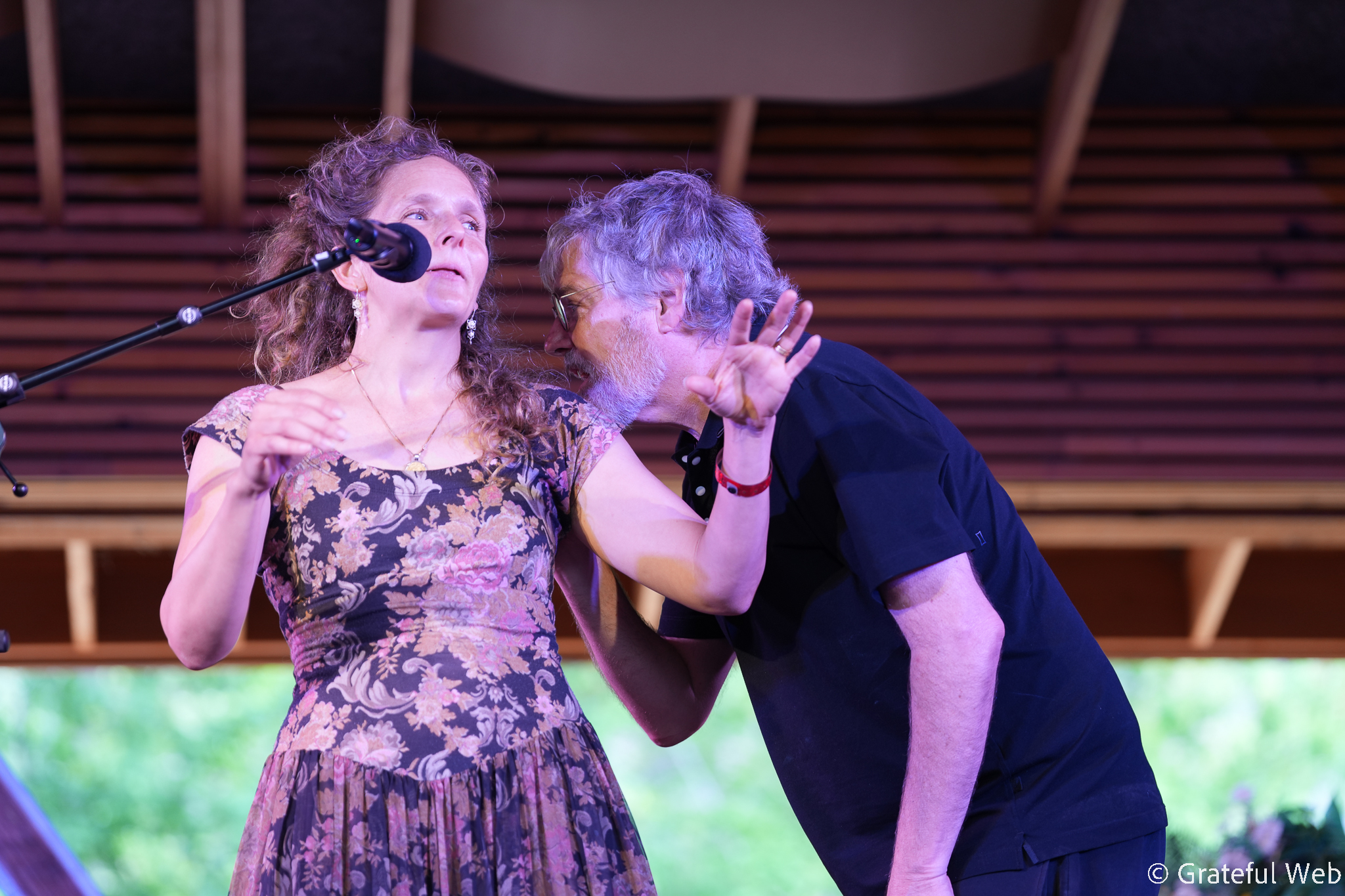
Near the end, someone at the soundboard apparently signaled that she had about five minutes remaining. Moments later, Fleck quickly slipped onto the stage and whispered something in her ear. Whether through his intervention or simple schedule flexibility, she appeared to gain a few extra minutes.
When Béla Fleck is sitting nearby, it probably does not hurt to have him negotiate on your behalf.
Washburn’s set was funny, thoughtful, participatory and unlike anything else I caught on Sunday. It also embodied the entire international theme of the day. Here was an American banjo player drawing connections among Appalachian traditions, Chinese history, Indigenous languages, railroad labor and communal singing, all inside a pavilion beside a Colorado river.
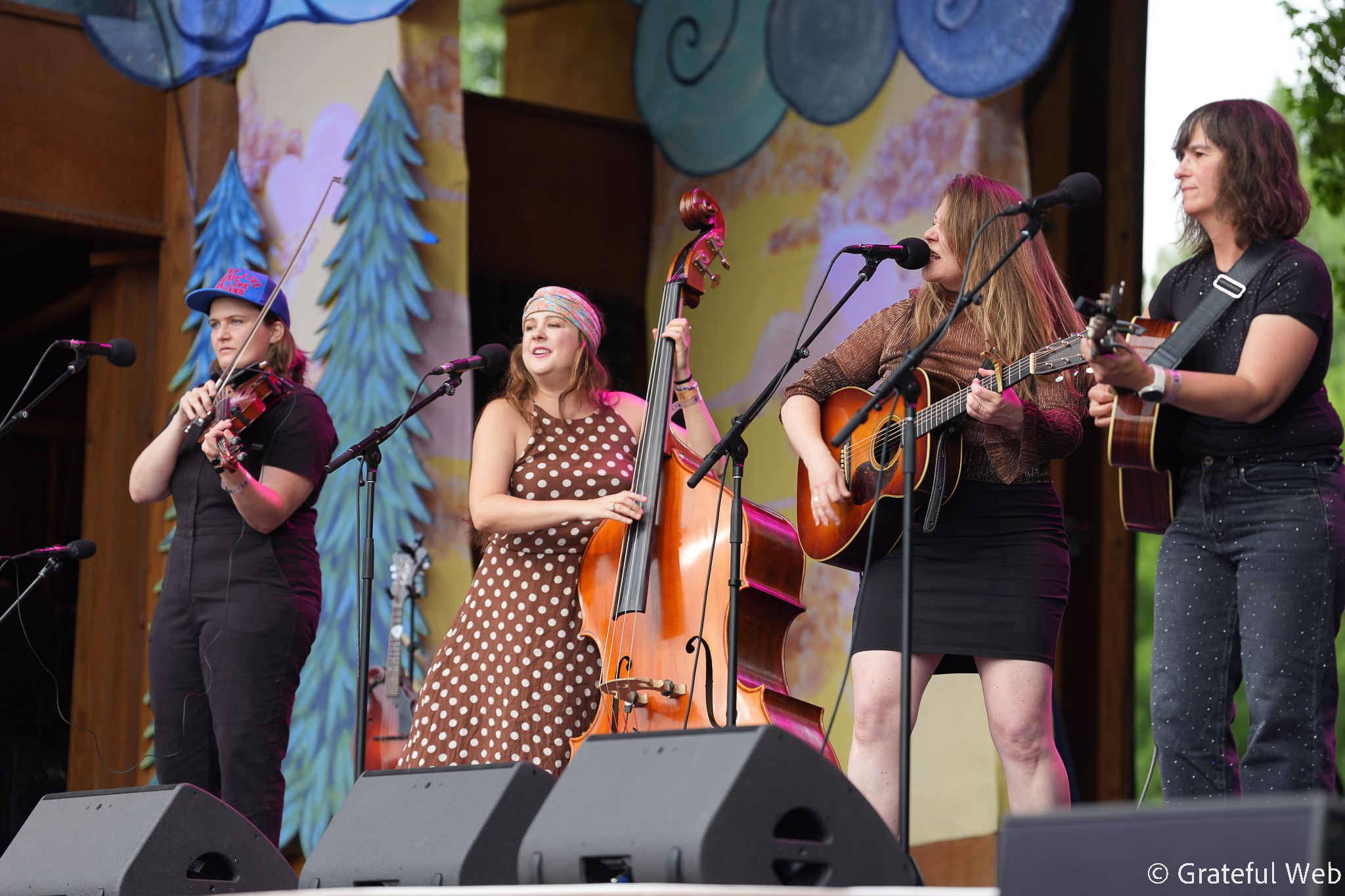
Back on the main stage, Della Mae brought precision, personality and powerful ensemble playing.
The all-woman quartet featured Celia Woodsmith on vocals and guitar, Kimber Ludiker on fiddle and vocals, Avril Smith on guitar and vocals, and Vickie Vaughn on bass and vocals. The group has become a familiar presence at RockyGrass, and Woodsmith recalled their history at the festival during a set filled with rich harmonies and polished musicianship.
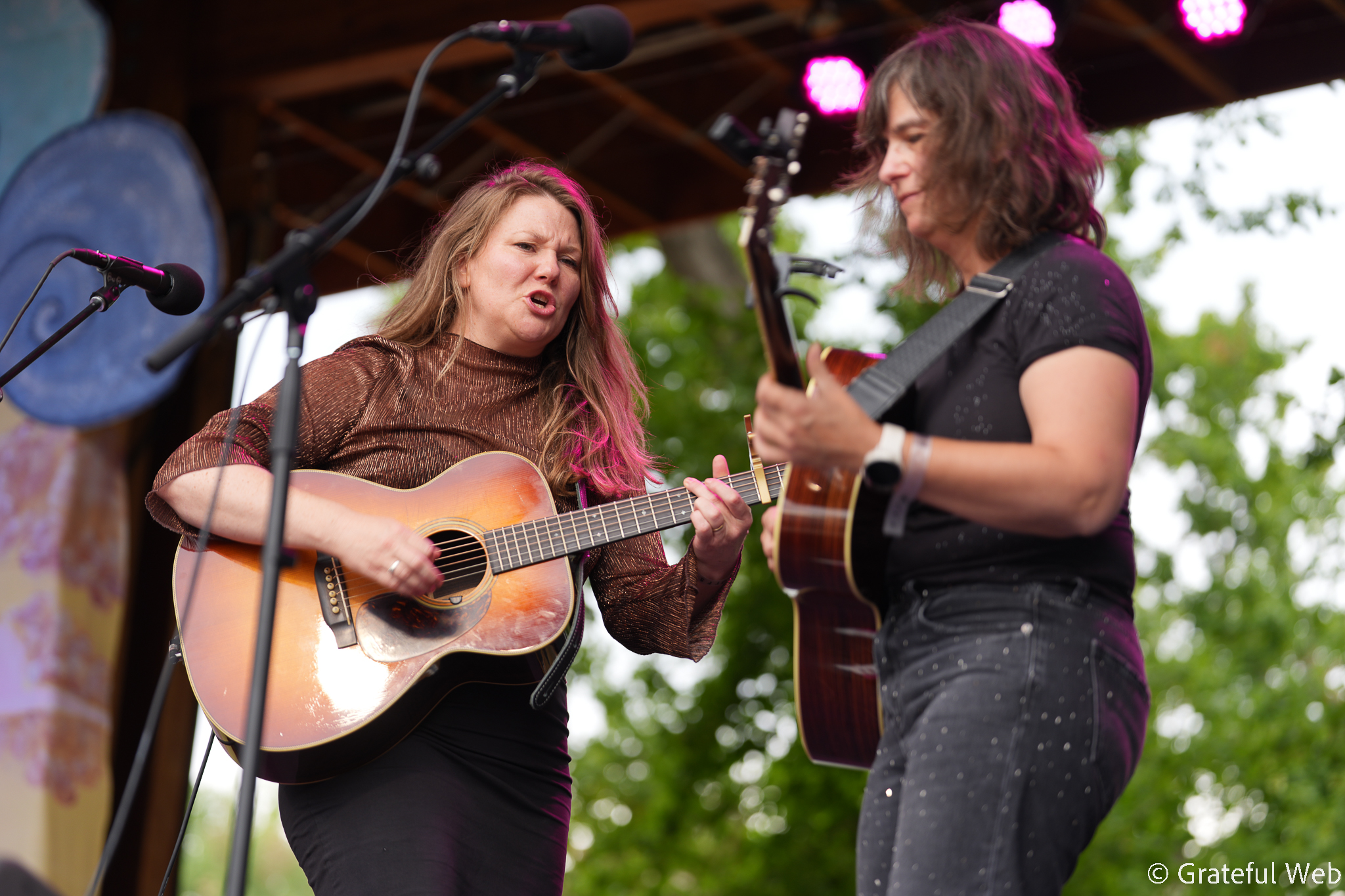
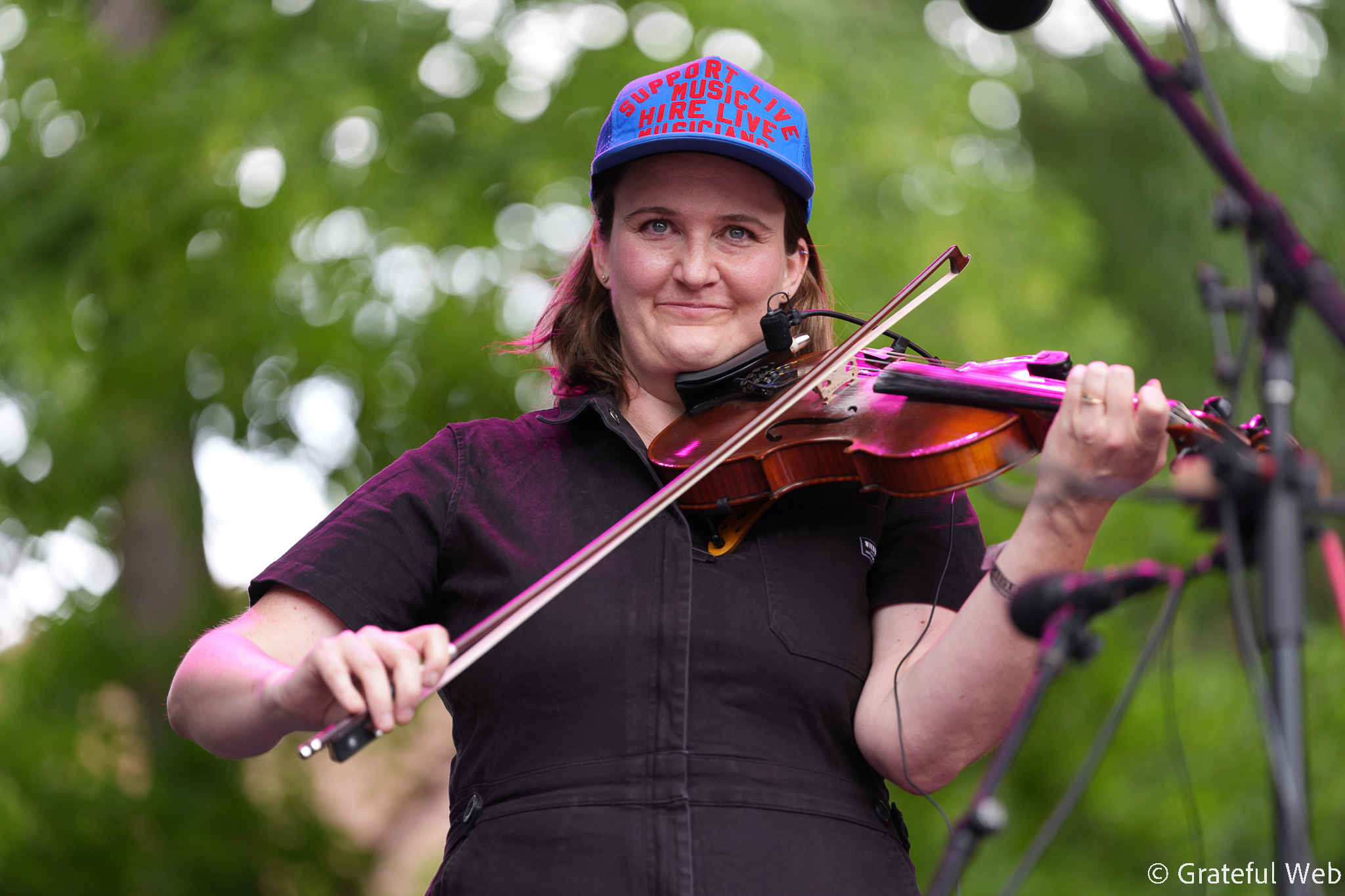
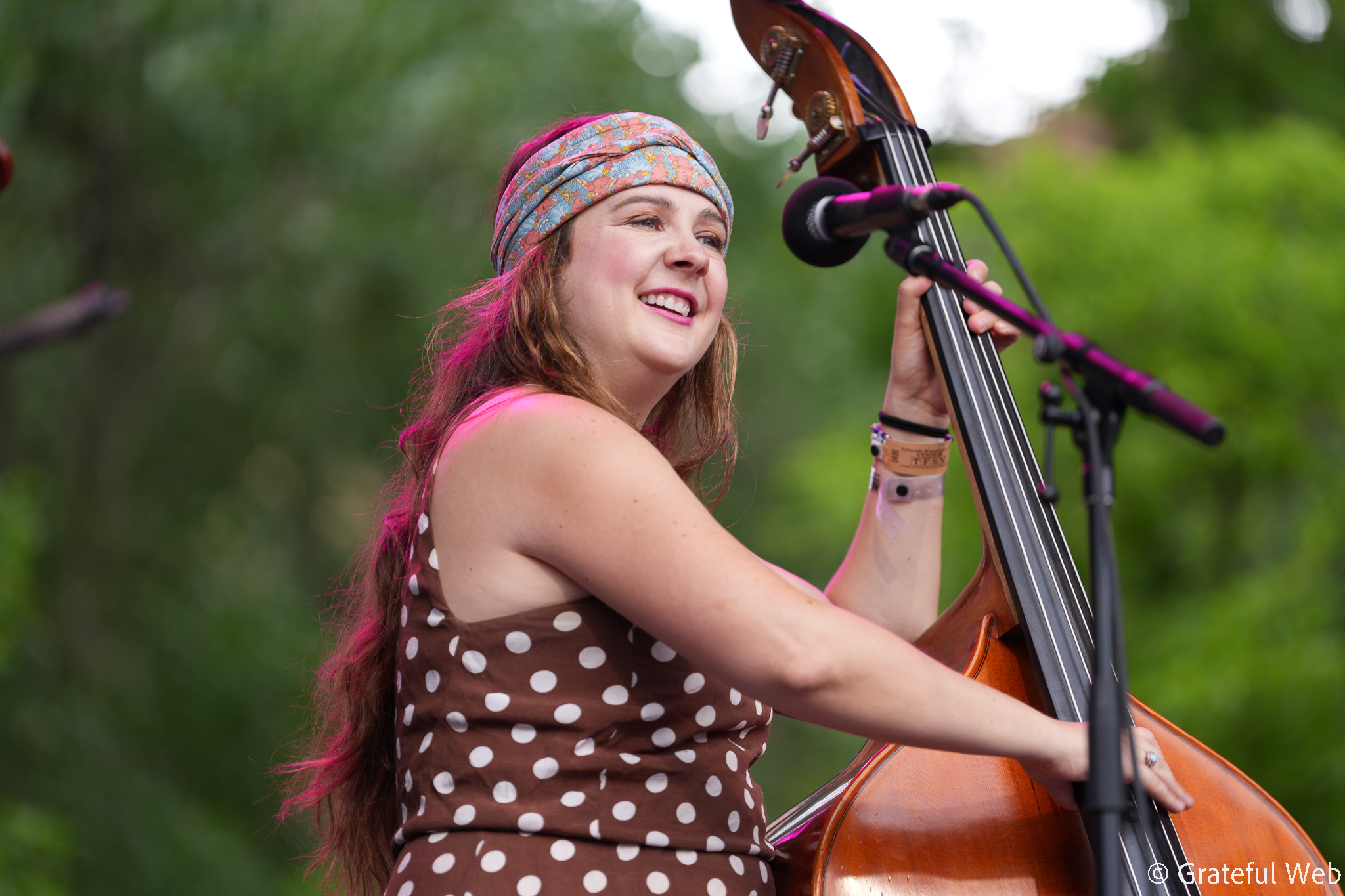
I had seen Della Mae at RockyGrass years earlier, when they welcomed Bonnie Paine of Elephant Revival for what I remember as a performance of the Grateful Dead’s “Mississippi Half-Step Uptown Toodeloo.” Their return on Sunday carried the confidence of musicians who know the festival and understand its audience.
Woodsmith introduced one newer song with a story about her husband waking around 4:30 each morning for work and wanting to give her a large kiss before leaving. At that hour, her first instinct was not necessarily romantic. She joked about wanting to punch him in the throat before recognizing how fortunate she was to have someone who loved her so completely.
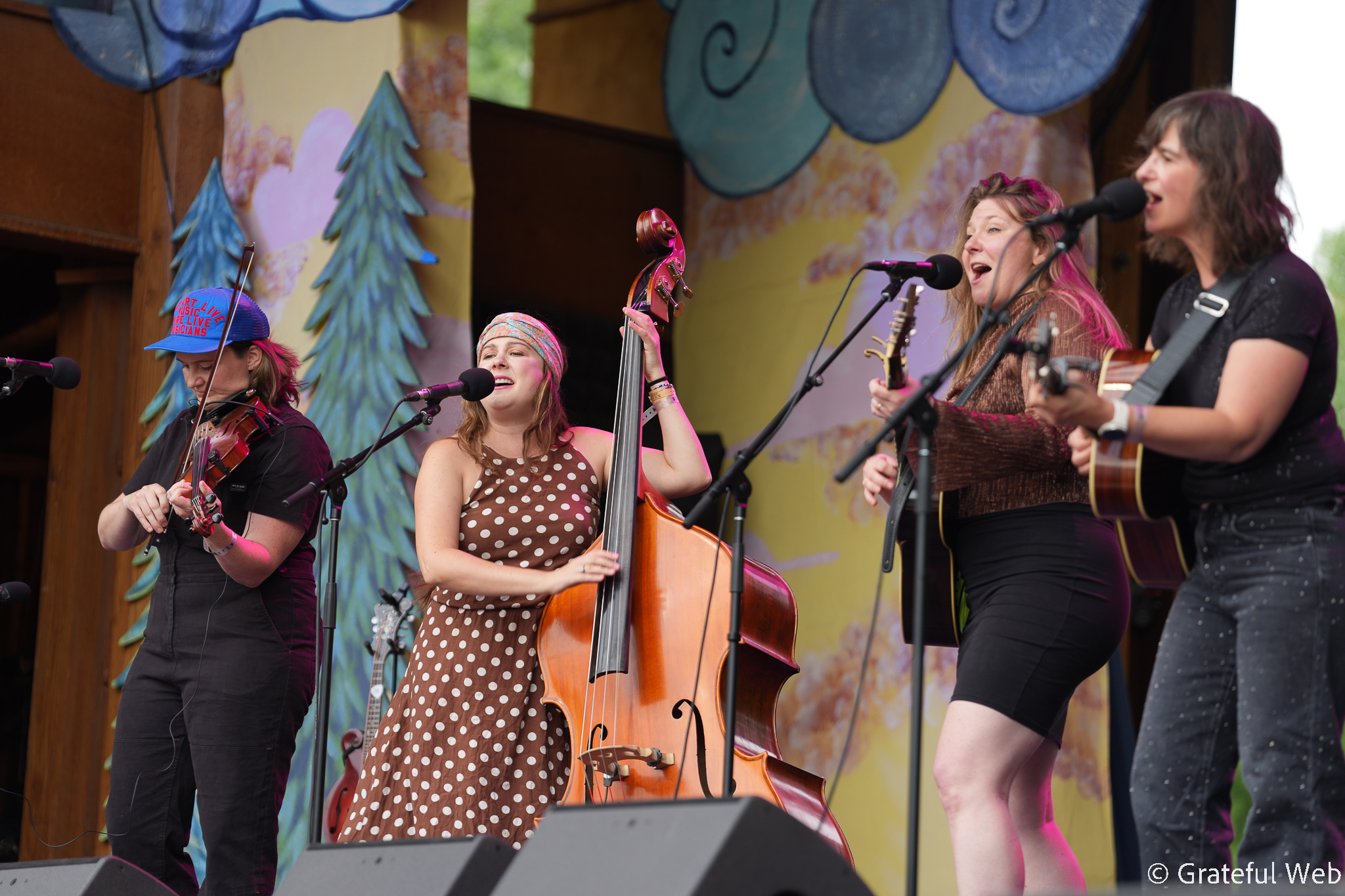
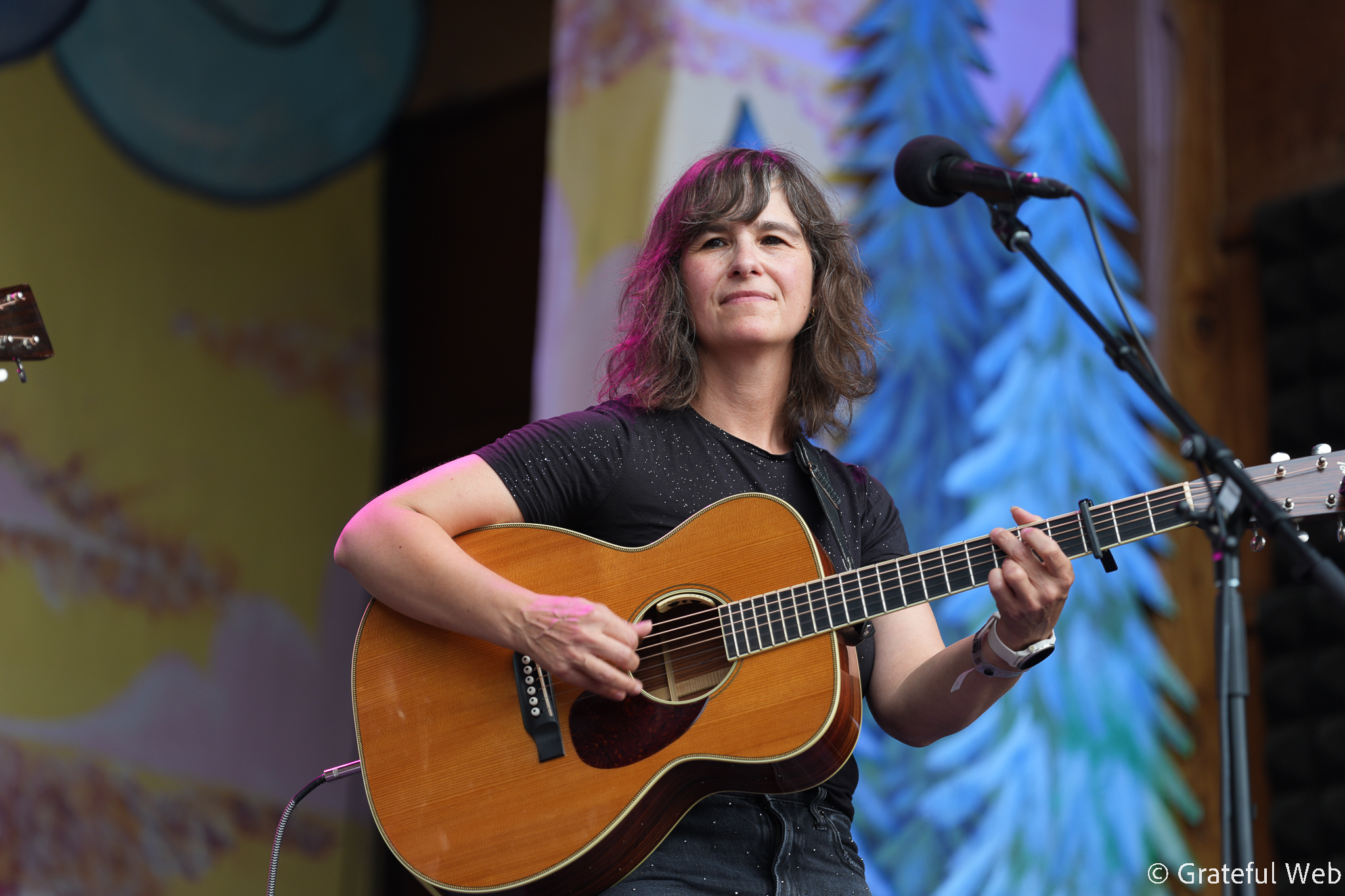
That combination of humor and gratitude carried into the song. Della Mae’s ability to move between sharp playing, strong vocals and informal storytelling made the set feel polished without becoming distant.
Slipstream and Friends closed the Wildflower Pavilion with a celebration of Colorado bluegrass. By then, I was already making my way slowly toward the exit, but I heard that music still coming from the pavilion and stepped inside long enough to catch a couple of songs and take a few final photographs.
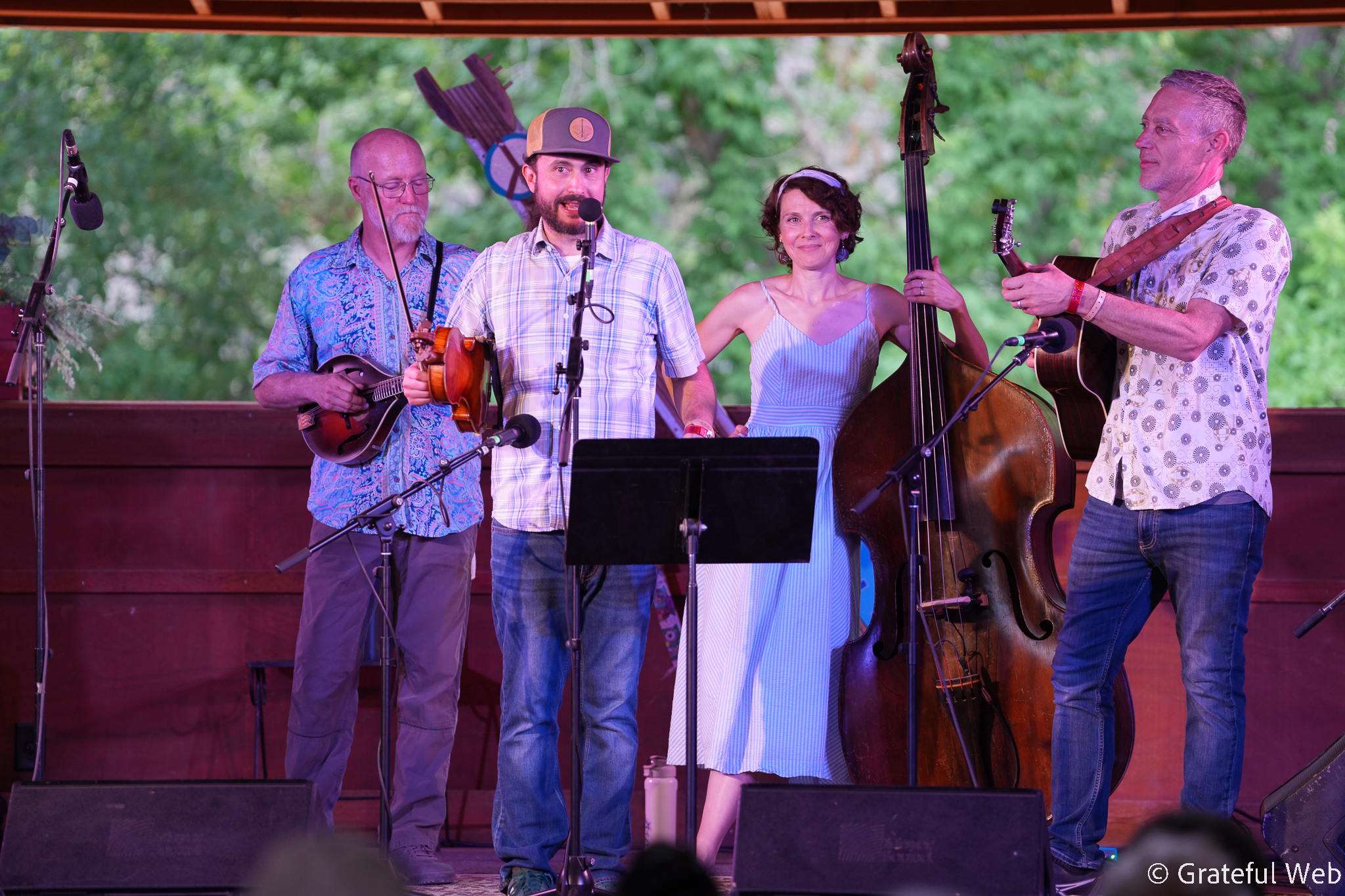
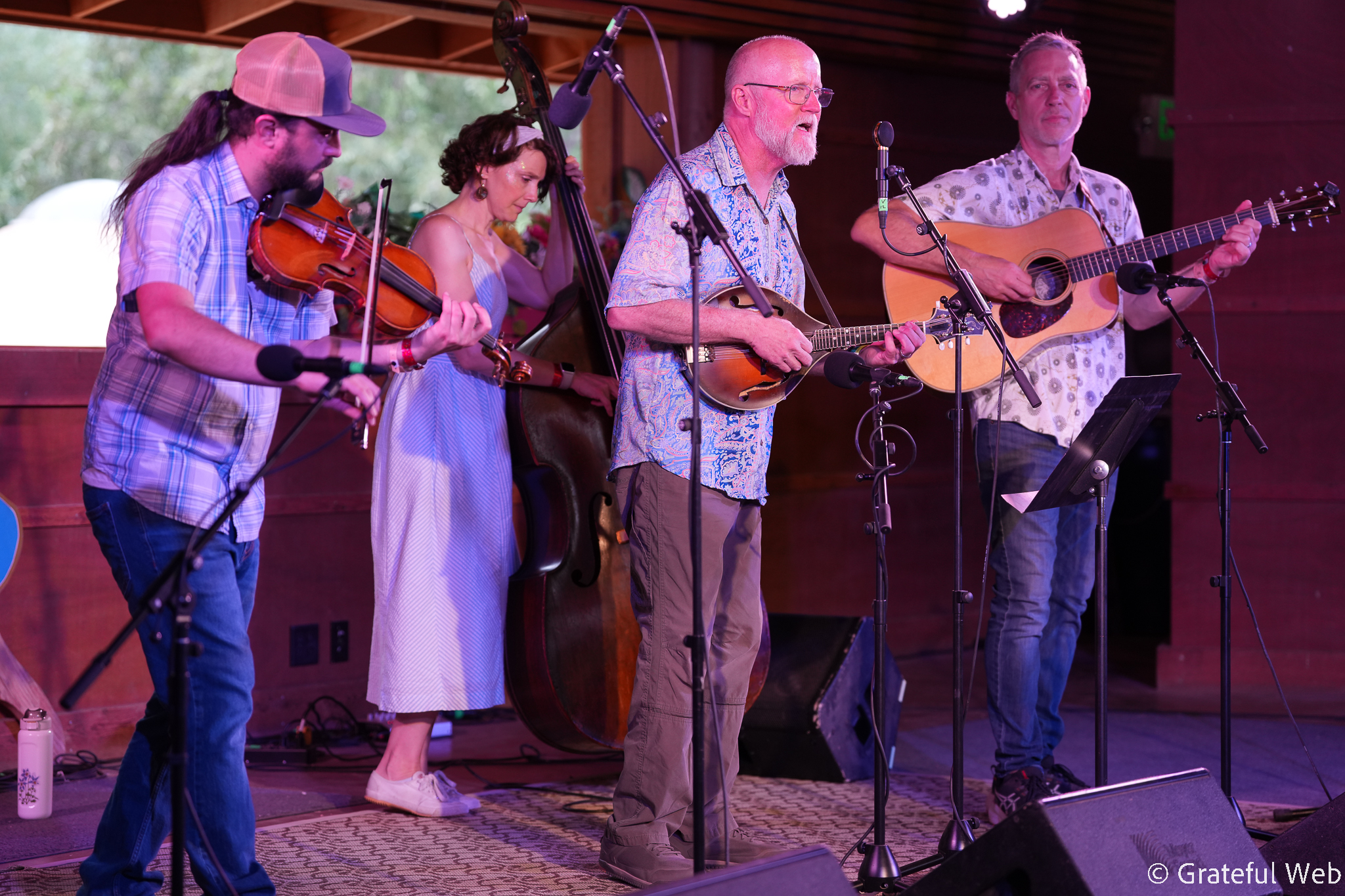
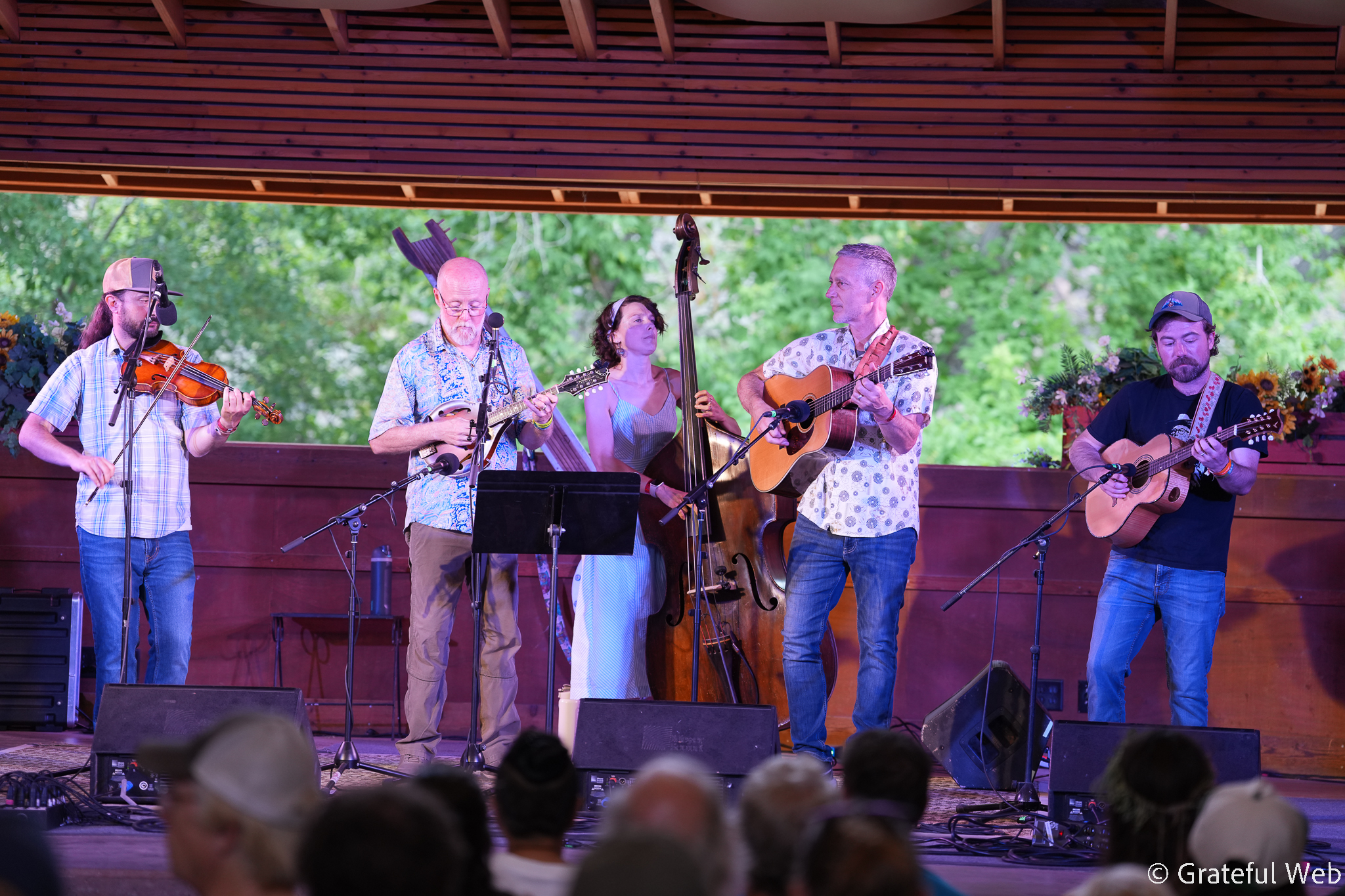
It was an appropriate last musical stop: a salute to Colorado’s own bluegrass history after a day that had stretched from Appalachia to Ireland, Canada, Germany and back to the Front Range.
Beyond the stages, RockyGrass remained one of Colorado’s most inviting festival environments.
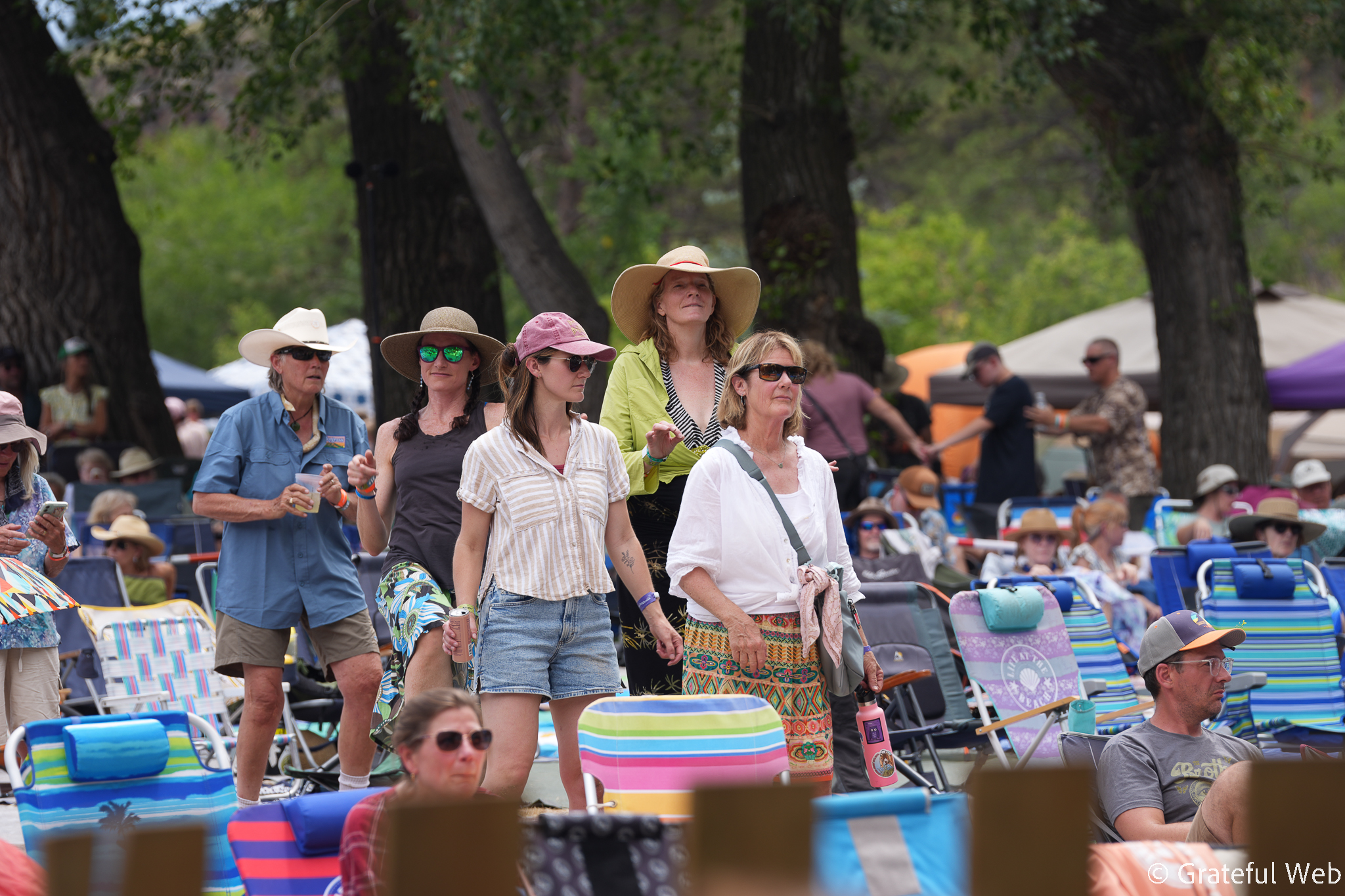
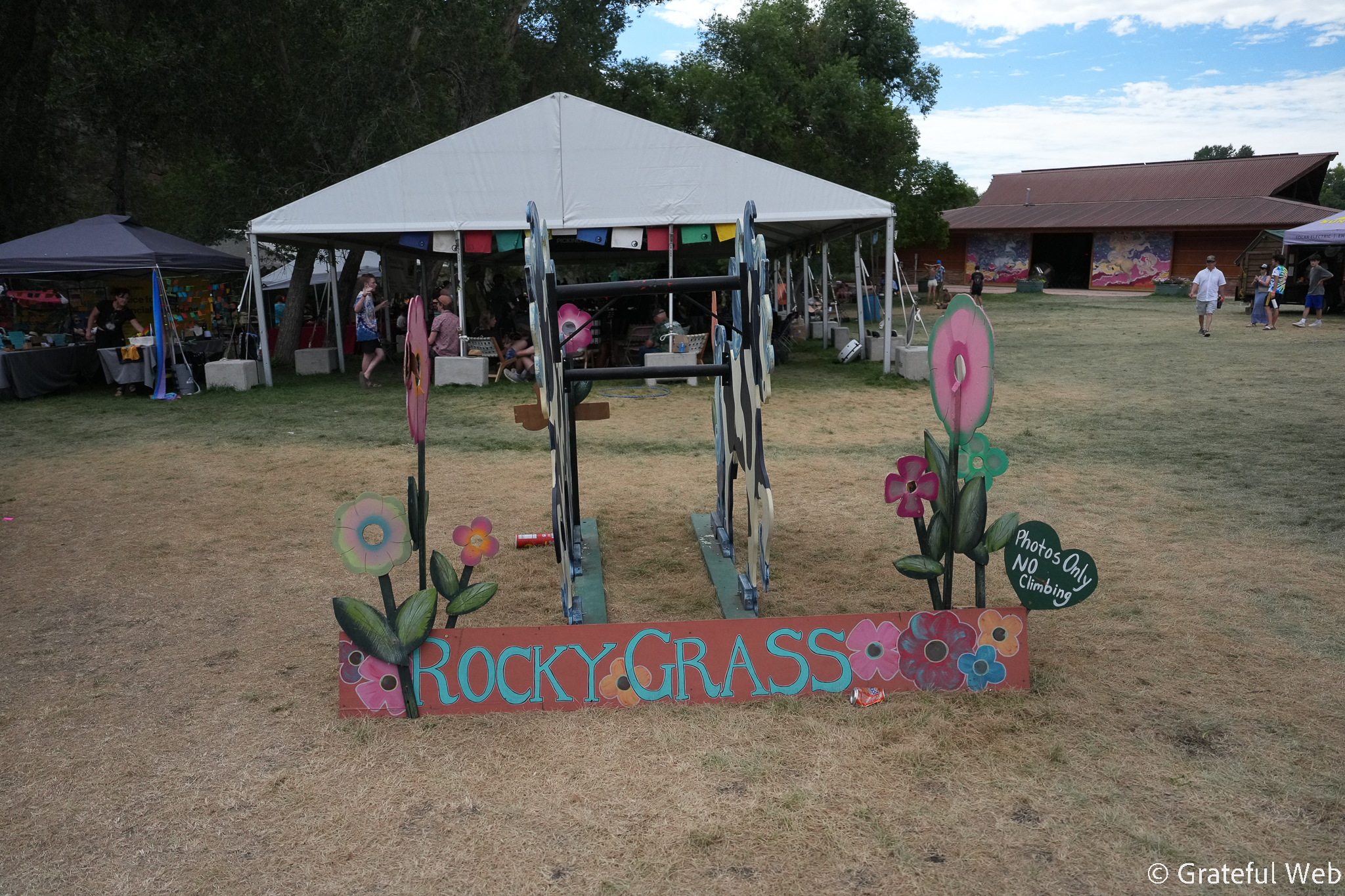
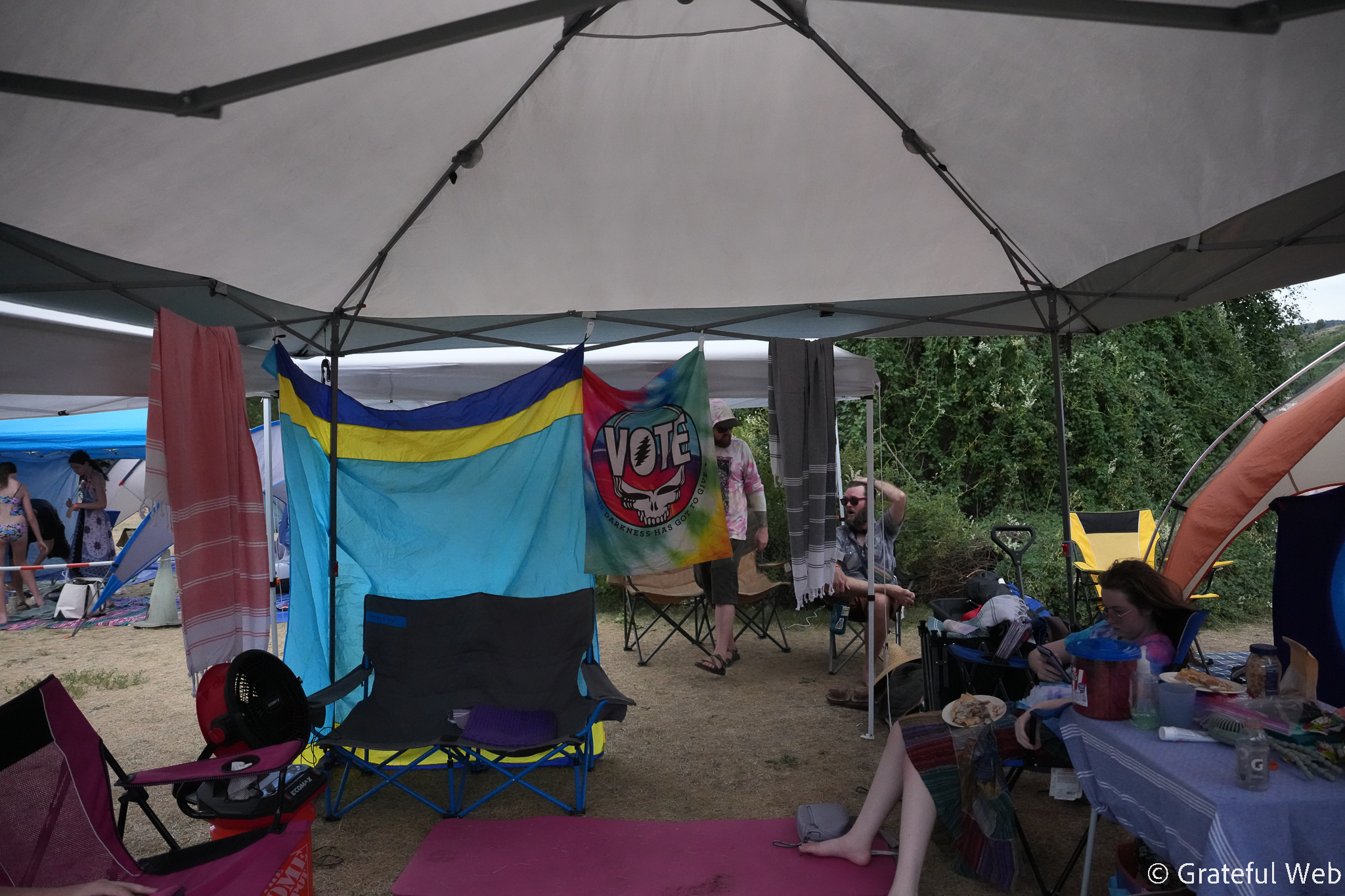
The forecast had threatened temperatures near 100 degrees, and I had been dreading a brutally hot day on the grounds. Instead, clouds covered the sun for much of the afternoon, with a few brief sprinkles and one minor shower that passed almost as quickly as it arrived.
Colorado remains desperately in need of sustained rain, but even that limited cloud cover made the festival far more tolerable.
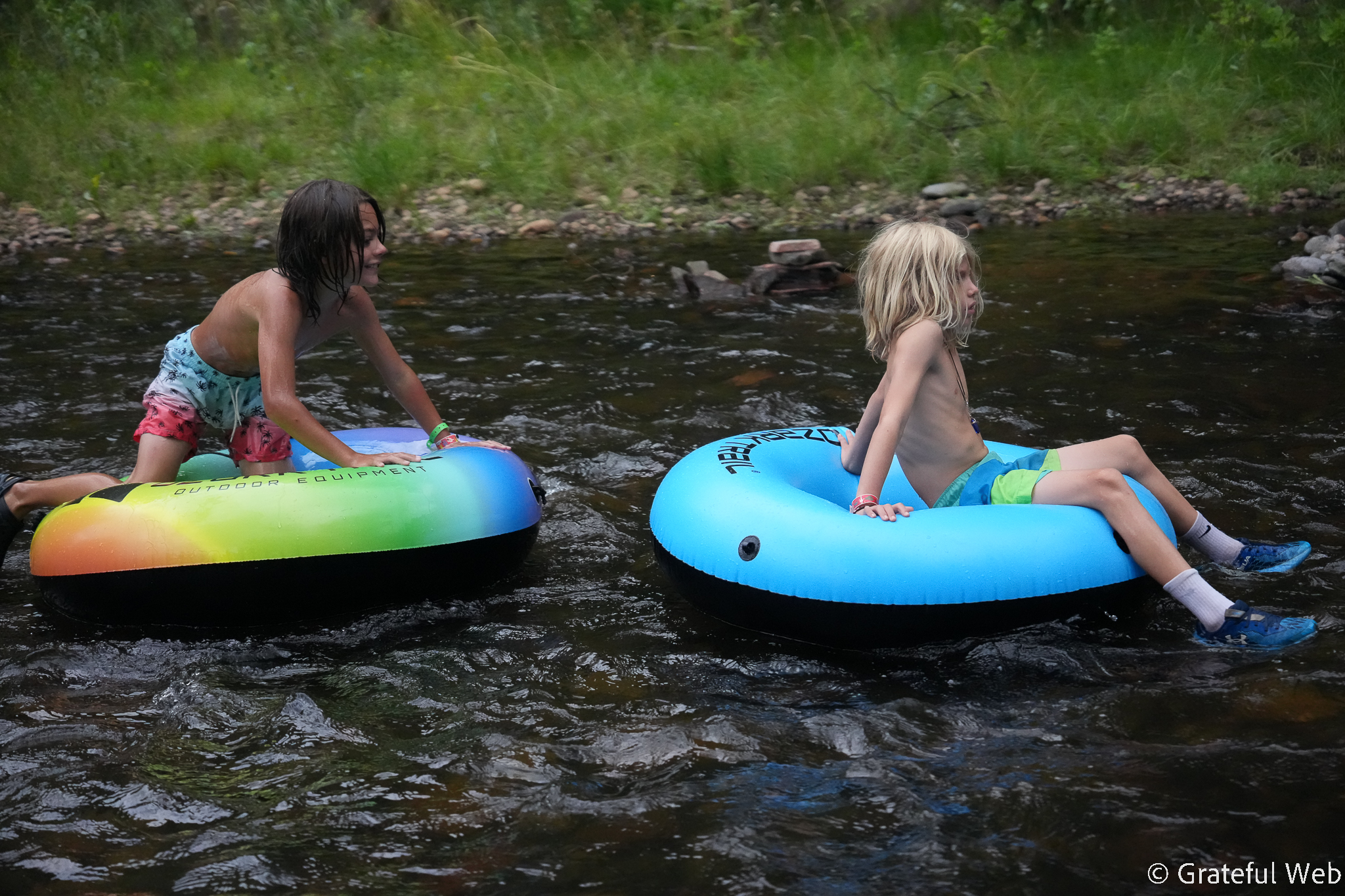
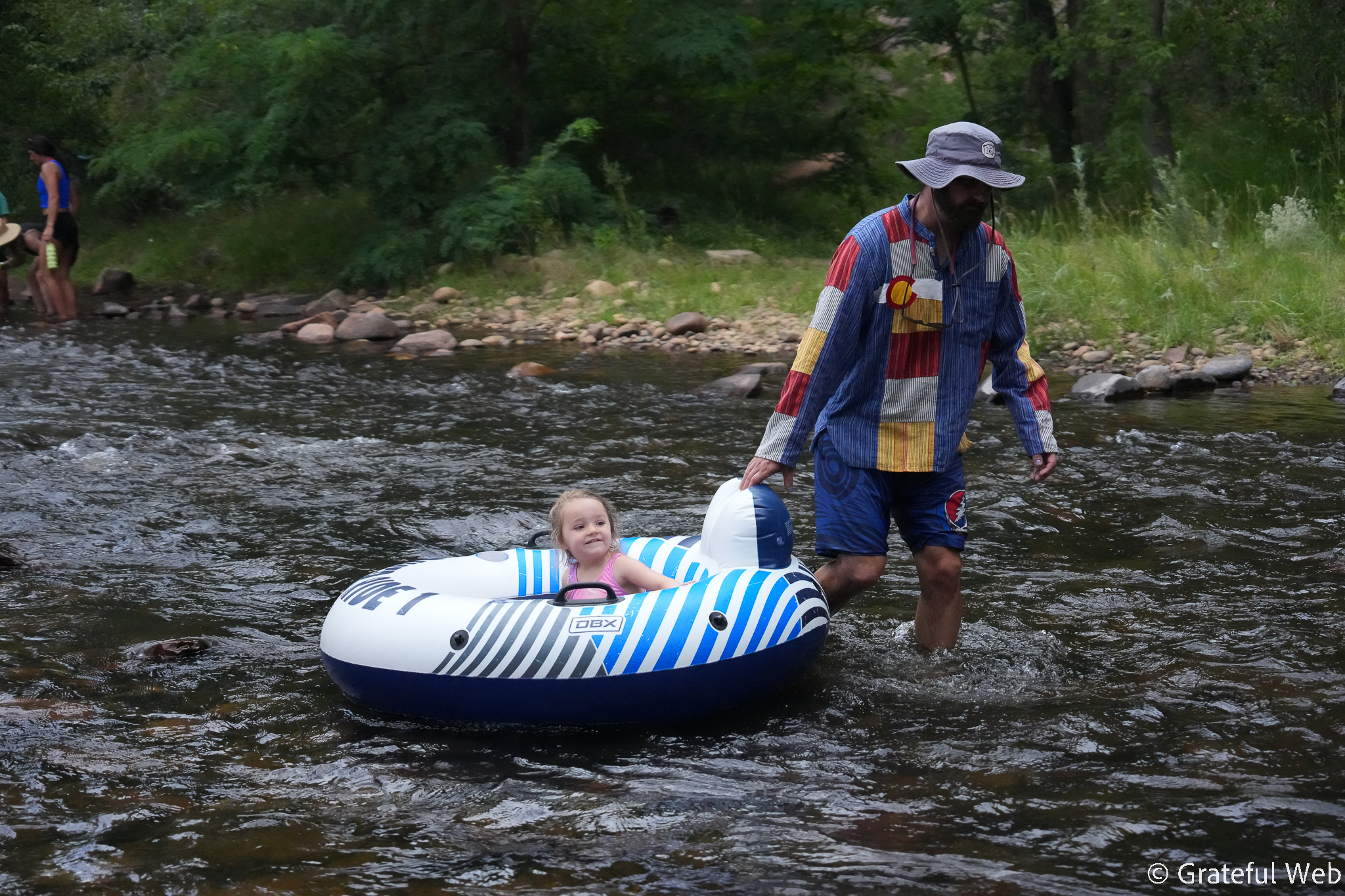
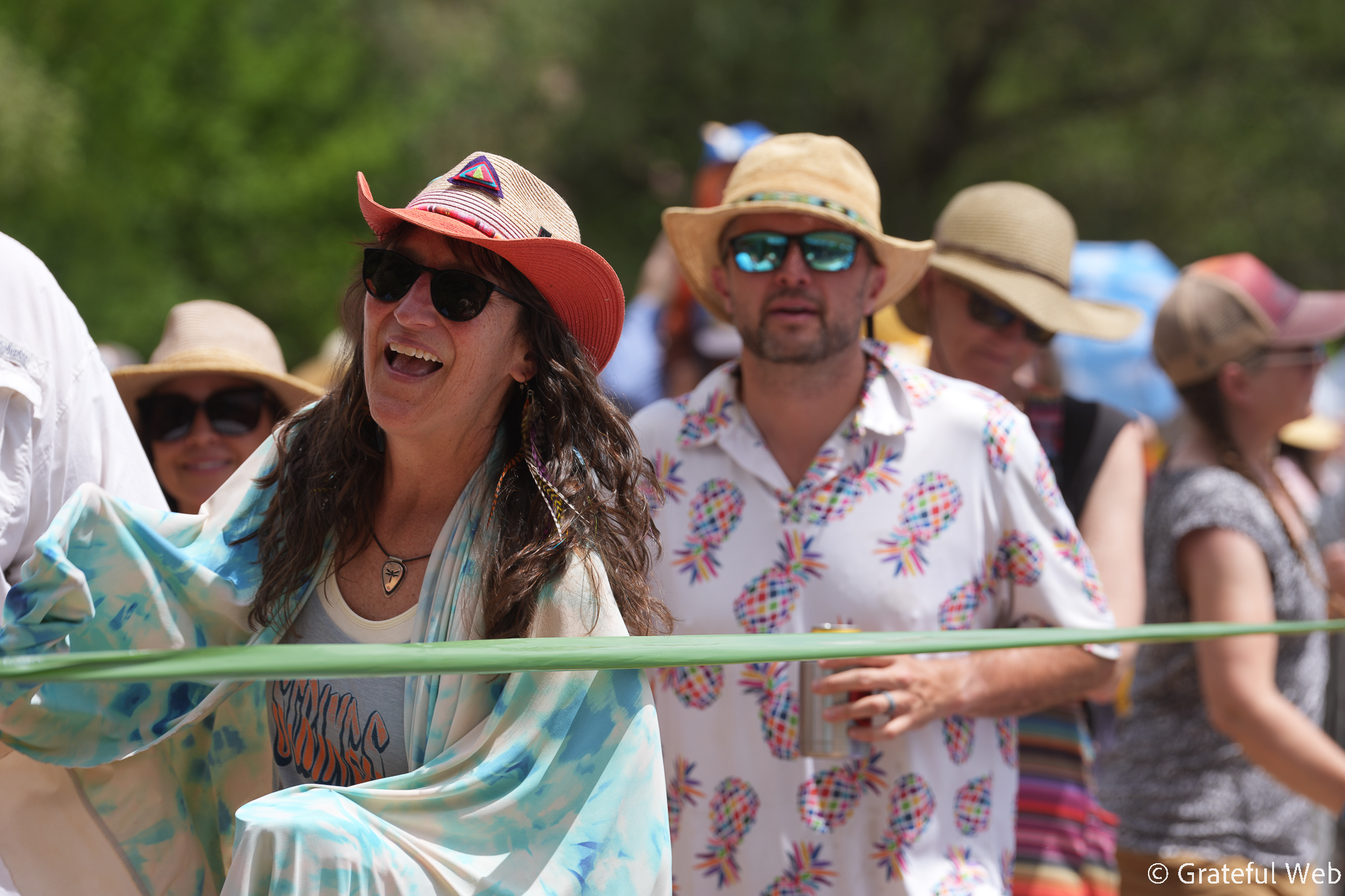
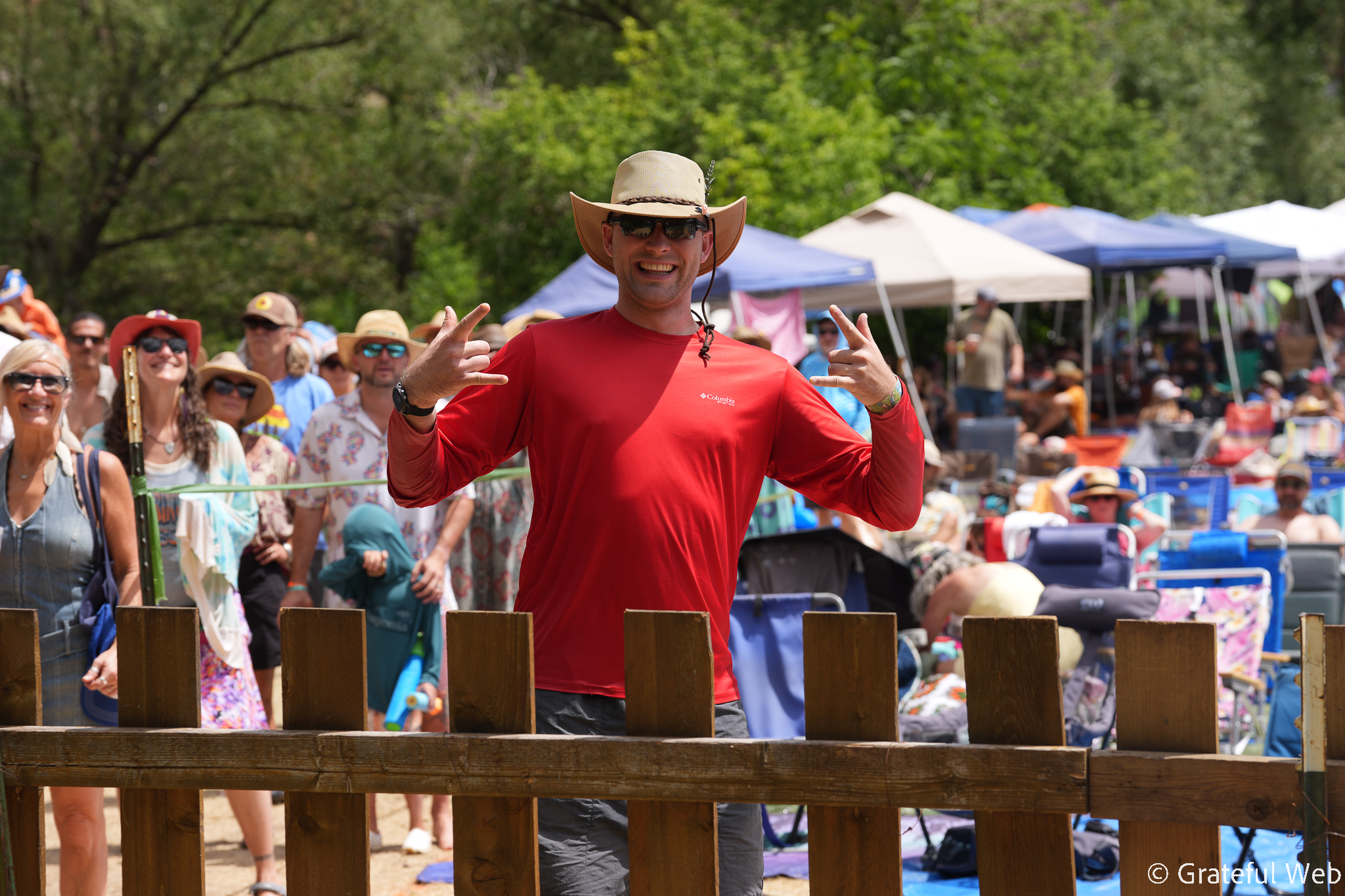
The North St. Vrain River again served as RockyGrass’ natural playground. Children and adults floated through the grounds in tubes, while others placed chairs directly in the shallow water and relaxed with drinks. For families, the river provides hours of entertainment without requiring anyone to leave earshot of the music.
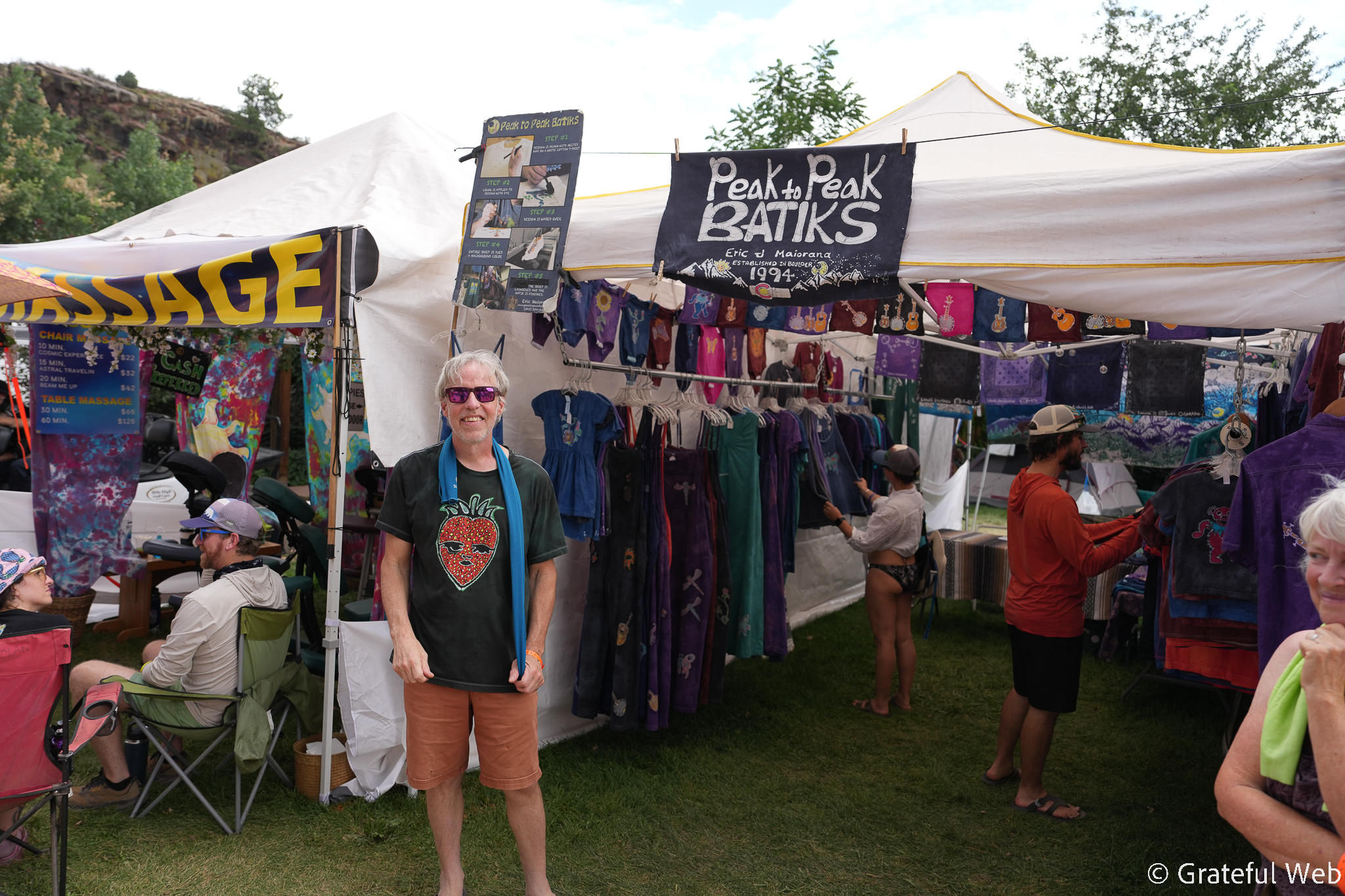
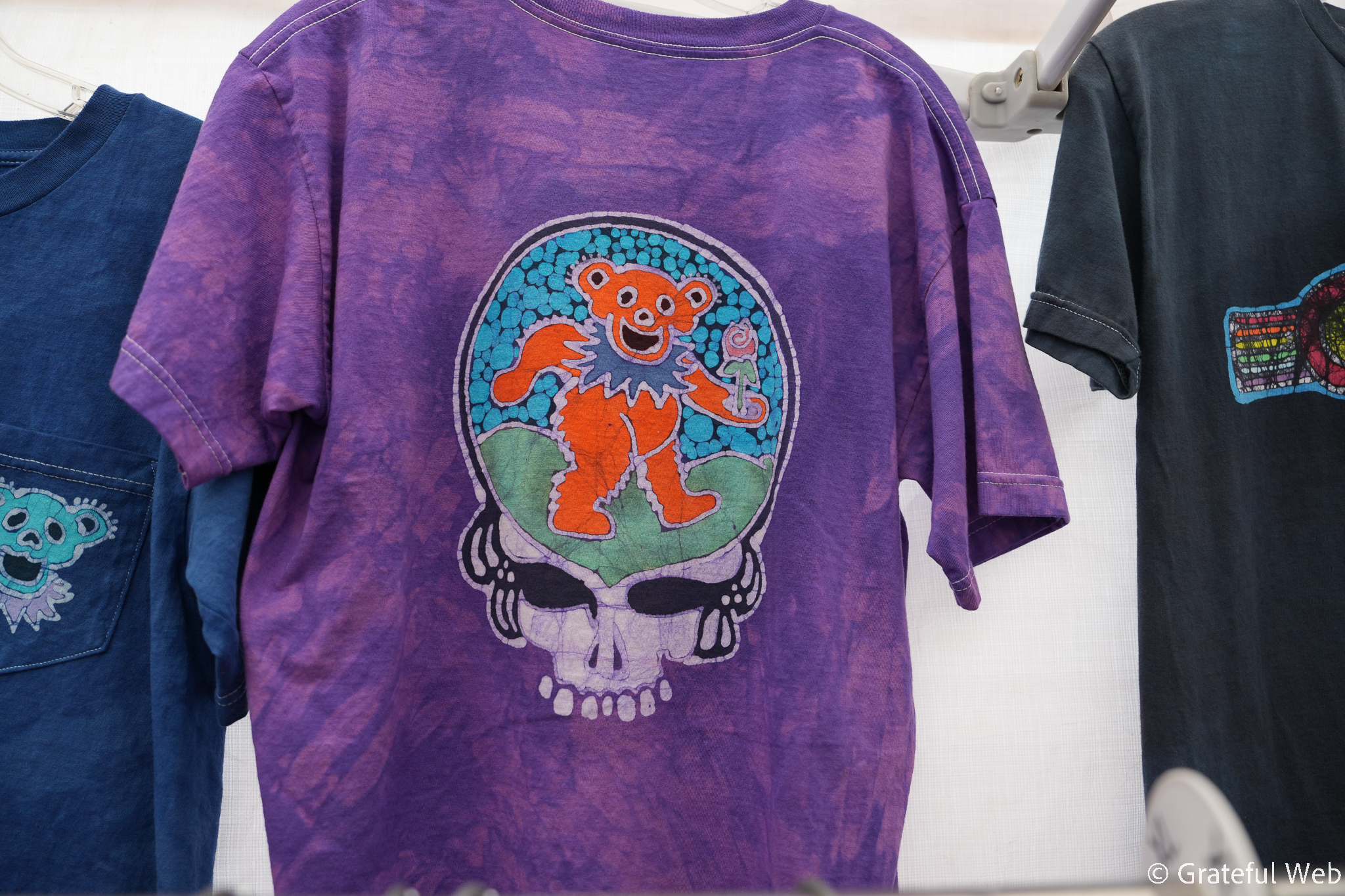
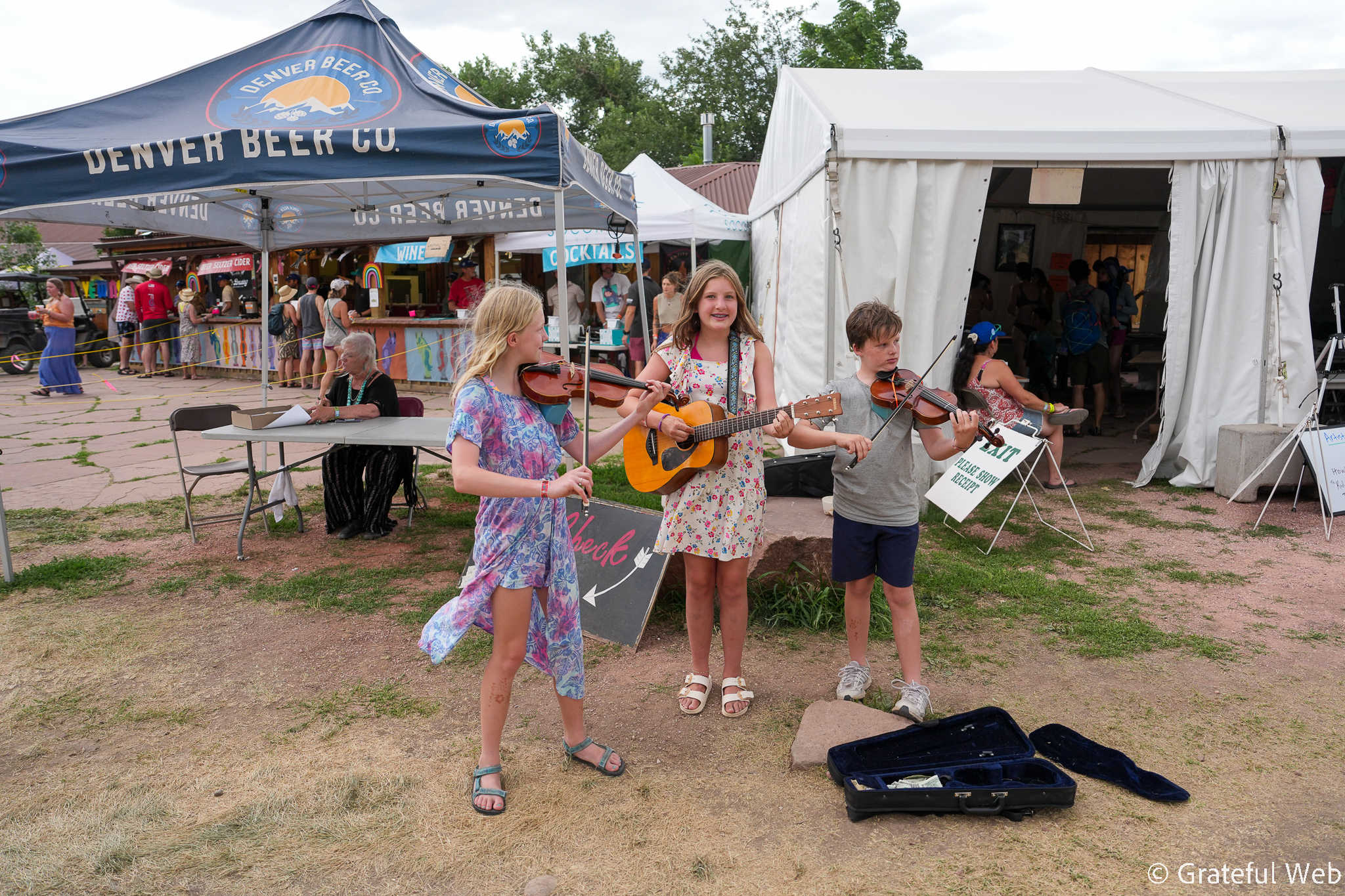
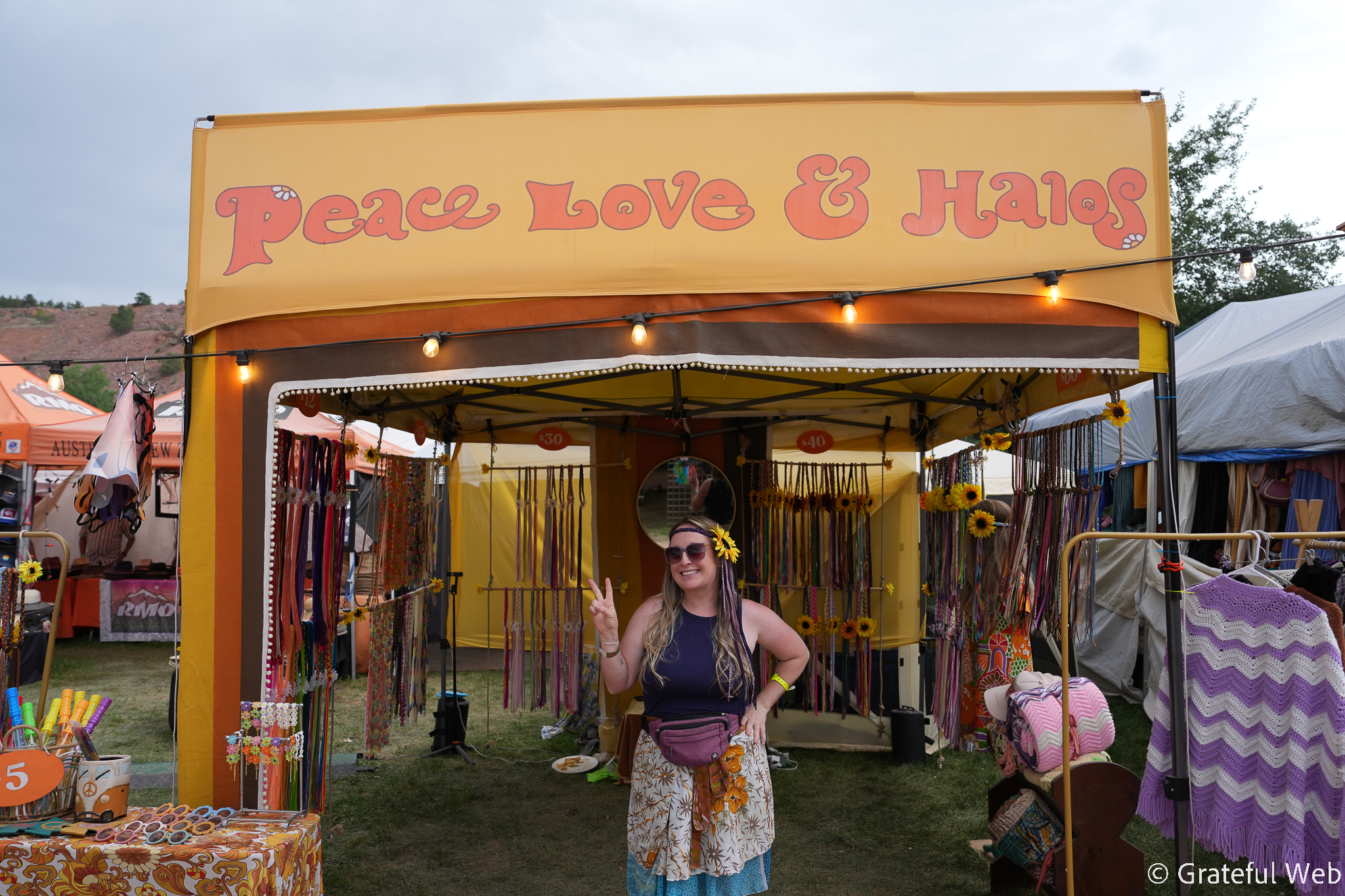
Elsewhere, musicians gathered to pick guitars, people wandered between vendors, and groups tossed Frisbees or played hacky sack on the grass. Hacky sack even appears to be experiencing something of a resurgence among younger festivalgoers, which I fully support.
Backstage, the hospitality remained exceptional. Grateful Web has been fortunate over the years to receive generous access at Planet Bluegrass, where walking behind the stage can mean casually passing some of the most respected musicians in acoustic music.
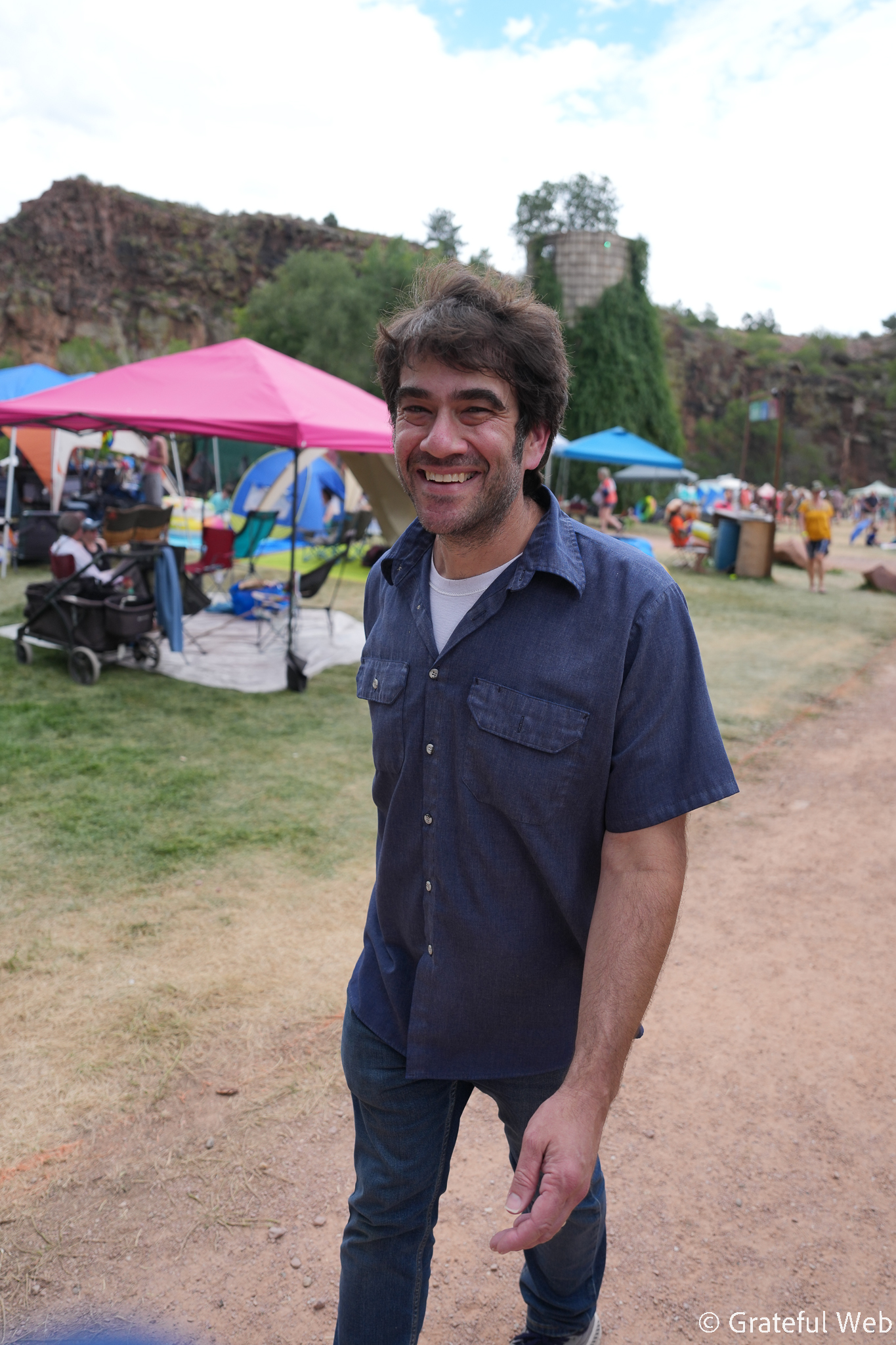
Debra Lambert covered Friday and Saturday for us and was understandably struck by seeing Béla Fleck, members of the McCoury family and others simply walking through the backstage area. On Sunday, I caught a candid photograph of Punch Brothers banjo player Noam Pikelny moving through the grounds.
I regret that I could not stay to watch Pikelny and Punch Brothers perform, just as I regret missing Tim O’Brien. But after nearly eight hours on-site and close to five miles of walking, my hip had reached its limit.
There is a difference between pushing through ordinary festival fatigue and ignoring the warning signs of a joint that was replaced only a few weeks earlier. Leaving was the responsible decision, even if it was not an easy one.
Fortunately, RockyGrass will return.
By next summer, I hope to be back at full strength, ready to cover the entire weekend and stay until the final note. For this year, one long Sunday offered more than enough evidence that bluegrass remains alive, restless and constantly moving.
It traveled from Ireland and Scotland into Appalachia, changed in the hands of American musicians and then continued across oceans and borders. At RockyGrass, those sounds met again beside the St. Vrain—familiar but never fixed, rooted in tradition while still finding somewhere new to go.