Article Contributed by Gratefulweb
Published on 2026-10-28
photos courtesy of Scarlet Fire Guitars
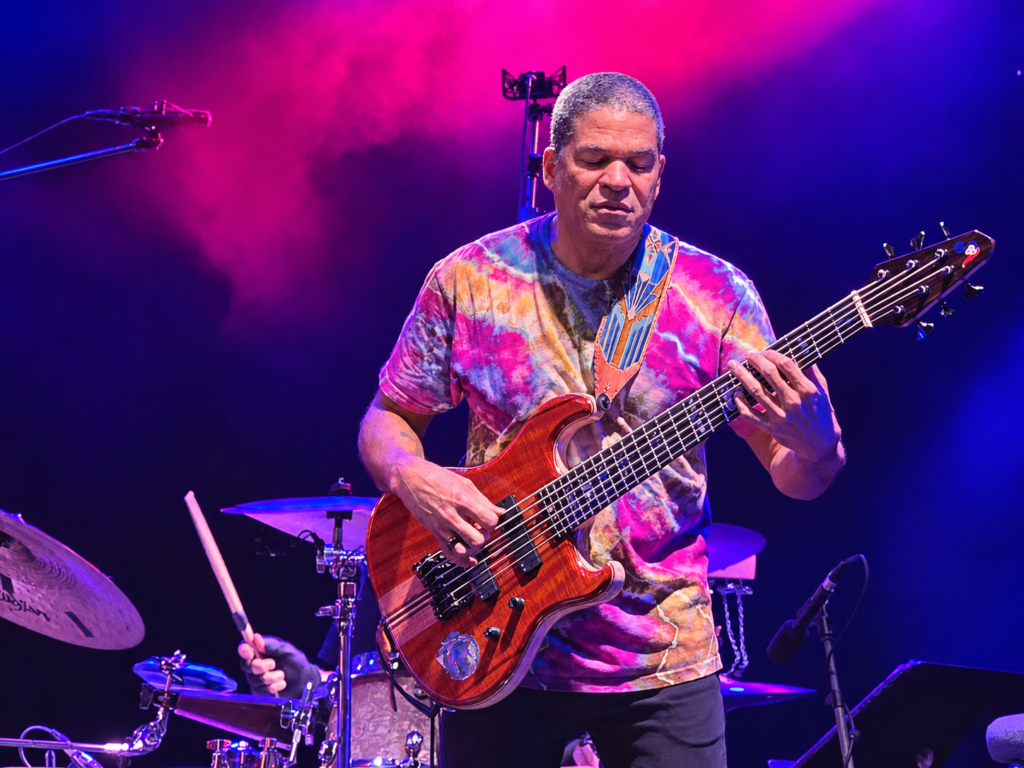
A bass built to revisit a piece of Grateful Dead history led Leo Elliott of Scarlet Fire Guitars toward something entirely new. After playing Elliott’s Mission Control replica, Oteil Burbridge had a request: bring the sound he loved into a lightweight, short-scale six-string bass, with an original body design and minimal onboard controls.
The result is King Tut, a custom instrument that combines carefully selected woods, intricate Egyptian-inspired inlay and a practical purpose: making it easier for Burbridge to keep making music for years to come. Its visual details reflect his family and personal interests, while its construction addresses the weight, balance and feel of an instrument built for the stage.
Grateful Web first covered Elliott’s Mission Control replica project in March 2022 through an announcement by Dennis McNally. For this follow-up, Elliott shares how that instrument sparked his collaboration with Burbridge, the decisions behind King Tut’s construction, and what happened when the finished bass went straight from a late-night setup session to the stage at Miami Beach Bandshell with John Scofield’s Electrospective.
GW: How did Oteil first encounter your Mission Control replica, and what led him to challenge you to build a bass for him?
LE: Oteil was originally going to play my Mission Control replica for one song at the Sphere to help the Grateful Guitars Foundation. He enjoyed it so much that he kept playing. He later asked me to bring it back for the final night of the run. That turned out to be Bob Weir’s final appearance at the Sphere. He also played it on “Truckin’” and “Cold Rain and Snow” during the second night of Dead 60. Afterwards, he got the whole band to sign it. He didn’t have to do that. Oteil is generous and bighearted. It was pretty amazing.
GW: What did Oteil want from a short-scale, six-string bass? Did he have particular ideas about its sound, feel or appearance?
LE: Oteil loved the sound of my Mission Control replica, but wanted those qualities in the six-string format he normally plays. He asked me to build a new instrument with an original body shape of my own design. He also asked for it to be lightweight, with as few controls on the bass as possible.
GW: Can you walk us through the design and construction of King Tut? What materials and electronics did you choose, and what were the biggest challenges?
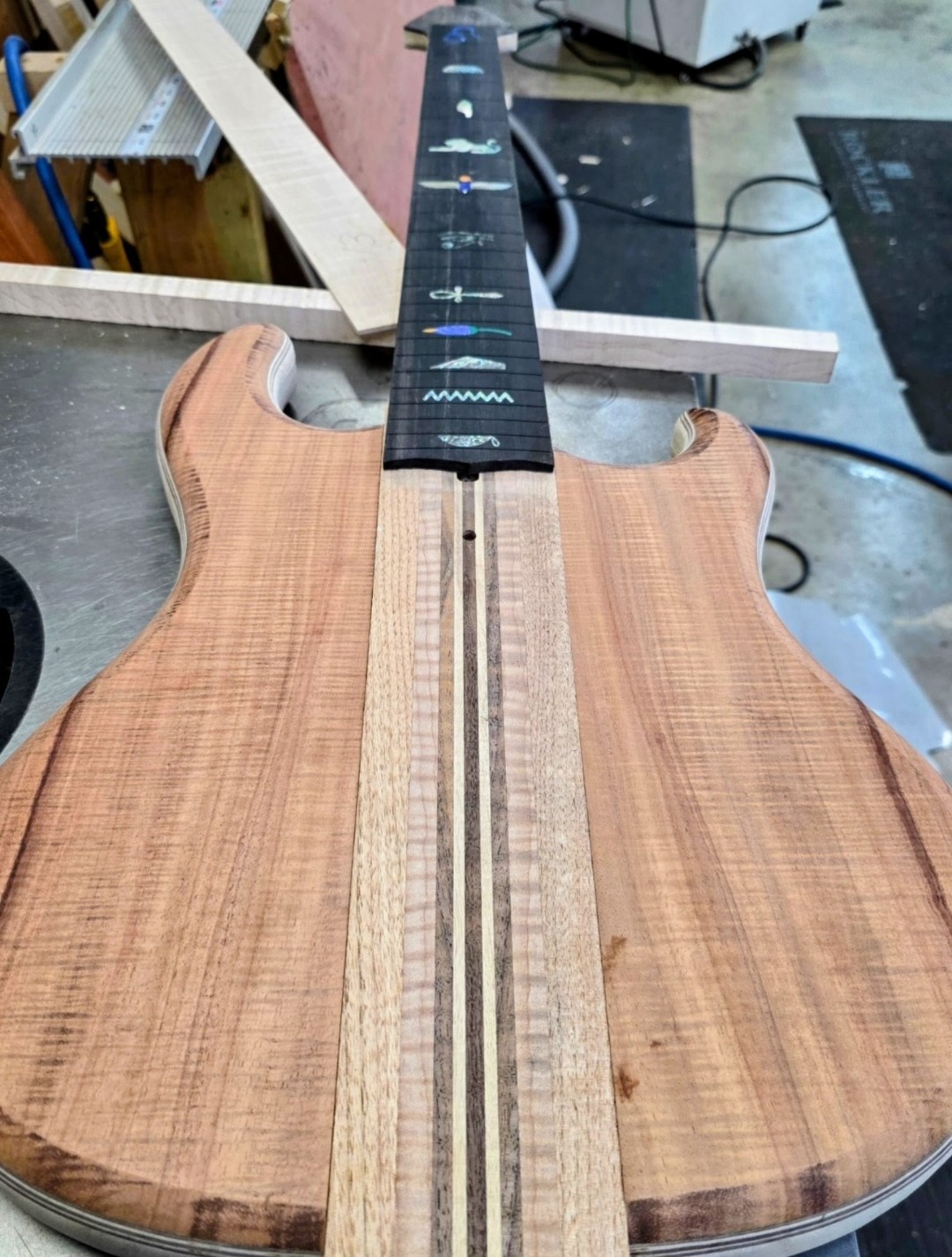
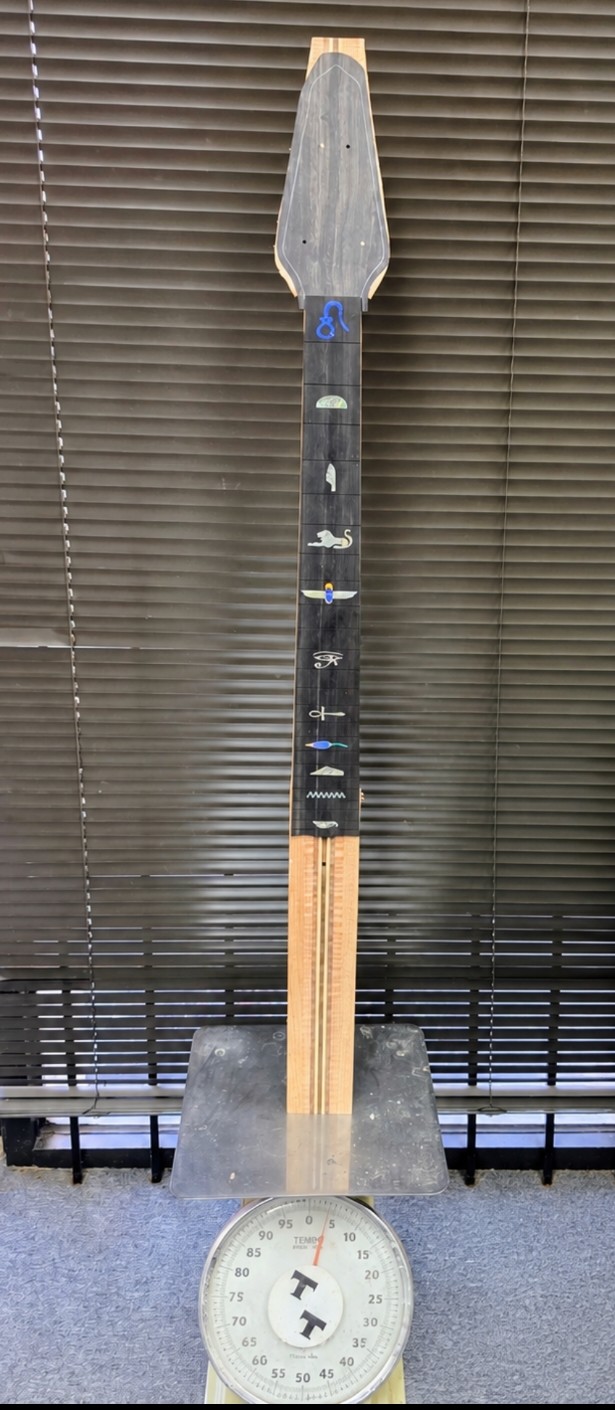
LE: I started the design shortly after the Sphere run and began construction in the fall of ’25. To keep it light, I leaned on the USDA Forest Service density data and chose butternut for the back and outer neck, with maple and walnut laminations and paulownia for the body core. The top is tight-grained, highly figured, old-growth koa harvested in the 1950s, with thin accent veneers, so it looks rich without much weight.
I wanted to use the new EMG E Series pickups because they were similar in design to the Mission Control pickups. I learned that after the people at Turner Guitars spoke with the EMG technicians.
GW: How did the name King Tut come about? Is there a story behind the instrument’s visual design?
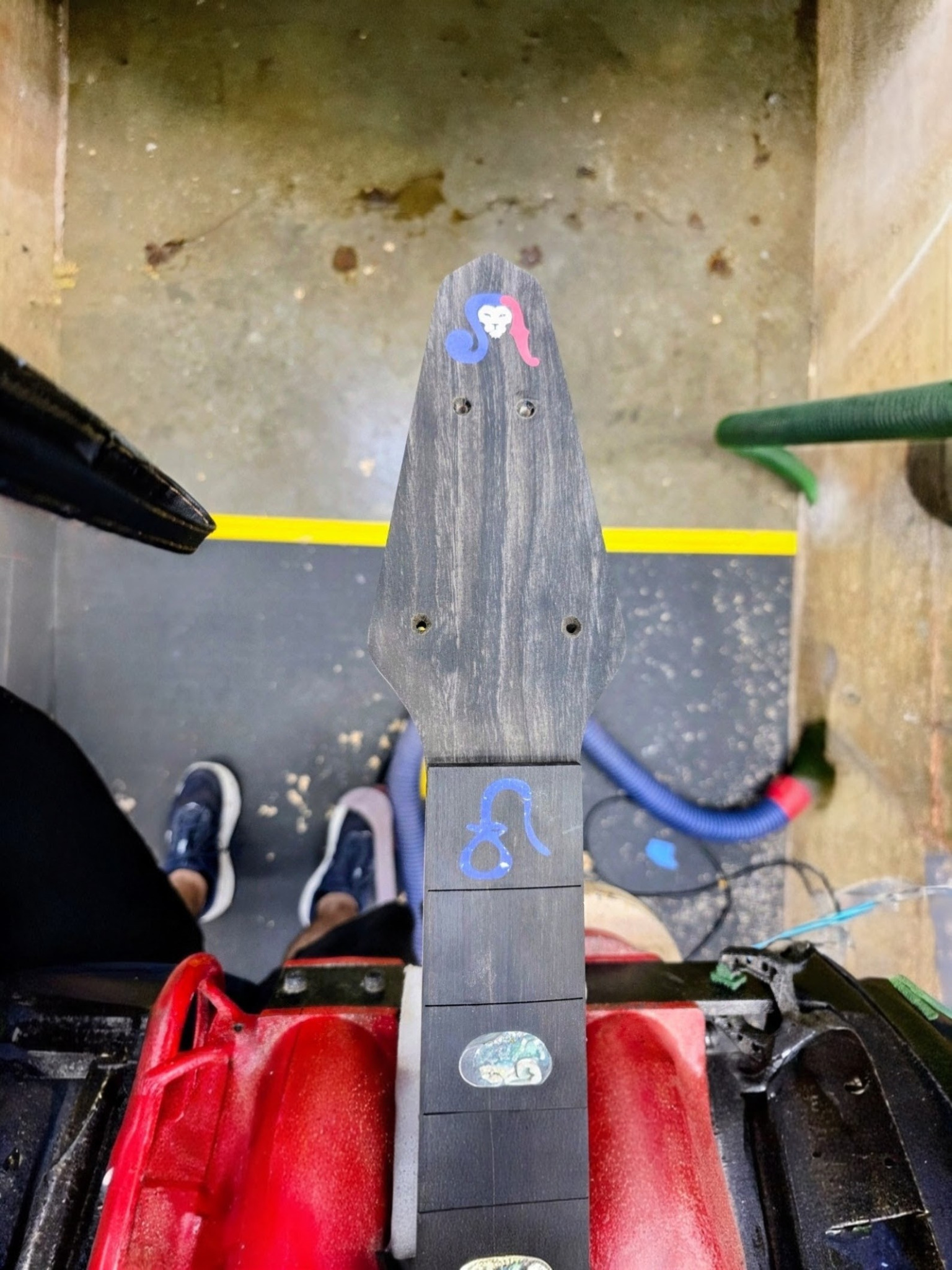
LE: Oteil loves Egyptian imagery and family means everything to him. So I spelled his name in hieroglyphs, added ankhs and a scarab, and wove in references to his family, including his wife’s love of dragons. Larry Robinson and I designed the main inlay based on a seal from King Tut’s tomb. We swapped the snake for a dragon. The inlay shows King Tut receiving the breath of life from Ra. The ankh, the key of life, represents that divine gift. It’s also Oteil’s favorite symbol. It is called King Tut because of the origin of the seal.
The imagery also symbolizes the continuation of Oteil’s life in music. The lighter weight and shorter scale make the bass easier for him to play. The idea is to help him keep making music for years to come.
GW: What was it like handing the finished bass to Oteil and hearing him play it for the first time? Has he shared any feedback since taking it on tour?
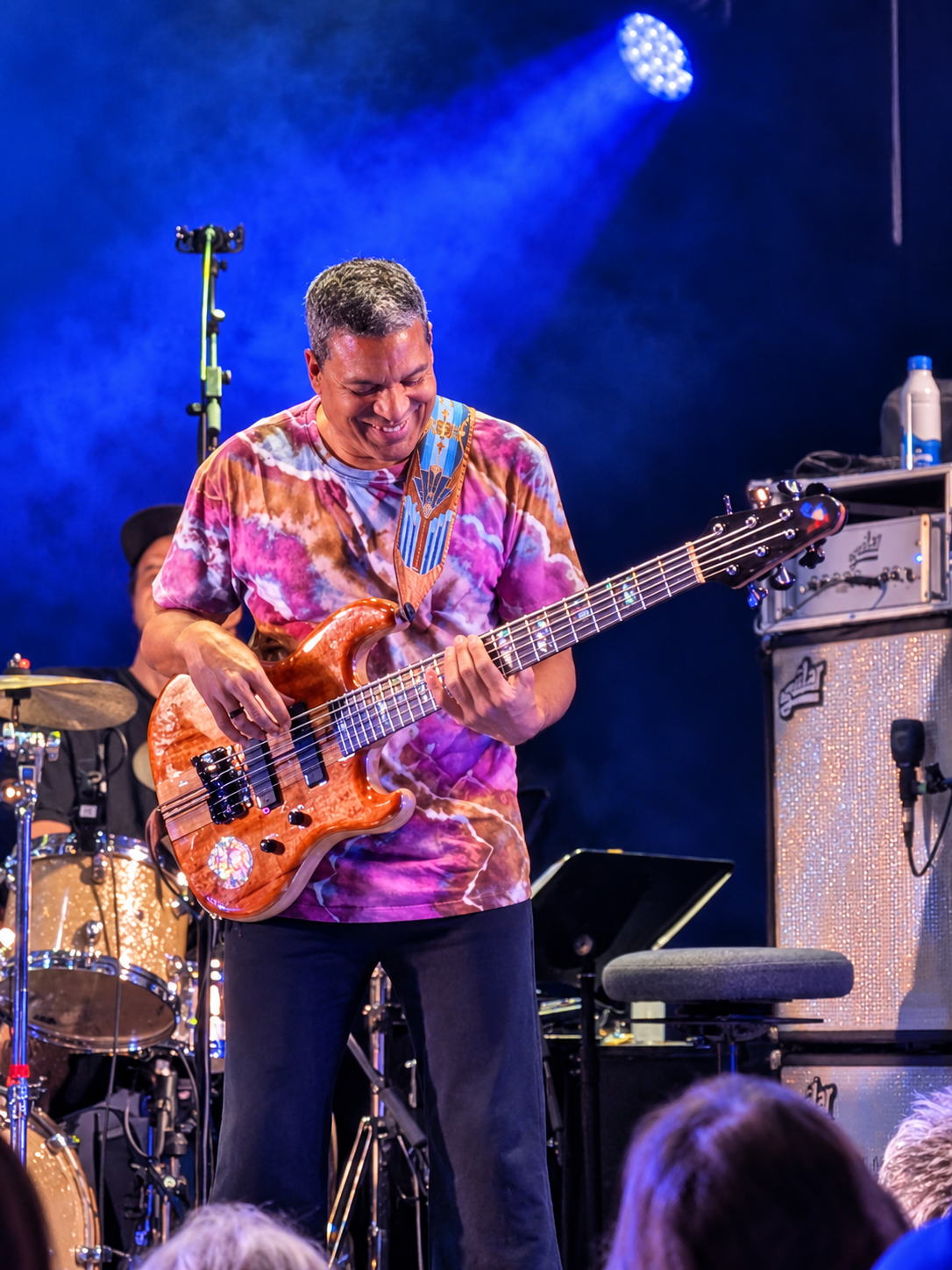
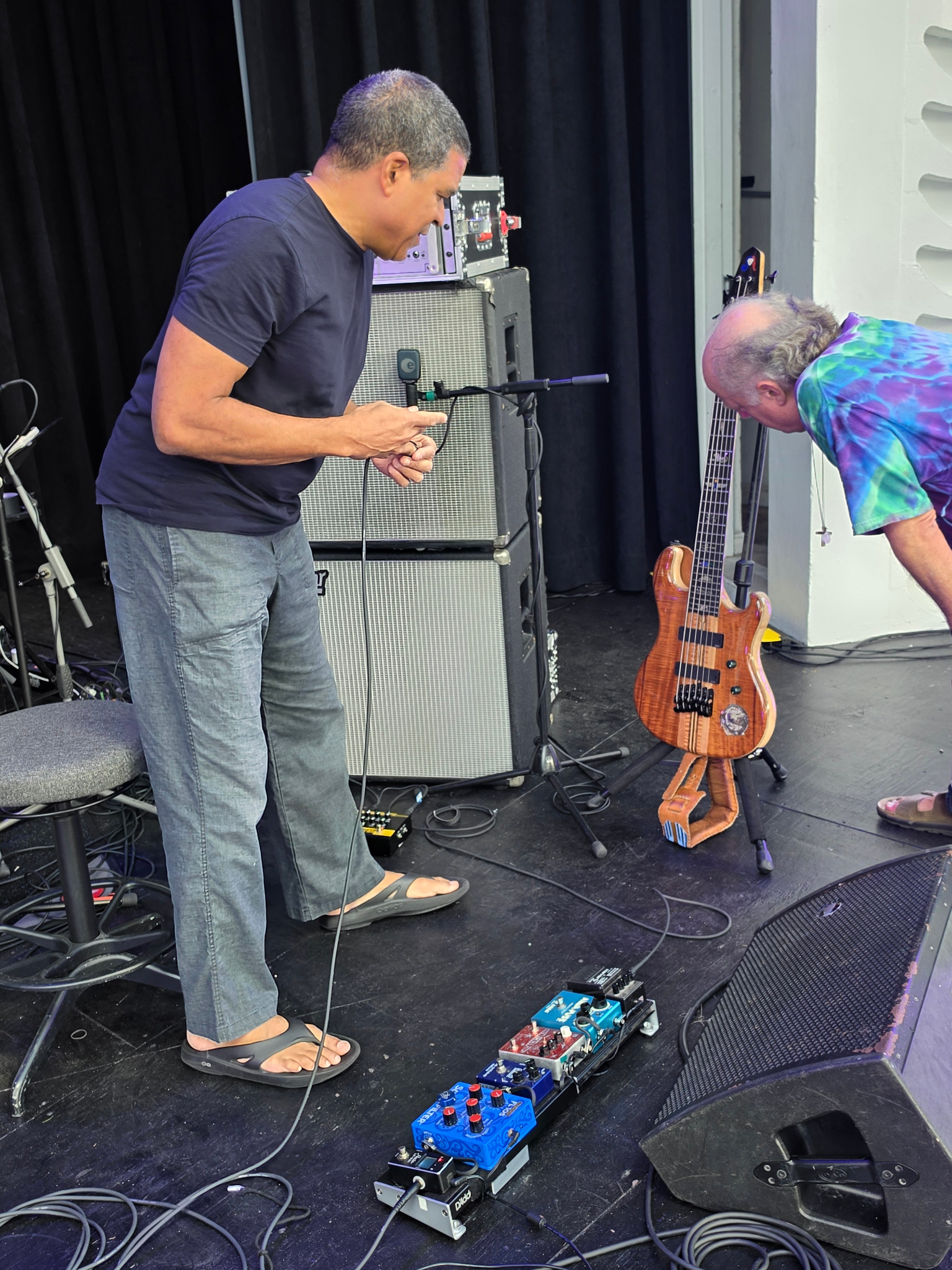
LE: Oteil was in town on a one-day break from the tour, spending time with his family. He drove out to my rental property late the night before the Miami show because that was the only window to set it up. We spent about three and a half hours dialing it in, and he took it straight on stage the next day.
During soundcheck before the show, he told me, “No six-string I have ever played thumps like this.” Right after coming offstage, he said, “Dude, Scofield loves this new bass, and so do I.” He also said, “Man, you hit a home run, a hole in one, the trifecta and a royal flush with that bass.”
Peter Lavezzoli also commented publicly: “What an incredible bass you made for Oteil, Leo! I’ve never seen him have such joy playing an instrument.”
GW: What did you learn from building the Mission Control replica that carried over into this project?
LE: I learned to chase the sound, but manage weight, balance, and feel from the start. With King Tut, that meant lighter wood choices, chambering, and the tight string spacing Phil liked. It’s a dual-use bass with simple onboard controls and more complex electronics offboard.
GW: Is there a moment from King Tut’s debut at Miami Beach Bandshell that stands out to you?
LE: At Miami Beach Bandshell, the interplay on “Trim” between Scofield and Oteil, and between Oteil and Adam Deitch, really stood out to me. Oteil had told me it was one of the hardest charts he had to learn for this tour. They ran through it at soundcheck, and then hearing it live blew me away.
Build photos courtesy of Scarlet Fire Guitars.