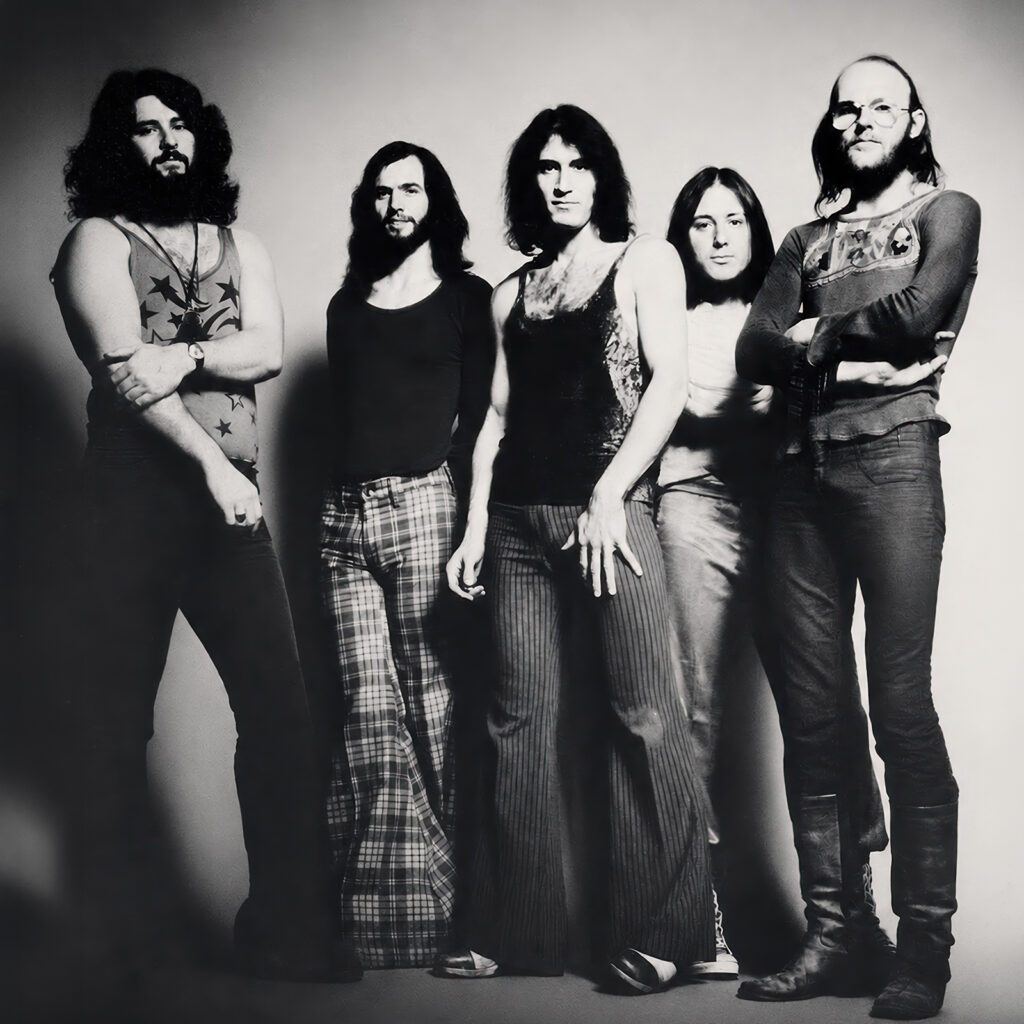
Article Contributed by Sam A. Marshall
Published on 2026-08-23
The Gentle Giant album In a Glass House begins – so fittingly – with the sounds of breaking glass. The jarring sound clip quickly becomes an echoey, accelerated percussive loop that leads into the electronic miasma of the rollicking kick-off track, titled “The Runaway”. Defying usual rock conventions, it features a snappy marimba solo over a drony, syncopated section where you might expect lead guitar. (Marimba, you say?) All other things being equal, though, it’s a truly a great opener – still laced with hints of rock guitar, too – that ups the ante for the listener’s expectations. Way up!
After you have gone on a labyrinthine, 38-minute journey through many different soundscapes and mood shifts – from twisting fusion vamps like that first track to Medieval-sounding chamber passages that mix and match strings and breathy choral voices with full-blown art-rock romps full of raging lead vocals and angular riffage – you arrive at the final kicker, “Index”.
True to its name, this 22-second non-composed track is an appendage of wicked, Zappaesque quick cuts that summarize all that has come before. So, once again, the listener is left with that agitated hammering of glass, however more briefly. And if it would happen to be your first time listening to the album, you’d have to shake your head at the end, as if to say: “Now whadda hell was all that about?”

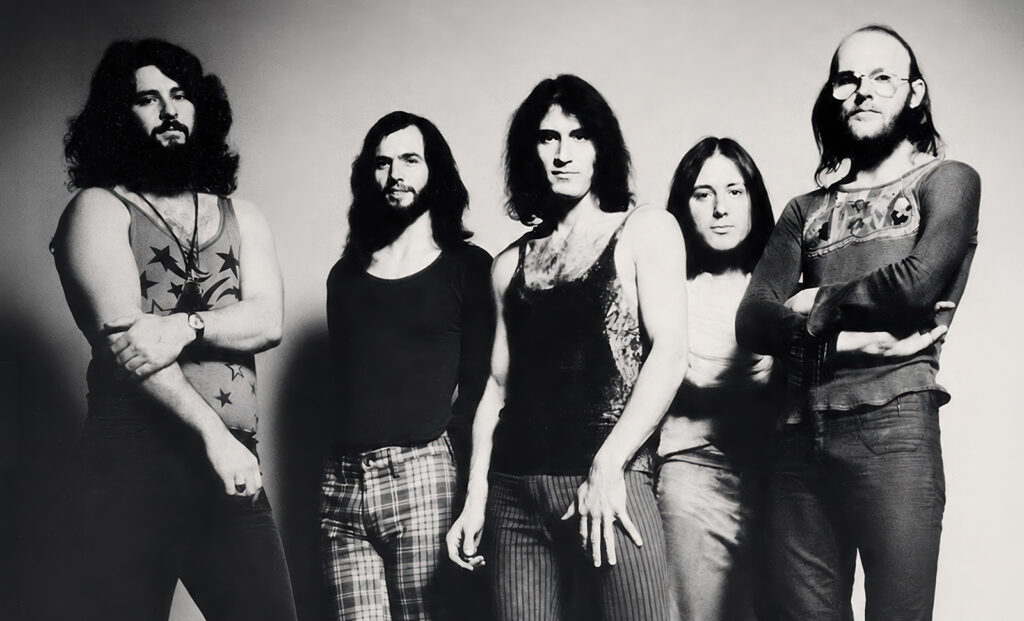
The 1973 album In a Glass House – by the classic yet non-conventional UK rock band Gentle Giant – was not always considered an easy album to listen to, something often echoed today by founding member Derek Shulman. It was, quite honestly, a challenging album for average rock fans at the time, although devoted fans of more adventurous rock were said to have embraced it quite readily. (Since it was not released in the U.S. at the time, fans here had to resort to import stores or mail order. Happily for the band and fans alike, it became the number one U.S. music import that year, selling roughly 150,000 copies.)
Some would even argue that the album – literally drawn from the karmic aphorism that people who live in glass houses shouldn’t throw stones, and full of lyrics about prisoners, the mentally divergent and regretful melancholics – is the Giant at the peak of their ten-year, eleven-album career. And, still, the band – which was undergoing rapid change at the time with the exiting of one-sixth of their multi-instrumentalist line-up – may have felt differently. For them, it was literally a case of necessity being the mother of reinvention. In retrospect, a tall task in short order.
As Shulman shortly explains in more detail in the interview to follow, the difficulty really had more to do with the accelerated writing and recording schedule – a hasty assemblage over four to five weeks before a major tour in mid-1973, and with one less band member to share the musical weight. So, unfortunately, a less-than-ideal EQ profile – very compressed and brittle-sounding with buried vocals and instrumental textures – resulted from that fast-track production process. And then, the band’s label at the time, Columbia Records, took a dim view of what the company considered an unmarketable album. The company not only skipped releasing the album in the U.S. but also dropped Gentle Giant from their contract. Ouch! Not exactly fun and grooves for the band who were rapidly expanding their fan base tour by tour at the time.
Luckily for the core of Giant fans who remain in the present day, In a Glass House is now on the receiving end of a full retooling and remixing, thanks to the persistence of the Giant’s record label – Alucard Music, created by GG keyboardist Kerry Minnear along with Derek and Ray Shulman – and to the latest in audio recovery technologies. Alucard – a GG song title from 1970, and also Dracula backwards if you hadn’t already guessed it – just recently delivered the newly-tricked out album on July 31, 2026.
Shulman served as a primary songwriter, saxophone and woodwinds player, secondary bassist, and alternating-lead vocalist throughout the band’s working years until their dissolution in 1980. And, today, as one of the original Giant members, he has since become a primary keeper of the flame for all things Giant. (Before the formation of Alucard as a GG-centric label, Shulman also became active on the management side in the industry as an acclaimed music label executive for Polydor Records, Atco, Roadrunner Records and DRT Entertainment. But all of that is another story.)
In reality, while most other Gentle Giant albums have been properly remastered from original multi-track tapes, the Glass House masters could never be tracked down. So it had seemed that the sound of the album was to be forever locked in a type of audio amber, with all of its sonic deficiencies hermetically sealed into the final mix. That is, until now.
According to Shulman, the remix engineer who offered his services for the project – Grammy Award-winning producer Eber Pinheiro – made use of new audio extraction techniques quite similar to what filmmaker Peter Jackson had used on the Beatles’ Get Back documentary.
Shulman explains that just as Jackson used high-tech tools to retrieve buried sound details and dialogue from that film’s audio sources, Pinheiro was able to unlock the dense arrangements and deeply interwoven musical parts in the surviving mixed-down Glass House production masters. Now, he adds, the Glass House can finally be entered, heard and understood in an entirely new way.
“We wanted to present In a Glass House the way we always hoped it could sound, clearer, more dynamic, and true to the original vision,” Shulman noted in an official press release earlier this year. “The detail in the performances really comes through in this new mix.”
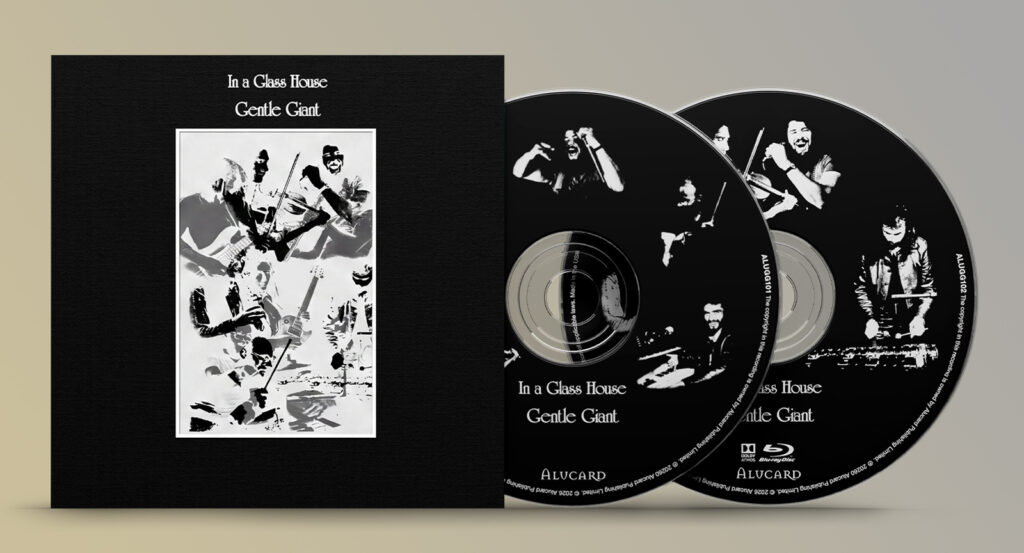
And, indeed, there are multiple ways to hear it besides the standard 2.0 stereo mix on 180-gram vinyl LP and on CD. (There’s also a limited edition clear vinyl LP edition for true Giant collectors. Yes, you can see right through it, just like a proverbial glass window.) For the first time ever, In a Glass House has been newly mixed for both 5.1 surround sound and Dolby Atmos systems on the deluxe CD/BluRay edition. And though I haven’t heard these multi-channel mixes myself, they are said to open up the album’s dense arrangements and intricate performances even more so than the new stereo mix.

Grateful Web recently had the great honor of speaking with the Glasgow, Scotland, native Shulman, who co-founded the original six-piece band with his brothers Phil and Ray in London, England, in 1970. (Unfortunately, the woodwinds/horns/piano/percussion man Phil was the one who left the band in mid-1973, reducing the band permanently to a quintet. And the more stringed instrument-centric brother Ray passed away more recently, in 2023, leaving only Derek, Phil and other former bandmates today as veterans of that era.) It only seems natural now that brother Derek would become a steward to see this project through to completion.
As you’ll soon read, the following interview transcript brings Shulman’s emotional investment and role in this near miraculous restoration process into clear focus. Our conversation has been lightly edited for context.
GW: Great to talk with you, Mr. Shulman. We understand that In a Glass House was selected for remastering a long time ago, but the multi-track masters could never be found. Could you talk a bit about how much time passed before this new opportunity came about, and how and when you met Eber Pinheiro?
Derek Shulman: Well, it was a by-chance situation. Steven Wilson – a great friend and producer (who has remastered several Giant albums) – said In a Glass House was the first album he wanted to do [a full remaster of] because, as he saw it, and as we did ourselves, it was the one that needed it most.
That was more than a decade ago. But all we could find were the quarter-inch production masters. So Steven [took on the stereo and multi-channel remixes of] Octopus, Power and the Glory, and other albums with the band [that had complete masters].
Then, I was in the studio, listening to a [2025] Atmos version of our [1976] live album (Playing the Fool – The Complete Live Experience), produced in Sweden by a good friend of ours. (Dan Bornemark) And, by chance, I was speaking to an engineer and producer there who was Eber.
Eber said he knew our band, and was a big fan. I mentioned to him, in conversation, “Y’know, we have an album that I wish you could remix just in the same way we’ve done this [live album].” Then he said, “What do you mean?” So I explained that we had lost the original multi-track masters. And he said, “Well, how about we work on it, using the technology we have, to see whether we can actually separate whatever you have into individual tracks?”
“Is that possible?” Then Eber said, “Well, let’s give it a shot!” And I said, “OK.” Just to be upfront about the technology we used, it was an AI tool, but it wasn’t [a quick automatic process.] It took us well over a year, literally – working on it a few days at a time and [reviewing it among band members] – before we had individual tracks that we could remix. It took a lot of work. But I think it worked really well, ultimately.
GW: So, to clarify, when you and the band made the original recording of In a Glass House, you co-produced the album with Gary Martin, correct?
Shulman: Yes, that’s right.
GW: Were you all equals then, or did he – as producer – take the upper hand? Y’know, because of the timeframe you were under, was he trying to be efficient and get it out the door?
Shulman: Well, Ray (Derek Shulman’s brother and fellow bandmate) was the most “hands-on” in the band as a producer, but we were all “grabbing faders”, if you like. We only had four to five weeks to write, record and mix the album, because we had an American tour coming up. So, basically, this was an “unfinished” album when we put it out – a bit hard to listen to sonically – even though now I can look back it and say, “It’s great.”
But also, it was our first album as a five-piece – done in a huge hurry. So then we were off to the States to promote the album, and then we heard that Columbia Records, whom we were signed to, didn’t deem it “commercial.” So they decided not to put it out [in the U.S.], which is the most hilarious thing, saying that Gentle Giant were not commercial. Heh – It was the number one import that year!
GW: Heh – that’s great! So with the extraction process, do you feel that everything in the audio was recovered, or did you have to accept any trade-offs?
Shulman: No, I actually think the whole band loves the way it sounds now. We didn’t realize how good the album was – or how good it is! – until I ran into Eber and we were able to separate all the tracks. When you’re in the studio [during the original recording], you want to do some [sonic adjustments like] putting on a bit of reverb or double tracking something. But we didn’t have time for that back in 1973. So it became a very dry, very dark album. Y’know, because of the situation with my brother Phil leaving and the tour [already] scheduled. Musically, it was great, but sonically it just didn’t cut it. So we were finally able to make it sound, I think, the way we would have loved for it to sound.
GW: Is this extraction process so new that Glass House was a test-tube for it? Also, did Eber know all the techniques for the extraction going into it or was he still finding his way? In other words, did he learn anything accidental that turned out to be a bonus for the project?
Shulman: Well, first of all, Eber is a Grammy-award-winning producer, and, second, he had access to the highest-end technology, both in terms of general recording and also to the do the extractions. Honestly, I believe it was more advanced than even what was used for the Beatles’ documentary. We were able to hear each isolated track, and then we could [get feedback from former members about clarity, depth and spatial imaging] when we started mixing. We’d have conference calls and [share notes] and Eber would make adjustments. So I wouldn’t say we were guinea pigs exactly, but maybe we all pushed ourselves to do something we didn’t even know existed or that we could do without leaving traces or, um, [digital] artifacts in the recording.
GW: Is the tool that Eber used something that is commercially available and everyone is going to start using, or is it proprietary to his studio and would they have to hire him if they want to use it?
Shulman: It’s really just a lot of high-end [filtering and equalization] tools that Eber uses, plus it was a labor of love for him. He’s from Brazil, and in that country – for whatever reason – Gentle Giant is – heh-heh – almost like The Beatles. So he was a big fan and he took his time to make sure everything we recorded was [recaptured correctly] and that he could make it sound better.
GW: Can you talk briefly about how Alucard Records came about with Kerry, how it evolved, and your role in the company? Did the remastering campaign start before Alucard was formed or was part of a previous label’s contract?
Shulman: Well, Kerry, Ray and I started it together. Decades ago. I oversee [Gentle Giant’s legacy] recordings. A big part of my career was not just being a musician but also being on the “other side of the fence.” We have a product manager and PR people. So, yes, we have our own record company, essentially to ensure we get the residuals from our writing and record sales.
GW: I know that Steven Wilson also did the remix for Three Piece Suite (a 2017 collection of Gentle Giant songs from the first three albums), and it became that because some “multis” from the first three albums had also been lost. But did you locate all of them and have the source albums been fully and properly remastered then?
Shulman: Well, at the time, those [selected tracks] were the only tracks we could find with multi-track sources. However, after Three Piece Suite was released, somebody had told Ray – I don’t recall exactly who that was – that the rest of the first album (Gentle Giant, 1970) had been found. So that one has been remixed, and quite possibly will be coming out in the near future.
More information:
To purchase related merchandise:
https://gentlegiantband.com/collections/all-items