Article Contributed by Nick Gumas
Published on 2026-05-29

The pride of Aberdeen, Maryland, reggae rock band Ballyhoo! has been pioneering and defining the genre of surf reggae since forming over three decades ago. Their albums give an eclectic mix of infectious anthems that have defined so many of our summers and narrative-driven think pieces that allow us to feel alongside the artists, earning their place in fans’ hearts throughout the world.
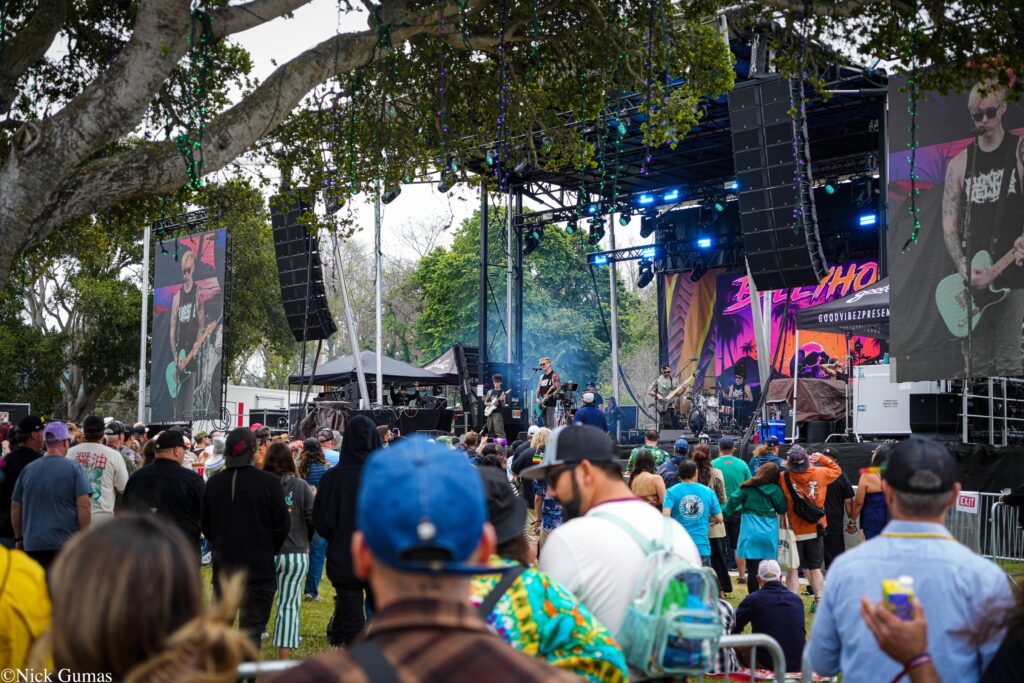
Grateful Web got to sit down with the outfit’s frontman, Howi Spangler, at this year’s Cali Roots festival to speak with him about the lenses through which he looks at his work over the decades, his relationship with his own vulnerabilities, and what immortalizing his own parents through his music has taught him about being present for his own family.

Grateful Web: Last year, you re-released and re-imagined your single “Close to Me” almost 20 years after its initial debut. What was it about that single that made you feel like it was a story that needed to be told through a different lens?
Howi Spangler: We were just trying to come up with a new setlist and a different show from what we’d been doing, and we’ve always toyed with a full band version of that song, because it was an acoustic track on “Cheers.” It was always one that people wanted us to play back in those days, so I thought it would be cool to bring that back and play it as a full band. So we were doing that, and I thought it would be sick to release it, because we’ve never released the full-band version of it, and I can kind of produce it the way I produce our modern stuff. It was interesting too, because the song is about losing my Mom when I was a kid, and when it dropped, it was 29 years, almost to the day, that I lost her. I hadn’t considered that before we set the release date. I’m not much of a spiritual guy, but I thought that was interesting. It’s just one of those songs that’s about depression and missing someone, or feeling inadequate, and I felt that people could relate to that. And the groove is dope.

GW: A lot of the band’s nucleus changed when you brought on Nick Lucera and he ran with the screamo element he brings to the table. When did it first click to take the band in a heavier direction?
HS: We’ve always been a rock band first. I always say that when we’re asked. A rock band that plays punk rock and reggae. We just try and make cool songs, and for whatever reason, it just works and we can make it sound right. After a while, realizing Nick could scream, I guess he was doing it live, we thought it added a cool element. We did “Riddled with Bullets” back on Detonate back in 2018, our guy Steve Donovan screamed on that record, but Nick would do it live. And there are other days like “Four Days” where we just leaned into that. It’s just another cool little element. We’re always trying to do cool little things and just add something here and there. It’s just fun to do.

GW: On that. When you contributed to Pepper’s Operation Irie album last year. Holding the distinction of being one of the only bands to play both Cali Roots and Warped Tour, your resume felt like a perfect fit for this. Why did you feel so drawn to covering Less Than Jake’s “Johnny Quest Thinks We’re Sellouts”?
HS: First off, we’ve toured with those guys a couple times, we love them. They’re awesome and a great band. But, I had a few songs pitched to me from Law, and I just couldn’t wrap my brain around how to make those songs different. I didn’t want to do an exact version of anything. I went through three or four songs, and finally I pitched “Johnny Quest Thinks We’re Sellouts” thinking that could be cool. So I listened to it on Spotify, and I liked it because it’s really fast, and punk rock, and just really raw, and it would be really cool to give it the “Ballyhoo!” treatment, and it turned out really cool. People seemed to like it. But Chris DeMakes (of Less Than Jake), I sent it to him and went “Dude, we covered your song, what do you think?” and he said “Can I send this to the guys?” Apparently they loved it.

GW: With so many of your lyrics and concepts, you’re very open with the idea of leaning into your stream of consciousness in your work. You’ve talked about how “Riddled with Bullets” was inspired by an episode of Family Guy, “Barnabas” plays as vulnerable because it is your own internal dialogue, and your albums narratively read like a diary with honesty and accessibility forward. Can you speak to the level of self reflection and luminous exposure that goes into your concept albums?
HS: I’ve been told in the past a couple times that a song is too dark or I can’t say something, and I’m like “The fuck are you talking about? What do you mean I can’t say that?” I just think its weird to not share your feelings or not tell people what's going on. I feel like I just want people to understand me, that's probably what it is if I’m going to shrink myself right now. Also, I know by being a fan of music myself, I want to relate to songs. I want to know that I’m not alone in my thoughts. We’re all the same to some degree, and I get a lot of people who come up to me and they’re like “Bro, that one song, I connect with that so hard, that saved my life” type of stuff. People tell me those things, and it's very strange, but it’s also awesome. I really appreciate it when people tell me that. But it's also validation for me that I’m not the only one who goes through these things. It’s like a symbiotic relationship, you know? I like telling my story, and sometimes it gets really dirty, because life is gritty and crazy, its not always rainbows and rose petals. It’s life, and life is hard, and I like to talk about it.

GW: I know it's been a while, but any plans to restart the “Tales from the Green Room” podcast?
HS: I think about it a lot, actually. I just always have so much on my plate. It was a lot of fun, I needed it at that time. I needed something else other than the band, something that I could really call my own and not share with anyone. At that moment I just needed a different outlet, and it was a lot of fun. We did over a hundred and fifty episodes and they’re great. I had Nick Hexum from 311, I had some great guests on. I still think about it, it’s not a “no.” Maybe at some point I’ll get back to it.

GW: You mentioned on an episode of that podcast years ago that your song “Run” was the last song your father ever heard. Musically, I’ve always seen a lot of similarities between that song and “Barnabas,” the song you wrote to eulogize him. The sharp guitar strikes, the urgency in the vocal inflections, their messages about not putting off making difficult decisions and facing problems head on. Were those parallels intentional?
HS: I love that you put them together like that. I didn’t think specifically about that when I was writing Barnabas, Barnabas was just a raw take on how that shit really hurt me. Shit sucked and I was just pouring out. When I recorded that episode, it was all still fresh. I started the podcast after my father died, like the next year, and I hadn’t really tackled it in that way. I grieved all the year before, but I hadn’t really tackled it out loud and it really hit me when I was talking about it. That’s a song where I just get real raw with my thoughts, and I try to put it in a cool song form. I had a lot of people tell me when it came out that they couldn’t listen to it, and I get it.

GW: During the end of that episode, it was so touching, heartbreaking, and endearing to hear your daughter playing in the background while you were navigating generational baggage in real time so openly and honestly, and talking about how important your own children are to you. Being on the road as often as you are, and being so committed to your family, how do you balance time away from home with making sure they get the love and attention you want to give them?
HS: It’s very hard. You have to be there when you’re not there. Today, I’m going through some stuff with my son. It’s fine, but he needs me, and my wife needs me right now, and it's really hard. I’m trying to be there, but also be here and be present. You have to split yourself. Obviously, family comes first, but it is crazy. You have to divide your attention in ways where it doesn’t seem like you’re dividing your attention, and that’s very hard to do. I was good at it for a while, but as these kids get older, their problems start to get more real and more important. I keep letting my wife know “I’m here, what do you need?” I do my best, and it would be a lot harder if I wasn’t making a little bit of money to send back home to pay bills, I couldn’t justify it at all, but my wife is a trooper, she’s the queen, and she handles all the stuff while I’m gone. My kids didn’t sign up for it, but I try to do the best I can and explain things like when I’m leaving and coming back, telling them you can text me, you call me, FaceTime me, whatever you want. It’s not easy, but they understand, I think, to a degree. We can go out and play shows to thousands of people, and they’re singing the songs back to us, and that's the kind of thing that keeps me going and be able to justify this whole lifestyle, but it’s not easy.
GW: Anything new coming from the studio?
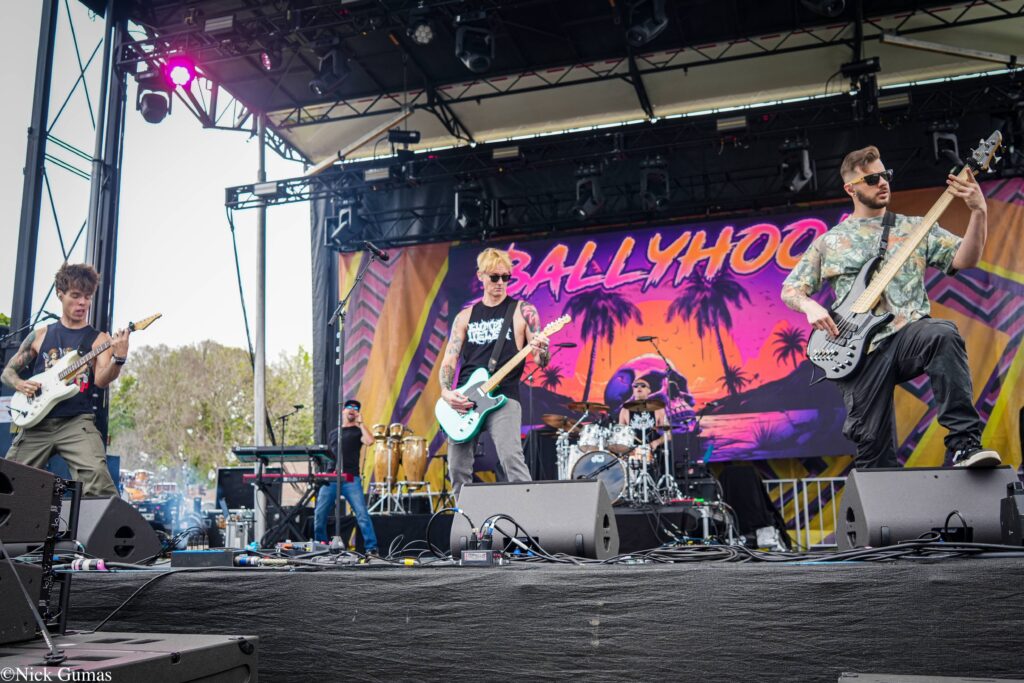
HS: New record coming out. August 28th, it’s called “Bad Summer.” The first single dropped a few weeks ago, same name, the next one drops June fifth, and then one every four weeks until the album comes out. We did it with John Feldman of Goldfinger, he killed it. We did some co-writes, we started from the bottom up, and he and his team made it sound amazing. It’s the best we’ve ever sounded, and the band is super excited. I can’t wait for everyone to hear the record. And then we’re going to Europe, we have tours coming up.

GW: Having done this for several decades, what’s one question you have never gotten in an interview?
HS: Ooh. Who’s my favorite manager? Shoutout to 1212 Management, everybody. Need a team? Go check out 1212mgmt.com. Check out Bryan Sandell and his team over at 1212.