Article Contributed by Scott Ward
Published on 2026-02-21
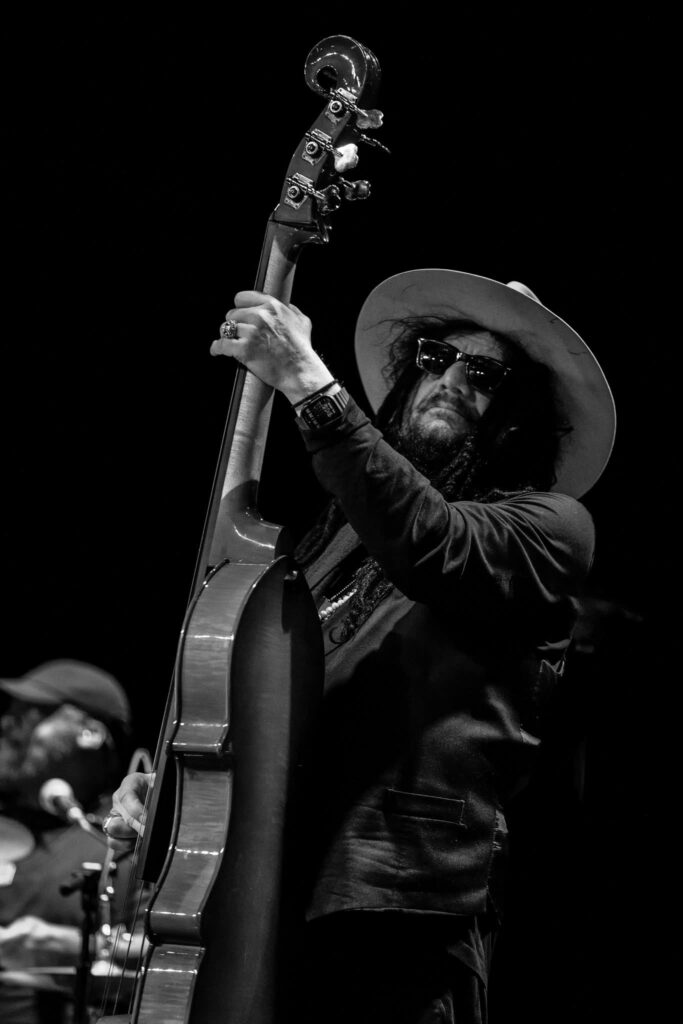
Photo: Courtesy of Princess Theatre
A couple of weeks ago I had the distinct pleasure of attending Don Was and The Pan Detroit Ensemble’s show at the beautiful and historic Princess Theatre in Decatur. Don remarked in his opening comments how beautiful the theater was. There was kind of a somber mood at first—Bob Weir of the Grateful Dead had passed away on January 10th. After his passing, Don decided he was going to pay tribute to him in all of the upcoming shows. The band performs The Grateful Dead’s 1975 album Blues For Allah at every show. Don toured with Bob’s band Bobby Weir and The Wolf Brothers in 2018 and in 2024 he played bass with him at The Dead Ahead Festival in Cancun. Don said initially he worried about playing Phil Lesch’s bass parts—Phil had a really distinct style and tone using a six-string bass with a pick—he said he felt a sense of relief when Bob told him, “play them the way you play them.” The Pan Detroit Ensemble got together to play as a one-time thing in 2024, but they wound up doing an album and going on tour. Three of those live tracks are on the new album, Grooving In The Face Of Adversity, which is Don’s first solo album.
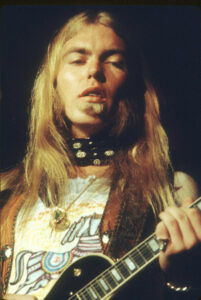
It was great meeting Don—he has always been one of my heroes, both as a bass player and producer. When I told him that Spooner Oldham was a good friend of mine, his eyes lit up. Don produced Gregg Allman’s final album, Southern Blood, at FAME Studios in 2016. He remembered Spooner coming by the studio to see him and Greg on the Thursday of that week. I had been doing a session with Spooner for Russell Smith earlier that morning at Billy Lawson’s old Big Star Studio and Spooner stopped off at FAME after we finished to visit with Don and Greg. Greg cut Spooner and Dan Penn’s song “Out Of Left Field.”
When the show kicked off that night at the Princess, I knew it was going to be something you don’t see around these parts very often. Every member of the band are virtuosos, and the vocalist Steffanie Christi’an is a powerful singer and dynamic performer who has recorded her own albums and worked around Detroit with bands such as Inner City, Mother and We Are Scorpio. Before she was introduced and she told who her biggest influences were, I knew Billie Holiday had to be one of them. Tori Amos is also one of her greatest influences.
The band played songs from their new album, including an eclectic version of a song that was written and recorded by Hank Williams—“I Ain’t Got Nothing But Time” (many Southerners moved up North to cities like Detroit after WWII), transforming Hank’s upbeat three-chord song into a subdued tune in the key of B minor. When things got really popping and the band members started playing extensive solos, it was intoxicating—kind of like a sensory overload, but so enjoyable.
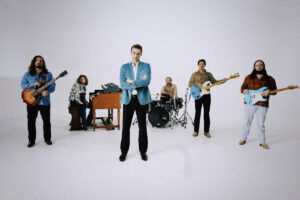
On guitar was Wayne Gerard, who has worked with legendary Detroit punk band MC5. I’ve never seen a guitar using a Fender Telecaster navigate so many styles of music seamlessly—from hot country licks to jazz and bebop to Van Halen-style guitar. On sax was Dave McMurray, who has played sax with Bob Dylan, The Temptations, and Was (Not Was)—Dave has also done several solo albums. On keys was Luis Resto, the primary collaborator of Eminem. Luis is a wizard on the keyboards—he has a stack of three and he also played fiddle on their performance of Blues For Allah. Luis was also a member of Was (Not Was). Vincent Chandler was on trombone, who is an Assistant Professor of Jazz Music Studies at Wayne State University. He has also performed with legendary bassist Marcus Miller, Herbie Hancock, and Michael Brecker. On trumpet was John Douglas, another mainstay of the Detroit jazz scene, who has performed with Gladys Knight, The Chi-Lites, and many others. On drums and percussion were Jeff Canady and Mahindi Masai, respectively. Jeff is a fabulous drummer—he hits the skins hard. He also stays busy as a producer, having produced a #1 album on the Billboard Jazz chart. Mahindi Masai has worked with Mitch Ryder, the band Tribe, and with Dave McMurray on his solo albums.
The band also does a great cover of Curtis Mayfield and The Impressions’ “This Is My Country,” a really relevant song for these times with all the division and turmoil that is occurring all around us. “Midnight Marauders” features some great synth/Hammond organ work by Academy Award winner Resto and wonderful horn parts and saxophone solo by McMurray. Steffanie’s vocal is also “out of this world.” Masai offers a clinic on every percussion instrument you can imagine on “Nubian Lady,” and there is an extended flute solo by McMurray and “wah-wah” guitar by Gerard—the drums driving the song like a freight train. A cover of Cameo’s “Insane” features some funky guitar by Gerard. The horn section are also fabulous on this one and features killer solos by saxophonist McMurray, Douglas on trumpet, and Chandler on trombone. “You Asked, I Came” features the iconic “Bo Diddley Beat” which was copied by so many rock and rollers in the ‘60s, and to this day still. The horn section is outstanding once again with a tasty sax solo and muted trumpet.
The first time I heard the name Don Was, I was in college and had just switched from guitar to bass so I could get a music scholarship. “Walk The Dinosaur” by Was (Not Was) got a lot of radio airplay and it featured some great “slap and pop” bass. It also featured some funky guitar parts and cool horn parts. Don was of course Was, and David Weiss was Not Was. Over the years their albums featured a grab-bag of artists ranging from Leonard Cohen, Kris Kristofferson, Mel Tormé, and Frank Sinatra Jr. On a side note, Steve Cropper told me once that the reason he left Stax Records was because they would not allow him to produce any outside artists—he left so he could produce Frank Jr.
During the show at the Princess, Don told a hilarious story about Leonard and Iggy Pop, but I can’t retell it here.
Don grew up in Oak Park, a suburb of Detroit and after high school, he attended the University of Michigan for a year. His first band in Detroit was called The Saturns and he was greatly influenced by Detroit’s blues and jazz. He was given a job as a recording engineer by promoter and manager Jack Tann at his Detroit studio Sound Suite. It was during this time that Don started a punk rock band called The Traitors. After working on sessions at Sound Suite Studios, Don moved to Los Angeles to work with the aforementioned Weiss, who had been his friend when they were teenagers in Oak Park. They had written some songs together during that time.
About a year after the commercial success and notoriety of Was (Not Was)’ 1988 album What Up, Dog?, and riding the wave of The B-52’s “Love Shack,” which was produced by Don, he became one of the most highly sought-after producers in the world. He produced Bonnie Raitt’s Nick Of Time album, which won three Grammy Awards and sold five million copies, launching Bonnie’s career into the stratosphere.
Don produced Ringo Starr’s 1992 “Weight Of The World” album, Willie Nelson’s Across The Borderline, Bob Dylan’s 30th Anniversary Concert Celebration, Elton John’s Duets album which features Elton and Paul Young’s cut of “I’m Your Puppet,” written by Dan Penn and Spooner Oldham, who we all know and love.
Don also produced Bob Seger’s 1991 album The Fire Inside and 2021 album Love Songs, The Rolling Stones’ 1994 album Voodoo Lounge, Waylon Jennings’ Waymore’s Blues Part II (1995), and Brian Wilson’s (The Beach Boys) I Just Wasn’t Made for These Times (1994).
In addition to all of the incredible albums Don has produced, he also did the soundtracks for TV shows such as The Wonder Years, Mad About You, and Malcolm In The Middle. He also produced many motion picture soundtracks including Black Rain (1989), 8 Seconds (1994), Maverick (1994), The Flintstones (1994), Toy Story (1995), The Grinch (1998), Hope Floats (1998), Days Of Thunder (1990), Honeymoon In Vegas (1992), Michael (1996), and Fifty Shades Darker (2017). I never knew Don produced the Michael soundtrack, but the inclusion of Aretha Franklin’s “Chain Of Fools” was the best part of the movie for me. That recording features Joe South on a low-tuned Telecaster, Spooner on keys, Jimmy Johnson on rhythm guitar, Tommy Cogbill on bass, and Roger Hawkins on drums.
I don’t think there is a producer anywhere in the world who is as versatile as Don. Since 2012, he has overseen Blue Note Records, the most prestigious and iconic jazz label which was founded in 1939. Not just anyone can produce a jazz record, but Don weaves in and out producing albums by legendary upright bassist Ron Carter and Herbie Hancock, and then producing country artists like Willie Nelson, Ray Wylie Hubbard, Kris Kristofferson, Marty Stuart, The Highwaymen, Carlene Carter and others.
After his five-decade career with no signs of stopping, when Don decides to hang it up, he could very well be the most prolific record producer in the history of recorded music.