Article Contributed by Sacks and Company
Published on 2026-10-24
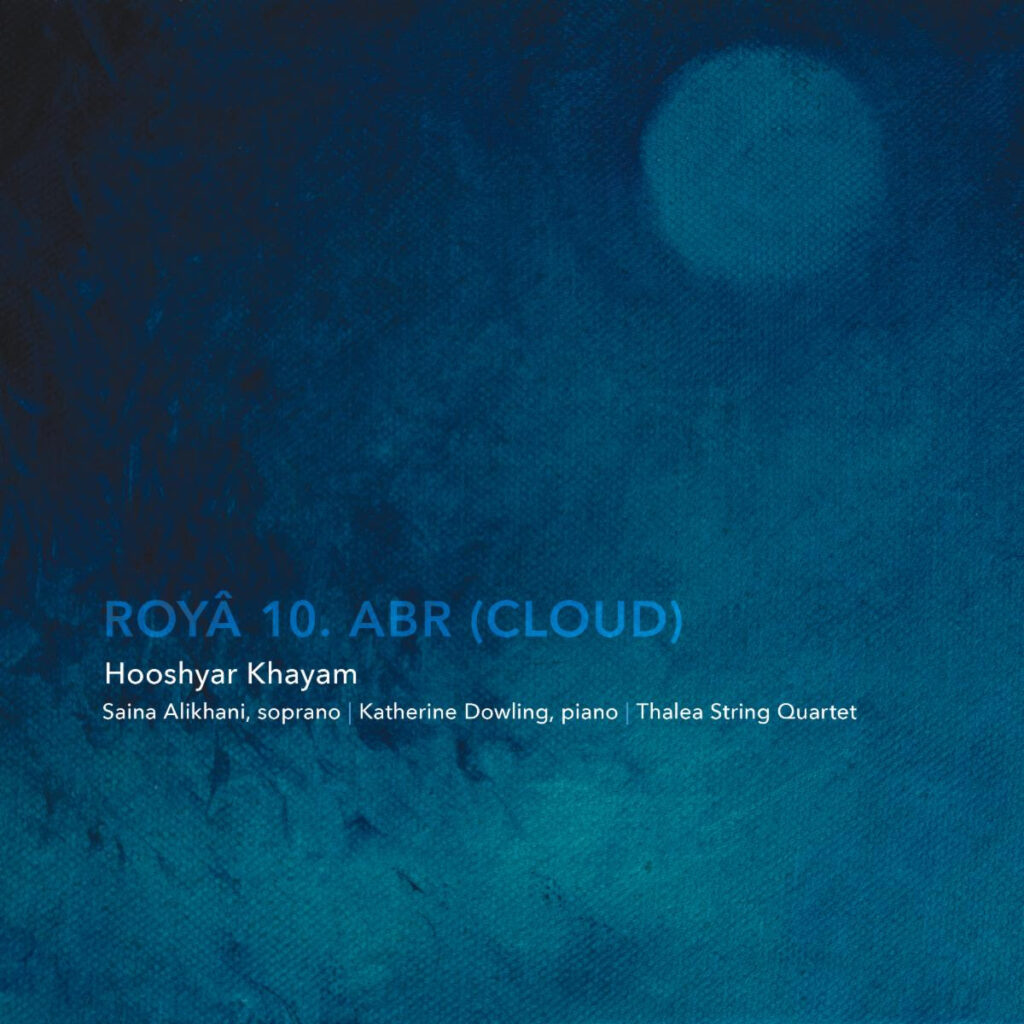
Hooshyar Khayam today confirms a new album, Royâ, featuring Saina Alikhani, Katherine Dowling and Thalea String Quartet, set for release November 20 via Phenotypic Recordings—pre-order/pre-save here. The collection’s first single, “Abr (Cloud),” is out today—listen/share here and watch the video here.
Royâ—the Persian word for dream—emerged gradually as an album through accumulated impressions: Khayam’s childhood memories of the Iran–Iraq War and displacement, the eleventh-century poetry of Omar Khayyam, and the paintings of Iranian artist Pariyoush Ganji, which became a visual companion throughout the album’s composition. Across eleven movements split into two parts, dreams become not an escape from memory but another way of understanding it: images of wind, waves, dust and moonlight surfacing, dissolving and returning transformed, the way memory itself is reshaped each time it’s revisited.
“I hope that people will carry something from their own dreams out of this album,” Khayam says. “It’s that living of the dream every day in our lives. To be a dreamer, to be dream-walking.”
The album brought together two artistic partnerships that formed almost by chance. Khayam and soprano Saina Alikhani connected after he came across her performance of Schumann’s Liederkreis online, an exchange that led directly to an invitation for her to join the project. Thalea String Quartet and pianist Katherine Dowling came to the sessions with a similar openness, and the recording quickly became less an assembly of individual artists than a shared undertaking. For Thalea violinist Kumiko Sakamoto, the music’s themes of migration and displacement struck close to home: “I connect to this on a musical level and a personal level, and it’s really easy to empathize with the story of Royâ... Hooshyar makes that such a visceral experience.”
The collection’s first single, “Abr (Cloud),” is out now—listen here. The track draws on a poem by Omar Khayyam in which clouds become symbols of continual transformation: gathering, dispersing and reforming, much like memory itself. Rather than building to a dramatic climax, the movement unfolds in long, breathing phrases, its emotional weight carried by patient accumulation rather than resolution. It’s the penultimate movement of Royâ’s second part, in which piano and soprano join the quartet for the first time, allowing Khayyam’s verses to emerge as though they had been present beneath the music all along.
Royâ unfolds in two parts. The first, Qazal, is written for string quartet alone and moves through six untexted movements—Sabâ (Wind), the title movement Qazal (Words), Moaj (Waves), Ghobâr (Dust), Rend (Awakened) and Zamân (Time)—each drawing on a different image or figure from Persian poetic tradition, from the enlightened wanderer of the rend to the dust that carries, in Persian verse, the trace of all that has vanished. The second part, which takes the album’s title, expands the ensemble to include Dowling’s piano and Alikhani’s soprano, setting Omar Khayyam’s Rubaiyat directly across five movements: Mâh (Moon), Meh (Mist), Rooz (Day), Abr (Cloud) and Royâ (Dream). The final movement gathers the record’s emotional threads into its most expansive statement, suspending past and present, absence and presence, homeland and exile without offering resolution.