Article Contributed by Gabriel David Barkin
Published on 2026-10-23
Photo(s) by Gabriel David Barkin
Todd Rundgren’s career has now reached its seventh decade. Although he’s known primarily for a string of radio hits in the 70s and 80s (including “Hello It’s Me” and the Friday-at-five anthem “Bang the Drum All Day”), the Philadelphia-spawned Rock and Roll Hall of Famer has continued to write, record, and tour with Energizer Bunny vigor. His current “Damned If I Do” tour hits a number of states across the West and Southwest between now and Thanksgiving, and he’ll be opening for Toto in Ireland and the United Kingdom next summer.
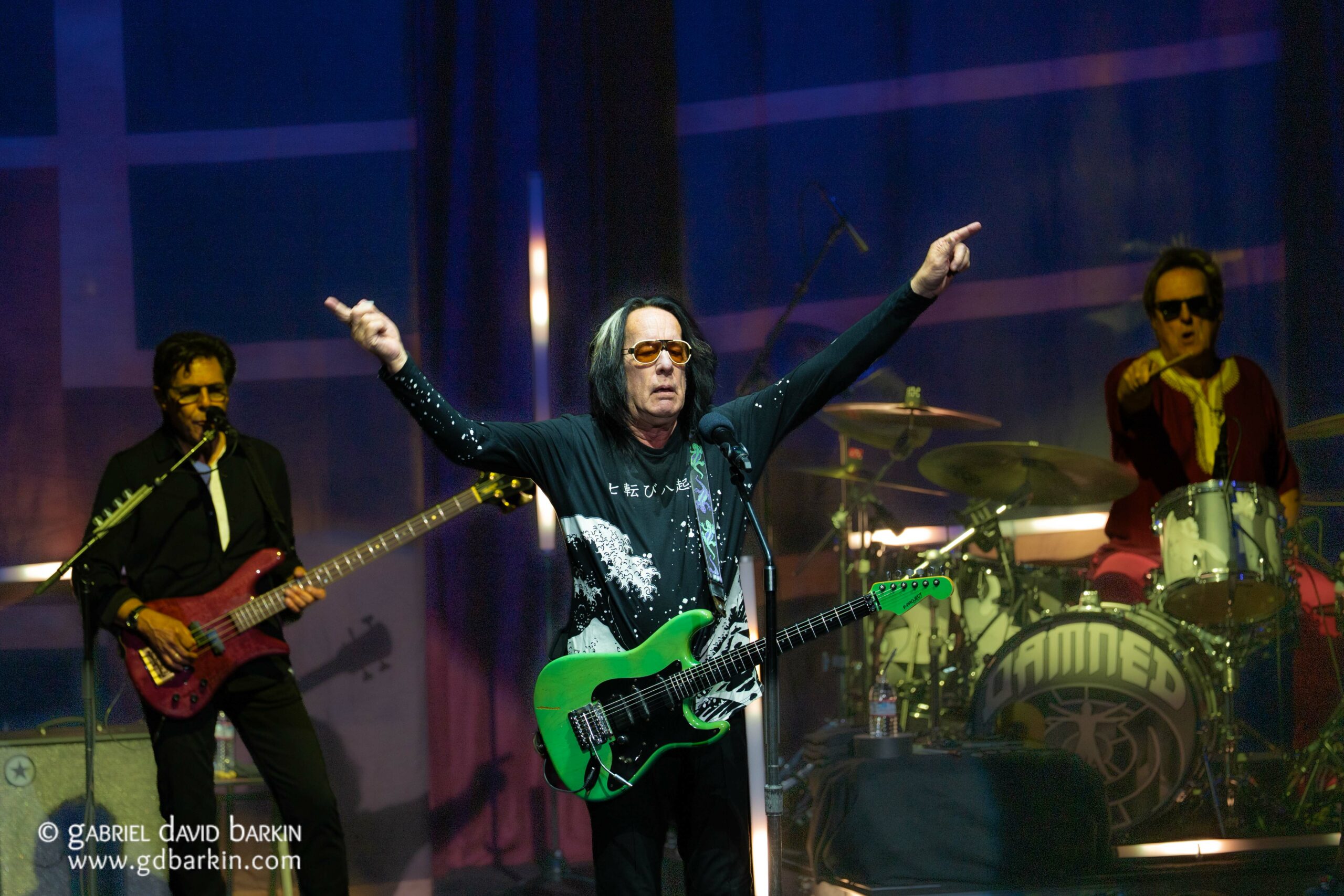
Between his solo career and Utopia, Rundgren has released 34 studio albums, of which he produced (checks notes) all 34. His first production credit came in 1969, when he was only 20, on Nazz Nazz, the second album by his proto-power-pop garage band the Nazz. (The credit was shared with his bandmates under the band’s name; Rundgren and others have complained that he deserved a production credit on the Nazz’s debut LP as well.)
The list of Rundgren’s achievements goes far beyond his handful of Billboard-charting hits. As a record producer, Rundgren was at the helm for Meat Loaf’s Bat Out of Hell, which is to this day among the highest selling records of all time. (Wikipedia has it in the top ten; other lists show only slightly less impressive sales rankings.) He also produced numerous seminal albums in the 70s and 80s, including Patti Smith’s Wave and Grand Funk’s We’re an American Band. And then there were records by Cheap Trick and Hall & Oates. The Tubes and The New York Dolls. XTC and The Psychedelic Furs. If you listened to rock radio in the 70s, you listened to stuff produced by Todd Rundgren.
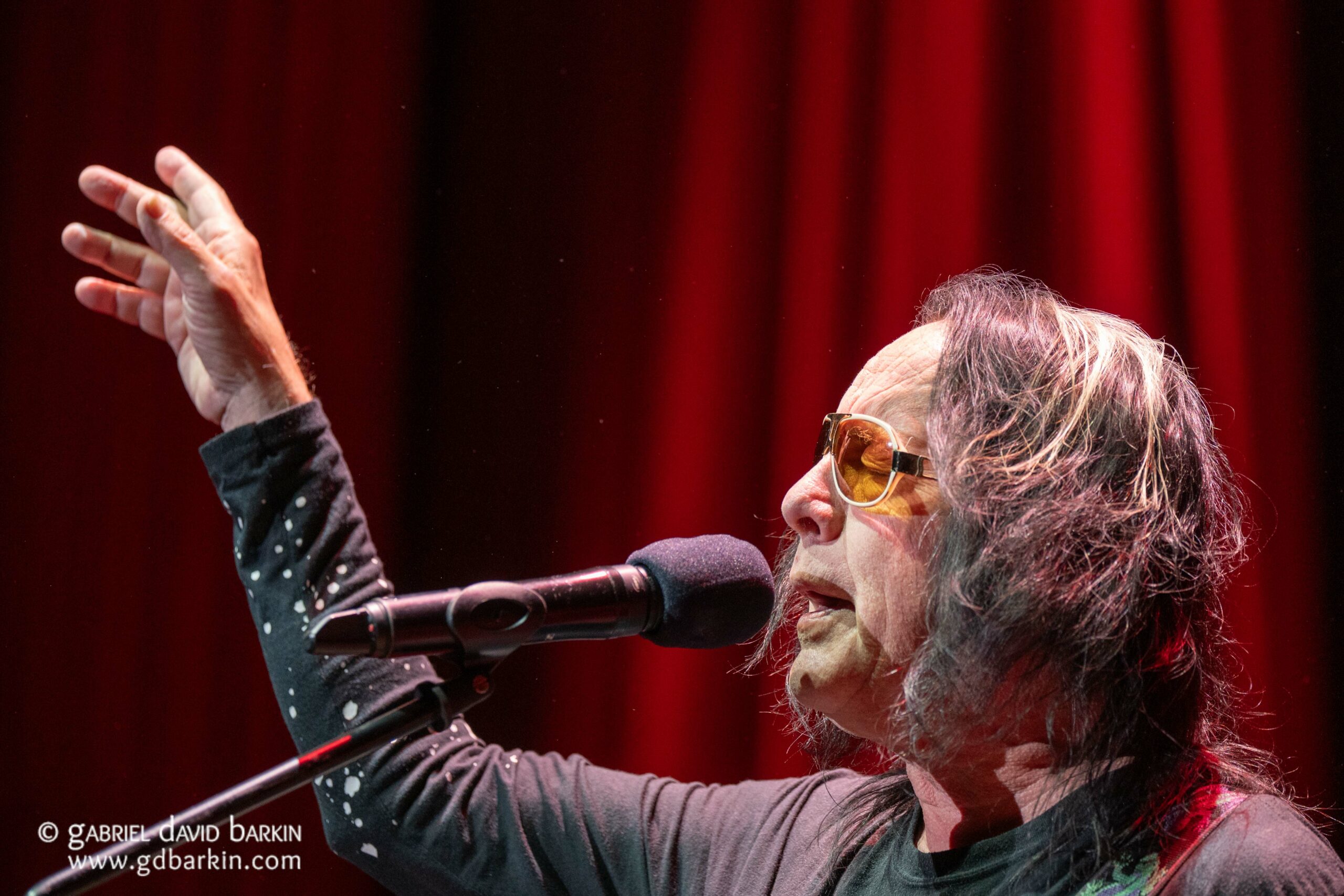
He also found time to front Utopia, the influential prog rock band that never found stateside “arena rock” success equaling 70s British contemporaries like Yes and Genesis. Utopia later adopted a sound that was more in the pop / new wave vein, but still never had a mega-hit on FM radio. (Rundgren later got to sing the hits of that era, albeit those of another band, in a 2005 “supergroup” called The New Cars. In concert with members of both Utopia and The Cars, Rundgren sang mostly hits from the latter’s songbook alongside a few of his own.)
Rundgren once won a BAMMIE (the now defunct Bay Area Music Award) for “Outstanding Keyboardist” despite – as he said in his 1989 acceptance speech – not having played a keyboard track on record as of that time for five years. He’s known more among his fans as a shredding guitar player, and his current tour gives him many opportunities to show off his mastery of the 70s rock-god guitar solo.
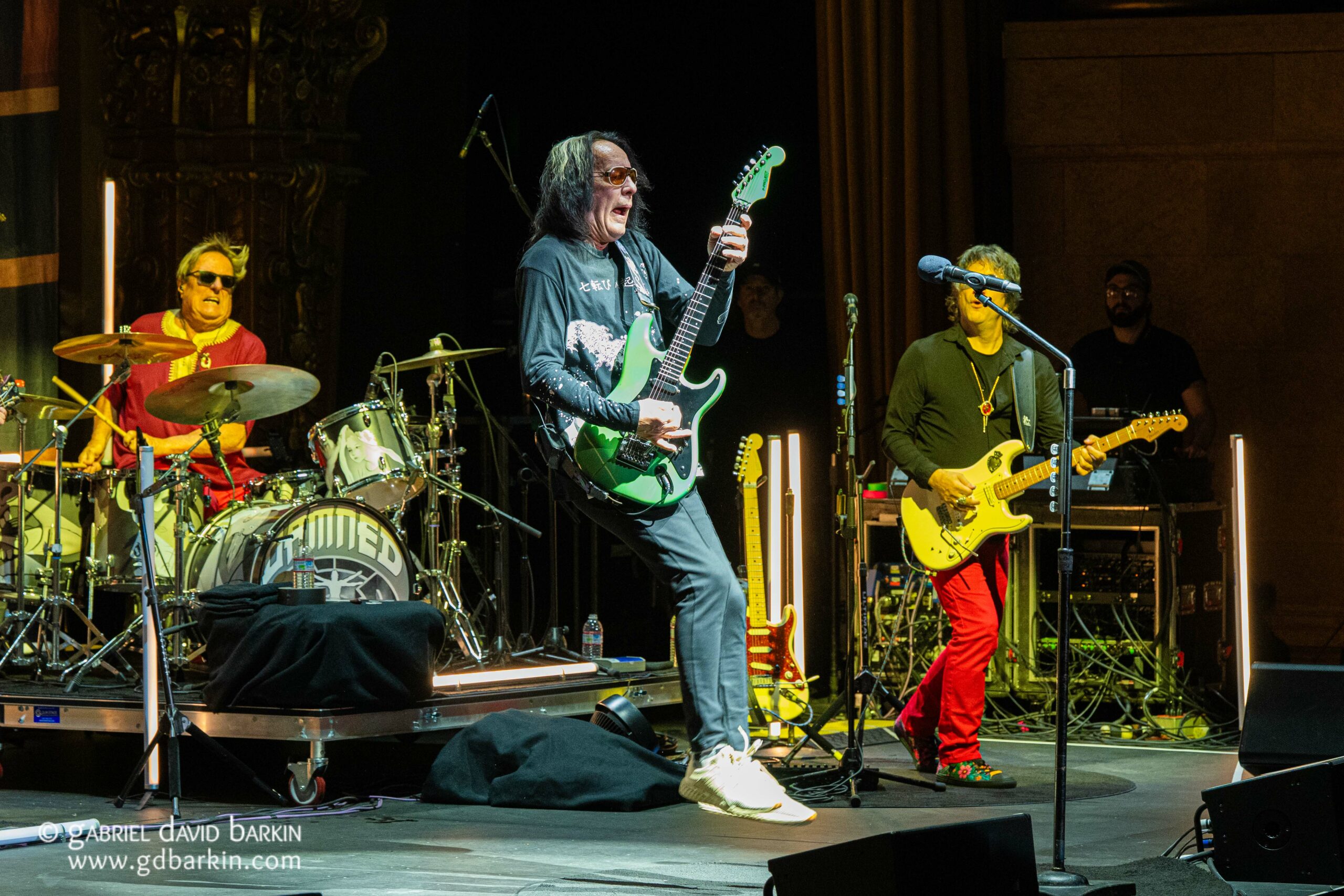
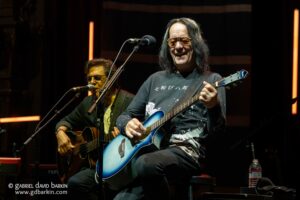
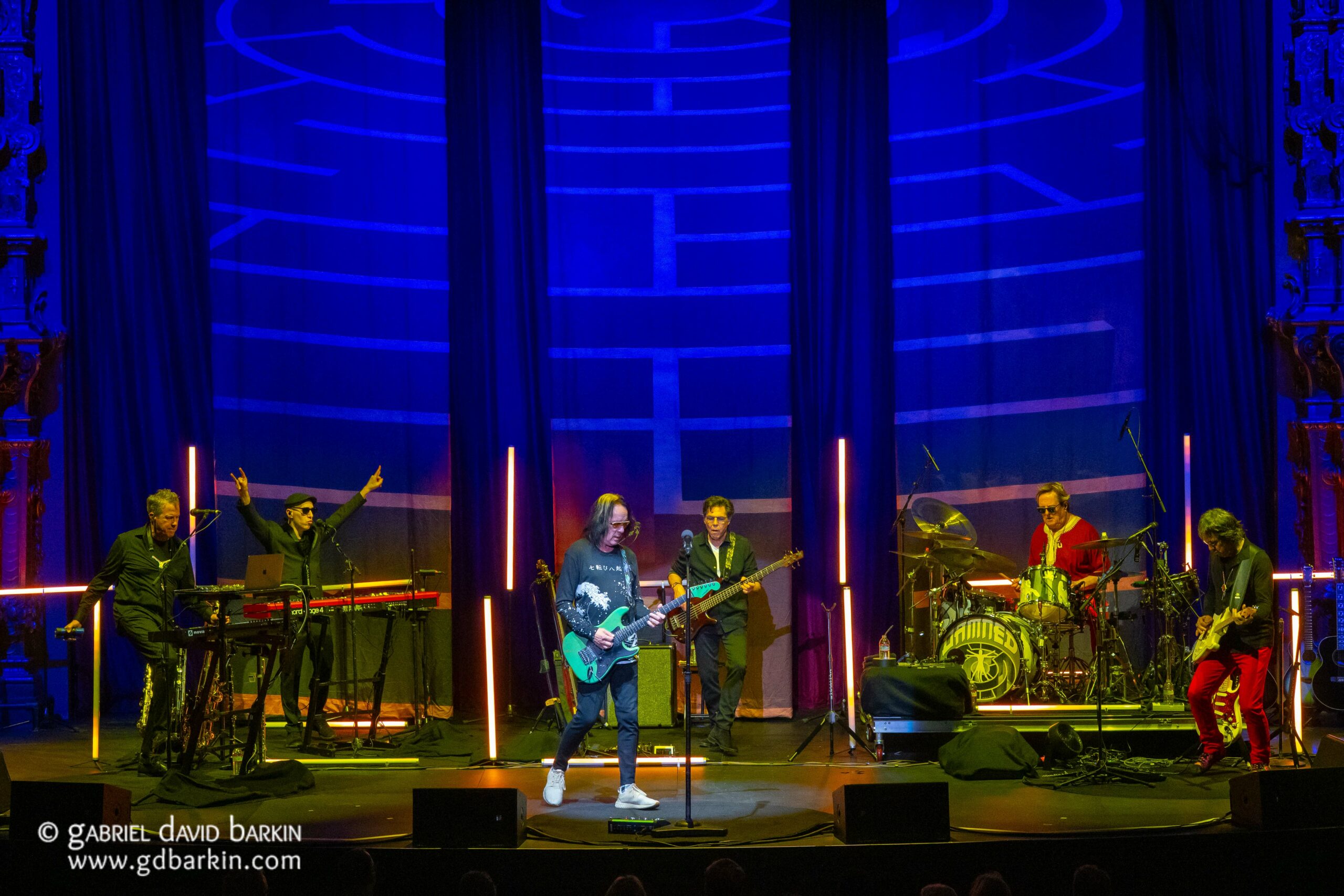
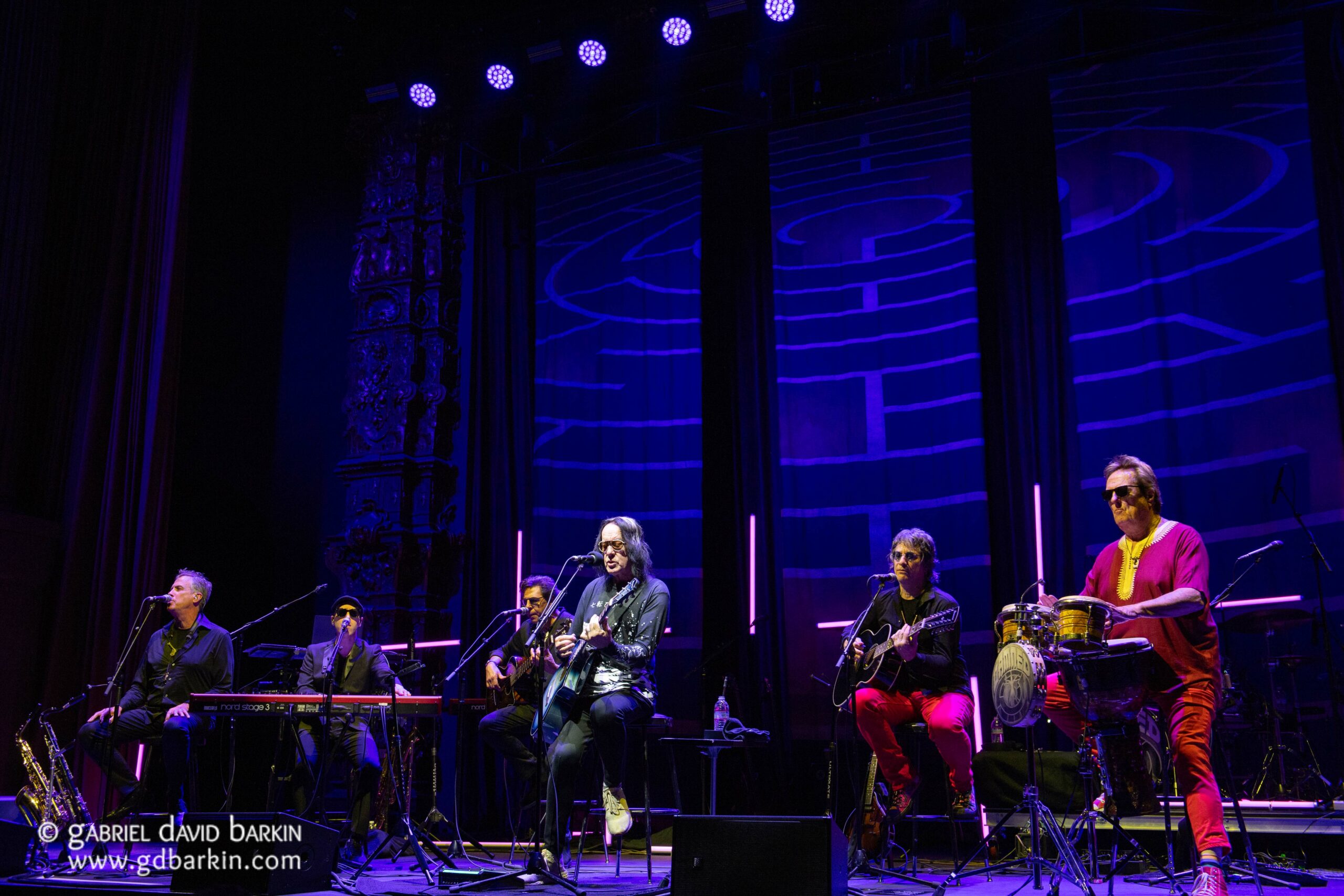
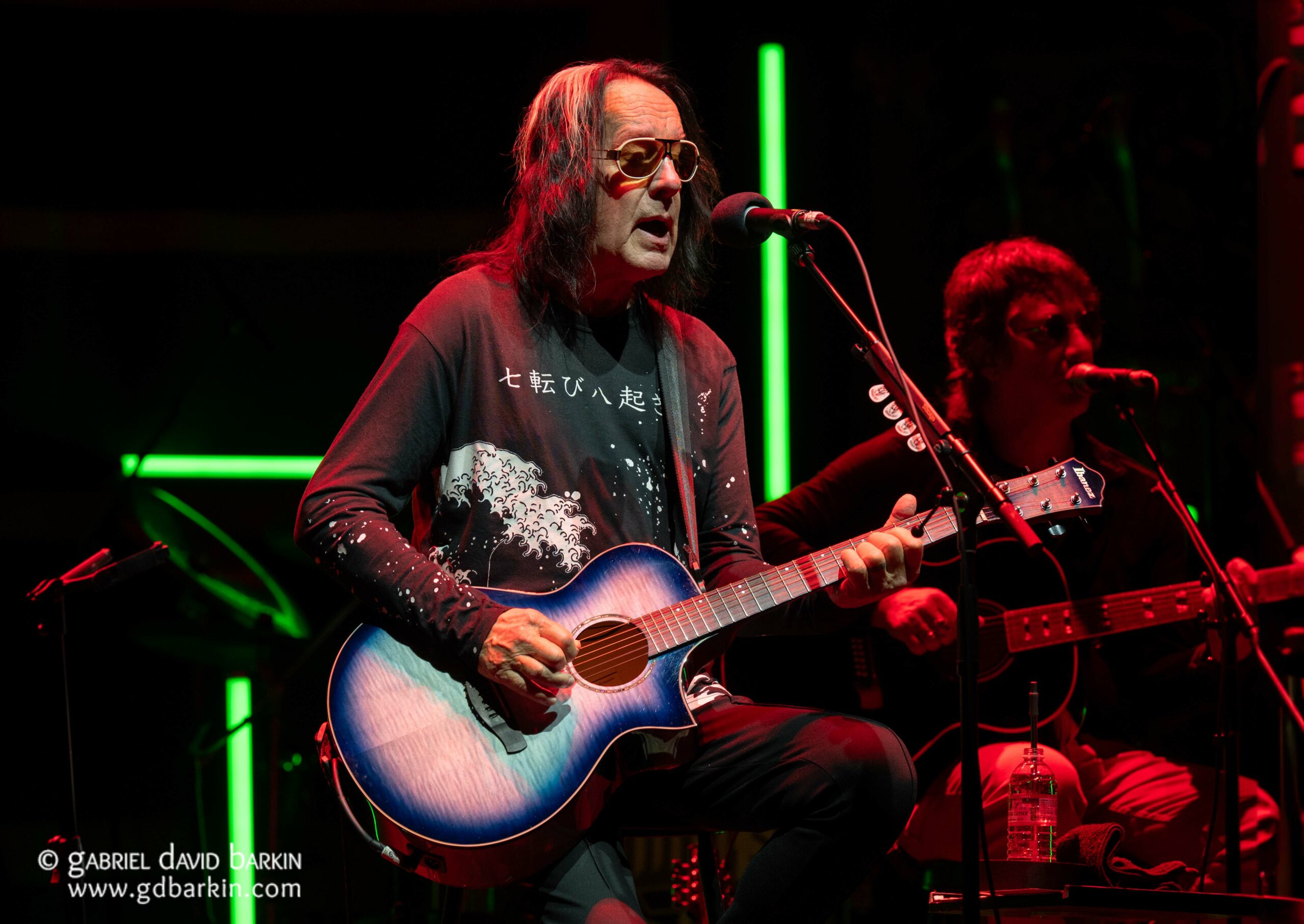
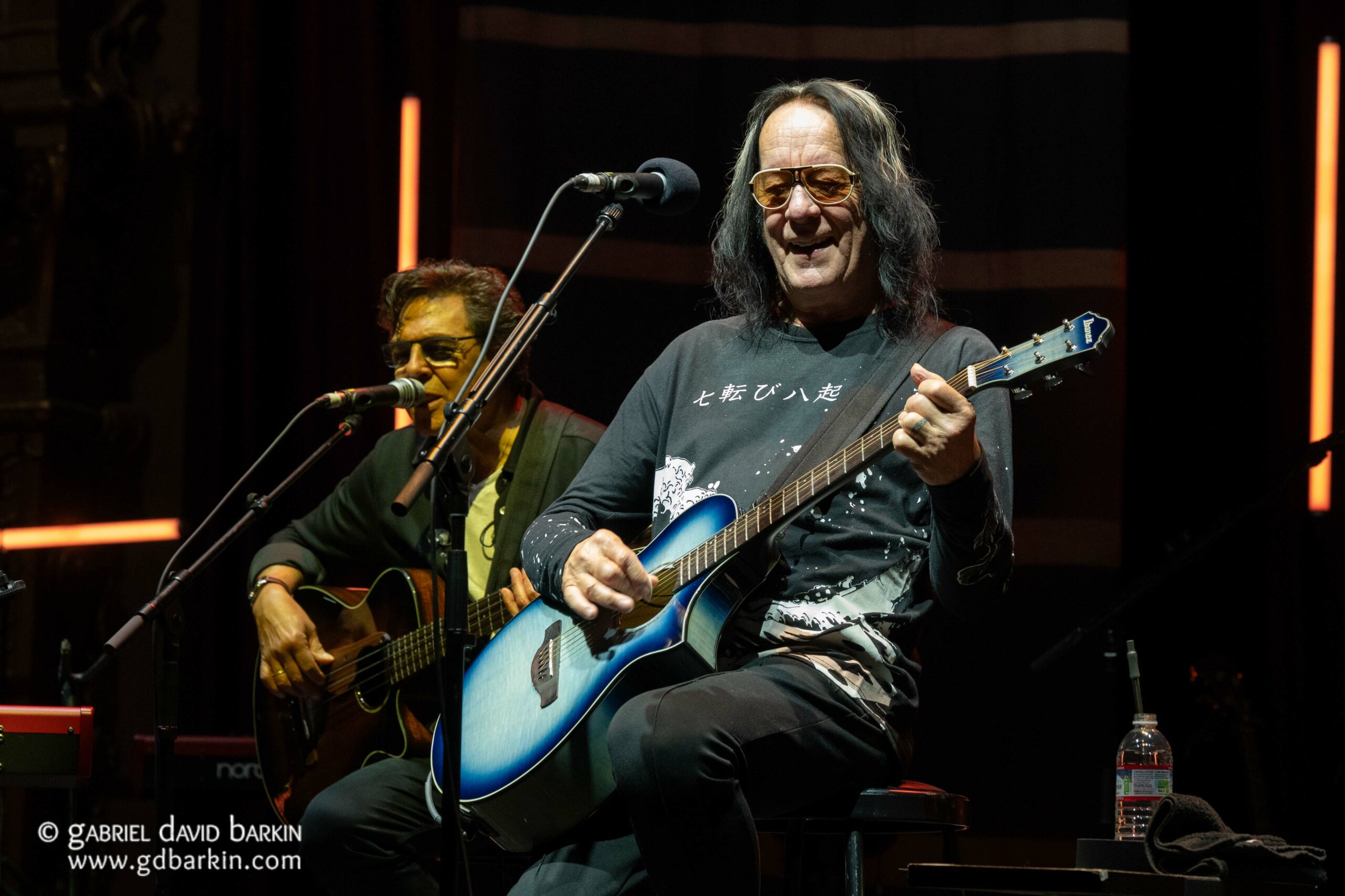
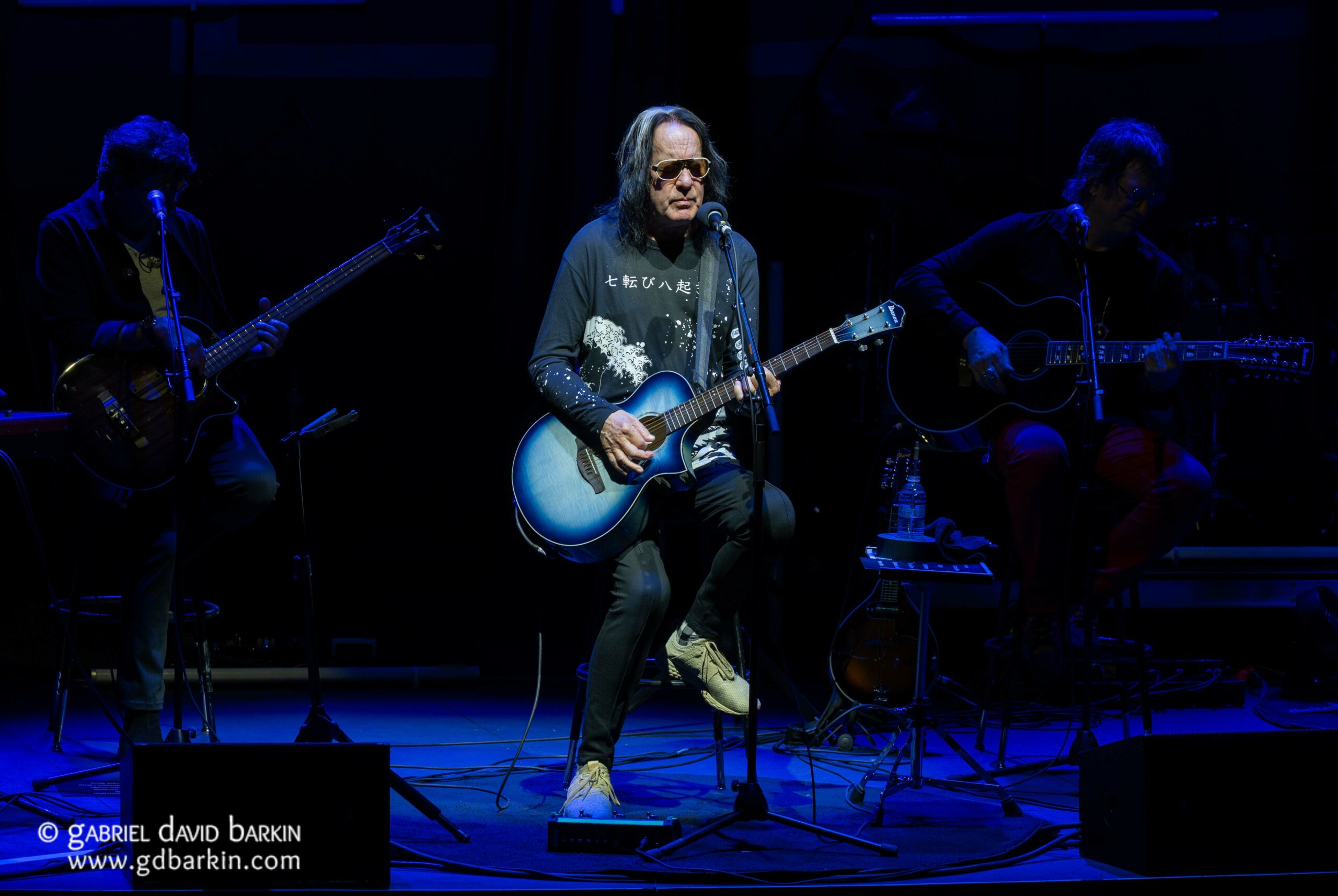
Utopia’s vocalist and bass player Kasim Sulton is in Rundgren’s current touring band, along with the Tubes’ drummer and Phil Lesh “Friend” Prairie Prince, Bobby Strickland on saxophone, Bruce McDaniel on guitars (in addition to Rundgren), and Gil Assayas on keyboards. In concert this week at San Francisco’s Castro Theatre (the first show on this leg of the tour), Rundgren & Co. treated an ardent audience to a string of hits, fan favorites, a few newer cuts, and even a few obscure tracks. A version of his Nazz chestnut “Open My Eyes” was a particular delight.
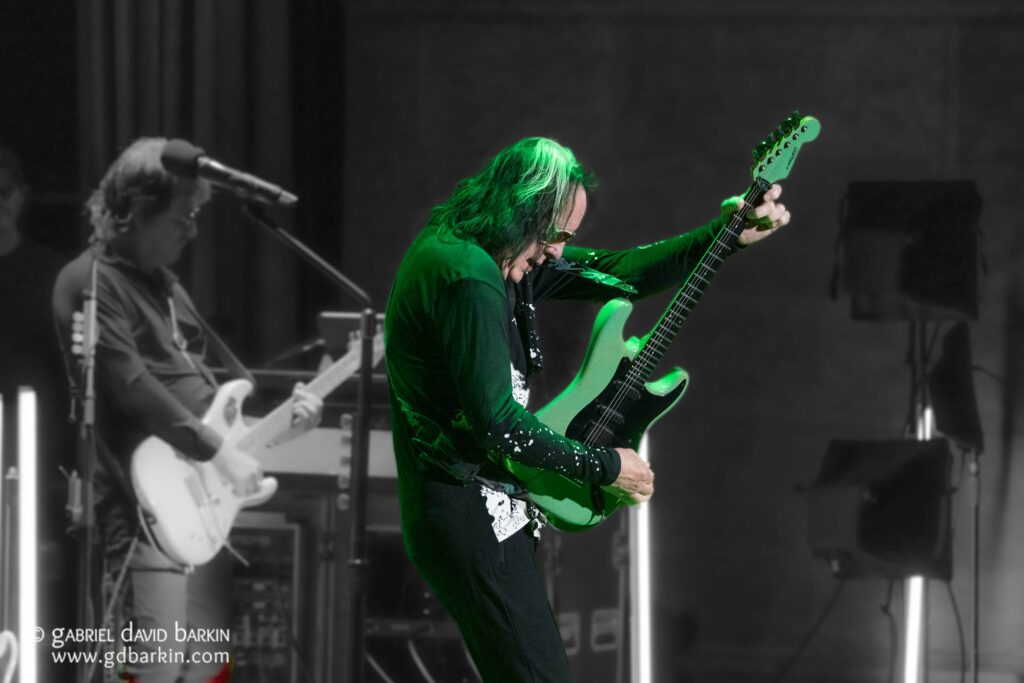
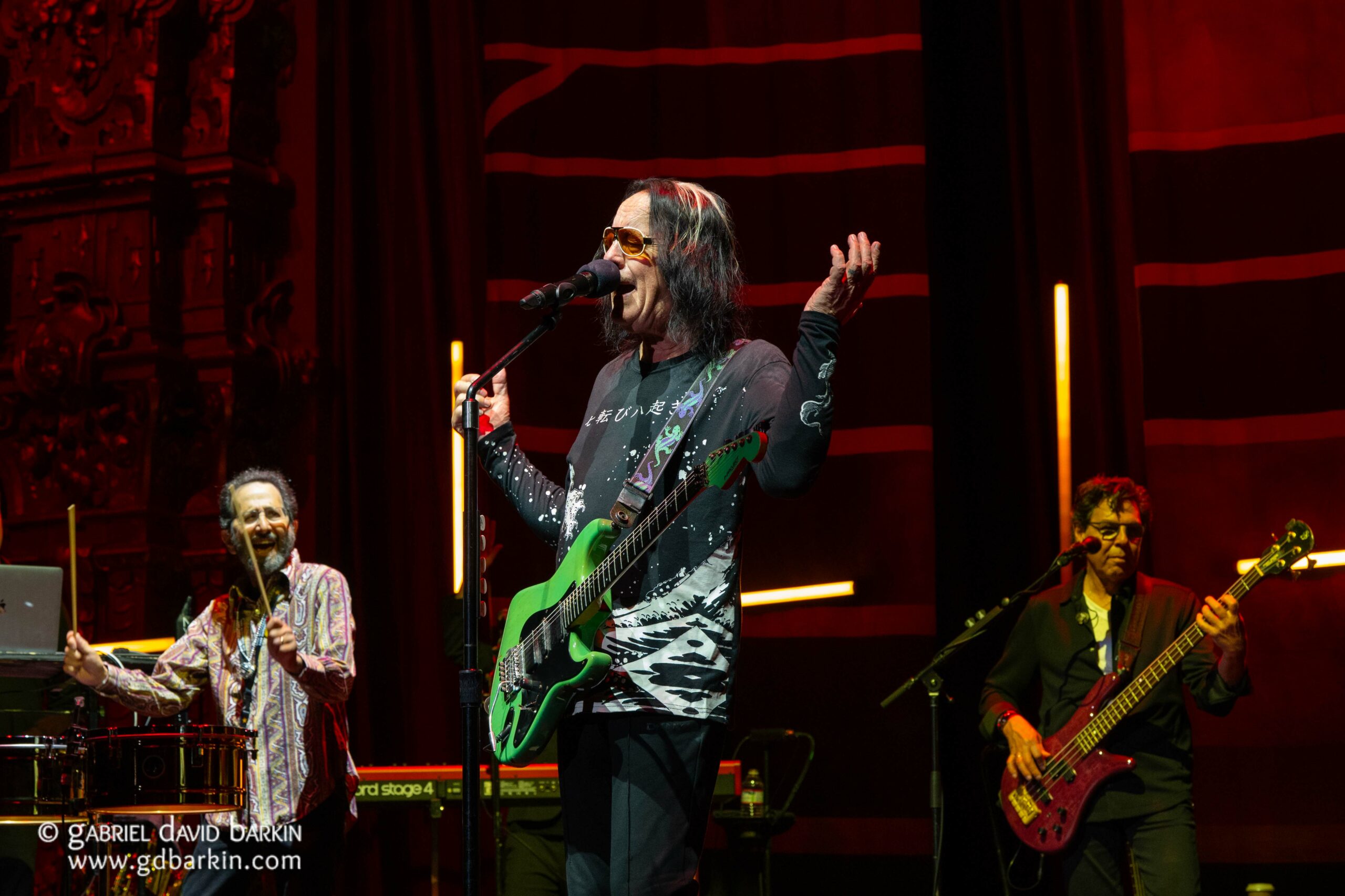
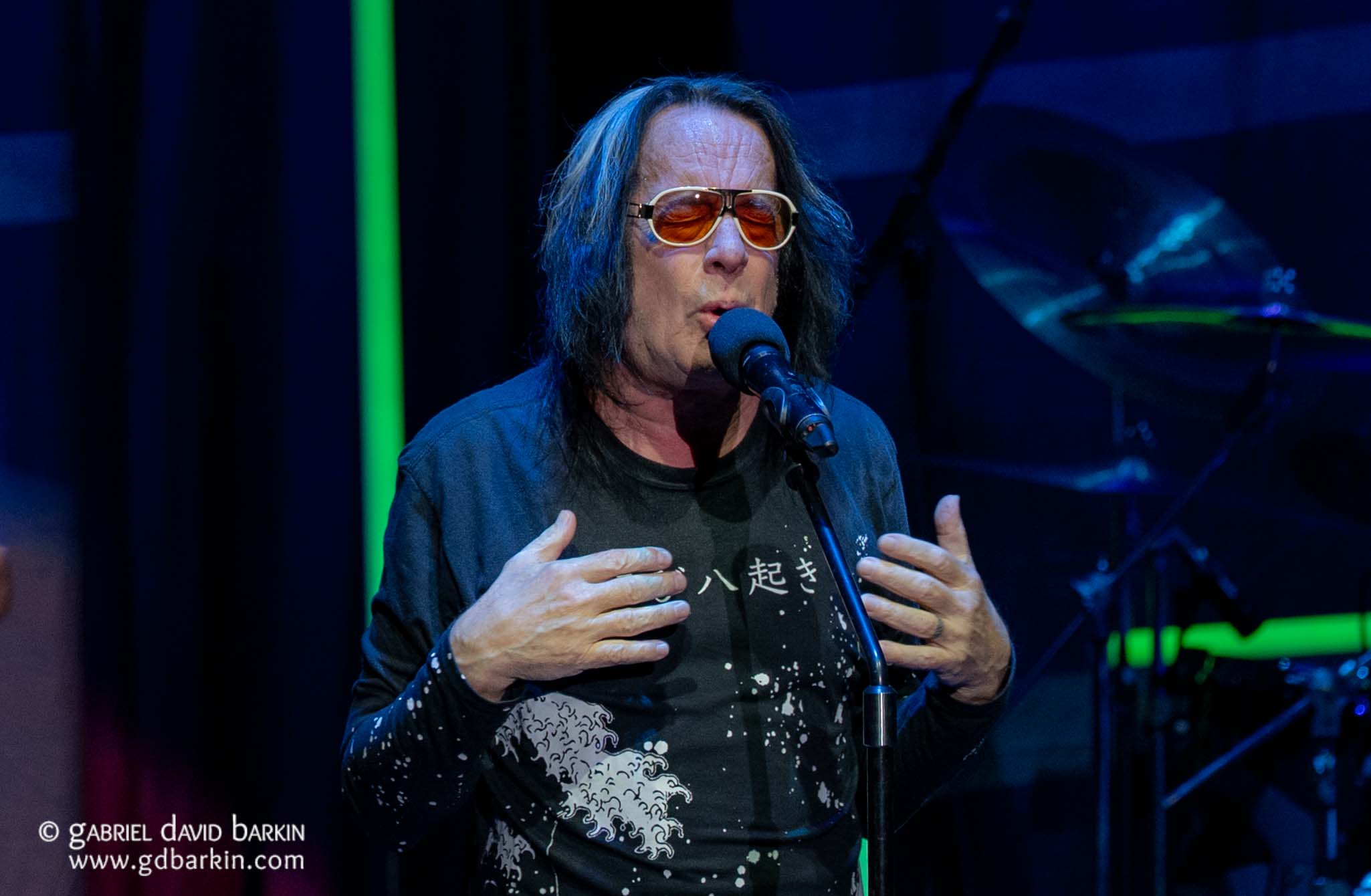
The 78-year-old Rundgren was in his comfort zone at the Castro, roaming the stage like an uncaged tiger and catching air with song-ending leaps at the end of his guitar solos. His voice, while not always perfect, was confident. Rundgren has had trouble hitting the falsetto notes for years, but the timbre of his go-to tenor has deepened in the past few decades and settled like fine wine. He’s at his best in the quieter moments – for example, during “Tiny Demons” in the acoustic segment that kicked off the second set. An a cappella version of “Honest Work” accompanied by Sulton and McDaniel at a single mic was likewise a sublime highlight.
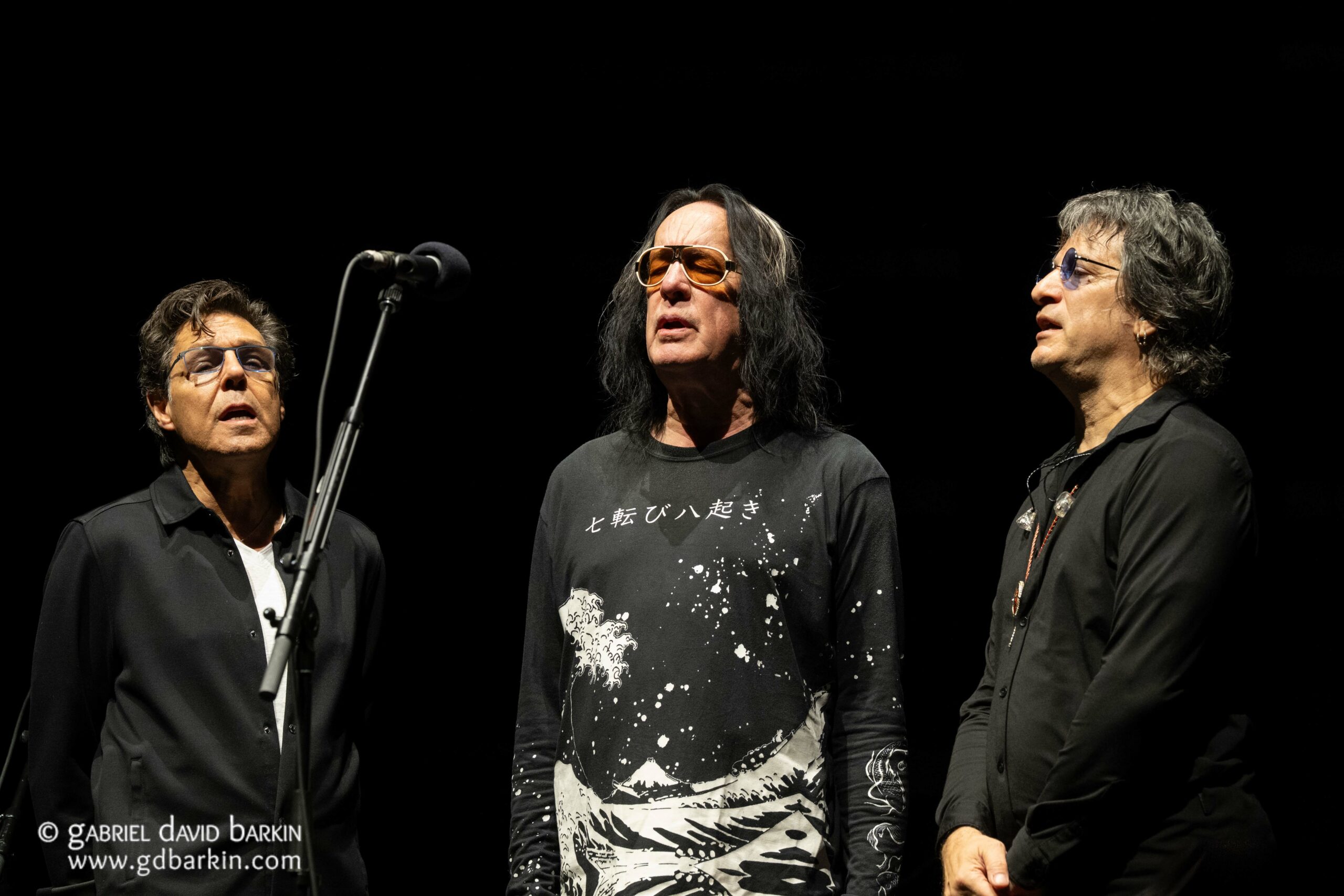
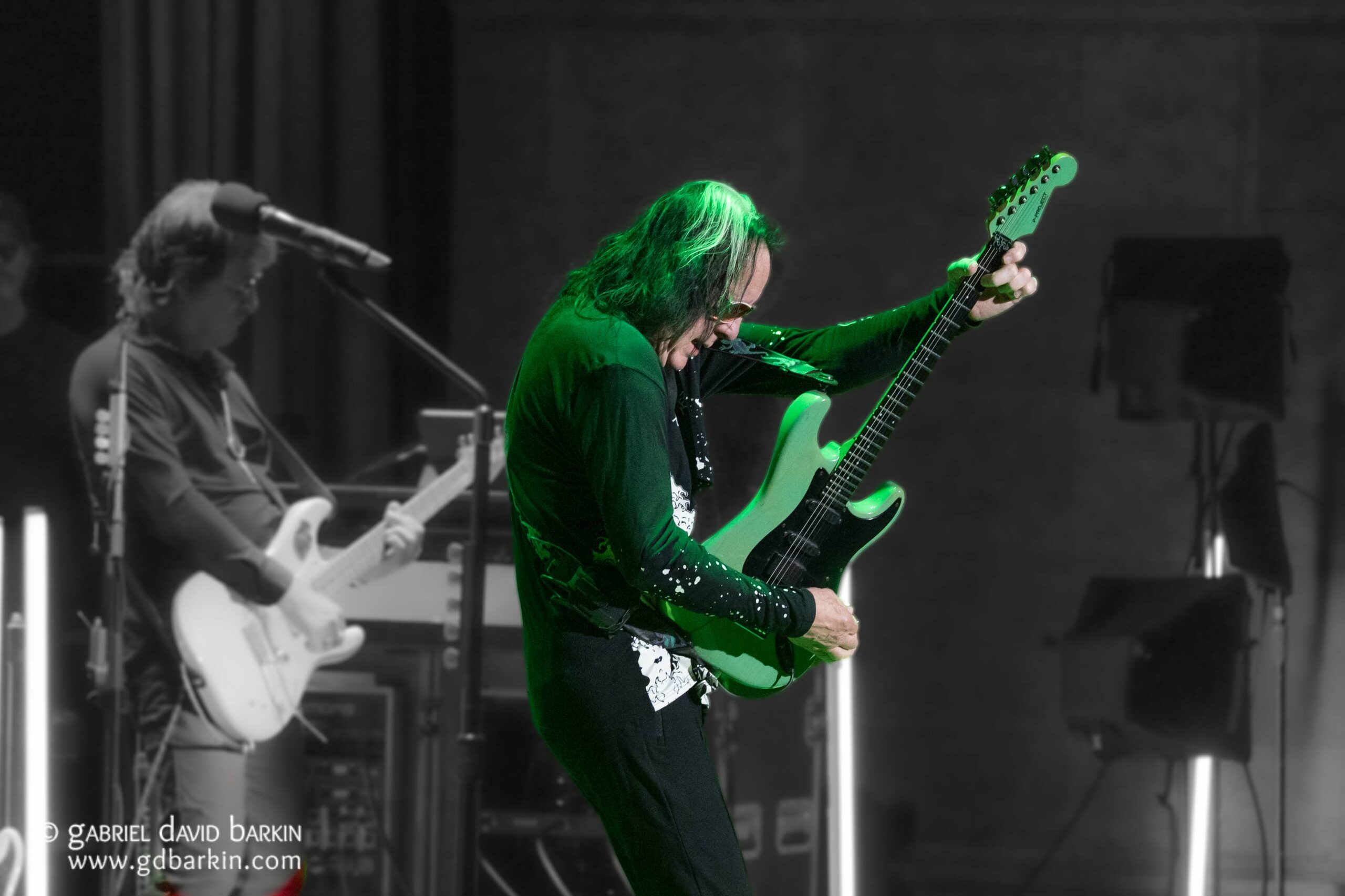
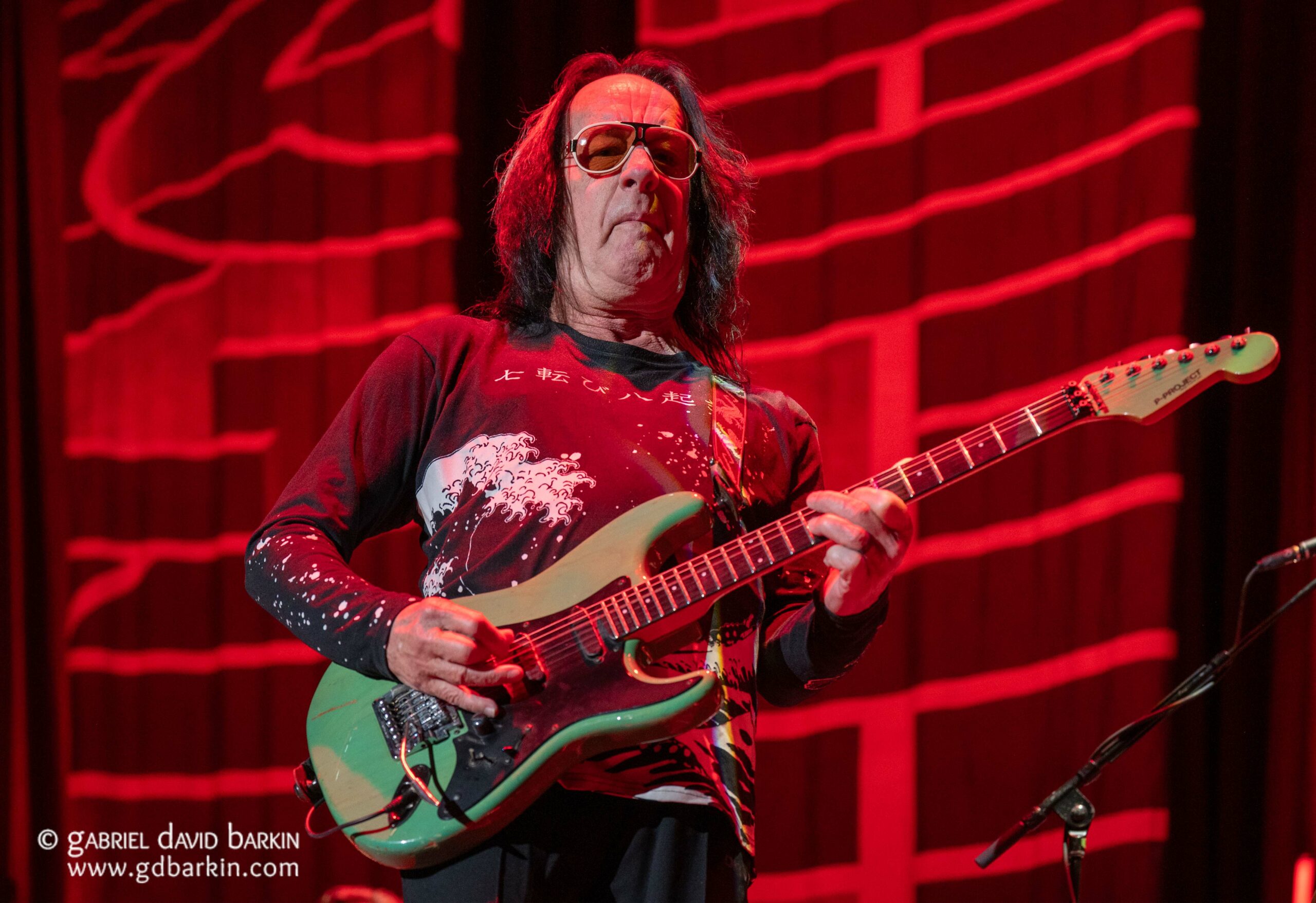
Rundgren played guitar on roughly half the songs – and let the record show that the dude still scorches on his leads. Age hasn’t slowed down his fingers one bit. On “Secret Society” and “Black Maria,” among others, he wielded “Foamy” (his seafoam-green made-in-Japan Fernandes P-Project “super strat”) like an axe in battle, slaying foes in his solos while storming from one end of the stage to the other.
For each show on this tour, an audience member is chosen to join the band on stage and play a pair of timbales for “Bang the Drum All Day.” “Every single one of you knows this song,” Rundgren told the crowd. “It’s like ‘Happy Birthday.’” Fan Richard was the chosen guest on Wednesday, and he proudly declared the night to be his fiftieth Todd show before performing adequately on the anthemic “Bang.” That kind of fan allegiance doesn’t come easy, but Rundgren’s lengthy career and dedication to performance have earned him such dedication.
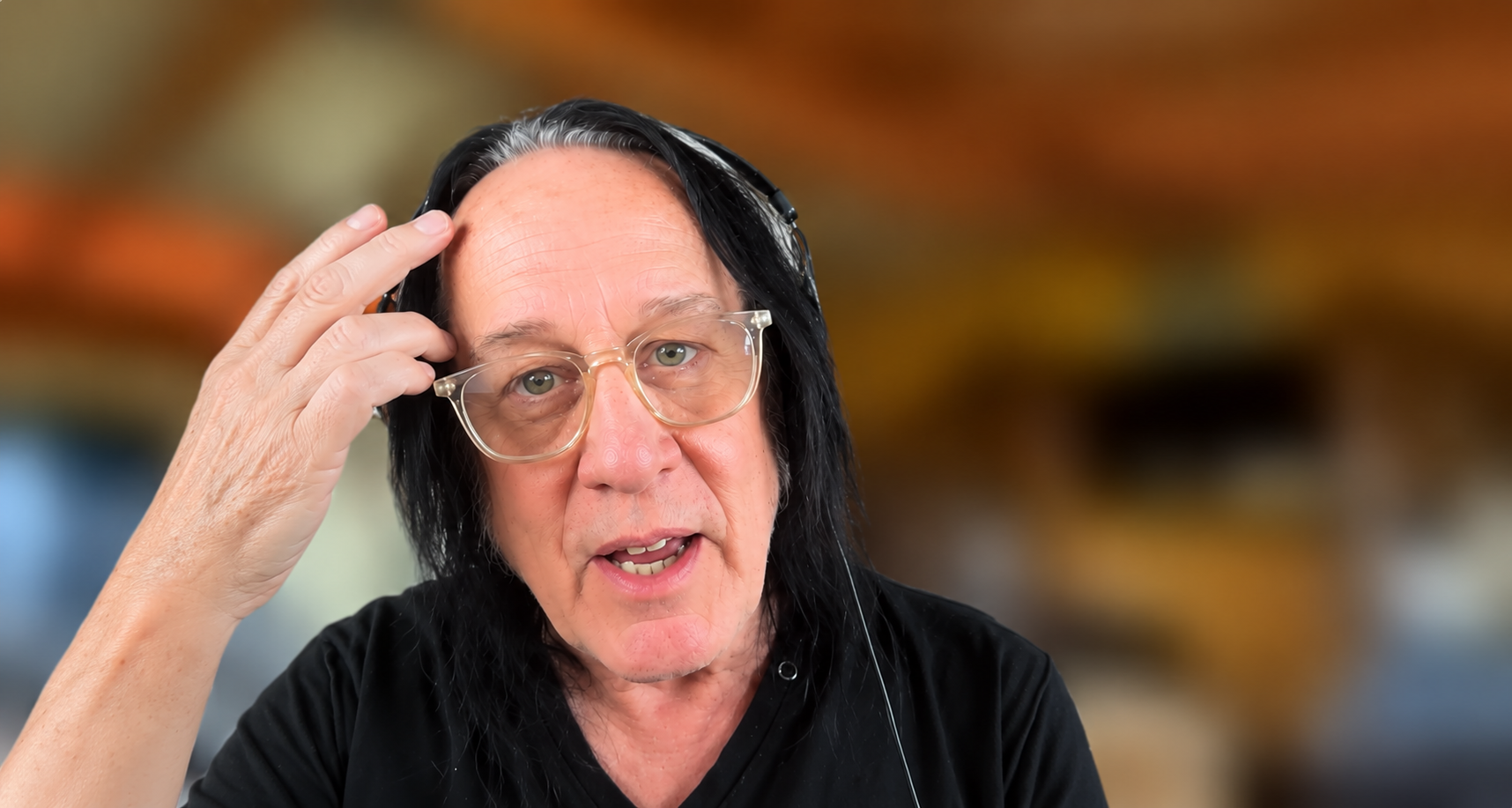
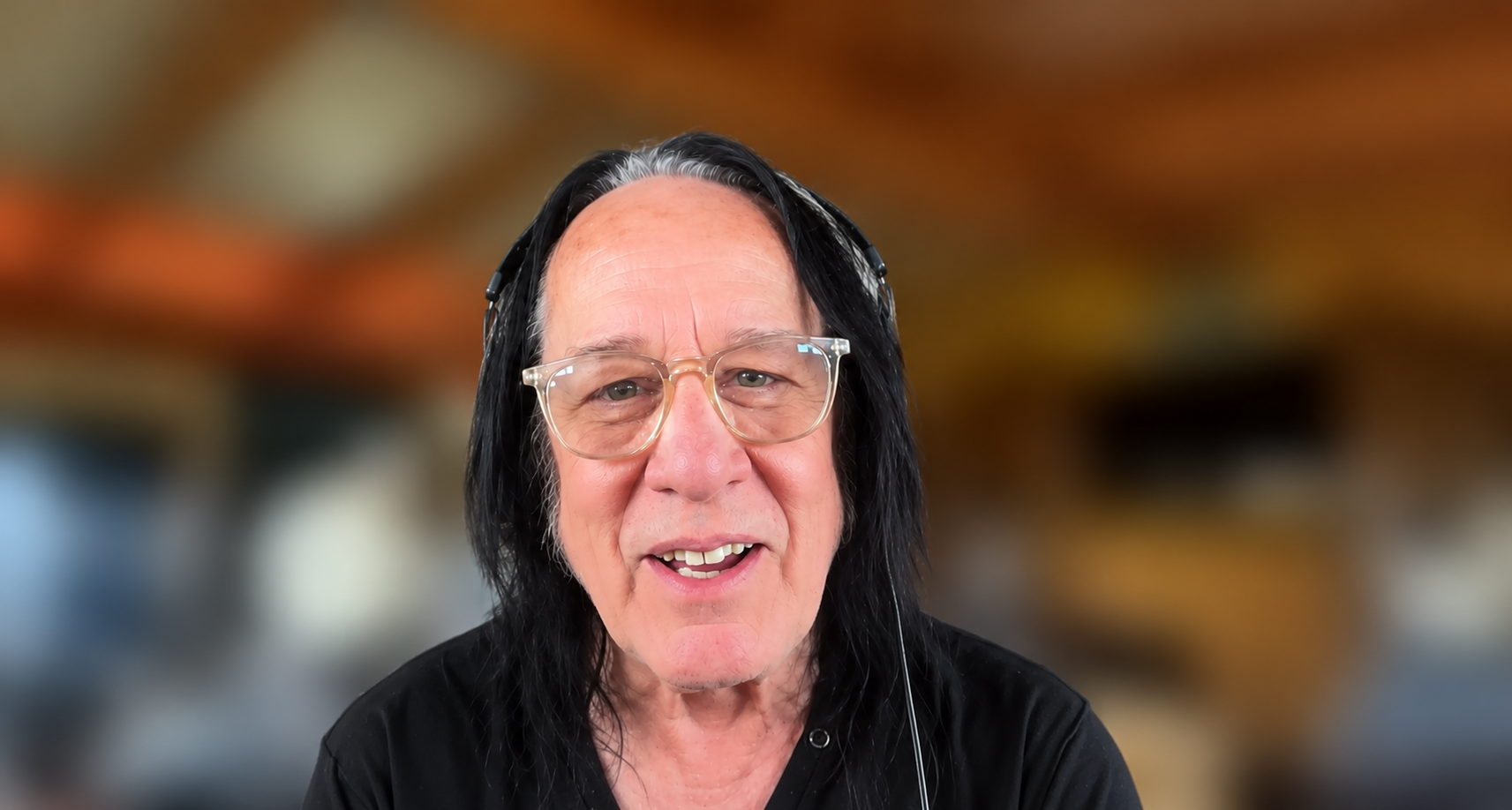
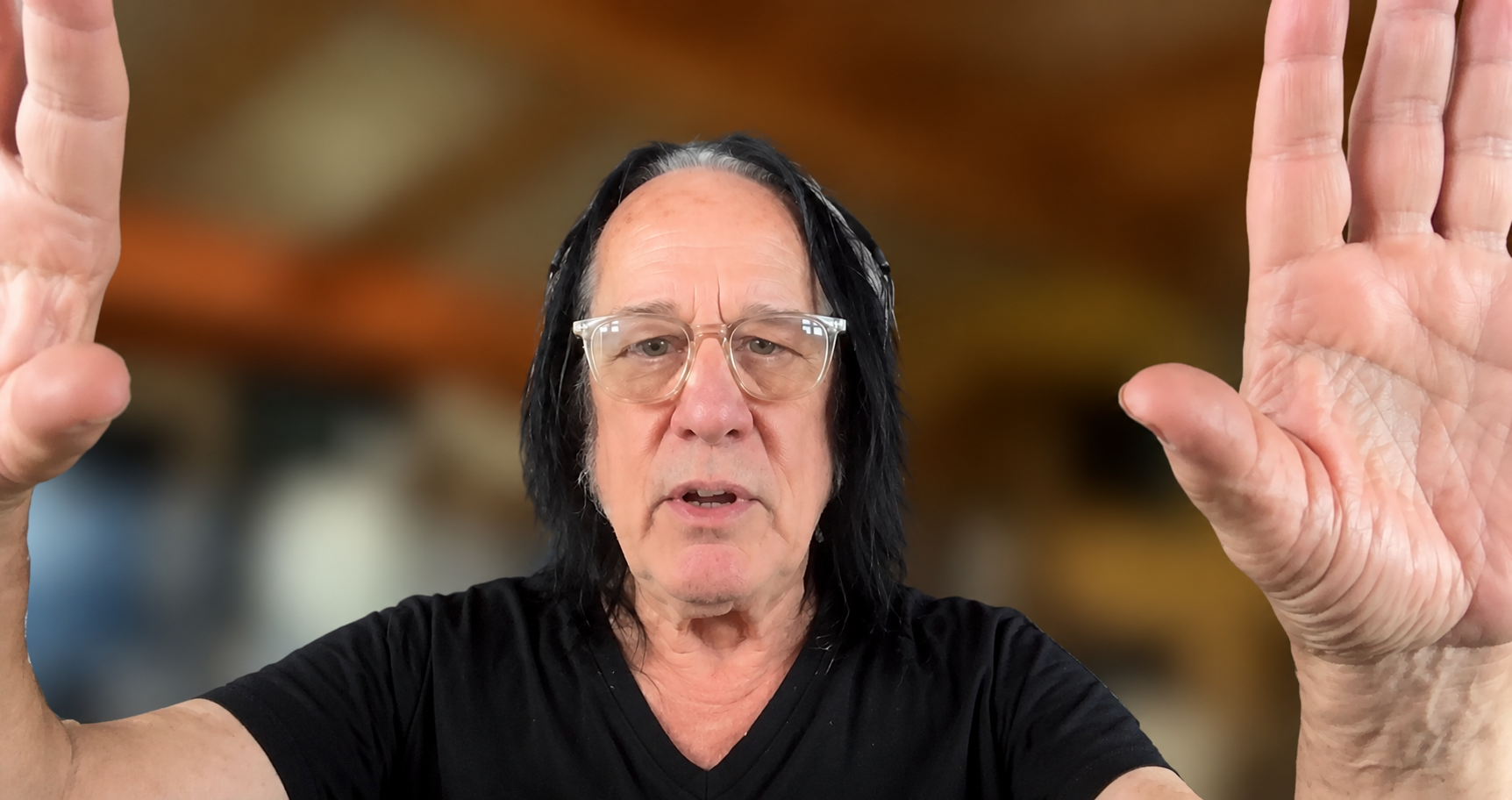
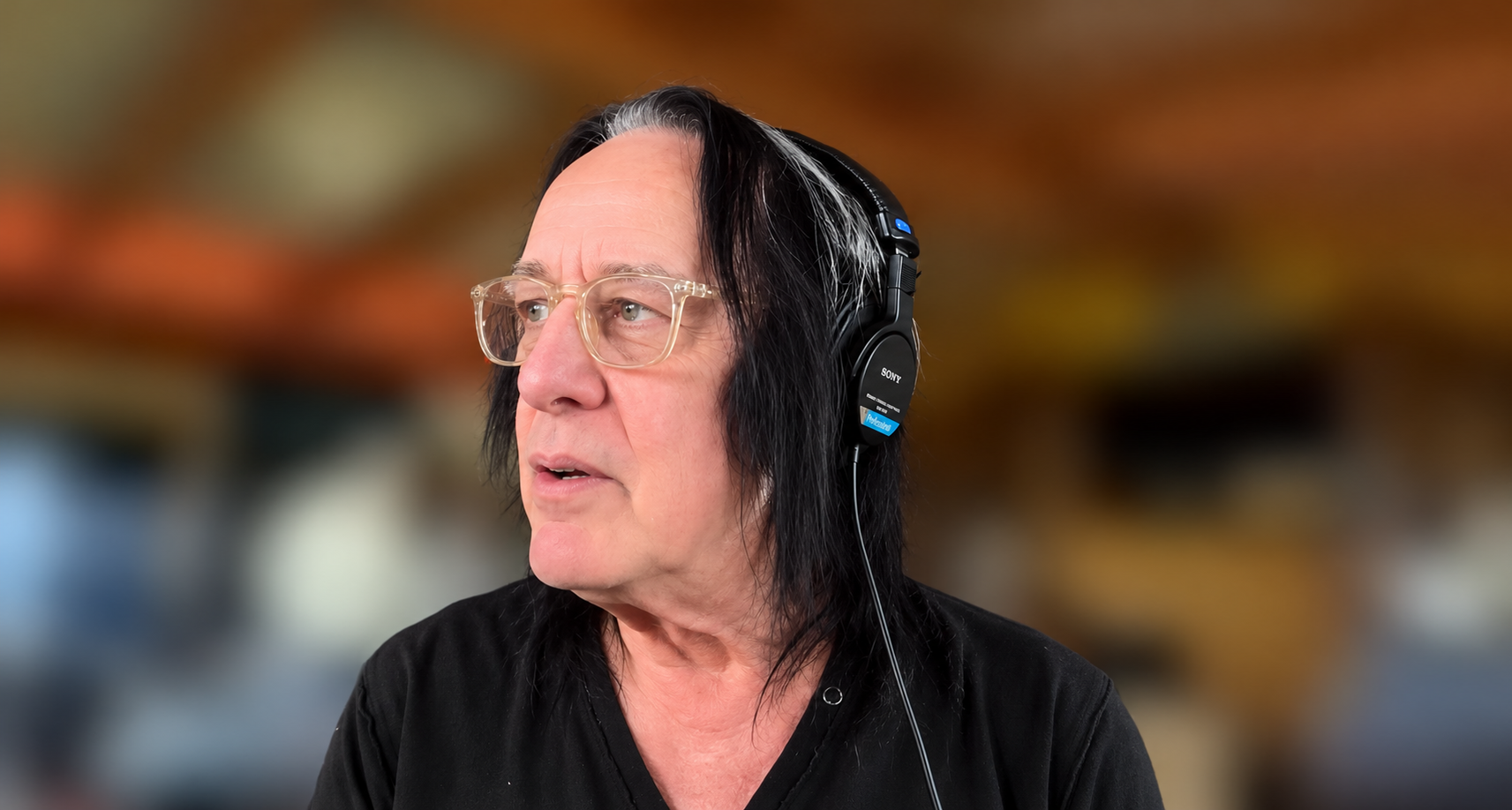
A few days earlier, Rundgren spoke with me on Zoom from his house in Kauai, where he was spending some downtime in advance of the Castro show. A word cloud derived from the impressions by people who’ve interviewed Rundgren over his long career might include words like “creative” and “innovative” alongside “sarcastic,” “curmudgeon” and perhaps even “what an [body-part-derived expletive].” In our conversation, he was nothing but pleasant, polite, engaged, and thoughtful.
The following interview has been edited for clarity and brevity.
Gabriel David Barkin: I’m looking forward to this conversation.
Todd Rundgren: Okay. Yeah. Well, let's have fun with it.
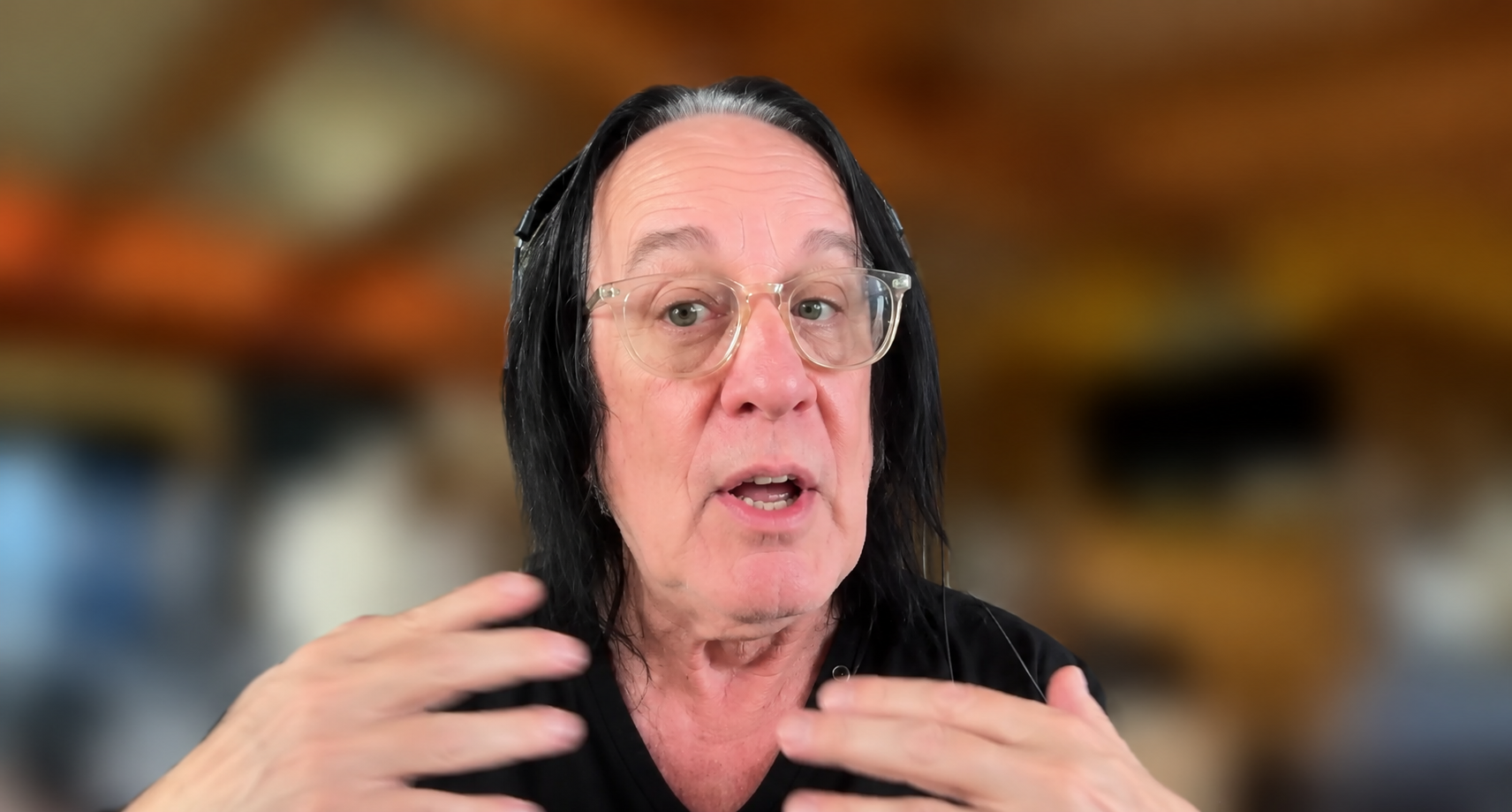
GDB: Great, yes, exactly. I'm looking forward to seeing you at the Castro next week. My wife and I are big fans – and she hates looking at set lists ahead of time, but not me. So, I looked at what you've been doing this summer in Europe, and it looks like a good long show with two sets. And there's an acoustic bit in the middle. You're playing a lot of hits, like “Hello It's Me” and “I Saw the Light,” and “Bang the Drum All Day.” What's that like for you, playing your hits night after night? You've been singing these same songs for decades. Tell me how you keep that fresh.
TR: Well, fortunately or unfortunately, I don't have a long string of hits. If I was to play a show of just hits, it'd be like a 20–30-minute show. So out of necessity, I have to play some other material. But I think the majority of my audience is aware of the fact that I’ve never really been a ‘hits artist.’ I never tried to be one. I've spent more time trying not to repeat what I've done before.
That seems to be a priority for me. I think there's new ideas still to be incorporated, and new things to write about – although after 300 or so songs, it gets a little harder not to repeat yourself.
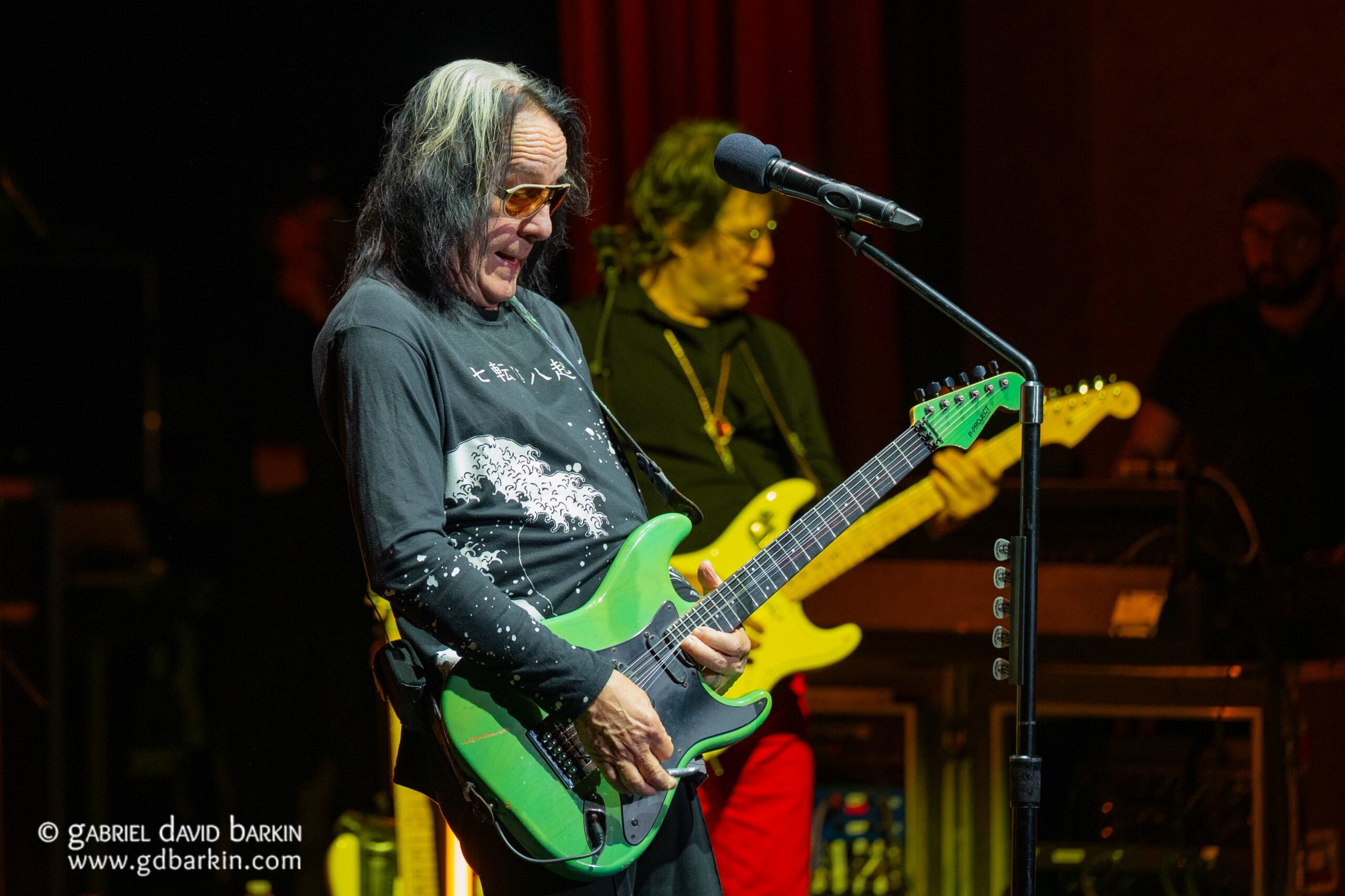
Also, because I was a producer for such a long time, it set the pattern for the way that I make records. Which is, I don't think about the commercial impact. And in some sense, I don't think about the audience when I'm making them. Because I have the freedom to make records any way that I want. And in that sense, I make them for myself.
I think a portion of the audience realizes that, and they're interested in that process. What's going through my head now?
I still make records. Sometimes they're conceptual or have a certain style to them, and I'll build a tour around them – and the tour will be completely different than any of the other tours that I've done. Often, people will be taken aback by that turn. But the core audience, I don't seem to lose them. They take it in stride. They give me the benefit of the doubt.
Something always lasts from those phases. And people want to hear it again later.
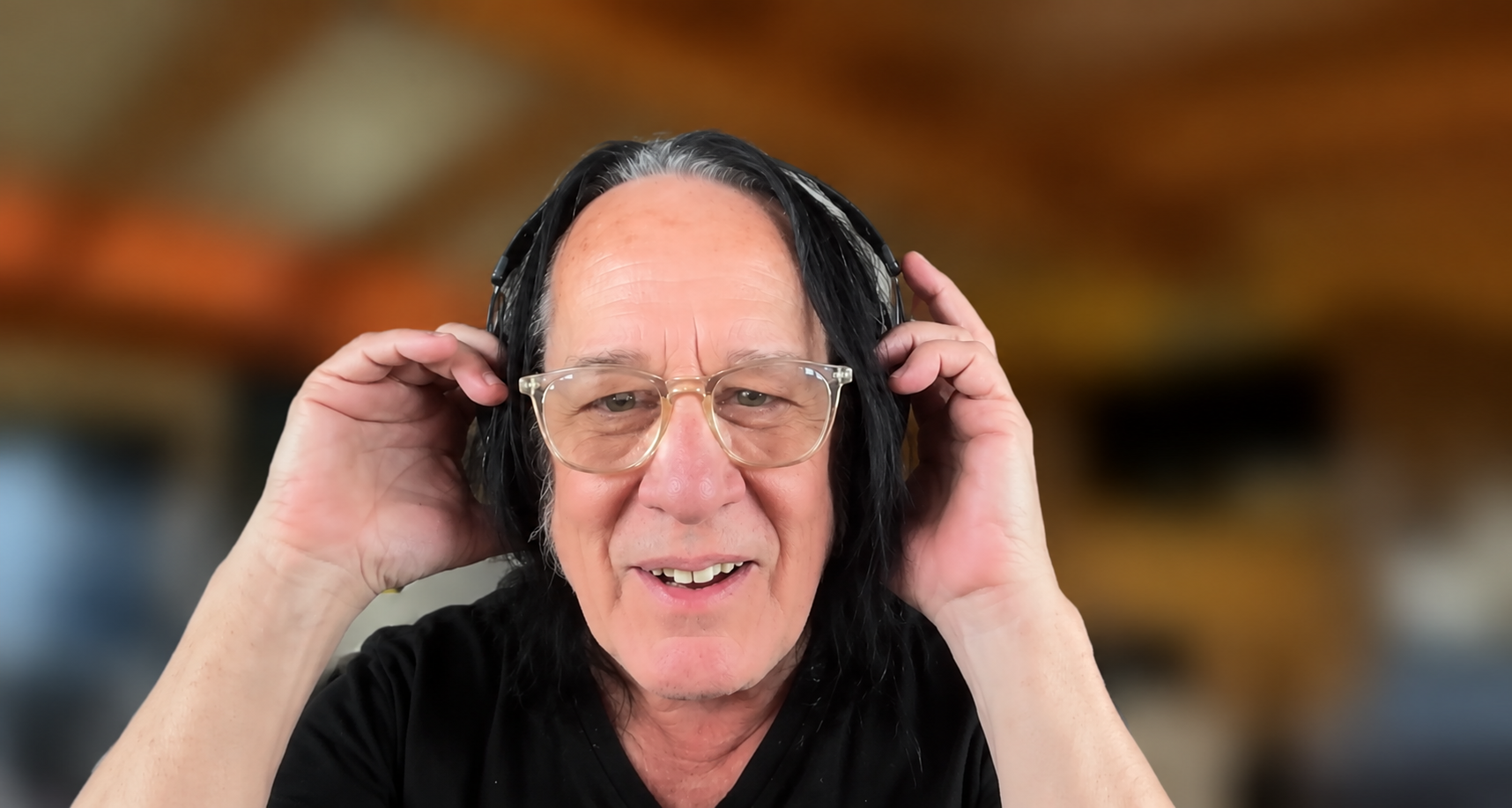
GDB: You put out a press release at the beginning of the tour, in spring, where you said that your audience is “so diverse, [you] never know what they're in the mood for.” What do you do about that? Within the basic setlist framework, do you change it up a little bit night to night? (I have an ulterior motive for asking this that I’ll get to in a moment.)
TR: Well, we do minor changes from night to night, but the logistics make it hard for us to ad-lib the show. Partly because of the timing. We have to break at a certain time so the crew can change over to the acoustic set. And getting the acoustic set undone is a weird sort of thing, because we do it without stopping the show.
We do know other [songs], and there's no reason why we couldn't just throw in one of these.
But another factor is that the arrangements are often very precise, and the guys have presets they need to have available to them for a particular song. Particularly Gil, our keyboard player, because he's often doing what normally two or three keyboard players would do.
We are adaptable in a sense. But I often wonder – if you change the set list too much, if some people might get upset because you did a song they wanted to hear, but it wasn't the night that they attended.
GDB: As a Deadhead who saw the Grateful Dead quite a lot, that was always part of the fun. Are you going to get to hear “Dark Star” or not tonight? And I’ve had that experience with your shows too. I’ve seen you play maybe fifteen or twenty times over almost forty years. You brought in a lot of different songs over that time, some I’d never expect I’d get to hear you play, so count me among those who like the unexpectedness, the variety.
Which brings me to that ulterior motive I mentioned: We love [Rundgren’s 1989 album] Nearly Human, so if you could throw in “Feel It” at the Castro. Just putting a bug in your ear.
TR: Oh, that would be great.
GDB: Moving onward, or maybe backward. You put out your last record to date, Space Force, about four years ago. And that was five years after the last album. That’s way below the pace of most of your career. So from that perspective, the pace of Todd Rundgren albums has slowed down in recent years. What are you feeling about at this point in your career as far as any urgency to write and put out music?
TR: Most artists who are at the point that I'm at, they just play the stuff they've already written and rarely write new stuff. But I still have this habit of coming up with concepts that require an album-length format.
|
Interlude: Something/Anything? [1972] – a two-LP set with all tracks recorded by Rundgren save the last side of disc two, recorded with a full band. A Wizard, a True Star [1973] – following the record above, which yielded two bona fide hits, Rundgren eschewed the possibility of a follow-up hit and instead released this tour de force record featuring numerous psychedelic twists, segues, and shall we say freaky-deaky bits. (My college roomie turned me on to this record, saying it was one of the best LPs to listen to on acid.) A Cappella [1985] – all the cuts on this record are derived from vocals only; every sound on the record, including the “instruments” and percussion, comes from Rundgren’s voice. Nearly Human [1989] – the entire record has no overdubs, an exquisite song cycle recorded in single takes with a full band in studio. 2nd Wind [1991] – recorded “live in studio” over a week of performances at the Palace of Fine Arts in San Francisco, with the band in isolation booths and the audience asked to stay silent. I attended two of those nights; each included repeat run-throughs of a few songs, with Rundgren giving the band notes between takes. No World Order [1993] – one of the first interactive albums by a major artist, released on the Philips CD-i format, which let listeners reshape the album by tempo, mood, and sequence. |
TR: That's why sometimes it seems like a long time between the music. First of all, I've got to refine the format. I've got to start writing the material. And I've got to do it in between what now is a very tour-heavy schedule.
Which is itself a byproduct of changes in the music industry. It used to be you would have a record deal, and that guaranteed you a certain amount of income. The label might give you tour support, and that got you out on the road. Nowadays, you don't get tour support, and you don't get a budget for the record. So you have to go where the money is, which is touring. You have to front all the costs of getting onto the road – and for the first month or so, you're just defraying all the costs of getting onto the road. So once you're out, you gotta stay out.
GDB: So instead of making records, you’ve got to get butts onto seats and necks into T-shirts.
TR: Yeah, doing some merch sales as well, right.
It depends on the way that you make records. My writing requires solitude and a lack of distractions. It’s hard to get settled back into that after you get off the road. It takes a week or two.
There's a base-level anxiety every day you have a show. You're on a schedule, you have to meet the schedule. Oh, what time is it? How's my voice gonna hold up for the show? There are all these little things that are nagging at you. And once you get off the road, it takes a little while for that nagging to go away as well.
GDB: You need time to settle into being yourself, not being on the go all the time.
TR: Yeah, to just realize that, okay, I'm on a different schedule now, my time is spent differently now. I still have other things that I have to do, but rescheduling is a little easier when you're off the road.
GDB: I can imagine that.
Thinking back on what it was like for you writing a song, let's say, in the early 70s compared to now. Do you approach songwriting differently these days? Do you write the same kind of songs you always did, or has your approach to songwriting and topics and structures completely changed over the years?
TR: Well, when you've got a lot of songs, your object is not to repeat yourself. [Sometimes] I'll be fiddling around and then I'll suddenly realize that melody sounds familiar – I'm like, Oh no, it's a song I wrote already.
That's another thing that protracts the process: trying to stop yourself from doing the things that you have habitually done. And for me, the process has moved further and further into my subconscious. It's like, I ruminate about it and I put together musical fragments and things like that. Sometimes they start to form themselves into songs. But the lyrics and the melody are usually the very last thing that I come up with.
GDB: What does that process look like?
TR: First, I’m trying to come up with something structurally interesting to me, or that inspires me. And then I let my subconscious do a lot of the work in terms of the actual song itself. So when it comes time to sing it, to write the lyrics out, and the melodies, and sing the song – that's the quickest thing that happens in the whole process. Because by then, I've let it all sort of bake back here [Rundgren cups his hand at the back of his head while saying this], and then it comes spilling out like automatic writing. I almost don't have to think about it that much.
GDB: Was it always like that for you, or was there a different kind of a process before you had 300 other songs?
TR: I didn't realize how much the subconscious contributes to the process until I started dreaming whole songs. Like “Bang the Drum All Day,” a song that I never would have consciously written. I dreamed the song, woke myself up, went down and recorded whatever I could remember of it. It turned out years and years later to be the song that made me the most money of anything I ever wrote. [But at the time] I was like, I don't understand it now, but years from now, you're gonna realize why this song came to you. Because you're going to be getting big checks for it.
And that's not the only song that was a result of dreaming. That's probably when things are the most ideal. When it seems like somebody else wrote the song completely and gave it to me.
GDB: You're a songwriter, maybe we can say a song dreamer, and of course a performer. But a lot of people know you also as a producer. And you had big successes in that role, in the 70s in particular, with all those seminal albums. Patti Smith. Meat Loaf. Hall & Oates.
It seems like today, the producer role (other than on your own records) has fallen off your radar. It’s been over a decade since you had a producer credit on someone else’s album. Is that just something you've consciously decided to drop from your repertoire, or what?
TR: My production career essentially followed the arc of the music business in general. A lot of it is technological advances. It's much easier for someone to make a recording nowadays than it was even 30 years ago. In the 90s, computers started to become more powerful, and then we developed digital audio, and all of the attendant technologies along with that. It became something that you could do on a laptop with some relatively inexpensive software. So, suddenly, my role as a gatekeeper went away.
You don't have to ask permission to make a record now. You just have to get yourself a laptop and figure out how to do it yourself.
GDB: Right? I mean, I’ve even done that. Although my record has probably only been heard by, like, thirty people. But I recorded and produced an entire record, playing all the tracks myself, in a spare bedroom.
TR: It's also the fact that I would produce albums mostly. I was not a singles producer. And that whole thing started to break down with the internet because people would listen to songs more than they would listen to whole albums. People's listening habits changed, and the format changed along with it.
I was not especially adapted to the format of just recording singles.
The other thing is – and I guess it's a compensatory move on people's parts – you look at a song nowadays and it's got five songwriters and three producers.
GDB: Right, especially pop music.
TR: Yeah, it's this weird collaboration where everybody puts in a certain part of it. It's like making a movie now. It's not that sort of relationship that you used to have with a producer-artist relationship throughout an entire project. That doesn't exist anymore.
[Producing] was the main way that I made money outside of touring. But nowadays, it doesn't make any sense for people to pay me the kind of money that I was getting. I provided the studio. I'd provide housing. I'd provide all of the logistics necessary to make a record. And I’d take a relatively large advance, and my production fee would be whatever was left over after all that. But things aren't structurally like that anymore.
GDB: I’m glad you brought up these changes in the industry, it opens the door for me to move to the most fun part of this interview. Because I read the quote from you recently about Taylor Swift in your interview with Vulture.
“There’s an argument to be made that she ruined music … Taylor Swift is the apotheosis of mediocrity … [she] doesn’t do anything particularly great except grow hair. She’s not a great singer. She’s not a great songwriter. She’s not a great dancer.”
(Author’s note: when I looked up this quote – and this was long after I wrote the intro above where I claimed Rundgren has been called a “curmudgeon” – I found it reprinted on Pitchfork, where the author used that exact word. I stand vindicated.)
TR: Oh, dear …
GDB: You're not going to get an argument from me. I’m not a Swiftie, although I do love a lot of other pop music.
TR: I'm just starting a conversation, that's all.
GDB: I think it's a great conversation, and it was your honest opinion. But rather than delve into more of a “dissing Swift” conversation – is there pop music that you do listen to today? What kind of new music, new artists, do you listen to, if any?
TR: Well, there are certainly artists who do great things, and they pop up, and then they sort of fade away. Because there's no movement. There isn't grunge, or new wave, or even disco. Everything's kind of fragmentary.
If there is one thing that's consistent, it’s that now you have to have dancers. If you're gonna make music, you need choreography to go with it, for some reason.
GDB: You don't have that.
TR: Well, I traipse around the stage a bit. But no, I don't have dancers now. I did do a tour where I had dancers, and it was a lot of fun. Singer-dancers, having that aspect of the show, worked pretty well for the particular show that we did.
But nowadays, it's K-pop and stuff, this hardcore choreography going on, or a singer who kind of sings but is a better dancer than a singer. That kind of thing. So it's a lot different in that regard, and it leaves out a lot of people.
The first wave of rock and roll – well, I was a little young for it, but I can see how it took hold. Because it simplified everything. You didn't have to learn how to read music, you just had to learn a couple of chords. The thing that really democratized it was the Beatles, because then you realized you didn't have to be a handsome guy with a whole band behind you. Just find a couple of other guys in the neighborhood and you got a band.
And then the Beatles went through genres so easily that they would start a new thing like classical rock, and then they’d move on to psychedelic rock or something like that.
GDB: It was hard to keep up with them. They did all of that in just seven years of producing records.
TR: I know, it was amazing. And it continued after that, because then we started having the prog rock wave.
GDB: And then punk.
TR: Well, first there was disco, and the reaction to disco was punk. And the reaction to punk was new wave, and the reaction to new wave was grunge. The reaction to grunge was electronica. And that had to do with festival culture, with the fact that DJs changed the whole approach instead of all the focus being on the stage. They brought the focus into the audience.
Plus, it was so easy for DJs to just bring their setup. They're not a whole band.
GDB: Yeah, you didn't even need three guys in a garage anymore. You just needed one person in their bedroom making beats.
TR: Yeah, one person, his arms in the air like they just don't care. [Rundgren throws his hands in the air, acts like he just don’t care.]
A lot of these musical movements have to do with the culture that supports them.
GDB: And then along comes Taylor Swift.
TR: Yes, and the whole Eras Tour was the biggest thing happening. And for a lot of us, we don't fit into that.
GDB: But she’s not the only thing in music these days, of course. I listen to a lot of what is still called alternative rock, but I just think of it as rock, it’s just what rock has evolved into. Like Big Thief and Geese. (And by the way, just to be clear, I mean Geese and not Goose. I love Goose, but I'm an even bigger Geese fan.)
TR: Yeah. Goose and Geese, whatever. I think they were on SNL a little while ago.
GDB: Right, Geese.
TR: They seem to me like the natural evolution of Radiohead. And Radiohead was kind of a phenomenon in and of themselves. A lot of people, a lot of bands wanted to be Radiohead. But now, they're like an outlier. We're waiting for some kind of a movement that's democratic enough for everybody to be able to participate in it.
GDB: Right. It’s been a long time since there was really a new genre in rock and roll. Maybe it goes back to basics now, like Jesse Welles singing protest music and drawing twenty thousand people to a stage in Golden Gate Park a few weeks ago [at Hardly Strictly Bluegrass].
TR: There's that. [Maybe] we have to go back to Bob Dylan to start again, right?
GDB: Maybe that's a good thing. Revolutions never really reinvent the wheel, they just repurpose it, maybe add a few spokes.
You were inducted into the Rock and Roll Hall of Fame [in 2021] after not getting the nod for a couple of ballots. At one point you said that honor “doesn't have the same cachet as a Nobel Peace Prize.”
TR: Yeah.
GDB: I'm going to say that is, unfortunately, something where Donald Trump might agree with you. But on the other hand, I think you're far more likely to get a peace prize than he is.
TR: But maybe Donald Trump will get in the Rock Hall of Fame [sic].
GDB: I'd say neither is very likely, don't you think? But you were inducted.
I'm wondering, do you see, whether because of that honor or for any reason, are younger fans coming to your shows or buying your records? Do you see a new generation of Todd fans when you tour these days?
TR: We do get a lot of kids at the shows. Some of it is “hand-me-down,” [kids who were] indoctrinated because their parents were fans, and so they went to the show. Your first show was seeing me with your parents, that kind of thing. We're even getting into third generation now. Grandkids are showing up.
There is, and probably always will be, some segment of the younger audience that's dissatisfied with the music their contemporaries are making. They can't go into the future, so they go into the past looking for something else, something different, something that has a different meaning or more meaning. Something that stirs something inside you that contemporary music isn't reaching somehow.
There are also plenty of people who just, by word of mouth, stumble across a song and suddenly think, “Hello It’s Me” is now my favorite song. The democratizing aspect of the internet is helpful in that sense – the fact that anyone can find me, can find most of what I've done.
It's kind of necessary as well that this happens, unless you want your audience to dwindle down to pretty much just 90-year-olds.
GDB: And at a certain point, 90-year-olds are not even going out anymore.
TR: Well, yes. I realize that [my] core audience is getting older. They don't go out as much, they don't listen to as much music, they don't buy as much music. The discretionary income they used to have that they would spend on music and concert tickets and merch and stuff like that, that’s their kid's allowance.
GDB: Or their inheritance.
TR: But I still have fans that I've had since nearly the very beginning. I see them at the gigs, and it's very gratifying that they continue to show up. But if it was only them, I'd probably be playing dinner theater.
GDB: You've been really generous with your time today, and I don't want to overstay my welcome – but I always like to ask this at the end. You've been in this career for a minute, as the kids say. You've done countless interviews. What’s it like doing yet another interview? Do you like doing interviews? And has your approach to being interviewed changed over the years in any way, maybe in how you answer questions or whether it makes you more introspective?
TR: Well, inquiring minds want to know, and you wouldn't want spurious information being spread about what you think, or what you've done. So it's necessary in a certain way to make sure that you're on the record, in your own words. That's maybe the primary reason why I do it.
Otherwise, it's like that Taylor Swift thing. There's a constant thirst for headlines. And not for headlines from me. They're thirsty for headlines about somebody like Taylor Swift. Whatever else I talked about in that interview was completely overshadowed by one thing.
So there's a danger in it as well. I always have to be mindful. Like, I need to be mindful about whether you're doing print or whether you're doing radio or video or something like that. Radio and video, you can be sarcastic. It's impossible to be sarcastic in print. Nobody knows. They don't get if you're being sarcastic or not.
But otherwise, I don't mind it. I don't do a whole lot of interviews nowadays. There were times, and there probably will be times again at some point, where you would go to Japan and you'd do two days of exhausting press, just one publication after another, one radio station after another. And that I don't enjoy, because they all pretty much ask the same questions. So I'd be saying to the interpreter, just tell them what I said before.
GDB: “Read the last interview.”
TR: Yeah, just tell them what I said in the last interview.
Todd Rundgren at the Castro TheatreCheck out more photos from Todd's show at The Castro.