Article Contributed by KG Music Press
Published on 2026-11-21
In 1948, Woody Guthrie wrote “Deportee (Plane Wreck at Los Gatos)” after a plane carrying Mexican migrant workers crashed in California, killing 28 people being deported from the United States. Guthrie was outraged that the victims were identified in news reports only as anonymous “deportees,” rather than as human beings with names, families and lives.
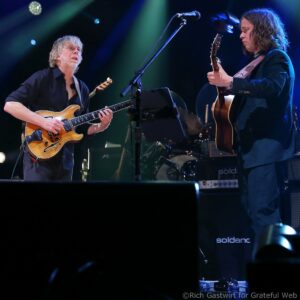
Nearly eight decades later, James Houlahan has returned to Guthrie’s enduring protest song with a new recording, released November 6, 2026, that is both a response to the present and an exploration of how the folk tradition continues to evolve. The track was produced by Fernando Perdomo, John Kruth and James Houlahan at Forward Motion Studios in Los Angeles. Houlahan performs vocals and guitar, Kruth plays mandocello, recorder and harmonica, and Willie Aron contributes backing vocals.
Recorded in Los Angeles on June 12, 2026, Houlahan’s version responds to the dehumanization of immigrants and the cruelty and violence surrounding America’s broken immigration system. But rather than simply recreate Guthrie’s original, Houlahan and multi-instrumentalist John Kruth have created a spacious, atmospheric arrangement that invites contemporary listeners into the song’s story.
“I don’t write good protest songs myself,” says Houlahan. “And since Woody seems to follow me places and he’s got great, sadly relevant, songs, he’s the writer to turn to in these unfortunate times.” Houlahan listened to numerous recordings of “Deportee” before approaching his own version, becoming interested in how a contemporary arrangement could communicate Guthrie’s words differently.
Many earlier folk recordings embrace a deliberately plain, direct and almost impersonal style—an aesthetic that can suggest resignation to forces beyond the singer’s control. Houlahan and Kruth instead chose to add space and ambience, allowing the listener more room to enter the emotional world of the song.
“We added a lot of space to the music,” Houlahan explains. “The idea was to let the contemporary listener into the story being told.”
For Houlahan, this is part of the ongoing folk process: songs aren't simply preserved; they are continually reshaped by the people who sing them, reflecting the times in which they are being sung. “Deportee” may have been written in 1948, but its themes of immigration, displacement, borders and human dignity remain painfully contemporary. In Houlahan’s hands, changing the music becomes a way of giving the song new agency without changing its essential message.
One of the recording’s most distinctive elements is Kruth’s recorder, which producer Fernando Perdomo immediately associated with Indigenous Mexico.
“When Fernando heard the recorder in the mix, he said it sounded like Mexico to him—indigenous Mexico,” Houlahan recalls. “The instrument seems to recall native instrumentation and hearkens back to a time before the current borders were imposed by white men.”
Houlahan and Kruth also reordered Guthrie’s verses so that the song ultimately arrives at one of its most powerful lines: “Both sides of the river we die just the same.” The arrangement becomes a meditation on borders—political, cultural and musical. “Music knows no borders,” Houlahan says.
Houlahan’s return to Guthrie is also deeply personal. When Houlahan moved from Boston to Los Angeles in 2012, Guthrie’s music unexpectedly became part of his own cross-country journey. Guthrie’s previously unpublished lyrics had just been set to music by Jim James, Jay Farrar and others for New Multitudes, an album inspired by Guthrie’s years in Los Angeles. Houlahan picked up a copy while passing through Memphis and listened to it as he made his way west.
Years later, after settling in Topanga Canyon, Houlahan discovered another unexpected connection: Guthrie himself had once lived in a shack at Theatricum Botanicum in Topanga.
“When I visited there, I noticed the New Multitudes artwork right there on the wall,” Houlahan recalls. “It brought me back to my own traveling experiences.” The connection made Guthrie an increasingly persistent presence in Houlahan’s life, and eventually the natural songwriter to turn to when he wanted to respond to the current moment.
During the recording session, Houlahan, Kruth and Perdomo kept returning to the question: What Would Woody Do?
“I don’t think Woody would have cared if some famous people had gone before him in recording a song,” Houlahan says. “He’d have to throw his own hat in the ring. Folk music—by the people, for the people, right? It belongs to all of us.”
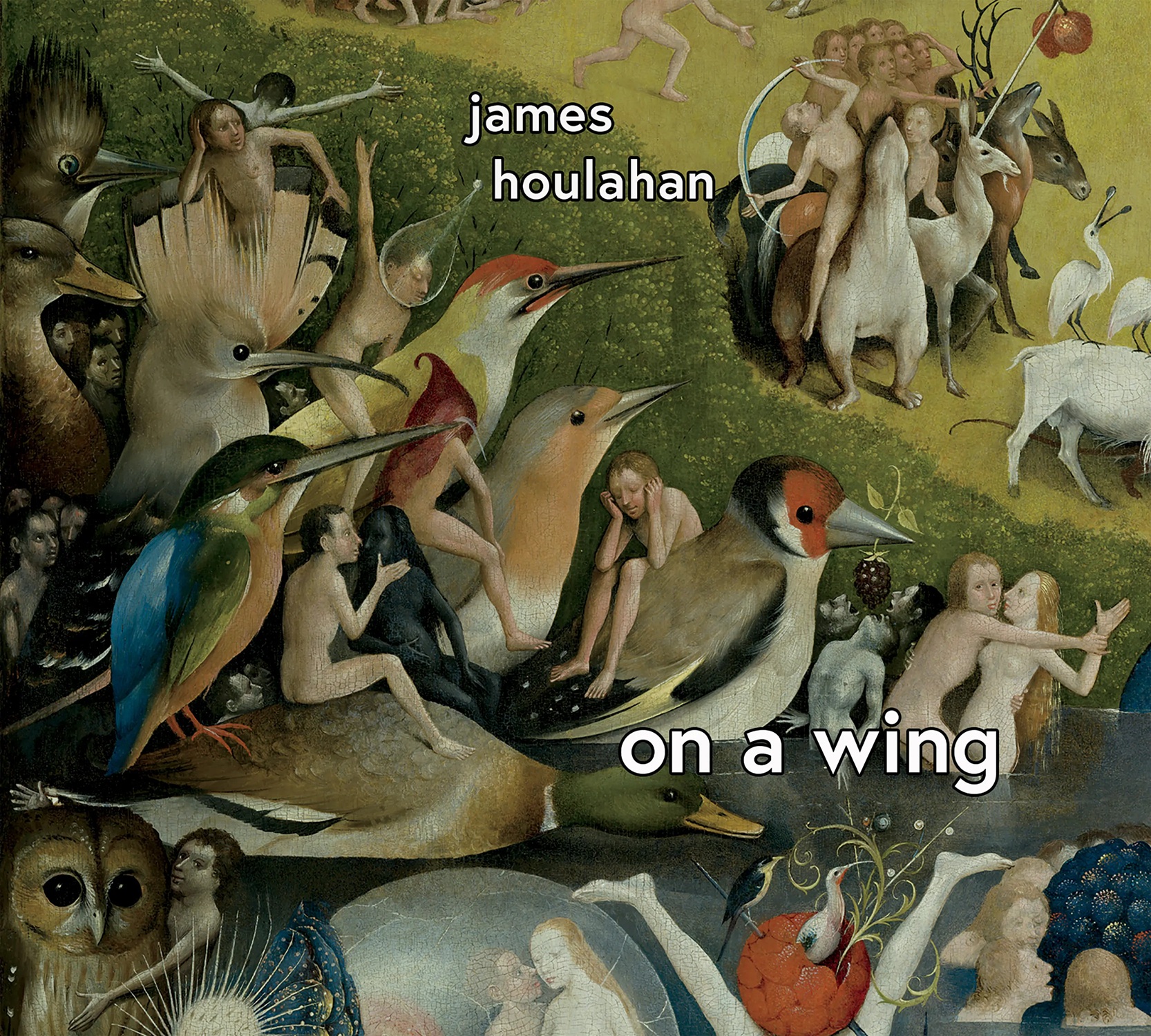
A folk/Americana singer-songwriter based in Topanga, California, James Houlahan has released seven albums, most recently On a Wing, released earlier this year on OOB Records. Produced with Fernando Perdomo at Forward Motion Studios, the album features contributions from Danny Frankel, Greg Cohen and John Kruth, among others.
Influenced by artists including Leonard Cohen, Bob Dylan and Tom Waits, Houlahan’s music explores the possibilities of the American folk and songwriting traditions. His music has appeared in commercials, television and film, including the 2017 film Little Pink House, starring Catherine Keener. He tours regularly throughout the United States and Europe.
AmericanaUK called On a Wing “uniformly excellent,” while Glide Magazine has described Houlahan as “near the top of must-see and hear indie singer-songwriters.”
For more information about the National Day Laborer Organizing Network (NDLON), visit ndlon.org.