Article Contributed by Scott Kepnes
Published on February 16, 2026
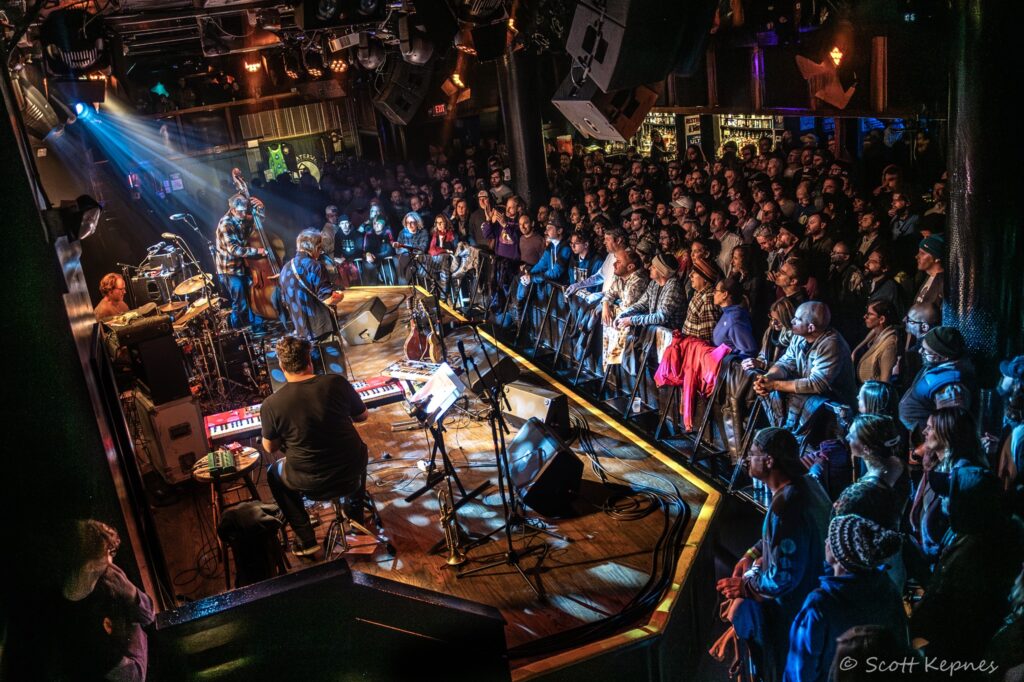
Jazz Mandolin Project | Boston, MA | February 5th, 2026 | photos by Scott Kepnes
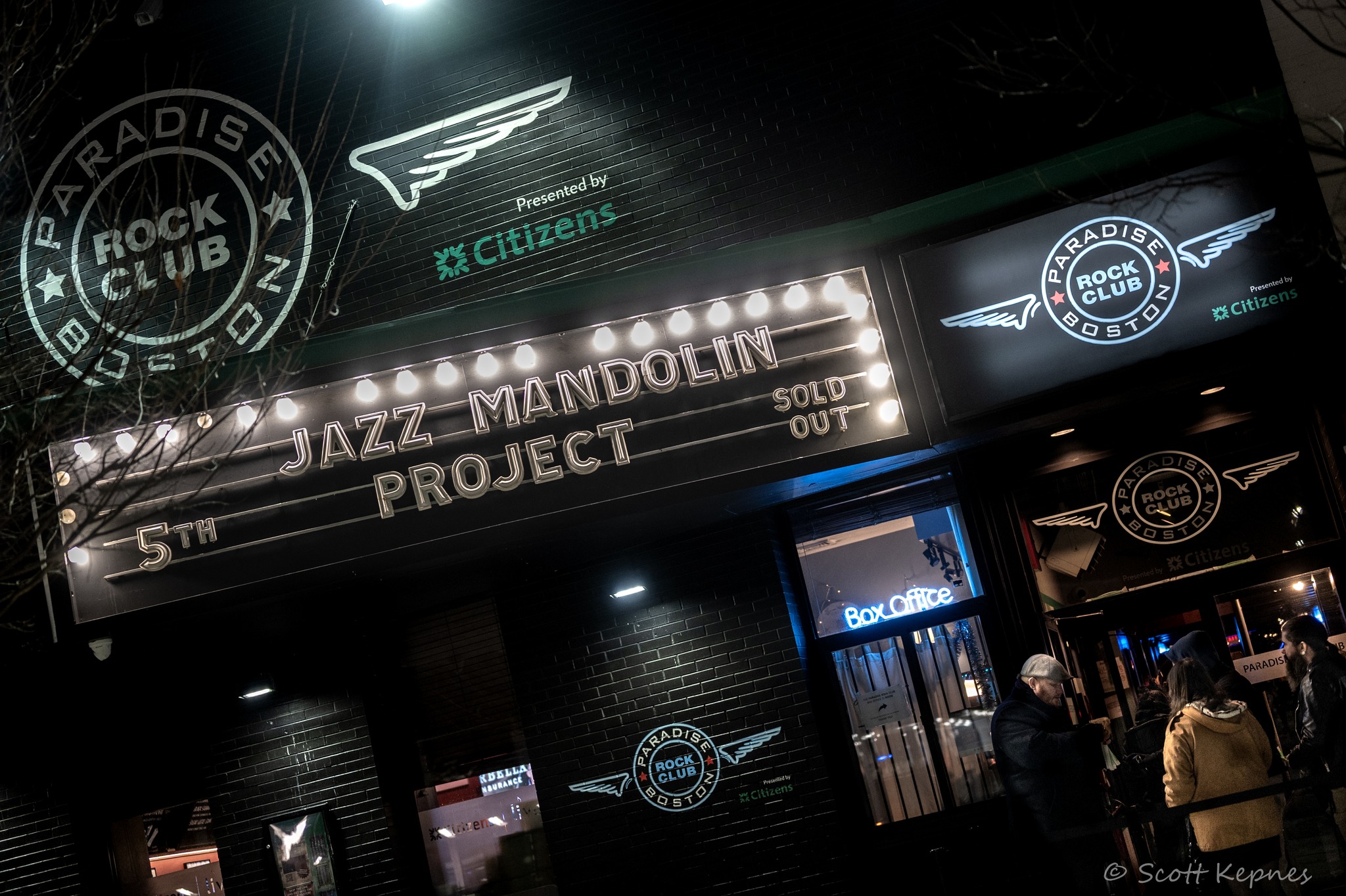
An excited and eager audience packed the Paradise Rock Club, welcoming Jazz Mandolin Project to Boston. The sold-out, 933-capacity standing-room-only venue was high with anticipation for JMP’s first tour in 20 years. This was the second show on the tour. The band traveled down from their previous night at The Higher Ground in Burlington, Vermont, the band’s origin.
The floor and wrap-around balcony filled quickly before the band took the stage. A good handful of tapers were busy setting up equipment to capture the show, with some recordings destined for archive.org. A coat check was available to stash winter jackets. The WaterWheel Foundation had a table set up with shirts, posters, info, and stickers.
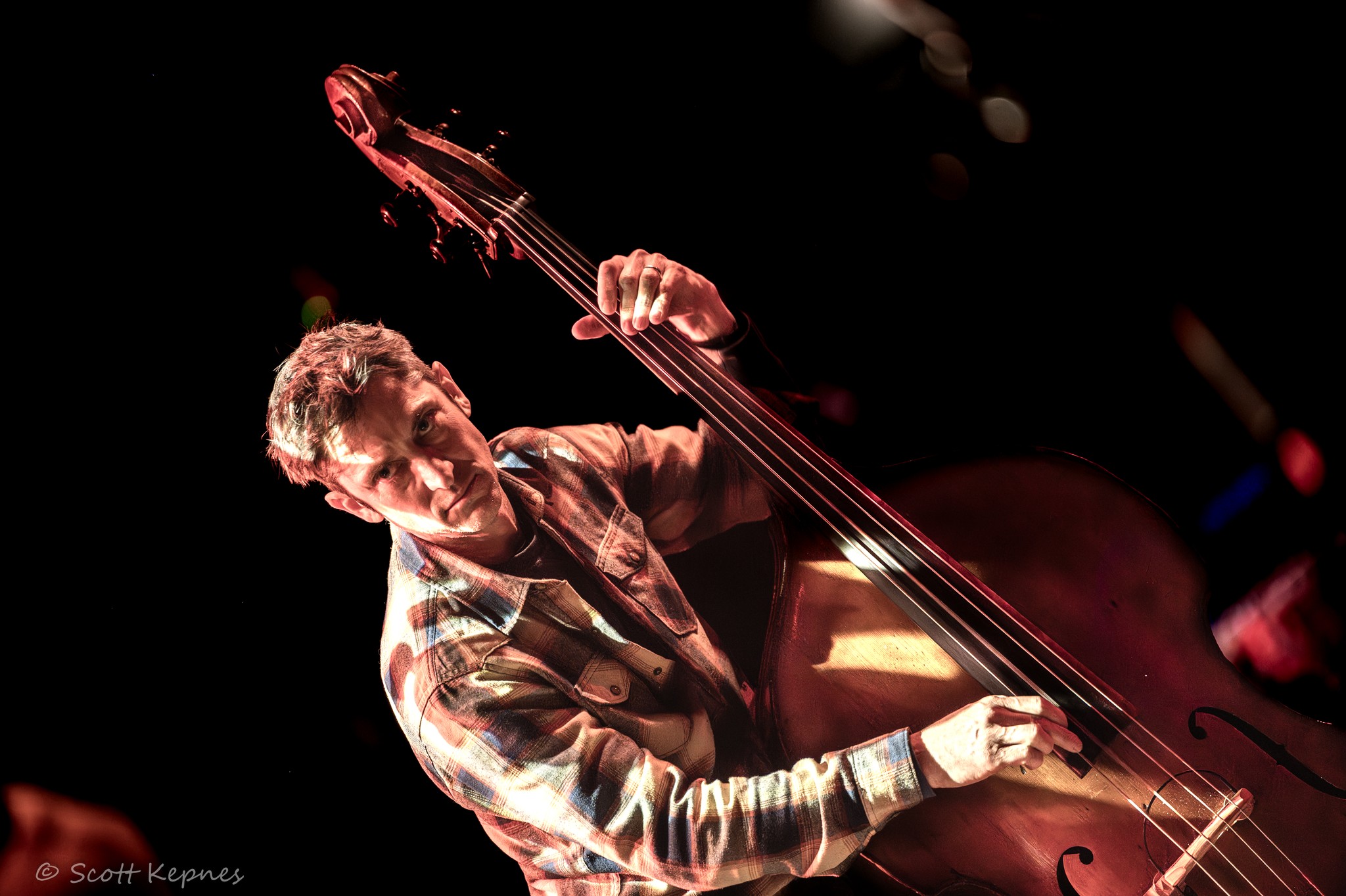
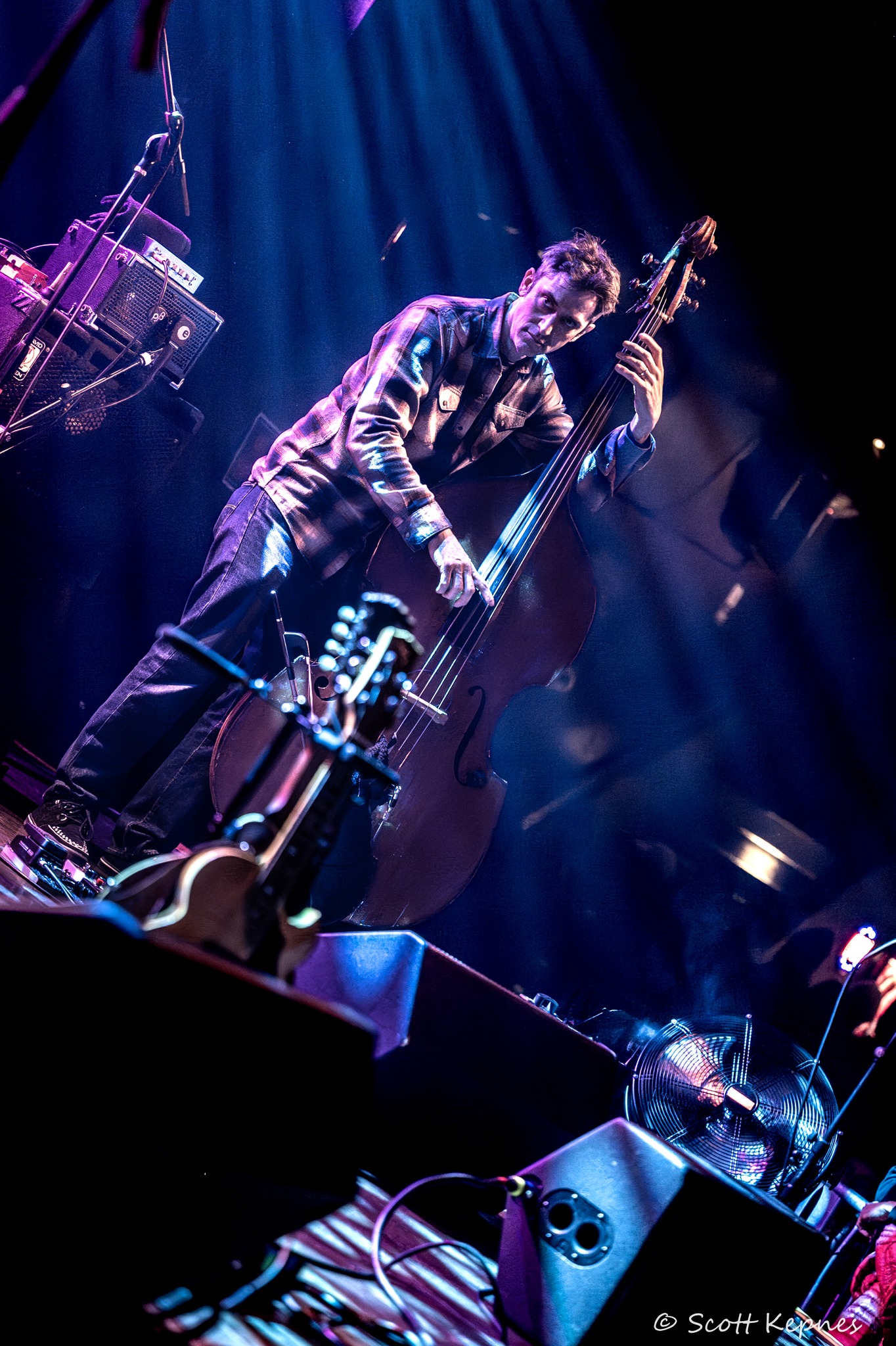
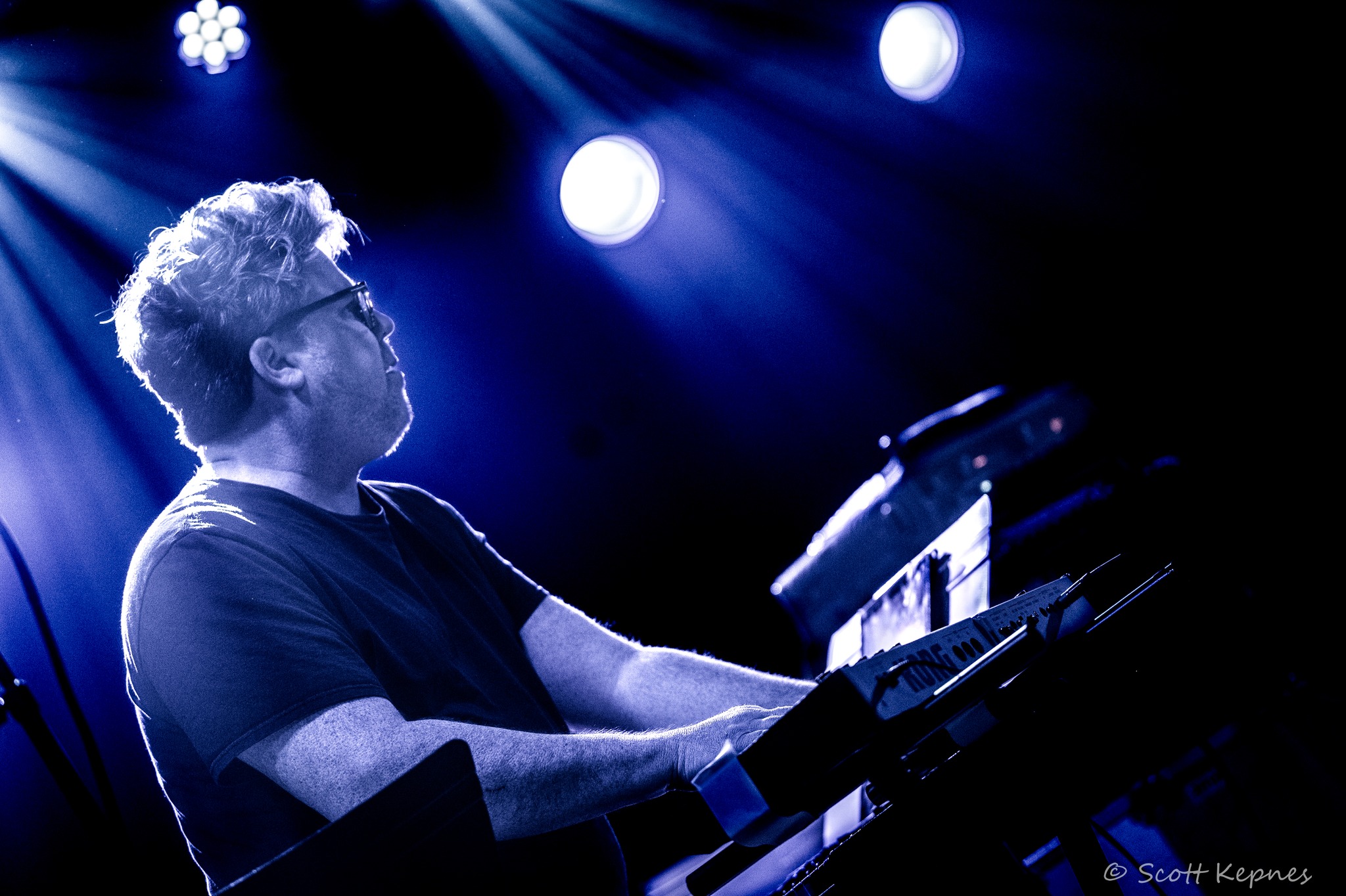
The Jazz Mandolin Project originated in Burlington, Vermont, and was established by Jamie Masefield as a platform to explore improvisation beyond traditional jazz frameworks. The musicians are Jamie Masefield (mandolin), Phish’s Jon Fishman (drums), Danton Boller (upright bass), and Michael “Mad Dog” Mouratoglou (keyboard/trumpet).
The evening included instrumental compositions from JMP’s discography, one new song, covers by other artists, and a Jon (introduced as “Soup Can”) Fishman treat at the end of the show. The music flowed through elements of jazz-fusion, funk, world music, cosmic exploration, and rock.
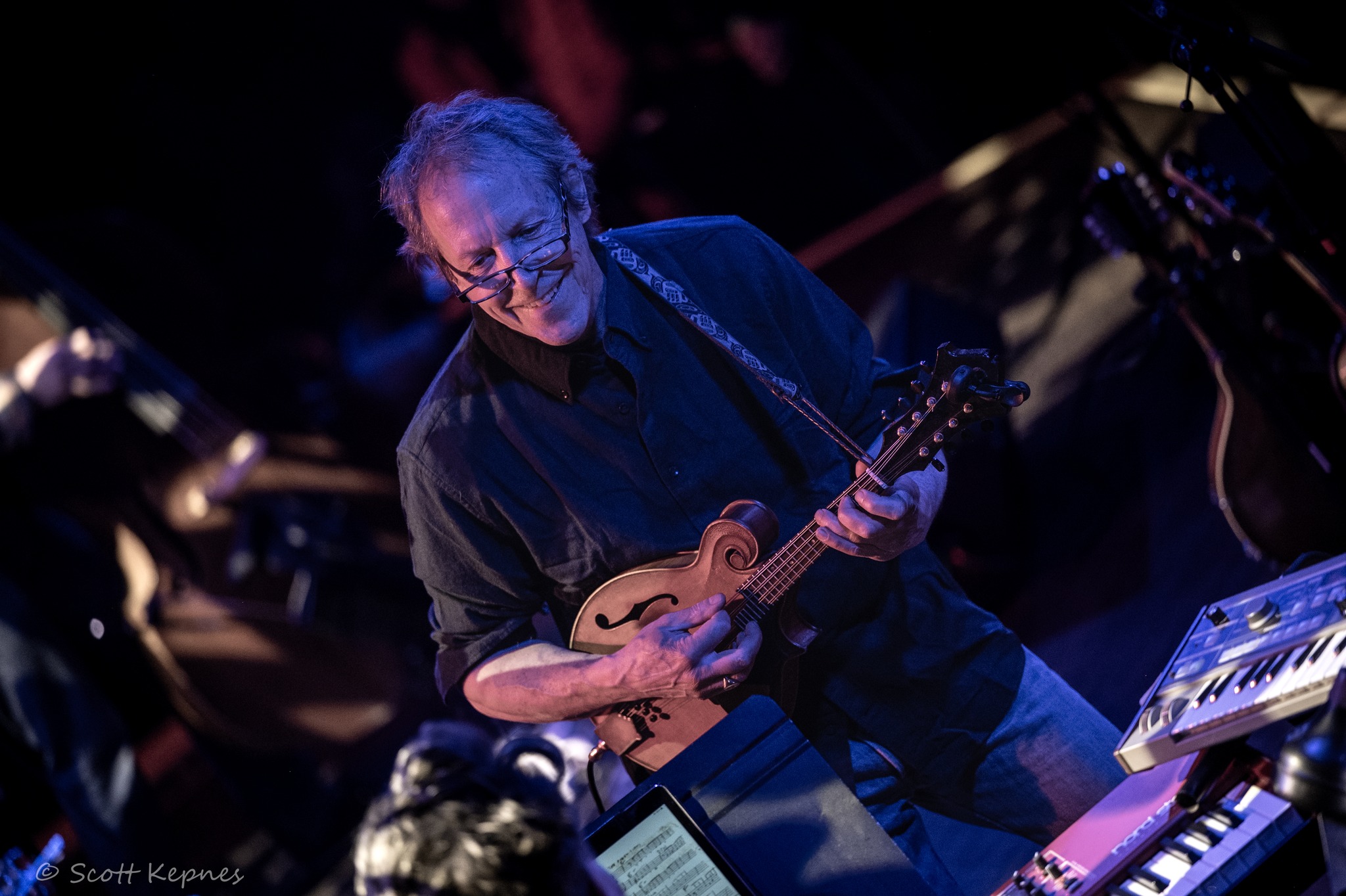
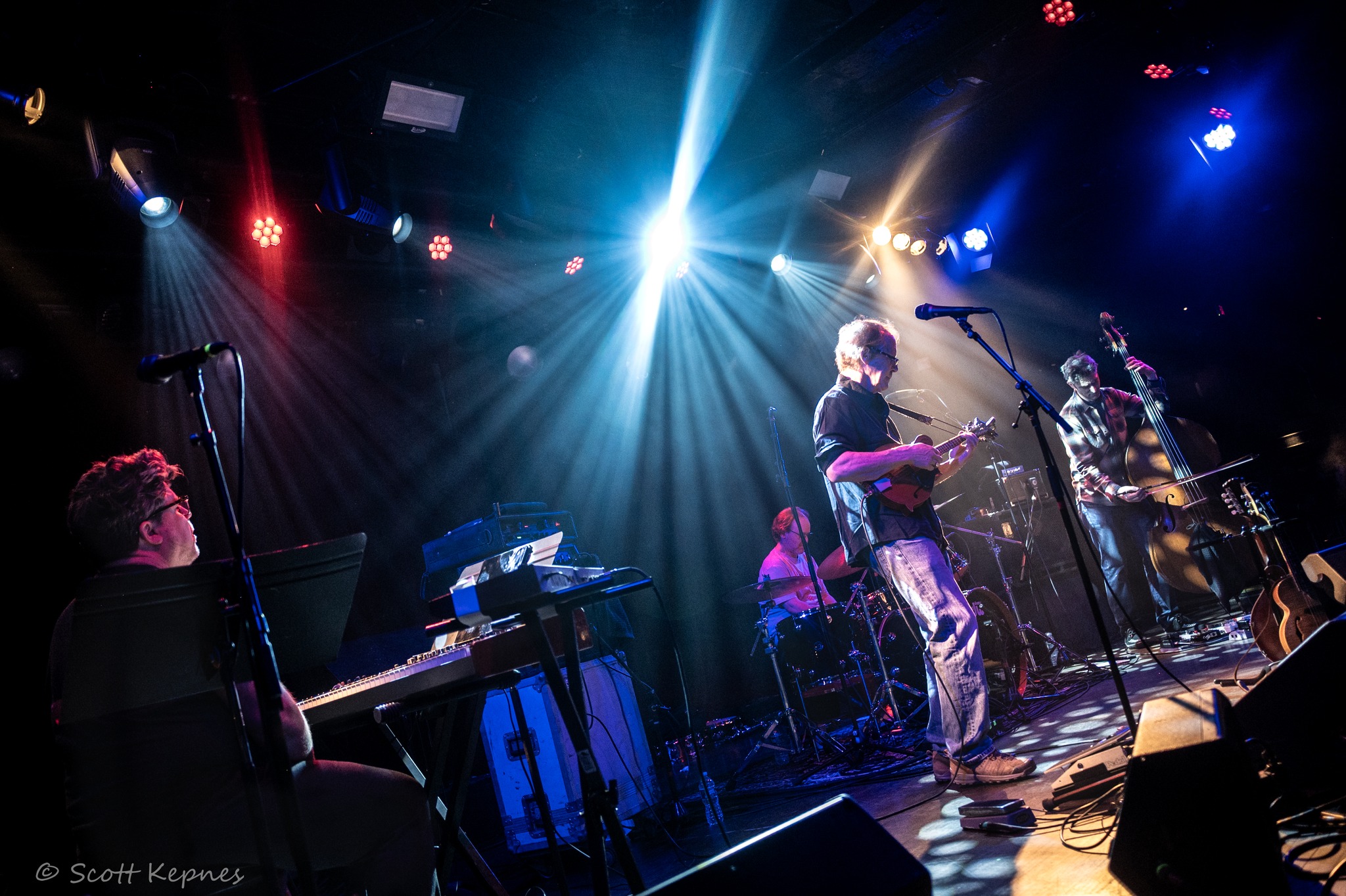
The band took the stage. Masefield gently played the mandolin, setting the mood. Soft keyboard joined in — jazzy upright bass then entered the mix — soft jazz drumming completed the sound and launched into “The Phoenicians,” from JMP’s live album Tour de Flux (1999). The groove was soft and swinging, eventually developing into a louder jamming sound before settling back down into a pleasant extended groove. Fans were instantly captivated. Masefield moved around the stage connecting with his bandmates. Solos from mandolin, bass, keyboard, and trumpet showcased improvisation at its finest. Fishman’s playing was jazzy, consistent, and dynamic.
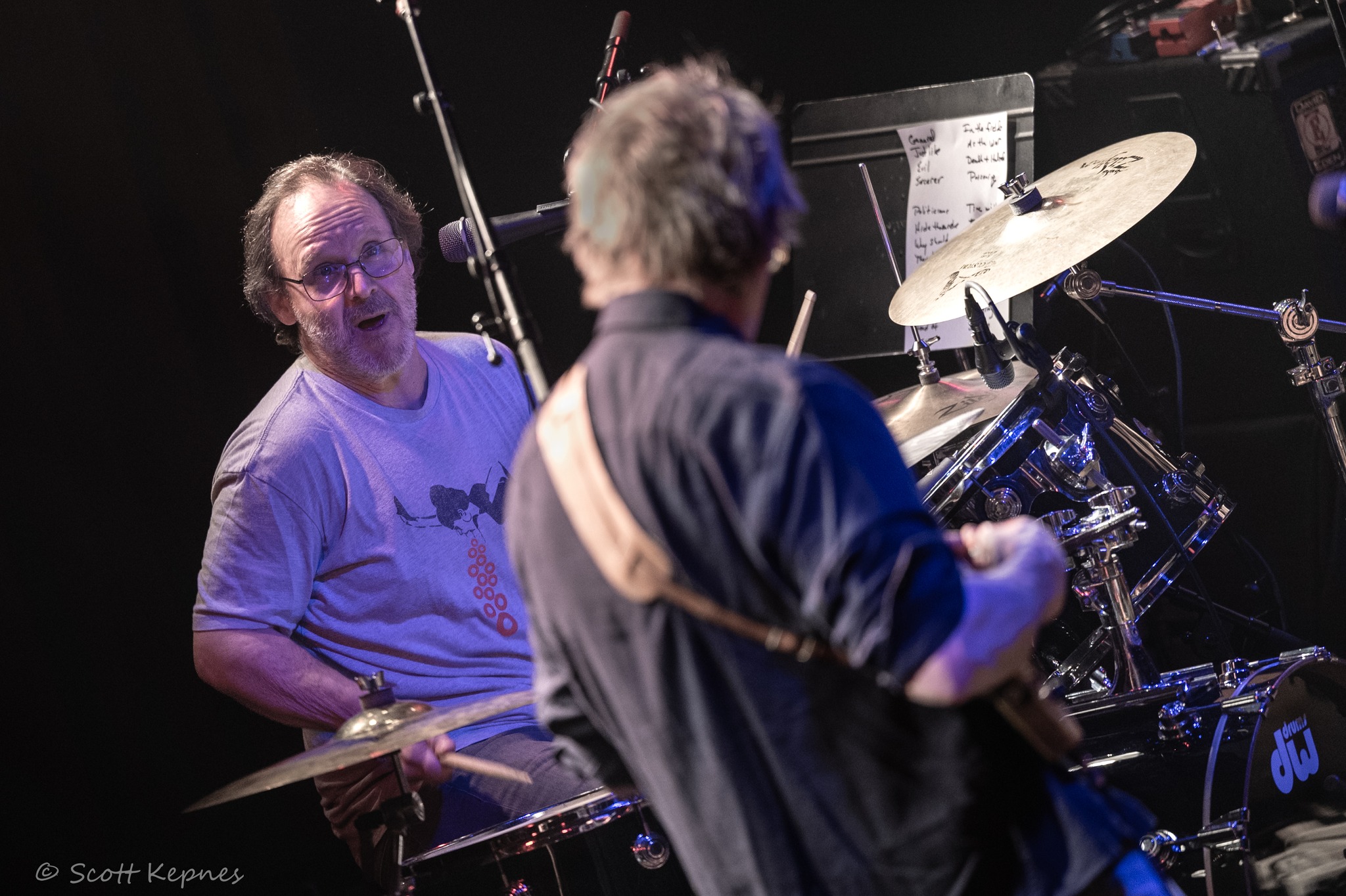
The next song, “Stiles,” was driven by bass and drums. Boller kept the tune bopping and masterfully delivered a bass solo that seemed to rise out of — then glide back down into — the groove. “Spiders” from Xenoblast (2000) morphed into a more experimental musical journey exploring jazz, funk, and space, which segued into the Gypsy jazz sound of “Ode to Dark Eyes” from Jungle Tango (2003). “Hamhock” followed, and a high-energy cover of Stevie Wonder’s “Sir Duke” wrapped up the first set, leaving the audience electrified and ready for more.
The second set opened with Weather Report’s “Black Market,” a funky groove that gradually became exploratory, with each instrument blending into a more cosmic sound. From my vantage point on the balcony, the yellow and blue lights shining onto the band and the swaying audience resembled a sea of sound. Next was “Chinquapin.”
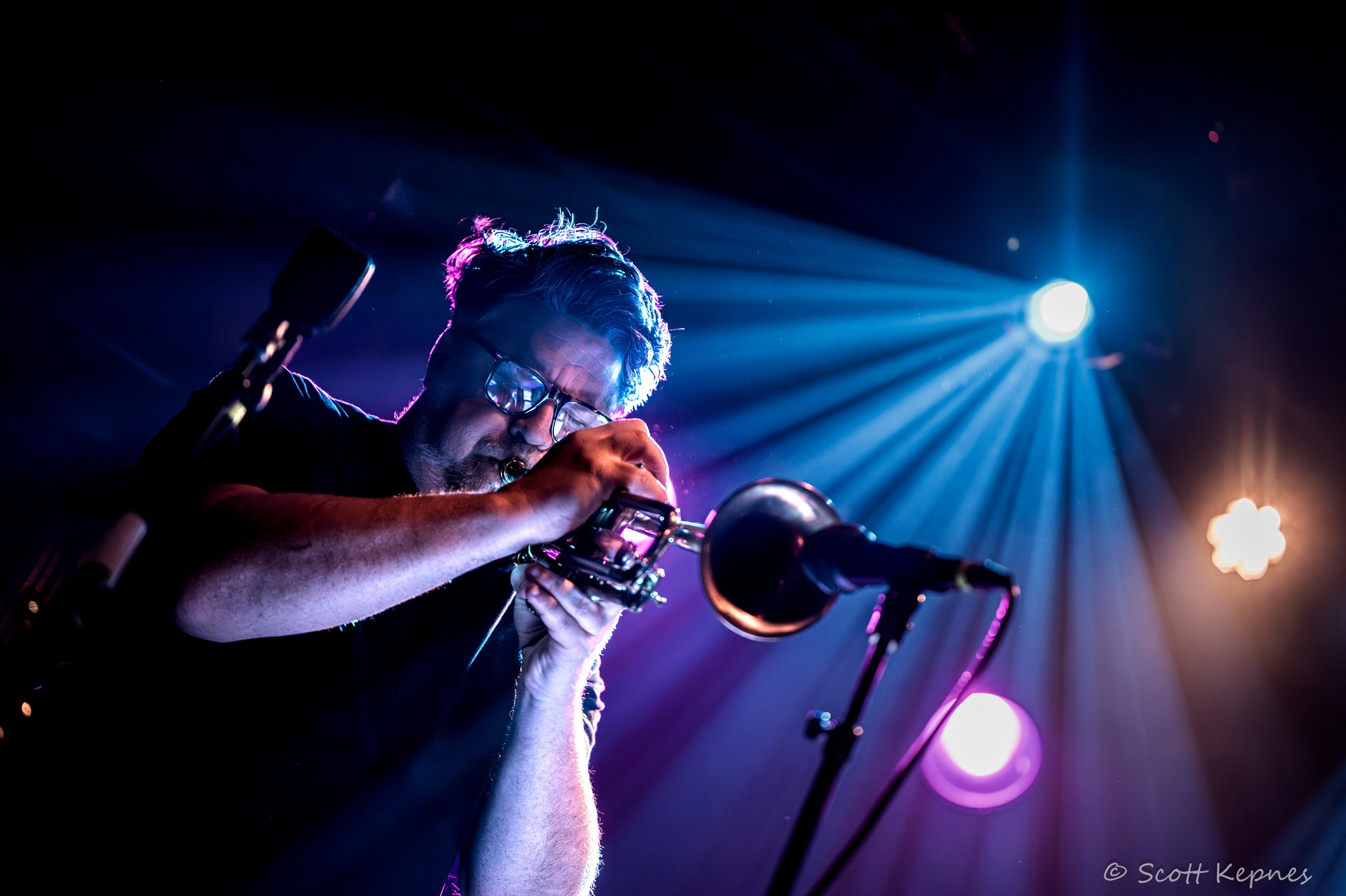
The following piece, “Clip” from Tour de Flux (1999), was one of my personal highlights of the evening. Mouratoglou’s trumpet playing was incredible. The variation of trumpet tones during his solo pulled me in as if listening to a story. Toward the end of his solo, call-and-response horn phrases evoked an ancient cinematic grandeur — perhaps even Cecil B. DeMille’s The Ten Commandments.
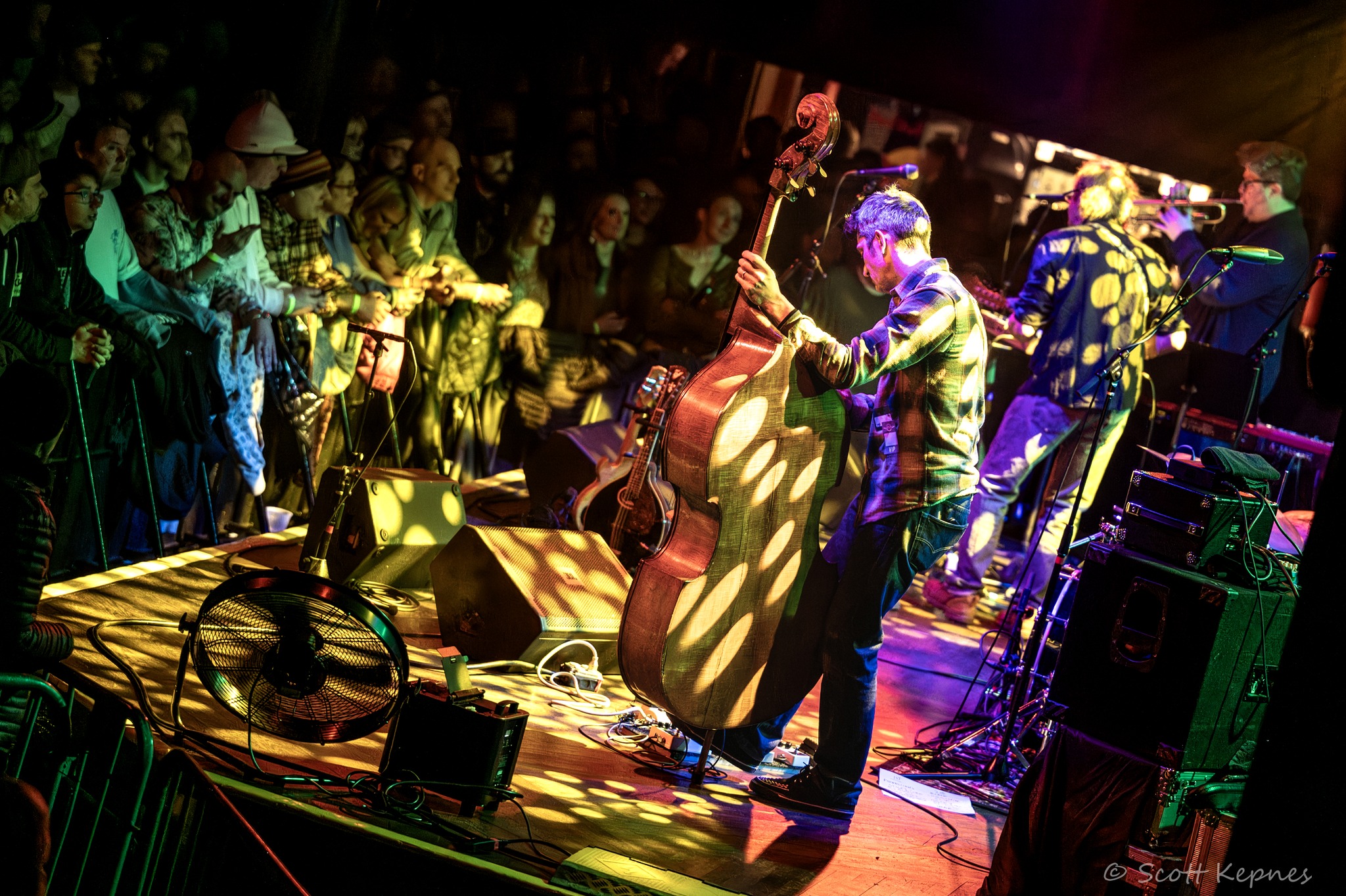
Masefield then introduced his new instrument, a “mandola.” He explained, “So there are violins and there are mandolins, and then there are violas, which are a little bit lower than a violin, and this is a mandola.” He continued, “I needed a new one, but what did I get… one that was built in 1913. A Gibson 1913 mandola.” He then shared the origin of the next song: “I said, mandola what do ya’ got for me? I need a new tune… and so it came out, it presented itself.”
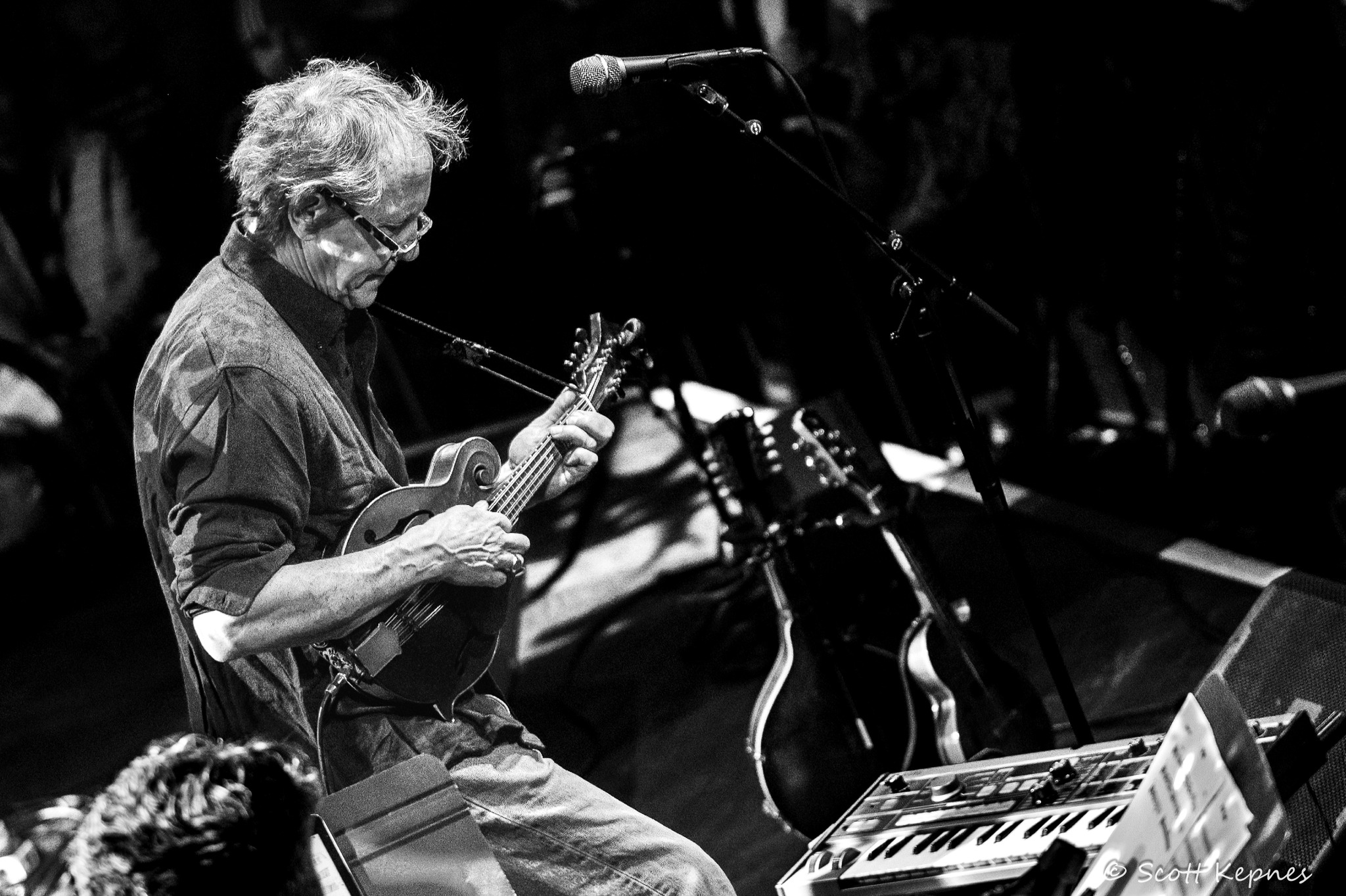
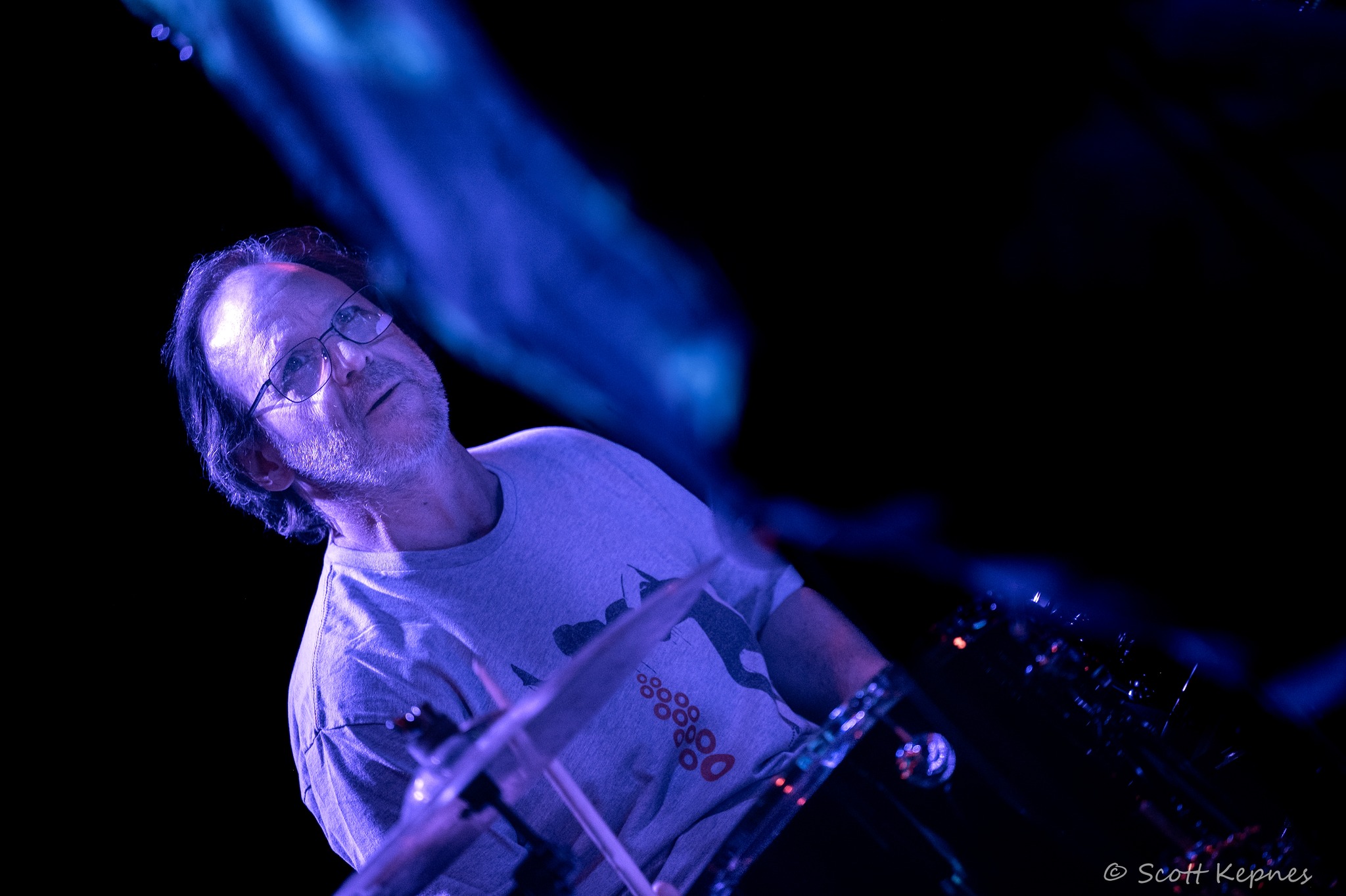
The new song, which debuted the night before, was introduced as a very quiet piece. Sharing their humor, quite the opposite happened, as Fishman kicked in rocking drums into a deep funk-jazz-rocker — quieting it down into a couple of false endings before ramping back up again.
Next, “The Boabab Tree,” featuring trumpet, evoked shades of Miles Davis and the Isle of Wight Festival era. Following that was a striking instrumental version of Neil Young’s “Powderfinger,” with Masefield’s mandolin beautifully substituting the lyrics, wrapping up the second set.
Masefield and Boller returned as a duo for the encore, delivering a sweet mandolin/bass instrumental of Led Zeppelin’s “Going to California.” A music stand was then brought out and placed at the drums. The full band returned to the stage. Fishman announced, “It’s karaoke night at the Paradise!” With lyrics on the stand, the audience knew they were in for a Jon Fishman treat. The only non-instrumental of the evening, the band launched into Black Sabbath’s “War Pigs,” with Jon “Soup Can” Fishman on vocals. The audience loved it.
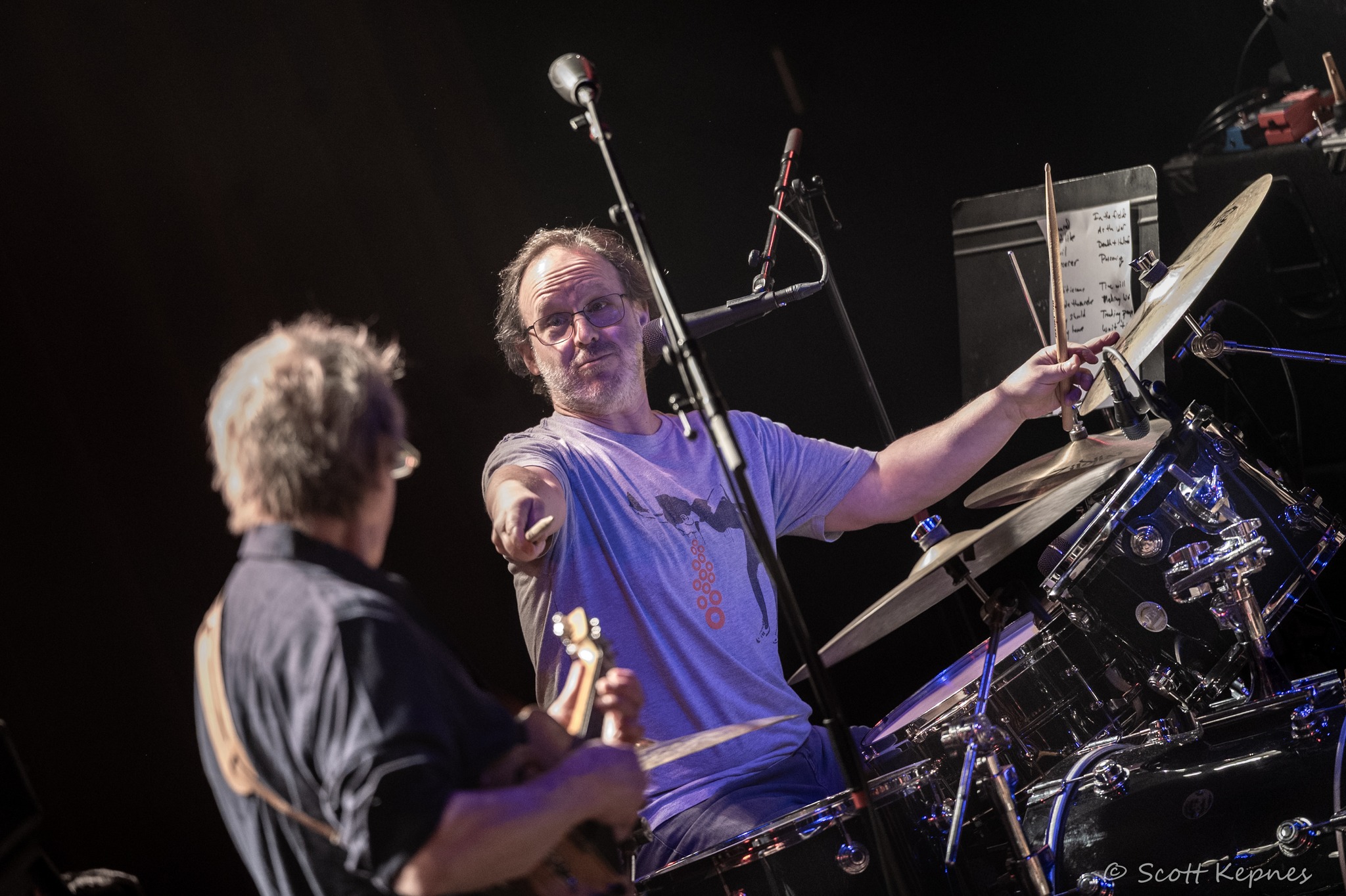
Throughout the show, it was clear the quartet genuinely enjoyed playing together. The fun they were having reflected back onto the audience — smiles were mutual all around. It was an evening of unique and fantastic music.
I packed up my camera gear and retrieved my winter jacket at coat check. The sea of fans slowly made its way out onto Commonwealth Ave, the Green Line T tracks dividing the road — carrying some of that JMP warmth back into the New England winter.
I am certain Jazz Mandolin Project’s fans will be happy to welcome them back to Boston again.