Article Contributed by Crossover Media
Published on 2026-10-02
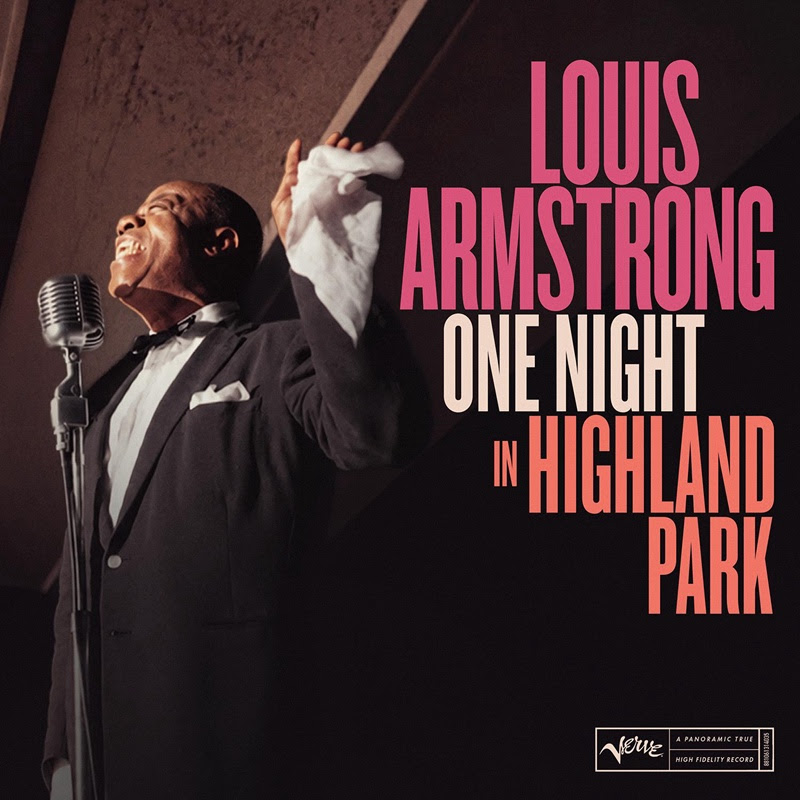
New York, NY (October 2, 2026) — On March 19, 1957, Louis Armstrong and His All Stars performed before 1,200 fans at Highland Park High School, 27 miles north of Chicago, at a concert raising funds for the Highland Park Reform Temple. Nearly 70 years later, that performance is being released for the first time as One Night in Highland Park. The first single from the album is the joyfully energetic track “Ole Miss,” a piece Armstrong had been playing since his teenage years in New Orleans. Order the album and listen to the live single here.
Armstrong was at a high point in his career. Beloved around the world as America’s “Ambassador of Goodwill,” he was enjoying the success of his 1955 hit “Mack the Knife,” the album Ella and Louis and the film High Society. Just two days before Highland Park, he had performed two shows at the Chicago Opera House. Yet Armstrong continued to play high school auditoriums and other venues across the country as part of a demanding schedule of one-night engagements.
For Armstrong, these performances were about reaching his audience.
“I play them because I love music,” Armstrong explained in 1957. “I don’t mind traveling and that’s where the audiences are — in the towns and cities — and that’s what I want, the audience.”
The Highland Park concert might have remained simply another date on that schedule if not for Joel Goldstein, who was serving as student stage manager for Armstrong’s visit. He decided to record the performance for himself, hanging two Telefunken microphones from a batten and recording the show on an Ampex reel-to-reel machine. Goldstein kept the tape, preserving a night that otherwise might have been lost.
One Night in Highland Park captures Armstrong with a version of the All Stars he personally considered his favorite: Trummy Young on trombone, Edmond Hall on clarinet, Billy Kyle on piano, Squire Gersh on bass and Barrett Deems on drums.
The recording showcases the range Armstrong brought to his live performances, moving between New Orleans jazz, ballads, popular songs, film material and recent hits. “(Back Home Again in) Indiana” and “Tiger Rag” showcase Armstrong’s trumpet and the interplay between Young and Hall, supported by the rhythm section of Kyle, Gersh and Deems.
“The Gypsy” and “Blueberry Hill” bring a change of pace, while “High Society Calypso” connects the performance to Armstrong’s recent film success. “Tin Roof Blues” and “My Bucket’s Got a Hole in It” reach back to his New Orleans roots before “Mack the Knife” brings the set firmly into the present with the hit that had become his biggest record to date.
The original recording has been transferred, mixed and mastered by Kevin Reeves and is accompanied by liner notes from Ricky Riccardi, Louis Armstrong biographer, Director of Research Collections for the Louis Armstrong House Museum and two-time GRAMMY Award winner for Best Album Notes.