Article Contributed by Gratefulweb
Published on 2026-01-28
Across the United States, a new wave of grassroots activism is taking shape, driven by communities responding to intensified federal enforcement actions and what organizers describe as escalating governmental overreach. In Minnesota, that movement has reached a historic inflection point.
In recent weeks, first-time protesters have filled the streets, neighbors have formed human chains to protect one another, and Minneapolis witnessed what organizers describe as the first general strike in the United States in nearly a century. For many involved, these actions reflect a broader shift — from isolated outrage to collective resistance.
According to activists affiliated with the No Kings Coalition, these demonstrations are unfolding amid ongoing reports of aggressive Immigration and Customs Enforcement (ICE) activity nationwide. Families, they say, continue to experience home raids, neighborhood enforcement actions, and prolonged detentions. Organizers cite multiple deaths connected to ICE custody in 2026 alone, following what was reported as the agency’s deadliest year in more than two decades in 2025.
“These are not isolated incidents,” organizers said in a recent statement. “They represent a compounding pattern of abuse that communities are increasingly organizing to confront.”
As part of that response, the coalition recently hosted an Eyes on ICE: Document and Record virtual training focused on the legal rights of civilians when documenting law enforcement encounters. The session drew more than 200,000 participants with less than 24 hours’ notice, signaling the scale of public concern and engagement.
Due to overwhelming demand, organizers announced a second session of the training, scheduled for Thursday, February 5 at 8:00 PM ET / 5:00 PM PT. The program is designed to equip participants with practical knowledge around lawful observation, documentation, and de-escalation.
The renewed organizing momentum follows October’s No Kings Day, which activists describe as the largest single-day nonviolent protest in U.S. history. Rather than viewing that moment as a conclusion, organizers framed it as one chapter in a much longer continuum of struggle.
“No Kings Day was never meant to be an end,” the coalition said. “It is one piece of a legacy that stretches back to the earliest resistance movements in this country.”
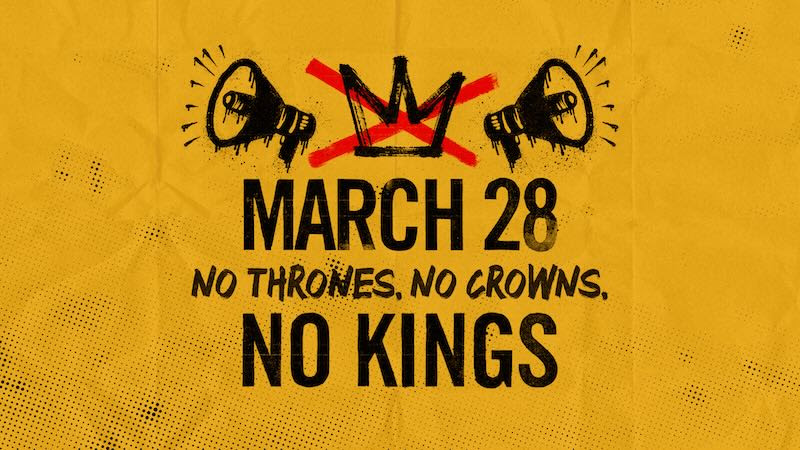
With that perspective, the No Kings Coalition has announced the next nationwide No Kings Day, set for March 28. While registration details have not yet been released, organizers emphasized the importance of early awareness to allow communities time to prepare.
The coalition operates in partnership with Indivisible, a nationally networked, locally led grassroots organization active across urban, suburban, and rural communities in all 50 states. Indivisible representatives reiterated that nonviolent action remains a foundational principle of No Kings events, with an emphasis on de-escalation and lawful participation.
As protests, trainings, and organizing efforts continue to unfold, organizers stress that resistance is not confined to a single day on the calendar. “No Kings today. No Kings tomorrow,” the statement reads. “No Kings on our watch.”
Further details regarding March 28 actions and future trainings are expected to be announced in the coming weeks.