Article Contributed by Gratefulweb
Published on 2026-05-28
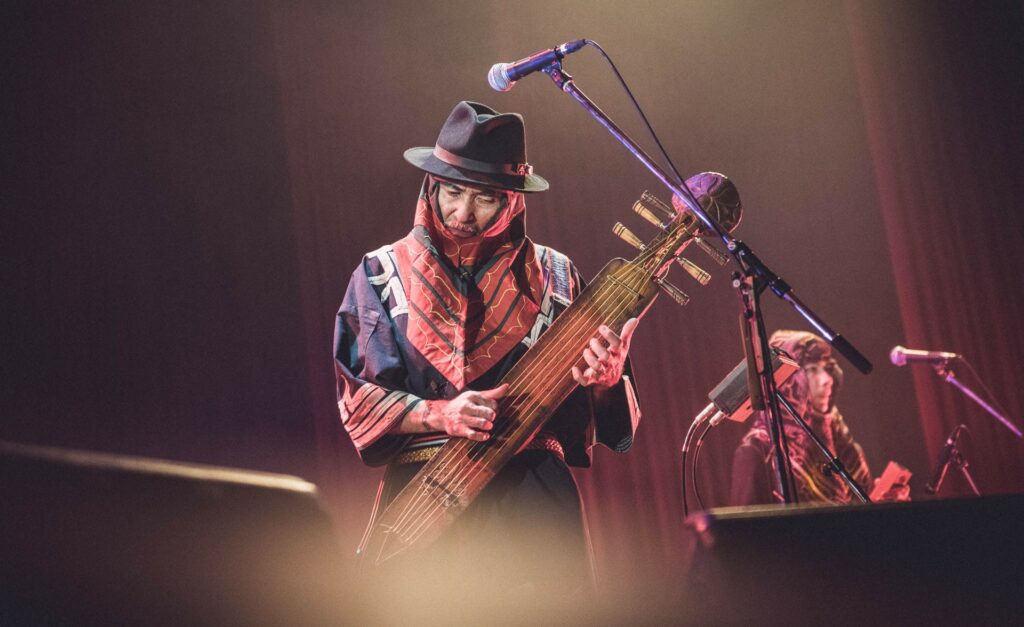
Photo: Courtesy of Lorraine Turci
OKI DUB AINU BAND, led by Hokkaido-born composer, arranger, tonkori player, and cultural force Oki Kano, brings its singular fusion of Ainu tradition, reggae, African rhythm, electronic dub, and folk music to the United States for a rare series of performances and conversations.
The group’s full-band U.S. debut takes place June 4 at Japan Society in New York City, followed by a separately ticketed June 5 conversation with Oki Kano about his work in film, music, and efforts to promote Ainu culture. Following the Japan Society appearances, OKI will also perform at PS21’s Center for Contemporary Performance in Chatham, New York.
Editor’s note: The views and opinions expressed in the interview below are those of Oki Kano and do not necessarily reflect the views or positions of Japan Society.
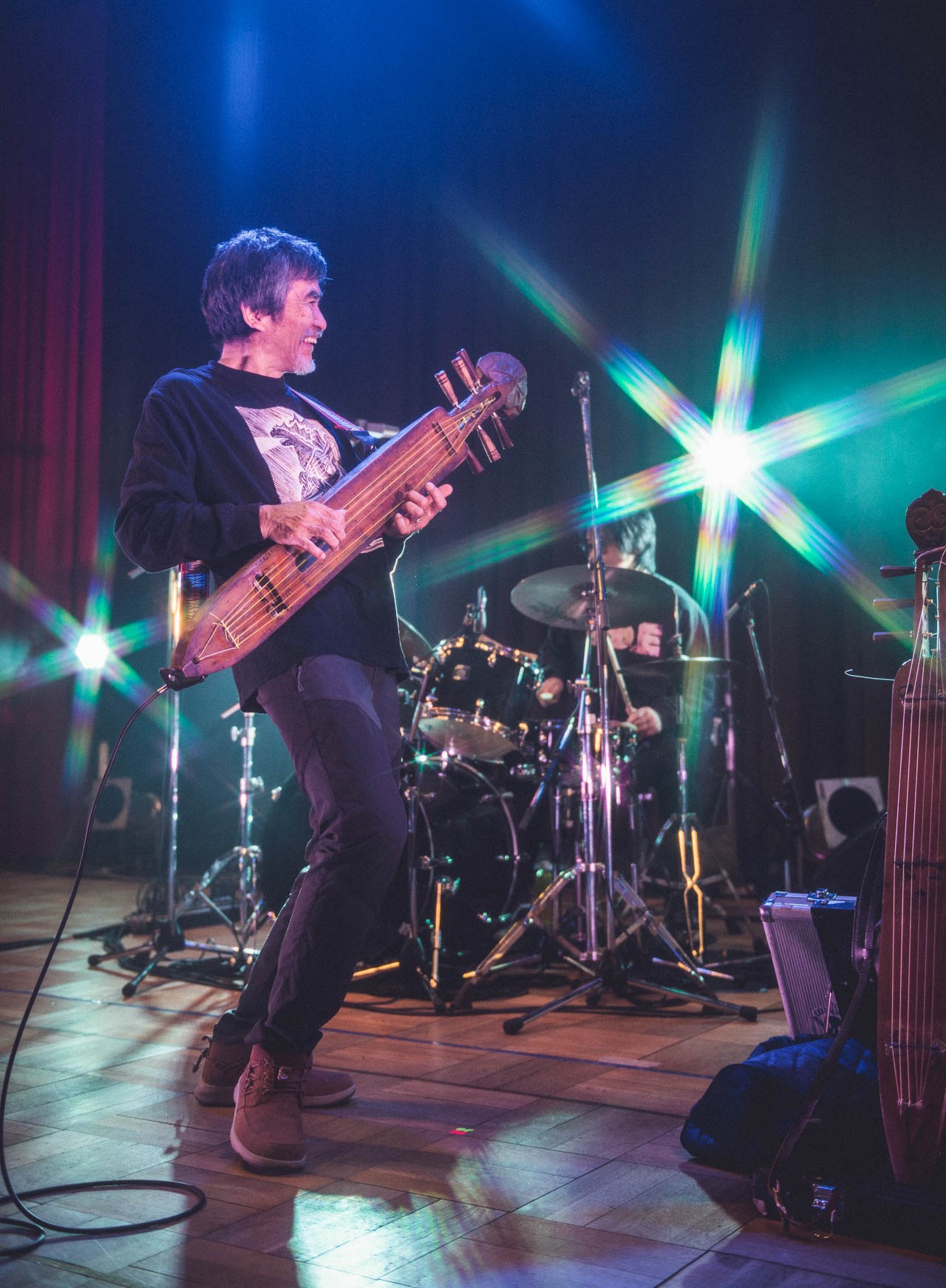
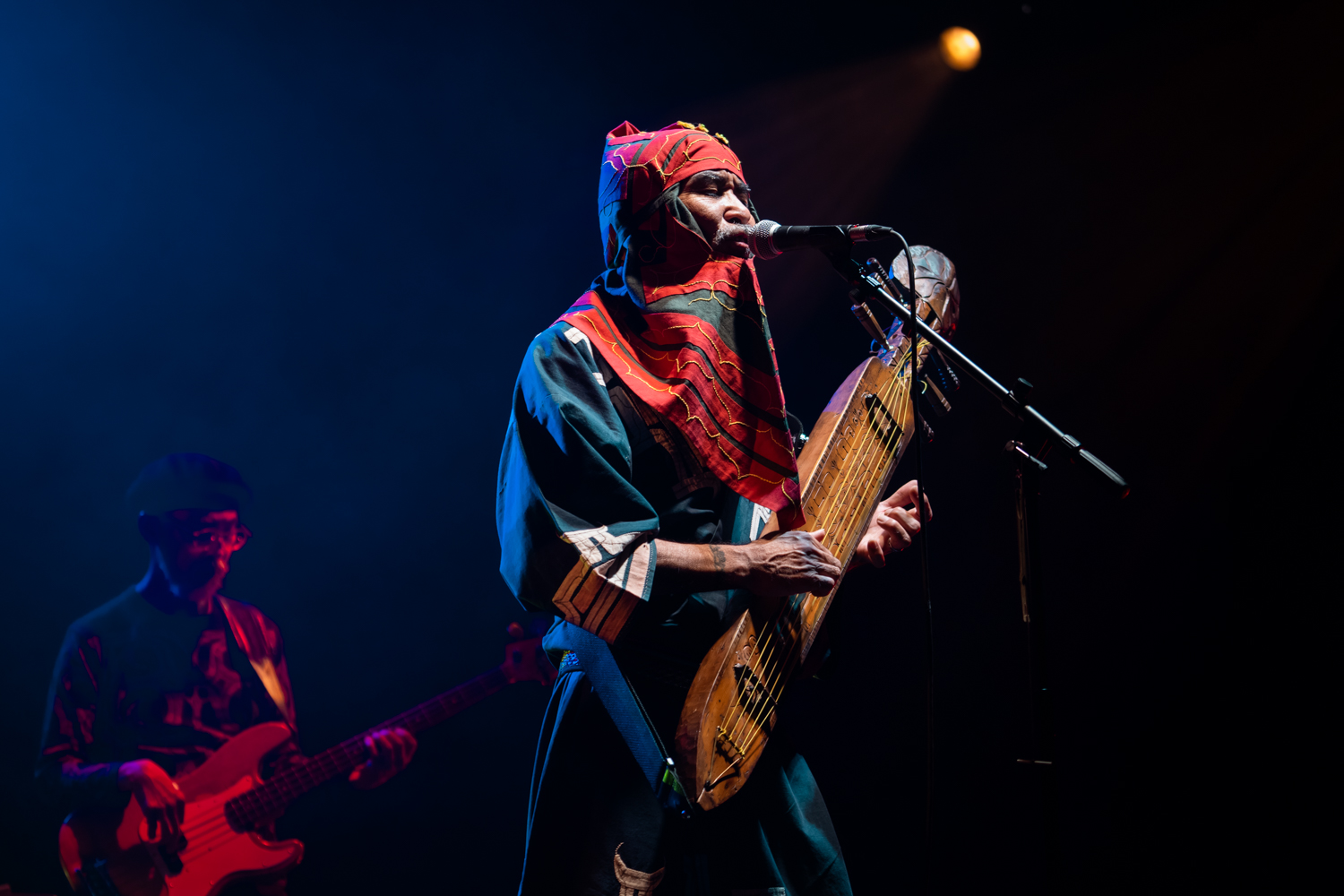
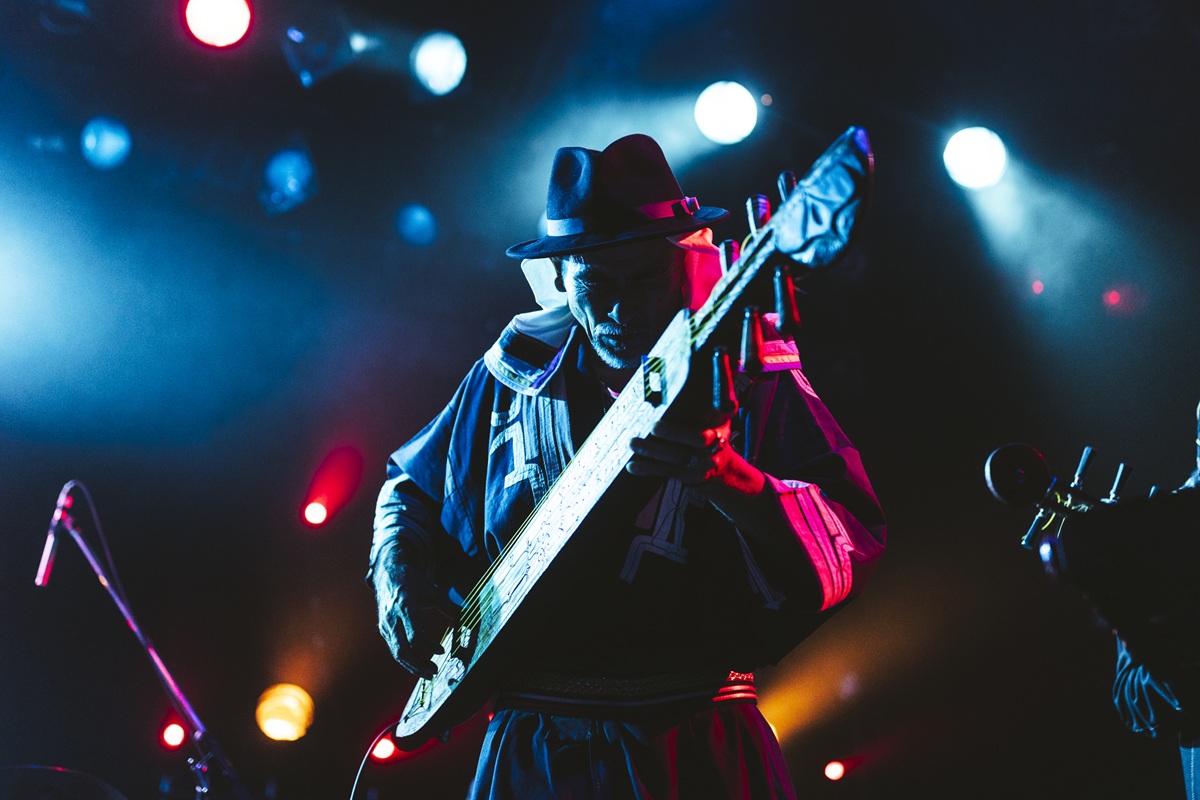
At the center of Oki’s sound is the tonkori, a resonant stringed instrument native to the Ainu people of northern Japan and Sakhalin. When Oki first encountered the instrument, tonkori performance was close to disappearing. Since then, he has helped return it to contemporary musical life, writing new music for the instrument and carrying its sound across five continents.
OKI DUB AINU BAND’s landmark album Sakhalin Rock celebrates its 15th anniversary this year, making the upcoming U.S. appearances a timely entry point for listeners discovering the band’s hypnotic, roots-forward, deeply global sound.
Grateful Web connected with Oki Kano ahead of the New York performances to discuss the tonkori, reggae, New York City, Ainu identity, cultural resistance, dub, and what he hopes first-time audiences take away from the music.
You’ve described finding the tonkori as a turning point — what did that moment feel like personally?
I thought this would make me number one. After all, no one else was playing it seriously. Thirty years have passed since then, and there’s still no player who threatens my position. I’m still number one. Because I am not an Ainu who was born and raised in Hokkaido, I developed a sense of inferiority — both toward the Ainu people and toward Japan. For a long time, the future of this “outcast” artist remained uncertain. Originally, I was trying to become a visual artist. I thought that an artist must arrive at a form of expression that is utterly unique. At the same time, I wanted to make up for the time I hadn’t spent growing up in Hokkaido. I intuitively felt that the tonkori was the instrument that could fulfill both of those desires. So at first, I approached the tonkori not so much as a musician but from the perspective of a visual artist.

When you first started playing the tonkori, there wasn’t really a modern blueprint. What did those early experiments sound like?
Just connect a drum machine to a 4-track multi-cassette recorder, add a bass track, throw in some tonkori, and you’re done. It’s a technique everyone uses. And yet, I find a kind of shamanic allure in building songs through this kind of layered recording.
Your music blends Ainu tradition with dub and reggae — when did you realize those worlds actually fit together?
It was inevitable even before I realized it. It wasn’t the music of countries like the United States or Europe — places many Japanese people idolized — but rather the music of a small island nation in the Caribbean that shook the world. From its lyrics I learned what it means to resist. It taught us about the Babylon system and encouraged us to return to our roots. For Jamaicans, that meant Africa, but for me, it was Ainu Mosir in Hokkaido. Reggae was also musically revolutionary. It was full of sound techniques that were ahead of their time.
There’s something hypnotic about your grooves. How much of your music is built from improvisation versus composition?
Thank you. The foundation of my music resides in composition. The structure of the songs is fixed. The same goes for live performances. It’s about how much freedom I can find within that set structure, and how the instruments interact with one another. You could call that improvisation. However, I often stray from the prescribed number of bars. Most musicians would likely find that frustrating if they viewed it as a mistake. But my bandmates don’t see it that way. I go where I want to go, and the band follows me. That’s the blues. Just like John Lee Hooker did! The Ainu people have always had a natural affinity for irregular time signatures.
You spent time in New York City in the late ’80s — what did that city teach you that still shows up in your music today?
In the late ’80s, New York was truly in the midst of a decadent boom, with loud hip-hop thundering through the canyons between buildings. It’s still a reflex for me to blurt out “F**k!” without thinking — a habit of mine from those days in New York. I’ve been deeply influenced by the countless musical experiences I had in New York, that city of love and hate. Even now, when I ride the New York subway and look around at the passengers, I feel it: “I’m back.” New York has changed quite a bit since then, though. I’ve lived in Tokyo too, but I never get that feeling there.
Your connection with Native American activists in NYC clearly shaped your path — what shifted for you during that time?
I went to the United States because I wanted to escape the confusion over my identity — whether I was Ainu or Japanese. In other words, I was strongly driven by the desire to “reset” my life by erasing my Ainu identity. However, I’ll never forget the impact of meeting several Native Americans and visiting Big Mountain in Arizona. I realized that trying to erase my Ainu identity was not being true to my own heart.
You’ve essentially helped revive an instrument that was close to disappearing. Do you feel more like a musician, or a cultural messenger?
I am an artist.
The dub element in your band feels almost spiritual at times — what is it about dub that connects with Ainu music for you?
My answers are as I wrote for Question 3. If I were to add anything, I would mention the echo produced by the looped magnetic tape of the Roland Space Echo. It suddenly cuts off the sound as it rises, leaving only the reverberation. On the axis of time, the music moves forward — but the reverb stops time. Time that moves forward and time that stands still; one represents the future and the other — the reverberation — the ancestors. Reggae is a thrilling, dynamic meditation where the sacred and the profane intertwine. I can’t bring myself to love songs that are merely beautiful.
Sakhalin Rock has now been around 15 years — when you listen back, do you hear a younger version of yourself, or something timeless?
Both. I’m an Ainu from Asahikawa who grew up by the sea near Tokyo. Sakhalin is the island where the tonkori originated; it’s now part of Russia, and the Sakhalin Ainu culture there has been lost. Every time I sing, I pour my longing for home into the song. The songs don't sound like reggae at all, but the way each section moves at its own tempo is pure reggae. It’s full of a delinquent edge and feels very much like me. Though it’s fine if listeners never know any of that.
How do audiences outside Japan respond to Ainu music? Do you feel that connection with audiences instantly, or does it build over time?
It doesn’t take long. The moment a song ends, you know. When that doesn’t happen, there’s a problem with the playing.
At outdoor festivals, the audience reaction is the same no matter the country. With concert halls, it depends on the crowd, but Japan might be the toughest. Japanese people tend to wait and see how others react before they start clapping, so there’s this delay before they stand up after the song. Even now, there are moments when that split second of silence in the venue frightens me.
In Taiwan, the moment the song ends, the audience returns their energy instantly. In Germany, the applause is deep and in perfect unison. Brazil was surprisingly shy — maybe our performance wasn’t up to par? In Swaziland, a girl in the front row was dancing along to the same choreography. At a New Year’s Eve outdoor show in Nepal, fistfights broke out all over the place.
What’s something people misunderstand about Ainu culture that you’re trying to shift through your music?
Some have asked whether the Ainu themselves are too confined by the framework of “Ainu culture.” There is a tendency to constantly seek approval from academia while relying on national and local government funding. Given the magnitude of what has been lost, this is perhaps unavoidable. However, it would be a mistake to think that Ainu culture has been revived as a result. Furthermore, if they are so absorbed in Ainu culture that they show no interest in the restart of the Tomari Nuclear Power Plant, can they truly say they have made amends to their ancestors? The Ainu must be outrageous; they must be funky. They must hold onto a spirit of resistance. That is what I learned from my elders, and my music is my way of putting that into practice.
On the other hand, some people distort Ainu culture to fit their own spiritual beliefs. Such repulsive films are being made and praised. As you may know, the biggest issue is the defamation and ethnic denial of the Ainu people on the internet. Most recently, a hate group held an exhibition in a space under the jurisdiction of Sapporo City claiming that the Ainu people do not exist. Despite the Ainu people asking the mayor of Sapporo to cancel the event, the mayor allowed it to proceed. It is a problem that there are a certain number of racists among members of the Diet and public intellectuals.
People believe sensational and false information and use the internet to gather supporters. Most of these people have never actually interacted with the Ainu people. There are quite a few people in Japan who don’t think highly of Chinese people. As inbound tourism became saturated, a politician who repeatedly made China-hostile remarks ended up becoming the Prime Minister. Most of the people who speak ill of China have never been there and have no Chinese acquaintances. I am astonished by the fact that the Prime Minister has never once visited China. The distance between China and Japan is roughly the length of one movie on a plane.
I love China. That’s because I’ve visited several times and experienced the warmth of its people. However, the situation changed following Prime Minister Takaichi’s remarks on the Taiwan issue last year. Cultural activities, including music, became the target of China’s retaliation. Several of my performances were canceled as a result. Why was music targeted? It’s because the Chinese people love it so much. I have a dedicated fan base in China as well. Nothing makes me happier than that.
It’s difficult to stop war with music, but music can make it harder for war to start. To achieve that, it’s essential to grow our fan base. I came to a realization in Shanghai that this is also my role. The album by Sandojo, a band from Yunnan Province that I produced, will be completed very soon.
If someone is seeing you live for the first time in NYC, what do you hope they walk away feeling?
I don’t know much about what will happen after the performance — but “that was fun” would be just fine! We’ll also have everyone singing various Ainu folk songs together, so please do your vocal warm-ups before you come.