Article Contributed by Russell Levine
Published on 2026-10-08
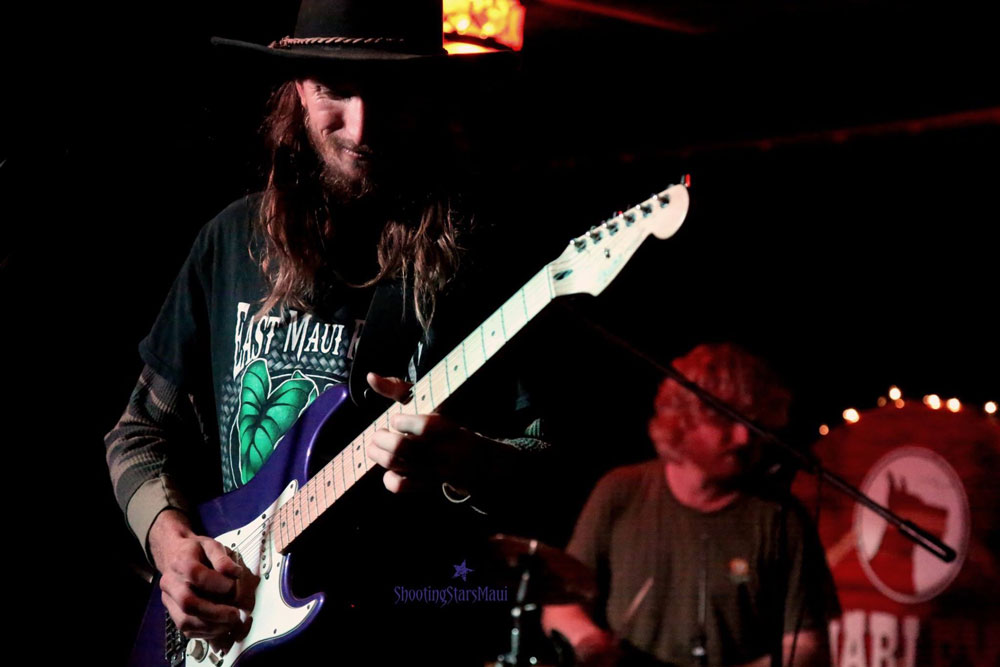
There are worse ways to grow up than spending your childhood on a tour bus with the Doobie Brothers. There are also probably few ways to have a normal childhood that are less likely to succeed. While most kids were worrying about school, baseball practice and whether they could stay up late enough to watch television, Pat Simmons Jr. was backstage, sitting on the shoulders of rock-and-roll history and watching his father, Doobie Brothers founding member Patrick Simmons, do what he had been doing for decades: make music.
Simmons was born in 1990 and spent much of his childhood growing up around the touring life. He remembers being backstage, standing on the side of the stage with his earplugs firmly in place and waiting for the final song, when he would sometimes join his father. His mother has even told him about being less than a year old and sitting him on Gregg Allman's lap during a soundcheck. At the time, of course, none of this seemed particularly extraordinary. It was simply his life.
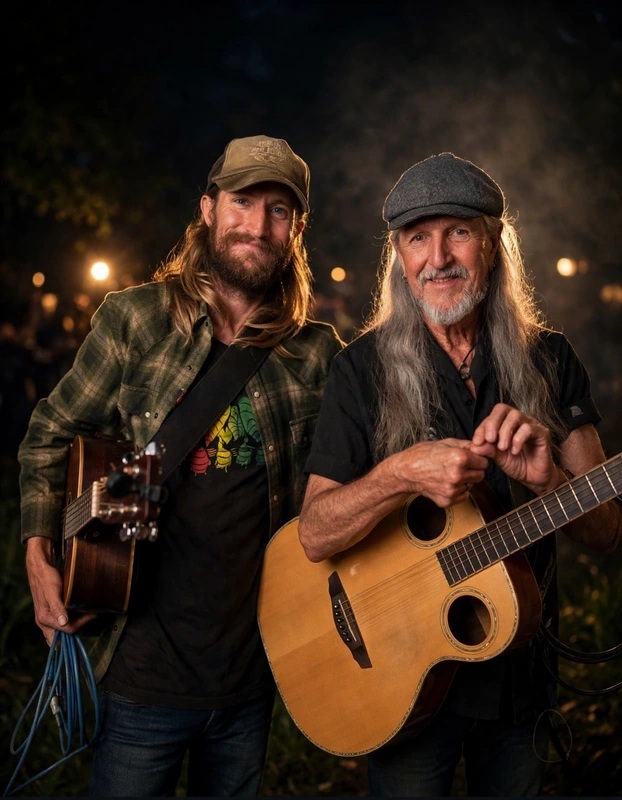
“I was always on the side of the stage with my earplugs,” Simmons told me. “Some of my earliest memories are really just being on stage out there with my dad on the last song. I’d listen to the music, and I’d always go out there and jam out.”
That little kid with the plastic guitar eventually grew up, but the music never really left him. Neither did the road. What changed was what he wanted from both.
Simmons was raised in Hawaii, spending much of his youth on Maui, and that experience became just as important to his identity as growing up around the Doobie Brothers. Hawaii introduced him to reggae, Hawaiian music, surfing and a profound connection to the land. He learned to play ukulele in public school and sang Hawaiian songs long before he started thinking seriously about becoming a recording artist. At home, his parents made sure the family record collection was stocked with the Beatles and other musical essentials, while the radio provided another constant soundtrack.
As he got older, Simmons discovered the music that would become part of his own foundation. Classic rock, the Grateful Dead, Pink Floyd and reggae all found their way into his musical vocabulary. Eventually, artists such as Jack Johnson and Xavier Rudd would become particularly important influences, not simply because of their music but because of the way their lives seemed connected to the things Simmons valued: the ocean, the environment, family and a sense of responsibility to the world around them.
Growing up in Hawaii also meant growing up around other remarkable musical families. Simmons became close friends with Lukas and Micah Nelson, Willie Nelson's sons, when they were kids. The three eventually formed their own garage band, Kalice, and spent their childhoods doing what young musicians do: playing music, experimenting and trying to figure out what might happen if you plugged in and turned everything up.
Lukas Nelson would go on to establish his own formidable musical career, while Micah Nelson, known as Particle Kid, developed a path all his own. Simmons watched both of them grow, and although life eventually took the friends in different directions, their influence remained.
“I was about seven when I met Lukas, and he was nine,” Simmons said. “He and his brother Micah were catalysts for me growing my music.”
There is no hint of jealousy when Simmons talks about his old friend. Quite the opposite. Seeing Lukas establish himself as an artist has become an inspiration for Simmons to get back to work on his own music.
The path wasn't always straightforward. In fact, at one point it took a sharp turn that had nothing to do with music.
At 23, Simmons was diagnosed with cancer. He went through chemotherapy and emerged from the experience healthy, but not unchanged. A cancer diagnosis at any age has a way of rearranging the furniture in your head. At 23, when you're supposed to be figuring out what you are going to do with the rest of your life, it can be a particularly violent reminder that the rest of your life is not guaranteed.
“I was a young man at the time and still young,” he said. “I was just starting to get into the world and then have to go through that. It was pretty radical.”
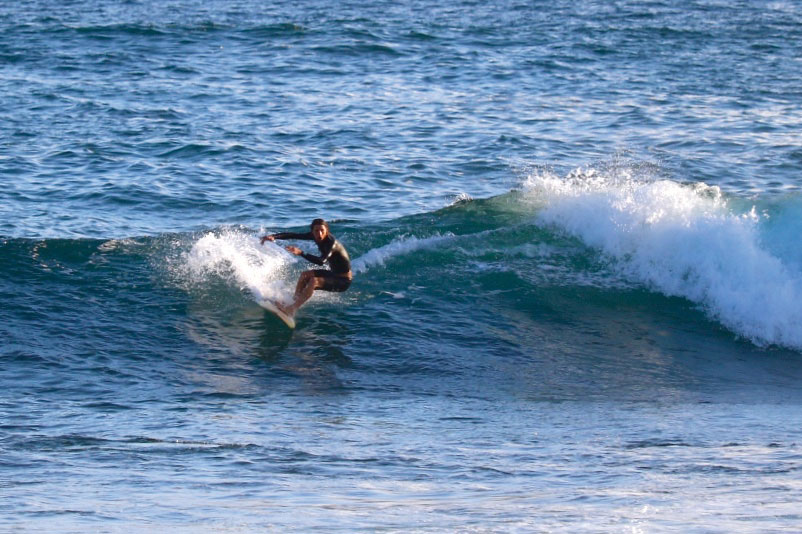
Simmons is a spiritual person, and the experience gave him a renewed appreciation for simply being alive. He began thinking about the things he wanted to accomplish while he had the opportunity. Having children became important. So did surfing, hiking, fishing, hunting and farming. More than anything, he wanted to build a life that felt real.
That philosophy eventually became the foundation of his music.
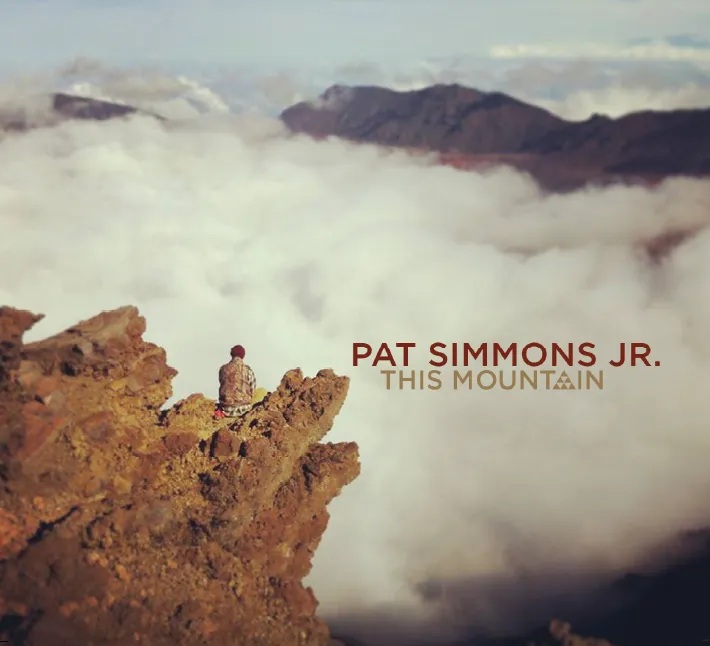
His 2017 EP, This Mountain, reflected his connection to Hawaii, the environment and the land. The record earned two Nā Hōkū Hanohano Award nominations, placing Simmons among the artists being recognized by one of Hawaii's most important musical institutions. One of the songs, “Mona Melle,” was inspired by the controversy surrounding development on sacred Hawaiian land, including protests over the construction of telescopes on Mauna Kea.
The song also led to one of those moments that can make a young musician wonder if he has accidentally wandered into somebody else's dream. Hawaiian music legend Kealiʻi Reichel heard the song after it was passed along by a mutual friend. Reichel called Simmons and told him he had written a part for the song.
“For me, not only are you calling me, but then you wrote a part for my song,” Simmons recalled. “It was a really big deal.”
It was more than a career milestone. It was a validation of the connection Simmons had been developing between music, culture and the land he cared so deeply about.
That connection became even more important when the COVID pandemic brought the live music business to a screeching halt. For Simmons, however, the shutdown opened another door. He had always been interested in farming, permaculture and sustainable agriculture, and suddenly people began asking him to help create gardens.
One garden became another. Soon he had a business.
Today, Simmons works on several properties in Maui, doing landscaping, farming and installing gardens. He describes himself as a certified permaculture teacher and is passionate about regenerative agriculture and teaching people how to work with the land rather than simply exploiting it.
His tools aren't exactly the ones you would expect to see backstage at a rock show. Chainsaw. Weed whacker. Shovel.
“I chainsaw and weed whack and do all that stuff for people,” he said.
And he means it. This isn't some rock musician's weekend hobby involving a raised vegetable bed behind the house. This is actual work, with dirt under the fingernails and sweat involved.
It also turned out to be a pretty good place to write songs.
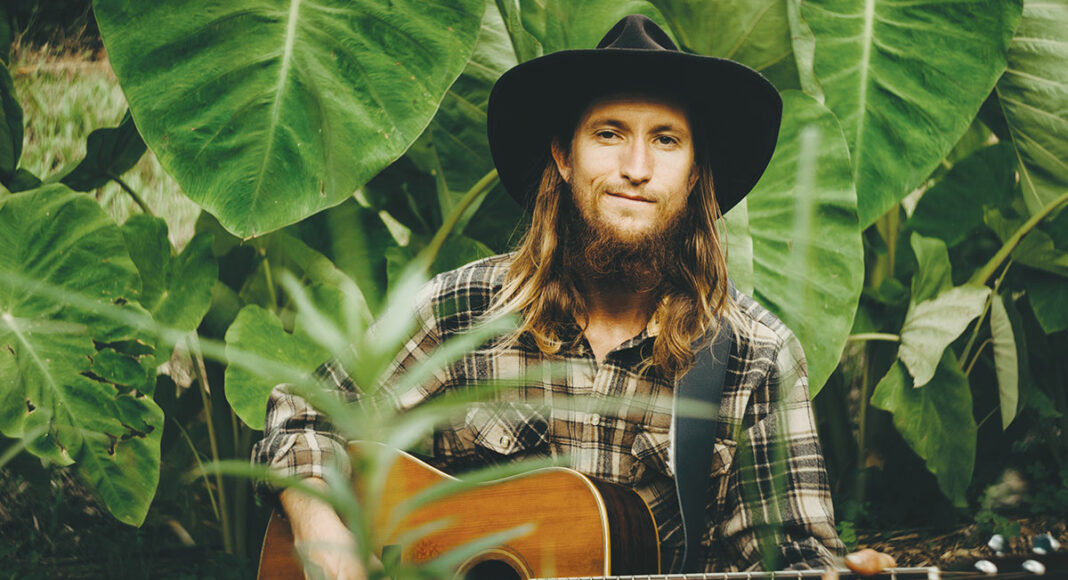
Simmons' musical influences continued to evolve. Jack Johnson became a major inspiration after Simmons saw him perform at the Byron Bay Bluesfest in Australia while he was on tour opening for the Doobie Brothers. He went into the show familiar with Johnson but came away with a completely different appreciation for what the musician was doing.
“I'd never really been a Jack Johnson fan, and then saw him play live, and that just really blew my mind,” Simmons said.
Johnson's music, lifestyle and connection to the ocean resonated with Simmons. So did Australian musician Xavier Rudd, whose activism and work surrounding Indigenous cultures made a powerful impression.
For Simmons, music isn't separate from those interests. It is another way of talking about them.
And then, for several years, the music became quieter.
Simmons married, started a family and eventually became the father of four children. After spending so much of his childhood traveling, he found himself wanting the opposite. He wanted to stay home. He wanted to raise his kids. He wanted to surf and farm and work his land. He wanted a life that wasn't dictated by somebody else's tour schedule.
For about a decade, that is largely what he did.
Now the guitar is calling again.
Backstage Organics recently announced that Simmons is its first artist-management client and that his first official national tour is being planned for summer 2027. The move represents a significant new chapter for an artist who has spent years building a life far removed from the touring machine.
Simmons plans to maintain his connection to Maui while establishing a Northern California home base, giving him greater access to the mainland music scene and making touring with a family somewhat more practical.
There is also something else happening here. For the first time, Simmons isn't simply the kid standing beside his father's amplifier.
He's the artist.
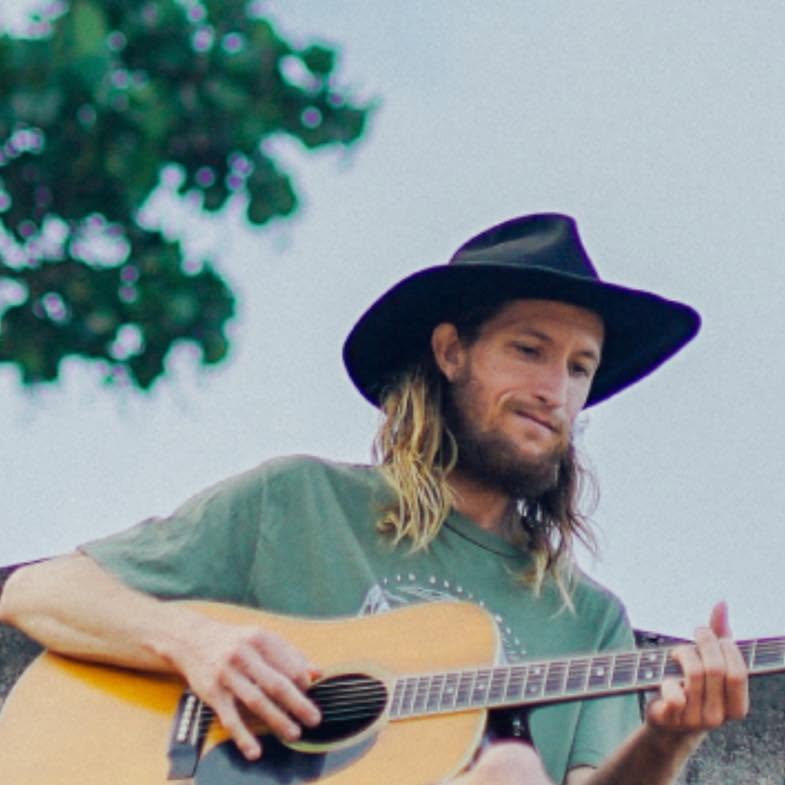
The name Simmons will still be on the marquee, and there is no escaping the fact that his father is one of the most recognizable figures in American roots-rock history. But the elder Simmons never pushed his son toward music. Instead, he encouraged him to follow whatever made him happy.
“He always encouraged me just to keep following my joy and my passion,” Simmons said. “He never pushed me. If you want to do it, go for it. If you don't want to do it, we support you still.”
That may be the most important thing his father ever taught him.
Pat Simmons Jr. doesn't have to spend his career proving he isn't his father. He doesn't have to run away from the Doobie Brothers or pretend that growing up around them didn't shape him. Those experiences are part of his story. But they aren't the entire story.
Because there is another Simmons story, and it has been developing quietly in Hawaii for years.
It involves a young man who survived cancer, became a husband and father, learned to work the land, taught himself about permaculture, became an environmental advocate, surfed warm-water waves, raised goats and chickens, built gardens and stepped away from the music business because he wanted to be home with his family.
Then the songs started calling again.
Toward the end of our conversation, I asked Simmons what he wanted people to understand about him that they might not know simply from knowing he is Pat Simmons' son.
His answer was unexpectedly revealing.
“I just want people to know that it's actually a big sacrifice for me to go out and share my music,” he said.
That might sound strange coming from a musician preparing for his first national tour. But listen to what he is giving up when he leaves home: his wife and four children, his farm, his animals, his garden, his friends, the ocean and the life he has spent years creating.
“I get to be home and surf warm-water waves and be in the sunshine and take care of my garden and my goats and my chickens,” he said. “It's going to be a big sacrifice for me to be out there in the world.”
But he is going anyway.
Not simply for the paycheck. Not because being a musician is what everybody expected him to become. And not because he's trying to prove anything to his father, Lukas Nelson or anyone else.
He's doing it because he has something to say.
“I'm out there doing that for them,” Simmons told me. “For the fans. It's not just for me. It's not just for making an income for my family. It's really for the world and for the fans.”
And suddenly the whole strange journey makes sense.
The little boy with the plastic guitar had no idea what he was standing in the middle of when he walked onto those stages with his father. He couldn't have known about the cancer diagnosis that would eventually change his life, the children who would become his world, the Hawaiian land that would become his teacher, or the years he would spend trading a microphone for a chainsaw and a tour bus for a farm.
He couldn't have known that one day he'd walk away from music for nearly a decade and then find himself missing it badly enough to pick up the guitar again.
But that's the funny thing about music. It doesn't always leave when you think you've left it.
Sometimes it just waits.
Pat Simmons Jr. has spent much of his life traveling between worlds: California and Hawaii, music and farming, backstage and home, family and the road. Now he's preparing to make that trip again, only this time he's carrying his own songs.
The Doobie Brothers gave him an introduction to the road.
Maui gave him his roots.
Life gave him a few hard lessons about how quickly everything can disappear.
And now, after all these years, Pat Simmons Jr. is ready to find out where his own music can take him.
The long strange trip home is just beginning.
Russell Levine is a photographer and writer covering live music for Grateful Web. He has been documenting the jam band world and its community for years, camera in hand and a few decades of Dead shows in his bones.