Article Contributed by Gratefulweb
Published on 2026-11-06
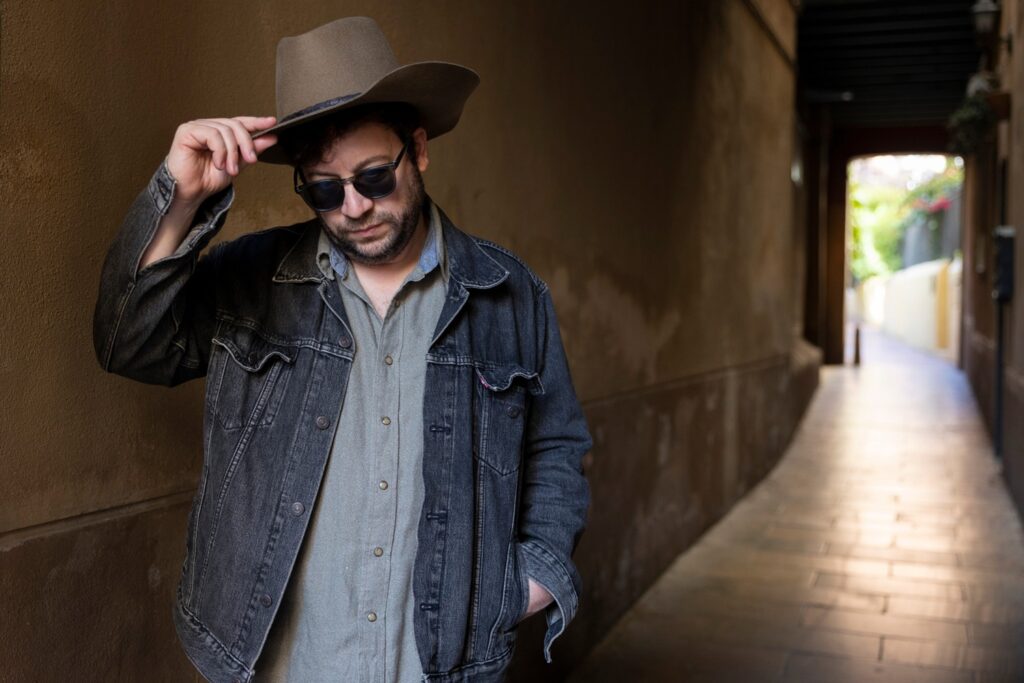
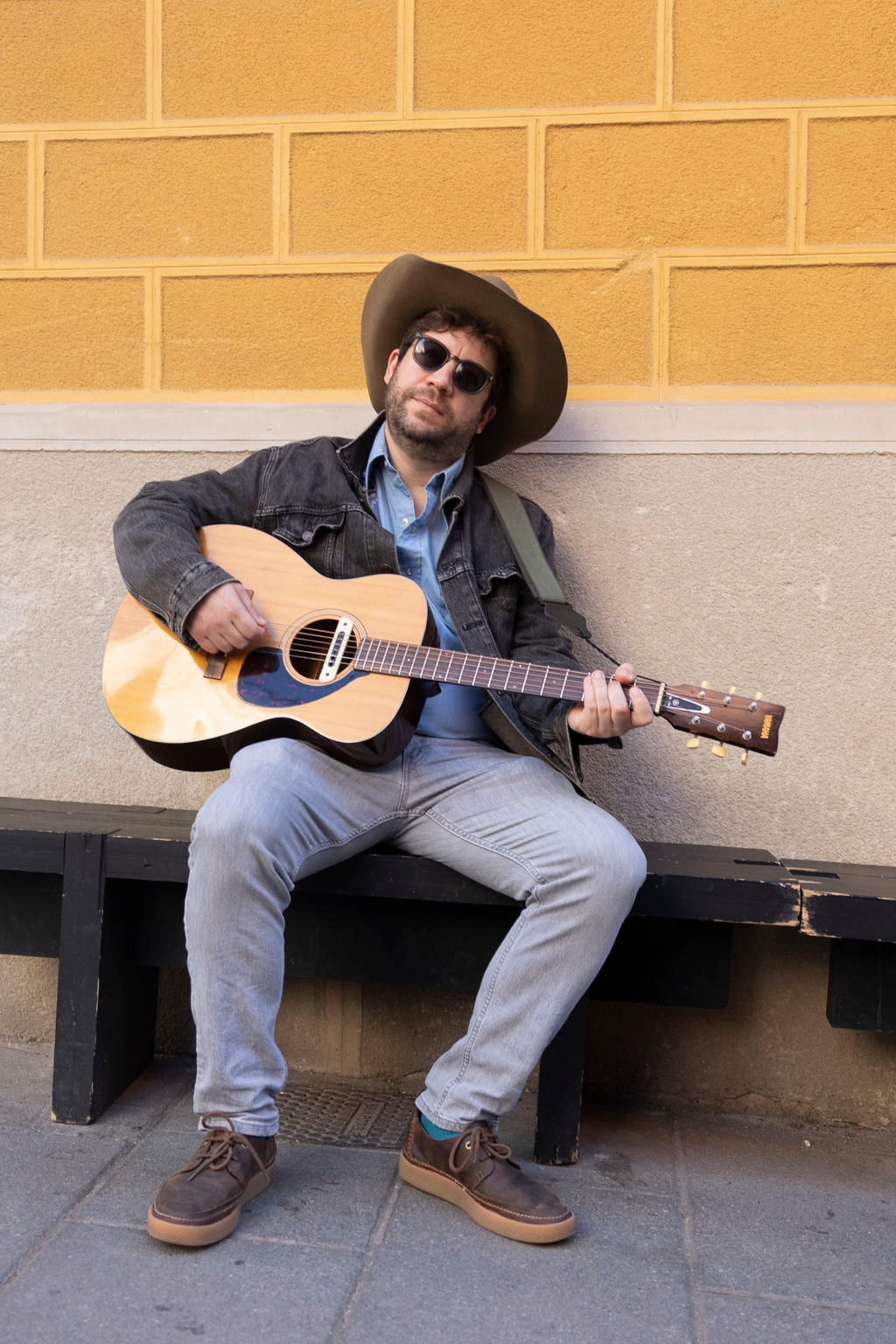
Photo: Courtesy of Bradley Lauretti
For singer-songwriter Bradley Lauretti, the journey from America to Barcelona has been about much more than changing addresses. As the creative force behind This Frontier Needs Heroes, Lauretti has spent years exploring the complicated relationship between personal experience, American identity, political upheaval, and the enduring traditions of folk music. On his sixth studio album, Homage to Catalonia, those themes take on new meaning as he builds a life in Spain while continuing to carry the musical and cultural influences of his homeland.
Due November 29, 2026, on Bandcamp, with a wider streaming release scheduled for January 15, 2027, Homage to Catalonia completes a loose trilogy that began with Real Job and continued with Go With the Flow. Across eight songs, Lauretti draws on the storytelling traditions of Woody Guthrie, Townes Van Zandt, and generations of American troubadours, weaving together encounters and experiences from both sides of the Atlantic.
The album's title track grew out of an unexpected musical discovery: a group of Catalan pensioners singing traditional melodies during their weekly demonstrations in Barcelona. That experience inspired Lauretti to borrow a familiar melody and give it new English lyrics, following a tradition closely associated with Woody Guthrie and American protest music.
But the connections to American musical history don't stop there. Since relocating to Spain, Lauretti has shared stages with Sarah Lee Guthrie, Johnny Irion, and Scarlet Rivera, the celebrated violinist whose playing helped define Bob Dylan's Desire and Rolling Thunder Revue era. He has also developed a musical partnership with Barcelona-based musician and producer Aaron Feder, whose band Afrodead reimagines Grateful Dead music through an Afro-pop lens. Feder, who mixed Homage to Catalonia, has also worked with musicians connected to the Dead's extended musical family, including Bob Bralove and Scott Law.
Recorded across Barcelona, Nashville, Portland, and San Francisco, Homage to Catalonia reflects a songwriter navigating the space between two cultures while discovering that the experiences shaping American folk music remain relevant far beyond America's borders.
Grateful Web recently caught up with Lauretti to discuss the stories behind the album, the influence of Woody Guthrie, his experiences performing with Scarlet Rivera, the Grateful Dead connections he's discovered in Barcelona, and what it means to leave one country without ever completely leaving it behind.
GW: The title track grew out of hearing Catalan pensioners singing an old folk melody during their weekly protests in Barcelona. Can you tell us about that experience, how you came to borrow the melody, and how the song developed?
Bradley Lauretti: Right before I moved to Barcelona, I was testing it out living here on a tourist visa for three months. I stayed at a friend's house on a quiet little street, hanging out on the balcony all day soaking up the sun. Living the dream. One day I came across a bunch of pensioners protesting near Plaza Catalonia. It turns out that they would protest every Monday in the same place to make sure that the government was protecting their pensions from cost of living increases. Lots of preemptive activity and lots of solidarity.
Watch This Frontier Needs Heroes perform "Homage to Catalonia" live in Barcelona:
I was so impressed that the people were organized and peacefully standing up for their rights in advance. The other thing that struck me was that they were singing all these songs together. I couldn't understand the song because it was in Catalan, but the melody was an earworm for me. So as I was walking home, I started singing my own lyrics in English based on the melody. Since then I have learned a lot more about how singing in Catalan was a very important part of resistance to the Franco regime.
I thought about how Woody Guthrie and other protest singers used to do the same tactic. They would take the melody of a song everybody already knew and change the lyrics so it was easier for people to remember. That is how they went viral back then before the internet. Basically, it was my story and experience of living here in Catalonia, with all its history. Since I was reading George Orwell's Homage to Catalonia at the time, I just wanted to write a sing-along song that my friends and I could enjoy.
GW: You've described Homage to Catalonia as the final chapter of a loose trilogy following Real Job and Go With the Flow. How has your songwriting evolved over those three records, particularly as you've gone from living in America to observing it from Barcelona?
Bradley Lauretti: Real Job was an album that I wrote at the Stetson Kennedy Songwriter Residency in Fruit Cove, Florida, while I was living in Jacksonville. That was a pivotal experience in my songwriting development because Stetson Kennedy's house turned out to be a very inspirational, important place for me. Woody Guthrie had spent a significant amount of time there. He wrote 88 songs including “Stetson Kennedy” which Billy Bragg sang on the Mermaid Avenue albums and he also wrote his book “Seeds of Man” while living there.
Real Job was written during the first Trump campaign in 2015–2016. A lot of those songs came out of my personal experience and my lens on America at the time. It didn’t hurt that Woody Guthrie had written songs in the same place. The energy was palpable, and the vibes were incredible. Picture a bohemian swamp in Florida. Woody and Stetson lived in a broken down bus in the woods.
Go With the Flow was written as I was leaving Florida to move to Nashville after Trump became president. It was about accepting that half the country had voted for him—even if I thought it was the wrong choice—and just moving forward with my life. I broke up with my girlfriend, I moved to Music City, and wrote some other songs trying to reconcile this new reality while understanding what was broken inside myself and maybe inside America. Everything can be a reflection of self and society.
When Trump won again after COVID, I was a little disillusioned and concerned about the trajectory of the country. Because I was able to get Italian citizenship through my family, I decided to move to Europe, at least for a while. Stetson Kennedy and Ramblin' Jack Elliott had both spent time living in Europe, and I thought it would be a super interesting YOLO experience. Having toured a lot in Europe, I knew it would be a good place for me to live, get health insurance, and enjoy a more affordable lifestyle.
So all the songs from Homage to Catalonia came out of that post-COVID chaos, after Go With the Flow was released and when I eventually left Nashville. People say Nashville is a ten-year town, and I was ready to keep rambling down the road no time for that. I wanted to move straight to Barcelona, but while waiting for my passport, I ended up spending two years living in Miami playing music and running a venue called the Center for Subtropical Affairs—which is a whole other story. The initial songs grew out of that time while touring the West Coast, Montana, Idaho, and Wyoming during the summer months.
The first half of the album features songs about arriving in Barcelona and settling into my new life and the unique stories. It hasn't been easy. When you're an expat or an immigrant—or whatever you want to call it—you're always looking back at your homeland, seeing what's happening to your friends, family, and fellow citizens. I'll always feel connected and responsible in some way to that. At the same time, it's super interesting to be in a new place with a rich history and see how another culture views the world and politics. It's been a bit of a relief to step out of America's constant 24-hour news cycle.
GW: You mentioned that you don't think you can fully leave America or fully arrive in Catalonia. After four years in Barcelona, how has living between those two worlds changed your perspective on home, identity, and the stories you want to tell?
Bradley Lauretti: Living here has given me time to reflect and look at myself from a different perspective. I still talk to people in America every day, so you don't ever fully leave it. But as I said, I'm no longer constantly immersed in the never-ending debate about what America is, where it's going, or what it should be.
Sometimes you just want to live your life in a chill, non-political way, even though I've always been a pretty political person. You get tired of constantly putting out fires and feeling like life is in a perpetual emergency. People need to rest, live, have fun, and enjoy themselves without being constantly engaged in political debate. That way of living is exhausting, alienating, and unhealthy for everybody. It's a distraction.
Now, being here, things are different. You might think moving to Spain is one of the easier transitions in the world, but it's still a different culture with a different language. Everything from getting a driver's license to finding a job requires adaptation. The way people see you changes, too. I'm no longer an interesting traveling artist; I'm just somebody who lives here now.
As someone who used to live in New York City, where people from all over the world live and become “New Yorkers”, the way Europe thinks about identity and culture is a lot different than in America. Barcelona is a very international, multicultural city, but you still have this sense that you live in Spain, you live in Catalonia, and it's very different from the way people think about living in New York or in America. It's not a melting pot the same way. I don't think it's necessarily changed the way I tell stories. It's just that these are the stories that I'm telling now and thinking about from a new perspective. Some of the songs have taken on a new meaning for me especially “I Love Immigration.”
GW: You've shared stages in Spain with Sarah Lee Guthrie, Johnny Irion, Scarlet Rivera, and other musicians connected to the American folk and roots traditions. What have those experiences meant to you, and how has being surrounded by a different musical culture influenced your own work?
Bradley Lauretti: One thing I realized is that no matter what America does politically at home or abroad that people around the world might dislike, everybody loves American culture and music—especially the music. That has been a saving grace for me. Playing alongside these icons of American folk music lets me represent my country in a positive light, even if not everyone loves us right now. It allows me to feel patriotic and engaged, recognizing that America's actions are a mixed bag of blessings and mistakes.
It's an honor and a privilege to represent that heritage in any capacity. The artists who come to visit me in Spain feel relieved to catch a break from the constant political turmoil in America. There is a whole world out there that doesn’t revolve around US politics. I feel like an ambassador of sorts, happy to play a small role for our country and to support other independent artists.
Spain has a very interesting history, especially since the Civil War and the Franco dictatorship. As a result, the Spanish people hold very strong opinions on democracy, dictatorship, and protecting human rights. I really admire how deeply the Catalan people respect human rights and democracy; it's one of the main reasons I wanted to live here. In fact, there is a general strike next week in response to the forced eviction of an elderly woman named Maricarmen, alongside other issues leading up to the Spanish election at the end of the month. It's a very interesting time to witness democracy in action.
Johnny had produced my last album, Go With the Flow, so playing with him again has been super fun. He is actually coming again next week! Performing with Scarlet Rivera was a trippy experience because I was acting as the stand-in for Bob Dylan as her acoustic guitar troubadour. Getting to sing a couple of Bob Dylan songs every night alongside the woman who played that iconic violin on Desire and The Rolling Thunder Revue—one of my favorite albums and periods of music by my favorite artist—was incredible. I had previously met Sarah Lee Guthrie through the Stetson Kennedy songwriter project and worked with her on other shows, so it was wonderful having familiar friends come visit me here.
GW: "Truck Driver" grew out of an encounter with a Trump-supporting trucker in an Alberta bar. You talk about trying to understand people who don't necessarily extend that same understanding in return. How did that encounter become a song, and what do you hope listeners take away from it?
Bradley Lauretti: I think missed connections have been a defining theme for us over the last decade. My family were farmers from South Carolina, so I've always held a rural, small-town, working-class perspective. At the same time, attending college in New York City gave me another point of view. I try to see things from everyone's perspective, though sometimes someone has to be wrong. Communicating across all strata of society is essential for coalition building so nobody gets left behind. What I hate to see is when someone suffers the consequences of somebody else's mistakes. That to me feels deeply unfair.
Sometimes I think that there is some disconnect between the farmers not truly understanding all the ramifications of tariffs, USAID, and global trade on their own livelihoods, but not really being able to listen to a liberal economist who could help them understand. So that is a huge blind spot for them and us. Yet at the same time they listened to a New York elitist who lied to them just to get their vote. At the time, those tariffs directly threatened that truck driver's livelihood—reducing his work and putting less money in his pocket—yet he went along with it anyway. This is something that is hard to understand.
Now, eventually people have caught on to the consequences as it directly impacts them. Sadly, we tried to warn them ten years ago, but they weren't ready to listen until seeing it unfold for themselves. The beauty of democracy is that we eventually get it right, course-correcting even after making major mistakes. That is how we heal the nation.
In my songwriting, I make a point to write about what I know. Having driven across the country many times on tour—usually in a Toyota Prius—I know what it's like to spend ten hours a day driving and sleeping in a car or a cheap hotel. I feel a kindred spirit with truck drivers. It served as a great catalyst to write a road-traveling song that people love to listen to while driving—plus, it's a real American story!
GW: Homage to Catalonia brings together songs recorded in Barcelona, Nashville, Portland, and San Francisco, including several previously released singles. What made these eight songs feel like they belonged together, and how did you bring those different sessions into a cohesive album?
Bradley Lauretti: Side B was written first as I was leaving America, while Side A represents my life arriving in Catalonia. Following the chaos of COVID and the release of Go With the Flow, I recorded songs whenever opportunity struck. While on tour in Portland, my friend Dave Dondero offered me a place to stay and a day at Fluff and Gravy recording studio, where we tracked "Ten Bullets in the Back." In San Francisco, I stayed with my friend Noah Wheeler and recorded at his home studio. Meanwhile, I recorded "Carolina Peaches" and "Truck Driver" in Nashville with a full band alongside Blake Tallent and Turner Stough.
I recorded the remaining four songs in Barcelona at Slow Sound Studio with Aaron Feder and Barko Waltz. Aaron leads the band Afrodead (playing Afro-pop versions of Grateful Dead music) and regularly plays with Bob Bralove (of the Grateful Dead) and Scott Law (of Phil Lesh’s Terrapin Family Band). He hosts the Grateful Nights music series here, played pedal steel on my record, and mixed the entire album.
https://www.instagram.com/afrodeadmusic/
https://www.instagram.com/gratefulnightsbcn/
https://www.instagram.com/slowsoundstudio/
Ultimately, what ties it all together into a cohesive album are the vignettes and real stories from my life—a snapshot of one man's journey through these chaotic times before leaving home and after arriving. I hope things are starting to settle down. At least for me they are. Maybe its time for my next adventure! Believe it or not, people everywhere share the same problems; sometimes they vary slightly, or sometimes they rhyme. The things that annoyed me about America are sometimes what I miss the most here, while the things I love about Barcelona can occasionally frustrate me too. I've learned to relax, slow down, and accept a new lifestyle that moves at a gentler pace—which is probably a good thing in the end.
For more information about This Frontier Needs Heroes, visit the official website or Bandcamp.
Bandcamp Release: November 29, 2026
Worldwide Streaming Release: January 15, 2027
Self-released
Track Listing
1. Cadaqués Cowboy
2. Homage to Catalonia
3. Take All the Time You Need
4. Significant Other
5. Ten Bullets in the Back
6. Carolina Peaches
7. Truck Driver
8. Not Gonna Write a Song