Article Contributed by Morris Public Relations
Published on 2026-03-13
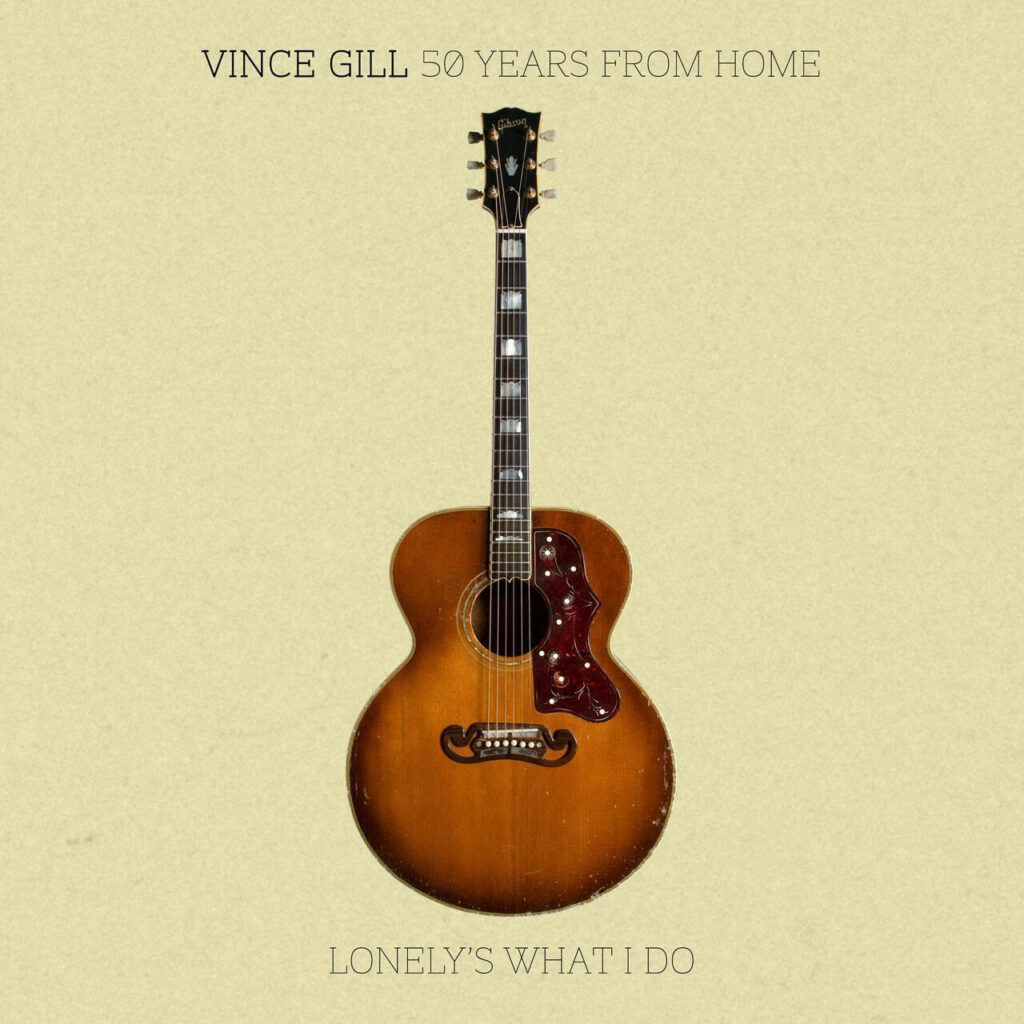
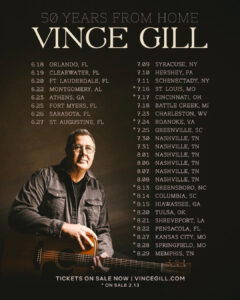
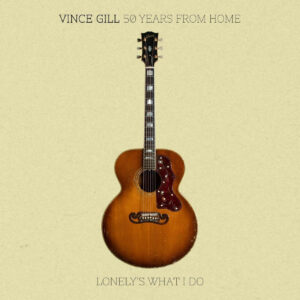
Sad is the flavor of Vince Gill on Lonely’s What I Do, the fifth volume in his 50 Years From Home EP series. And he’s happy about that. The EP is out today on MCA.
Gill left his hometown of Oklahoma City, Oklahoma in 1975 to launch a career that now includes 22 Grammy Awards, both Country Music Hall of Fame and Grand Ole Opry member inductions, and 25 Top 10 hits on Billboard’s Country charts. One of the latter, “Pocket Full of Gold” from his 1991 album of the same name, is included along with the seven new recordings featured on Lonely’s What I Do. These songs are lovelorn laments, demonstrating a hurt that’s exquisite and palpable thanks to Gill’s rich, high and lonesome tenor and minor-key instrumentation.
Gill addresses this theme of sadness, explaining, “I love the melancholy in music. I always have. Maybe it goes back to the bluegrass days of the murder ballads, those kinds of songs. There’s so much more emotion in songs that have a little more despair. I think they’re as powerful as they are because they tell great stories. They paint great pictures that take you to that place — whether they’re true or not.”
The first loss Gill bemoans on the EP is not of a person but a culture. “Nothing Like They Used to Be,” a Texas swing co-written with Sharon Vaughn and Hadlie Jo Pritchard that mourns the classic honky-tonks, where “those swinging doors ain’t swinging” and “they ain’t singing ’bout cheating” anymore. “It just reminds me of the early days of going into a real beer joint and hanging out and hearing some twangy music,” he says.
The hankies then come out for “A Million Tears Ago,” a co-write with Mae Estes, who also sings the harmony vocals. “I’m really crazy about Mae,” Gill says. “She’s somebody who really loves the kind of old school spirit of our music. We got together and made up a song, and this is what turned up.”
The delicate “How’s the Leaving Going” is another trio write, a teaming of Gill, Lee Thomas Miller and Kameron Marlowe, who’s also released his own rendition of the song. Gill’s track, meanwhile, features backing vocals by his youngest daughter, Corrina, from his marriage to Amy Grant.
For the equally gentle “Lonely’s What I Do,” the EP’s title track, Gill teamed again with Vaughn, as well as Belle Frantz. Gill says, “it’s a little tip of the hat to Bob Wills’ ‘Faded Love.’”
Gill says he and Tom Douglas (co-writer of Miranda Lambert’s “The House That Built Me”) were a bit surprised by the brevity of the weepy “The Last Thing You Left Behind.” “The song starts with the chorus, then we wrote a verse, and the verse was great,” Gill recalls. “I looked at him and said, ‘I think we’re done.’ He was like, ‘Excuse me? What do you mean? It’s only one verse.’ I said, ‘Think about how many Merle songs had one verse — quite a few of them. Tell me what else you would say that isn’t saying the same thing.’ He said, ‘You’re right. That’s the least amount of words I’ve ever put in a song!’”
With its old-timey, late-at-night vibe, “How Lonely Lonely Gets” is the EP’s oldest song, one Gill says has been patiently waiting for its time. “I never found the right time to record it or the right record to put it on,” he says. “I saw this stack of songs showing up and knew, ‘Hey, I’ve got an old song I think is pretty good,’ so I dusted it off, cleaned it up a little bit and recorded it.”
Amidst all of this sad material, “The Book” may be most heart-wrenching. Penned with Bob DiPiero – “a knucklehead, funny guy like me” — it was inspired by frequent questions Gill receives about when he’s planning to write a book. “I love how it turns in the second verse,” Gill says. “It’s so mournful; ‘When I watched those six white horses carry you away/Oh, I wanted to go with you/But the children need me to stay.’ That crushes.”
Like its 50 Years From Home predecessors, Lonely’s What I Do was produced by Gill at his home studio in Nashville, with engineers Matt Rausch and Justin Niebank and a corps of his regular players including Paul Franklin, guitarists Tom Bukovac and Jedd Hughes, bassist Jimmie Lee Sloas, keyboardists Gordon Mote, John Jarvis and Jim “Moose” Brown, and drummer Fred Eltringham.