Article Contributed by Gabriel David Barkin
Published on January 20, 2026
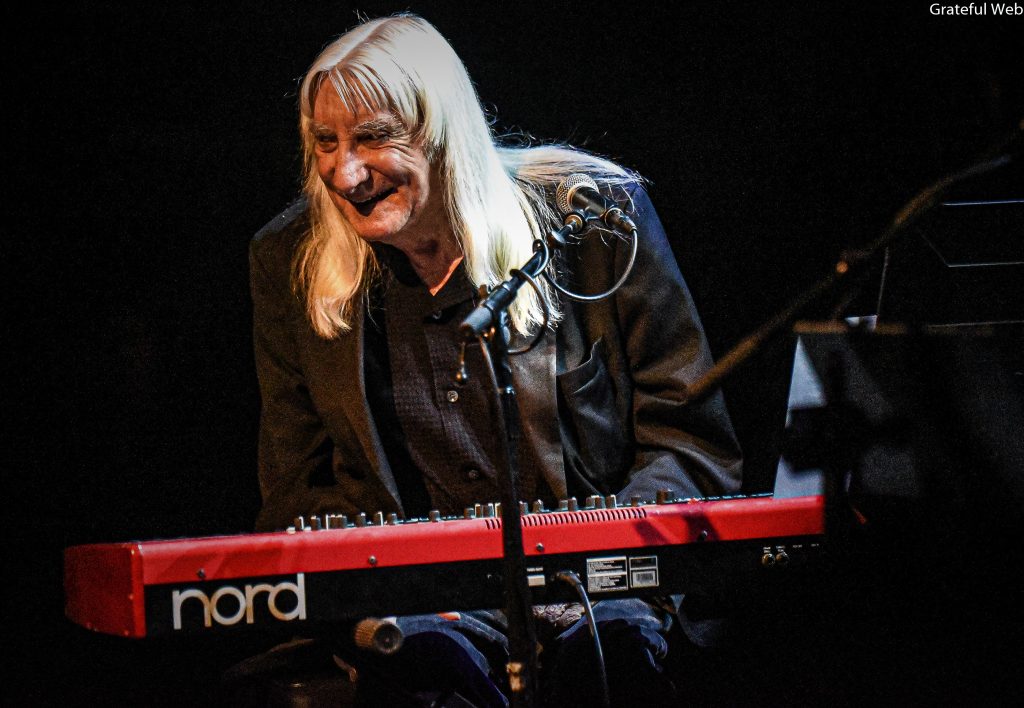
There should be no debate about Grateful Dead alum Tom Constanten’s bona fides. The band itself treated him as a full-fledged member for a brief time. He was inducted into the Rock and Roll Hall of Fame as a member of the Dead alongside Jerry Garcia, Bob Weir, et al., and even Wikipedia lists him as an official band veteran. Bill Kreutzmann once dissented, saying he did not consider Constanten a “card-carrying member.” Your own results will vary, but by most measures, Constanten’s affiliation passes the sniff test.
Which means he is now in elite company with drummers Kreutzmann and Mickey Hart as one of the only surviving members of the Grateful Dead today.
I met with Constanten on Zoom last week to discuss his career, including his experience as a member of the Grateful Dead, and his current situation battling lung cancer. I also gave Constanten the opportunity to eulogize Bob Weir, who had died just days before we spoke.
Constanten was in good spirits and appeared hale and hearty on the Zoom screen. Still, his health situation has been costly, and he reported on Facebook this weekend that “the symptoms continue, mainly a near total lack of energy.” With that in mind, before we dive into the interview below, I want to take this opportunity to plug a GoFundMe set up by his close friend and associate Greg Martens to support this musical icon. Visit https://gofund.me/72dd1e243 to chip in your support and help Tom Constanten with his medical bills.
Dead freaks unite!
AN ALL-TOO BRIEF INTRODUCTION TO TOM CONSTANTEN
In 1968, as the Dead pushed deeper into psychedelic and avant-garde territory, they brought Constanten aboard to handle keyboards. Ron “Pigpen” McKernan remained the band’s blues-driven frontman, but his musical inclinations did not align with the experimental paths leading to the albums Anthem of the Sun and Aoxomoxoa.
Constanten, a classically trained pianist and musical prodigy who had begun composing orchestral works in high school, was a natural fit. His former Berkeley roommate Phil Lesh brought him in as a session player for Anthem, even while Constanten was on active duty in the U.S. Air Force, burning through three-day passes to play in the studio and occasionally onstage. After an honorable discharge, he officially joined the band in late 1968 and stayed on board for a stint that lasted about 15 months.
Despite his talent, some people felt he never fully meshed with the band’s culture. Manager Rock Scully memorably wrote, “He was so different… like a Marine in a prison camp full of Japanese.” After leaving the Dead, Constanten pursued a varied career: performing with ensembles, composing for theater, teaching music, and later touring as a solo pianist and with Dead-related projects such as Dark Star Orchestra and Terrapin Flyer. Now nearing the end of a months-long chemotherapy cycle, he’s looking forward to returning to the road for some live performances, including a few dates in Maine in late February.
And now, with no further ado (but with some edits for clarity and brevity):
MY CONVERSATION WITH MR. TOM CONSTANTEN
Tom Constanten [TC]: Can you hear me?
Gabriel David Barkin [GDB]: Perfect.
TC: Great. I’m a big fan of perfect.
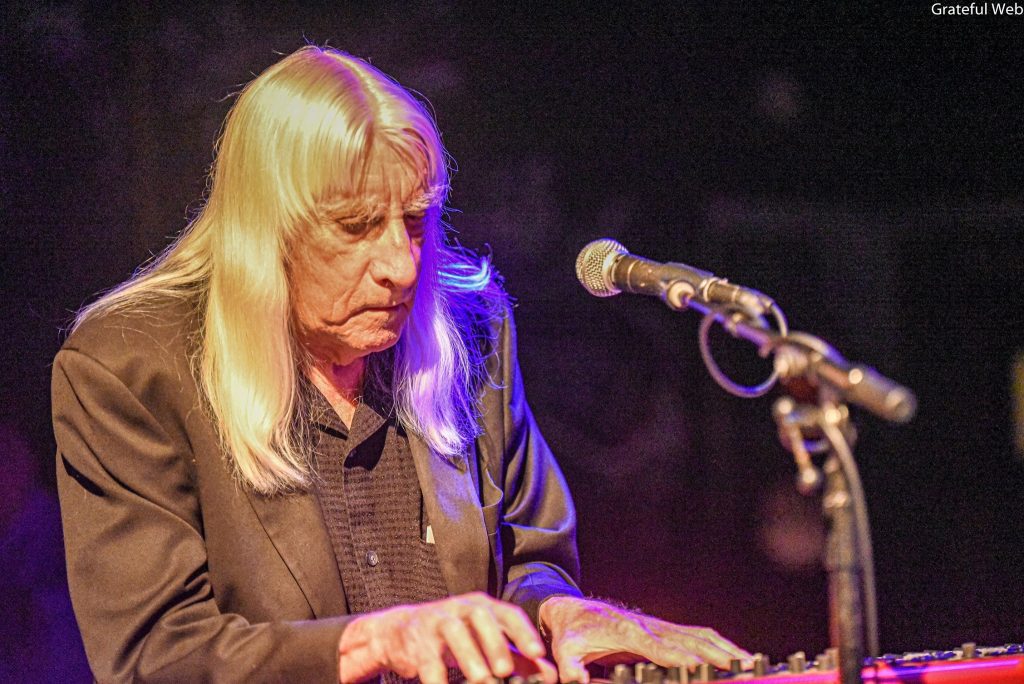
GDB: Perfect is the enemy of the good. We could have fun with that conversation, but let’s not. So how are you?
TC: All’s well here in the mountains. I live in the mountains between Albuquerque and Santa Fe, New Mexico.
GDB: How are you doing with your treatment? How’s it going? To whatever extent you want to share.
TC: I have one more chemo to do next week. The symptoms are relatively light. Just a total wind in the sails and coughing up snot. I was given a list of a lot more [symptoms to expect]. It could be a lot worse. So I’m grateful for the good, and dealing with what I’ve got. And hopeful that in a month or so all that will be behind me. I’ll be ready and loaded for bear for a show in Maine and whatever else the year brings. Hoping for the best.
GDB: Oh, that’s fabulous. We’ll talk about that show in a little bit. Before we dive into the conversation, just to set some context, the publication I’m writing for is called Grateful Web. And as the name implies, our audience is going to be interested in a particular subset of your biography. So I hope you don’t mind that some of the questions I have focus on that brief but amazing period of your time when you were in the Grateful Dead. I want to talk about some of the other things you got going on as well. Just want to make sure you’re okay with that.
TC: Not a problem at all. Let’s go.
GDB: I want to start with this idea that I think you’re aware of. While you’ve been dealing with your treatment, I’ve seen posts on social media about your health and your financial needs related to medical bills. I’ve seen people post things like, “Well, why doesn’t Bobby help? He’s got tons of money from Dead & Company!” Now here we are mourning the death of Bobby from complications resulting from his own cancer. Did you know about his health? Were you in touch with him? And what are your thoughts on his passing?
TC: I’ve known about [Bobby’s cancer diagnosis] for about six months. As far as Dead & Company – the easiest thing in the world is to pontificate how other people should spend their money. And I’m not into that at all. Is it their fault that they’re so successful? And I’m sure they have their own issues. I don’t even know if I’m on the radar. I really don’t think about that. I have enough wonderful friends, and it looks like more and more are coming in all the time, and that continues to blow my mind.
I think of myself as just a kid moving around with a circus, and I’ve been getting away with it for about 60 years. So I don’t have any standing to demand anything, and I’m just grateful for what I’m getting.
GDB: I think a lot of that kind of conversation is silly too. I don’t see any reason why Bobby and his family have any more or less obligation than anyone else to help me with my mortgage, for instance. (Although, a big fat check from Elon Musk would be nice.)
TC: Yes, it’s very easy to make judgments like that. And you know, even with the full desire to disclose everything, we see but the tiniest slivers of each other’s lives. There’s so much you don’t know, and that’s reason enough for me to not be judgmental. I mean, there are things that people are going through that you don’t know about. There are things that I’ve been going through that are difficult to show the whole picture of. So I avoid that whole thing.
GDB: And we shall speak no more of it. Moving on, this would be a great time for a Bobby story, if you’ve got one. I think you lived with him briefly at one point.
TC: Oh, yes. We shared a house in Ross [in Marin County]. Rather risky, considering our income at the time.
I remember one time – whenever went to Las Vegas, my old hometown, I had several favorite haunts around there and invited everybody in the band to join me on excursions. Only one of them accepted, Bob Weir. And we took the afternoon out, we went out to the Valley of Fire, which is my favorite place on Earth. It’s like a bright red sandstone walk in a Rorschach blot. Anything that’s in your head, you’ll see the shape of it in one of the rocks. My friends and I used to go there with psychedelic assistance to enjoy nature. And [with Bobby], we went out past where the pathways went out into the valley, to a place called Mouse’s Tank. It was acoustically magical. He took out his guitar and sang the “Master’s Bouquet” for an audience of one. And the magic continues from then on. Not that it hadn’t been going on before, I’m sure.
Note: “Gathering Flowers for The Master’s Bouquet” is a bluegrass song recorded by the Stanley Brothers and Hank Williams Sr., among many others. Bob Weir performed it at least once in a Grateful Dead acoustic set on December 26, 1969, at McFarlin Auditorium, University Park, Texas. The recording is available on the Internet Archive and was included on Dick’s Picks #43.
GDB: I want to touch more on that one sliver of your long life. You’re one of the last few people who at some point was, so to speak, “officially” a member of the Grateful Dead. There’s just you and the drummers at this point. And I’m going to guess though that as much as you’re proud of that, that’s not the only thing you want to be recognized for. How do you define yourself in terms of your career and your bio these days? Is “I was a member of the Grateful Dead” the headline? Is it even on the front page?
TC: Well, you know, there are worse things to be recognized for. And other than that, I really don’t think about it that much. I mean, it was a phase of my life that I went through. I’m grateful for it to the degree it was. I accept it.
I missed out a bit of the beginning because I was in the Air Force. I couldn’t think of a way to dodge the draft, unlike some people we’ve heard of. And nobody knew the band would get that big. It seemed like an opportunity for me to go towards. I don’t regret any of my choices.
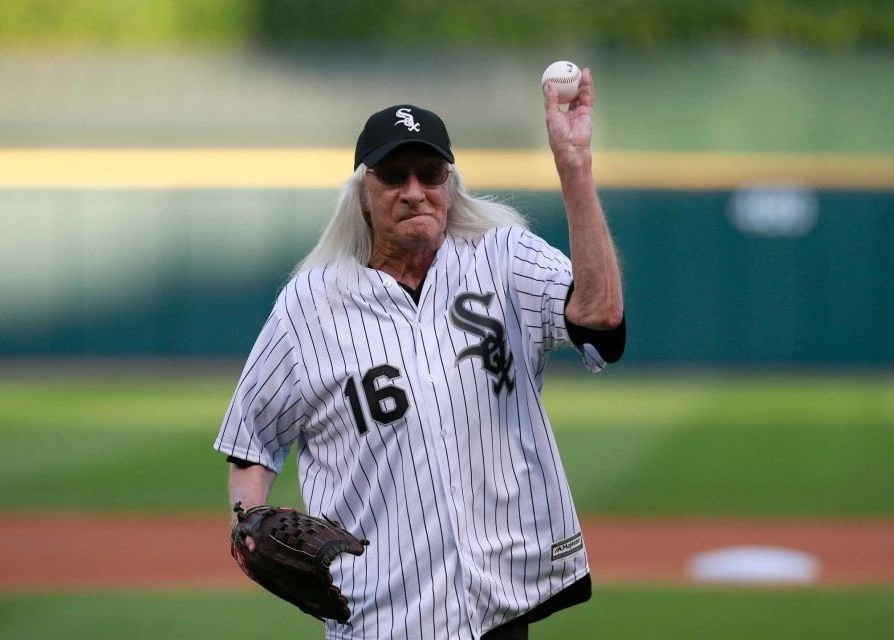
And as you imply in your question, I’ve done a lot of other things. I have orchestral compositions that were performed in Las Vegas in the 60s. I have a solo piano act. I have solo piano compositions which I’ve got a little bit of play here and there. A couple of them have been published by reputable publishers, and I continue to sit in with bands. I’ll be doing that at the end of February. I did that four times last year. Brooklyn, New York, a festival in Delaware, a festival in Maine, and I threw out the first pitch at Grateful Dead night at a Rochester Red Wings ball game. So the hits keep coming. And I look forward to more blessings in the future.
GDB: We all are.
So there you were in the Dead for a couple of years. Phil, your old friend and college roomie, brought you into the band. I think he brought you into the studio in LA. first, if I remember the story right. What was really different about playing with those guys in terms of the musical style and theory that was in your head at the time versus what they were doing? You’ve got Phil, who was musically trained – but then you’ve got these other guys who picked up different aspects of music through their own experience. How do you think you fit in with that?
TC: You’ve got to understand we were all real young. Phil was 29, Jerry was 27, I was 25. I mean, we were practically kids. And it was a brave new world for us. Musicians nowadays learn these tunes from a book that they got at Guitar Center. I learned the tunes from the chord changes written on a piece of legal paper by Phil. A lot of stuff segues, individual parts in tunes had not been worked out.
We did that by playing and it was a looseness. We sort of threw the spaghetti at the wall to see what would happen. And we kept what stuck, so to speak, to carry on the metaphor. And it was very ad hoc. It was very much in present time.
We didn’t do set lists. After a tune, Jerry, Bob and Phil would get together and say, okay, what do we do next? And it was looser to that degree.
GDB: I think you’ve seen some of the descriptions of your collaboration by others involved at the time. I’ve read a few times where the word “misfit” came up to describe a counterpoint between you and the Dead, perhaps both musically because of your education and also because you were an Air Force guy (even if that was unwilling). There’s a quote from Billy [Kreutzmann] saying something about this, that you just didn’t mesh with what they were doing long-term. Did you ever feel that at the time, that you were in any way not a fit for the band? Do you feel that now in retrospect? Has that feeling grown and changed in any way over time?
TC: It’s almost like were reading some kind of Akashic record. I remember a time at the Fillmore East where Phil and I made eye contact and we just were sure where to go, what was going to happen next. It was like were reading this cosmic chart, and we just walked through a space. Making a mistake was not possible. You just put one foot in front of the other, musically speaking, and it somehow worked. It was very magical.
GDB: I’ll take that as a “No,” you didn’t feel any discordance with playing in the band. [TC smiles.]
So now let’s talk about these things that you’ve got coming up. Tell me about the gigs that you’ve got and let me put them on the radar a little bit. Hopefully they’re going to come to fruition.
TC: Of course. In Maine, it’ll be John Kadlecik and I doing a tag-team operation on the audience, which I’m looking forward to. There’s a lot of freedom there, which means responsibility for getting together, but it also means a lot of fun.
GDB: And are you still composing? Are you writing these days? Are you even playing while you’re going through chemo?
TC: You know, with the new musical software, it’s made that a lot easier. I mean, you write a piece for string quartet, which I’ve done, and it even extracts parts for you. Fifty years ago, that was a lot more laborious. In fact, I’ve compiled a set of manuscripts of my compositions called “Handwritten Music,” because it is. And it was definitely the old tech, the way we used to do it.
And there’s solo piano music, string quartet music, a couple of orchestral pieces. And nowadays it’s very different. I have a whole lot of scratch pad items of ideas that get developed and I just throw them out there and occasionally they meld together and blend and become a composition.
I remember practicing with the band. We practiced a number that we called “The 10.” It was in 10/8 time, a circling beat of ten, and eventually it became a tune called “Playing in the Band.”
GDB: Of course, yes.
TC: It was just some exploration we were making. Beyond that, I’ve made a couple of piano CDs, limited circulation. They haven’t really sold a lot. I think one of them just went “plywood.” [Several levels below going “gold” or “platinum.] And classical pieces, ragtime, a couple of originals, a couple of tweaked Grateful Dead tunes. Glenn Gould said, if you’re going to do it like everybody else, why do it at all? So I have to do something to make it different, if not my own. “Different” is good enough, and it’s enough to keep me occupied.
Note: The exact quote from Gould is this: “If there’s any excuse at all for making a record, it’s to do it differently, to approach the work from a totally recreative point of view… to perform this particular work as it has never been heard before. And if one can’t do that, I would say, abandon it, forget about it, move on to something else.”
GDB: I have to ask, how many copies sold is “plywood”? Is that a thousand?
TC: Actually, that’s about it. Yes. I have another one that’s just reached “aluminum foil.”
GDB: Nice. That’s a step up, I think, right?
TC: Yeah, I’m not in the stratosphere yet.
GDB: Well, maybe we can help out with that. [See links below to purchase some of Constanten’s music.]
What else do you want fans and friends to know about you these days?
TC: Well, the show coming up, And Bob Bralove and I have an operation called Dose Hermanos. And that’s “D-O-S-E.” It’s not a number, it’s a measurement of medication.
GDB: Got it. Okay.
TC: We get as close as we can to 100% improvisation all the time. At first, we were amazed we got away with it at all. Then were amazed that the farther out we got, the better they liked it. And we were surprised also to find out that there are musical ideas out there in headspace that you can return to, like a clearing in the forest – you find things, and you return to it, and you find new things. It’s like another world to explore. We already have a couple of CDs out. Bob has been here to visit me here in New Mexico, and we’ve done some recording. He’s already started to edit them to put something presentable out, which we will do as soon as it’s ready.
GDB: Well, thank you, Tom. I do hope I see you on a stage before too long. I will keep my eyes out for that.
TC: I’ll look for you now that I know what you look like. Live long, prosper and hang loose.
Tom Constanten will be playing a few shows in Maine in late February. The show he mentions above with John Kadlecik on Feb. 25 is sold out, but there are still tickets for this one:
Bayside Bowl
Portland ME
Feb 26, 2026
With Melvin Seals & JGB, and also Blues Brothers Tribute Band
Tickets and more information can be found HERE.
DOSE HERMANOS
Persistence of Memory
Constanten and Bob Bralove
Available at https://bobbralove.com/persistence-of-memory/
WITH NORMAL BEAN BAND
Into the Future
Jam band fun
Available at https://music.apple.com/us/album/into-the-future/718396481
SOLO PROJECT
Through the Listening Glass (Live)
Instrumental originals
Available at https://music.apple.com/us/album/through-the-listening-glass-live/1739520613