Article Contributed by Craft Recordings
Published on 2026-07-14
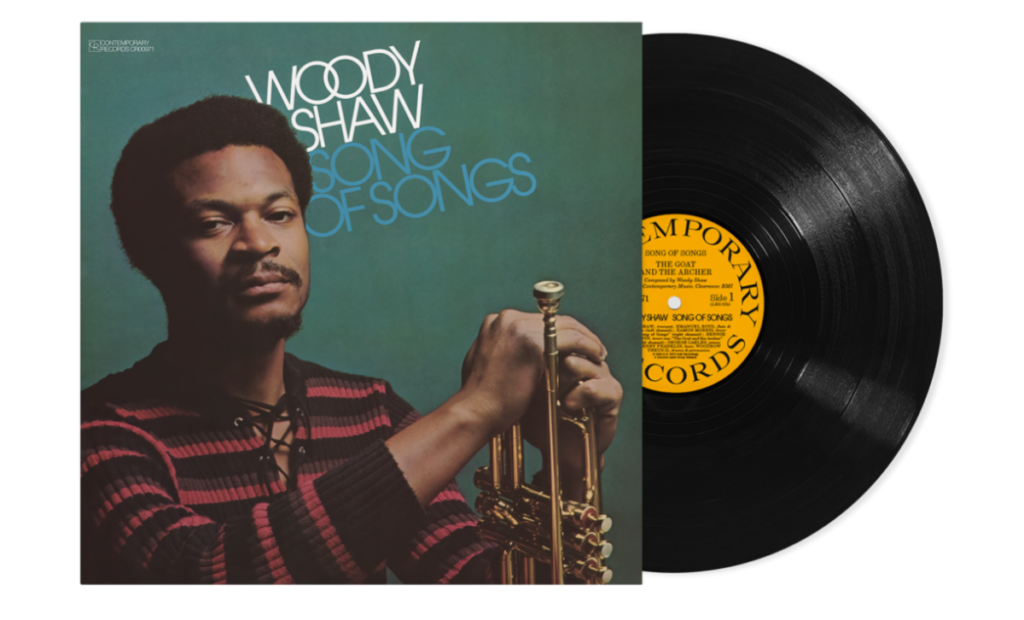
Woody Shaw’s avant-garde tour de force Song of Songs returns to vinyl after more than 50 years via Jazz Dispensary’s Top Shelf series.
Jazz Dispensary’s 10th anniversary celebrations continue with the September 4 release.
“Now there’s a great trumpet player. He can play different from all of them.”
— Miles Davis
PRE-ORDER / PRE-SAVE SONG OF SONGS
It may be hot outside, but the folks at Jazz Dispensary are staying cool with their latest Top Shelf series offering: a fresh reissue of 1973’s Song of Songs from influential trumpeter Woody Shaw. A brilliant release from his early years as a leader, the four-track album showcases Shaw’s talents as a composer, arranger, and soloist.
Returning to its original format for the first time in over 50 years, Song of Songs features all-analog (AAA) mastering by Kevin Gray at Cohearent Audio and is pressed on 180-gram vinyl at Fidelity Record Pressing. As with all releases in Jazz Dispensary’s album-centric Top Shelf series, the LP comes in a stylish tip-on jacket that faithfully reproduces its original Contemporary Records design.
Arriving September 4 and available for pre-order/pre-save today, Song of Songs will also be reissued on streaming platforms in standard and HD audio.
A virtuosic trumpeter, composer, and bandleader, Woody Shaw (1944–1989) was a pioneering figure in modern jazz, revered for his unique harmonic approach and innovative technical abilities on the trumpet. The New Jersey native showed early musical promise, soon capturing the attention of Eric Dolphy, Willie Bobo, and Bud Powell—all of whom he performed with. After a stint in Europe, Shaw returned to the U.S., where he worked alongside such forward-thinking musicians as Chick Corea, Max Roach, Art Blakey, and Joe Henderson, who inspired him to push the limits of his artistry.
The 1970s also marked the beginning of Shaw’s career as a leader. Signing to Contemporary Records, the trumpeter made his debut as a leader with 1970’s politically charged Blackstone Legacy, which served as a bridge between his bebop roots and the avant-garde. That stylistic theme carried over to his 1973 sophomore effort, Song of Songs.
Working in a sextet setting—including flutist/tenor saxophonist Emanuel Boyd, keyboardist George Cables, bassist Henry Franklin, drummer Woodrow Theus II, and tenor saxophonist Ramon Morris—Shaw led his group through four extended originals.
Shaw based the cinematic title track on an Indonesian five-note scale, dedicating “Song of Songs” to the people of Southeast Asia. Composed against the backdrop of the Vietnam War, the nearly 12-minute-long piece was an expression of Shaw’s concern for the people in Vietnam and neighboring countries.
“When I wrote it I was thinking about something I could dedicate to [their] suffering,” he wrote in the album’s liner notes. “I like to relate my music to the times or my environment. And we all have to admit that war has had some influence on us in some way or another.”
The trumpeter also confronted more personal struggles in the emotionally complex ballad “Love, For the One You Can’t Have,” in which he reflected on his recent separation from his wife.
Side A closes on a lighter note with “The Goat and the Archer,” inspired by Shaw’s astrological sign, Capricorn. Featuring a cameo by Bennie Maupin on tenor sax, the track finds the group breaking into a bluesy, swinging groove.
Song of Songs closes with “The Awakening,” a spiritual jazz opus that showcases the group’s connectivity and improvisational skills.
“What I want to emphasize is that everybody listened to each other, and we did find different moods. Not forced moods but moods that were created collectively,” Shaw explained, adding that the title of the track is self-referential.
“I’m going through a period of awakening because for the first time in my musical career, really, I would like to have my own band to express me for a change. I’ve been very honored to work with certain bands, but I think I’m awakening to my way of playing music, and I think I’m finding my way of writing music.”
Indeed, Shaw was carving a distinct path for himself. This era would prove to be a launching pad for his prolific career as a leader—one that encompassed more than two dozen albums under his name. Shaw also dedicated much of his time to educating and mentoring others, and his work directly influenced the “Young Lion” generation of horn players, including Terence Blanchard, Wynton Marsalis, and Chris Botti—the latter two of whom studied under Shaw in the ’80s.
In addition to multiple GRAMMY® nominations, Shaw was a consistent favorite in the DownBeat Readers Poll, earning honors including Best Trumpeter in 1980 and Jazz Album of the Year for Rosewood in 1978. In 1989, he was inducted posthumously into DownBeat’s Hall of Fame.
Dubbed “The Last Great Trumpet Innovator” by NPR, Shaw was also deeply respected by his peers and heroes—from Dizzy Gillespie (“Woody Shaw is one of the voices of the future”) and Miles Davis (“Now there’s a great trumpet player. He can play different from all of them”) to Wynton Marsalis (“Woody added to the vocabulary of the trumpet. He was very serious, disciplined, and respectful towards jazz”).
PRE-ORDER / PRE-SAVE SONG OF SONGS
SONG OF SONGS TRACKLIST — VINYL
Side A
Song of Songs
The Goat and the Archer
Side B
Love: For the One You Can’t Have
The Awakening
SONG OF SONGS TRACKLIST — DIGITAL
Song of Songs
The Goat and the Archer
Love: For the One You Can’t Have
The Awakening