Article Contributed by Scott Ward
Published on 2026-05-06
Photos courtesy of Jean Longuil Frank
On Friday, April 27, I made the drive up to see Gov’t Mule at the celestial Sand Mountain Amphitheater in Albertville, Alabama. Located inside a 130-acre park and established in 2020, the venue is truly something special. The people of Albertville and the surrounding counties should be proud to have such a magnificent concert venue at their disposal.
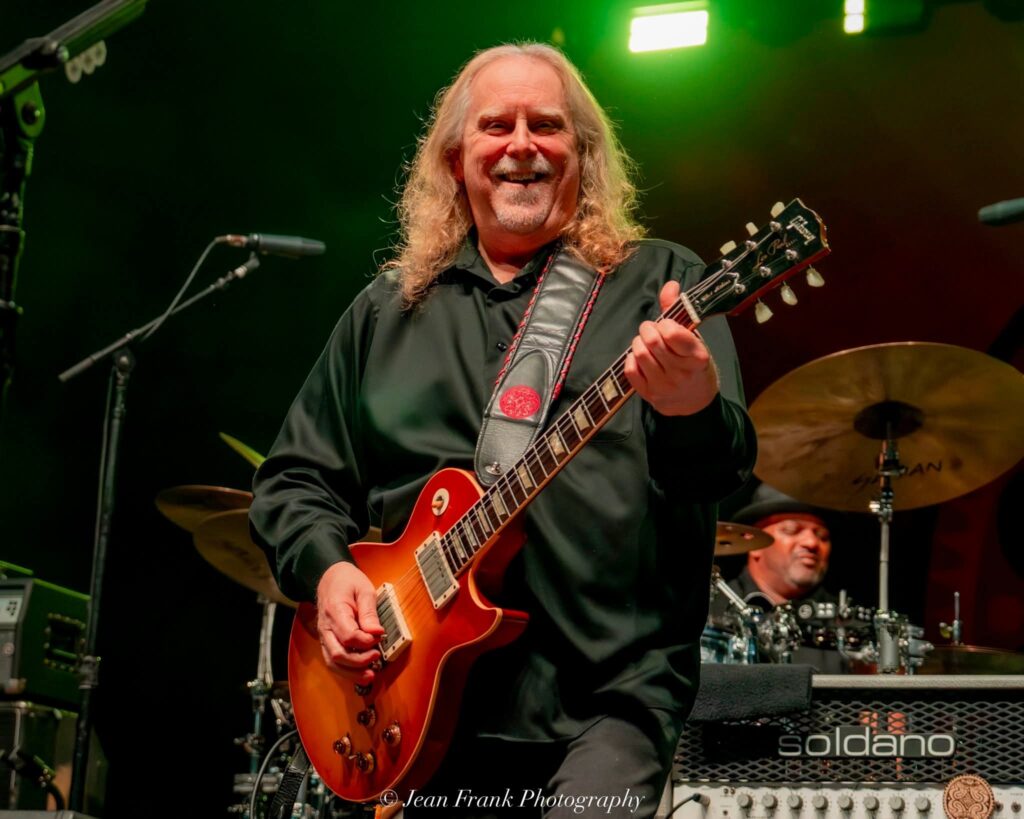
After a fabulous performance by Maggie Rose and her band, Gov’t Mule took the stage and opened with “Going Out West.” The song kicked off with Terrence Higgins’ bass drum and crisp snare work while Kevin Scott laid down a deep groove on his signature Aluminati bass. Vocalist and guitar extraordinaire Warren Haynes entered on slide guitar using one of his familiar Gibson Les Pauls, while producer and multi-instrumentalist Danny Louis added some really cool staccato organ parts.
Scott has a serious arsenal of basses — two Fender Precision basses, a Rickenbacker 4003, a Reverse Firebird bass, along with the Aluminati. Haynes unleashed some unbelievable cosmic slide guitar parts while Scott answered with cool upper-register bass runs. The lyrics, “I’m gonna drive all night, take me some speed, I can’t wait for the sun to shine down on me,” captured that universal urge to just hit the road and escape the grind of everyday life. Louis’ keyboard work on this one brought to mind the late, great Ray Manzarek of The Doors.
“Slackjaw Jezebel” began with Higgins hammering bass drum, snare, and crash cymbal patterns before Scott entered with funky licks on his Reverse Firebird bass. Haynes introduced Scott as an Alabama native from Dothan who recently relocated to Nashville. Haynes switched to his blue Gibson Reverse Firebird and launched into distorted power chords while Louis cranked up his Hohner Clavinet, later adding fantastic Wurlitzer and Hammond B3 parts and a killer keyboard solo. Scott mixed in octave lines and double stops while Haynes delivered a scorching solo. He even altered the lyric to, “I know you’re just a Jezebel with a poisonous tongue — I’ve been to Alabama before.” It remains one of my favorite Gov’t Mule songs.
“Game Face” opened with Higgins driving the groove while Scott played 16th-note bass runs reminiscent of Chris Squire. Haynes layered a flanger effect over an Em7/A7 progression, giving the tune a distinct Aqualung-era Jethro Tull vibe. Haynes then ripped into a fantastic solo filled with octave chords, string bending, pinch harmonics, and lightning-fast runs.
As the band transitioned into “Mountain Jam,” Haynes played wonderful double stops while Higgins locked into a Bernard Purdie-style backbeat. Haynes and Louis traded beautiful harmony lines before Louis launched into a sweet Wurlitzer solo. Haynes followed with an incredible slide solo and familiar Allman Brothers-style harmony passages while Scott answered several guitar licks with his bass.
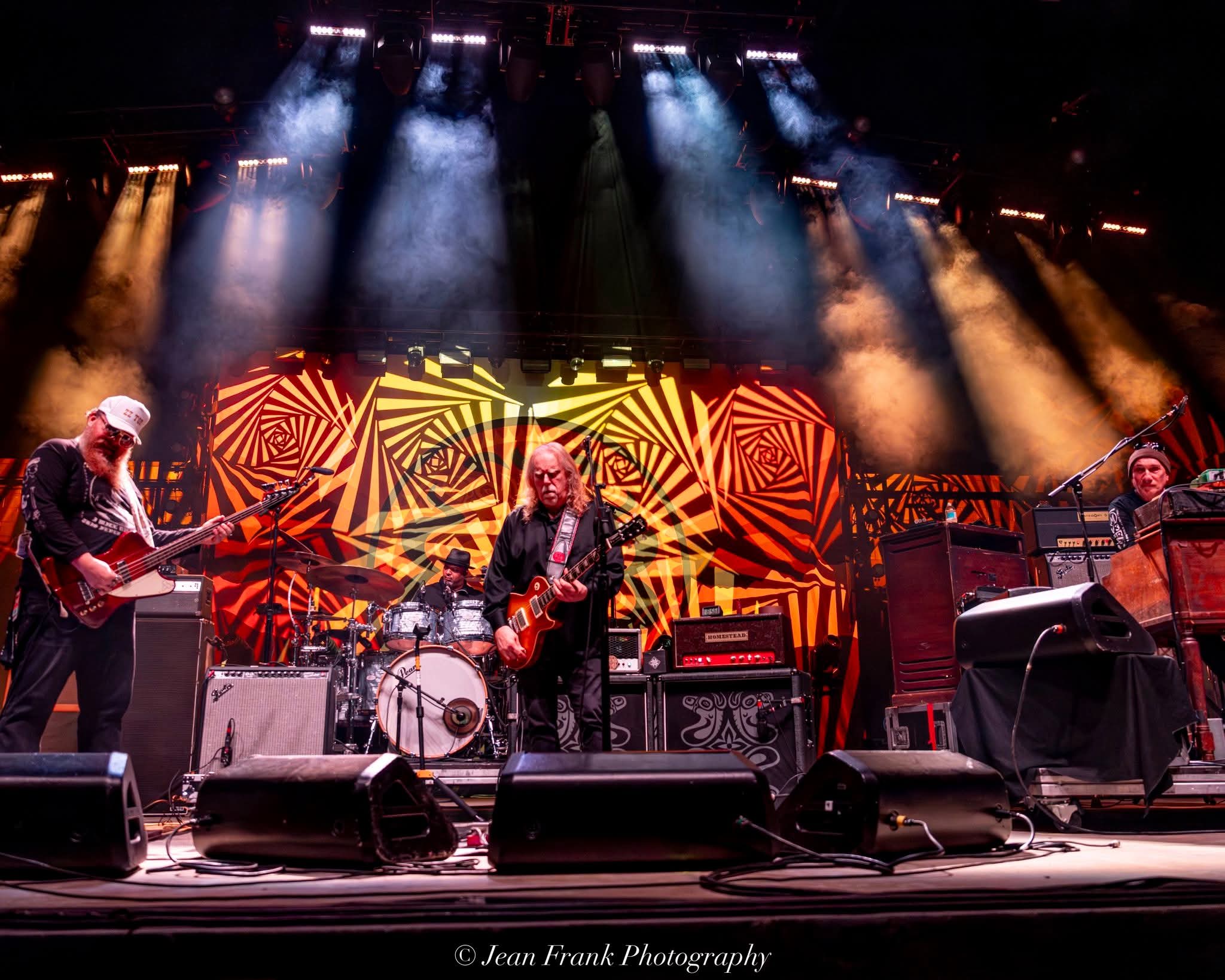
At one point, Haynes slipped into a snippet of “Norwegian Wood” before the drums kicked back in and Scott once again explored the upper register of the bass. His playing during this section reminded me of legendary Lynyrd Skynyrd bassist Leon Wilkeson and Ed King’s incredible work on “Free Bird.” Being a bass player myself, it was a treat to watch Scott in action. I haven’t seen a bassist this versatile — especially on the jazz fusion side — emerge in the last 20 years.
When I texted Scott the following day, he told me some of his influences include saxophonists Greg Osby and Gary Thomas, jazz guitarist Pat Martino, Jaco Pastorius, and John Coltrane.
As the band returned to “Game Face,” Haynes added several more bluesy rock solos before closing the song with heavy feedback-drenched guitar work.
On “Banks Of The Deep End,” Scott switched to a Fender Precision while Louis played fabulous B3 parts that reminded me of Benmont Tench from Tom Petty & The Heartbreakers. The song drifted into reggae territory several times, with Louis adding a tasteful Wurlitzer solo before Haynes answered with another strong guitar lead.
“From A Whisper To A Scream” featured both Haynes and Louis using wah-wah effects, with Louis delivering some exceptional B3 work underneath another fabulous Haynes slide solo.
Haynes leaned into jazzy chord voicings and spectacular octave work on “Devil Likes It Slow,” while Scott unleashed unbelievable walking basslines. Louis answered with Oscar Peterson-style Wurlitzer chords once the song shifted into cut time. I really love these fast, jazzy-style tunes. Haynes moved effortlessly between interesting guitar phrases, bluesy textures, and cosmic slide work before the band slammed back into cut time again. Songs like this prove Gov’t Mule can’t simply be pigeonholed as a Southern rock band.
Scott played Precision bass on “Hunger Strike” while Haynes introduced a chord progression reminiscent of Elvis Presley’s “Suspicious Minds” before the band segued beautifully into Traffic’s “Dear Mr. Fantasy.” That song has always been a favorite of mine because my friend David Hood toured with Traffic in the early ’70s. There’s a fantastic YouTube performance from Santa Monica Civic Center in 1972 featuring Hood on Fender Jazz bass. I think David would be proud of Scott’s playing here.
Haynes delivered a brilliant solo that sounded like he was using a talk box — popularized by Peter Frampton on Frampton Comes Alive! — before the band launched back into “Hunger Strike.”
The bass absolutely thundered on “Shake Your Way Out” while Louis switched over to a white Gibson SG. Haynes’ guitar work strongly recalled Billy Gibbons, especially through his use of pinch harmonics and natural harmonics. The tune sounded like something ZZ Top could have recorded. Haynes’ closing solo was outstanding.
At the end of the song, Haynes joked, “You know things are goin’ crazy in Alabama — we broke a string and a snare drum at the same time.”
Louis wielded a Stratocaster on “Captured.” It’s rare to see a keyboard player who is equally brilliant on Wurlitzer and Hammond B3 while also being such a capable guitarist. Jay Gonzalez of Drive-By Truckers comes to mind. The song carried a laid-back smooth jazz vibe, almost like “Comfortably Numb.” Haynes added wonderful Cornell Dupree-style R&B guitar work alongside strong harmony vocals before closing with another bluesy solo.
“Time To Confess” featured a reggae groove in the spirit of Bob Marley and Jimmy Cliff. Louis played funky clavinet parts before the tune exploded into a Jimi Hendrix Experience-style jam and eventually returned to the reggae groove. The clavinet remains one of my favorite instruments — Stevie Wonder used it masterfully, as did Christine McVie on Fleetwood Mac’s “You Make Loving Fun.”
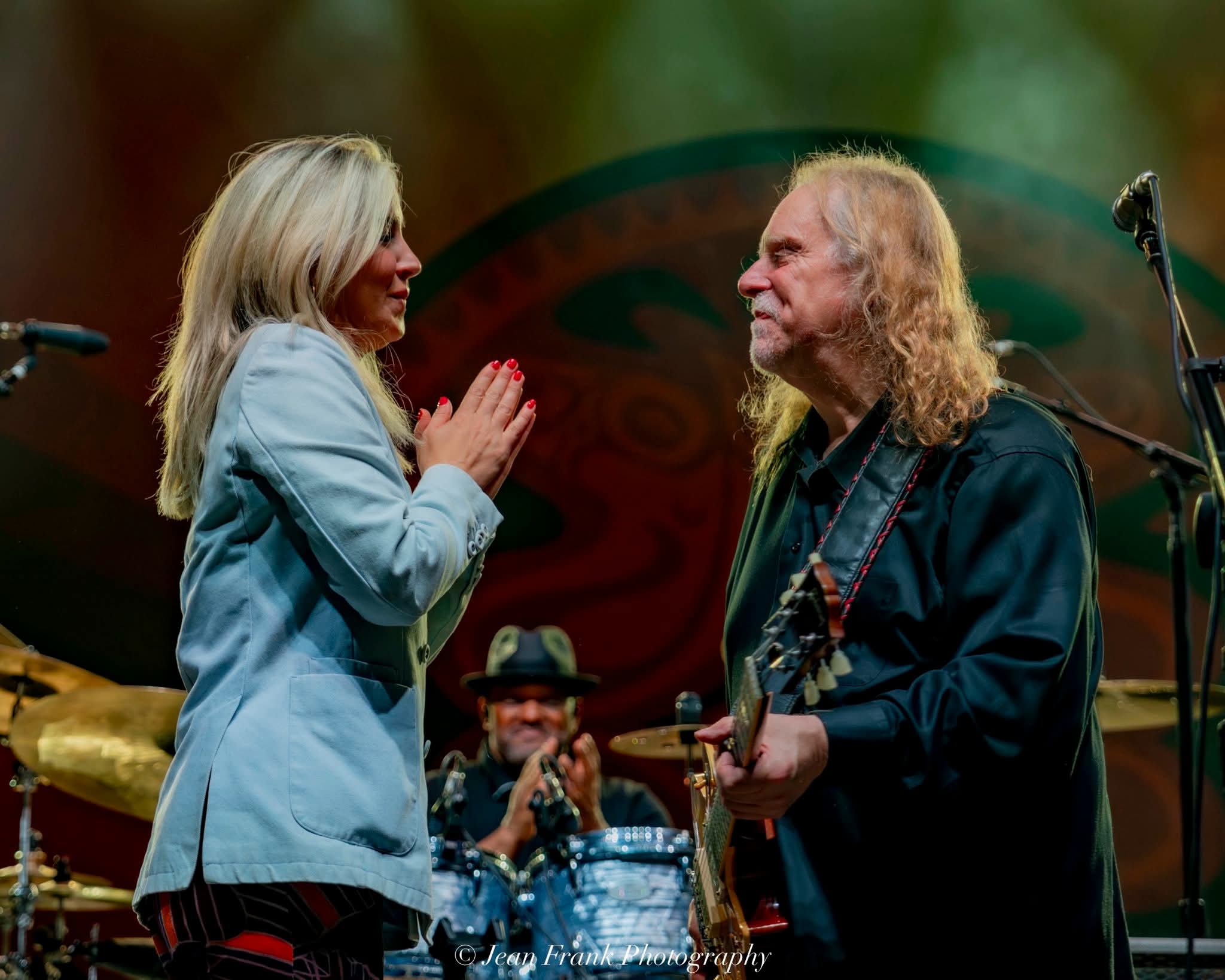
Maggie Rose, guitarist MP Gannon, and keyboardist Cav Mims joined the band for “Turn On Your Lovelight.” Mims delivered soulful B3 work while Haynes unleashed guitar runs reminiscent of Dickey Betts. Haynes sang the first verse in a call-and-response with Rose before they reversed roles on the second verse. I could really hear the Aretha Franklin influence in Rose’s vocals. Not many singers can pull that off. She’s an incredibly soulful vocalist, and it’s no surprise she recorded two albums in Muscle Shoals with Alabama Shakes member Ben Tanner producing.
On “Thorazine Shuffle,” Higgins created a laid-back groove with added percussion while Scott’s fingerstyle attack on his Rickenbacker generated a tone similar to slap-and-pop bass. The song felt like a cross between War and ZZ Top with flashes of Sugarloaf keyboard textures thrown in. Haynes once again leaned heavily into flanger effects, double stops, string bending, and overdriven blues-rock leads. Louis’ B3 work gave the whole thing a Santana-like flavor.
For the encore, Haynes and the band closed with the longtime fan favorite “Soulshine,” one of the first songs Haynes ever wrote. The tune was originally recorded by legendary blues singer Larry McCray on his 1993 album Delta Hurricane before The Allman Brothers Band later made it famous.
Louis’ R&B and gospel-flavored Wurlitzer intro brought to mind Spooner Oldham and Ray Charles. A few days later, Louis told me, “I never know what that intro is gonna be, or even if I’m gonna do it. It’s always unscripted and a bit of a surprise.”
The song’s uplifting message hit perfectly for the moment: “Just like my daddy used to say — Soulshine, it’s better than sunshine, damn sure better than the rain.” Alongside more stellar B3 work from Louis, Haynes delivered beautiful string bending, country-flavored double stops, blues solos, and even slipped in a few Dickey Betts-inspired “Jessica” licks near the end.
If I had to sum up the concert in one sentence, I’d describe it as four world-class musicians getting together and doing what they do best. It’s rare to witness this caliber of musicianship in Northeast Alabama. Sand Mountain Amphitheater is doing a wonderful job bringing artists of this level to the area.
Having the opportunity to see both Maggie Rose and Gov’t Mule on such a beautiful night inside a spacious, state-of-the-art amphitheater made this one of those shows I won’t soon forget. I truly hope to see them both again soon.