Article Contributed by Sam A. Marshall
Published on 2026-07-24
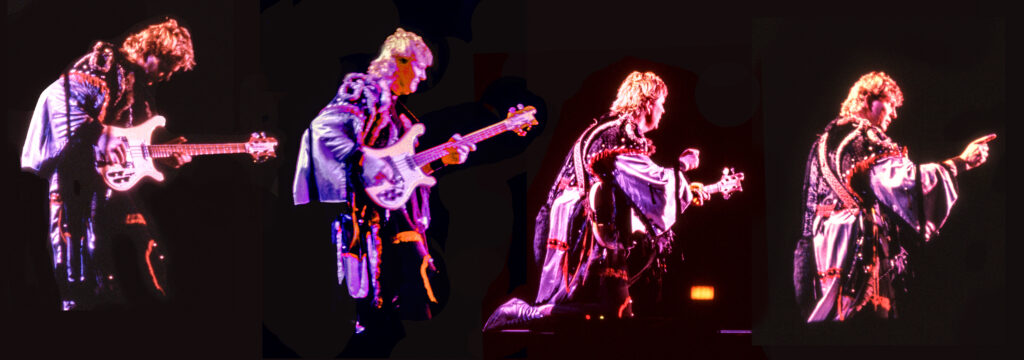
When the news broke in June of 2015 that Chris Squire – the legendary bass guitarist and co-founding member of the British progressive-rock group Yes – had passed away, I knew by instinct exactly what to do:
I reached for my copy of Squire’s 1975 solo album, Fish Out Of Water.
At that moment I queued up the song “Silently Falling”, cranked the volume and then let the heroic, multi-layered, bass-propelled orchestral composition wash over me. It was my own way of remembering the brilliant career of this progressive rock visionary, all in one densely-packed 11-minute epic. Then I turned off my sound system and allowed the audio thrum and shimmer to slowly fade. And I was good for the rest of the day.
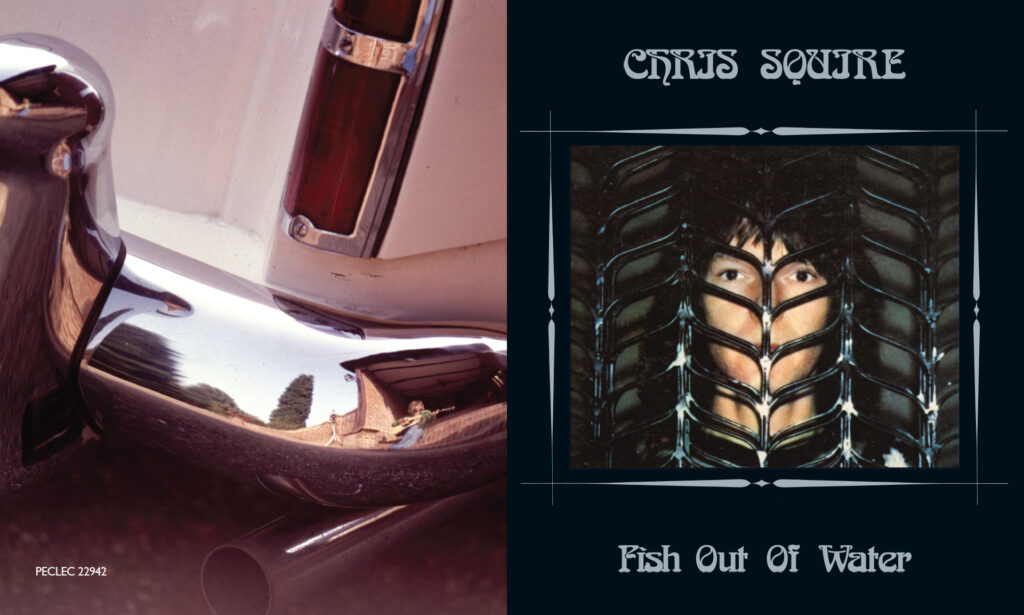
And even though “Silently Falling” is actually the third track on the prolific Squire’s only truly solo album in a long and storied progressive rock career, that song still may be the best one to start with on the new special 50th Anniversary reissue of Fish Out Of Water, on Esoteric Recordings. (The new re-issue recently became available on July 10, 2026, via Esoteric.)
Every bit as strong as the original 1975 mix by Paschal Byrne and then some, the new version of “Falling” – which I had only recently heard for the first time and have been fairly geeking out over since then – has the same irresistible oceanic sway. With its deep, driving bass undertow, it takes you far out to sea, drowns you and brings you back the same day. In this new version the bass’s timbre makes you truly feel the music as if you are the bass line, not merely hearing the notes. And the song becomes a world unto itself, which may help in part to explain my personal obsession with it.
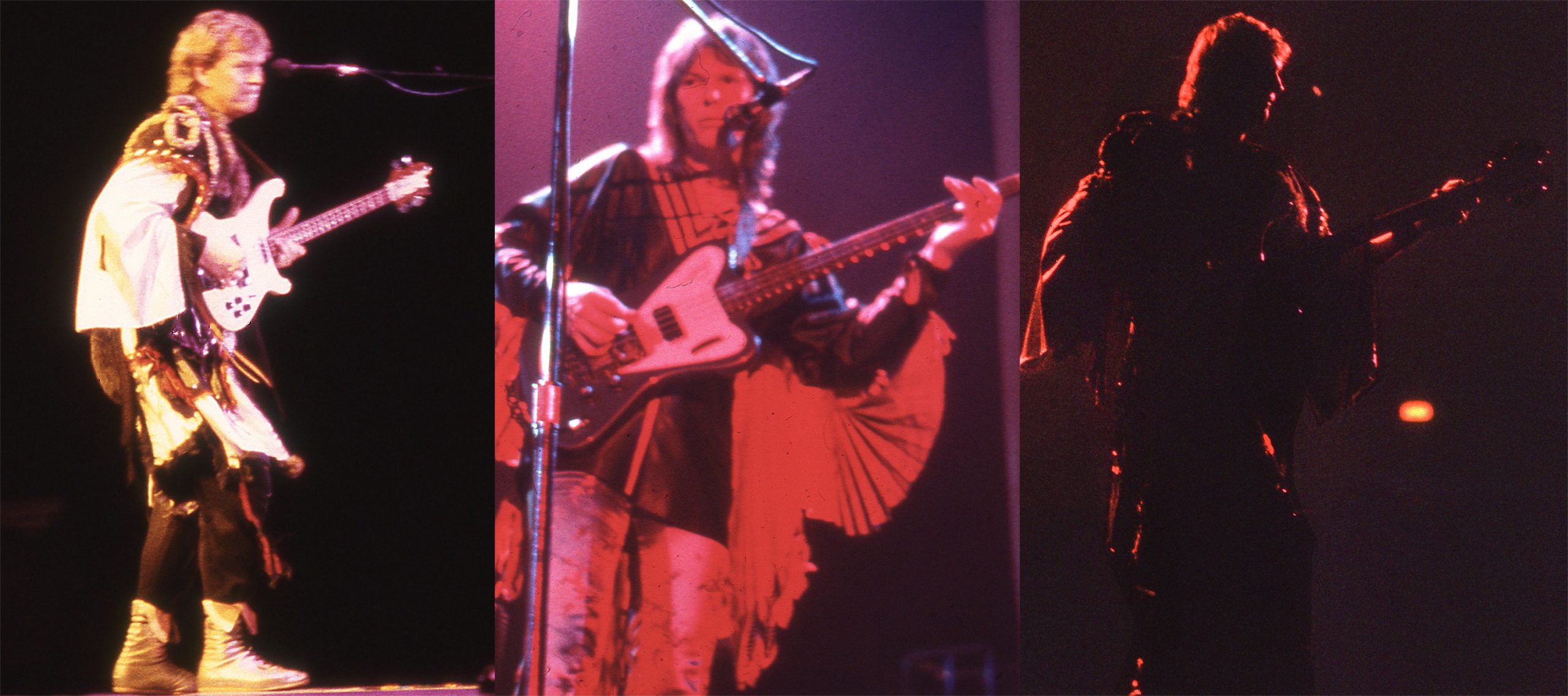
Since Water was such an idiosyncratic declaration of a personal artistic concept (Or conceit?) by the bassist better known to bandmates and longtime Yes fans as The Fish, it’s hard to imagine how Squire could have made the album any Fishier unless he were still here to do it himself. But Esoteric Recordings and Tayler have found a few ways. And I think they have done the late musician darned proud.
It’s worth mentioning that Esoteric has done a splendid job of putting together this special reissue of this classic 1975 Squire album, in connection with the album’s slightly-belated 50th Anniversary in 2025. (The original LP was released in November 1975, while Yes members had been spending time on solo projects in the down period following their 1974 Relayer tour.)
A number of different sets are available, from a single vinyl or CD set to more hybrid packages. Yet, except for the two-CD and the deluxe BluRay DVD versions with multi-track mixes, there’s honestly not a great deal more to the standard half-speed-mastered vinyl or single-CD versions than the original offering. All of the five original album tracks – in the same order – plus one bonus, three-minute single edit of “Falling”, and that’s it. (But, with an album this confident and commanding, who’d need anything more, right?)
Of course, the real paydirt for Squire fans far more serious than I (those who have multi-channel audio systems) is that the deluxe package does include those multi-channel-versions in both 5.1 and Dolby Atmos formats, plus a small number of bonus audio and video materials from the era, and a brief-but-jam-packed documentary booklet. Among these are filmed performances of two songs – “Hold Out Your Hand” and “You By My Side” – with classical musicians from the London Symphony Orchestra and the band fully miming the songs to the studio recordings in a TV studio. So this staging – first created as a video promotional film EP of sorts in 1975 for the album– is the only surviving visual document of the grand assembly of musicians on the opening portion of the album.
Even though the ship might tilt heavily toward cliché to say this, the more open stereo field and slightly “wetter” soundscape – thanks to the new stereo remix by acclaimed sound engineer/artist Steven W. Tayler and his slightly more reverb-flavored touch – has made the album sound much more Fishy than the ‘drier’ and rather more sterile-sounding original release. (In 2018 there had also been a Cherry Red Records’ reissue with a then-freshened stereo mix and a 5.1 remix by fellow prog musician and engineer Jakko Jakszyk. In 2020, there was a single-disc BluRay edition also released. But I’ve not heard any of these versions.)
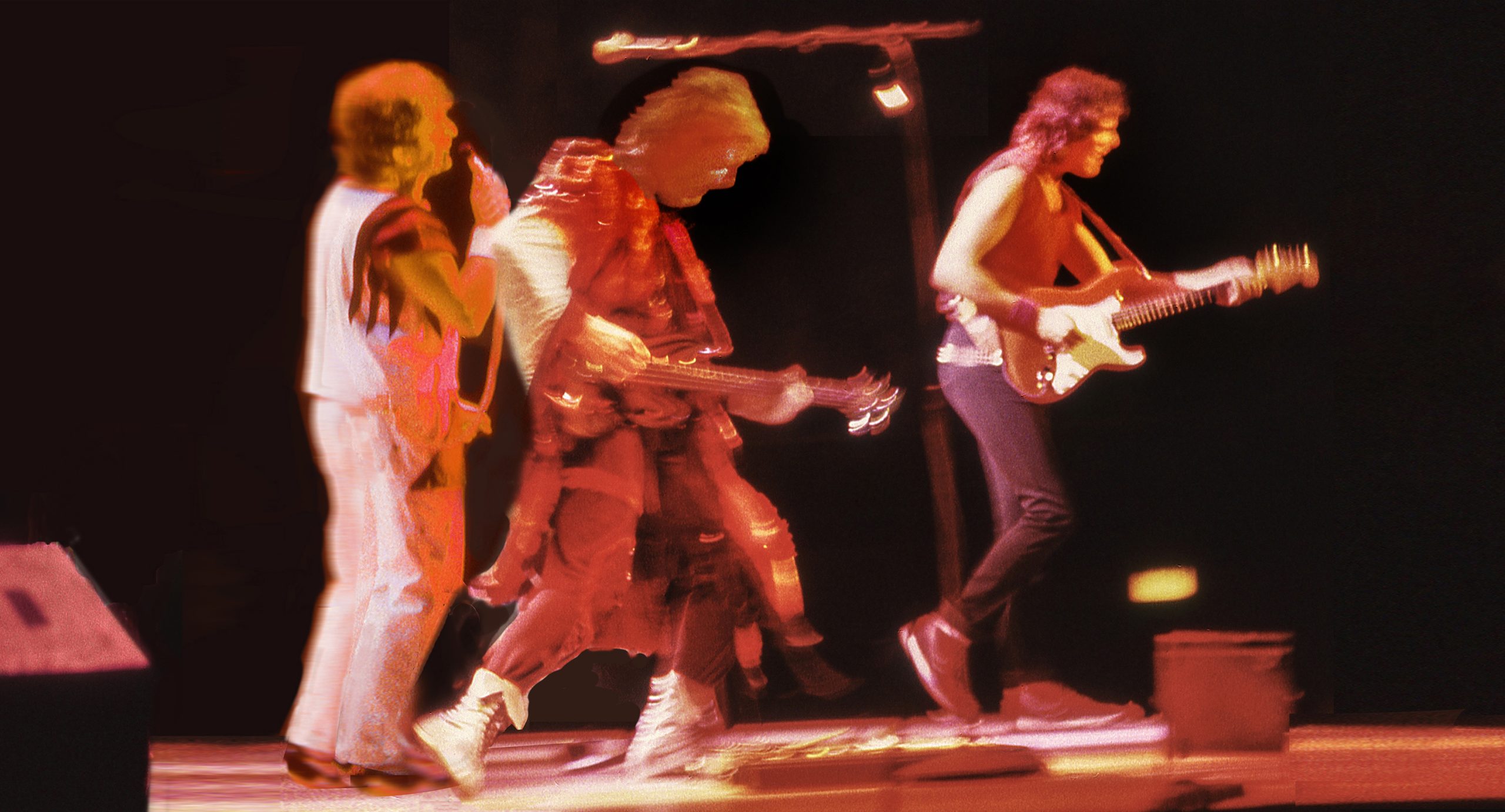
It’s worth noting that Jakszyk’s 5.1 version is also included once again in the latest deluxe BluRay-disc version of this reissue. But, more importantly, a bonus attraction in the new BluRay is the shiny new Dolby Atmos mix by Tayler. So you can listen to one or the other multi-channel mixes, or maybe even both to decide which version you prefer. But, honestly, how many folks have the luxury of both types of devices?
For the sake of comparison – before listening to the newest two-channel stereo mix of Water – I dialed up a digital capture of my original 1975 vinyl copy of the album, complete with occasional clicks and pops, hissy sibilance from track wear and other artifacts from the passage of time. In fact, that revisit was virtually identical to vinyl, except frozen in time, because that’s where the recording came from. (Umm, I traded away my vinyl copy more than 20 years when I began digitizing my LP collection, and I have not heard the previous 2018 Cherry Red Records package or any other CD reissues.)
After a short break from this archival spin I tracked the new version of the album – from start to finish – from a special digital link provided to gratefulweb.com by Esoteric Recordings. I was attentive for anything that would strike me as substantially different. And there was actually a lot, right from the start, and I took some notes!
Starting with the opener - “Hold Out Your Hand” – Squire makes his mission statement, clearly and crisply, with swelling pipe organ by childhood friend and non-Yes associate Barry Rose, plus former Yes’ rhythm section mate Bill Bruford on the song’s mathematically crisp percussion backbone. And there is a triumphant-sounding orchestral score keeping pace throughout. For his own part, Squire makes his bass the lead instrument right from the get-go – um, there is no electric six-string guitar on Water, and Squire plays only 12-string in a couple of places – and steers the song’s melody with his lead vocals and assertive Rickenbacker bass line.
Of course, the track features other instrumental elements, including that magisterial orchestral arrangement and electric piano fills by Andrew Pryce Jackman, who also was reported to have contributed generously to the writing but who deferred any co-songwriting credits. The sonic re-balancing, however, makes a strong case for moving the rhythm section and vocals forward in the mix while dialing the church organ – recorded originally in 1974 on the in-house pipe organ of London’s St. Paul Cathedral – ever so slightly back into the layers. Happily, the bass and vocals are right where they need to be – nicely in front and on top, not with bass and organ undertones crowding them out. Because, y’know, it’s Mr. Squire’s album and he would still have to be the main attraction! At least, that’s how it seemed to come out in the new stereo mix.
Squire’s lead bass line – which he would often play brightly with round-wrapped RotoSound strings like his Who hero John Entwistle, high on the bass neck, and kicked up high on the treble pick-up – seems to zing more in this version, perhaps with a bit more reverb or flange applied. (He is said to have used a mix of basses on other tracks, such as a Fender Telecaster bass, sometimes with an even more trebly and growling sound.) My own sense is that the keening organ chords and flourishes – so dominant in the original recording and reminiscent of the Gothic-flavored style of acclaimed prog keyboardist Keith Emerson – seem not to be as satisfying with the discernible organ dial-down.
Understandably, though, to make room in the sound field, some frequencies, unfortunately, would just have to be demoted. It was just the organ’s unlucky day. But you may find – depending on your stereo system, EQ settings and volume – that you can personally compensate for some of that difference. It still sounds amazing at a kickin’ volume, for sure, again with that sense perception of swimming among the instruments in a spatial way rather than just hearing the notes. I can only imagine what the multi-track versions must sound like.
In this instance this shift of the organ swells naturally allows the voice and lead bass to shine, as well they should on any Squire-related project. It also helps to bathe the listener’s ears with a more detailed swirl of mixed keyboard sounds and multi-tracked voices in this pulsing opening track. For example, Jackman’s percussive electric piano interplay tightly follows the rhythm section, keeping the track snapping along. The overall effect on this track that urges the listener to seize the day and steer his or her Ship of Life wherever they want to go is one of uplift and positivity. But I’d be lying if I were to say that the dialed-back church organ delivered that message more effectively than the joyously churchy fills of the original version.

What is quite a sweep of the original Side 1 (still true, I imagine, if you seek out the new half-speed mastered vinyl edition) consists of three songs – the already cited “Hold Out” plus “You By My Side” and “Silently Falling”. For sure, the three songs feel much like a three-piece suite. As with the original engineering, “Hold Out” reaches a furious orchestral peak and then blends seamlessly into the swaggeringly Beatlesque love song “You By My Side”. This gapless, follow-on track begins with Squire’s vocal lead announcing the new song on the ‘1’ of the very first measure. There is almost no gap between that track and “Silently Falling”, but there is a definite palate cleansing moment before “Falling” fully unfolds.
The openness of the new mix makes the previous densely-packed arrangement of “You By My Side” sound much airier and more lilting, befitting the sweetness of this romantic waltz. Quite honestly, in the past I had had a tendency to skip over this track when playing the vinyl, sometimes cutting right to the 11-minute-long “Falling” as the main attraction.
“You By My Side” had always seemed overly schmaltzy to me, full of thrumming cellos and double basses, flutes, tubular bells and more. But the sonic improvements – which take away much of the shrillness of Squire’s at-times piercing lead vocal and stacked harmonies on this track – make the seamless flow a welcome invitation to fall in love along with Squire on this romantic declaration of undying love. The performance is the same as before, but now it feels entirely more sincere and enchanting. Funny how a good mix can change your perceptions, innit?
So – no longer just a syrupy interlude or a cloying sonic challenge to listen to – this track now seems to have been rounded nicely and made into a completely unguilty pleasure. Luckily for us, “You By My Side” seems to have settled nicely into the whole experience of hearing the first three songs as a story arc, rather than just being something to tolerate as you race to the more thrilling parts that lie just ahead on the album. But, subjectively speaking, I also wonder: Does some of this forgiveness for such a treacly song have less to do with obvious sonic improvements and more to do with just being able to revel again in this full work now that the creator is no longer with us?
Of course, I’ve already said much about “Silently Falling” as my personal tidal pull that has always drawn me most into the album. I should add that when it does arrive in the ‘Side 1’ sequence, it begins after an infinitesimal pause with the same exquisitely beautiful flute/woodwinds counterpoint and a lyrical bass melody as before. It feels like the first breathy winds of Spring, before a daunting thunderstorm moves in. Soon, the main song arrives with angelic lead vocals, the gathering storm of orchestral layers and the slow ascension of the verse and melody against the rhythm section. And then. . .Bill Bruford – in a move that points toward the sound of his next ensemble jazz-rock fusion project, U.K. – launches into full drive mode on the drums. That’s when the undertow begins.
Naturally, all of this was nearly as obvious in the original recording, but the clarity and spatial separation of the individual layers seemingly elevates it into something more transformative. In particular, Squire had employed a lower octave and deeper bass tones in the early passages of this piece, and these tones sound much ‘rounder’ and warmer, with the finger-on-the-string vibrato coming through more beautifully in the opening theme. Then, as the song progresses through its multiple sections, his tone becomes brighter and more percussive – still with deeply anchored bass frequencies – that holds its own against Bruford’s intricate but propulsive drumming. A special guest on this track – one-time Yes keyboardist of the Relayer era, Patrick Moraz – is also showcased to dramatic effect on lead organ and bass synthesizer.
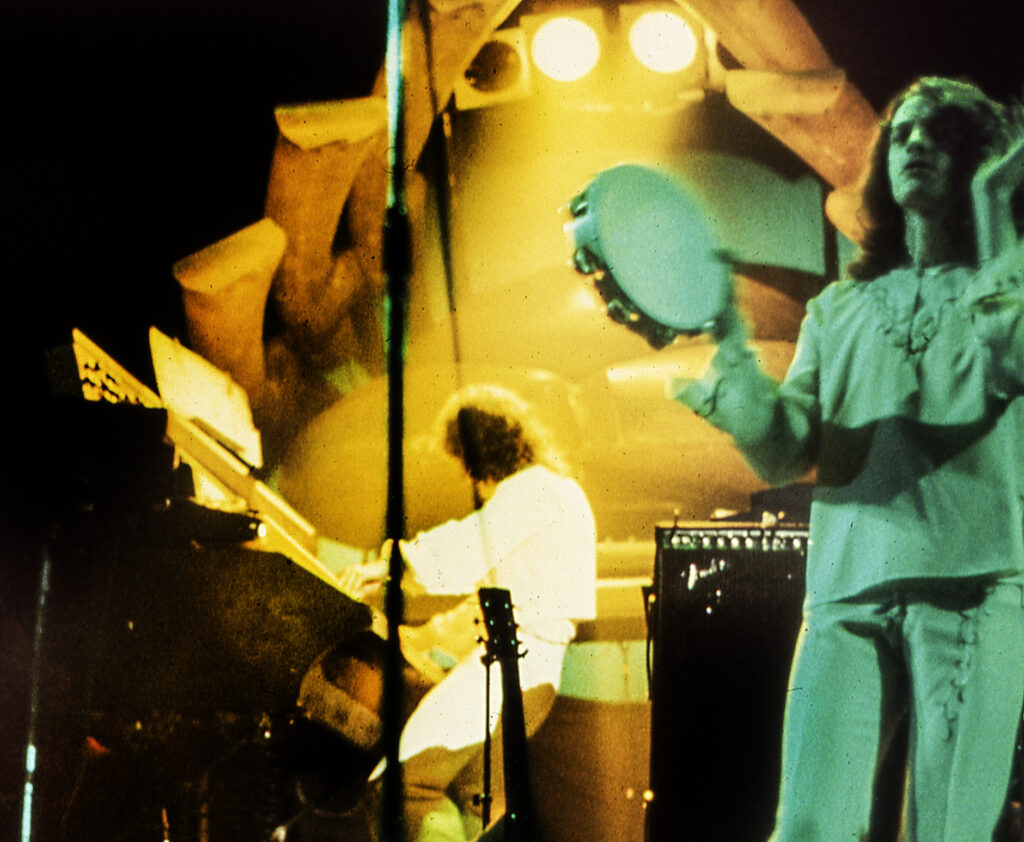
With such an epic track, being able to submerge more fully in the sound and feel as if you and the musicians are in the same room definitely makes all the difference. When the slow, sweet, deliberate opening with the flute and woodwinds of King Crimson alumnus Mel Collins gives way to the wash of the full band and orchestra hitting full stride, it feels like a submarine going into full dive, past the point of no return. From my POV, the audio environment is as important as the composition and performance in letting go of the proverbial rope and just letting the tidal flow take you under.
There’s a different flavor to the second half (Side 2) of Water that – to my ears and mind – is a result of the time in which it was recorded, and this is a more intentional break from both the neo-classical drama and dynamics of large chunks of ‘Side 1’. As with all that precedes it, there are not many blues sounds on this recording, fitting enough given Squire’s own background as a church choir vocalist in his school years. But “Lucky Seven” – with its distinctively irregular 7/4 time signature slyly referenced in the title – injects an earthier, jazz-fusion groove before things go entirely off the conceptual deep end with the final track on the album.
Of course the rhythm section of Squire and his one-time partner-in-crime from Yes – Bill Bruford – rules on “Lucky Seven”. (Bruford left Yes in 1972 to join Robert Fripp in King Crimson for the next two years. So this was a happy reunion for the two former bandmates.) Yet this is perhaps the best overall ensemble piece – rounded out with punchy electric piano, orchestral accompaniment and alto saxophone – that still feels economical in comparison to the album’s other weightier tracks. For me it has always been the irregular-but-looping nature of the 7/4 cycle that keeps sinking the song’s claws into my brain. (Some sources have reported it as 7/8, but – as a musician friend of mine keenly observed – that depends on which instrument you follow in the rhythm.)
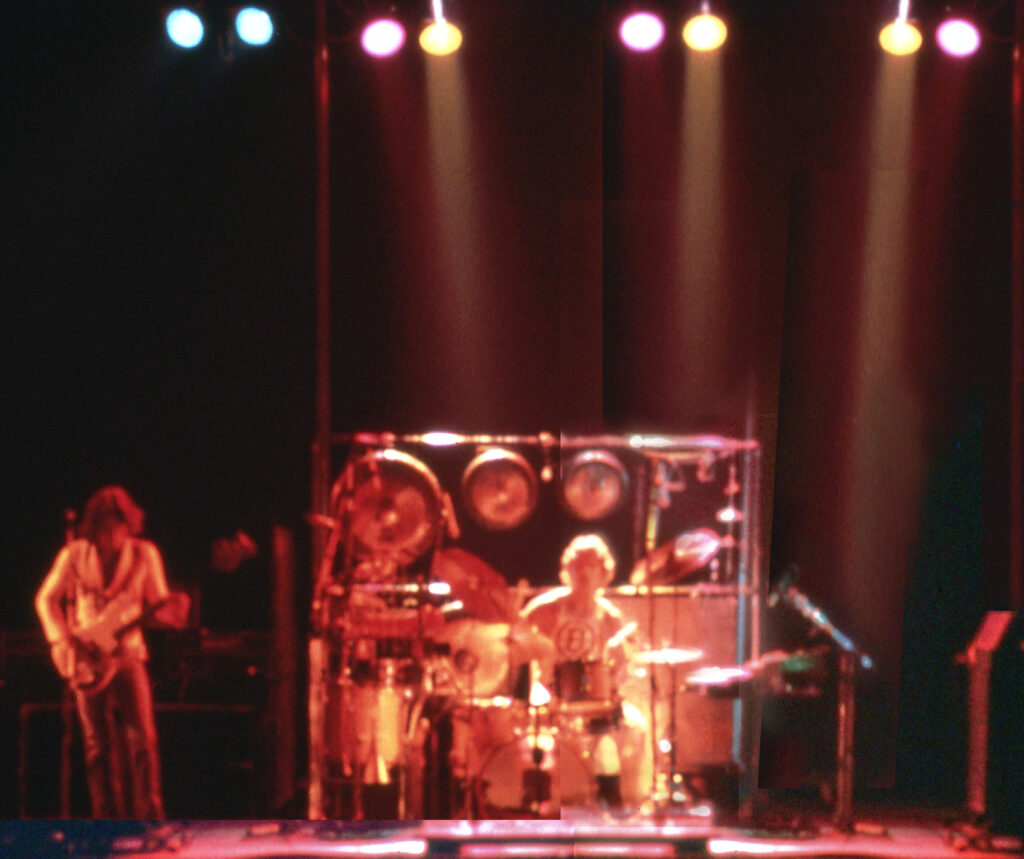
I’ve always loved this song, and I know some folks who find its asymmetrical rhythm annoying or distracting. But, for me at least, the improved sonic environment seems to be the key ingredient that helps to lift the curtain and allows the listener to hear the musical conversation going on among the band members – especially the one under the surface between the two rhythm section guys.
Technically speaking, as my pro musician friend pointed out, the time signature is deceptively more complex. Squire lays down a moderate quarter-note count while Bruford adds dynamic tension with eighth-note counterpoint, and the seven-count between the two parts gives it an irresistible, angular kick. Whether you think that’s an all-win for the players, or some kind of irreconcilable musical Gordian Knot is up to you, dear listener, to decide for yourself.
In addition to the playfully competitive interplay here between the bassist and drummer, there is wonderful, chime-y electric piano arpeggios adding to the foundational groove. Tonally and harmonically, this track feels strangely from another time, not bluesy like many R&B-leaning rock artists of the time – say, Steely Dan – but jazzy in a more post-modern, mathematical way. In other words, seemingly ahead of its time. On the other hand, there’s also the sassy call-and-response between skittering alto saxophone lines and almost-disco-style string arrangements which seem to place it back more in its proper time zone in 1975.
This disorienting post-modern, non-classical attitude on “Seven” is clearly down to the fact that even in his early career Bruford was an unlikely rock drummer, instead using jazz techniques of inverting bass drum and snare parts. That’s something that Squire himself observed more than once about Bruford’s unique approach. As the bassist has explained in an interview or two, he and the drummer had in fact co-evolved their playing styles, creating a unique relationship not easily reproduced with different players. Perhaps the title“Lucky Seven” is even a sly reference to their luck in managing to always find their way back to ‘1’.
This era-shifting – more obvious to my ears now 50 years later – is deliciously enhanced by the clearer spatial arrangement within the track. In fact, in the new mix, it's surprising to hear nuances like the orchestral strings defiantly mocking Squire’s lead voice from the opposite channel and other previously less obvious details like his raking of the strings and plucking out false harmonics in a brief diminuendo passage that did not seem as obvious in the earlier recording. (The electric piano frequencies previously masked these details, but the piano was dialed back in the remix.) So, while those details were truly present before – but only if you listened for them on purpose, they drew far less attention to themselves in that old mix and you would have to go back and prise them out. As the song’s lyrics say, “Nothing in sight, nothing in mind.” No shortage of irony on this track.
Far funkier than anything that Yes had done up to that point, this deeply-infectious groove workout comes closest to being a song that could have become a crossover radio hit if there had been more promotional push behind it. (A single edit was released in 1975, but, curiously enough, that version is not included in any of these packages.) Thanks to Bruford’s irregular but irresistible counterpoint to Squire’s bass, this track quickly became addictive for me a long time ago. But, now, hearing all the new details makes it sound like a whole new piece of music from a crack ensemble, rather than just another rote return to a time-worn den of antiquity.

Before you know it and can even catch your breath, the album comes to a resounding end with the orchestral tour de force titled “Safe (Canon Song)”. This is the grandest of arrangements, in which Squire and Jackman once again built the layers of backing band and orchestra to support the bass as lead instrument. Although Squire does sing prominently on the track, it is his bass that ultimately becomes his true lead voice, clanking in extended, staccato passages against the orchestral string and horn sections. Not simply happy to be a bass line underlying the song, Squire’s bass becomes a squawking and strutting character, a mechanical man you can almost picture in your mind.
Whereas Yes largely achieved their orchestral textures with multiple keyboards and Mellotron in particular, Squire employed an actual orchestra throughout the album. So by the time you get to “Safe”, you realize in a profound way that you have been listening to real, flesh-and-blood musicians all the way through, not just a band simulating the orchestral textures with synthetic instruments like Mellotrons and mini-Moogs. (Some early electronica was present, but it was mostly tucked in rather than running wild.) And the power and beauty of the strings and horns – now given loving depth and clarity in the new stereo mix – sound absolutely spectacular on “Safe”. In spite of the fact that the sprawling composition seems to go on well beyond what you think is its natural end point, here the dialogue between the bass guitar and the orchestra keeps you on the edge of your seat. And when the piece finally ends, you still feel as if you could ride that gnarly wave for even a few minutes more.
In fact, the brass section and Squire build up such a thick wall of tension over its 15-minute course that it feels like either the heralding of a unimaginably glorious New Age or a funereal, ceremonial farewell to an unattainable dream. (When Pink Floyd did something similar five years earlier with their brassy, 20-minute orchestral foray, “Atom Heart Mother”, they first imagined it as a theme to a movie Western. Squire must have thought, “Right. . .I can do that cinematic thing even better!”) The clarity of the sound here – full of French horns, trombones and more tubular bells as well as piano, violins, cellos and harp, and, at least in theory, a rock band – is crucial because in the earlier mix the density of the arrangement could easily turn to muck that you only hear as aural bombast rather than as any kind of detailed musical expression.
In the historical rearview mirror, 1975 was clearly a mile marker for many prog rock dinosaurs – including Yes – who must have begun to smell the scent of burning dino flesh in the air as punk rock came raging forth to torch the musical establishment in the mid-1970s. Yes, the air was changing then, the music world was getting hot and crowded, and prog was no longer quite as cool. Was Squire in fact eulogizing the Death of Progressive Rock in a tricked-out orchestral tribute? There is hard evidence for that here, if you listen closely!
Arguably, Squire could be seen just as easily as emblematic of some of the worst excesses in the prog genre, whether everyone called it prog then or not. For my part – early-adopting Yes fan that I had been – I had detested what Yes had evolved into during their double-album Tales from Topographic Oceans era, which only preceded Fish Out Of Water by two years. Yet, Water – with its adventurous sense of elaborate composition and band/orchestra interplay, plus Squire’s idiosyncratic style of bass playing – pulled me back into his singular musical world even as my own personal tastes were rapidly changing.
I think hearing this work all so clearly now – 50 years after the fact – shows that Squire had this project burning in him and felt compelled to get it all down while there was still a measurable audience for it. Obviously, it was never going to be a concept that could go on the road and play to 50 cities as his night job in Yes would often do, yet it was most worthy of being preserved for all time.
As it stands now, many serious Yes and Squire fans have already acquired some previous remixed and re-issued form of Fish Out Of Water, and may be yawning right about now, saying, “Ho humsky. . .Just what I need – another reissue.” And maybe they are justifiably satisfied with the versions they have acquired, so there would be nothing more (they think) for them here.
For a less serious but still attentive Squire fan like me who has never picked up any other re-releases of Water since I bought my vinyl copy back in the day, I am delighted on so many levels and have been enjoying getting totally lost on auto-replay with the new stereo version. It has given me many insights into the man’s artistic motivations, and since he never recorded another purely solo album like this it feels as if he understood this was his one chance to make a true masterpiece.
In the end, a lot of the formats that are accessible to you – or what you want to spend money on – is necessarily intertwined with your personal commitment to chasing and achieving audiophile perfection. But, hey, if that’s your jam, this special expanded release will have you covered. Yes, for a nominal service charge, you could reach Nirvana by early next week. All I ask is that you send me a postcard here at Grateful Web when you get there – I wish I could join you for a dive in the multi-channel multiverse right now, and I’ll want to know all about it.
Someday, when the water is just right, perhaps I finally will “go multi” myself. If you have any doubts, let me just add this: Don’t hold back. Go for it, and you will be handsomely rewarded for letting yourself go under with any version of this distilled Madness of King Fish. It’s a hell of a good swim.
To Purchase:
https://www.cherryred.co.uk/chris-squire-fish-out-of-water-the-50th-anniversary-remix-edition-two-disc-edition
https://www.cherryred.co.uk/chris-squire-fish-out-of-water-the-50th-anniversary-remix-edition-half-speed-master-vinyl-edition