Article Contributed by Dan Ward
Published on 2026-09-14
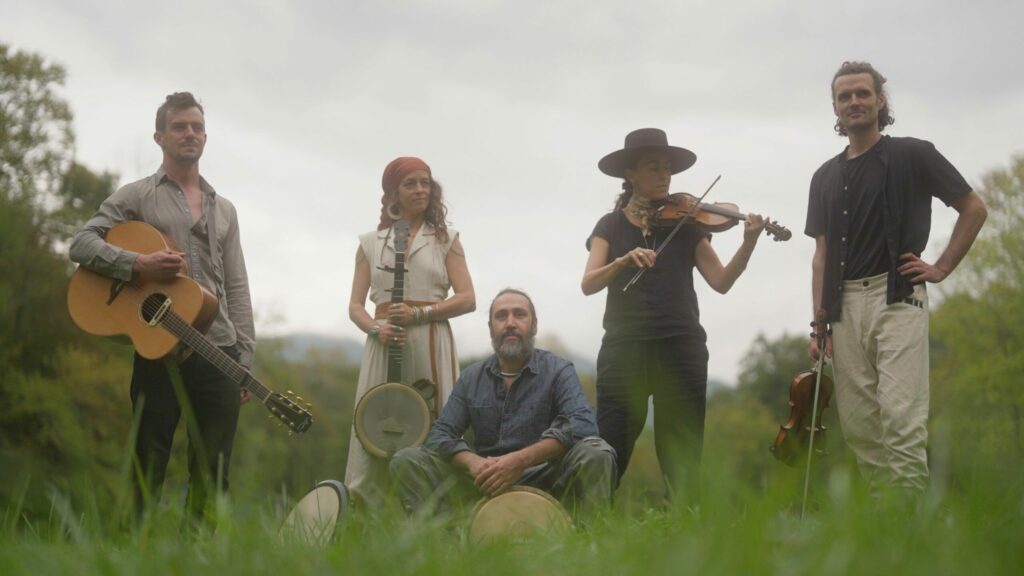
Rising Appalachia has been making music together literally since childhood. Sisters Leah Song and Chloe Smith grew up in a home where art wasn’t a hobby — it was the air they breathed. Their father sculpted, their mother fiddled, and the girls absorbed it all. Now, ten albums in, the duo releases Trade My Troubles on October 2, a project enriched by guest appearances from Aoife O’Donovan, Ayla Nereo, Bonnie Paine, and Brittany Haas.
The album opens with a stunner: the traditional Irish reel “What Will We Do When We Have No Money.” Rising Appalachia begins it as a slow, mournful dirge before snapping into a bright, dancing reel. It’s both classic and unmistakably theirs. The vocal phrasing captures the tension at the heart of folk tradition — hardship in the first strain, answered by resilience and optimism in the second. It’s a perfect thesis statement for the album: sorrow acknowledged, spirit undefeated.
“In Love with the Quiet” flows like a mountain stream — cool, calming, and beautifully unhurried. The sisters’ harmonies wrap around the listener, creating a lilting, meditative space where imagery and reality blur. It’s a song about music, silence, and the places both can take us.

Then comes “Cageless,” a funky detour driven by a steady bass-and-drum groove. Ratchet clicks, trumpet bursts, and violin lines weave through the mix, creating a toe-tapping, soulful jam that stands out in the best way.
“Life Is a Poem” shifts again, built on a simple two-chord progression that drills into your ears and stays there. Percussive jingles and floating strings lift the lyrics, delivering a message of hope through minimal instrumentation. Natural birdsong opens “Trade My Troubles,” a companion piece that mirrors the previous track’s gentle philosophy: troubles are temporary, love is the constant. The imagery is soft, soothing, and quietly triumphant.
One of the album’s most aggressive cuts, “Come Undone,” blends rap-like vocal percussion with a growling cello section. Somehow, the sisters maintain their signature harmonies even as the lyrics snap and punch. The low cello rumble paired with high violin lines creates a textured, captivating soundscape.
Released August 4, “Battering Ram” quickly became a fan favorite. It’s jazzy, soulful, and feels like it could have rolled straight out of Muscle Shoals during its golden era. Tight harmonies meet bluesy bends and riffs that intertwine with effortless charm — a guaranteed playlist add.
The album returns to nature-driven imagery with “Chance at Wholesome.” You can practically hear water lapping against a canoe as the sisters paddle through another life-lesson motif. A prominent banjo line keeps the tune moving. “Moon” continues the water-and-light theme, comparing moonbeams to rippling currents. The sisters’ gentle touch makes the familiar imagery feel fresh.
“Sugar River” completes the water trilogy, carrying the listener from evening into night and then into morning’s renewal. It lands softly and jubilantly — a quiet celebration.
“Lady Liberty” brings back the upbeat bounce of the album’s opening tracks. The lyrics are layered with allusions: maybe the statue, maybe the country’s founding ideals. Either way, it’s timely and intriguing. “Pilgrim” follows with a late-’60s campfire vibe, the kind of melody strangers could sing together under starlight.
“Mud and Honey” dips again into jazzy blues. Sung over simple rhythmic backing, it’s essentially an a cappella showcase for the sisters’ extraordinary harmonies.
A stylistic twist arrives with “Million Colors,” which builds from a pulsing rhythm and bassline into a single-voice melody. Harmonies stack one by one until the song reaches full sonic bloom. It’s rhythmic, flowing, and tailor-made for a road-trip playlist.
“Helene” returns to the water motif with a gospel undertone. Slow and churning, the cello is given room to roam — and it does, beautifully. The song feels like a warm hand on the back, guiding the listener toward closure.
The album’s sequencing deserves praise. Placing songs in the right order is often harder than recording them, and Trade My Troubles nails the flow — fast to slow, mournful to jubilant, earthy to ethereal. The closing track, “Red Prairie Dawn / Red Rocking Chair,” circles back to the album’s beginning with a traditional feel and hopeful strains. It’s a gentle reminder: you’ve heard what we came to say. Understanding and compassion permeate the entire project, and this final cut is the perfect outro.
Rising Appalachia Tour Dates
September 26-27 — Pisgah Brewing — Asheville, NC
October 2-3 — Lime Kiln Theater — Lexington, VA
October 9 — Neighborhood Theater — Charlotte, NC
October 10 — The Bijou Theater — Knoxville, TN
October 11 — CaveFest — Pelham, TN
November 7 — Moab Folk Festival — Moab, UT
November 20 — Assembly — Kingston, NY
November 21 — National Sawdust — Brooklyn, NY