Article Contributed by Gabriel David Barkin
Published on 2026-11-08
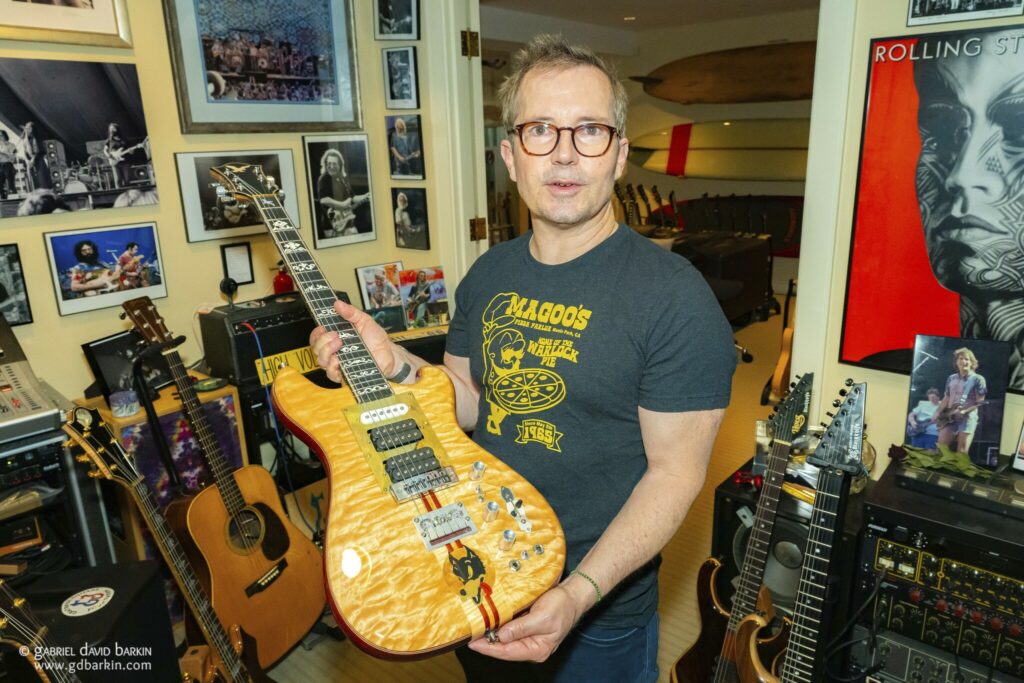
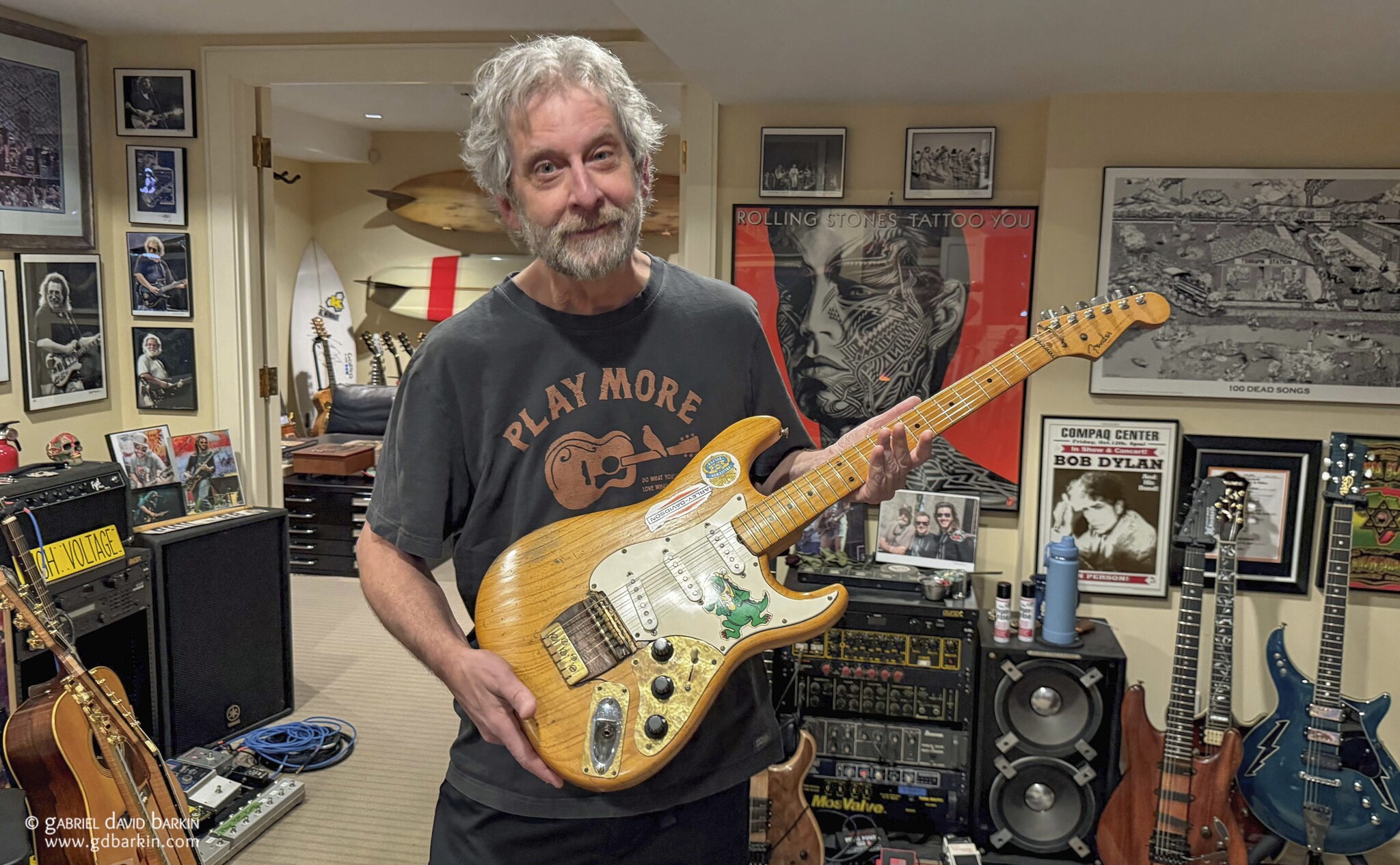
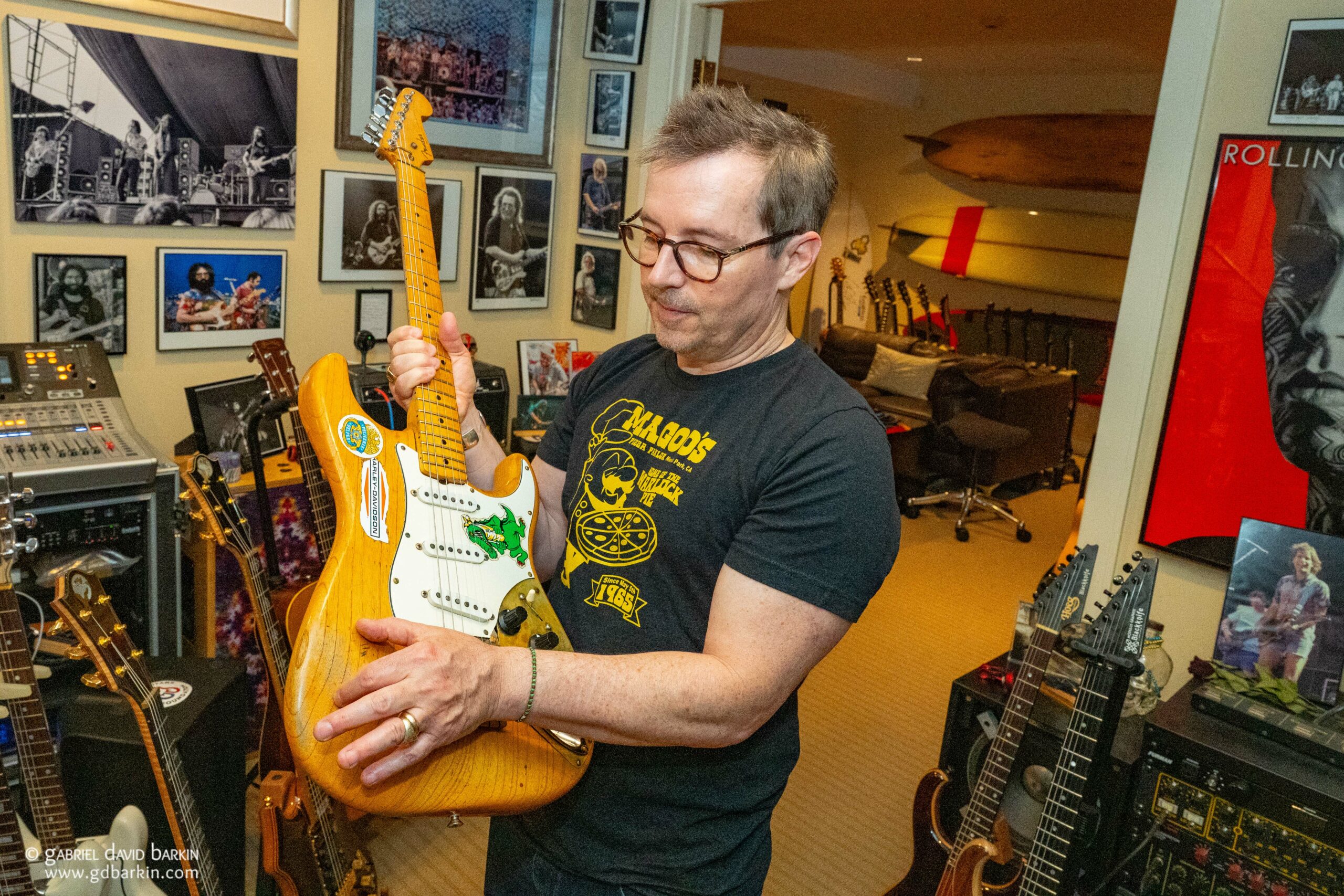
Andy Logan holding up a replica of Garcia's 'Wolf.' All photos by Gabriel David Barkin
On March 12, 2026, Jerry Garcia’s custom-built Doug Irwin guitar Tiger sold at auction for $11.56 million. The buyer was Bobby Tseitlin of Family Guitars, a Chicago-based entity already in possession of several other vintage axes once owned and played by Garcia, his fellow Grateful Dead mate Bob Weir, and many other guitar legends.
The very next night, guitarist Derek Trucks (who had sat beside Tseitlin at the Christie’s auction) played Tiger on stage during a Tedeschi Trucks Band concert at the Beacon Theatre in New York City. One of the songs he played was Garcia’s “Sugaree.”
You can’t do that with a Picasso!
Unlike many other types of collectibles, instruments are built to be played. I recently toured the Madrid Royal Palace in Spain, and among many treasures on display is a set of unique Stradivarius instruments, including three violins, one viola, and a cello. Although kept in glass display cases, those rare, treasured items are often entrusted to the hands of virtuosos for live performances in the Palace. As my tour guide told us, “These instruments, over 400 years old, need to be played occasionally, or else their quality fades.” Álvaro Guibert, a prominent Spanish musicologist and author, likewise told The Strad magazine that "[these Stradivarius instruments] were created in order to make music, so not playing them would be denying them their fulfillment."
Even so, the vast majority of instruments collected primarily due to their provenance – for instance, guitars with a chain of custody that once included a famous rock star like Garcia – live out their years as keepsakes in the private residences of wealthy buyers or hang in glass cases on the walls of Hard Rock Cafes. That’s not fair to the instruments, nor to humanity writ large, and does a huge disservice to the luthiers and other craftspeople who intended their creations to produce sounds and not sit on shelves.
Pixar’s Toy Story 2 revolved around a plot wherein a toy aficionado wanted to put the cowboy doll Woody in a box on a shelf. But toys, as we learned in the movie (if we didn’t already know this), are meant to be played with. That’s their purpose.
Andy Logan is a well-known collector of Grateful Dead guitars (among other things). He shares his first name with the boy who owned and cherished Woody in the Toy Story movies – and just like that other Andy, Logan is affable, kind, and fond of his toys. He loves them deeply. Along with a growing number of instrument collectors and enthusiasts (including Bobby Tseitlin, for instance), he wants to spread the love.
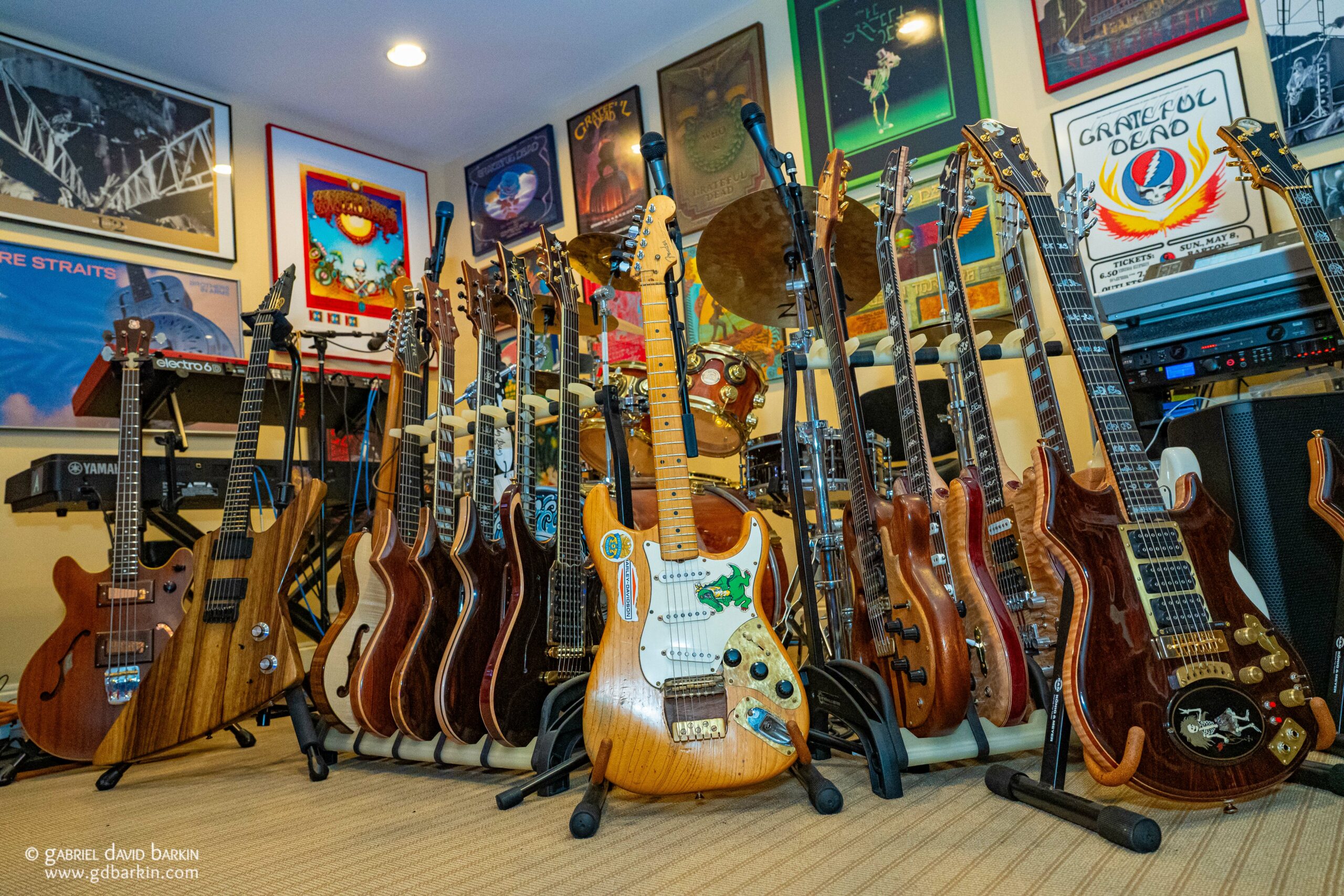
Logan’s personal collection comprises dozens of guitars and other instruments, notably including a handful of items once owned and played by the Grateful Dead’s Garcia and Weir as well as numerous bespoke and vintage models that are identical (or nearly so) to other instruments played by members of the Dead throughout their long, strange trip. Among his prized possessions are Garcia’s 1955 Alligator Fender Stratocaster and the 1943 Herringbone acoustic Martin D-28 used by Garcia to record “Ripple.” That same Martin was played on stage by Garcia numerous times. Bluegrass legend Peter Rowan borrowed it for the renowned “Old & In the Way” tours and album recording in the early 1970s.
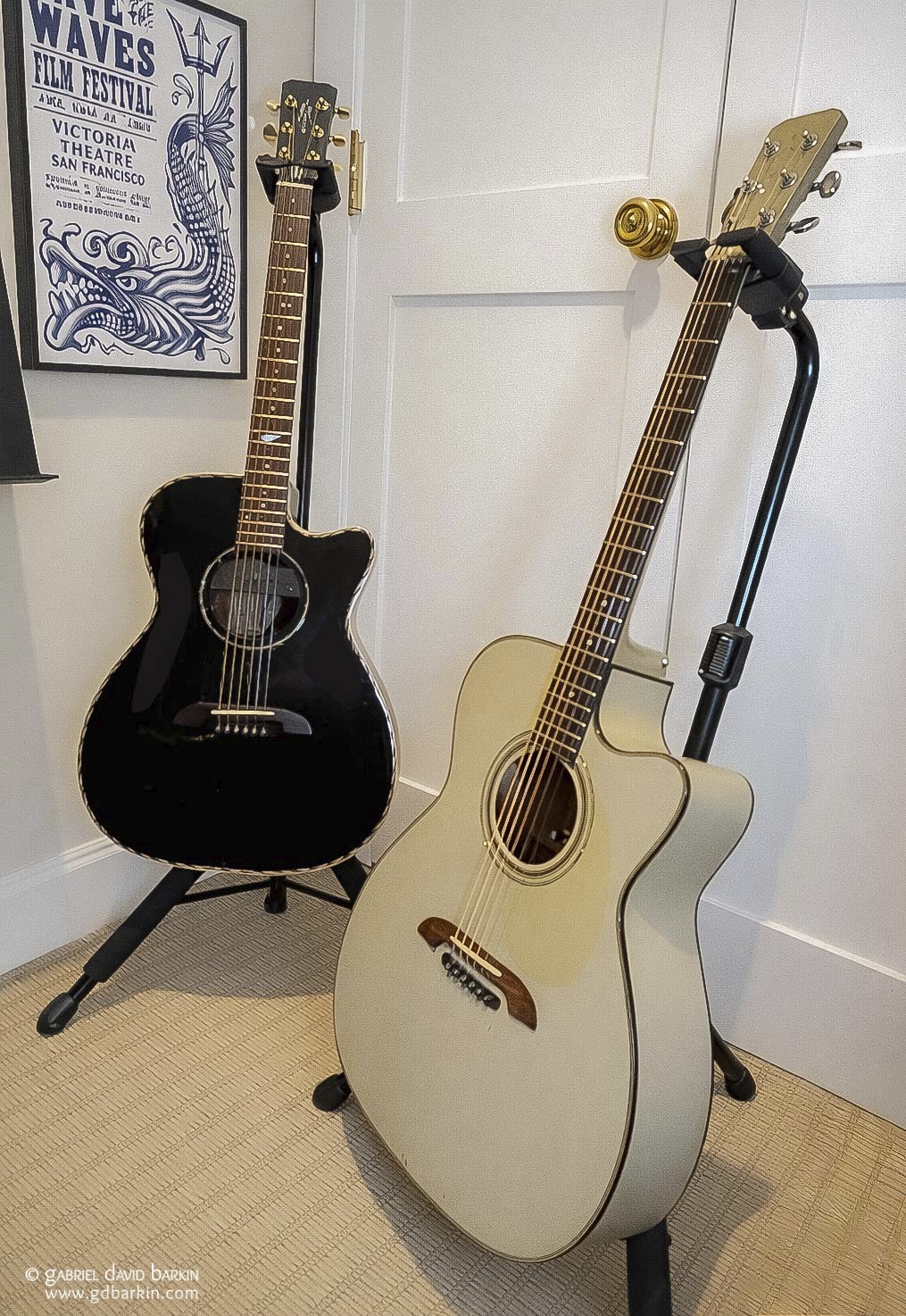
Other significant items in Logan’s collection include a pair of Alvarez acoustic guitars played by Weir on two unfortunately momentous occasions. One is a WY-2 Black with a Modulus carbon fiber neck, which has the historic distinction of appearing on stage in Weir’s hands at the last Grateful Dead show on July 9, 1995. (Ironically, Logan “loaned” this guitar back to Weir for a gig in 2022.) The other is a WY-1PG Grey, also with a Modulus carbon fiber neck. Weir was playing that one at a RatDog show exactly one month later in 1995, on the night Garcia died.
Those items alone make Logan’s collection worth notice – but that’s just for starters.
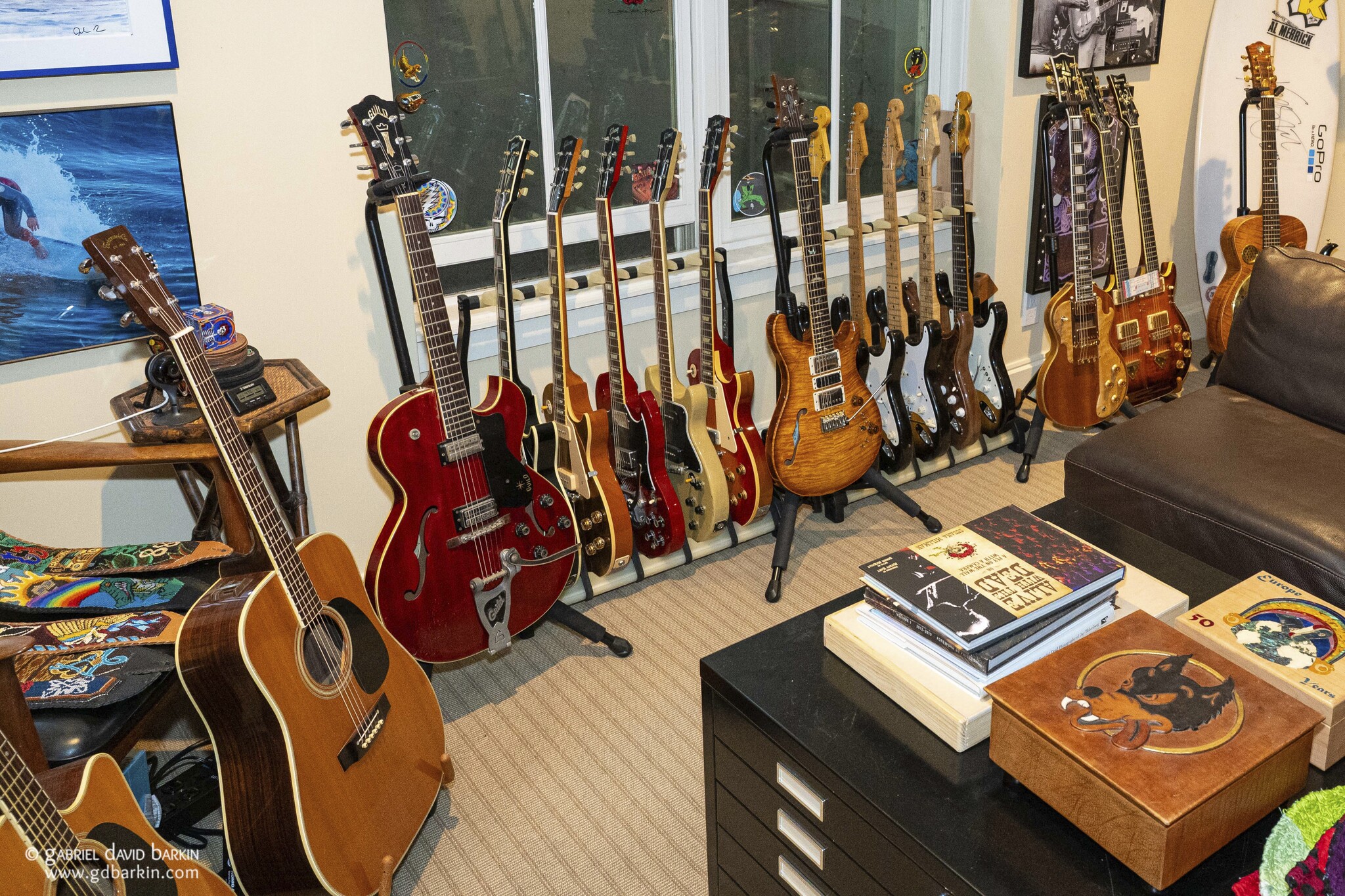
In addition to providing a home for a vast assemblage of vintage guitars and other equipment, Logan has a history of loaning equipment to world-class jam band musicians. (I suspect Alligator may have been played on stage by now by more different musicians than any single guitar in rock history.) Moreover, in the past decade-plus, he has also gifted nearly a hundred instruments to worthy performers. Many of those gifts were made via Grateful Guitars Foundation (https://gratefulguitars.org), a nonprofit organization Logan founded along with several other philanthropic music lovers.
Joni Mitchell once joked that “Nobody ever said to Van Gogh, 'Paint a Starry Night again, man!'” Perhaps that’s true (although the dude did paint a ton of irises over and over). But what Logan and other like-minded patrons have in mind is more akin to giving artists one of Van Gogh’s paintbrushes and a set of his pigments with instructions to go paint their own thing. Maybe they’ll paint more irises, or their own version of Starry Night. Maybe they’ll create something unique.
Imagine the inspiration! Imagine the possibilities!
Grateful Guitars Foundation was founded on such imaginings. Logan’s passion for live music and his appreciation for musicians in the Grateful Dead scene in particular led to the formation of the Grateful Guitars Foundation (GGF), which was officially launched as a 501(c)(3) in 2021. The Foundation’s mission is to support the jam band community by providing high-end, iconic, or historic instruments to hardworking artists who embody the improvisational spirit of the Grateful Dead. The Foundation also partners with nonprofit music education and healing groups to expand access to music.
We might boil the mission down to “Let there be songs to fill the air” supplemented by “Reach out your hand if your cup be empty.”
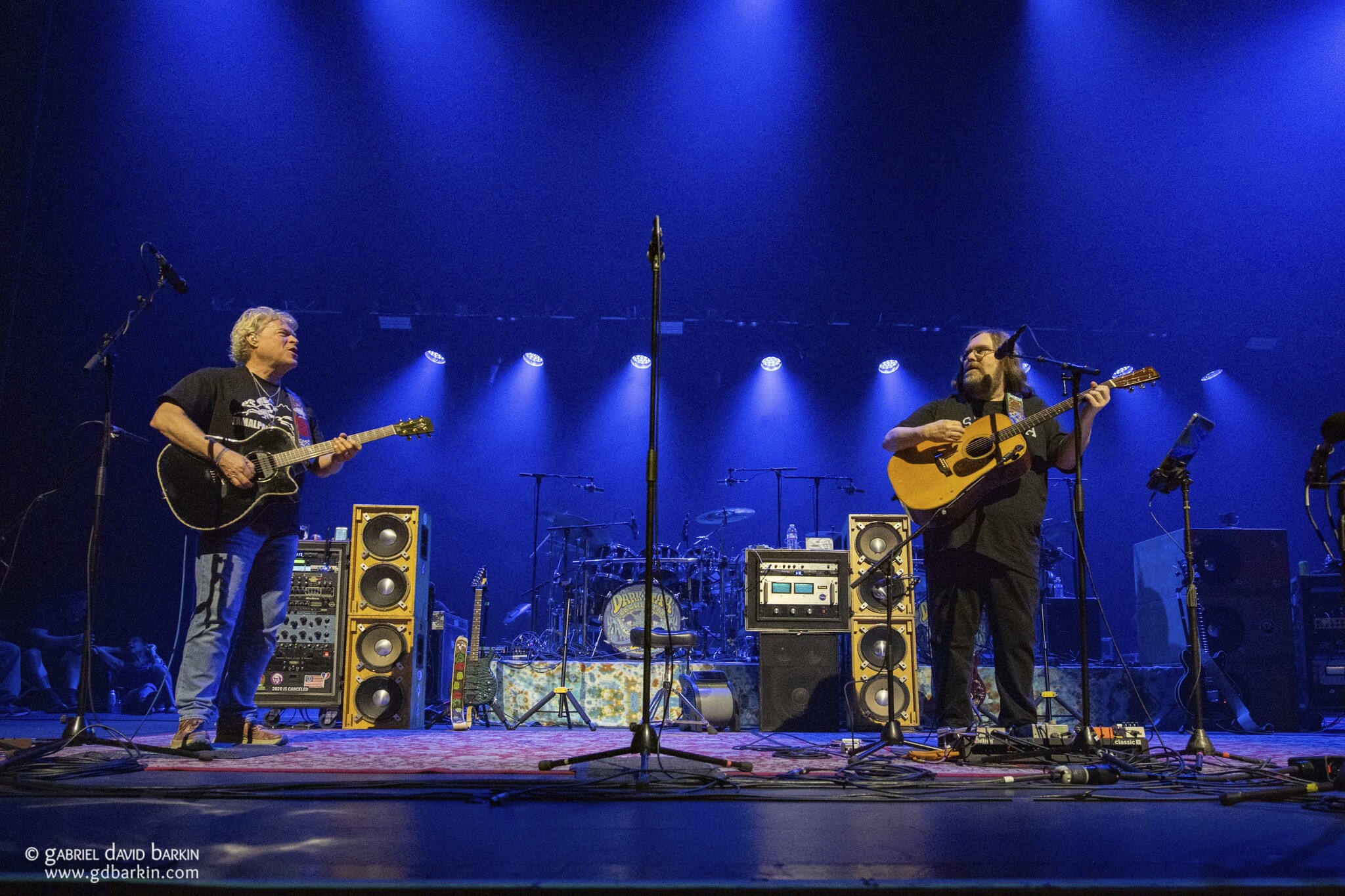
In January of this year, I published a review on Grateful Web of a Dark Star Orchestra (DSO) show in Oakland. Jeff Mattson of DSO played Garcia’s Martin during a short acoustic set at that show – but in my article, I misidentified the model. (Oops.) I also neglected to mention that the Martin, and also a Weir guitar played by DSO’s Rob Eaton during that same set, were loaned by Logan and Grateful Guitars Foundation.
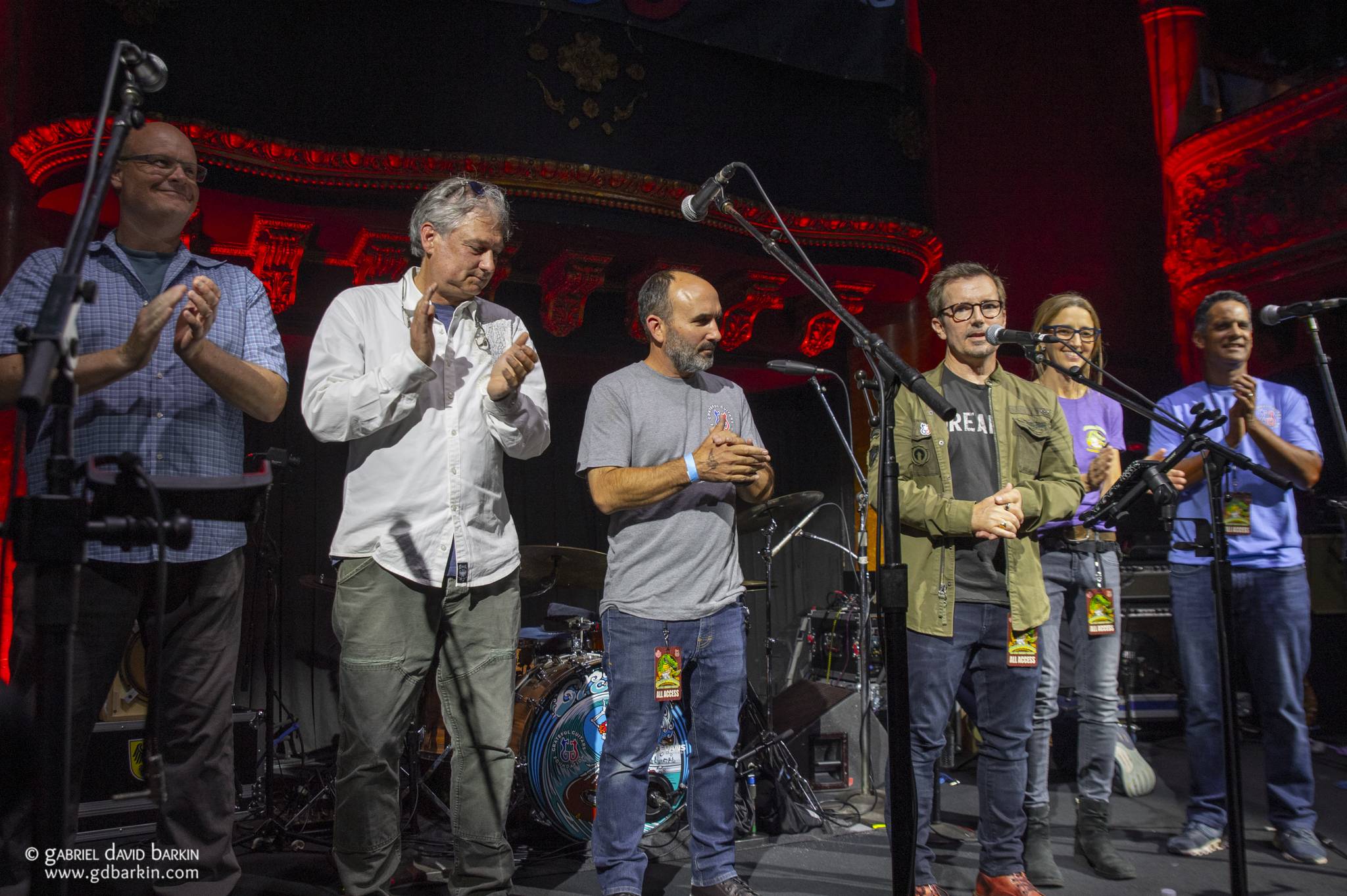
After my article ran, I got an email from Logan (whom I had only met once before, and very briefly at that) titled “GD Gear Clarifications & GGF Role.” He cc’ed several of his fellow GGF board members along with the Foundation’s press contact Dennis McNally, who is perhaps best known as the Grateful Dead’s authorized biographer and longtime publicist. Logan expressed concerns about my article, regarding both the inaccuracy of the guitar model and my failure to mention GGF’s contribution to the evening. I wrote back, cc’ing all, with my apologies. I promised to correct and amend the online article promptly (which I did, of course). I also took the opportunity to request an interview with Logan.
A few minutes after I hit “Send,” I got an email from McNally. He did not cc anyone else, and I realized right away that his message was clearly intended for Logan, not for me:
“Now that is my idea of a sensible response to being corrected! I hope you will give him some time (and even invite him to look at the guitar room — he’d swoon.)”
I laughed, sent a reply to thank McNally, and asked him to send that along to Logan as he’d intended. McNally did so, and an interview invitation ensued.
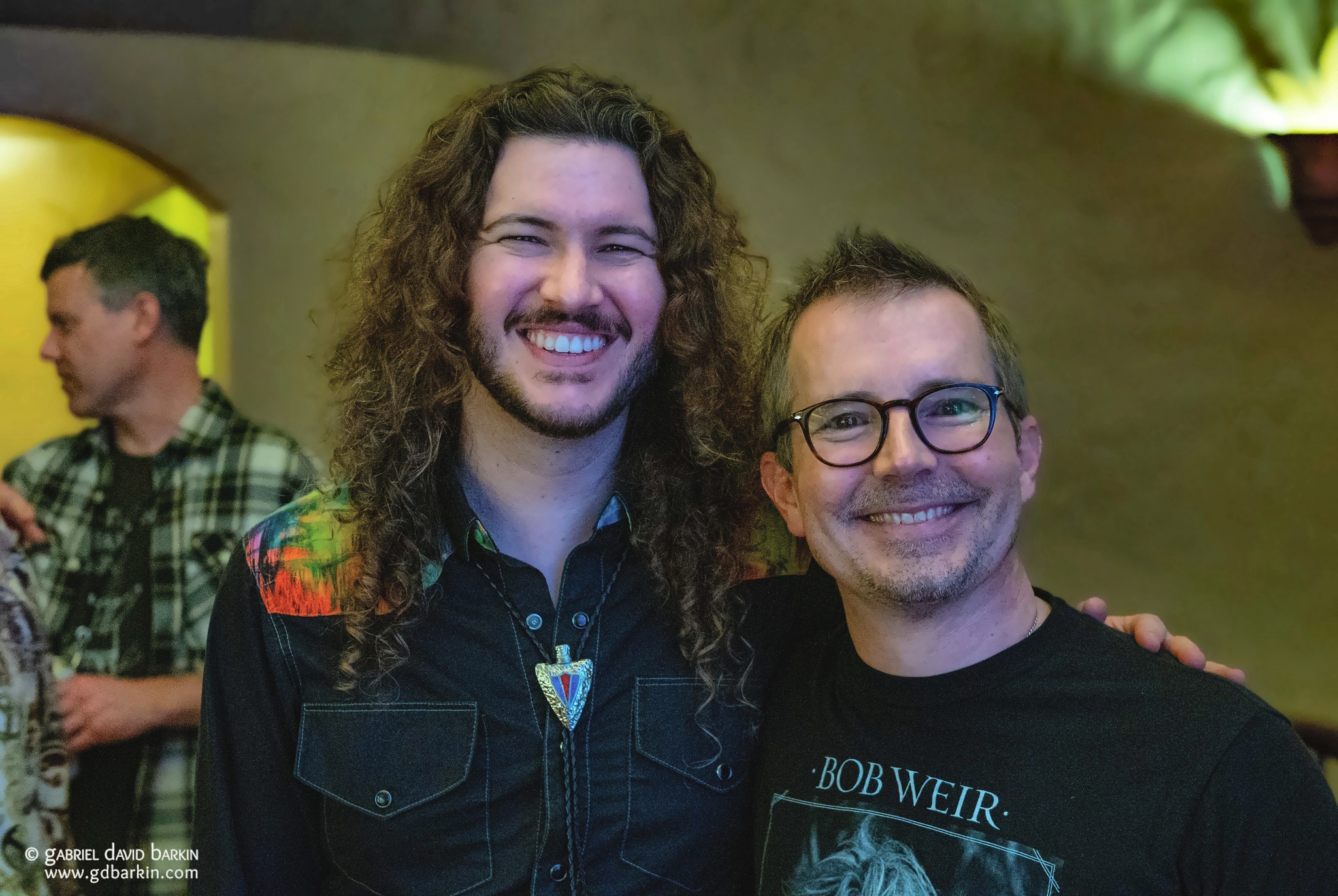
Fast forward to April, when I visited Logan at his home in Woodside, CA, near the Dead’s hometown of Palo Alto on the Bay Area’s San Francisco Peninsula. And yes, I did swoon when I saw all those guitars! You can see the shit-eating grin on my face in the pictures Logan snapped using my iPhone while I held Alligator, and again when I played “Black Peter” on the very same Martin D-28 I had misidentified in my Dark Star Orchestra article.
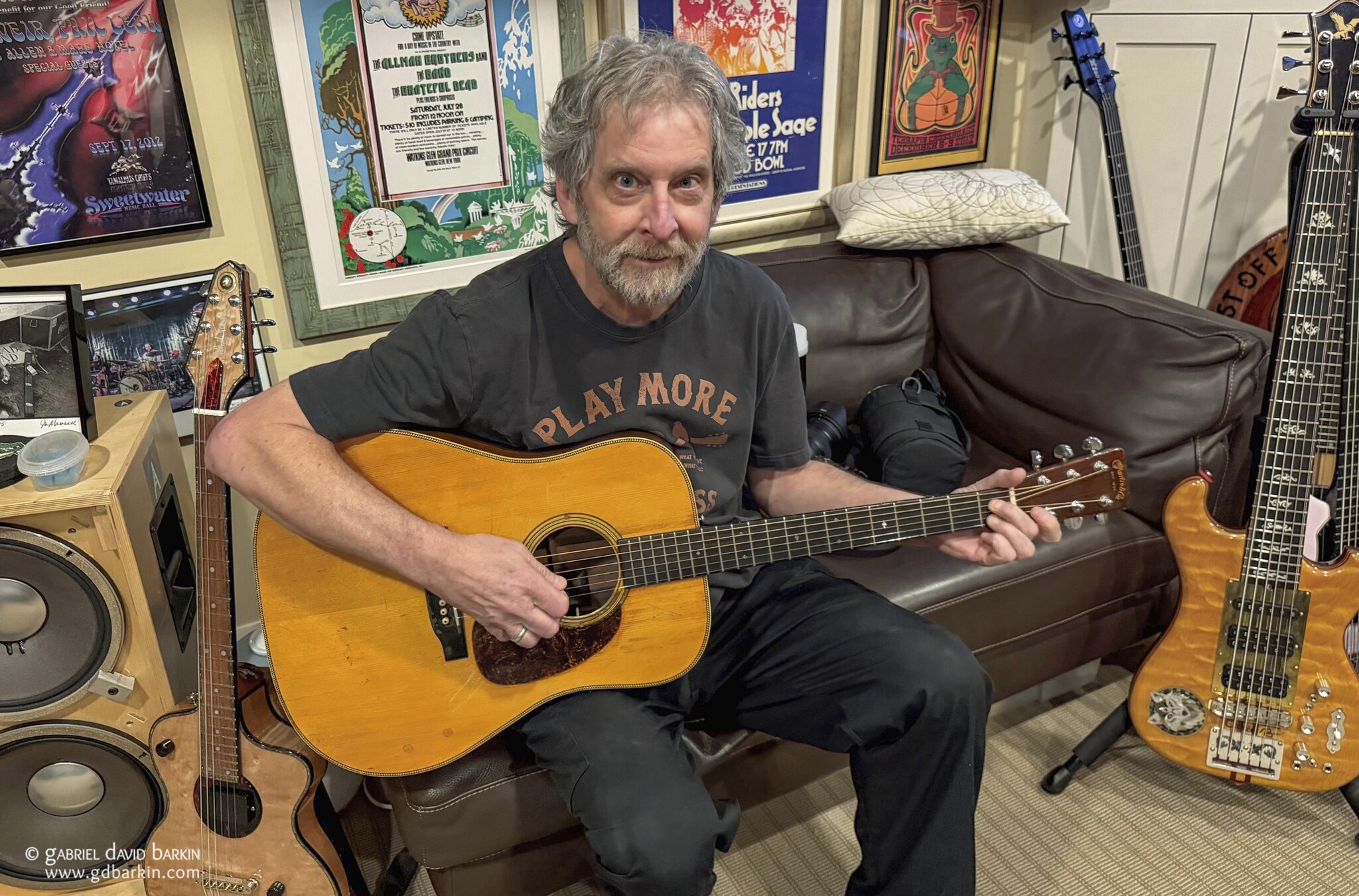
I was nervous as hell playing that guitar, but I was also awed by the magic I held in my hands. Garcia almost certainly had played the same song on this guitar during acoustic sets in the early ‘70s, and possibly even on the original recording for Workingman’s Dead. (A 2002 Acoustic Guitar magazine interview with David Nelson implies that was the case, but other evidence seems sparse.) I mean, geez, I was holding and strumming history!
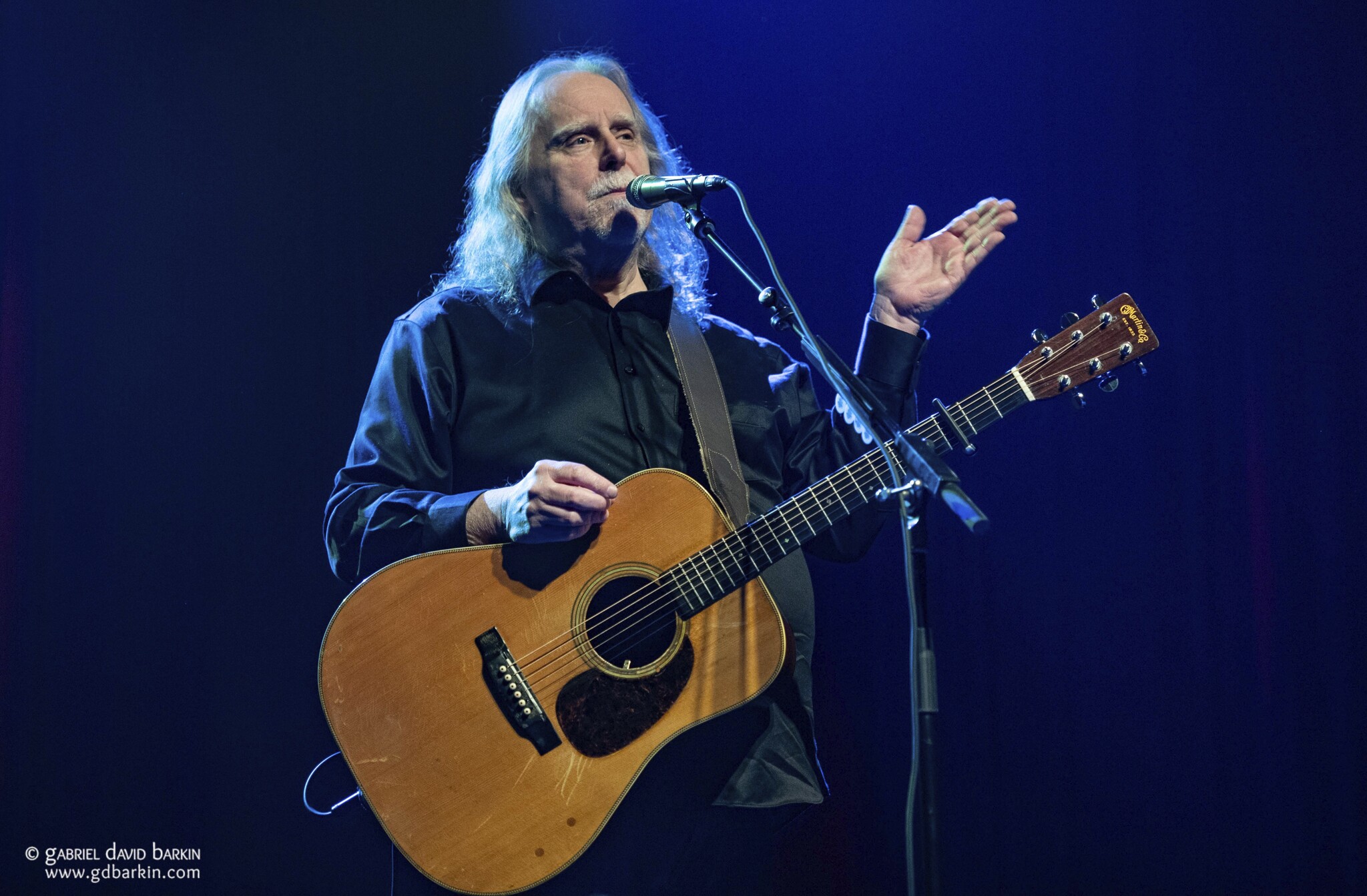
I had seen Warren Haynes play “Brokedown Palace” on that same guitar just a few weeks earlier at the Fillmore. Later, Haynes told me, it was “kind of one of those moments where you get this feeling that you've tapped into something that doesn't happen every day.” Haynes clarified that it wasn’t just the thrill of playing such a marvelous instrument. “The sound of those pre-war herringbones is incredible. And then the history aspect adds a whole ‘nother dimension to it.”
“You know, the first thing you want to do is, like, start strumming the chords to ‘Ripple.’”
I had no idea what I was signing up for when I accepted Logan’s invitation to visit his home and see his collection. After greeting me at the door and spending a few moments talking about one of the many collectible longboards mounted on the interior walls of his house (Logan is an avid surfer), we descended a staircase to a three-room basement. The first room at the bottom of the stairs serves as a storeroom full of guitar cases, amps, and other equipment. Beyond that was the first guitar room, which glowed in my eyes like an Emerald City for Garcia fans and gearheads. Alligator was prominent in the row of guitar racks that filled the center of the room. The Martin was right next to it.
Framed photos and other memorabilia lined the walls, mostly shots of Garcia and Weir playing the same guitars that were here in Logan’s collection. A few of the guitars in Logan’s basement were those original items shown in the pictures. The rest were nearly identical models, some made by the same luthiers who created the originals and others by craftspeople following closely in the footsteps of their creator.
For the next two hours, Logan took me on an axe-by-axe tour of nearly every guitar in that room and the room beyond, which was primarily stocked with Bob Weir guitars. Logan’s collection is indeed a sight to behold. All told, my memory says there were somewhere between 50 and 75 fretted items in Logan’s basement. Call them collectibles, curios, toys, or what-have-you. To Logan, they’re treasures of humanity, and he is their loving caretaker.
And as such, he knows their history well. Logan was a docent of the highest caliber; his tour was worth every moment.
For the record, I play guitar modestly well, but I’m no gearhead. I can barely tell a single-coil pickup from a humbucker. Logan, however, spared few details as he walked me through the racks of guitars. In addition to numerous technical tidbits that (to be honest) went far over my head in many cases, he also recounted the history and pedigree of the guitars in his collection.
CRYING “WOLF”
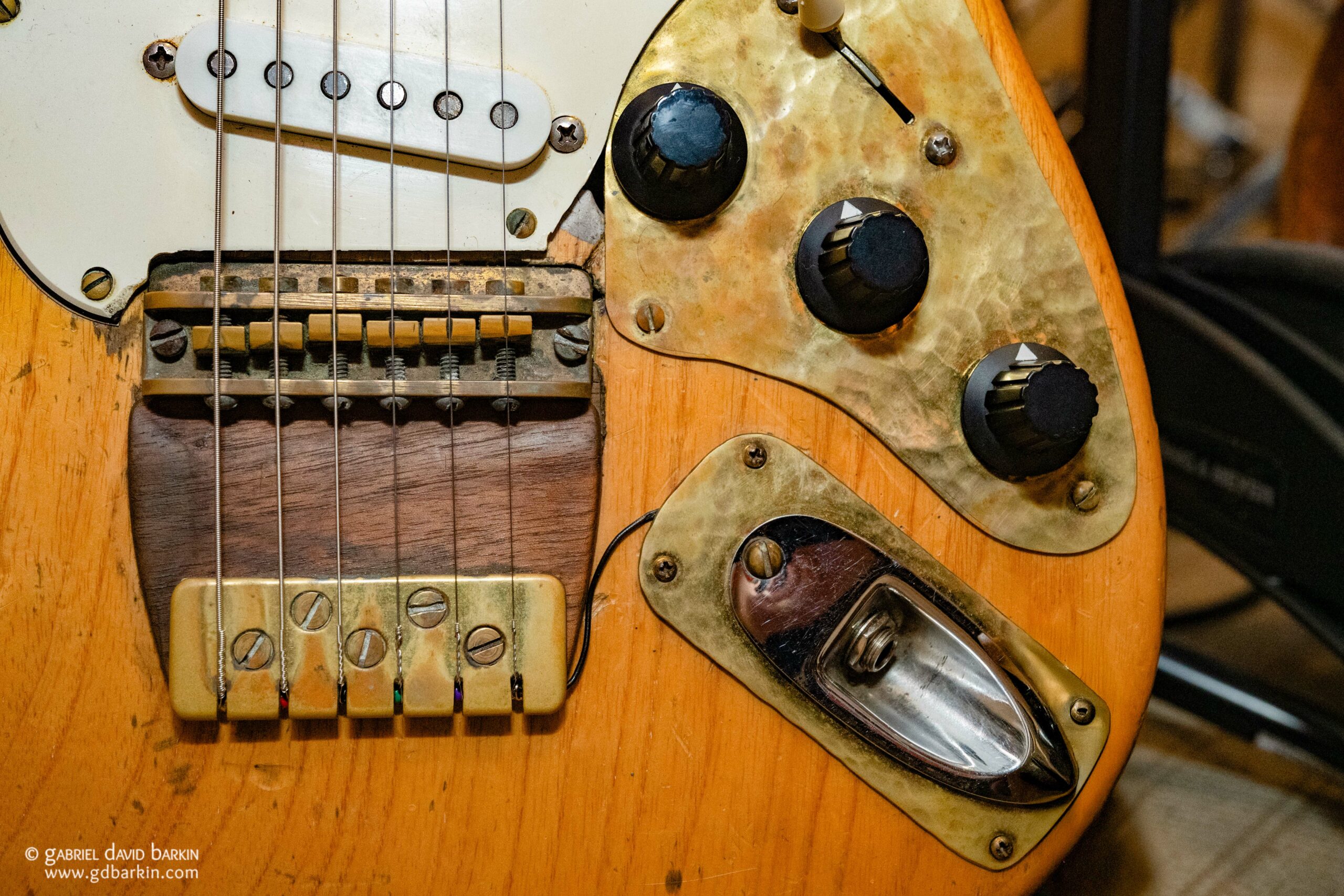
Logan has learned a lot about the Grateful Dead’s guitars over the years, and he strives to have replicas that hew as true as can be to the technical aesthetic of Garcia and Weir’s original equipment. For example, he told me this about Wolf replicas:
“Whenever I see a picture of Wolf on the Internet, the first thing I do is I look right around here for a screw hole for that Roland unit. Because they mounted it right into the body, which is kind of sacrilegious in a way. But there's a hole right here where they mounted that. So I just know to look for that.”
Befitting someone with such love and appreciation for the history and high quality of his instruments, Logan has enlisted the help of numerous luthiers, craftspeople, and technicians to help care for his collection. This is where Alex Jordan comes in.
Jordan is a fluent and gifted musician, another veteran of the Terrapin Crossroads scene who has remained prominent on the Bay Area Grateful Dead music landscape since the closing of that venerable institution. He is a talented keyboardist (he plays keys under the pseudonym of “Cousin Bertha” in BERTHA: Grateful Drag, for one thing), and he is equally skillful on guitar whether taking on the “Jerry” lead role or easing into a “Bobby” rhythm slot.
He is also a masterful instrumental and equipment engineer, and as such he is Logan’s go-to gear guru. Jordan bears much of the responsibility for the care and feeding of Logan’s collection, and Logan holds nothing back in his praise for Jordan’s skill. “It is not an overstatement to say that Grateful Guitars Foundation does not fly without Alex’s support on every level.” Jordan has unfathomable technical knowledge about gear ranging from amplifiers to keyboards to guitars, and Logan says he has reinvigorated several former Grateful Dead pieces of gear with new life, bringing them back to the stage where they belong. (An amplifier deserves to be heard every bit as much as a guitar.)
“Speaking for the fans and myself,” Logan says, “we all owe Alex a huge debt of gratitude for all he has done to ensure this scene remains built to last.”
As for Jordan, he shares much of Logan’s ethos and awe regarding the value of the historic items in his care. “[Alligator] has played a lot of notes that I've listened to,” Jordan told me. “[But] when this guitar needs to be restrung, I'm not thinking about, ‘Oh my god, it's Jerry's guitar!’ I’m thinking about ‘What strings do I have to put on this? What are the action specs?’ So I try to remember to have a minute and touch the guitar and take a breath and remember what it is and what it's done and where it's been.”
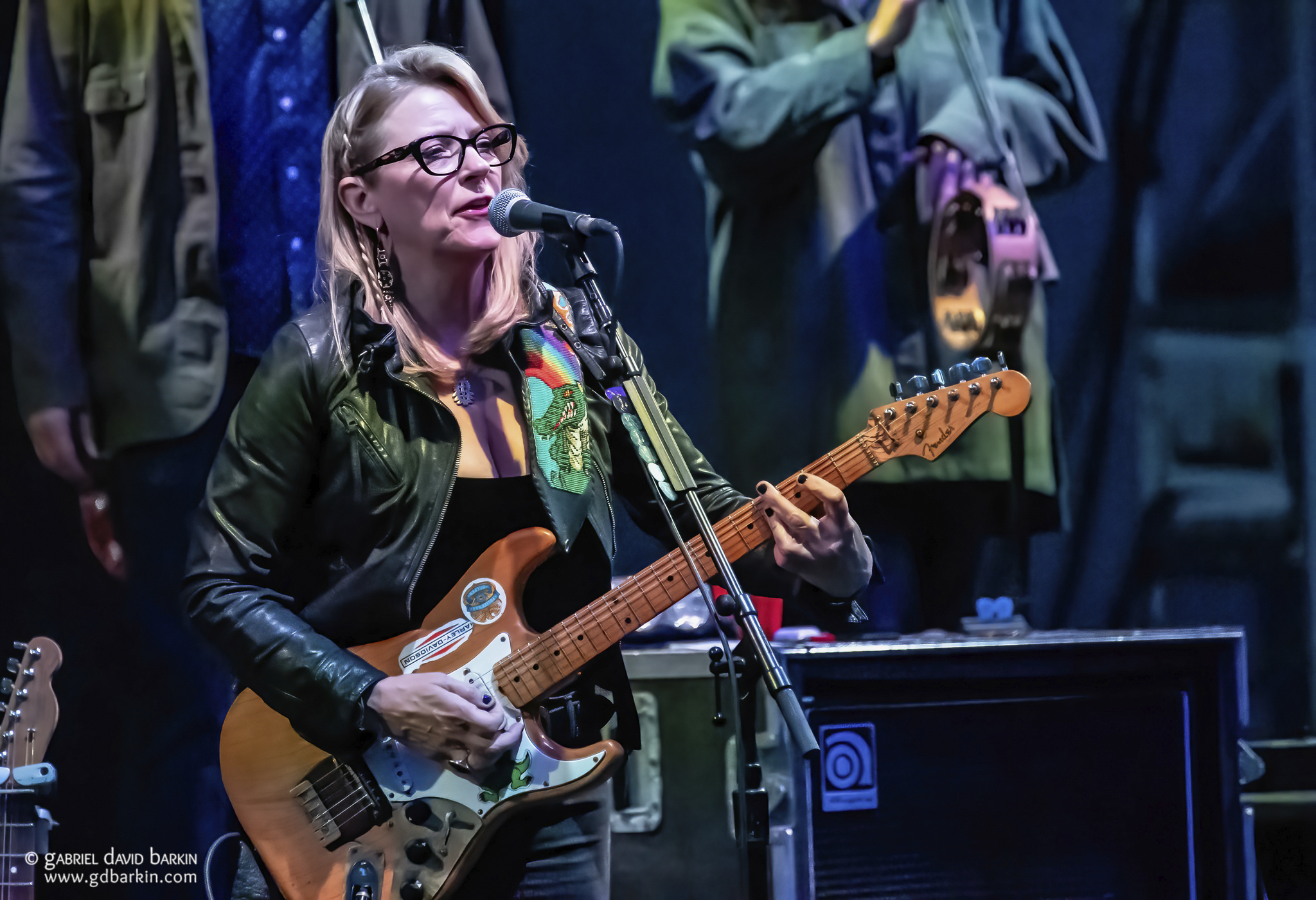
And where has Alligator been? That’s another long, strange, and marvelous trip, as Jordan recounts. “Now, when I pick it up today, not only is it Jerry's guitar, but Susan [Tedeschi] has played it, Derek [Trucks] has played it, Los Lobos, et cetera. It becomes this greater thing because it's a symbol of connectivity amongst a bunch of people who really like this one player. We have this thing in common that's just about this very positive energy, and that's a very cool thing.”
When I shared my thought with Jordan comparing Logan’s collection with Andy’s toys in the Toy Story movies, he said, “Maybe Andy's guitars are all talking to each other while we're out of the room about – you know, who gets to get played next.”
SCRATCH THAT MARTIN!
Logan shared this story with me about a set of scratches visible on the body of Garcia’s famous Martin D-28. This narration comes from veteran radio broadcaster, music producer, and archivist Rob Bleetstein:
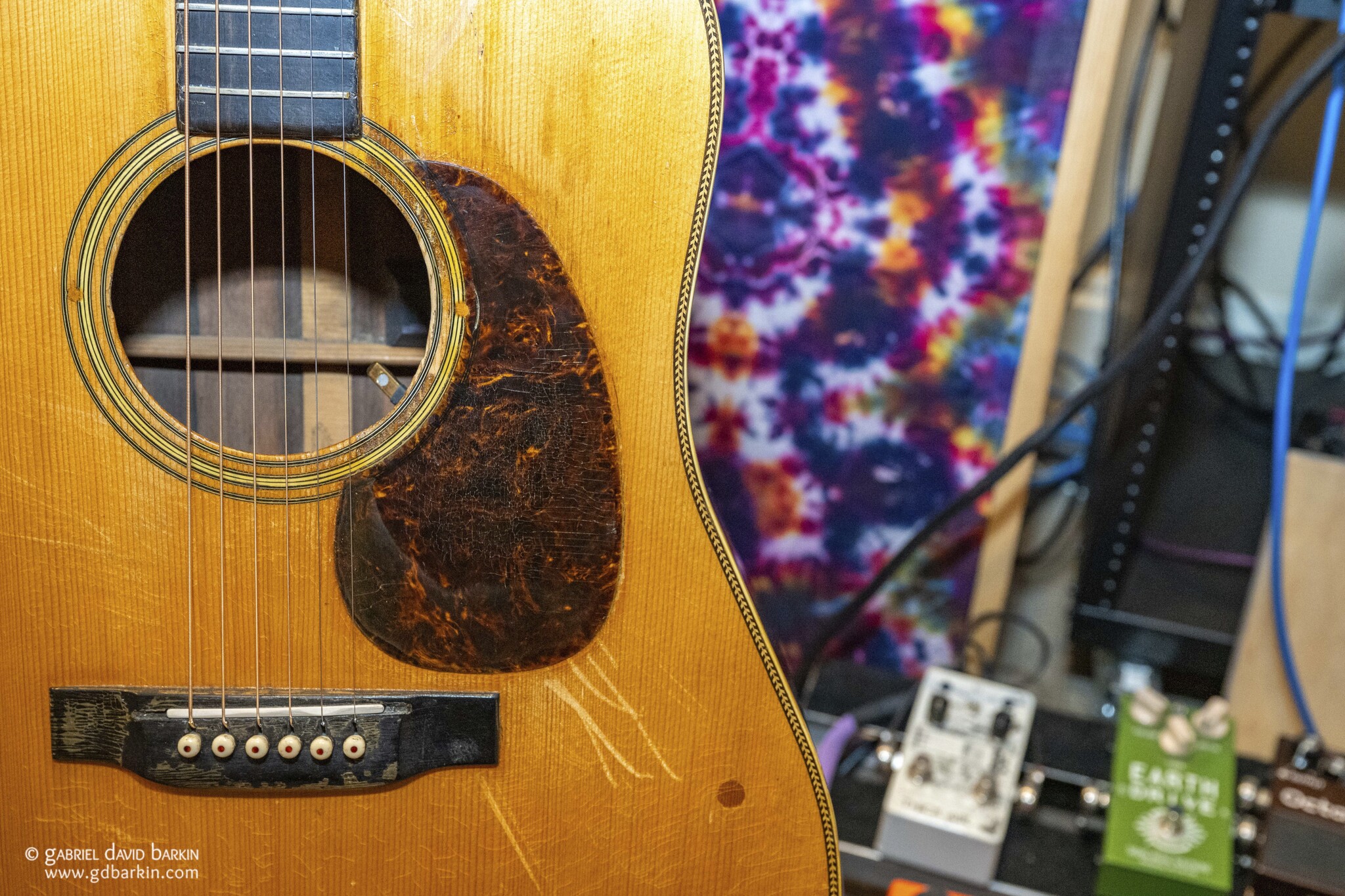
“Dawg [David Grisman] called me, and I mentioned the guitar and he brought up the scratch. So during a Garcia/Grisman session, engineer Dave Dennison accidentally knocked the guitar over and put a tiny scratch in it. Feeling terrible about it, upon Jerry’s return to the studio, he apologized to him for it, and that’s when Jerry proceeded to take an object and embellish the scratch even further, showing how much he felt about such things!”
A few weeks after my visit with Logan, I attended a live auction of Grateful Dead memorabilia in San Francisco. Hundreds of historic items from the personal collections of Jerry Garcia’s daughter Trixie and longtime Grateful Dead roadies “Big Steve” Parish and Lawrence “Ram Rod” Shurtliff were sold, including a cowbell played by Mickey Hart at the closing of Winterland (final sale price $6,400), a nondescript, off-the-rack black leather belt worn by Garcia ($1,600), and a number of auto license plates with Grateful Dead song titles that were tossed onto stages over the years (these went variously for $800 and up).
The big-ticket items included a 1939 Gibson Super 400N archtop guitar and an Alvarez Denver Belle Whyte Eagle banjo, both owned and played by Garcia. Each went for over $250,000.

Both Big Steve and Trixie Garcia were in attendance, and they were happy to see these instruments find new homes instead of gathering dust in their garages. Parish told me, “We don't want these guitars to sit in their cases and never be played.”
Trixie Garcia was ardent about her wish to have her father’s tools be used and shared (although she told me that she had decided not to make it a condition of sale for the items she was auctioning that day). To that end, she’s been trying to retrieve Wolf and Rosebud, two of her father’s most famous guitars, from the Rock and Roll Hall of Fame Museum. Both are owned by the Grateful Dead organization and on semi-permanent loan to the museum.
“I wrote a letter to the Grateful Dead board and asked them to take my dad’s guitars out,” she told me during the auction. “Everyone, and my dad especially, hated museums – and it's such a dead space for a musical instrument, right? Because again, it's no life for these guitars.”
The younger Garcia described the situation with an apt metaphor. “It’s like that orca that’s trapped in a swimming pool in Florida.”
Free Rosebud!

Alex Jordan has a similar viewpoint. “Across many different areas of collector culture, static display is the norm. But musical instruments aren't designed to be that way.” He added that “I have a firm belief that [guitars] last longer if they're played. I mean, yes, there's wear. But I've worked in the vintage guitar industry for a number of years, and instruments that sit – weird things go wrong with stuff that's in the case for a long time.”
He was talking to me on the phone from a van on tour with BERTHA at the time, and he made this observation: “Here we are driving north from Tennessee, where there’s a Corvette museum and factory. There's a track there, because the whole idea is, ‘Yeah, check out how this thing operates!’ It's not just about, ‘Look at the pretty car.’ I mean, the whole point of the car is to go, to drive.”
Logan used a similar auto analogy when he explained why it’s appropriate to do things like re-fret collectible guitars and service their electronic innards. “I love cars. If I buy a vintage sports car, I'm not keeping the tires on it. And frets are a part of how you fret a guitar. How do you play guitar? You need to fret it.”
HOEG IT OUT!
“This Strat is a Bobby Strat. It's called the Hoeg Strat and it's very light.” Logan was cradling one of the items in his collection, a model nearly identical to one of Weir’s guitars that was built by luthier Rich Hoeg.
“At the time, Bobby was having shoulder problems. You can see he's removed the volume knob because you don't want to hit that when you’re reaching for the on and off switch for the pickups. And this is called a Fathead, this piece of brass. That's something that Bobby was into. I think it might need string retention though, now that I'm looking at it. See how if there's not enough of an angle, this string might not stay in tune the way we wish. So it's interesting he doesn't have that on there. I can look at the photo now of Bobby's to see, I don't think his has it either.” That photo, of course, was on the basement wall behind the Strat.
Logan’s own Grateful Dead concert experience began in the late 1980s. “The first show I went to was Worcester ’87, but I didn't get in. There's a mall next door, and they piped the music in, but … I don't count that as my first show.” A year later, Logan was finally on the inside, at the Hartford Civic Center in April 1988.
He got on the bus, proverbially speaking, and saw as many shows as he could thereafter. At first, it was just a few shows a year. “St. Lawrence University, where I went, had an attendance policy. That made it tough for touring. We would try to squeeze in two here, three there, whatever it was.” After graduation, Logan moved to the Bay Area, attending annual runs at the Greek in Berkeley, the Oakland Coliseum, Shoreline Amphitheatre, and other NorCal venues. “I saw a lot of shows between ‘92 and ‘95 just because of being here.”
Then the unimaginable happened. Garcia died.
Like many Deadheads, Logan sought a musical salve to soothe his soul. “When Jerry died, I was like, ‘Okay, I'm 25. Jerry's gone, I need to learn an instrument.’” He tried drums at first – but although he could hold a beat, the passion didn’t take hold in his heart. Eventually, he said to himself, “This is ridiculous. I want to learn the guitar. It's my favorite instrument.” He started to learn, playing his wife Becky’s Takamine acoustic and sunburst Fender Strat. (Logan says he bought her those particular models “Because, Jerry!”)
His passion for guitars grew quickly, eventually morphing from playing to collecting. Around 2007, Logan recalls, “It became like, well, ‘Geez, it’d be really cool to have a version of every Jerry guitar that he ever played.’”
It’s not a stretch to imagine that Logan can make good on such a wish, wealth-wise. His bio on the GGF website notes that he is a practicing psychotherapist who previously worked in high-tech marketing for successful start-ups S3 Incorporated and NVIDIA Corporation. He also told me he “had a family who was well off,” which doesn’t hurt. For those unfamiliar with Woodside, I can concur that Logan’s neighborhood would fit most people’s definition of “affluent.” It’s likely that some of his neighbors collect fine art, rare cars, and those bottles of French wine seen on restaurant menus with price tags equivalent to a month’s rent for a studio in San Francisco. Logan collects longboards and guitars.
Even so, his collection started modestly. “I obviously love guitars, but I am a practical human being.” His assemblage of instruments grew at first as he added affordable models akin to Garcia’s guitars, not the exact guitars owned by Garcia himself.
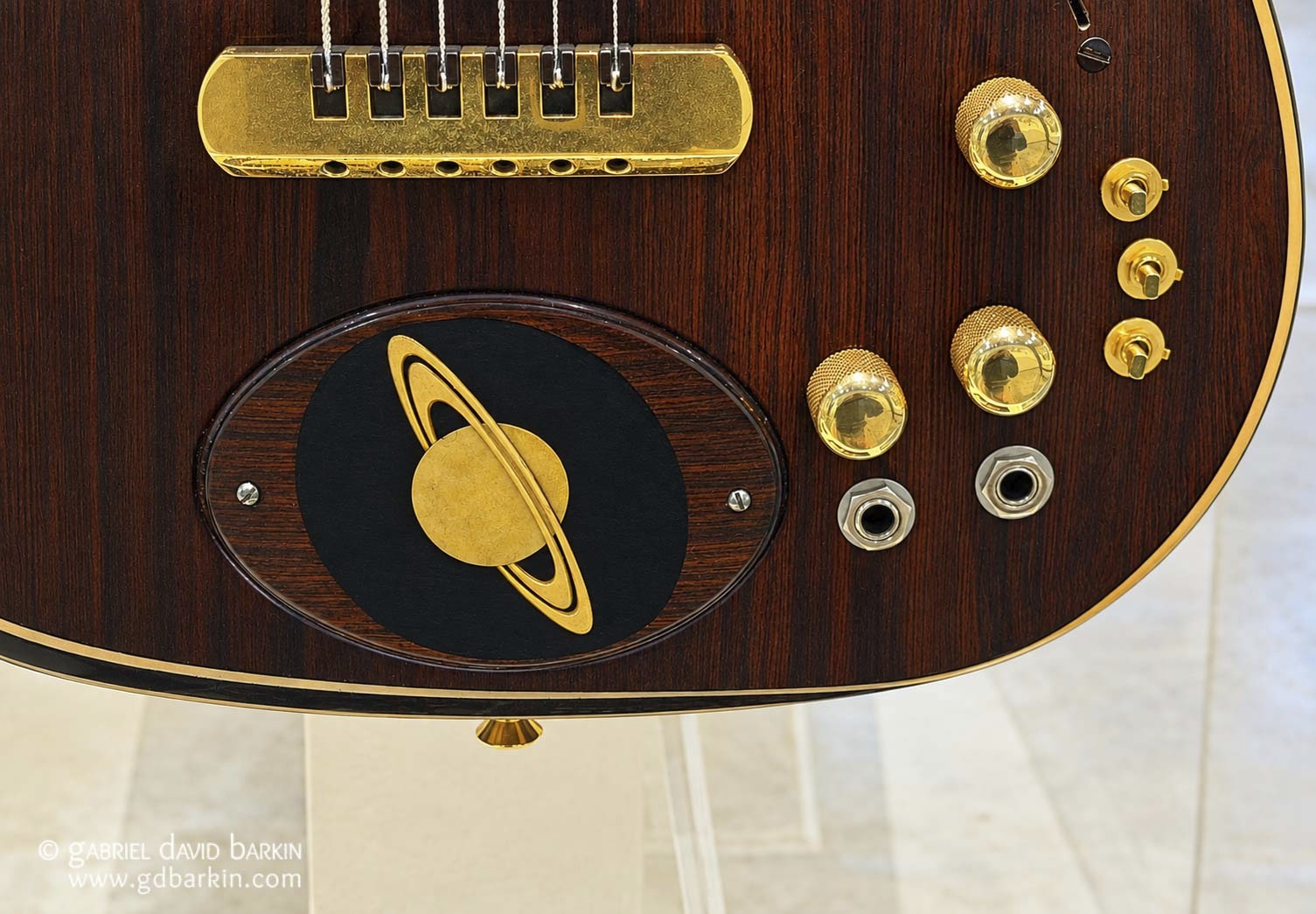
As he amassed guitars of increasingly valuable interest in his basement, Logan began to have other ideas. He came into possession of a guitar that was being built by Steve Cripe for Garcia that was still unfinished when the iconic musician died. “I was doing research on Jerry and came across the Cripe website,” Logan recalls. He saw that a bespoke guitar named “Tribute” (nicknamed “the Saturn” due to an inlay of the planet on the body) was for sale. “I was like, ‘Okay, well it's probably going to be a ridiculous number, but I'll message him to see.’ And it turned out not to be that crazy.”
Logan felt such a beautiful instrument deserved to fulfill its destiny. “If I buy it,” he thought, “I have to have it get on stage. I cannot in good conscience just have it in my house. It was made to be played.” After purchasing the guitar, Logan let Jeff Mattson play the Saturn at a DSO show in 2013. Later, he also loaned it to Stu Allen, a well-known Grateful Dead-adjacent musician who played many times with Phil Lesh at his Terrapin Crossroads club and elsewhere.
Logan felt a calling to spread more love. He began to loan out his guitars with increasing regularity. Eventually, the gratification felt by both the benefactor and the recipients of his kindness morphed into something new. The collector sensed he could do more to support the musicians he appreciated and respected.
Logan’s first guitar gift went to Allen. In 2015, Logan bought two Travis Bean TB500 #12s, historic electric guitars featuring a signature aluminum neck and a magnolia body. (Garcia used the same model throughout most of the Dead’s tours and recordings in 1977 – including the May 8, 1977, show at Cornell University considered by many Deadheads to be the best live Dead gig ever.)
The collector says he bought “one for me and one for Stu.” Allen had no idea he was about to receive such a gift. Logan recalls the moment he handed the TB500 #12 to Allen before a gig at Ashkenaz, a well-known Berkeley, CA, music venue. “He was like, ‘Okay, so I'll give this back to you after the gig.’ I'm like, ‘No, dude.’ And he was like, ‘Wait, what?! I get to keep this?!’”
Allen has a similar recollection. “Yeah, that was mind-blowing. I was trying to understand what he was saying, because it couldn’t possibly be that this beautiful, rare instrument was a gift!”
Many other gifts followed from Logan to other musicians on the Grateful Dead scene in the Bay Area and elsewhere. He felt a calling, perhaps somewhat akin to a religious awakening. “It was really fun and exciting because I would see their inspiration that would ensue.”
BOBBY’S BLACKKNIFES
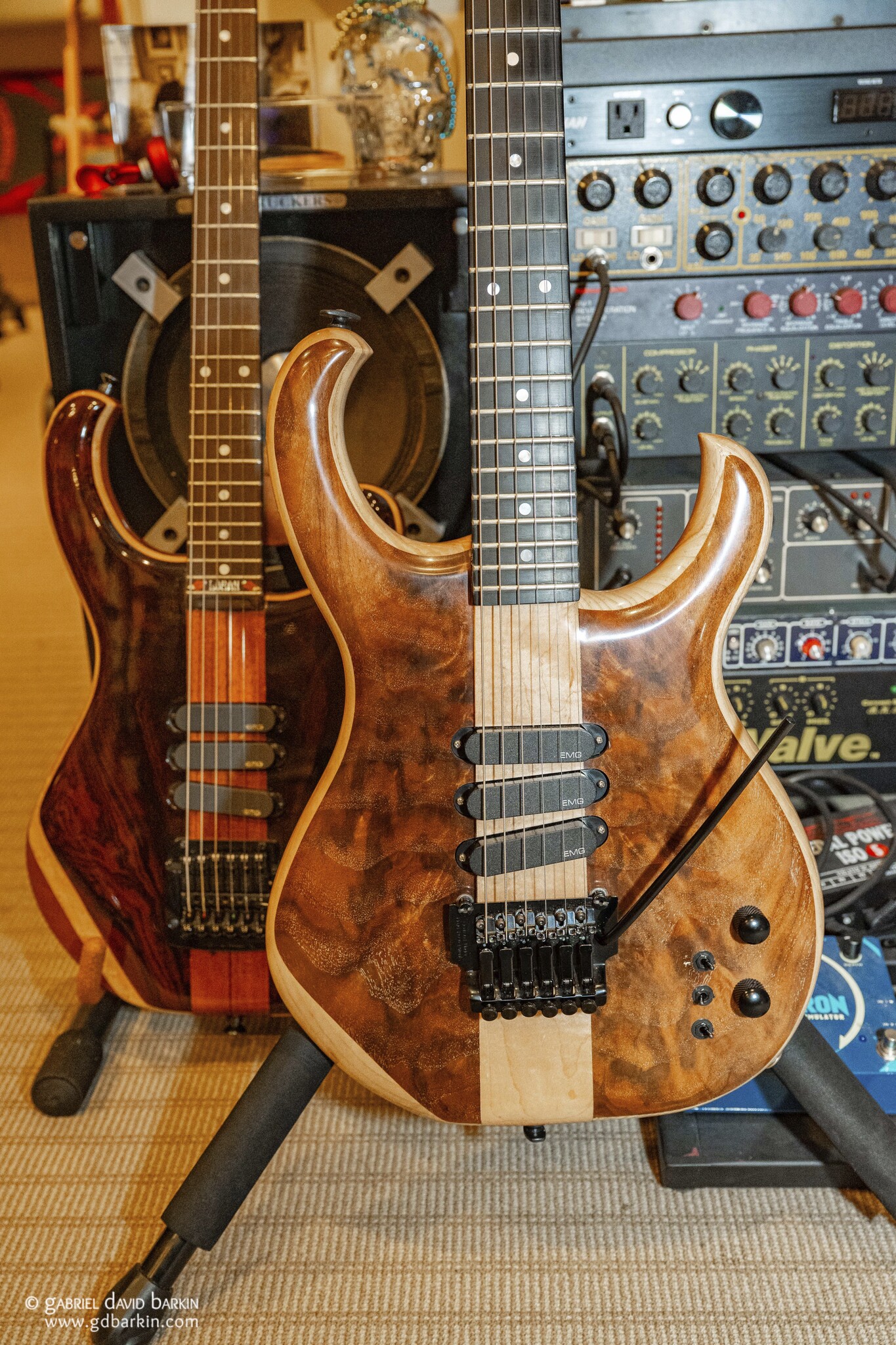
“This is the cocobolo Blackknife.”
Logan was showing me a Modulus guitar, one of several used by Weir over time. Logan’s cocobolo Blackknife is a replica. (Logan does have two other Modulus guitars Weir owned and played, but those are made with different wood stocks.)
“The Bobby Coco. That's what we call it. Cocos are my favorite woods. [Rich] Hoeg, he went and made replicas of this guitar. Bobby used it from the end of August of ‘88 until January.”
I asked Logan, “Cocobolo – is that an African wood? Where's that from?”
Logan: “That's a good question. I should know that.”
I stumped Logan! (Not that I knew the answer either. For the record, cocobolo is a tree that grows on the Pacific coast of Central America and Mexico.)
Eventually, Logan was compelled to own a piece of Grateful Dead history.
“For about ten years, Jerry's Travis Bean #12 was for sale on the internet. You could buy it, any one of us could have bought it for $250,000. I thought about it a lot. So sick! Jerry's TB 12!” Logan balked at the price, but he kept his eye out for other opportunities to own a piece of Grateful Dead history.
Opportunity knocked in 2019. “When ‘Gator was for sale, I felt it was more special than the Travis Bean because it was played fourth-most of all those [Garcia] guitars. About 140 times with the Grateful Dead, and many more times with Jerry and Merl and other things. But I felt like, ‘It's a guitar! What is it worth?’” Logan landed on a figure. (Your results may vary.) “I just came up with a number. $400,000. That felt right to me.”
I asked Logan what his wife Becky said when he told her he was going to spend $400,000 on a guitar. “I mean, she definitely was worried, a little eyeroll, a little ‘This is crazy!’ But I was pretty confident that if I wanted to, I could turn around and sell it a month later.”
Logan couldn’t attend the auction in person, so he made his bid on the phone. He was outbid at first but remained deeply motivated to win the day. A new upper limit replaced his initial $400K budget cap. “I am a big fan of marijuana, and I was an early 420 adopter. We actually celebrated April 20th in college.” So with that reference specifically in mind he made a second and final bid for $420,000.
The significance of his bid was not lost on the auction attendees. “I could hear them laughing over the phone.” But he got ‘Gator! With additional auction fees, the actual cost for Garcia’s guitar was slightly over $500K. “Jerry would laugh,” Logan suspects. “Yeah, he might not think it's smart – but he would think it's hilarious, right?”
As it turns out, the investment – especially in light of increasing interest in similar collectibles (see “Tiger, $11.56 million”) – seems to have paid off. “I've been offered a million since.” Given the price tag for other vintage guitars owned by luminaries like Garcia in recent years, a million is probably in lowball territory for Alligator. (Logan’s explanation for skyrocketing prices goes back a few years: “The collector market went crazy during COVID. I've been told by many that the billionaire class was bored online.”)
But the potential increase in value isn’t what motivated Logan to buy Alligator. “I knew I was gonna share it, and I was very excited about all that. Selfishly, I was looking forward to hearing it bring joy to a lot of people.”
ORIGINAL WALNUT FOR A NEW “JERRYCASTER”
In 2016, Logan commissioned luthier Dan Erlewine to replicate the custom Stratocaster the luthier had built for Garcia in 1973.
“I said, ‘Have you ever made a replica of your walnut Strat?’ And he said, ‘You're the first to ask. And I have the same piece of walnut that I made Jerry's from.’ Then he said, ‘The one caveat I have is I want to make the neck the same exact way.’ And I said, ‘You're speaking my language!’”
The Grateful Guitars Foundation was a lovechild born from Logan’s playful lust for historic guitars (“originals,” replicas, and the like) and the joy he derived from seeing those instruments in the hands of high-caliber musicians recreating the Dead’s music. What began as an inspired whim when he gifted Stu Allen with that Travis Bean in 2015 has now blossomed into so much more than just a lending library with occasional donations.
“I think it was 2017 when I first had the idea of making it a nonprofit,” Logan says. “Before that, I had been loaning guitars. I started to see that a lot of the players, people who had been playing since they were kids, didn't have gear commensurate with their skill.” The collector recognized he could make a difference. “I've been fortunate. I worked in high tech, had a family who was well off. So I started gifting guitars to people before we had the Foundation.”
Logan’s benevolence was enjoyably self-gratifying. “Selfishly, as a fan, an exciting musician makes for a great show. I get to reap the benefit of watching this amazing player dig deep.” The inspiration moved him brightly. “I thought we could do this on a bigger scale if we could get other investors and like-minded people to contribute. And getting a tax benefit for donors – it's cheaper giving a guitar if we have a little bit of a tax break. So that was also a little bit self-serving.”
It took a few years to move from inspiration to reality, but GGF was officially set up as a nonprofit 501(c)(3) in 2021. The delay was in part due to Logan’s work in the late 2010s making a documentary about the Grateful Dead tribute scene. (The movie has yet to be released due to a number of factors, primarily related to music licensing issues.) That project gave Logan an opportunity to meet and interview “tons of players – I got to know all the tribute players at the time.” Many of those players have since been gifted guitars by Logan and GGF.
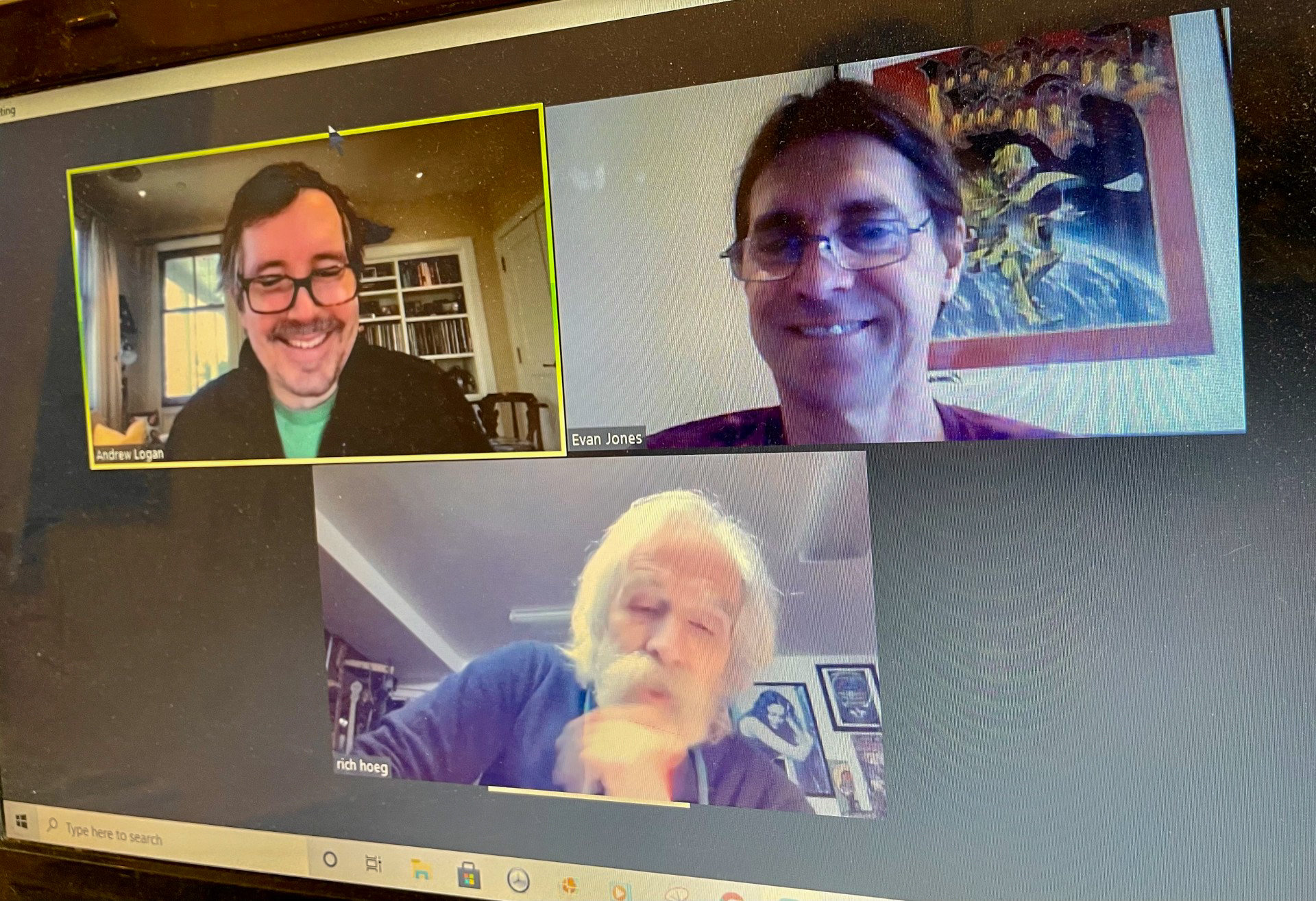
The first recipient of a GGF gift was guitarist Evan Jones of Xtra Ticket, which bills itself as Arizona's longest-running Grateful Dead tribute band. Jones was informed that a Hoeg Blackknife was coming his way courtesy of GGF via a Zoom call with Logan and Rich Hoeg. (This was in May of 2021, when live performances were still rare following over a year of COVID restrictions.) Zach Nugent was next in line, receiving a Kevin Burkett-built TB 1000 Artist. The Foundation was off to a running start.
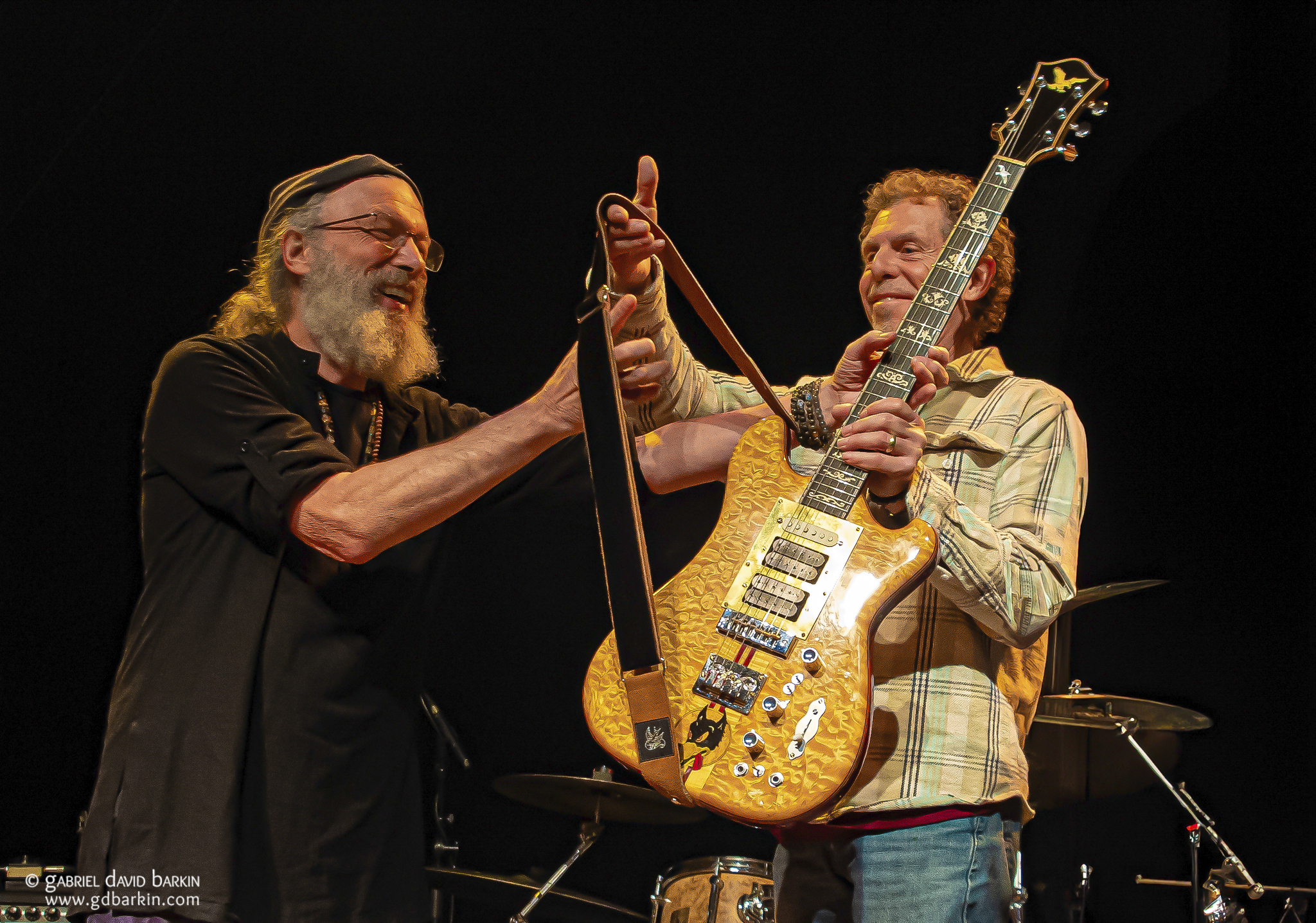
Today, many of the gift presentations are made on stage. I’ve had the pleasure of witnessing several of these occasions. Steve Kimock of Zero receiving a Wolf replica by its maker Bill Asher in Petaluma and jamming on it that night with gleeful abandon. John Kadlecik (Melvin Seals and JGB, formerly with DSO) beaming when he strapped on the Alembic guitar Logan handed him at the Great American Music Hall in San Francisco. Nate LaPointe of Cubensis misting up when Rich Hoeg handed him a replica of Weir’s Alvarez WY-2 Black acoustic earlier this year at a Bobby tribute show.
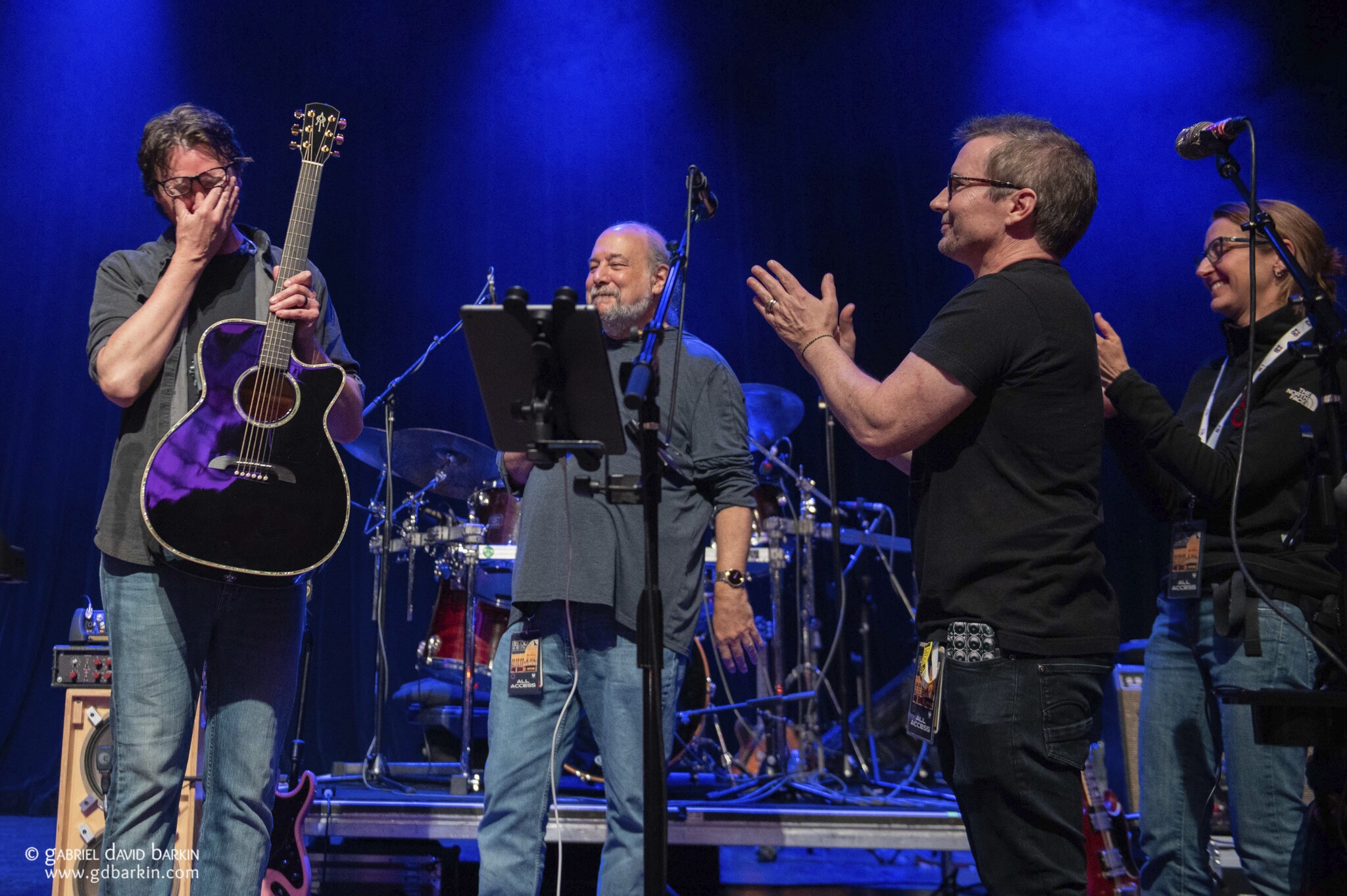
When I asked Logan in April how many instruments the Foundation had gifted to date, he said, “I think it was 88 recently, but I bet we're at 90 at this point.” Worth noting that it’s not just guitars. Logan is proud of many types of contributions to the Dead and Dead-adjacent music scene. “There's just so many pieces of gear,” he notes. “Keyboards, old Mu-Trons, Sennheiser mics.”
Logan and GGF are open to suggestions too. “If someone has reached out and says, ‘Hey, I need a guitar, I need something,’ we do our best to help, either as a foundation or my wife and I personally.” Financial hardships and material misfortunes (a house fire or stolen equipment, for instance) are known to pull GGF heartstrings. The GGF website has an application form for musicians who need equipment. (https://gratefulguitars.org/application)
Logan feels the work of GGF is important. “A huge part of the goal of this is to keep jam band music going into perpetuity. I see the teenagers at the Club Fox or Ashkenaz [who are] seeing a ‘Gator replica on stage – and they're all excited because they know that connects something to them.” It’s not just for the young’uns either. Logan recalls that when Stu Allen played Logan’s Les Paul Deluxe at a recreation of the Dead’s 8/24/71 Berkeley show, “A woman came up to me and said, ‘Are you the guy that brought that guitar? I was at the original show, and I haven't heard that tone until tonight. I just want to thank you so much for bringing it.’”
“NO DUDE, THAT WAS BOBBY’S”
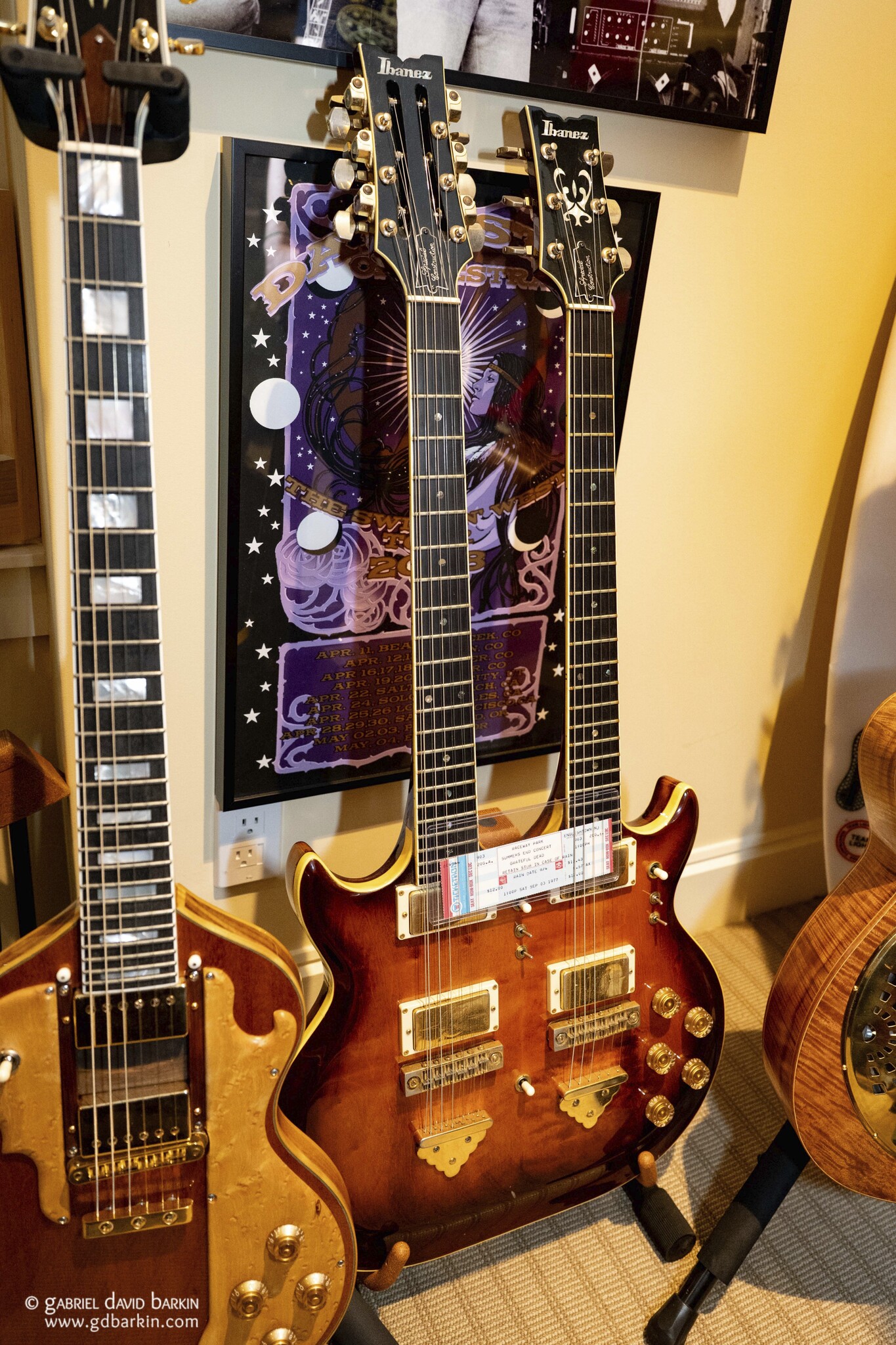
Bob Weir’s very own Ibanez double-neck guitar is on display in Logan’s “Bobby” room with a ticket for the renowned Englishtown, NJ, show in 1977 threaded into the strings. Weir used this guitar during the recording of “Terrapin Station” and had the guitar on a live show stage only that one time in New Jersey. He’d planned to play the Ibanez on the “Terrapin Flyer” section of the full “Terrapin Part 1” suite that day, but the band never got to that section at Englishtown due to drummer Mickey Hart’s reaction to the excruciating summer heat. (He was still recovering from a car accident just three months earlier.)
Fast forward to the current century. Logan loaned the guitar to Zach Jones for a performance of the full suite at Club Fox in Menlo Park, CA, closing the loop in a way for the double-neck several decades after its lone stage appearance. Jones apparently didn't know it was the “real” guitar. Logan recalls that “After the show ends, [Jones] and Alex [Jordan] are talking, and [Jones] is like, ‘Well, that was a replica, right?’ Alex was like, ‘No, dude, that was Bobby's.’ And Zach was like, ‘Oh, my God, I'm so glad I didn't know while I was doing it, because I would have freaked out.’”
GGF is also committed to doing much more than just giving guitars to cool musicians. Logan explains how this came about. “It feels a little bougie to people who don't have that same enthusiasm that we do about [Grateful Dead bands, etc.]. So we thought about music education.” Logan drew on his experience working since 2017 on a board for Fit Kids. (https://fitkids.org/) “We help schools do PE programs because, sadly, many school budgets have cut them out. Which is crazy, right?! And art was the one part that I wasn't getting with Fit Kids. I was glad I was [helping with] sports, kids need physical activity – but I still felt like I wished I was also doing the arts.”
When GGF associate Jack Barton suggested the Foundation begin funding music instruction and related programs for kids, Logan says, “I was like, ‘Oh my god, thank you!’ Because now we can do this. Now, every time we give a guitar, we give a $5,000 gift to a local nonprofit. And so we – as Jack likes to say – we leave something behind.”
GGF’s beneficiary organizations now include numerous nonprofits that help build the next generation of musicians and music lovers, including (a partial list):
At DSO’s January Fox Theater shows in Oakland, the two philanthropic sides of GGF came together. “We gave Rob Eaton this really cool Rich Hoeg guitar,” Logan says. “It's called a Blueknife. It's an amalgamation of the blue lightning bolt hollow body guitar that's out there [he points to one of the guitars in his collection] and a Blackknife.”
That same evening, GGF also donated $5,000 to Elevate Oakland. Many of the nonprofit’s students were in the house for the occasion, and Logan was excited that the DSO show provided an opportunity to bring the two philanthropic sides of GGF together – and in particular to give those kids an experience that might have real-world impact.
“It's not that [Elevate Oakland] is making them into Bob Weirs – it's that they're keeping them in school, keeping them engaged, and they're practicing something that teaches them that they're smart. Because of course, yeah, music makes us smarter. The Dark Star crew was totally turned on by it. They were putting headsets on the kids, and kids were watching them do lighting, watching them do front-of-house monitors. They got to see that you could do something else here, be an engineer or whatever. And it will enrich you, right?”
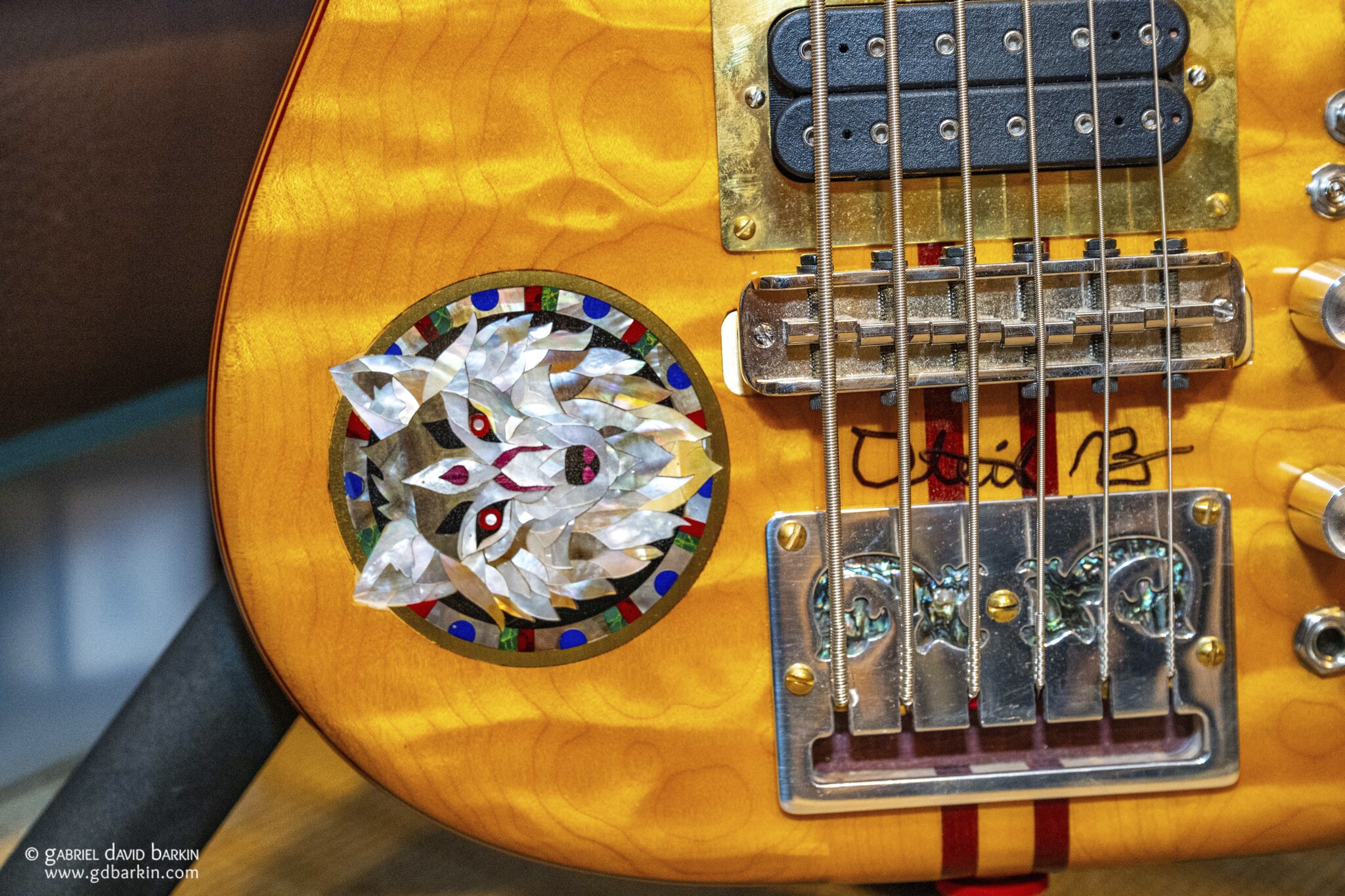
GGF’s philanthropy often receives payback in kind. Last year, the Foundation gifted Allman Brothers and Dead & Co. alum Oteil Burbridge a custom Dire Wolf bass crafted by Bill Asher. The luthier worked with Burbridge’s specs to design a unique bass that paid tribute in design and quality to Garcia’s famous Doug Irwin guitar Wolf. The output is a visually stunning instrument featuring an iconic mosaic of a wolf’s head just above the bridge that was hand-crafted with mother-of-pearl, abalone, and stone (designed by Jessica Asher and Jenny Shuman).
Burbridge was touched by the generosity and commissioned an identical instrument as a gift for the Foundation. The duplicate was auctioned at an event in Mill Valley’s famous Sweetwater Music Hall (once owned in part by Bob Weir), raising $100,000 to be split between GGF and Music Heals International, a kindred charitable organization founded by bass player Rob Wasserman’s daughter Sara. (https://www.mhinternational.org/)
A 'GATOR NEVER DIES
While he was holding Alligator during my tour of his collection, Logan recounted how another guitar aficionado he knows “asked Steve [Parish] recently, ‘Do you remember changing a battery in 'Gator?’ And Steve was like, ‘No, I don't remember that.’”
“About once a year we change the battery in this guitar. We do it because we feel like we should – but every time we go in to look, it's reading over 9 volts. [Garcia] probably only got the battery changed twice in its life when he was playing it, because it just didn't need it.”
Logan is also excited to describe how GGF has expanded the Foundation’s ability to reach musicians with its Matt “Curfew” Reynolds Matching Program. Matt Reynolds was the road manager for DSO until he died in 2017. “We love this idea of matching,” Logan says. “It's something that we have done as board members. Any fan who wants to give a piece of gear – it doesn't have to be a guitar, it could be a microphone, an amplifier, anything – they will pay half and the Foundation will pay the other half.” (https://gratefulguitars.org/the-matt-curfew-reynolds-matching-gift-program)
Warren Haynes was a noteworthy beneficiary of this program. Logan says, “Ed Reines, who sits on our board, bought half of a Wolf for Warren, and then the Foundation bought the other half. (And those Wolves are pretty expensive!) So now Warren has a Wolf.”
Haynes was thrilled with the craftsmanship and history of the gift. “[Grateful Guitars] had asked me if I wanted to make any changes to the design,” he told me on the phone. “I said no, I wanted it to be an exact replica. Because I had played the original Wolf when I did the Jerry Garcia Symphonic Celebration.” (That tour featured Haynes playing Grateful Dead music backed by a symphony orchestra.)
“It's a fantastic guitar!”
Haynes praised the work of luthier Bill Asher, who recreated the original guitar built by Doug Irwin for Garcia. “When they brought it out for the first time and I was able to play it, it looked and sounded and felt so much like the original Wolf it's uncanny. I was very impressed with all the tonal options and stuff that that guitar offered. It’s spot on.”
More from Haynes on the magic of playing Garcia’s historic guitars: “I also played Tiger at Red Rocks when I did the Garcia Symphonic Celebration. That guitar is amazing as well. That was, I think, the first time it had been played since [Garcia’s last show at] Soldier Field. From what I remember, the original strings were still on it. They took them off and put my strings on it for me to play – and then when it was done, we put the original strings back on it.”
Haynes described the magic of such an experience, the way it connects players across the years. “All those guitars have their own personality. [Playing] Wolf and Tiger kind of puts you one step closer to Jerry's sound because they were designed with his sound in mind.”
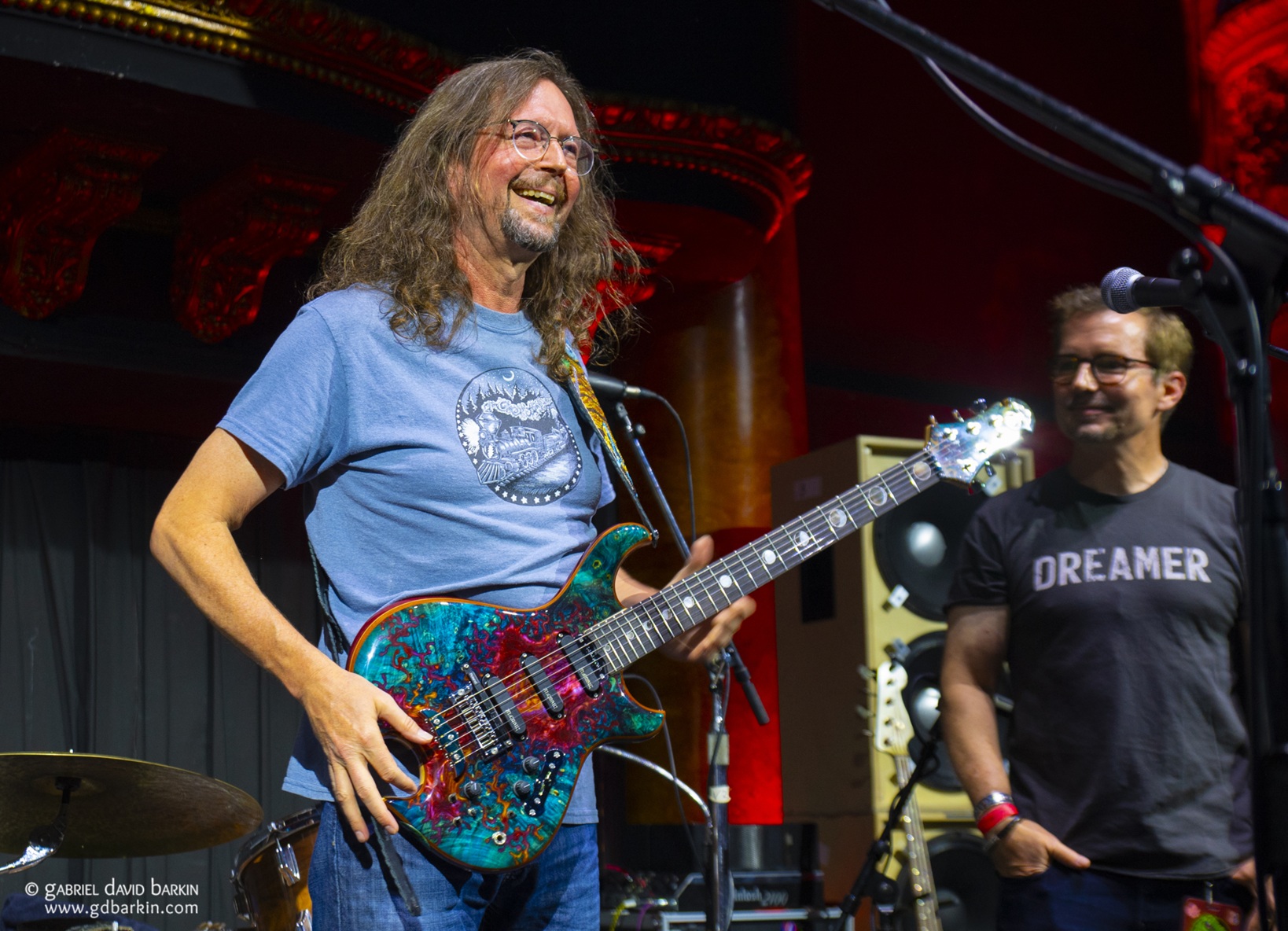
Logan is on a mission to share that magic as widely as possible, and not just with virtuoso celebrities like Haynes, Burbridge, et al. “We joke about having a Wolf in every bar,” he says, speaking about GGF’s mission. “And I still have that goal.”
Stu Allen sums up that mission with high praise for Logan. “He loves and values the music so much that he wants to contribute at a high level to its continuation, betterment, and base of knowledge in whatever ways he can. The music, the musicians, and the fans all benefit from it.”