Article Contributed by Russell Levine
Published on 2026-04-12
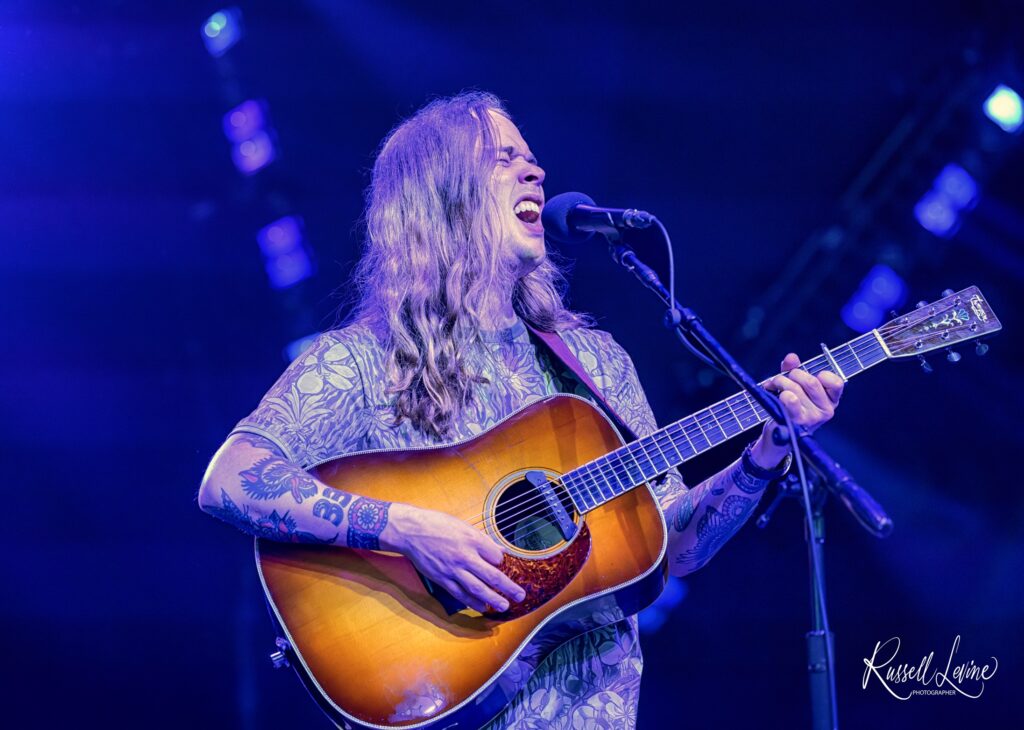
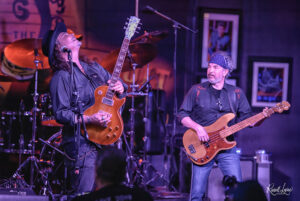
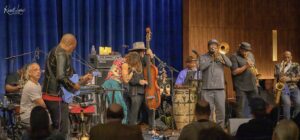
Billy Strings | St. Augustine Amphitheatre | St. Augustine, FL | April 4, 2026 | photos by Russell Levine
Some nights don't behave like concerts.
They don't really start clean, and they don't really end clean either. They just happen — then hang in the air afterward like humidity you can't quite shake.
That's what went down at the St. Augustine Amphitheatre on April 4th when Billy Strings brought a band that plays like it's trying to outrun the edges of gravity without ever quite breaking them.
But before any of that, there was Shakedown Creek.
Outside the gates, things were already moving. Not official. Not organized. Just a sprawl of vendors, travelers, heads, photographers, and first-timers slowly realizing they'd stepped into something with its own pulse. Tie-dyes everywhere. Grilled cheese sandwiches and genuine smiles. Nothing dark, nothing heavy — just people finding each other the way people at these shows always seem to find each other, like the music puts out a frequency that sorts the room before a note is even played.
It carried echoes of the roaming lot culture tied to the Grateful Dead, but it wasn't imitation. No nostalgia cosplay. No museum piece version of the past.
Standing there, I felt it the way you feel something you haven't felt in a long time but never actually forgot. Forty years ago — give or take — I was on tour with the Dead. Spring 1983. That same current running through a parking lot, that same low hum of people who'd traveled toward the same invisible thing. Shakedown Creek wasn't trying to be that. It didn't need to be. It just was — same instinct, different era, same pull toward wherever the music is happening. Some patterns don't disappear. They just wait for the right conditions to reappear.
People call The Amp the Red Rocks of the South. I've been to Red Rocks many times — that comparison is a stretch, and anyone who's stood on that Colorado mountainside knows it. But here's what's true: The Amp is something special, and it earns its reputation honestly.
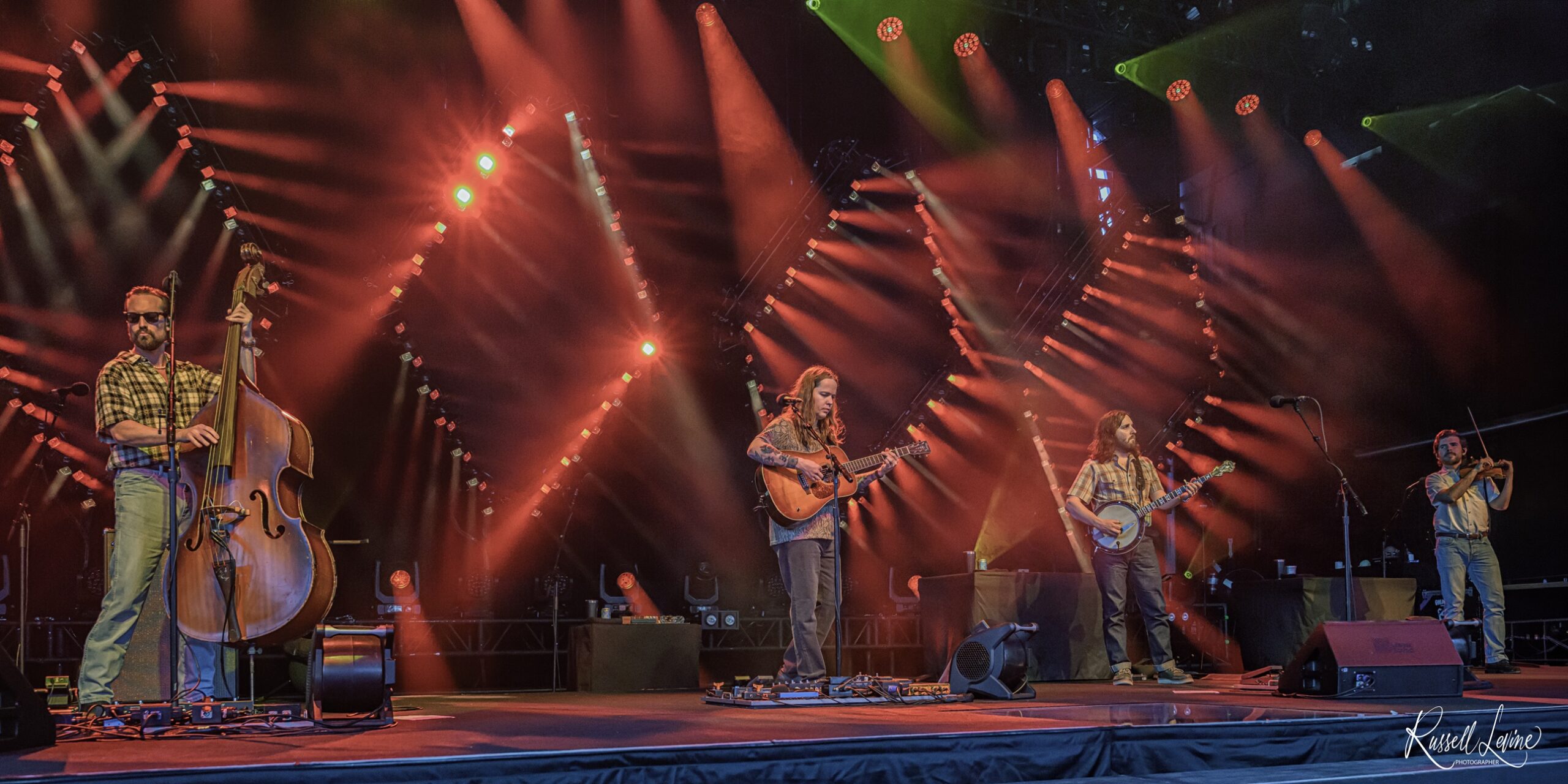
Nestled on Anastasia Island within a scenic arboretum, the venue sits adjacent to Anastasia State Park, surrounded by ancient live oaks and cooled by ocean breezes drifting in off the Atlantic. The tent-style roof and Roman Coliseum layout give it a look unlike anything else on the touring circuit — and the acoustics it produces are genuinely exceptional. With around 5,000 seats, even the upper deck feels close. You're never really far from the stage. For a band like Billy Strings, who could easily be filling sheds four times this size, the choice to play The Amp says something.
Ranked among the top outdoor venues in the country — and consistently — The Amp has developed the kind of chemistry with certain artists that only comes from repetition and trust. Billy Strings returning for a three-night run here to kick off his spring tour wasn't random. This room and this band have history. The crowd felt that before the first note landed.
Set One opened without ceremony.
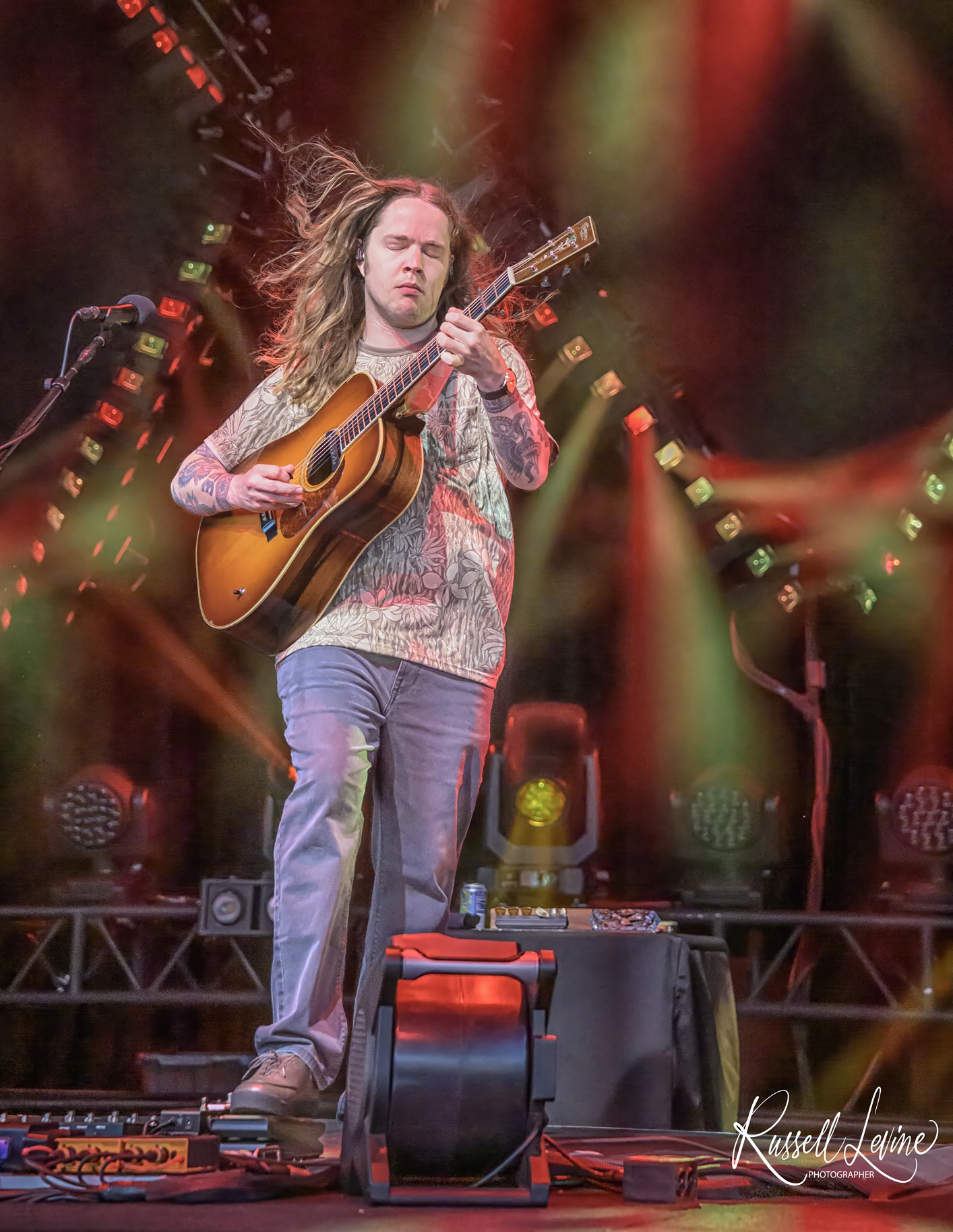
Billy Strings came out already in motion, like the show had started mid-air and the room was just catching up. "The Fire on My Tongue" into "Know It All" — no warmup, no easing in, just immediate lift-off. "Psycho" into "Pyramid Country" into "Must Be Seven" blurred the line between songs entirely, the band stitching pieces together so fluidly that looking for the seams felt beside the point.
I was shooting from the pit, working the first three songs before moving back through the crowd, and what struck me immediately was how little showboating was happening for a player of Billy's caliber. The fireworks were real, but they were in service of something — the song, the moment, the room. By the time "Wargasm" closed the set, Set One hadn't really ended. It had just released pressure.
Set Two opened the room up differently.
Less explosive, more elastic — like the amphitheatre itself was being gently stretched outward to see what it could hold. "Leaning on a Travelin' Song" eased things into a different gear. "End of the Rainbow" set the tone from there: loose, exploratory, unconcerned with resolution.
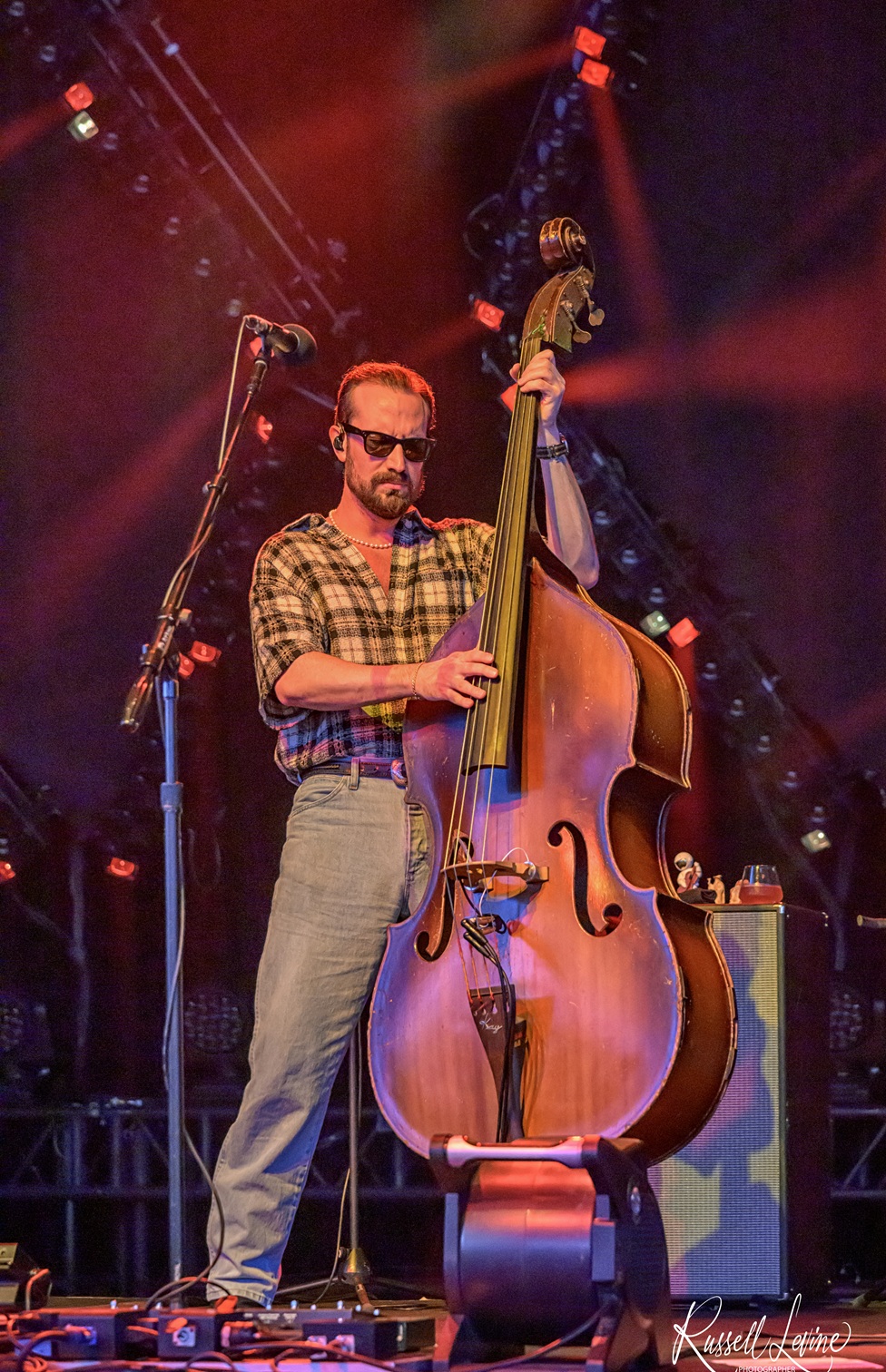
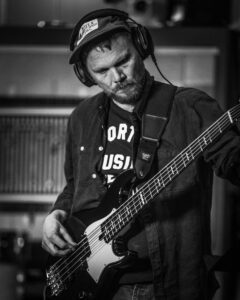
Through all of it, I kept coming back to Royal Masat on bass. In a band this kinetic, with this much happening at the treble end of the spectrum, somebody has to be the spine. Masat was it — holding down a low end so steady and so present that the band's wildest improvisational swings never once felt untethered. You don't always notice great bass playing. You just notice that everything feels right, and then you realize why.
The set pulled inward mid-way — "In the Morning Light," "Enough to Leave" — quiet stretches where the crowd stopped moving because nobody wanted to break whatever was holding.
And then the night tilted.
I didn't see the shooting star.
I was underneath — floor level, press position, pen in hand — when it happened. What I heard was the upper deck before I understood anything: a roar, then stomping, the kind of crowd response that doesn't come from a guitar run or a key change. Something else had entered the room. Or rather, something had crossed above it.
During "Love Among the Tombstones" — a brand new song debuted this weekend, melancholy and precise in the way that the best Billy Strings originals are — he hit a run that broke loose from the structure around it. Fast, bright, too deliberate to feel accidental. And somewhere in that moment, up in sections 301 and 302, a streak of light moved above the St. Augustine skyline, gliding over the lighthouse like the sound itself had stepped outside.
By the time I understood what had happened, it was already settled into the crowd as shared fact. Thousands of people had registered the same impossible thing at the same moment. There was no debate. Just that collective pause, and then the roar, and then the stomping that reached me down on the floor before I knew what it meant.
Masat held it together underneath. The band expanded the moment rather than punctuating it, stretching what could have been a flash into something that felt more like structure. "Love Among the Tombstones" kept moving. The night kept moving. But something had shifted.
"Highway Hypnosis" brought things down slowly after that — not an ending, more a return to gravity. The band didn't resolve anything. They just eased the room back into its body.
The encore arrived without fanfare.
"The Beginning of the End" carried its contradiction plainly. "We Shall All Be Reunited" landed softer — less statement than feeling. Nothing was explained. Nothing needed to be. It just kept echoing.
Outside, Shakedown Creek was still moving.
Long after the encore, people were in no hurry. Conversations running, laughter, the night being shaped and reshaped in real time, the way these nights always are — half the show still happening in the parking lot an hour after the house lights came up.
I've stood in a lot of lots over a lot of years. There's a specific quality to the ones that mean something, and this had it. The grilled cheese was gone by then. The tie-dyes were drifting toward cars. But the current was still there, same one I felt in 1983, same one that doesn't have a clean explanation and doesn't need one.
A shooting star is supposed to disappear.
That's the rule.
But this one didn't leave cleanly. It stayed in fragments — in the music, in the faces, in the air outside the gates where nobody seemed ready to let the night end.
What remained wasn't spectacle.
It was shared certainty that, for a few minutes over the lighthouse, everyone in the upper deck saw the same impossible thing.
And down on the floor, I heard it happen.
That was enough.
But Billy wasn't done with the night either.
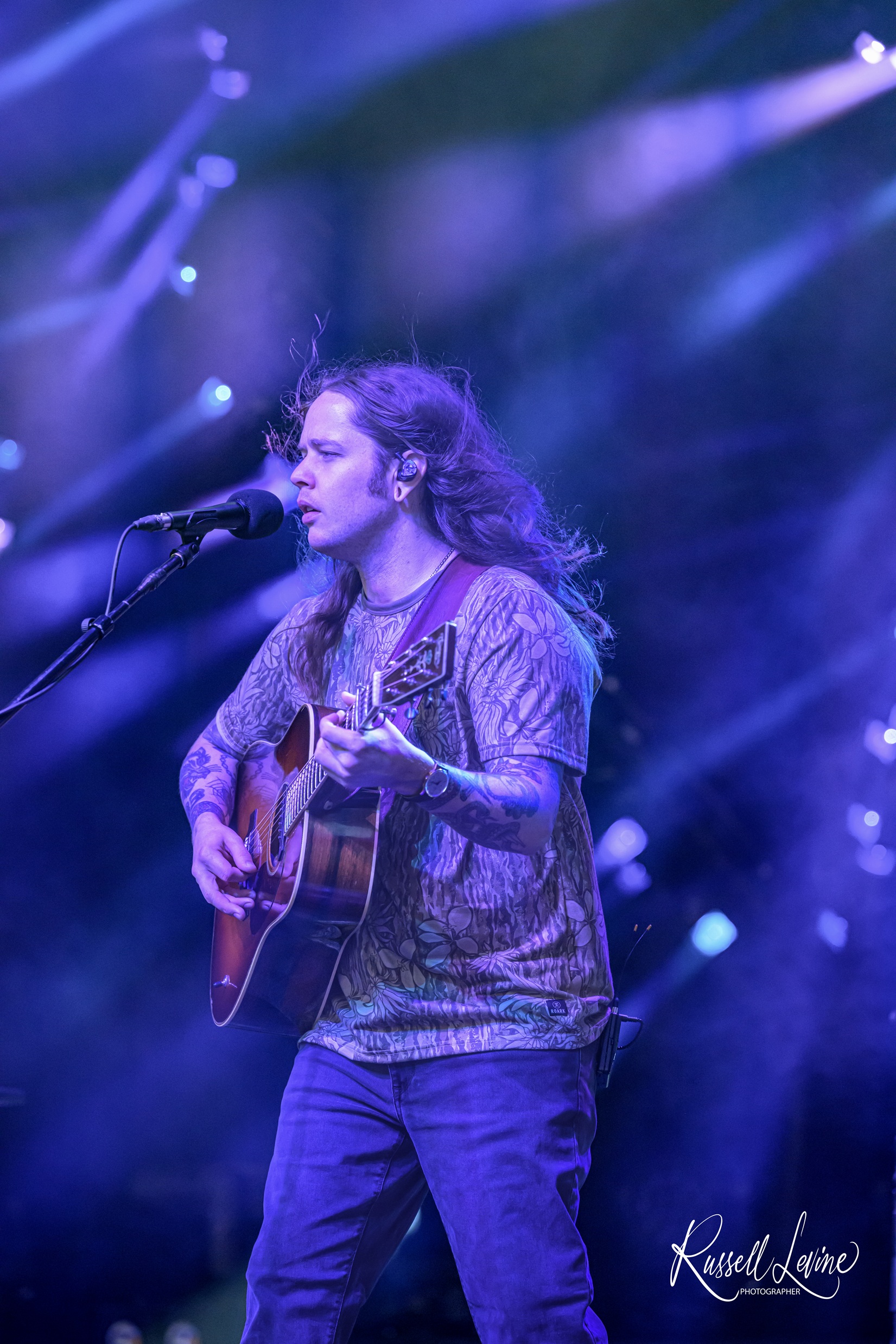
Long after the encore, he stayed at the edge of the stage — not performing, not acknowledging, just standing there. Soaking it up. A man who had just played two sets of music that bent the room into new shapes, standing quietly at the lip of the stage like he wasn't ready to let go of it any more than the crowd was. The roar had softened into something warmer by then. More gratitude than electricity.
He just stood there and took it in.
It was a small thing. But it was the realest moment of the night — a performer and an audience mutually unwilling to be the first one to say goodnight.
Shakedown Creek was still thinning out behind the gates.
The lighthouse was dark.
And the shooting star was long gone — except it wasn't, not really.
Some things don't disappear just because they're finished.
Russell Levine is a photographer and writer covering live music for Grateful Web. He has been documenting the jam band world and its community for years, camera in hand and a few decades of Dead shows in his bones.