Article Contributed by Joan DeLeon
Published on 2026-10-06
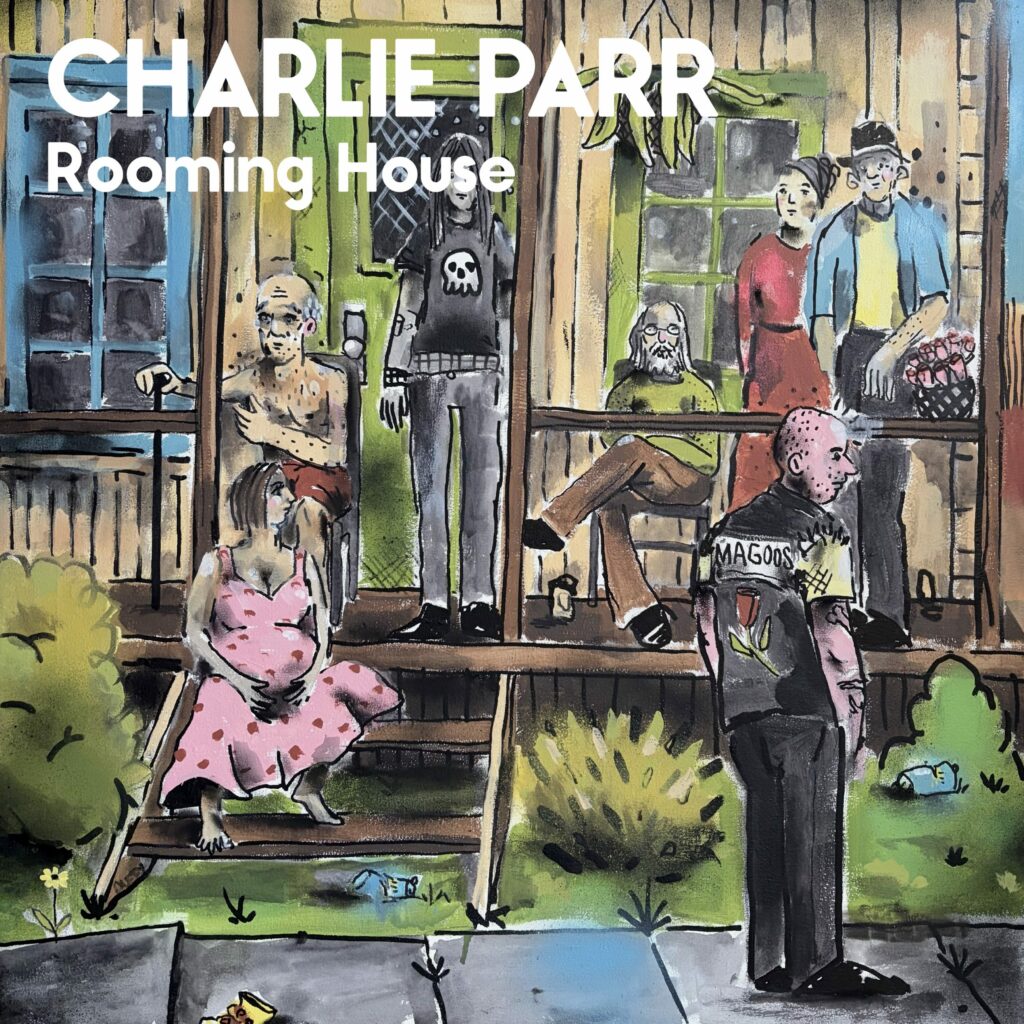
To knock at the door of Charlie Parr’s Rooming House, you are agreeing to his terms: tune in, and don’t turn away.
Instead of relying on overly referential societal commentary by pulling quips from headline clips, Parr offers a half hour of narrative so engaging and earnest that I keep returning to its ambiguous closing to exhume clues. His previous works maintain a similar sense of place as Rooming House (“Boombox” from 2024’s Little Sun comes to mind), but Parr builds on his familiar territory with what I can only describe as an urgent morality play that can be cast in any zip code, county, or corner of the country.

On Rooming House, the instrumental ebb and flow of “Duluth 1964” pulls us back to what could have easily been an exercise in nostalgia, but instead immediately devastates with the introduction of our Everyman, John, at the moment of his adolescent abandonment.
Mary abandoned John when he was only 12 years old
She left him on a January night and she walked out into the cold
And he awoke the next morning to find his mother gone
And he ate his breakfast and went to school and then he came back home.
Parr trusts that we can handle these hard, sometimes unfinished truths, and spares us no details. We may never see Duluth's aging infrastructure, but thanks to Parr, we feel every ache that acknowledges our universal struggles and ensures, like his Rooming House tenants, that we do not suffer in isolation, fulfilling the promises of good company and good art.
The album’s messiest moments (best illustrated in its title track via a Rockwellian kitchen tableau interrupted by a good deal of bathroom talk and roommates retching) remind us that this work comes from a human and seeks to capture a spectrum of deeply human experiences. Across the album, it’s almost impossible not to weave a mental web tracking “who’s who” as Parr introduces his inhabitants as naturally as neighbors do through the intimacy of close quarters. But as evident in “Mother Sara,” intimacy doesn’t always equal a lack of friction (“Her roommates hate the smell of dirty diapers” / “In a houseful of people trying to sleep, Sara’s baby knocked over a glass”). What persists throughout the narrative is a simple, though oft forgotten truth: enduring friction is the cost of community, especially for those like Sara who are otherwise seen as an inconvenience or afterthought.

Parr pulls us aside within the parentheticals of “(what’s so funny about) Universal Healthcare?”, breaking the established observational distance with exasperation and fear so palpable and convincing in his plot to rob a bank to receive medical attention, that I too felt primed to catch a charge for the peace of mind only a copay and CAT scan can provide. Up until this point, Parr’s tone is consistent and conversational, but here, as he blurs the lines between himself and the narrator as another neighbor, he hollers - and it’s not just to get our attention; it’s because it hurts. The track is somatic, Dave King’s percussion syncing up with our own pulse, and I swear, about halfway through, there’s the simulated rattling of a pill bottle. And when our worst fears are made manifest in the subsequent track (“Bank Robber”), that is, when we are desperate enough to take extreme action, we are dismissed, or worse, reduced to a punchline or caricature.
The “hero” of the bank, in his valiant, adrenaline-infused enthusiasm, recalls his diffusion of the debacle by referring to our failed felon (and friend) as a “derelict bum” - a mischaracterization that stings since we’ve spent so much time immersed in his world. The cops, when they drop him back at the rooming house (“Duluth 2026”), offer no intervention or advice beyond an act of unbearable Othering, saying they “don’t want to see [him] anymore.” Parr grants us the omniscience of both parties to drive home how our easiest, immediate assumptions are almost always inaccurate and lack the most basic empathy. As the aftermath unfolds, our narrator, though deflated, contemplates his fear of death and the futility of words, but decides anyway to get up off the floor.
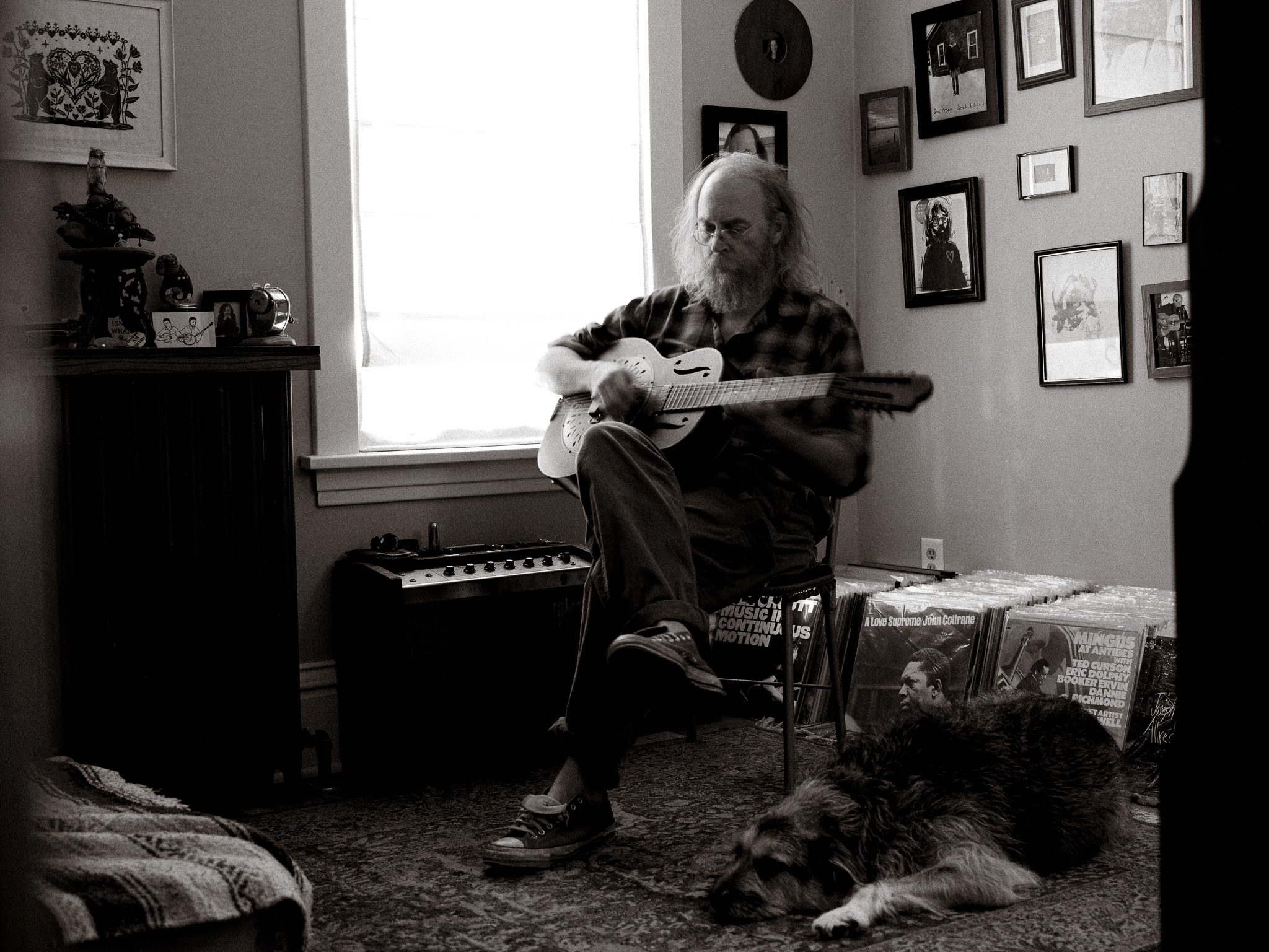
The conclusion to Rooming House builds on this momentum in “Lilliput Park,” opening with Jacqueline Ultan on cello, producing a swelling resonance so expansive it fills every hollow crevice of your being. It’s unlike any track on the album and makes Parr’s picking even more dynamic, signaling a clear shift as the household wakes to a new morning. What seemed sure to bring about a fresh start instead results in a bait-and-switch: our cast of characters suddenly face eviction, but their community carries on with (now Old) John - the original catalyst and North Star back home.
In his liner notes, Parr grapples with the helplessness of those inside Rooming House and his own feelings of resignation, working to make sense of meaninglessness as he oscillates between “tiny things” as trivial or important evidence of effort in the face of daily demoralization. Parr’s voice joins the chorus against the hardening of our hearts, alongside Joan Baez (“Action is the antidote to despair”) and Simone Weil (“Attention is the rarest and purest form of generosity“), leaving us with a maxim of his own, ”Empathy aids in healing.“
No other posts from Joan DeLeon.