Article Contributed by Joan De Leon
Published on 2026-11-06
In this fragmented moment, where tastes and trends are fleeting and informed by forces beyond our control, many artists settle into a niche that appeases the algorithm and our attention spans: nostalgia. Nostalgia, from the Greek words nostos (“return home”) and algia (“pain or longing”), is often directly translated as “homesickness.” These nostalgic creative endeavors are abundant, but hollow - offering up splices of recognizable samples and shot-for-shot recreations of once provocative routines. They are reanimated corpses intended to remind us of when reality felt more solid and predictable. In her work on nostalgia, sociologist Janelle W. Wilson references travel writer Jan Morris: “We cannot return to the past, but we can go home again” (2002). Arriving at exactly the right time, Sylvie’s debut album, New Season, builds on the sound and themes of the self-titled 2022 LP, while Ben Schwab himself returns to an inevitable lineage as he finds his way back home.
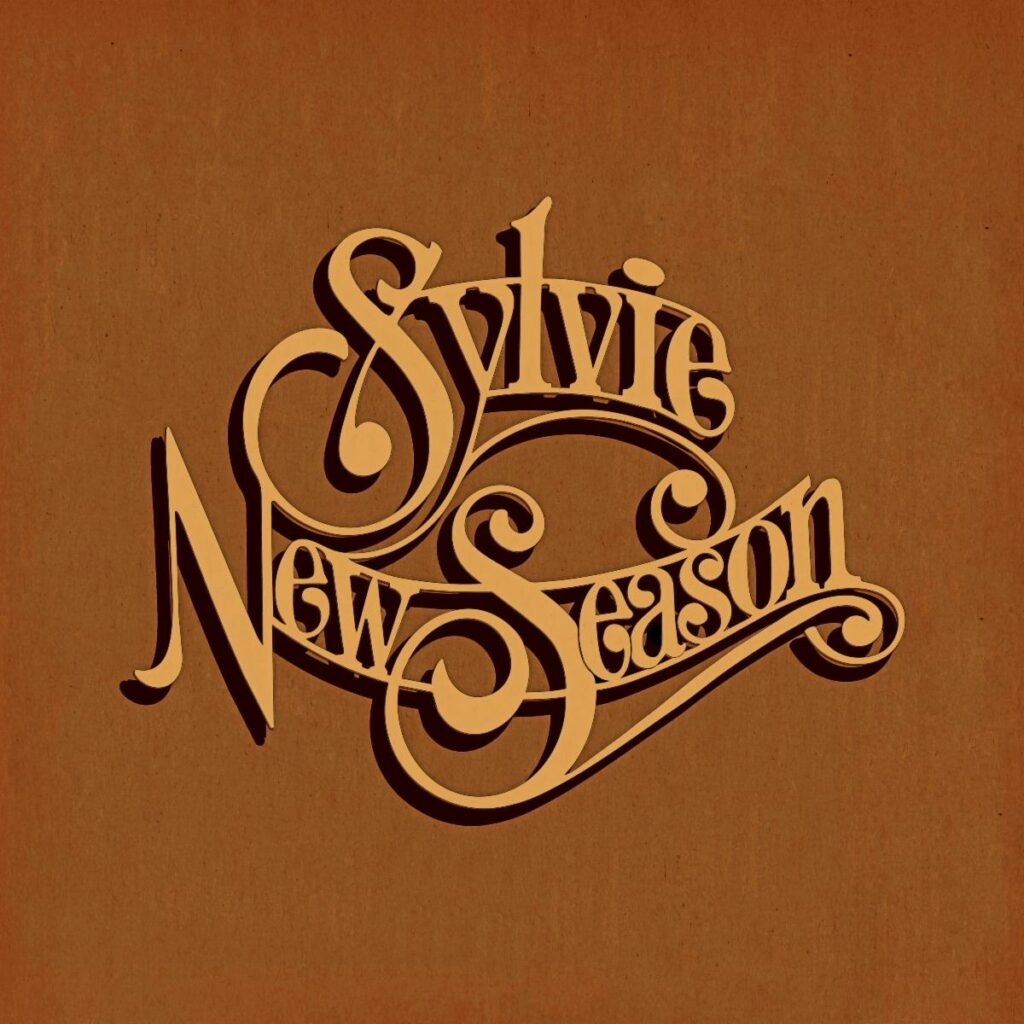
Even the album cover, ornamental yet minimal, doesn’t conceal its influences, and the open acknowledgment of the project’s wellspring is how it finds its sweet spot on the ‘70s spectrum (which otherwise tends to swing to extremes, either Stevie Nicks pastiche or claustrophobic psychedelia). Instead, Sylvie’s collaborators expand on their predecessors’ foundation, bringing forth an exploration of emotions that is introspective and simultaneously spacious, avoiding the habit of melancholic rumination that often persisted among singer-songwriters of the era. Nothing in New Season is preserved in amber; various voices remind you throughout its tracks that this is an exercise in constant motion, gaining momentum, and even when looking back, we’re still moving as we shift into nodding terms with memory.
In a 2023 interview on The Vineyard Podcast, Schwab affirms the enduring cultural significance of Southern California (“The history is here”) and situates Sylvie in contributing to the scene - not seeking to imitate, but to maintain; in his words, to “take that energy and carry it forward.” To Schwab, Sylvie’s ethos emerged as he arrived at a place of acceptance with “what was in front of [him],” regarding the connection between the soundtrack of his youth and his father’s band. The younger Schwab now takes the baton from Mad Anthony, comprised of Larry Dotson, Carl Richards, and John Schwab, and, with so much care, creates the conditions for their original song, “Rina,” to resurface in 2026. “Rina” accomplishes a similar juxtaposition as Looking Glass’s “Brandy (You’re a Fine Girl)” - tender, but tragic - though its unflinching portrait of loneliness and isolation is an act of mutual disclosure, reminiscent of hearing the plight of “Eleanor Rigby” for the first time, and realizing — Someone else feels this way too. To listen to father and son’s interpretations of the same source material is akin to stumbling upon the ultimate heirloom, with static fading as they harmonize in a dialogue spanning five decades.
The sense of community at the heart of the album is both historical and personal; just as folks floated through the canyon homes of Cass Elliot and Frank Zappa, contributing a lyric or melody in passing, the collaborative nature of New Season speaks not just to Schwab’s ability to compose and curate, but to his character and the company he keeps. Schwab, who believes in the social gravitational pull of an upright piano, tugs on the threads of Tapestry (1971) throughout the album, and alludes to James Taylor in “Travelling.” Schwab’s camaraderie comes through lyrically as well, with several tracks explicitly extending thanks to or mourning the loss of a friend. Although Schwab is at the helm of this group project, one of the many strengths of Sylvie is how Schwab makes space for the ensemble, with Zena Kay’s pedal steel as a standout, especially complementary to Kacey Lee Anderson’s effortless vocals on “Wish I Could Tell You,” soaring as Kay slides. Kay’s pedal steel orients the listener in time, space, and place, immediately establishing atmosphere on tracks like “New Season,” not unlike Jerry Garcia on Crosby, Stills, Nash and Young’s “Teach Your Children.” It’s a specific sound you seek out, and it fosters an inherent Americana sincerity.
Though we are forced to wade through the wreckage of algorithmic recommendations, Schwab seems to disregard the attention economy entirely, by giving the listener time to indulge in extended instrumental intros and breaks that warrant rolling a window down to enjoy to the fullest extent. In production, Schwab largely leaves the vocals and instruments alone, forgoing stylistic distortions that lean gimmicky, a choice Schwab describes in his talk with Jacob Burnett; that the simplicity and authenticity in Sylvie’s delivery, and of their ‘70s soft rock counterparts, is refreshing to disoriented audiences grappling with “weird, crazy times.” In the album’s penultimate track, Schwab, accompanied by Sierra Ferrell, ubiquitous and otherworldly, delivers a perfect closing-time ballad, blending California iconography with wistful wisdom and cinematic strings. Ferrell references “an old familiar song that you know,” and whether deliberate or not, the lyric captures how it feels to spend time with New Season.
What’s ultimately so satisfying about the album's progression is the evolution of the extended invitation, which initially offers and assures that there’s “always room” for us (“Are You Coming?”). But once our moment with Sylvie is through, Schwab and company urge us, as the season shifts and the credits roll, that we are to keep going and cross a threshold - “alone and on our own.” This release doesn’t feel like abandonment, but rather reassurance after a collective catharsis transpired, ending by processing a “season of burden” and returning home.