Article Contributed by Dan Ward
Published on 2026-06-09
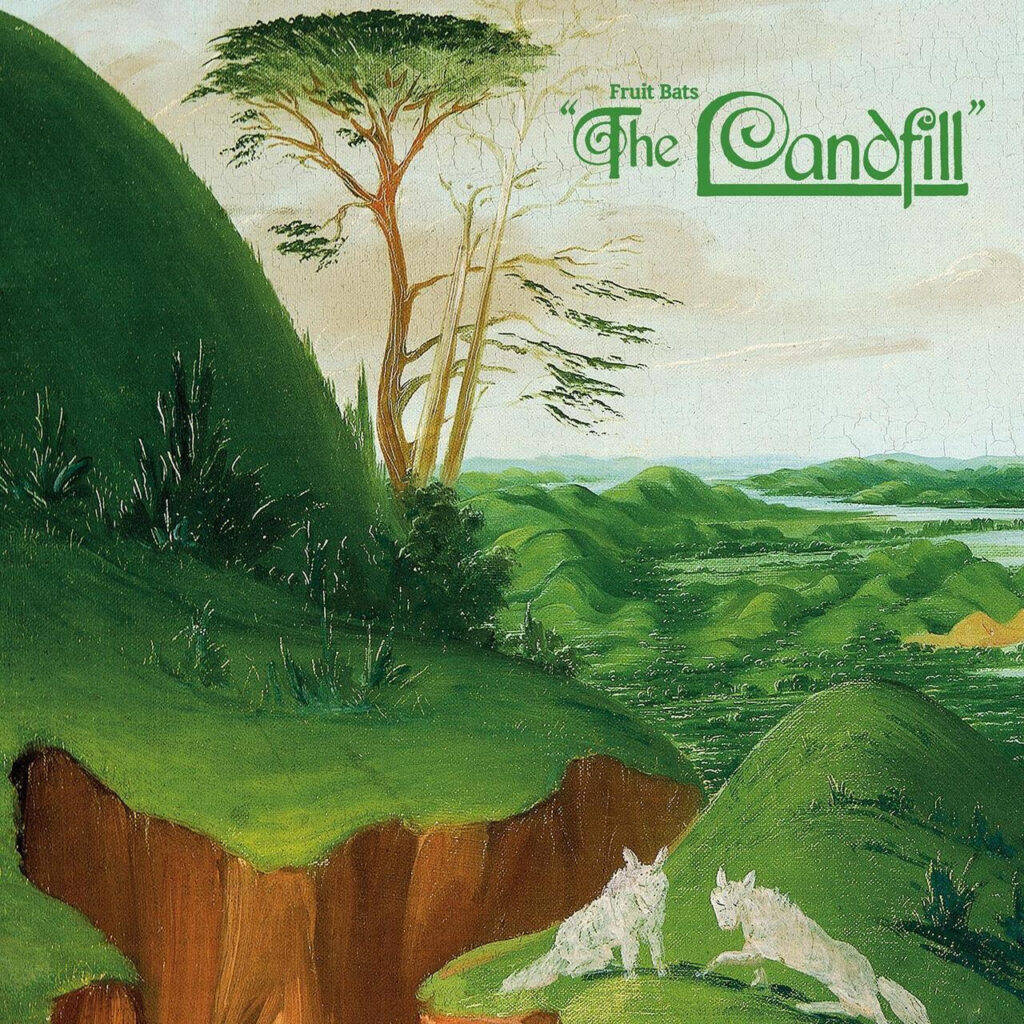
Photo: Courtesy of Fruit Bats
Fruit Bats have returned with a new album titled The Landfill, derived from frontman and only permanent member Eric Johnson. Johnson, a Chicago native, chose the title from his upbringing in the Midwest, where ubiquitous landfills dot the landscape. The album is a collection of his own thoughts on society, people, and love. Eric put together an impressive lineup of musicians to complete the release: bassist Davis Dawda, Josh Mease on guitar, Frank LoCrasto on keyboards, and Kosta Galanopoulos on drums. Joining the ensemble are violinist Renata Zeiguer and pedal steel artist Owen Thayer. The music is decidedly personal.
The album starts off with “The Saddest Part of the Song,” a laid-back, melancholy melody that drifts along over soulful guitar riffs. The song instantly evokes feelings of introspection and reflection. The backing instruments, however, provide an uplifting feeling, giving the listener hope. Is it a personal reflection or sage engagement that asks or tells, “Found every little turn to take wrong…”? It is a great tune to set your mind on that healing inward journey, and a great place to start.
The band moves on to “All Wounds,” a truly uplifting song. The song starts with brushed drums and keys, slowly building with vocals and guitar. The message is simple but relatable, as if Eric is singing directly to us, telling us to be patient because healing is a process. A wonderful harmonica solo sets this song apart, giving the audience that wonderful feeling of inclusion and understanding.
“Think Aboutcha” has a bouncing beat that moves us right into our happy place. Playful and disarming, the song complements our need for self-worth in the eyes of others. Eric builds up the intended subject with words of acceptance and desire mixed with an ominous warning: “Maybe someday this will all be gone…”
Interestingly, the next song, “That Goddamn Sun,” feels like an antithesis, where he is lamenting the loss of someone who has moved on. The lyrical lines even move in the opposite direction. The intended subject enters his thoughts, and we are drawn into that shared feeling of loss, like the sun cannot even find us, all while seeing those we think about and envisioning them doing well. The pair works together or separately; in any case, they are salient.
The release moves on with “Silverfish in the Sink,” one of the slowest songs on the album, returning to a sad, brooding feeling. The song weaves a tale of a family in decline, with the parent and child not relating to each other. This feeling expands to the singer himself, wondering if we will ever move on and “put your feet into the sea again.” The song leaves the listener without resolution. Like the idea of the bug-infested sink, it just is, and the listener must find their own ending.
Eric gives us a slight return now with “Wild Pony Tower Moment.” The music has an open, fresh feeling, and with the addition of piano and violins, it sounds very different from the previous tracks, yet it fits right in with the subject matter. We are heading back to a happier side of the band, and the next track builds on the last with “Fishin for a Vision.” This track has the happy factor turned up another notch and adds wonderful rhythmic details to keep you on that track.
The music is in full uplifting, happy mode for “Perhaps We’re a Storm.” The drums, which have been mostly subdued, are now on full display. The juxtaposed lyrics give us great, vivid imagery to digest as we think about not the destination as much as the journey: “Climax in slow motion.” The song has a more rock feel than the rest of the album and presents the band’s versatility. It is truly a fun and pleasing song that feels just right here toward the end of the release.
The band settles back down with “Hummingbird Sage.” Eric takes us back to a time before Chicago was born, then parallels the town’s development with human development. It is a call to simpler times wrapped in a lovely melody that allows us to drift into thought.
The final cut is titled “Landfill,” both a metaphor and a reality. The song speaks of civilization’s creation of something good and the waste it generates. Humans, too, create themselves, but also waste. The narrator is outside looking into the subject, but Eric takes a different perspective. Instead of looking up from a pit of despair, he looks down on the neighborhood from the lofty landfill.
Fruit Bats have been gaining popularity and honing their musical skills. This latest album is yet another facet in a career that is rising. Look for the band out on the road this summer, and pick up this release to get primed for the live show.