Article Contributed by Gabriel David Barkin
Published on 2026-09-19
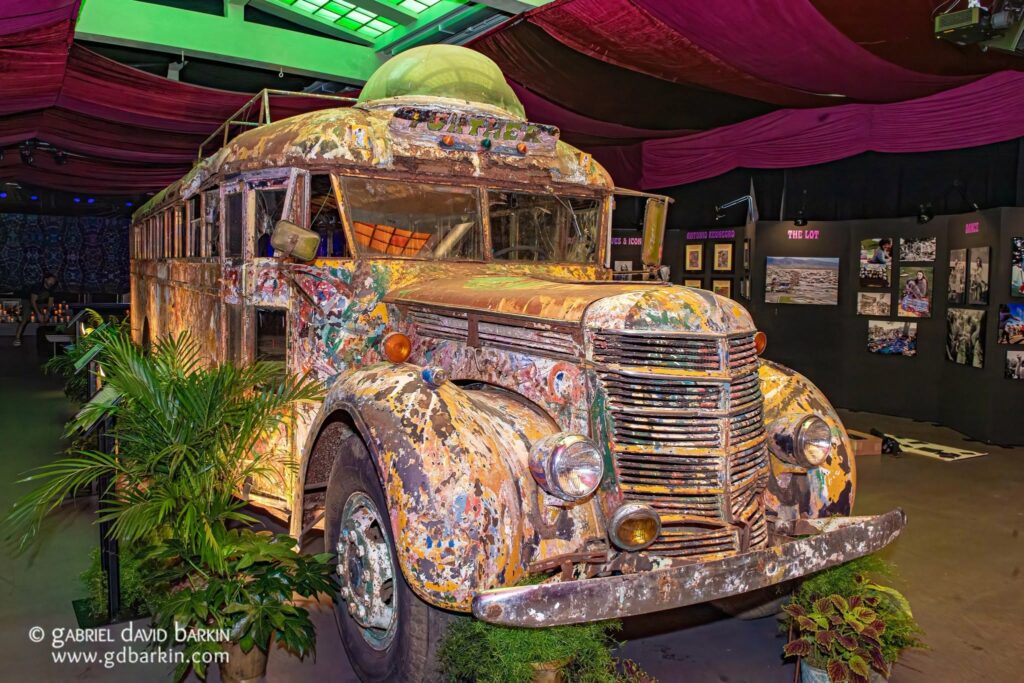
Furthur bus - photos by Gabriel David Barkin
Buses loom large in the tapestry of Americana. There’s the bus upon which Rosa Parks refused to give up a seat to a white person, launching the civil rights movement. The Magic School Bus of children’s literature. The bus that has wheels that go round and round, which every child sings about in preschool. And don’t forget about The Partridge Family’s tour bus, with its Piet Mondrian-esque geometric paint job.
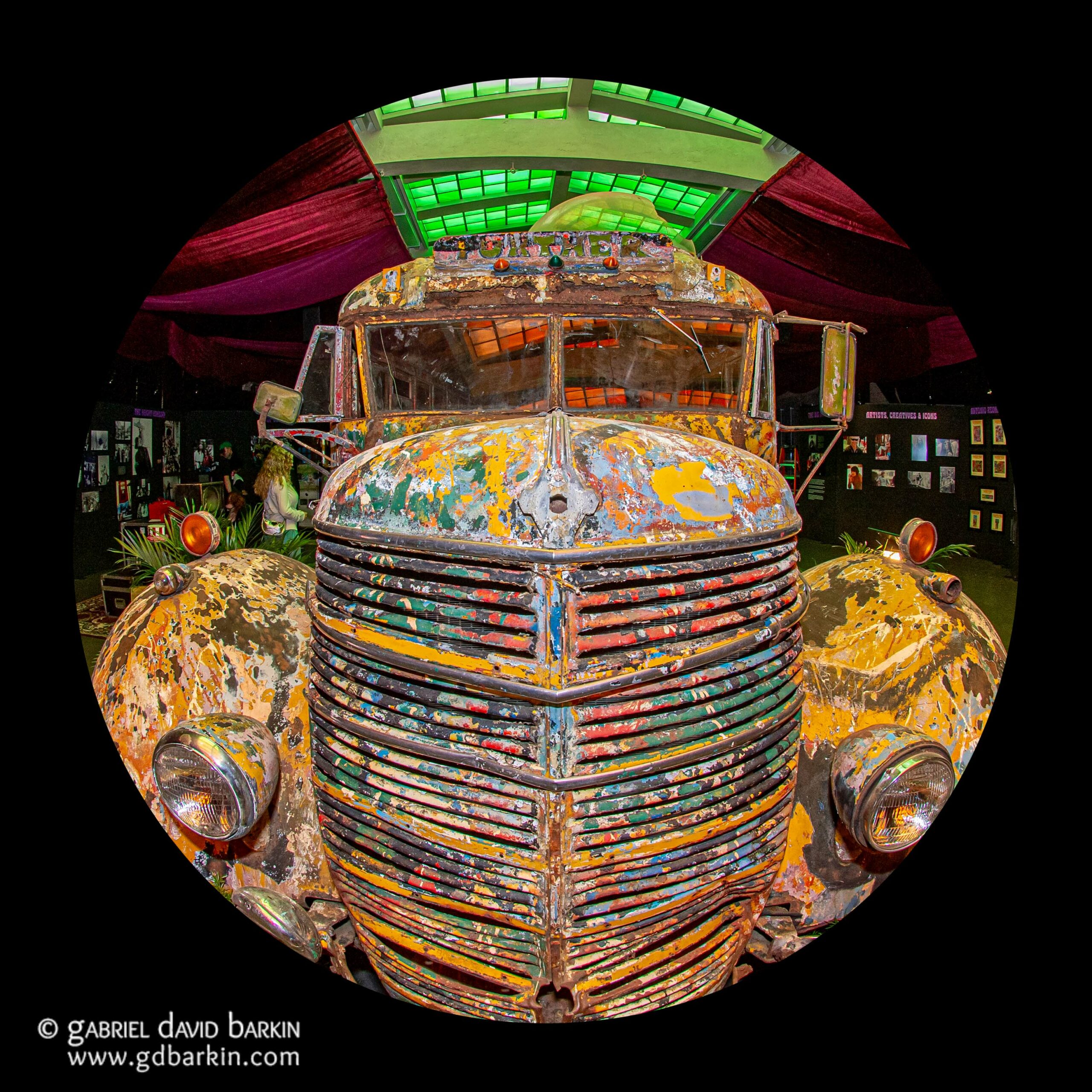
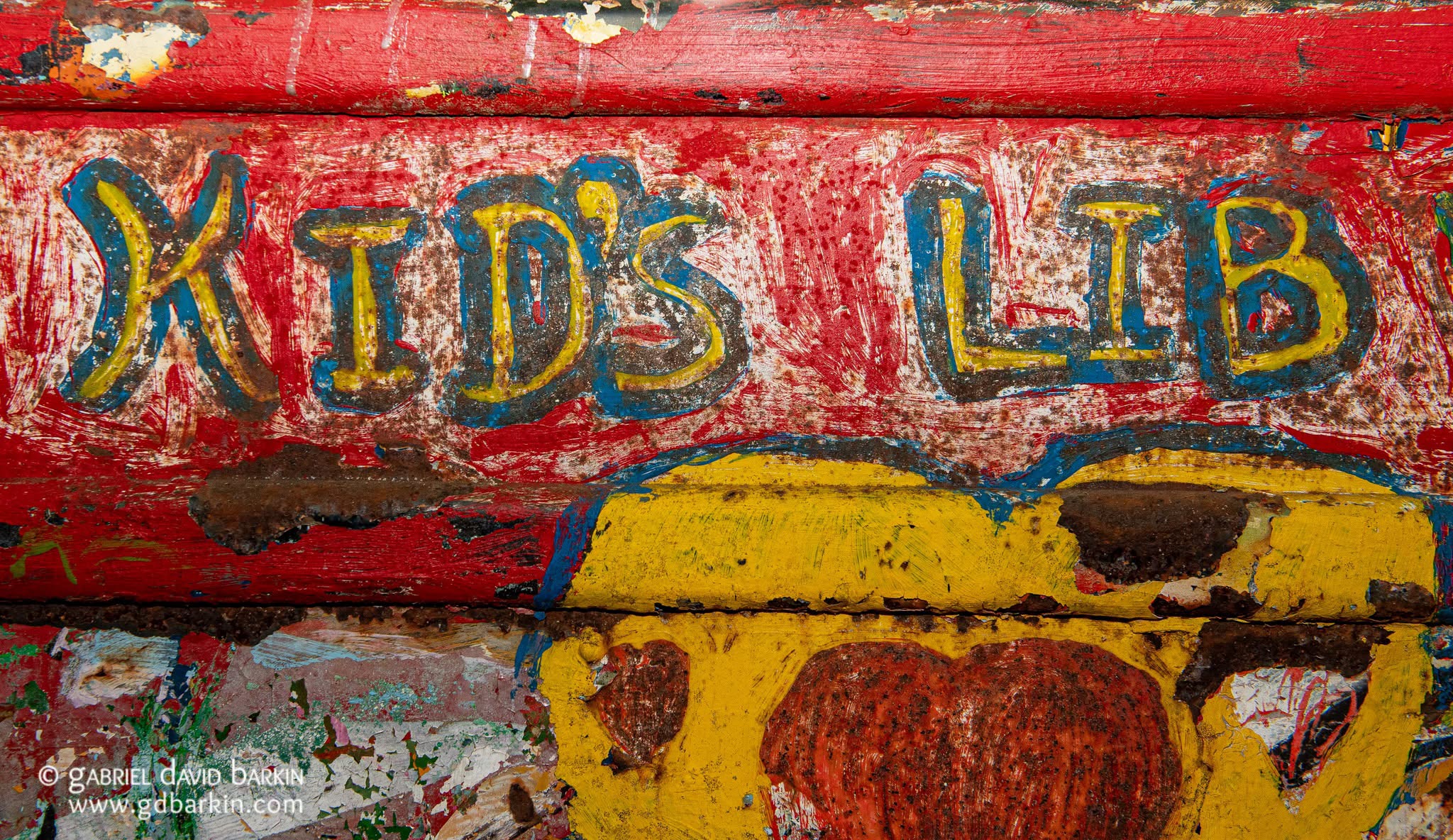
For the so-called counterculture movement that spawned the Grateful Dead in the 1960s, THE bus of record is Furthur, the 1939 International Harvester school bus that Ken Kesey and the Merry Pranksters drove across the country. (Admittedly, that brief description of its history barely scratches the surface.) The iconic vehicle painted in psychedelic DayGlo colors that scared the bejesus out of everyday mom-and-pop Americans from coast to coast. The bus memorialized in Tom Wolfe’s 1968 book The Electric Kool-Aid Acid Test. (Homework assignment: read that book.)
When Deadheads and others use the expression “I got on the bus” – this is that bus!
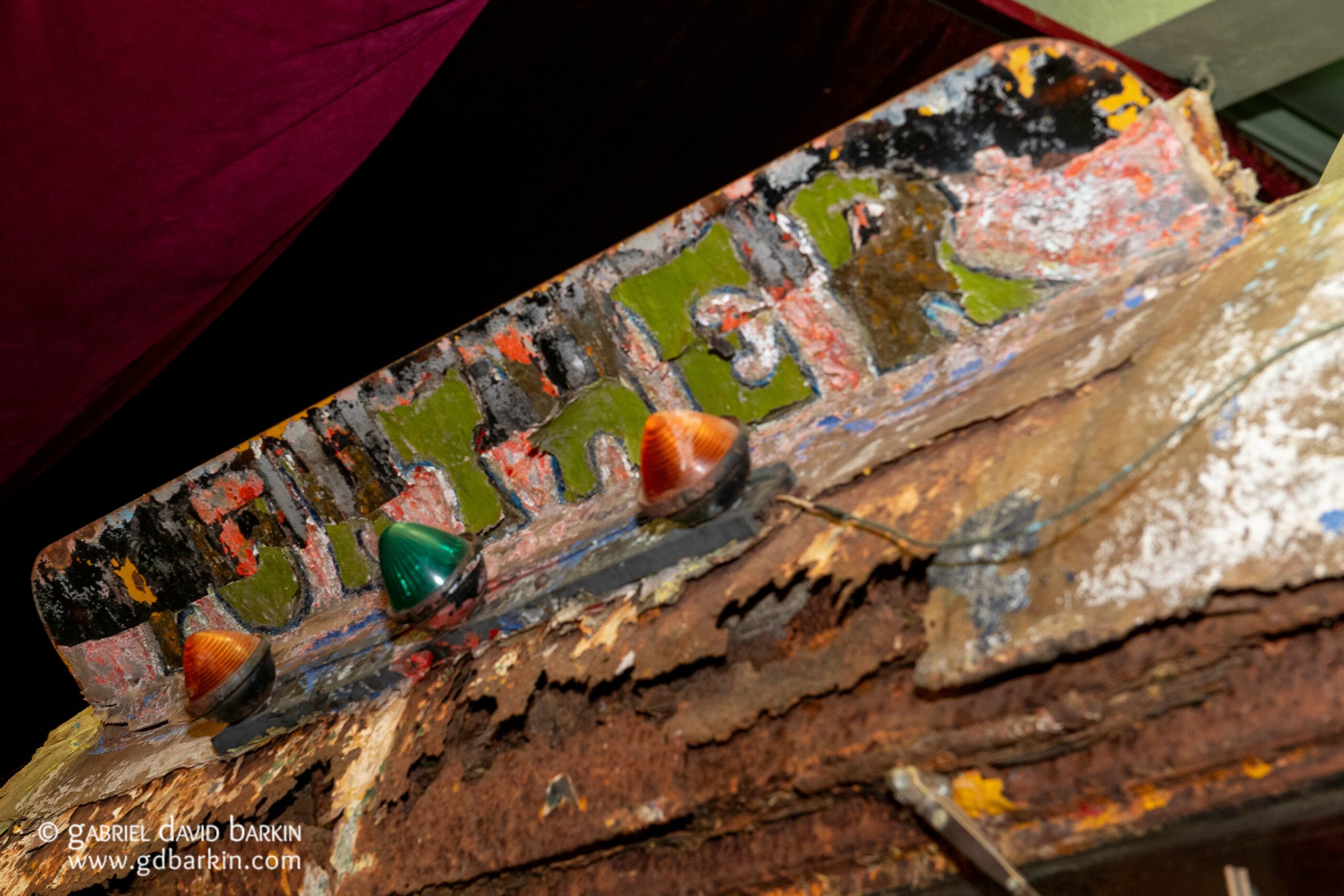
When Bobby Weir sang, “The bus came by and I got on” – this is that bus!
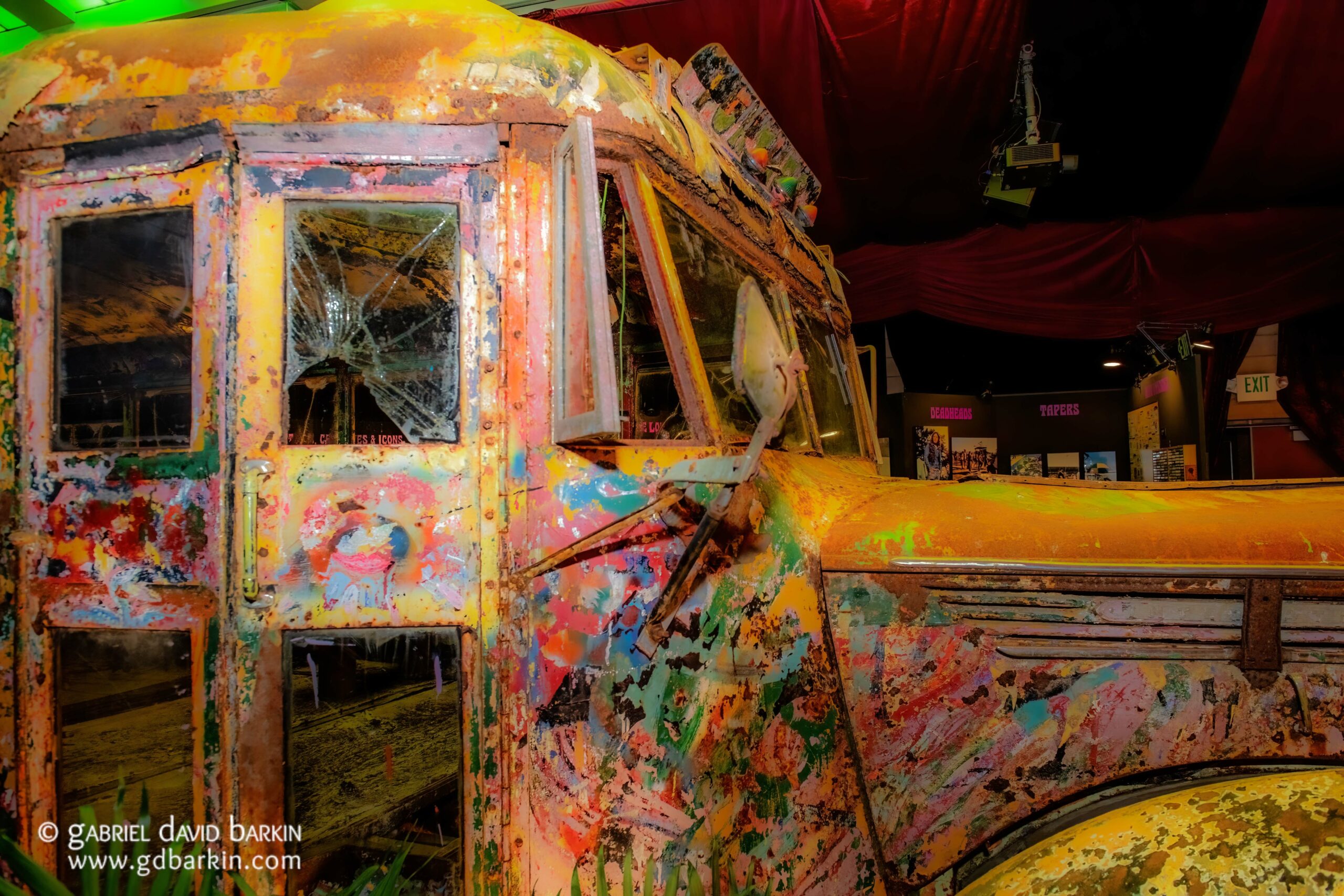
In 1969, Furthur returned from its last great journey, a visit to the Woodstock Festival, and began a long rest at Kesey’s family farm in Pleasant Hill, Oregon. For years it stood in a moist pasture increasingly blending into the landscape, a patina of moss and blackberry vines merging with its fading paint. Later, Furthur was given sanctuary in a barn Kesey built for it on the property, where it neither languished nor thrived in particular. It just was.
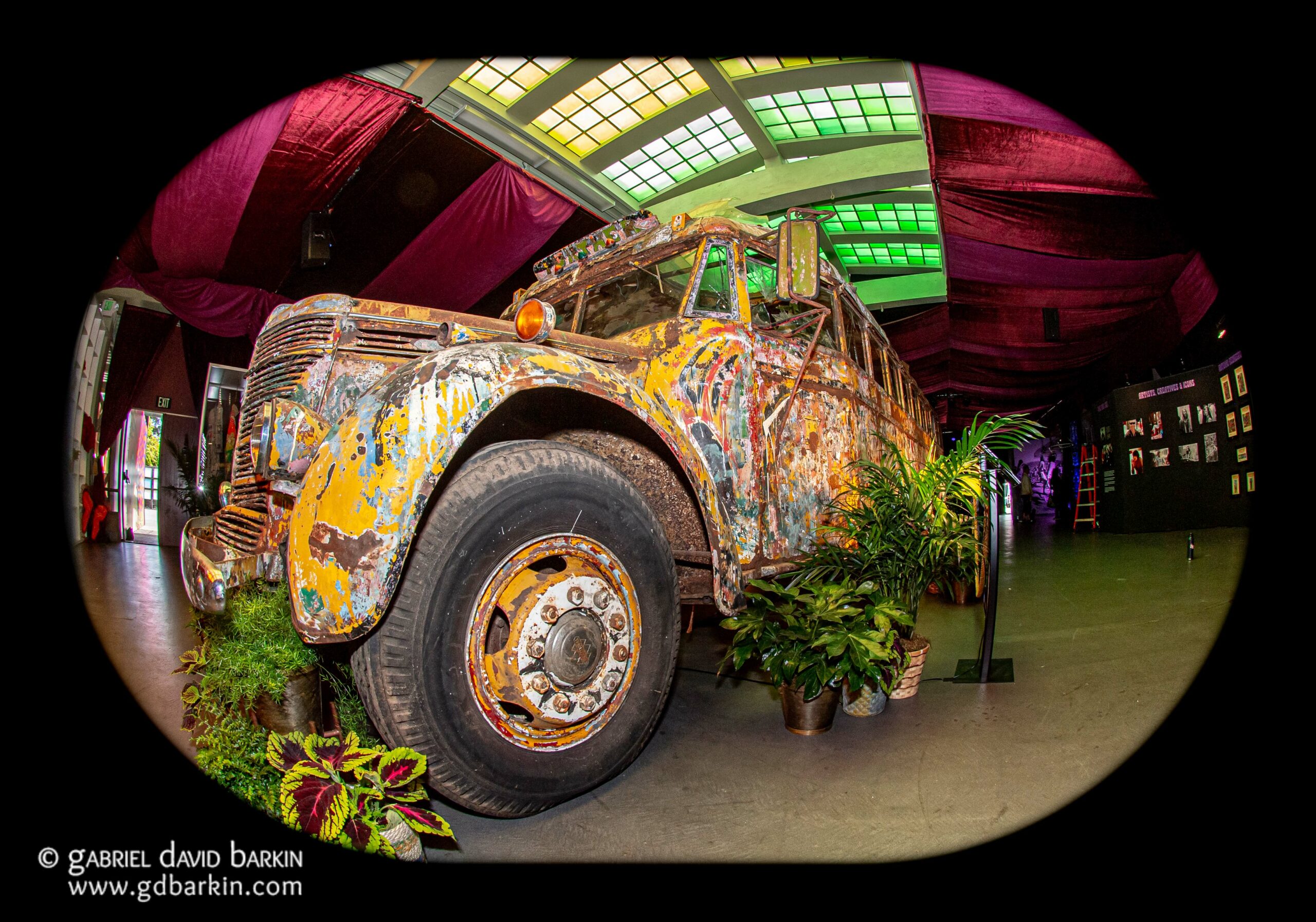
Now for the first time in over half a century (and not unlike what we say about Elvis, another American icon) the bus has left the building. Furthur is at present on display in San Francisco’s Golden Gate Park as part of the Forever Grateful exhibit in the park’s Hall of Flowers.
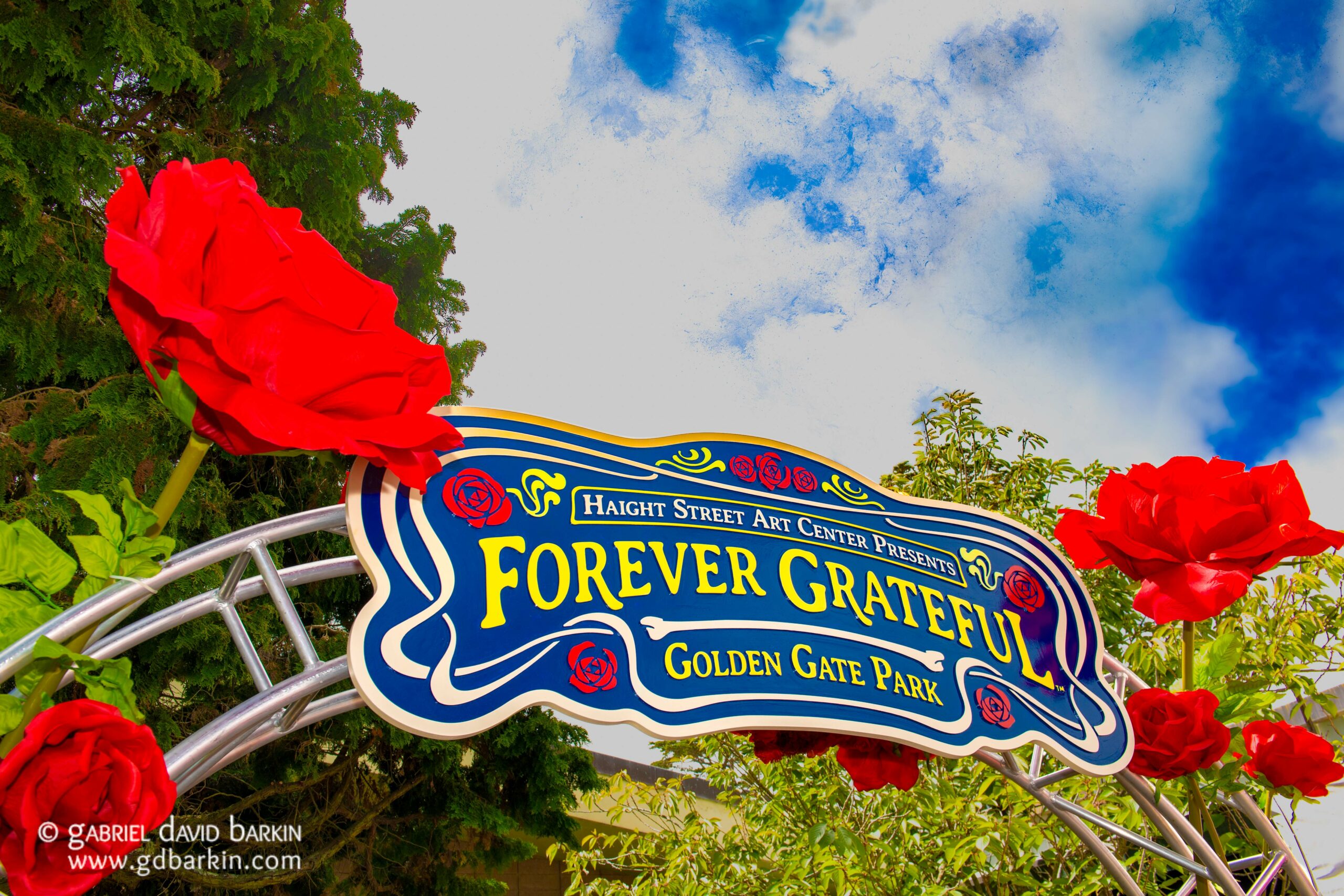
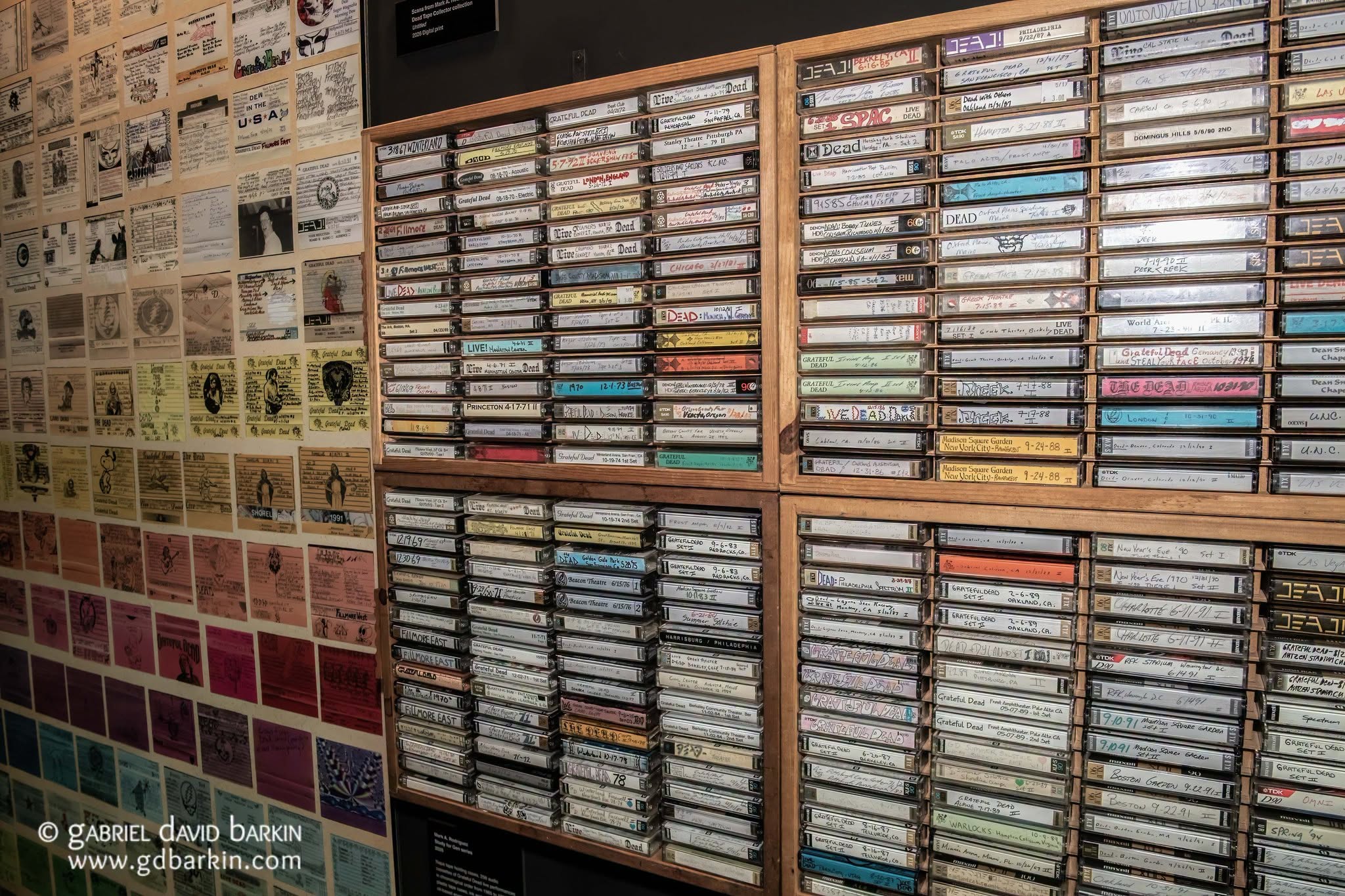
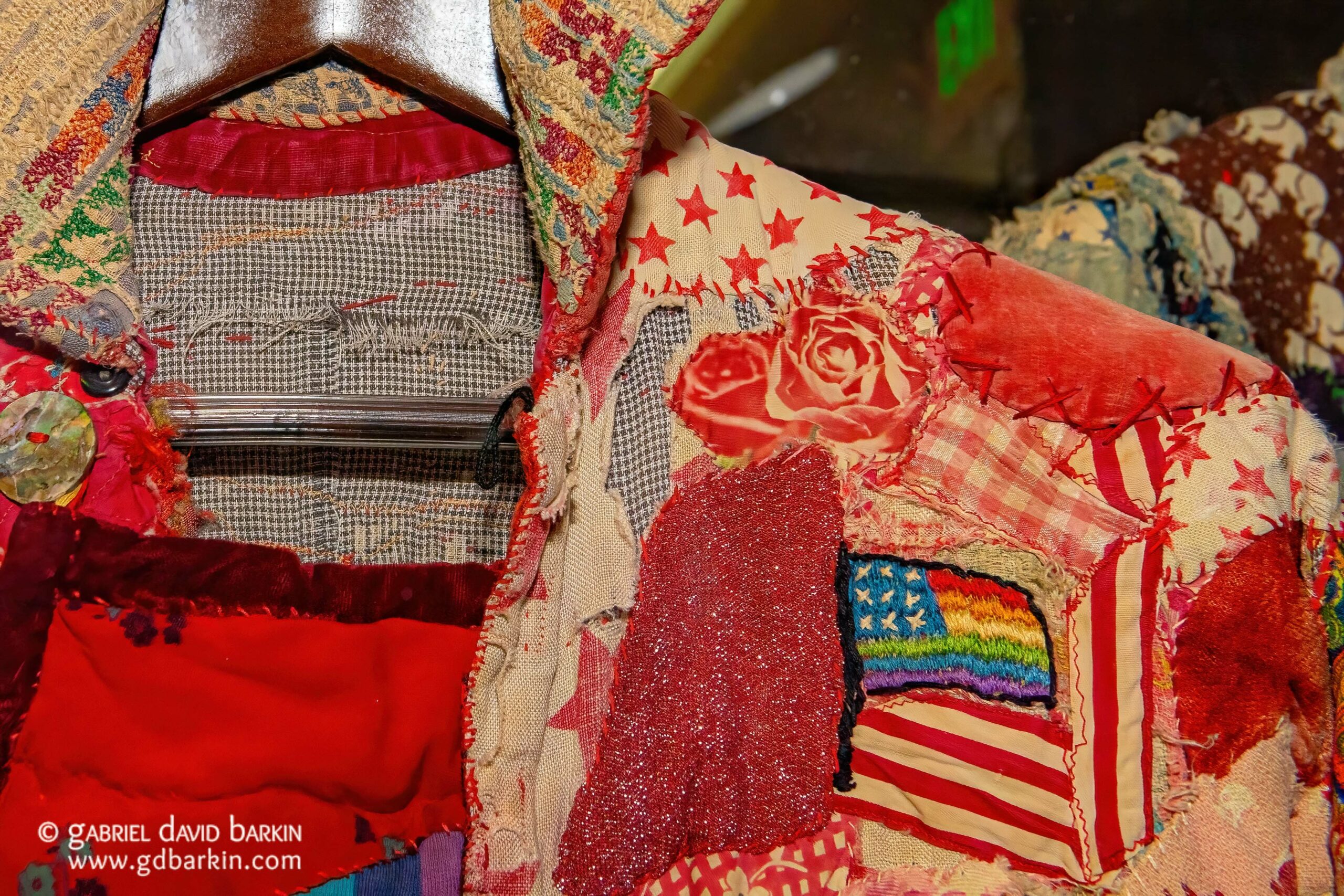
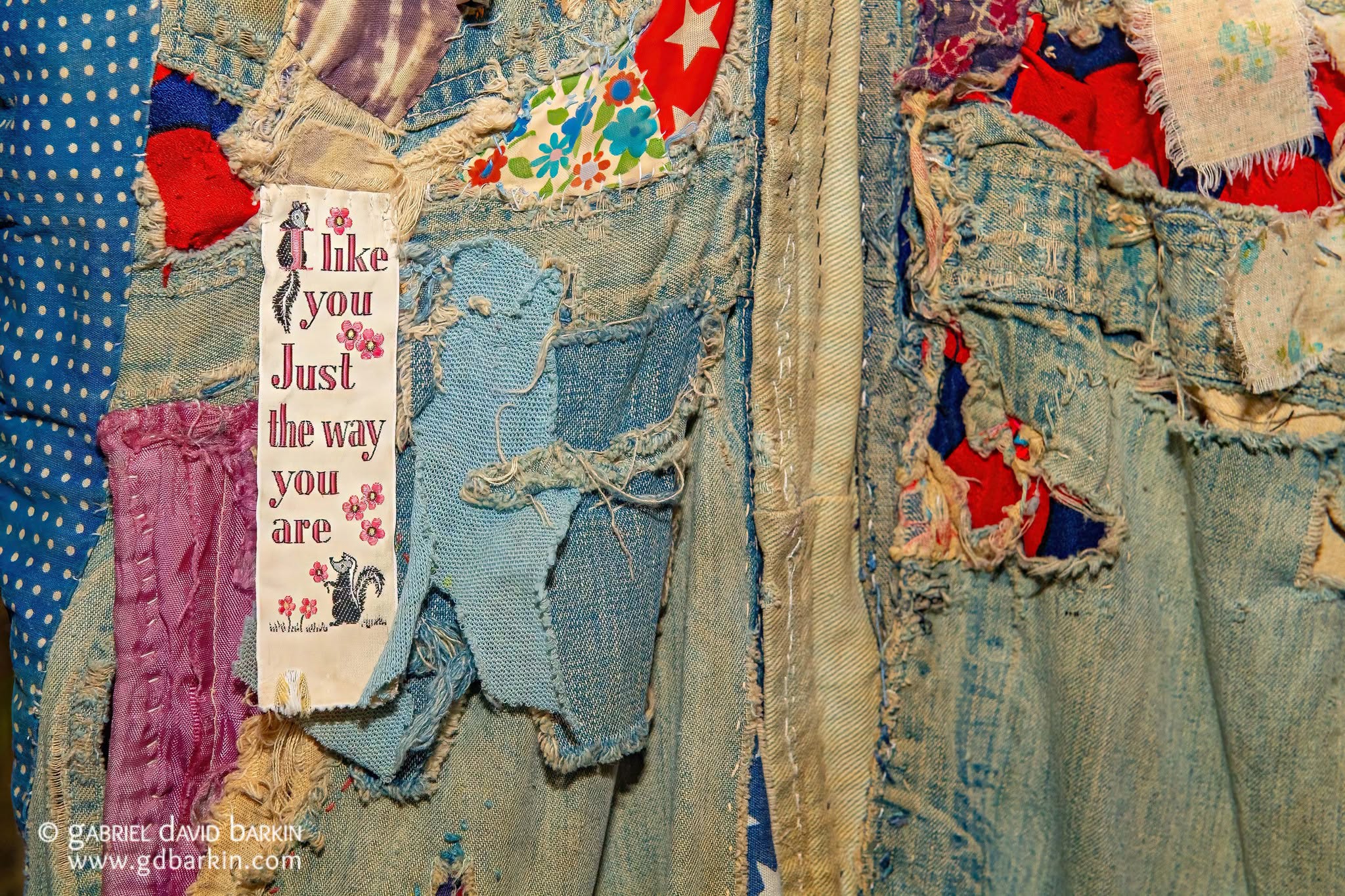
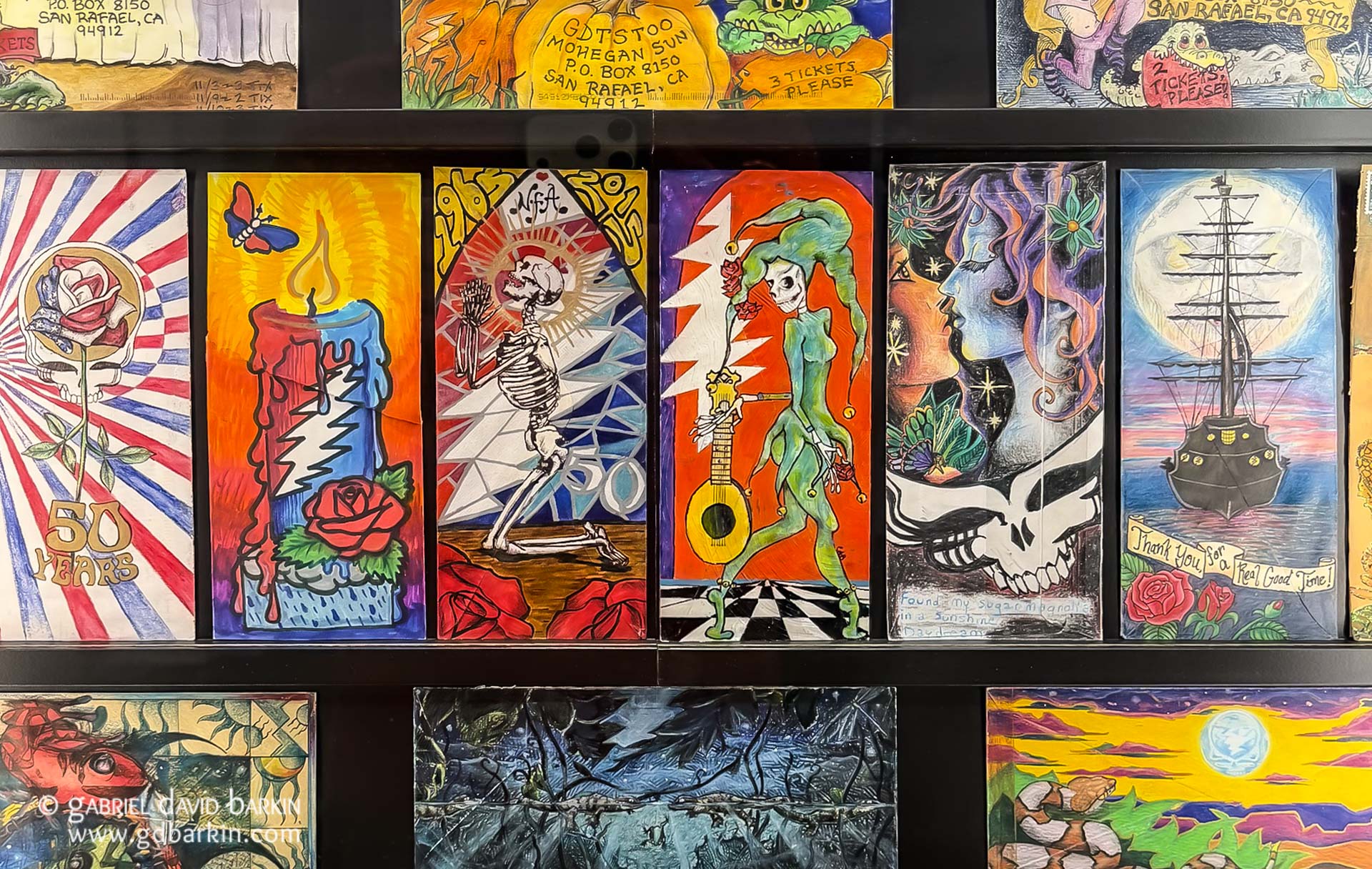
Forever Grateful, Golden Gate Park opened in early September. At the heart, figuratively and literally, of this first-of-its-kind immersive experience is Furthur. The bus sits in the middle of the exhibit hall surrounded by other attractions including photo displays, interactive phone booths (more on those later), a unique listening experience (ditto), and an iconic collection of items such as a pair of Wavy Gravy’s outfits (designed by his wife Jahanara Romney) and a collection of “bootleg” cassettes encased in cases with handwritten tour-lot tape covers.
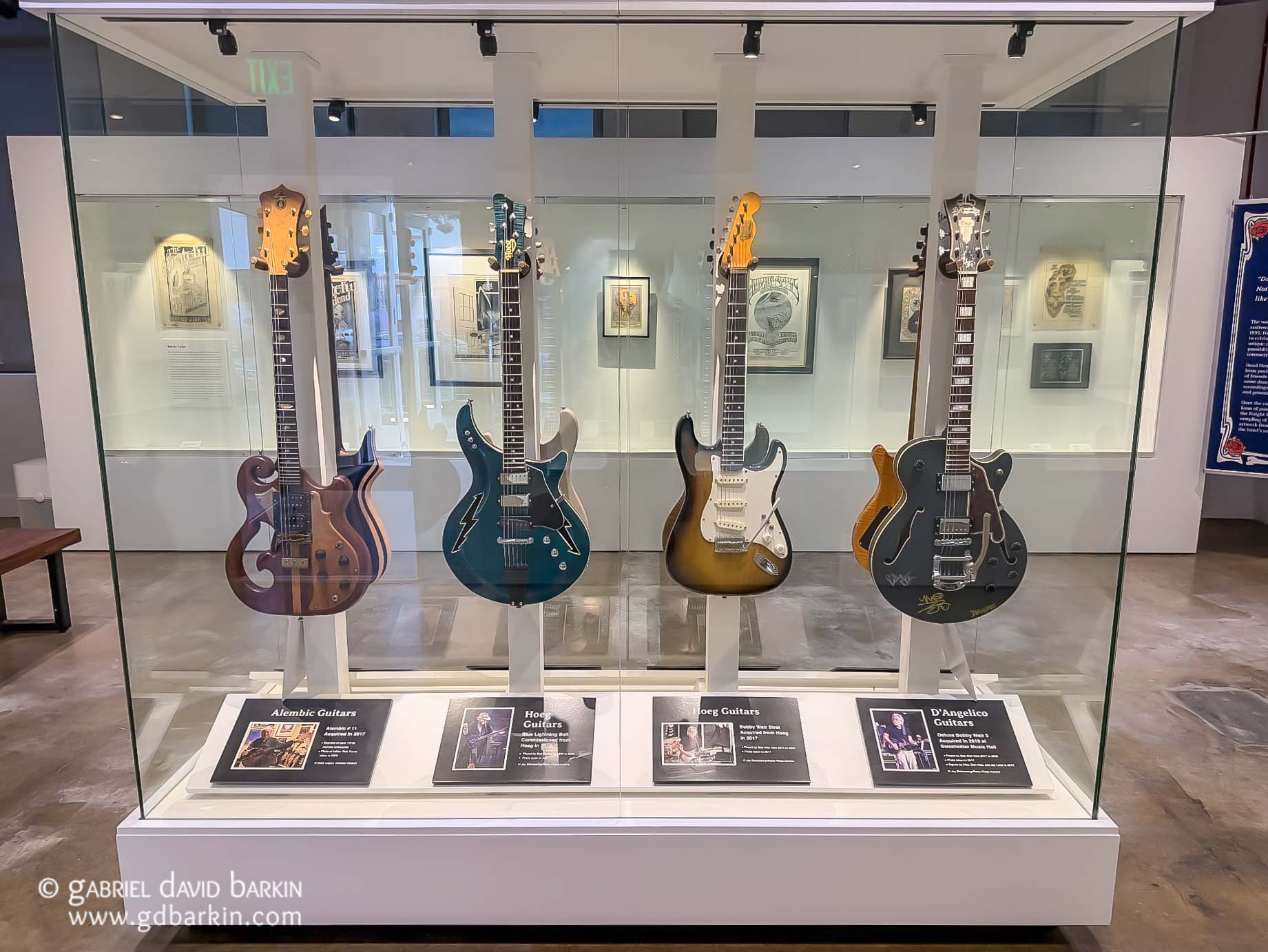
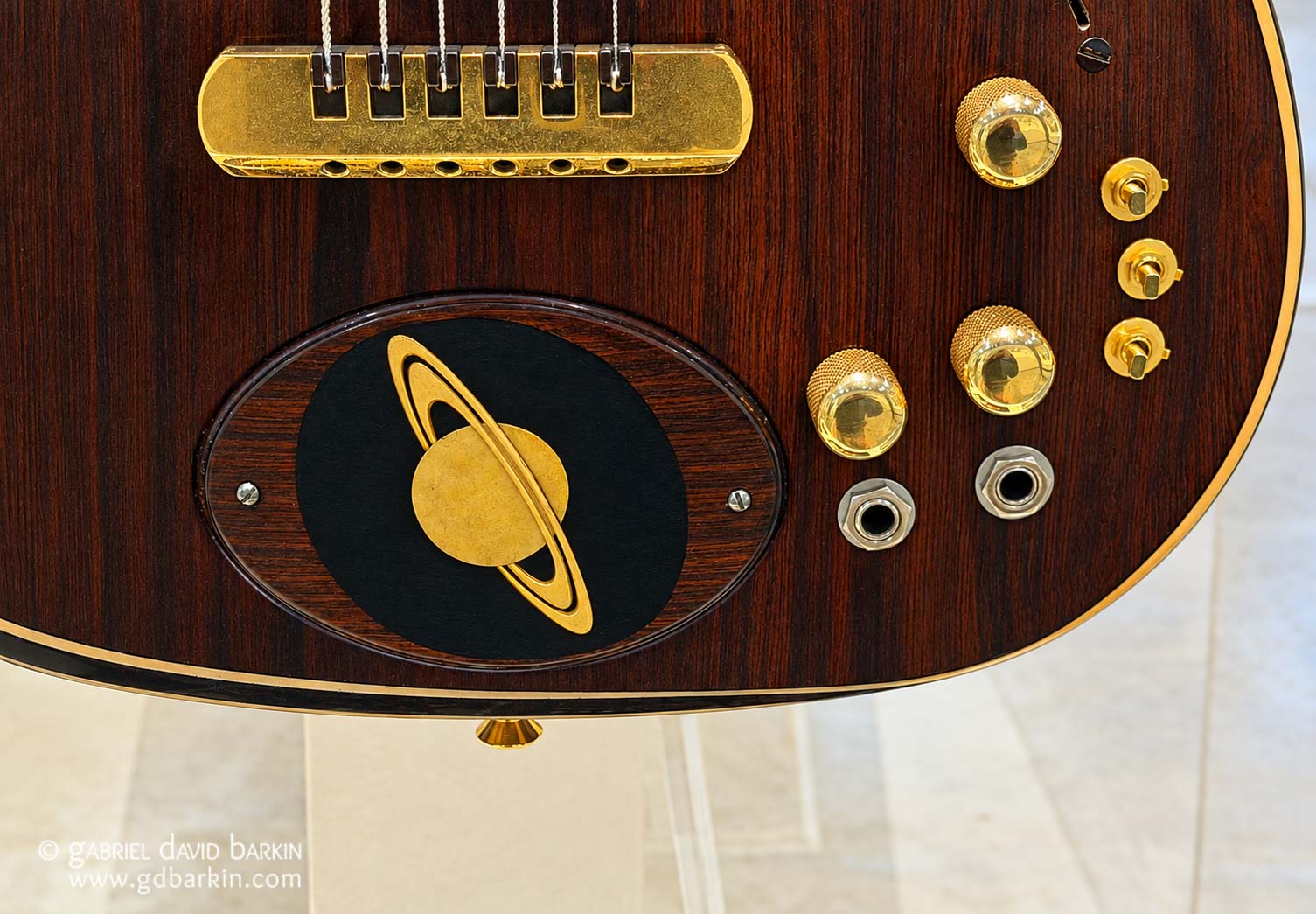
At one end of the main hall, a stage has been set up to host occasional evening live music performances and a scheduled “Conversations” series. The latter kicked off last week with a presentation about Bob Weir’s guitars hosted by the Grateful Guitars Foundation. Upcoming topics include Grateful Dead poster art and artists, and a discussion about tapers’ craft, equipment, and legacy.

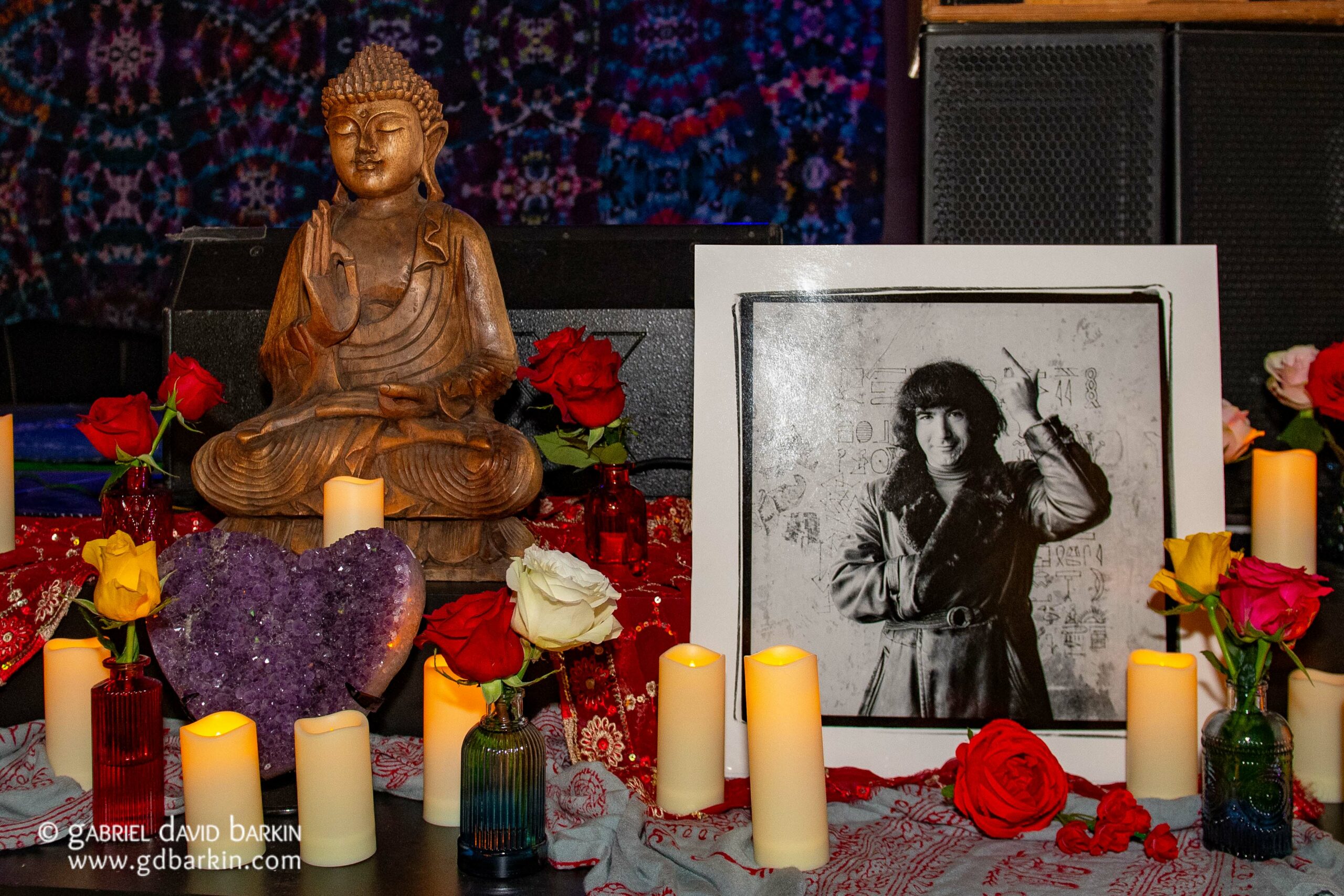
The stage itself is adorned with ofrendas dedicated to Jerry Garcia, Bob Weir, Phil Lesh, and Ron “Pigpen” McKernan. Two bass cabinets from the original Wall of Sound era frame the stage.
Other highlights of the exhibit include:
The Golden Gate Park exhibit runs through October 25. For tickets and more information, visit https://haightstreetart.org/pages/forevergrateful-ggp.
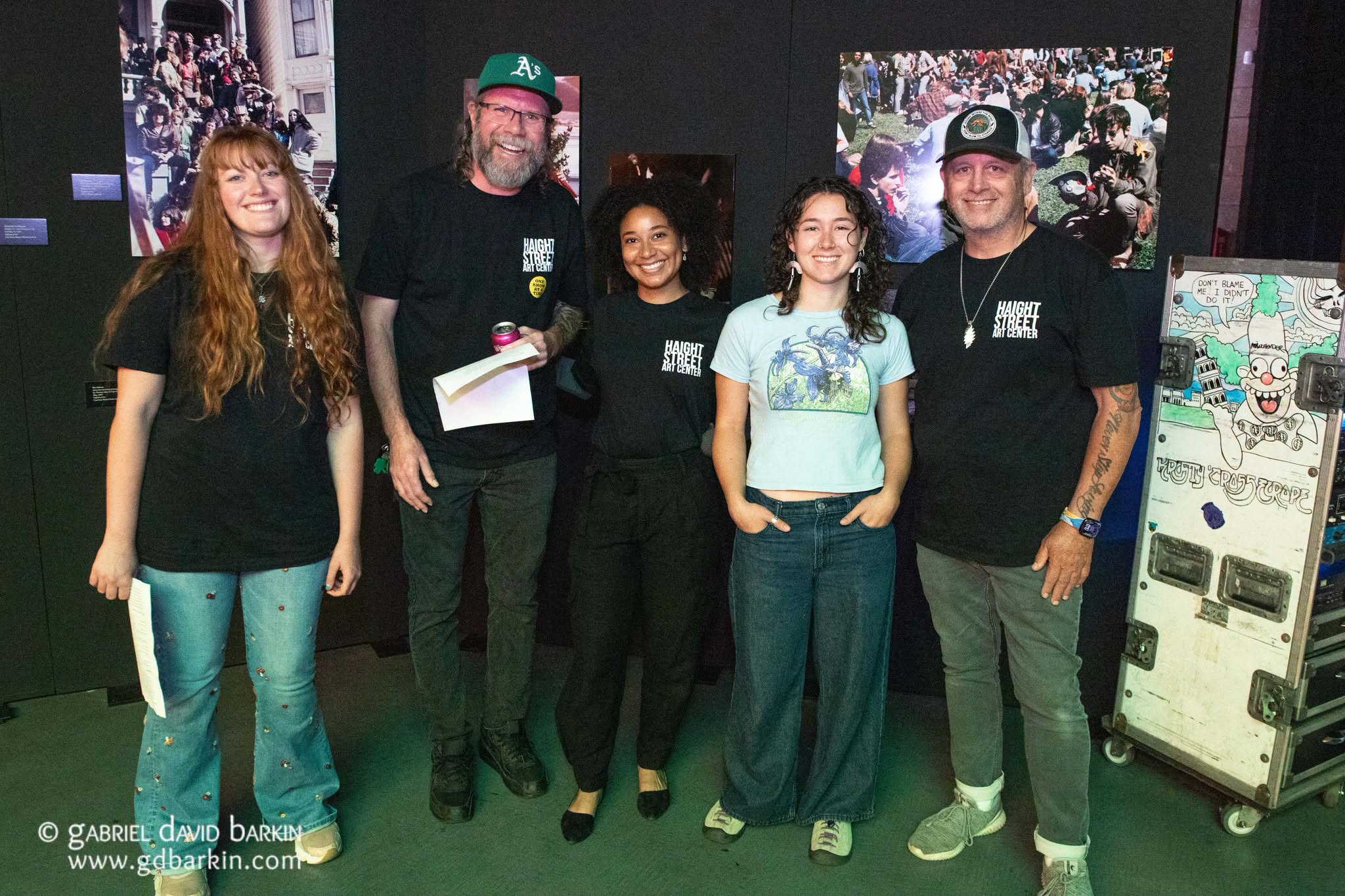
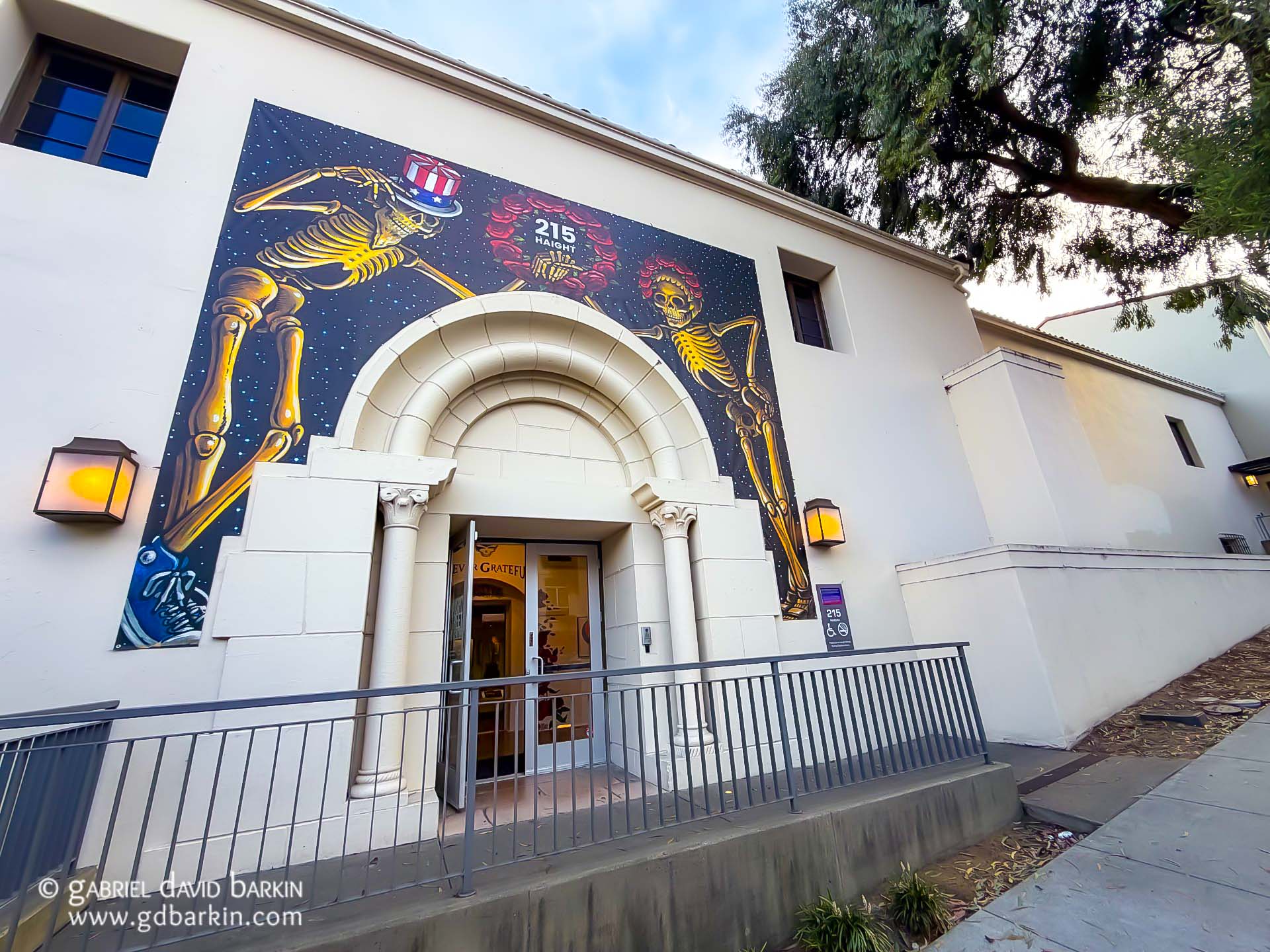
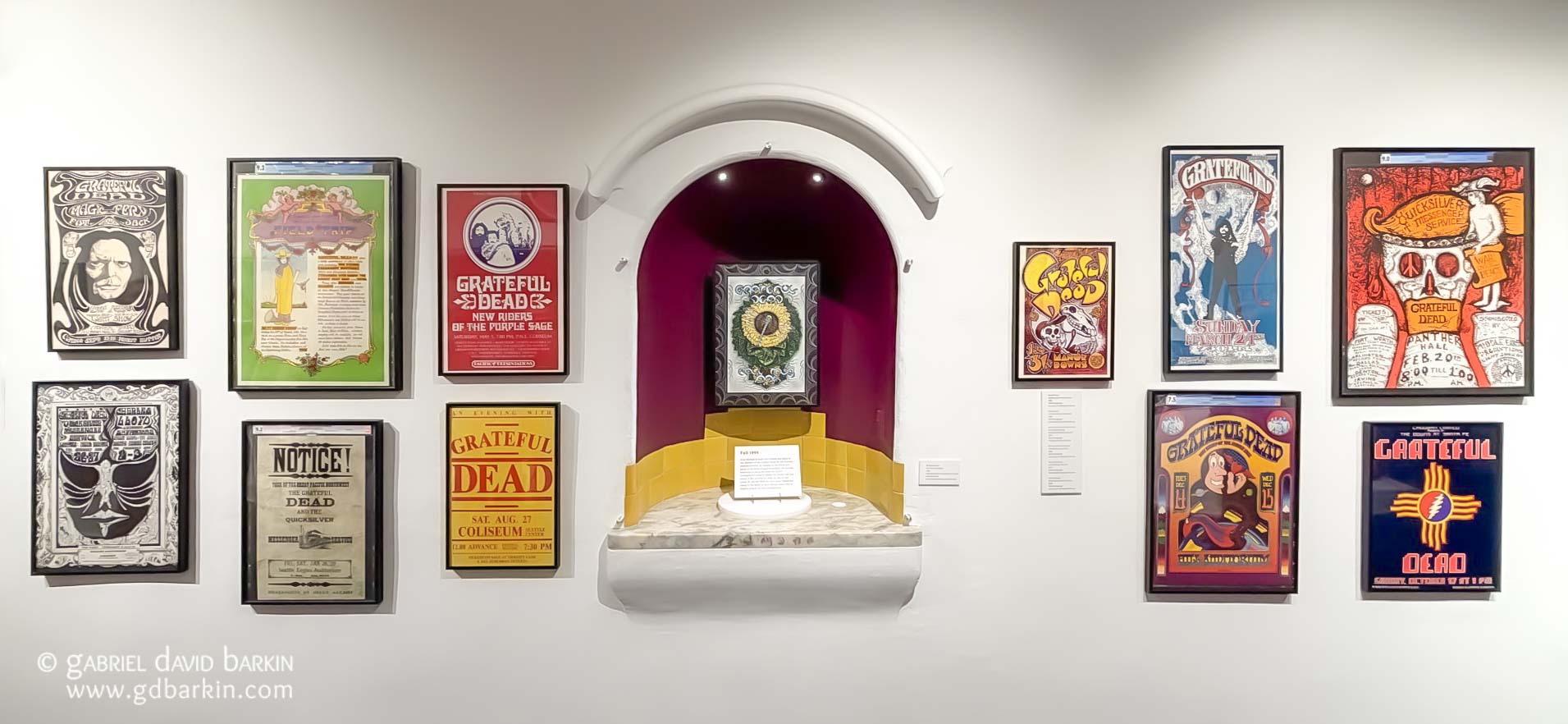
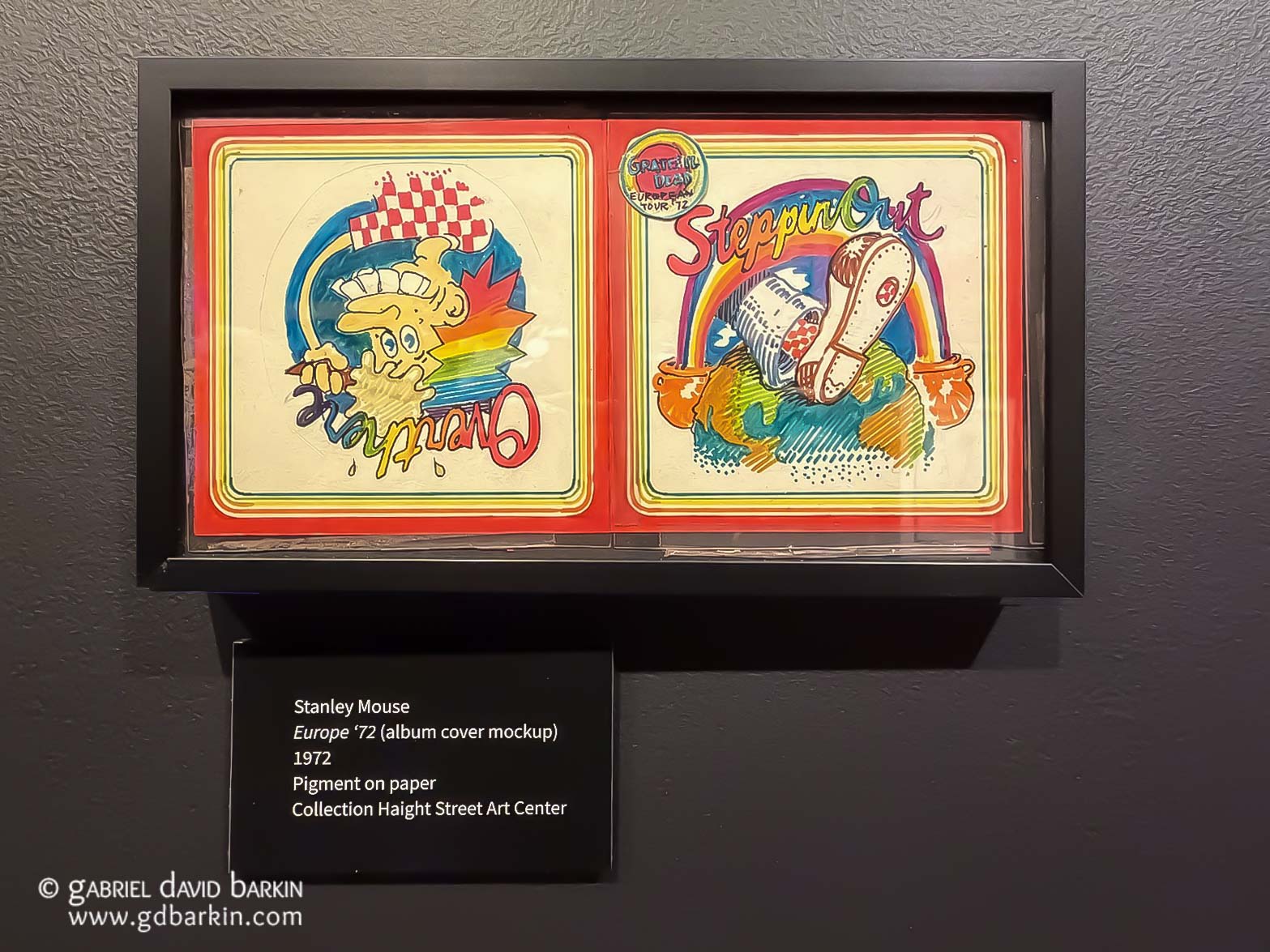
Forever Grateful is actually a two-part exhibit hosted by the Haight Street Art Center. The first part was an exhibit at the Center itself that ran from July through this weekend. Visitors could view numerous original works of art used by the Grateful Dead for album covers and concert posters, including iconic drawings and paintings by Wes Wilson, Stanley Mouse, Alton Kelley, Victor Moscoso, and Rick Griffin. Several guitars owned and played by Jerry Garcia and Bob Weir were displayed as well.
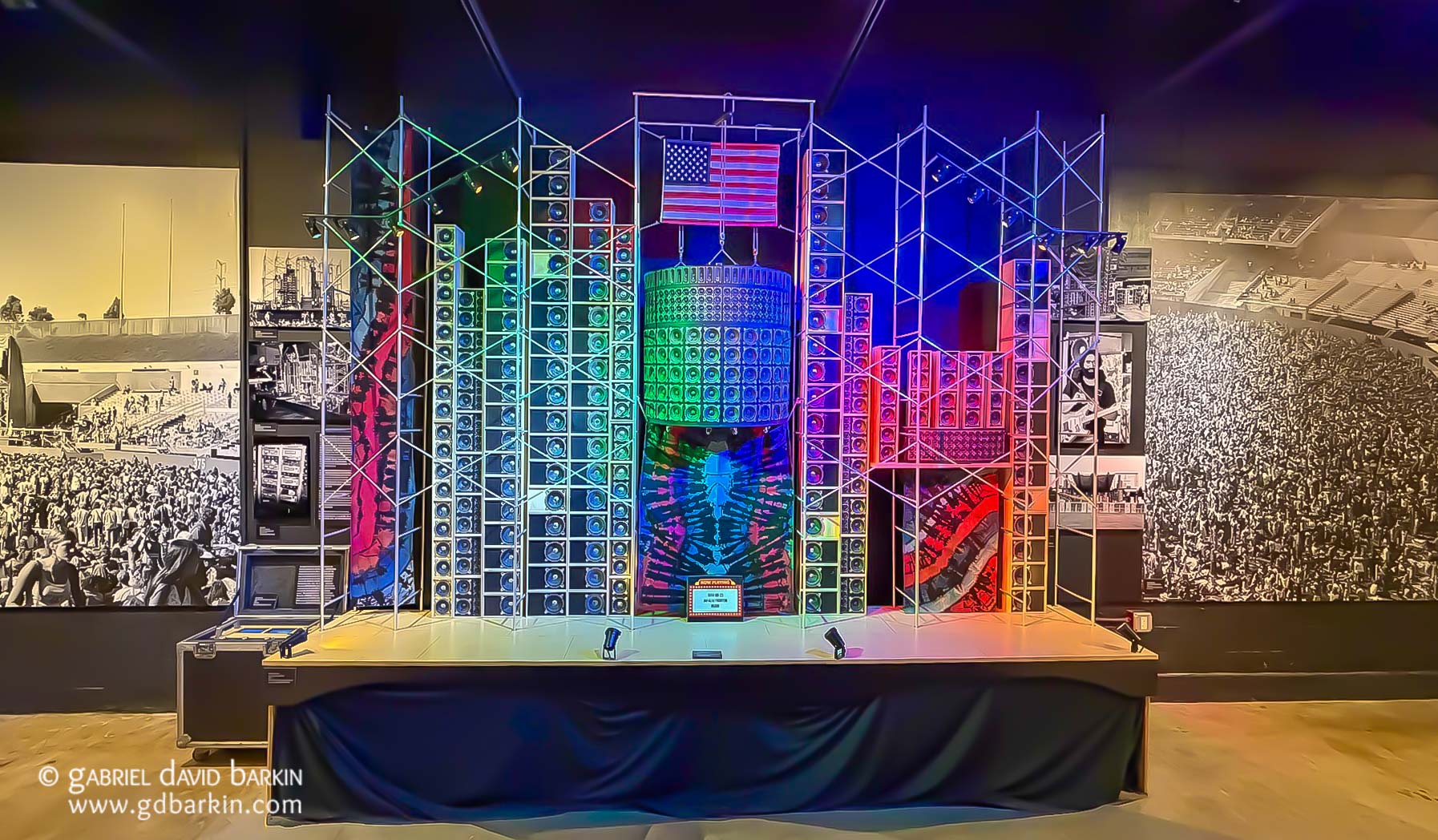
The centerpiece of that exhibit was a ¼-scale, fully functional replica of the Dead’s Wall of Sound amplification system. The original Wall was, of course, the lovechild of Owsley Stanley, a 75-ton behemoth used by the band in concert in the mid-1970s until its weight and logistical complexity became too burdensome and expensive. The facsimile on display this year was designed and built by Anthony Coscia of Coscia Guitars and featured 500 speakers powered by 9,000 watts. Guests could hear high-fidelity music throughout the gallery as they gazed at a myriad of photos, artwork, and other memorabilia celebrating the rich visual history of the band.
It’s a testament to the Grateful Dead, and to the counterculture icons like Kesey and his bus who loom large in the band’s rearview mirror, that exhibits like this can be so rich and vibrant. It’s worth a long, strange trip to experience any part of the Haight Street Art Center’s exhibits and events that comprise Forever Grateful.
For many people, Furthur has taken on an anthropomorphic quality over the years. Entering the exhibit hall and seeing the icon stretched out before you, it’s almost like you could reach out and touch Ken Kesey or Cowboy Neal. However, I must point out that the curators will remind you that you’re not allowed to touch it. (For the record, it’s probably not a good idea to reach out and touch luminaries without their permission anyway. I once made the mistake of reaching out to touch Arlo Guthrie’s necklace and he recoiled, shocked that I might violate his personal space with such chutzpah. “It’s from Tibet.” He said, somewhat tersely. “It’s made of human bone.”)
Furthur is perhaps the only object specifically mentioned in a Grateful Dead song that you can actually see in a museum-like exhibit. This is the bus that had “Cowboy Neal at the wheel,” after all.
Ben Marks, the curator who led the development of both Forever Grateful exhibits, hinted at the lifeforce present in Furthur when we spoke. When Marks first brought the bus into the Hall of Flowers, he recalls, “I had to put an oil pan under it because it's leaking transmission fluid.” Was this perhaps a case of an old dog staking a claim to new territory? Marks allows for that possibility. “It's amazing that it's still got fluids. It's still got blood in it somewhere.”
To get Furthur out of the barn and down to San Francisco, Marks worked directly with the family of Kesey – specifically, the elder altered-statesman’s son and daughter-in-law Zane and Stephanie. The Kesey family, Marks says, “has had a lot of people over the years try to convince them that they're the perfect people to do something with the bus. And then things never happen.”
Marks told them no, “things are really gonna happen.”
He told the Keseys, “We're committed to the same things you're committed to – which is to figure out what the word restoration means when it comes to the bus. We want to hear what you guys think should happen and see if it aligns with what we're trying to do.”
Perhaps the family heard what they wanted to hear, or perhaps they were just ready to give someone else a chance to take responsibility for the ol’ bus. Marks assumes it was a little of both. “It can get old to have good-intentioned people traipsing through your property wanting to get a look at this thing. It's a lot to manage if you're trying to just have a life.”
Stephanie Kesey spoke similarly, explaining their decision. “Our work is twofold: preserve the original bus for generations to come and put it back in front of the people it was always meant to reach – before restoration begins, and permanently once it's complete. We chose Haight Street Art Center because their exhibition is the right setting for Furthur’s first public appearance, and because their board and staff understand, as we do, what it takes to carry this history forward.”
Martin Olive is the Operations Manager for Forever Grateful, Golden Gate Park. The day after its first soft opening, he gave me a tour of the exhibit. After a few moments admiring Wavy Gravy’s jumpsuits, we moved on to bask in the faded DayGlo aura of Furthur. Olive spoke the words that mirrored my own silent observation, referencing both the bus’s appearance and its demeanor. “There's a rich patina to it,” he said, adding that the bus “sort of exudes storytelling and adventure and chaos.”
Storytelling. Adventure. Chaos. Reminds me of the years I spent following the Dead on tour in the 80s.
That theme runs throughout the entire exhibition. Before visitors even enter the hall, they’ll pass by a display of concert posters and pictures of counterculture luminaries like Ram Dass and Allen Ginsberg. Audio of Deadheads telling stories recorded by the online Psychedelic Communications Network set a tone for the auditory narrative and archival experience to come.
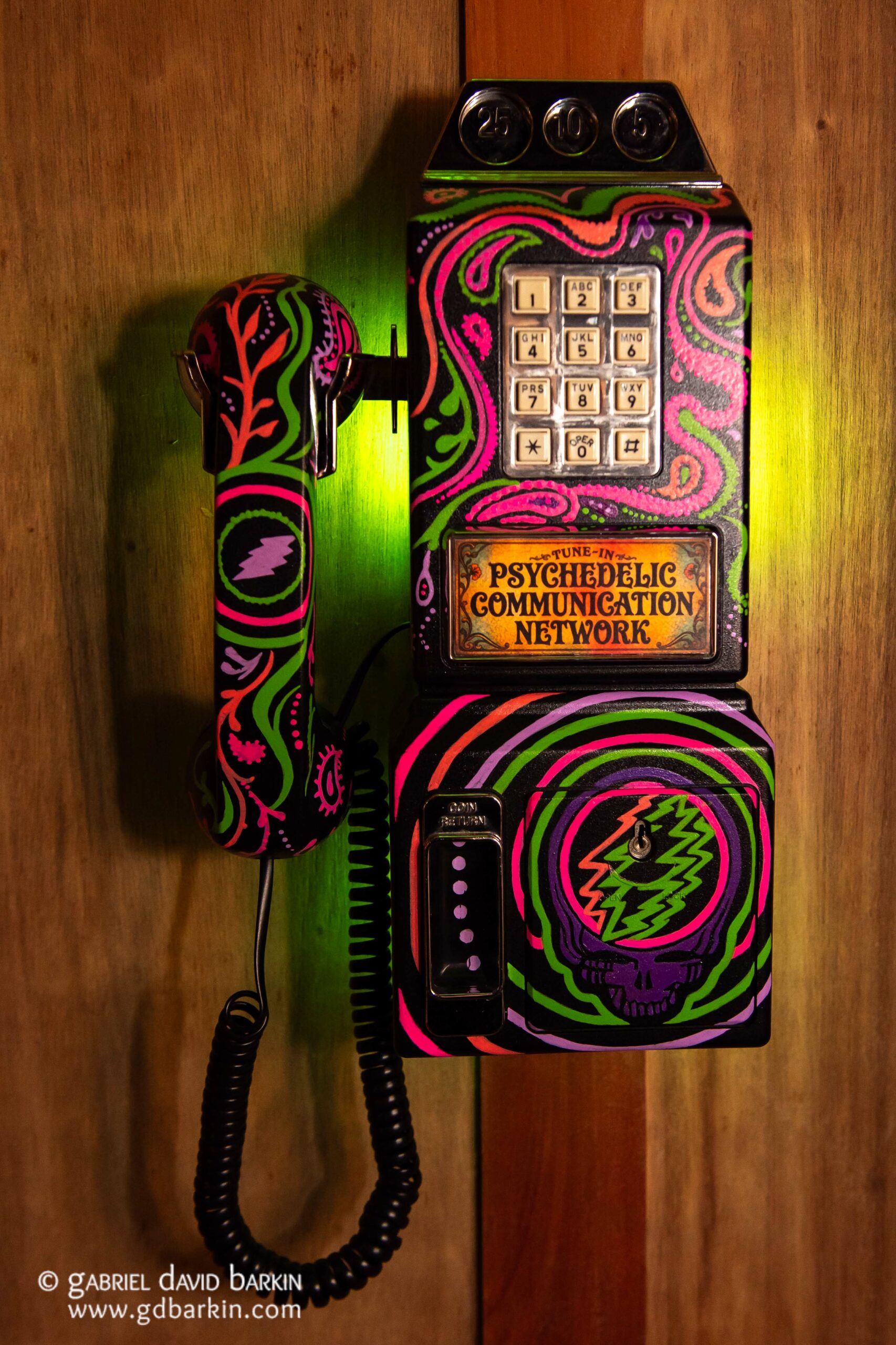
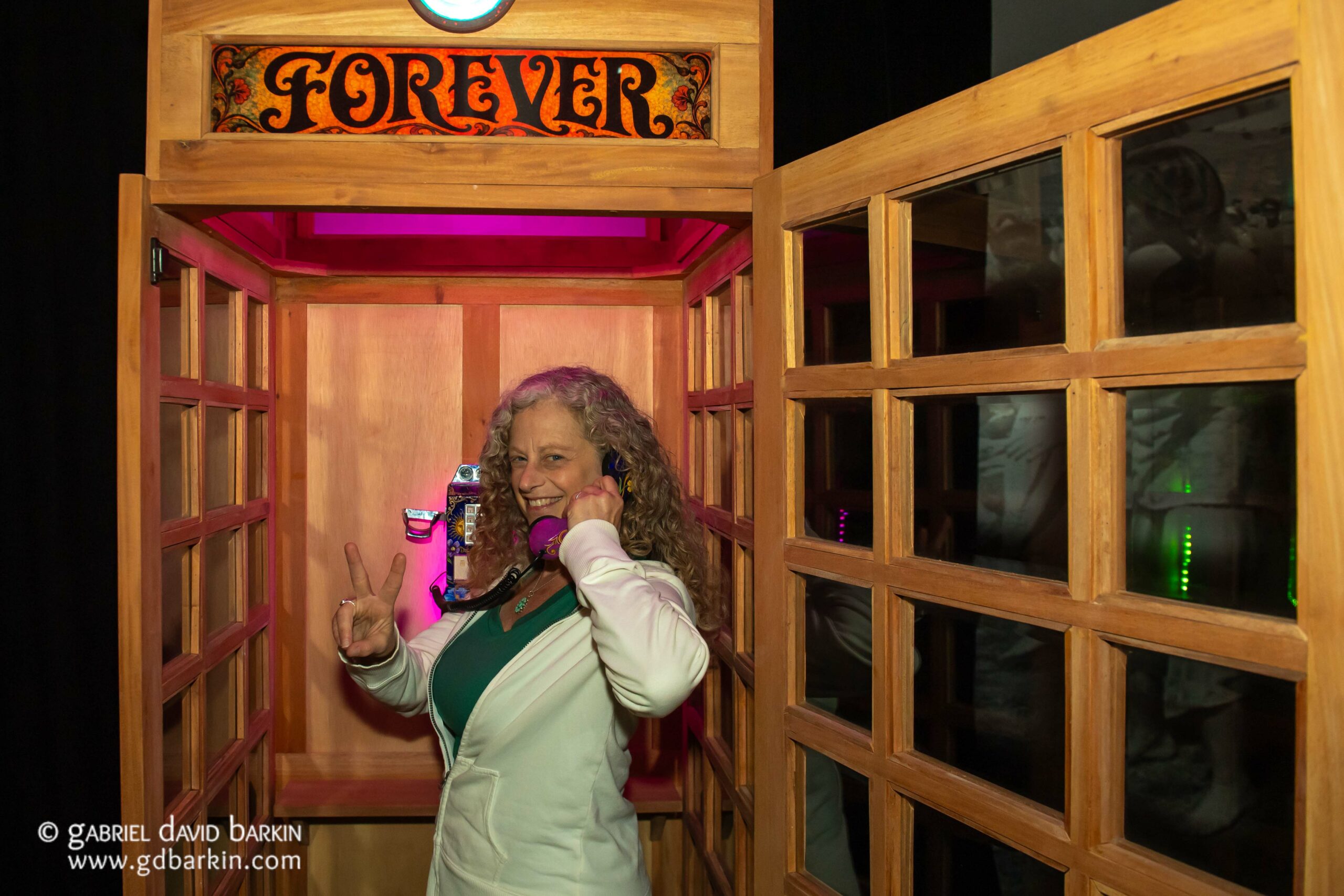
After entering the main room and transfixing for a few moments on the multi-wheeled centerpiece, guests might find themselves in front of a row of telephone booths. Again, the Psychedelic Communications Network provides an avenue for hearing and telling stories. The Network is essentially an interactive archive of tales directly or tangentially related to the history of the Dead and its fans told by Deadheads and others in and around the culture.
Callie Schneider created this exhibit, using A.I. technology to enhance access to the ever-growing library of recordings. Enter a booth, pick up a phone painted in psychedelic colors, and engage. “It's interactive,” Schneider explains. “You can ask questions and get answers. You can ask about stories. Like, you can ask, ‘Has anyone ever had a birthday at the Fillmore?’ and you'll hear a story about a birthday at the Fillmore.”
Schneider is aware that some people who visit the exhibit might have a negative reaction to A.I. (Garcia and at least some other members of the Grateful Dead were generally big fans of technology, so I feel confident they would not be among those detractors.) That being said, he suggests this is a positive application of a controversial tool. “We're trying to use it in a way that feels good … compared to the way it's being used in other settings. It's a tool you can use for the good of community, and for our benefit.” As a reflection of that mindset, names are omitted automatically from the stories people hear to protect the perhaps not-so-innocent.
Schneider is not a lifelong Deadhead, but he says, “I'm learning as I'm going – and what better way to learn about it than directly from the stories?” Likewise, some of the docents hired for the exhibition are people born long after Garcia died. It’s a learning experience for everyone.
The telephone booths aren’t just a one-way tool. People can also use the devices to record their own stories. Olive says storytelling is encouraged. “It gives our docents a break from listening to all these stories – someone starts telling a story and we're just kind of like, ‘Hey, we’ve got something for you, go tell it here.’” Guests are also given an opportunity to contribute a written memory when they come to the stage at the back of the room where they find the ofrendas dedicated to Garcia, Weir, Lesh, and McKernan.
The rich patina of stories. That ol’ bus in the middle of the room. The roses surrounding pictures of deceased Grateful Dead band members at the foot of the stage. These elements combine to produce quite an emotional effect on people visiting Forever Grateful. Olive told me that on opening day, “I had to run down the street to get Kleenex because we realized people are crying.”
It’s not just old-timers who have that reaction. Renee de Cossio, Director of Exhibitions at Haight Street Art Center, has observed a wide range of ages experiencing Forever Grateful. “It's not just the original people who saw the band back in the early days of the Grateful Dead,” she says, “but also the generations that followed. It’s a phenomenon.”
The Dead, she says, “generated a special type of love and passion.”
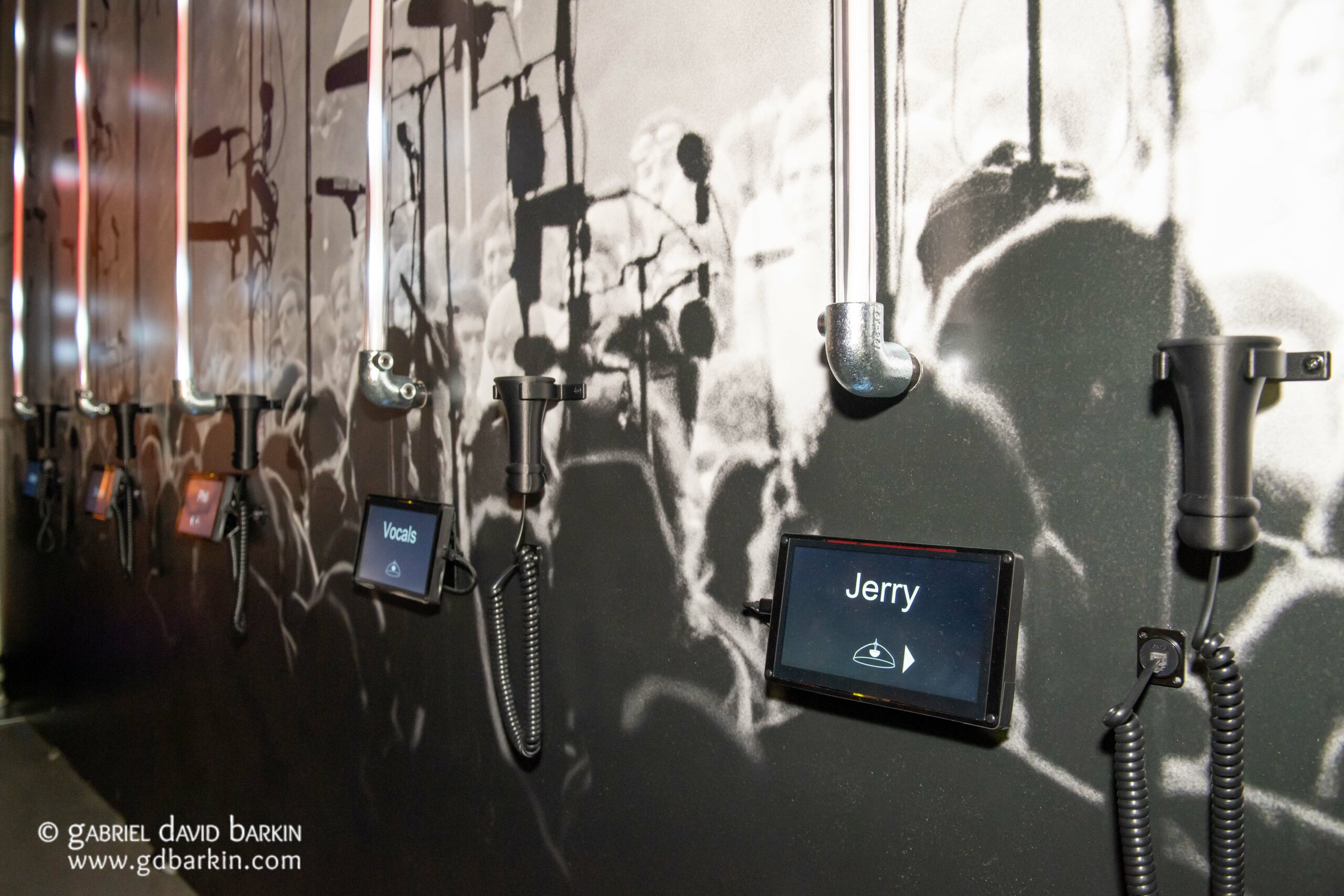
Before moving out of the main exhibit room, another don’t-miss experience is the listening wall. Four cones dangling from the ceiling each play a different track from a live taper recording. Alternatively, guests can pick up a small phone-like speaker, press it to their ear, and hear just the Garcia guitar part or just the vocals. Colorful lights and a wall-sized photo of a sea of tapers’ mic towers (credit to Bob Minkin) might make a significantly high person think they were at a show. For most people, this audio-visual display is a great opportunity to reflect on the contributions of tapers and the people on the Dead’s team who produced their quality sound.
The next stop on the tour for those who follow the prescribed route (which is not required) is a living room area where members of Third Rail Projects engage guests in dialogue and foster an interactive experience.
Edward Rice, Associate Managing Director at Third Rail Projects, says the group “dreamed up an experience where you could be transported to a moment – like being in the parking lot after your favorite band’s concert.” The goal is to invoke “unexpected encounters you might have with a stranger.”
“We're trying to keep a lot of the details under wraps,” Rice told me – and I will honor his secrecy here. Suffice to say that Forever Grateful patrons will “sit down in those living room areas, start having a conversation with one of our performers, and then get whisked off to have a sort of dreamlike experience.” If all goes well, Rice says, a participant might say to themselves, “Dude, what did we just experience?!”
de Cossio says Third Rail Projects’ contribution is one of the most distinctive elements of Forever Grateful. “You have that performative element that allows visitors to participate.” And it’s working. “[People are] really engaging and telling stories.”
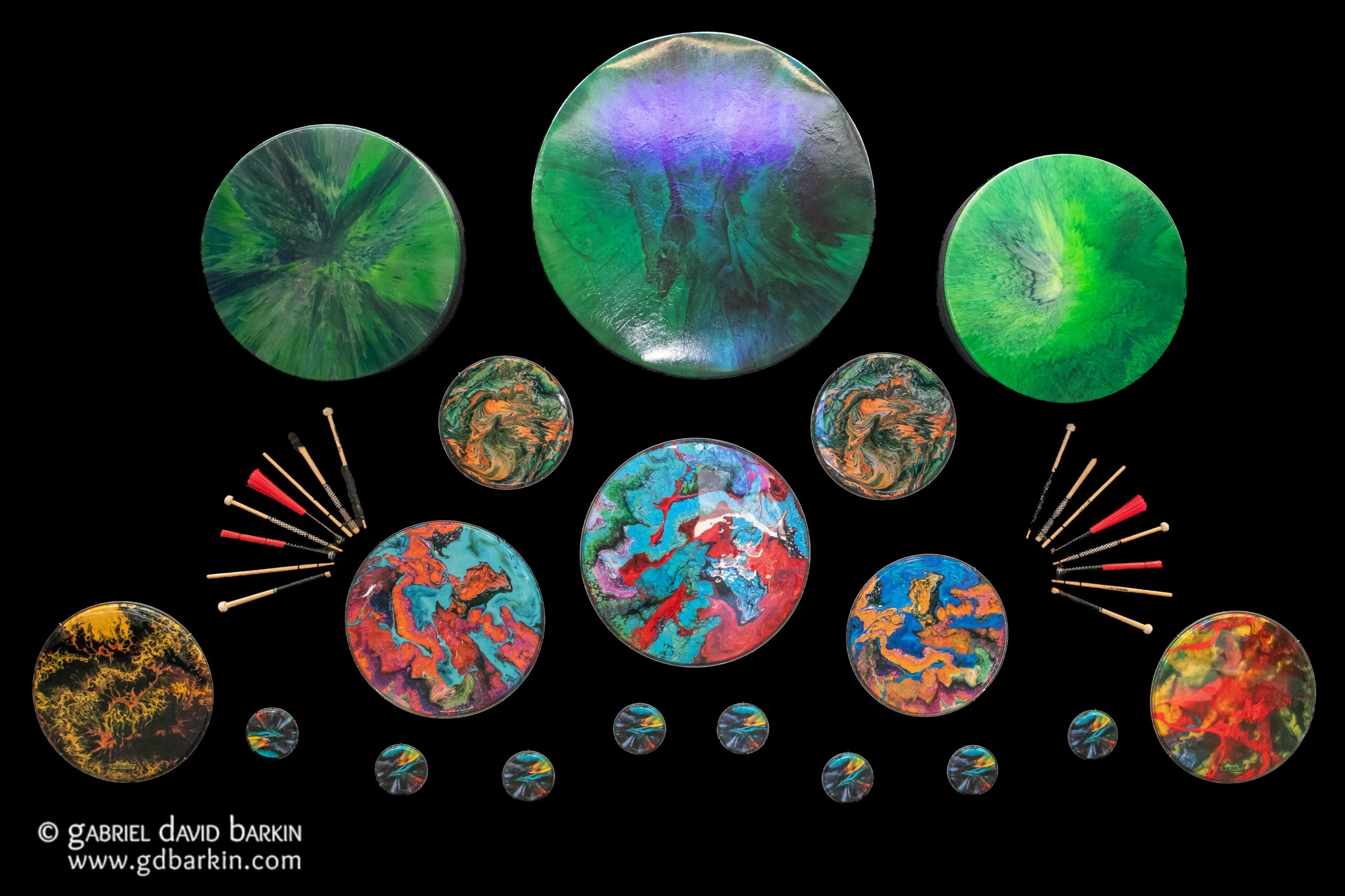
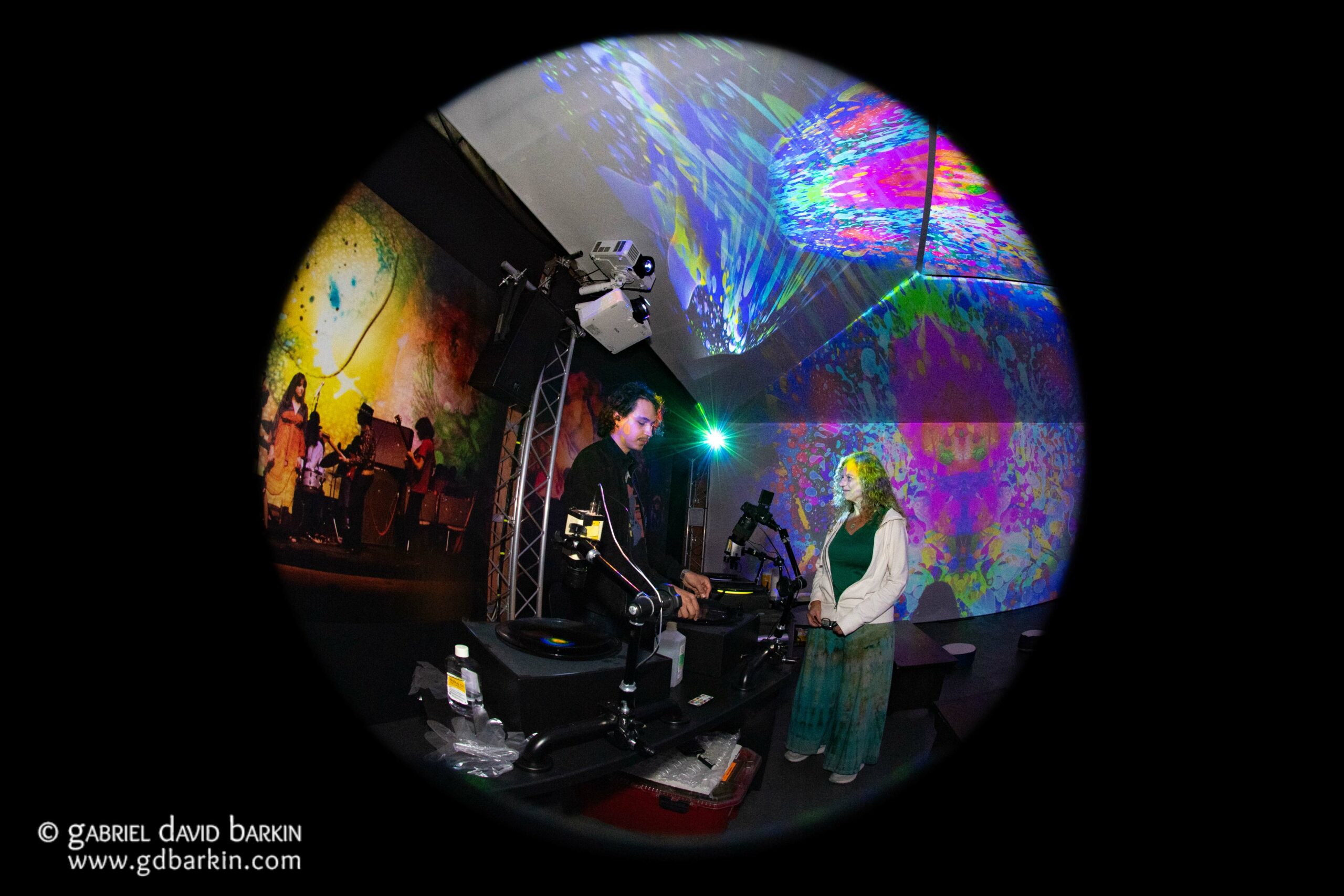
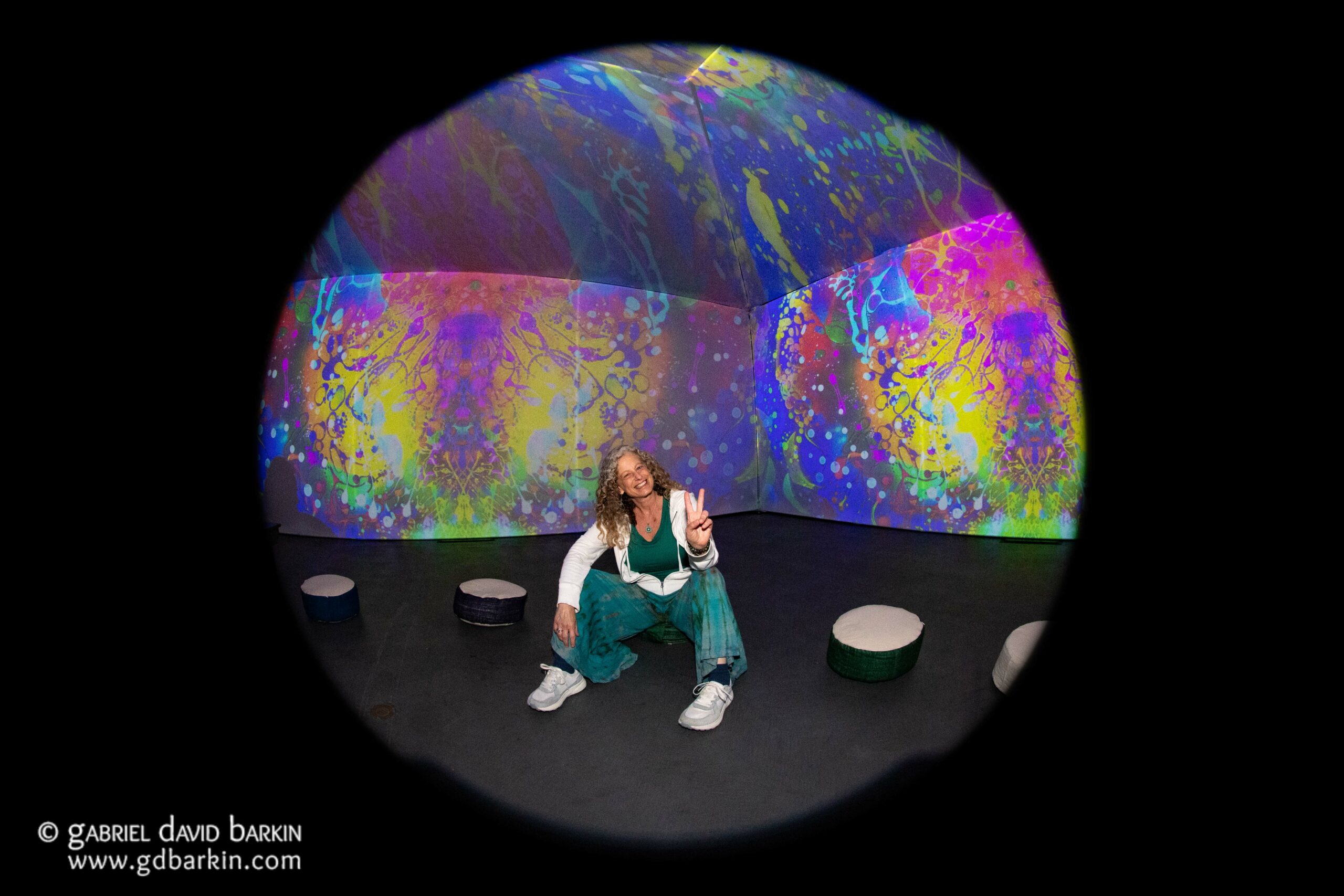
But wait, there’s more participation to come. After being “whisked” into small parlors designed to evoke a hippie tour bus for the Third Rail Projects experience, the next stop is a chill room filled with naught but a few small, elevated cushions on the floor. In here, people can relax for a few moments listening to the Dead and grooving on the visuals of Mad Alchemy’s liquid light display. The participatory part comes into play for those who want more; a bank of four liquid light projection setups gives people perhaps their first-ever chance to make the “germs” dance. (Personal note: I got to participate in producing two liquid light shows when I was younger. One for Willie Nelson, who found it oddly amusing to have that hippie stuff going on while he played.)
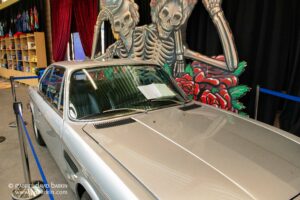
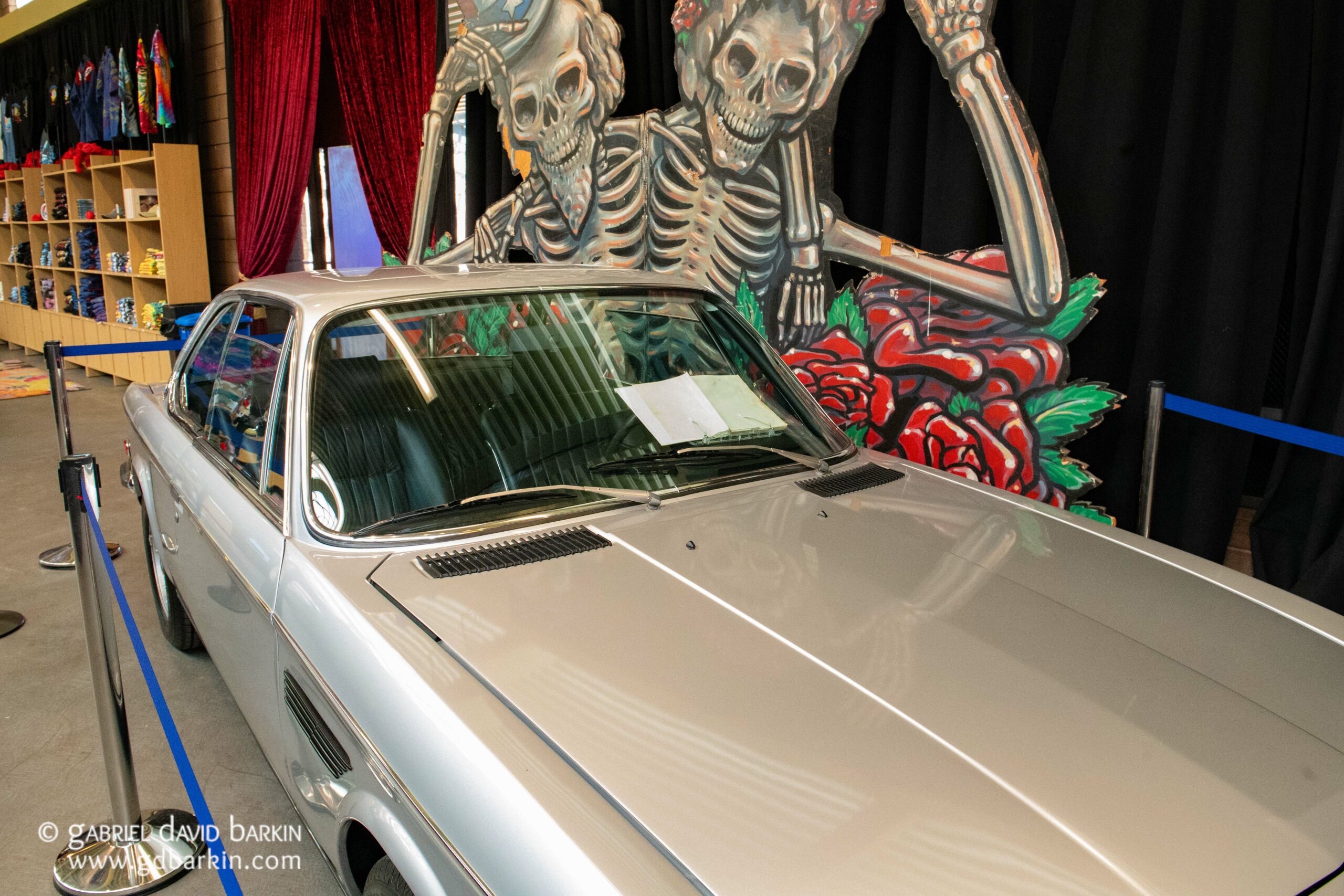
After that, it’s an “exit through the gift shop” experience. Fair enough. It’s a cool gift shop, presented by San Francisco’s Love on Haight store. But this final room also has Garcia’s BMW and a print-your-own silk screen opportunity. Finally, goodies in hand, an exit into the great outdoors brings guests to a wall of photos reminding them that freedom isn’t free. Images of 60s-era free speech, Vietnam War, and civil rights protests provide a counterpoint to all the fun and frolicking. “This is the serious side of things,” Olive told me at the end of our tour. “This is where organization can affect global change – so what do we do now?”
That’s part of de Cossio’s expectations for Forever Grateful. She hopes the experience “triggers a response. There's reflection and looking back to the past – but also, it's very here and now. I see this entire exhibition as an ongoing conversation.”
Storytelling. Adventure. Chaos. The future awaits. It’s a participatory future.
What does the future hold for Furthur, the bus that was there at the beginning and now holds center court at Forever Grateful? Marks, the show’s curator, has many thoughts to share on this topic.
“What does restoration even mean for this object that evolved between '64 and '69? It had a lot of coats of paint, and the paint was only part of it. Would it be authentic to restore it to a perfect 1964 ‘Driving to New York’ paint job? Would it be more authentic to have its last paint job, when it went to Woodstock? I don't think anyone really knows the answer to these questions. That's what we're going to take a year to figure out.
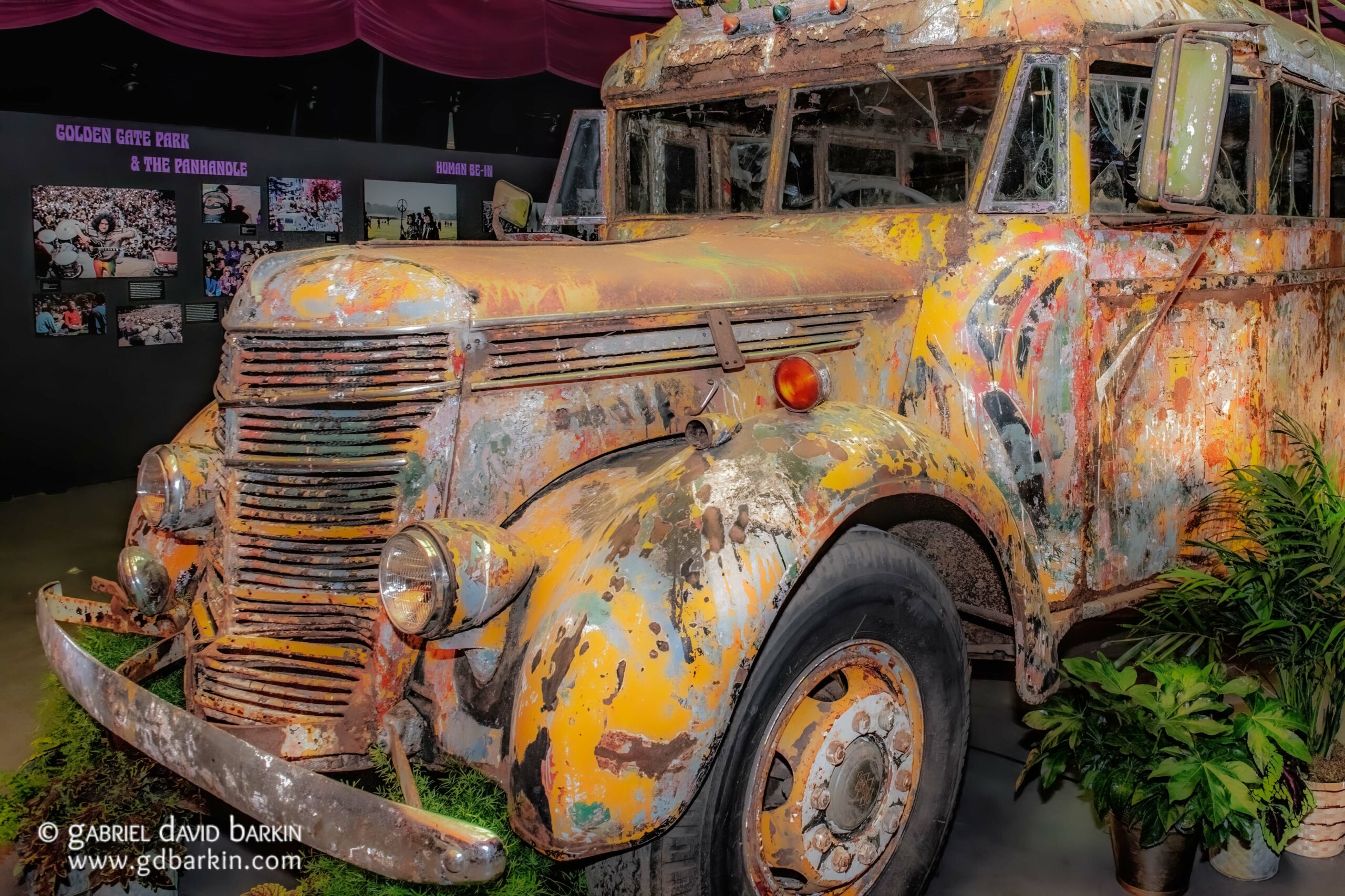
“My vote is that we … figure out a way to restore it in a way that just stops it from getting worse. Maybe replace some broken glass and some missing metal here and there, and … repair the holes in the floor, some things like that. Maybe figure out how to stop the transmission fluid from leaking. Do almost as little as possible – and then put the emphasis on what the bus represents, what the bus can teach us about some of the questions that we're all grappling with right now in the culture. Because the bus was an act of protest in '64 against the conformity of the '50s and all that, and so it could serve that role again.”
More practically, there is the question of where Furthur will live – perhaps even for the next 300 years that Weir says will continue the era of the Grateful Dead and its counterculture relations. “To borrow a phrase,” Marks says, “Furthur [sic] on down the road, we want there to be a Grateful Dead museum in San Francisco where the bus would be a permanent exhibit.”
Donations to help restore Furthur: visit https://furthurdowntheroad.org/donate/