Article Contributed by Gabriel David Barkin
Published on 2026-09-23
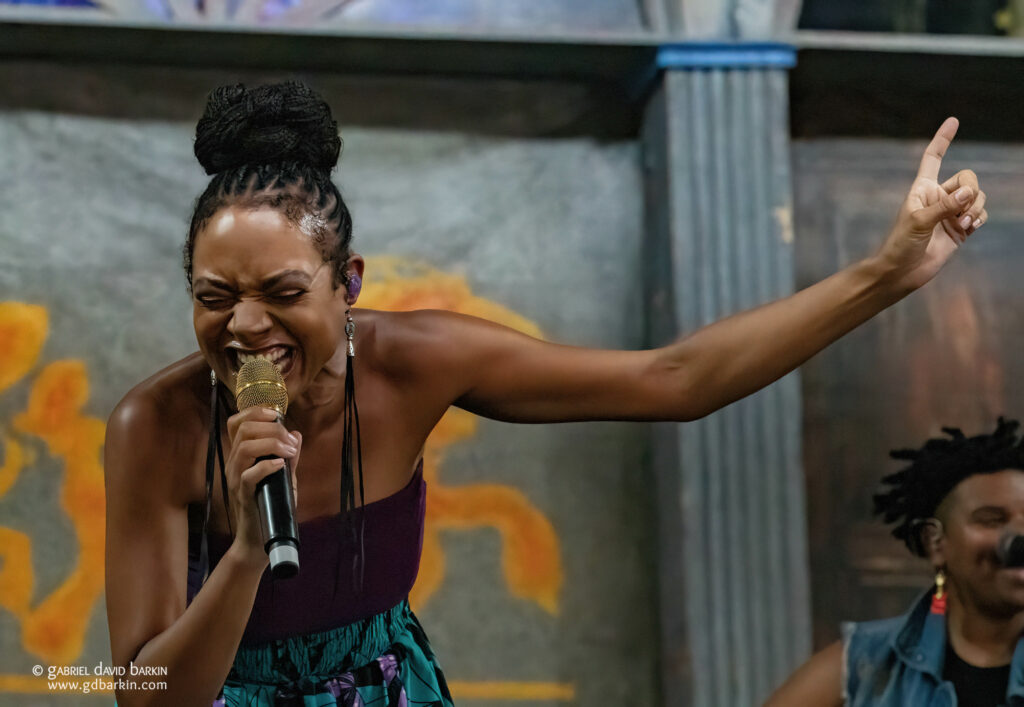
Allison Russell - photo by Gabriel David Barkin
Allison Russell never stops moving. On stage with her band the Rainbow Coalition, she whirls with glee, dancing joyously between her turns at the mic and playing clarinet. When she’s not on tour, she’s likely to be writing new songs, working on a new record, writing a book, or collaborating at a festival with her musical heroes and up-and-coming artists. Russell also found time to appear on Broadway, inhabiting the lead role of Persephone in Hadestown for well over 100 performances.
Russell first gained notice in 2003 as a founding member of the folky ensemble Po’ Girl alongside fellow Canadian Trish Klein, and later in Birds of Chicago alongside JT Nero. (Russell and Nero are now married and have a child together, Ida.) In 2021, she released her debut solo record Outside Child, followed two years later by the highly acclaimed The Returner. Both received Grammy nominations, and Russell’s song “Eve Was Black” from the latter record won the award for Best American Roots Performance.
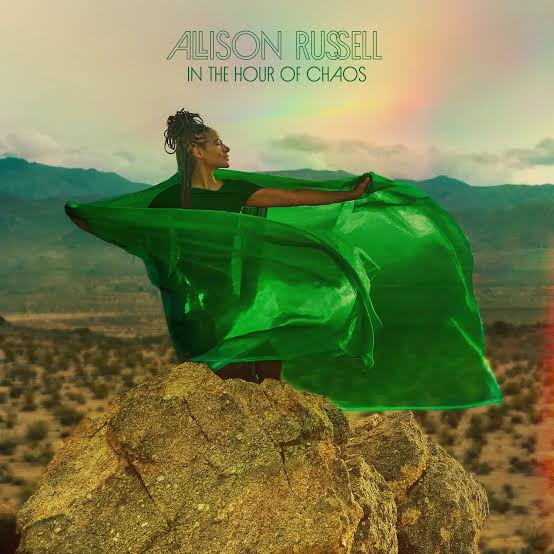
Her current tour is in support of Russell’s 2026 album In the Hour of Chaos, which features collaborations with numerous singers and musicians Russell counts among her favorites—including Joy Oladokun, Norah Jones, and Sara Watkins, to name but a few.
Russell spoke to me on the phone from her home in Nashville last week about her latest record, her Broadway appearances, and her love of music, performance, and life.
The following transcript has been edited for clarity and brevity.
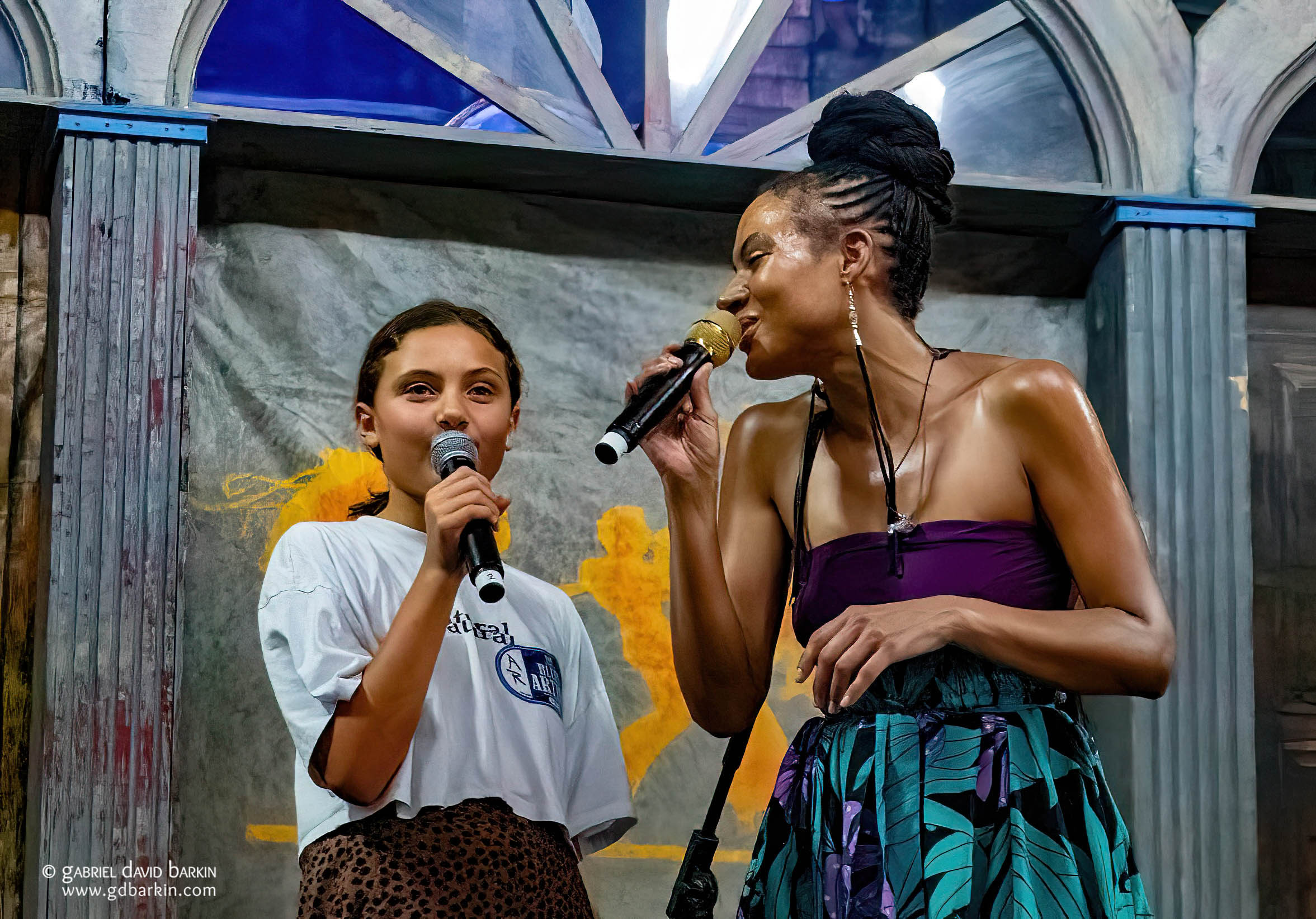
GDB: First of all, I am a big fan. I had the pleasure of photographing you in particular at Jazz Fest in New Orleans a couple of years ago, when your daughter sang on stage with you.
Allison Russell: Oh, that was such a wonderful time. Jazz Fest is always so magical. And getting to have my daughter with me on stage, it was wonderful.
GDB: Are you out on tour now, or where are you?
Allison Russell: I just got back to Nashville the day before last, for the Americana Awards. We live here now. We’ve been in East Nashville for about five years, and Greater Nashville for about eight years. But really, since [Russell’s debut solo album] Outside Child came out five years ago, I’ve barely been home. We moved into the place where we live now the night before Outside Child dropped, and then I just went on the road and kept working.
So when work brings me back home, it’s wonderful. Madison Cunningham and I got to present the Artist of the Year Award to Molly Tuttle. It was a joyful night. And the best new artist [Emerging Act of the Year], Ken Pomeroy, have you heard her? She’s extraordinary!
GDB: Yes, yes!
Allison Russell: Oh, she’s so good. Oh, she’s so good.
GDB: She is. But I am going to ask you to talk about you now.
Allison Russell: Okay, well ... let’s get to it.
GDB: I’ll start with the album. It’s been out for a few months now. First of all, are we eternally in the “hour of chaos”? What is the “hour of chaos”?
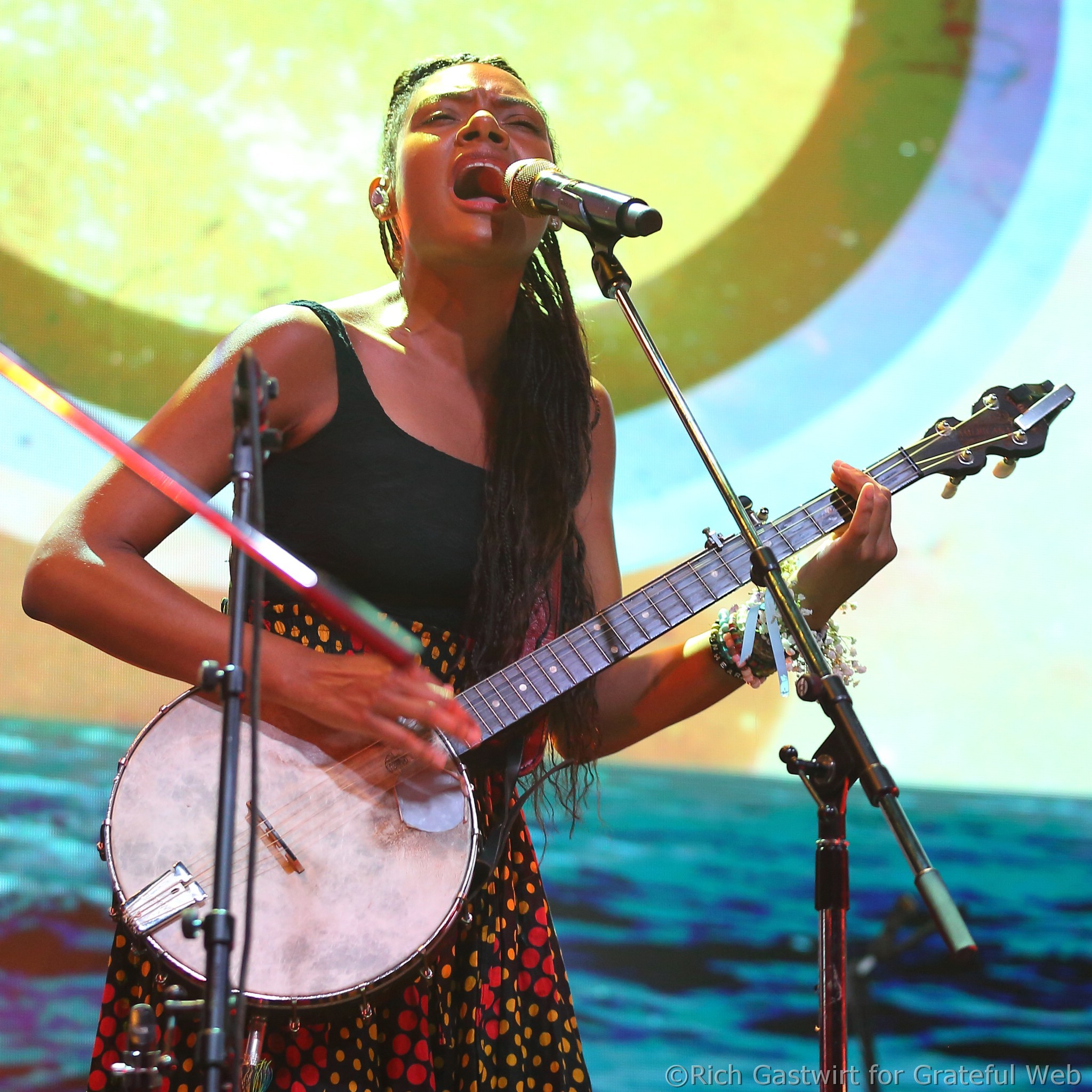
Allison Russell: Yes, I think we are eternally in the hour of chaos—and we always feel that our hour of chaos is worse than any hour of chaos that ever was or shall be. But in fact, every single one of our ancestors went through worse hours of chaos than the one we’re currently in. I like to remind myself of that.
And the hour of chaos is always the time to draw the circles ever larger and closer at the same time.
GDB: In the press release for the album, you talk about how the record is supposed to make you feel good.
Allison Russell: Yes, I hope it does. It’s a little bit of an antidote. A little bit of, hopefully, respite in the hour of chaos.
GDB: You’ve also said that “feeling good is a radical act.” What does that mean?
Allison Russell: Capitalism depends on us feeling really bad a lot of the time, and thinking that everyone around us is really bad, [to keep us] buying things, or endlessly scrolling, or whatever. So yes, it is radical to get off our phones and get out in the real world together and be together in real life. To communally and collectively solve problems together without rage-baiting, without cynically, apathetically giving up on all life on Earth.
It’s time to get off the phone, go meet your neighbors. That will heal us if we start to do that more. I do think that’s quite radical these days.
GDB: “Go meet your neighbors.” You mentioned a moment ago that you haven’t been home a lot, you’ve barely been home in five years. Do you know your own neighbors in Nashville?
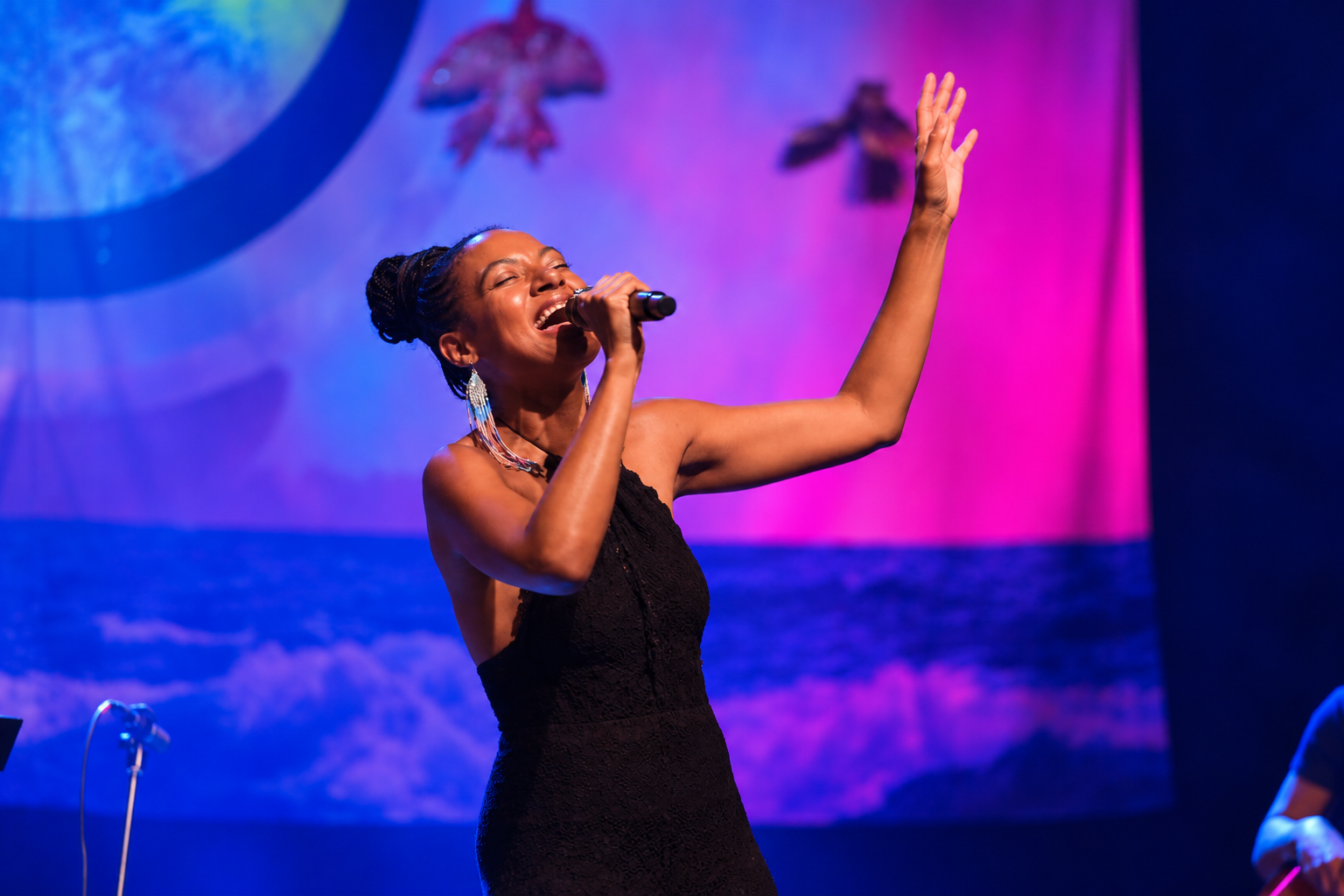
Allison Russell: I feel like a ghost in my own town! I have to tell you that this week has been so healing because I have met so many of my neighbors. I’ve been going to events, going to hear artists. We went to the Legion last night. [American Legion Post 82 is a Nashville music hub known for an eclectic musical calendar.] Our friends Dan Knobler and Jamie Dick, they play every Thursday night. It was the most joyful night. You pay your $10 cover, and you two-step, and you hang out, and you sing along. Everybody was dancing. There were veterans in their 80s dancing with hipsters in their 20s. I mean, it was just so beautiful. It was such a gorgeous cross-section of humanity. Just regular folk in the community, people who were tortured in war, and they’re given a bit of joy on a Thursday night in Nashville!
I’m sure a bunch of us don’t necessarily agree about a lot of things, but we could agree that it was joyful to sing and dance together.
GDB: That sounds amazing.
You talk about joy often. I can’t help but notice there’s a dichotomy—you often talk publicly, even on stage, about your (to say the least) challenging years growing up. [Russell has spoken openly about her mother’s mental illness, abuse at the hands of her adoptive father, and homelessness as a runaway during her teenage years.] And yet, the new album is full of sunny nostalgia for your youth. There are lyrics about remembering all the great times and such. And you called yourself a “hopeful agnostic” in interviews. How do you explain that contrast? Is that part of your own healing process?
Allison Russell: I am a little agnostic. In those lyrics, if you listen closely, it’s not always sunny.
Childhood is fraught and terrifying, but it’s also wonder-filled and precious. Mine was certainly both. I was, of course, broken by severe abuse. But I had my imagination, and I had books, and I had the public library, and I had the Festival International de Jazz de Montréal, which is the largest jazz festival in the world. I got to hear Oscar Peterson play for free in the park, and I got to hear Oumou Sangaré and Salif Keita. I didn’t know how extraordinary that was then, but it was transformative to me, foundational to me as a human. And as an artist.
I think that as deep in the depths of miseries as we’ve been, that’s how high the joy can be.
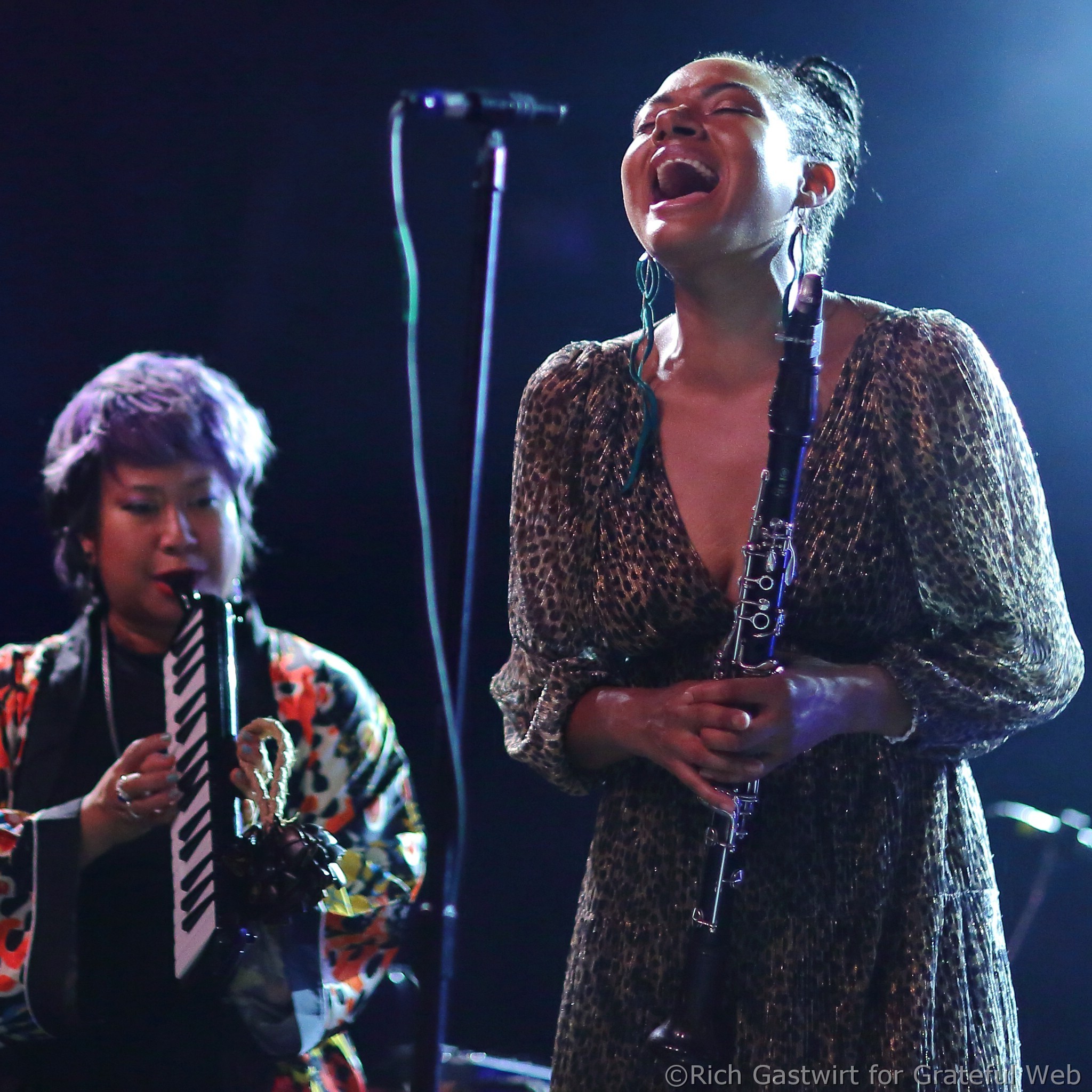
There are two sides of the human experience. It doesn’t matter what our circumstances were, none of us are getting out of this alive. None of us are getting out of this without experiencing trauma. To be born is traumatic. There’s a reason we don’t remember it.
I’ve been really leaning into going back to my teachers, re-reading James Baldwin, re-reading bell hooks, re-reading Audre Lorde, re-reading Nikki Giovanni. All of them went through far worse times in this country than what I’m going through, or what any of us are going through right now.
James Baldwin taught us long ago that all children are our children. I believe that includes our inner children. And getting back to that, and remembering that every single adult that we meet—no matter what they’re doing, or how horrific we may find their behavior or their beliefs—that’s still an adult walking around who has an inner child somewhere that I believe can still be accessed. And there’s some bit of wonder, hopefully, that maybe starts within them, some sort of personal revolution where they can honor that child more and maybe do better as an adult.
GDB: That makes me think of your role as Persephone in Hadestown. There’s a lot of both the dark and sunny side in that role.
Allison Russell: Yes.
GDB: And the broader story arc of Hadestown, which reminds us that as humans, we’re eternally stuck in the same cycles. We love, and we experience loss.
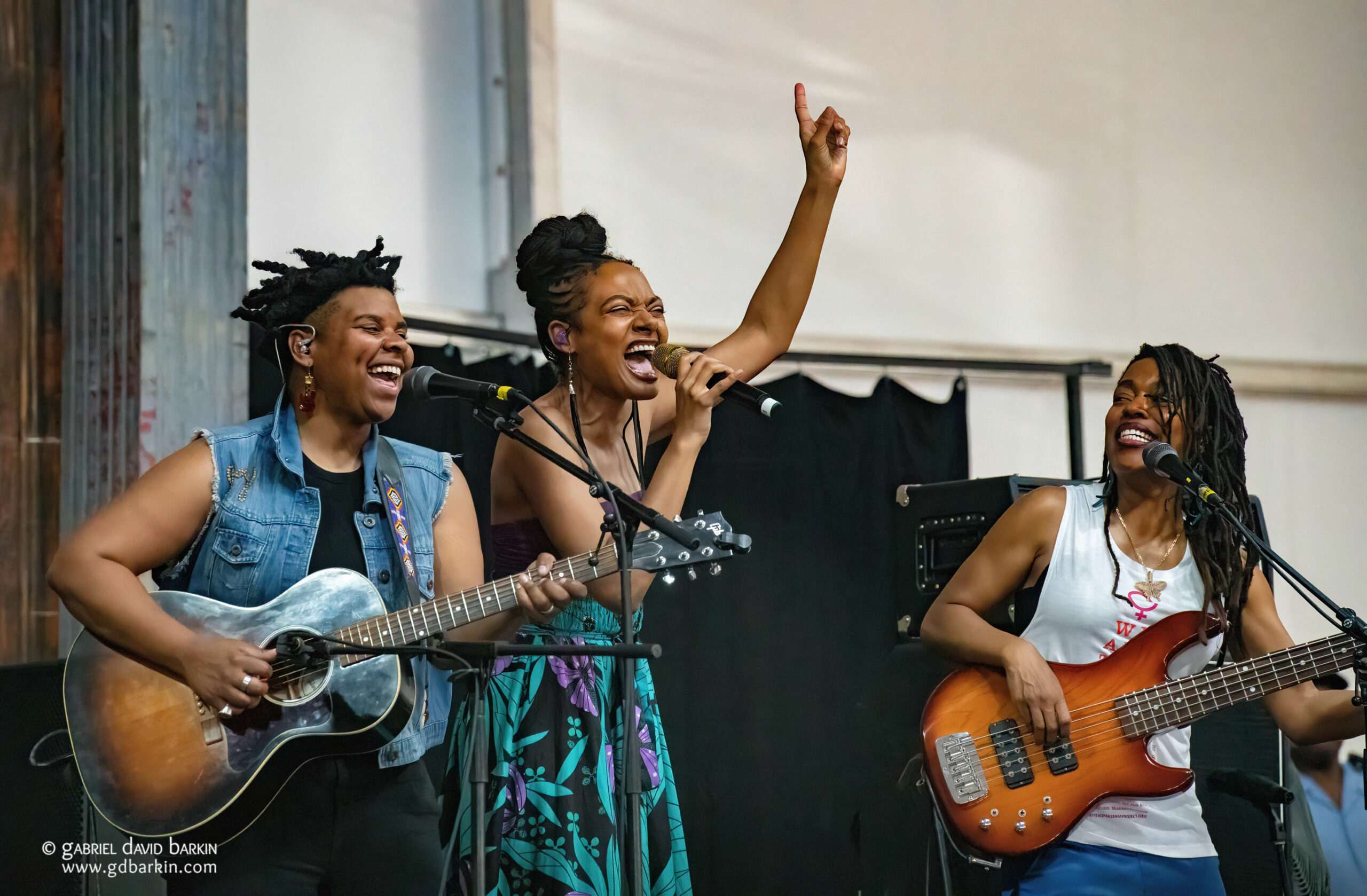
Allison Russell: And we find courage to love again. So much of Hadestown is that even though we know how it ends, we have to find the courage and the will to sing it again—and to imagine a different ending one day.
It really is my favorite musical. I think Anaïs Mitchell is a generational writer and artist. I feel so lucky that I got to live inside her beautiful mind and music and words for nine months. Persephone, for me personally, is an archetype and a goddess, a potent literary figure in my world. It was incredible to get to embody that role.
And also to witness first-hand the magic of theater. I mean, music is magic—but there is something about the permission to go on the journey when it’s a theater piece. I mean, Hadestown is kind of an anti-authoritarian, anti-fascist piece. But people can feel the story without feeling personally indicted. They can go along on that journey.
There’s something so transformative and powerful in the medium of theater. I’m hooked on it now. I’m going to continue to do more.
GDB: I wanted to ask you about that. Do you have any plans to get back on the stage? Is there anything in the works?
Allison Russell: Well, I’m working on something I’m not allowed to talk about yet. But I’m very excited for when I do get to talk about it.
GDB: The role of Persephone has both the dark and the light, and you carried that so well. But when you perform musically, both on stage with your band and in the studio, you sing with such joy. It’s hypnotic and captivating and somewhat contagious. Like you say, it’s a radical act.
So I have to ask, thinking about how Persephone was a role you embodied, but that role has the joy and the ennui and the darkness embedded in it. As a musician and singer, that may not be a scripted role, but how much of that delightfulness we witness is performance, and how much of that is just you?
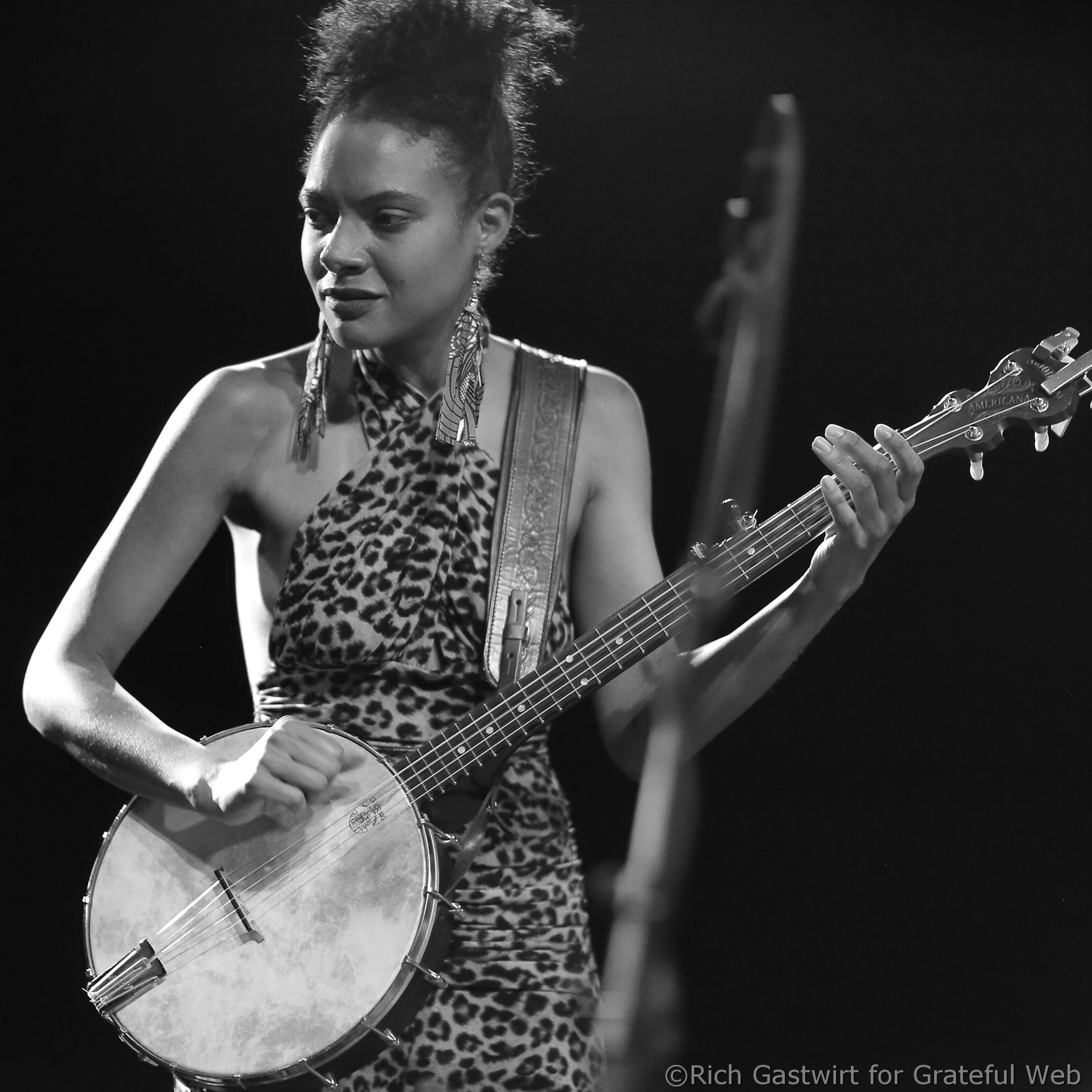
Allison Russell: I don’t think it’s performance at all. It’s just what comes out.
I mean, it’s performance in the sense that we’re doing it in front of people. But I really think of it more as creative communion. [Russell and her bandmates] stand in a semicircle very intentionally because nobody is above or beneath anybody else. And we all want to see each other and feel each other’s energy. We’re in conversation when we’re playing live—not only with each other, we’re in conversation with the people who choose to come and participate in that show as audience members. And the audience isn’t just “the audience,” the audience is informing the art. The art is different every night because the people that come to participate are different every night.
I felt that so much, even in Hadestown. Obviously, we don’t deviate from the script in Hadestown. But even within the world of theater, it’s different every night with every audience. It was eight shows a week, and every show was different. Every show was a new communion.
[In concert with my band] it’s the same, and maybe even more extreme. We never play the same set twice. We’re always adjusting little things, always responding in real time. Sometimes someone will call out for a song they really wanted to hear, and we’ll adjust on the fly and do that. It’s always a collaborative experience.
GDB: I interviewed somebody who’s in a very famous band a number of years ago. (I don’t want to say who.) He was playing in some improv jam band sessions, and I asked him how that experience was different than his regular touring gig with the famous band. He said, “I’ve been in the same damn band for over 40 years, I could be in a coma and play those songs.” What I’m hearing is that you never have that experience, you’re always “in it.”
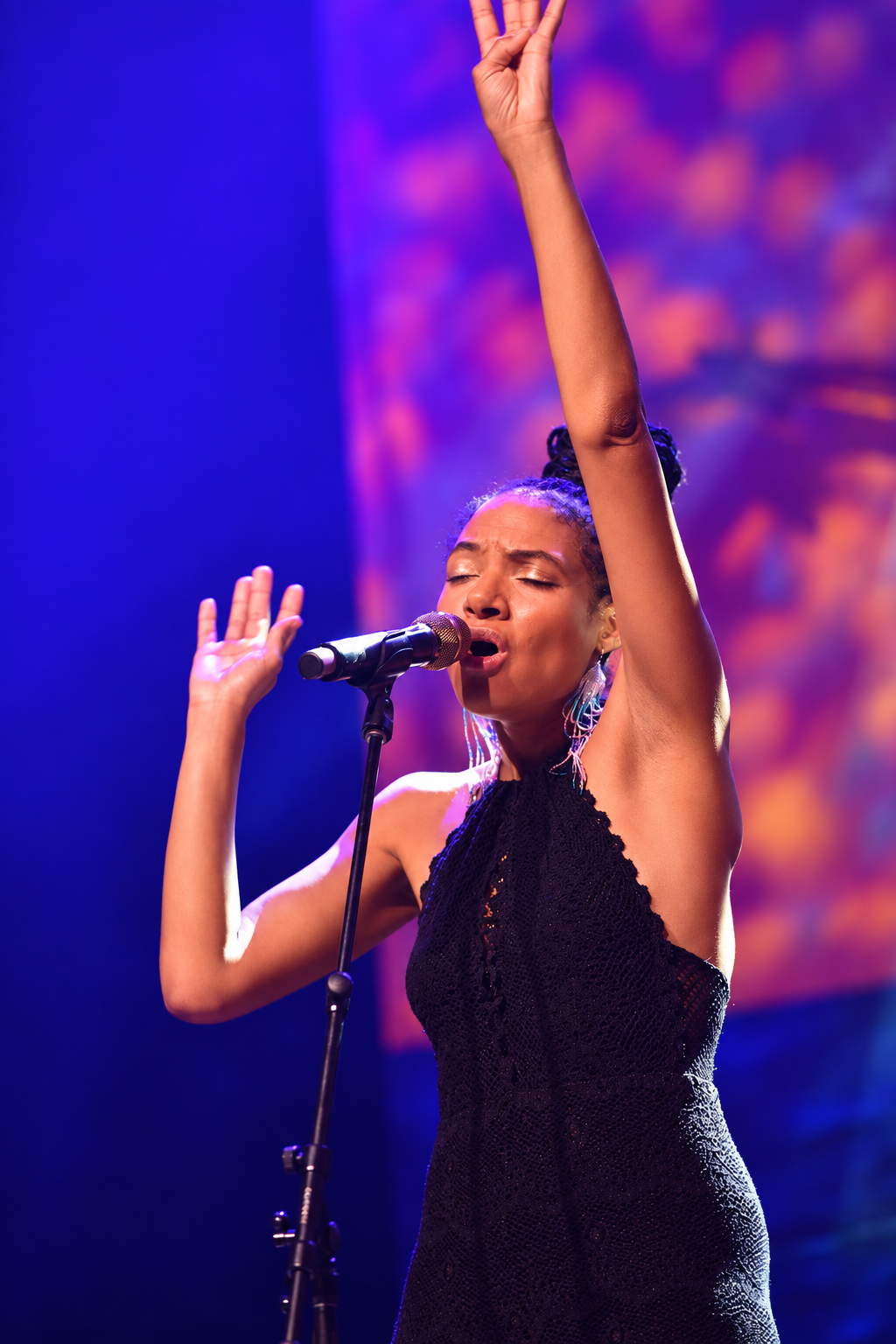
Allison Russell: I think that’s what I love so much about live performance—especially in these times where people are so traumatized by the psychological assault of our online platforms. It’s not healthy for any of us. We all feel it when we’ve been online too long. It’s skewed, like a distorted, funhouse mirror version of the world. Then when we go out in real life, it’s this relief. Particularly when we are outside in nature.
Most of this record got written as I was walking our rescue dog through the Shelby Bottoms. [A Nashville parkland area.] We’ll go on 20-mile trail runs and walks. And that is when I get my best writing done. I’ll just sing little snippets into the phone. I bring my notebook with me, jot things down. Then when I come home, I coalesce them and work on stuff with my collaborators, JT [Nero] and Drew [Lindsay], who are known as Dim Star.
It is the most healing thing ever to get to play music with people that I love and admire, and whose art inspires me. I’m always surrounding myself with people who are far better musicians than I am. They’re all just brilliant! And they inspire me, and we go to places together that we could never go alone. I think the same is true of our entire species. We go places together that we could never go alone. And we forget that to our detriment. When we reground in that, we do better.
GDB: I mentioned earlier that I got to see you sing with your daughter at Jazz Fest. I also saw you at the High Sierra Music Festival when you were pregnant with her.
Allison Russell: Yes, I was pregnant! That’s a wonderful festival, such a community builder. It’s so wonderful.
GDB: So yes, I want to ask about your daughter. Is she interested in singing and performing? Really, that’s her business in a way, of course. What I’m more interested in is what your thoughts are about that kind of career for her, if that’s the direction she wants to go?
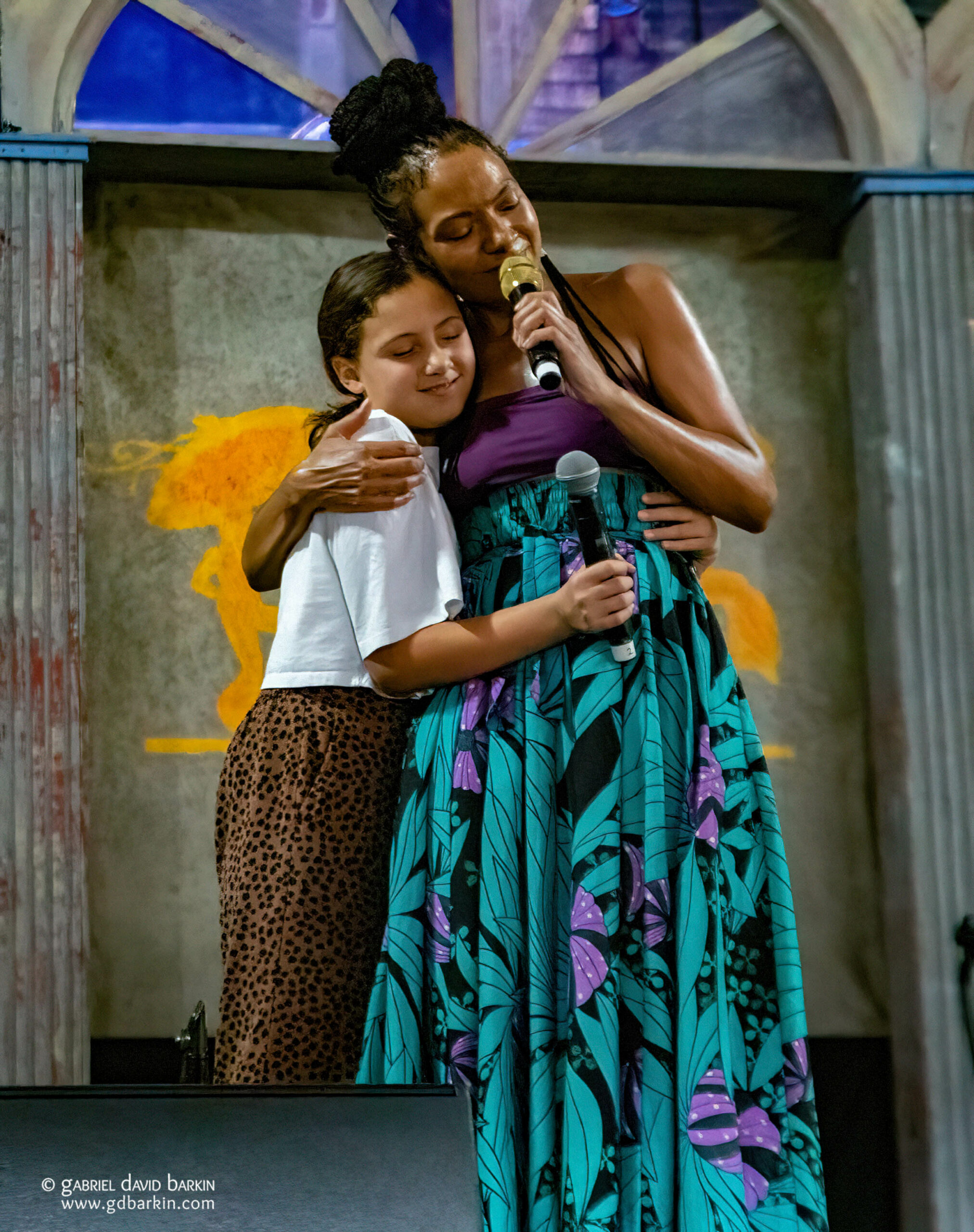
Allison Russell: I will support her in whatever she wants to do. She has said forever that paleontology is number one. She’s a dinosaur kid, she always has been. But she’s always said that she loves music. She plays piano and drums, and she sings so beautifully. She has an incredible voice and incredible control. Her favorite musician of all time is Adrianne Lenker. She loves Big Thief so much. She got me into their music, and now I love them so much.
We are still kicking ourselves because we missed their show here. Ida will never forgive me. We weren’t paying enough attention to the calendar. I’m in the doghouse still for that one.
GDB: What’s next for you after the current tour? I know you mentioned more theater that you can’t talk about. Anything else on the horizon?
Allison Russell: I have quite a lot! I’m finishing a book. I’ve turned in the first draft, and I’m feverishly trying to finish the final draft. And I am working on that theater piece that I can’t talk about yet. I’m working on a new record too, this one’s going to be folk and acoustic.
I’m very lucky to play with two extraordinary Irish musicians, Caoimhe Hopkinson and Caoi de Barra. [Both are members of Russell’s touring band the Rainbow Coalition.] We have had some of the most fun sessions and jams, in Ireland and on this side of the water, and we’re gonna be playing TradFest [in Dublin] in January. We’re collaborating there with one of my favorite bands of all time, Hothouse Flowers. And also collaborating with Altan, which is one of my favorite ever Irish trad bands. We’re doing kind of a transatlantic session with them as well, and we’re going to do a little acoustic recording while we’re there. We’ve been writing some songs together, and the girls [in my band] have been writing more with me. We’ve been doing a ton of touring and writing together in the last couple of years, and we want to capture some of that. I’m also working on a project with Kronos Quartet. I’m really excited about that, too.
GDB: I am amazed that you had time to talk with me today!
Allison Russell: This was amazing.
GDB: I always save this question for last because I don’t want it to impact how you answer all my other questions. I wonder what it’s like for you as a performer and an artist to do interviews? Is it a chore? Do you find it’s an opportunity to be introspective? Does it give you an opportunity to learn something about yourself?
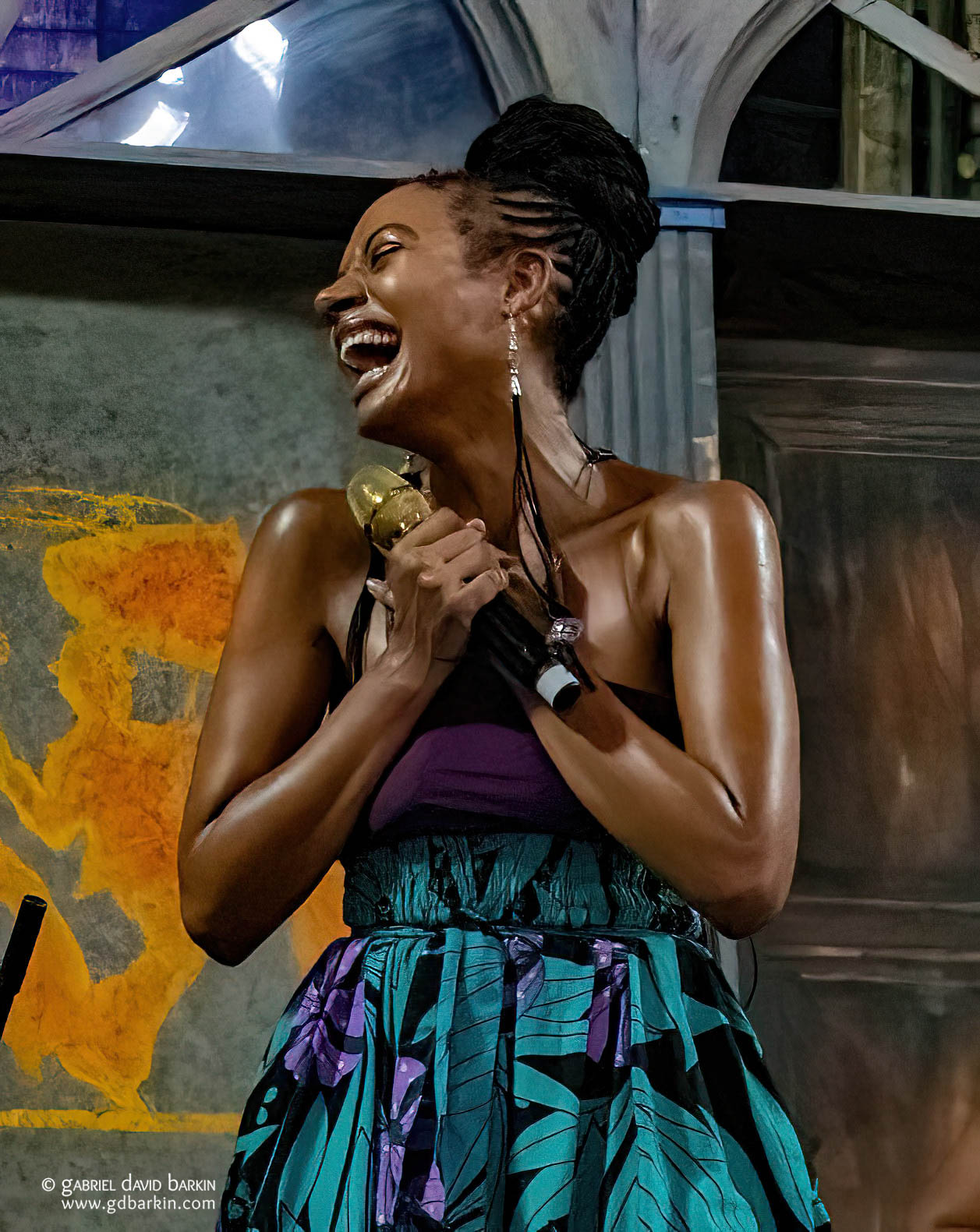
Allison Russell: I actually love interviews. I feel really grateful, particularly since Outside Child came out. There has been a level of research and interest and care in all of the people that I’ve talked to, including you, that I really don’t take for granted.
Journalism is a part of the art form, too. It’s been important to me as a listener and a person that loves to discover new music. I love reading a great interview—so I don’t ever phone it in. I always want to be very present. And yes, it’s an opportunity to be introspective and honest, to be present and clear and precise. To speak the truths about the craft that we have in our little treasure chests. It might seem pedestrian to me, but maybe it’s helpful to somebody else. You don’t know.
Allison Russell is currently on tour in support of her album In the Hour of Chaos. For dates and more information, visit https://allisonrussellmusic.com/