Article Contributed by Stites McDaniel
Published on 2008-11-19
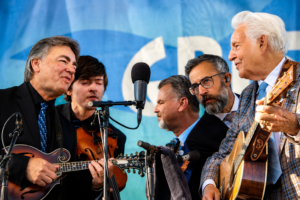
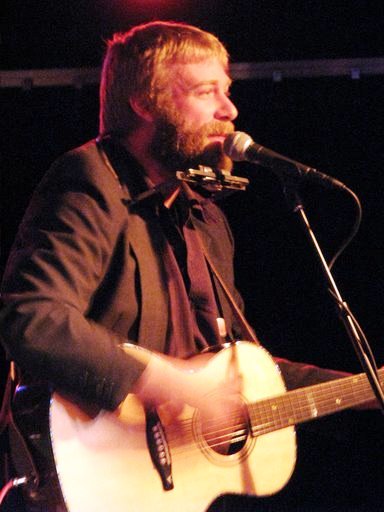 Nathan took the stage looking like a wealthy hobo. His suit was well worn but clean. His beard was thick but manicured. His voice was raspy, but strong. He greeted the crowd with what many folk singers are thinking about in this new age of hope. "I am Nathan Moore from the recently blue state of Virginia and I'm wondering what I'm going to do with all of the songs I wrote over the last eight years." Such a rumination, although jovial, cut to the heart of what many young people in this crowd, this town and this nation were thinking just then. And as the set of modern Appalachian folk music began to take shape, I realized that this is what a voice of the people- a true folk singer- can do. He took the thoughts right out of my head. He wasn't trying to give me an answer. That is not what folk music is about. He was simply making sense of all of the questions I have.
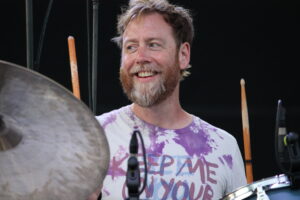
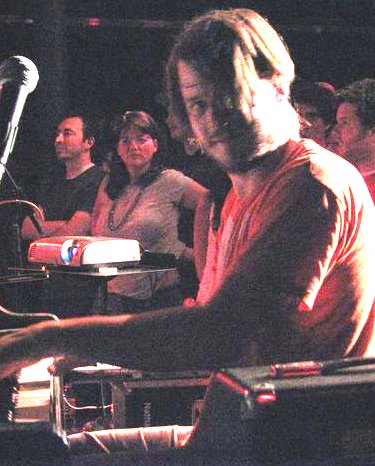
 When Marco Benevento, Reed Mathis and Jon Fishman took the stage the music they were making couldn't have been anymore juxtaposed to that of the night's opening act. I mean, looking past the fact that the trio opened riffing on Led Zeppelin, these guys were creating a type of jazz that wasn't comparable to anybody's music today. This is what has begun to make Marco a symbol of his own style. The addition of players from different musical places served as a compliment to what Marco was creating, but it was still his music. No matter how good the wine is with dinner, chances are the entire meal is defined by the entrée and Marco is what's for dinner.
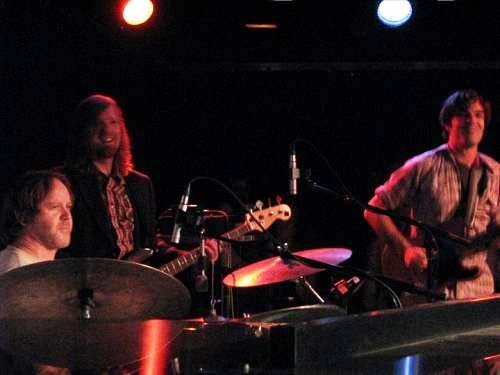 But as I said before, these two players, despite their insane amount of experience, confidence and originality served only as parts of the recipe. So while the music they, along with Marco, were creating seemed unmatched by any of today's touring bands, I found myself drawing parallels to the jazz scene of the 50's and 60's. A time when players moved between bands and each different formation made for a different sound. The Miles Davis Quintet of the early 50's had a sound all its own, yet that sound hinged on the charts Miles wrote or chose for the band to cover. The same can be said for Marco. He has begun to subtly create a scene defined by his music and his rotating cast of characters. When Miles hooked up with his new band in the late 50's, a whole new form of jazz was born, but it was still Miles. And, as it was with Miles, no matter who is playing with Marco, it is always his sound that is breaking through. He has taken to making modern jazz standards out of songs that sound like the background music for video games, out of classic rock, out of simple four-bar repetitions. Like an artist who can create a sculpture out of things he finds around the house, Marco find the hidden beauty in songs that may not seem so beautiful if played by someone else. He searches for the inverted chords. He is unexpected- complicating the simple and simplifying the complex. Yet he is always creating this in the moment, and he is always having fun. He can be cute, he can be dark, he can overplay, he can leave too much space, he can tickle, he can pound, he can distort and he can play without any effects. But no matter what he does, he is doing it as it has never been done before in the jazz world, but will always be done by him. Above all, he leads.
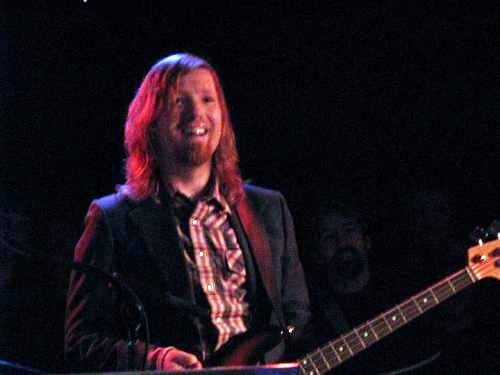
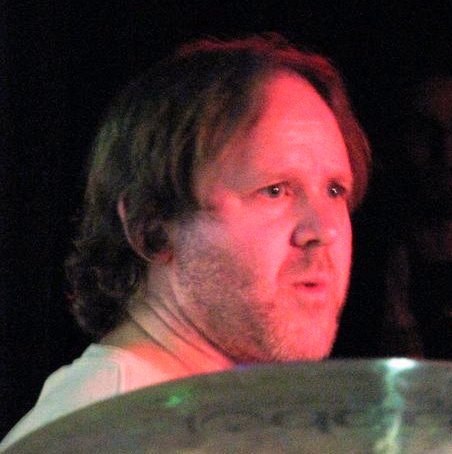 The superset of music was sending waves of heat through the sold out crowd and even the strongest of diehards were giving into their exhaustion as the band got deeper and deeper into what must have been a limited repertoire of music, as Fishman joined the band at the last minute, replacing Andrew Barr, who had another commitment. Near the 80th minute of the set, even Marco had to step away from the stage to catch his breath, but Brad Barr had stepped up to the stage and grabbed a telecaster which he made sound like a hollow body with nylon strings as he lead the rhythm section into one of he more psychedelic jams of the night, with Marco standing off stage watching with sweat dripping form his chin and a smile from ear to ear. But the night did not belong to Brad. He knew it and so did we and when Marco sat back down at the piano, the night's final jam brought the electrically charged crowd back up again. When the quartet plunged into the swamp rock jam of Credence Clearwater Revival's 'Have You Ever Seen The Rain', the only thing left was the kitchen sink. Marco had given his all and shown not only the dumbstruck audience, but the players who joined him on stage what the new face of jazz looks like.