Article Contributed by Debra Lambert
Published on 2026-08-03
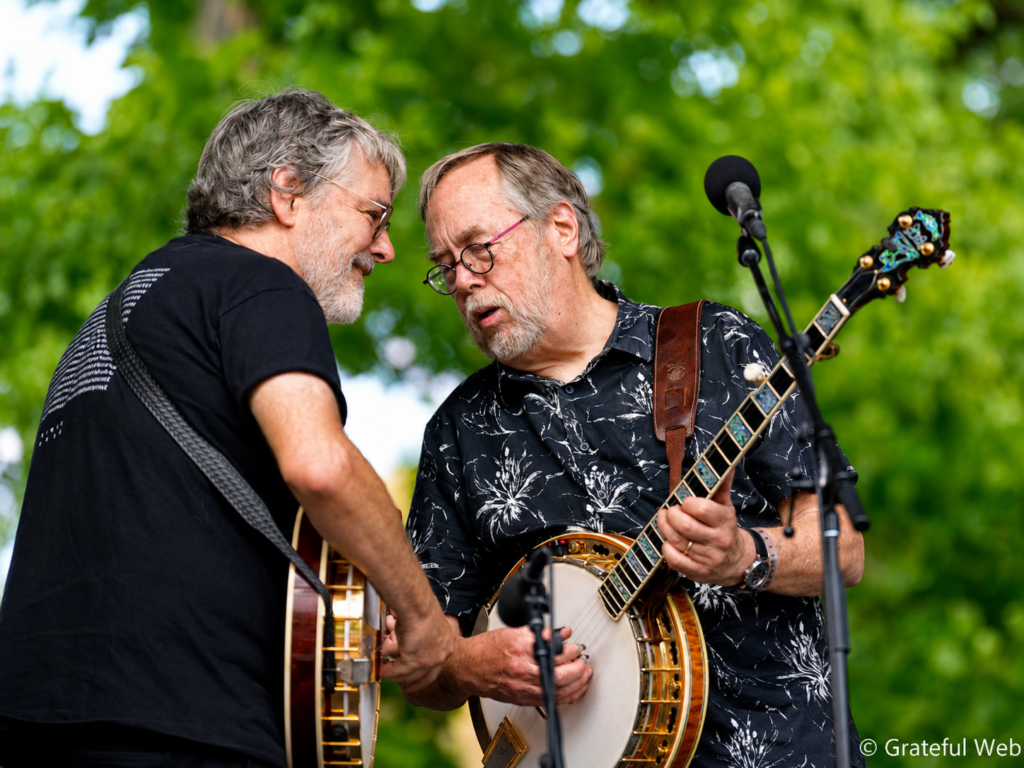
Béla Fleck & Tony Trischka | RockyGrass 2026 - photos by Debra Lambert
At RockyGrass, the sound of the banjo is never far away. It is the signature sound of bluegrass, its rolling picking patterns creating the pulse that drives the music forward. For more than six decades, Tony Trischka has explored where that sound can take him.
A pioneering player, composer, and teacher, Trischka has helped shape modern banjo playing while remaining deeply rooted in bluegrass tradition. He has been part of the RockyGrass lineup many times over the years. At this year’s 54th Annual RockyGrass in Lyons, he returned with Tony Trischka’s EarlJam, featuring Michael Daves and drawing from Earl Jam and Earl Jam 2, albums inspired by previously unheard recordings of informal jam sessions between Earl Scruggs and John Hartford.
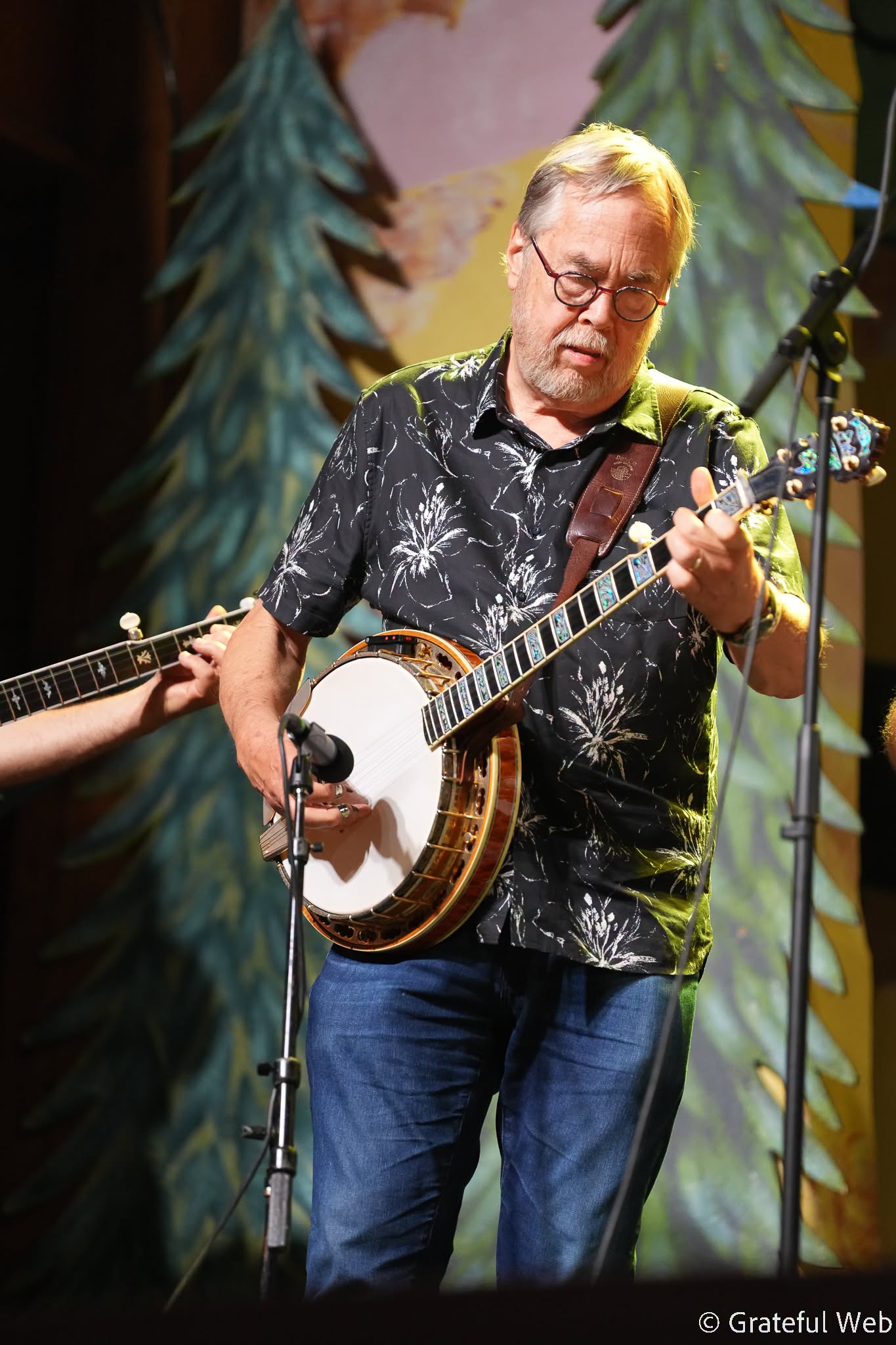
The resulting albums brought together an all-star lineup of bluegrass musicians, including Béla Fleck, Billy Strings, Sam Bush, Molly Tuttle, Del McCoury, Michael Cleveland, and Michael Daves. On the first day of RockyGrass, during a hot July afternoon, I had a chance to sit down with Trischka for a brief conversation about the banjo, teaching, the lasting influence of Earl Scruggs, and how music still moves him.
Before we settled into the interview, I showed Tony two old Telluride Bluegrass Festival programs I had brought with me. Before heading to RockyGrass, I had gone through my collection looking for the years he appeared on the Telluride lineup. He smiled when he saw them, then chuckled at a photo of himself with Skyline in the 1985 program.
The programs brought back Telluride memories, including one performance during which, he recalled, “It rained through our entire set heavily.”
I smiled, thinking of my own memories of the many climates a Telluride Bluegrass Festival can have.
I asked if he had a favorite banjo joke.
Instead of telling one, he reached into his wallet and carefully unrolled a small sticker he carried with him. It showed a banjo and one word:
“Tolerable.”
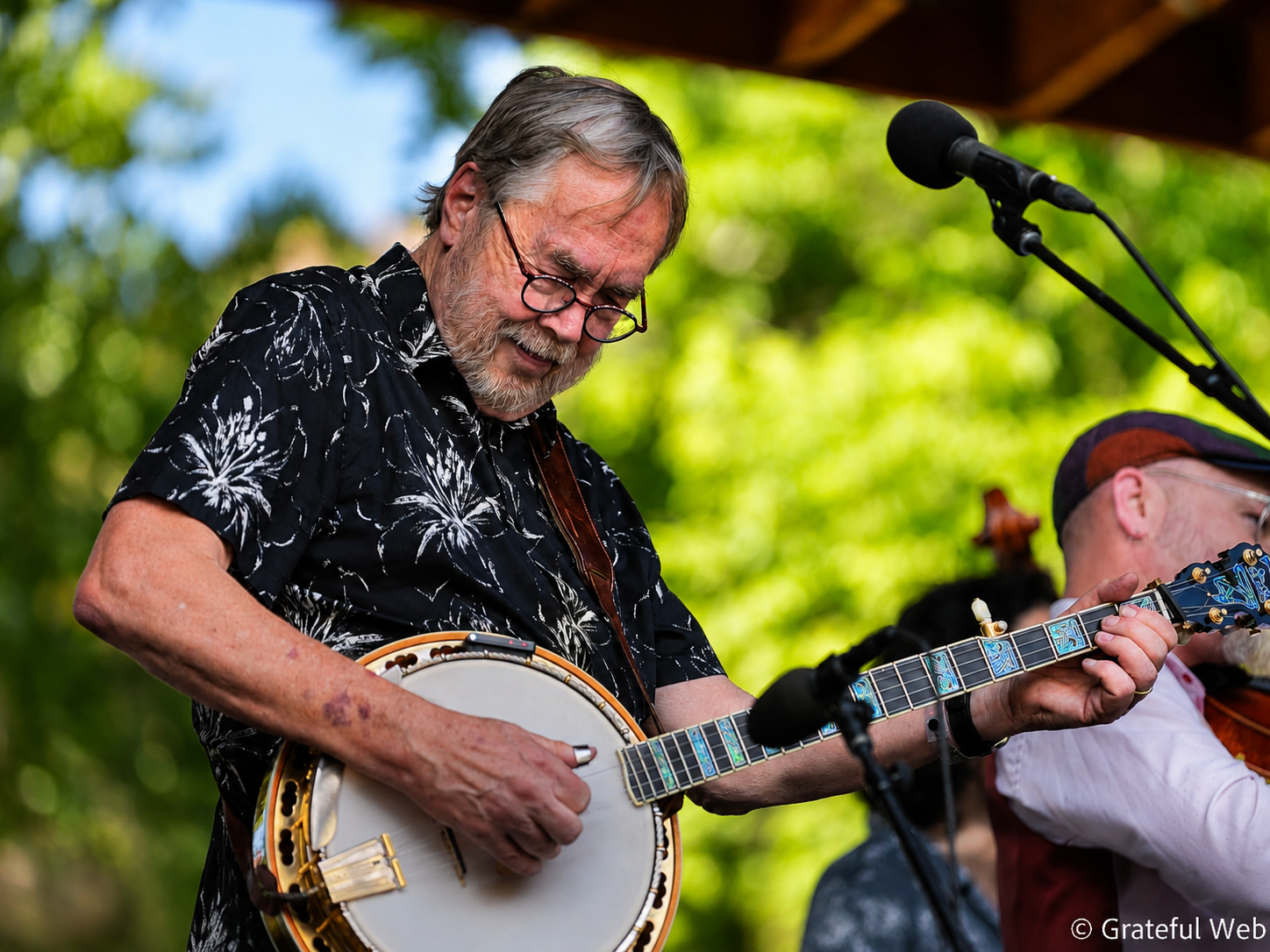
We both chuckled. Poor banjo gets a bad rap. Like licorice, you either love it or hate it.
I told him that although I’m not a banjo player, I’ve always loved its sound—that I feel it in my heart.
“Right,” he said. “That’s what you’re supposed to get.”
So I asked what had drawn him to the banjo in the first place.
“The sound of it,” he said. “You know, it just has that exciting sound.”
He recounted hearing the Kingston Trio in the early 1960s.
“I want to do that.”
More than 60 years later, that excitement seems very much alive.
“Absolutely. I’m still hooked,” he said. “I’ve been playing since 1963, and I still find new things to do, new avenues and new projects. It’s a never-ending journey. I have so much to learn. It’s totally wide open.”
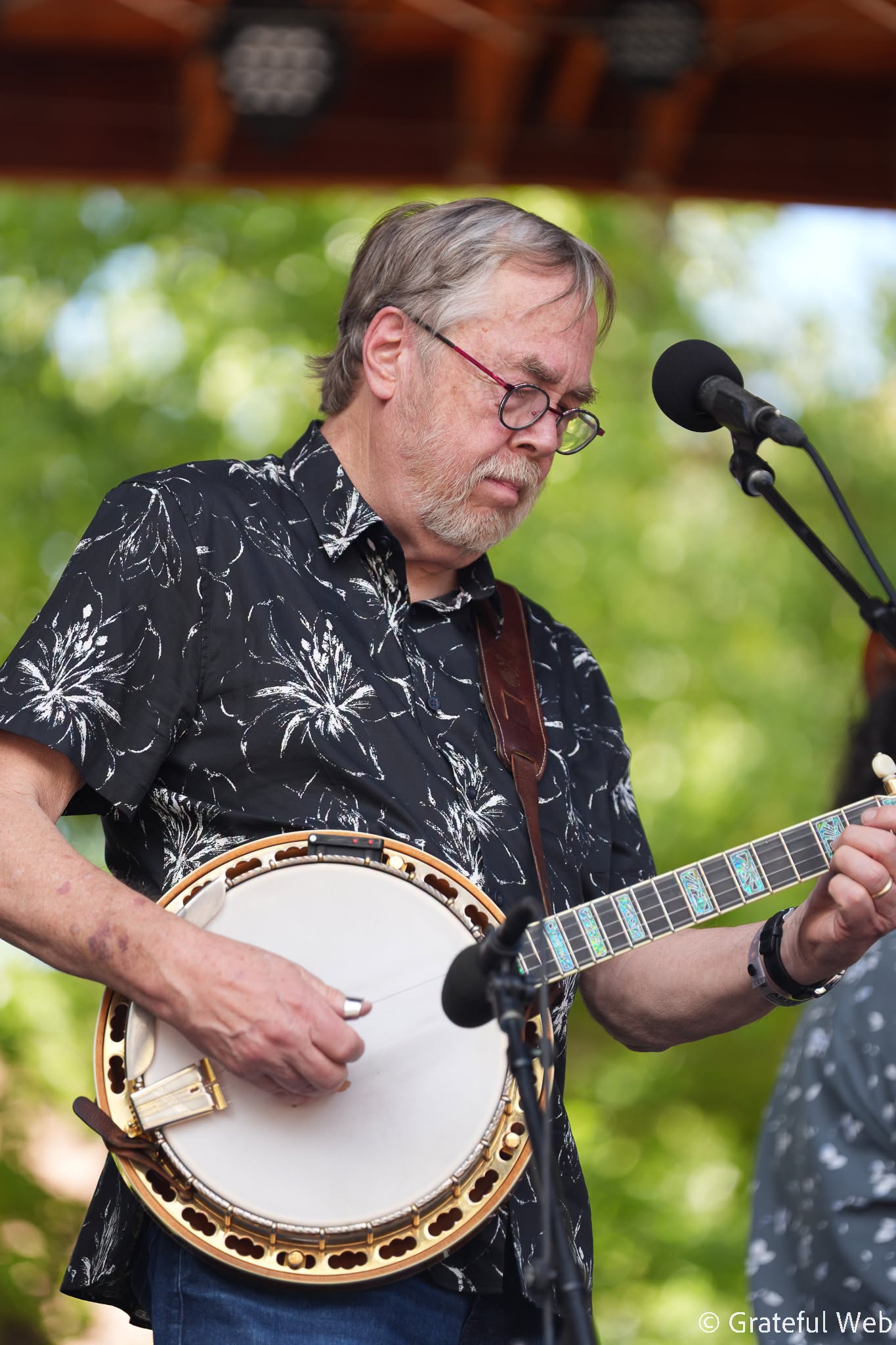
That same enthusiasm shapes the way he introduces beginners to the banjo.
He begins by getting the banjo into standard G tuning, showing a couple of chords, teaching a simple roll, and then introducing “Boil Them Cabbage Down.”
“Now you know how to play the banjo,” he said with a smile. “You’re welcome.”
The idea, he explained, is to give beginners some gratification right away.
Our conversation turned to one of the questions I was most curious about: Were there times, I wondered, when he felt himself disappear into the music?
“Good question,” he said.
“It doesn’t happen enough. But it does happen.”
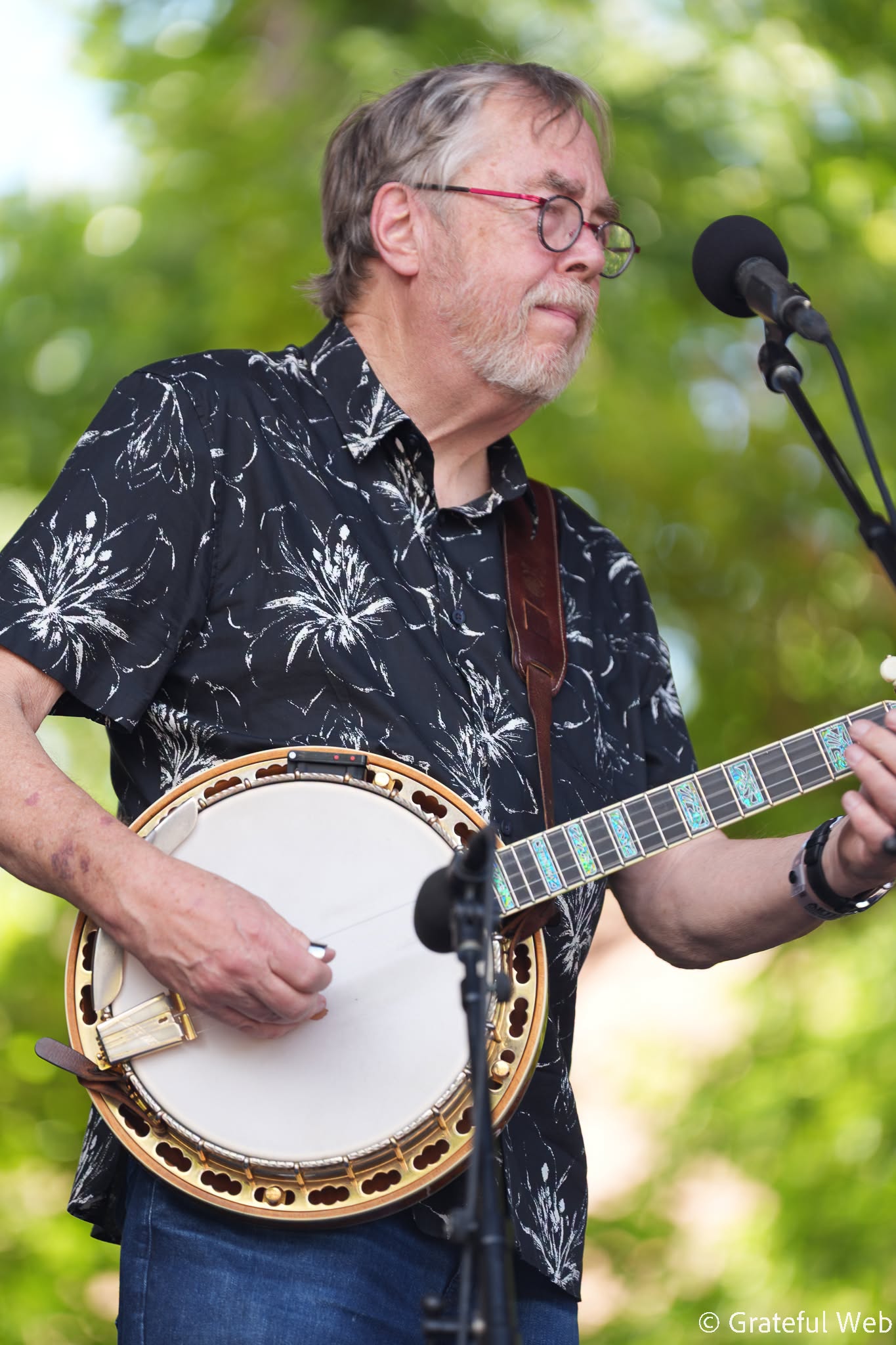
“There are times when you’re playing and you’re just...gone.”
“There are certain tunes that I play. I could just play it for a minute, and I’ll be gone. I’ll be just lost in it. The tune itself—I can get lost in it instantly.”
“It’s not like you’re onstage and you’re jamming and maybe 45 minutes in and everything’s clicking. There are certain tunes—I just start playing them, and I’m immediately transported.”
I asked what tunes took him there.
“There’s a guy named Dock Boggs,” he said. “He recorded in the late ’20s and was rediscovered in 1963. He did a version of the murder ballad ‘Pretty Polly’ in this really unusual tuning on the banjo. Whenever I play that, I’m back in the ’20s. It just takes me back.”
Trischka transcribed Boggs’ recording so he could play it exactly as Boggs had in 1928.
“I feel like I’m just inhabiting that song and that story.”
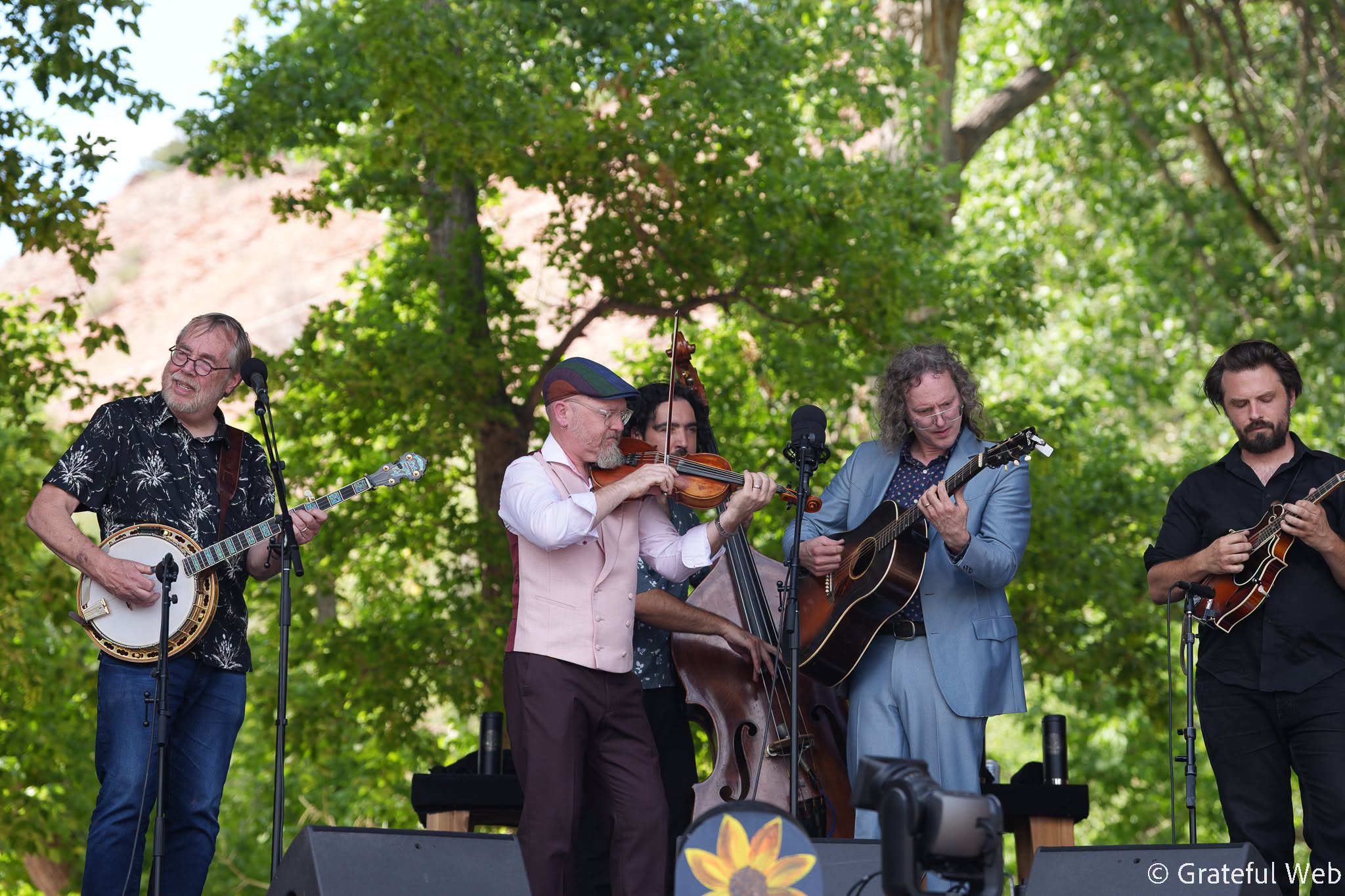
With Tony Trischka’s EarlJam billed as his featured RockyGrass set, our conversation turned to the story behind Earl Jam, a defining project in his musical journey.
During the COVID pandemic, Scruggs family friend and fellow banjo player Bob Piekiel mailed Trischka a thumb drive containing more than 200 rare home recordings that John Hartford had given him. The recordings captured informal jam sessions between Hartford and Earl Scruggs.
“I started listening and went, ‘Oh my God,’” Trischka said. “‘This is like a treasure that’s just been unearthed.’”
At first, his goal was simply to understand Earl’s playing.
“I decided I should transcribe these things and write them all down just so I could figure out what he was doing.”
That simple exercise grew into something much larger.
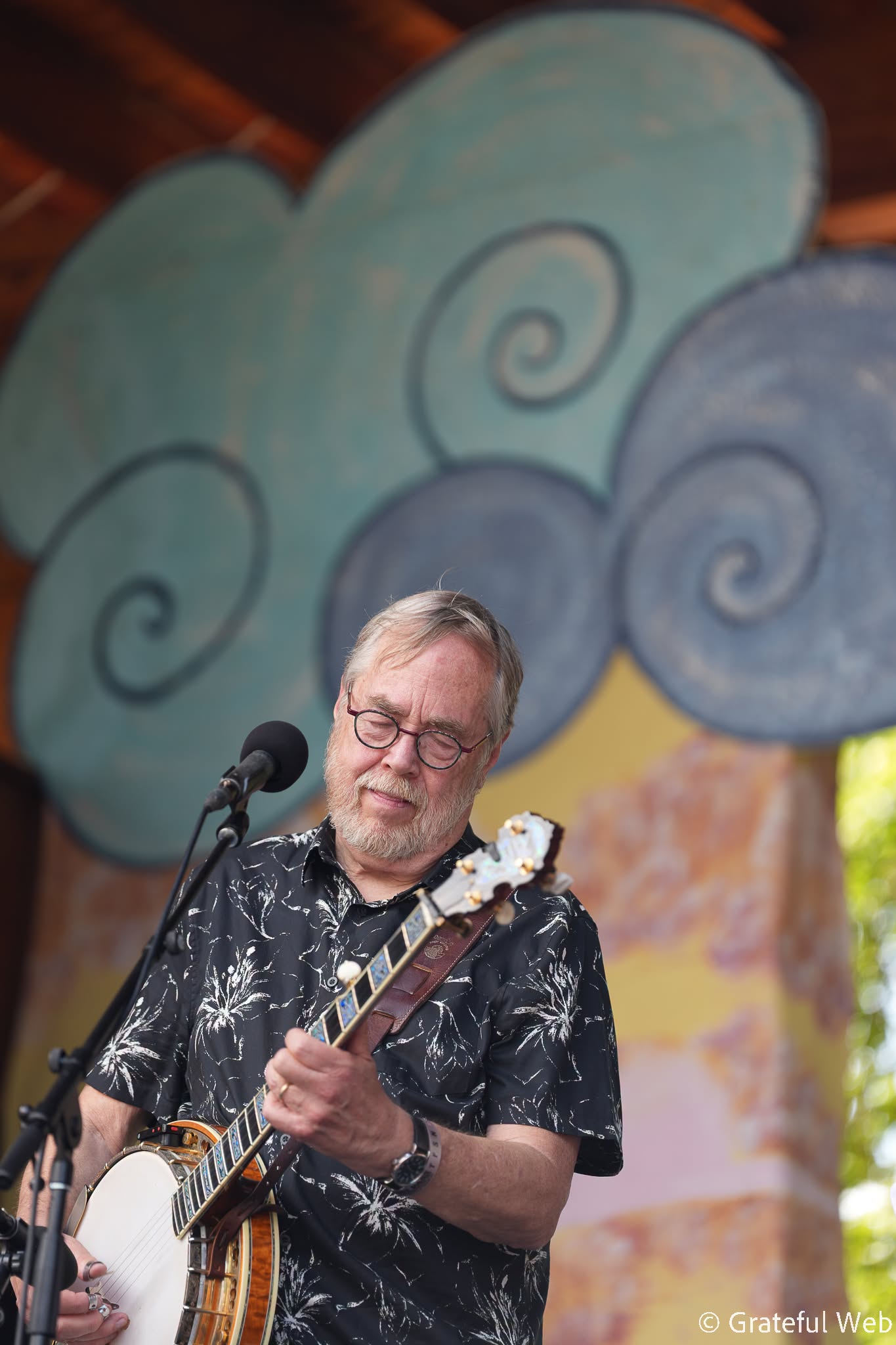
“Once I started doing that, well, I should record this so people could hear what Earl was playing on those rare recordings.”
Only after the first Earl Jam album was released did Trischka learn that Earl and Louise Scruggs had never intended for the informal recordings themselves to be made public.
“So it’s out there through my fingers, but it’s not him playing it.”
The approach became a way to share an extraordinary musical treasure while honoring Earl’s wishes.
“He was the best that there ever will be,” Trischka said.
“So, your North Star,” I replied.
“Yeah,” he said. “Absolutely my North Star. To this day.”
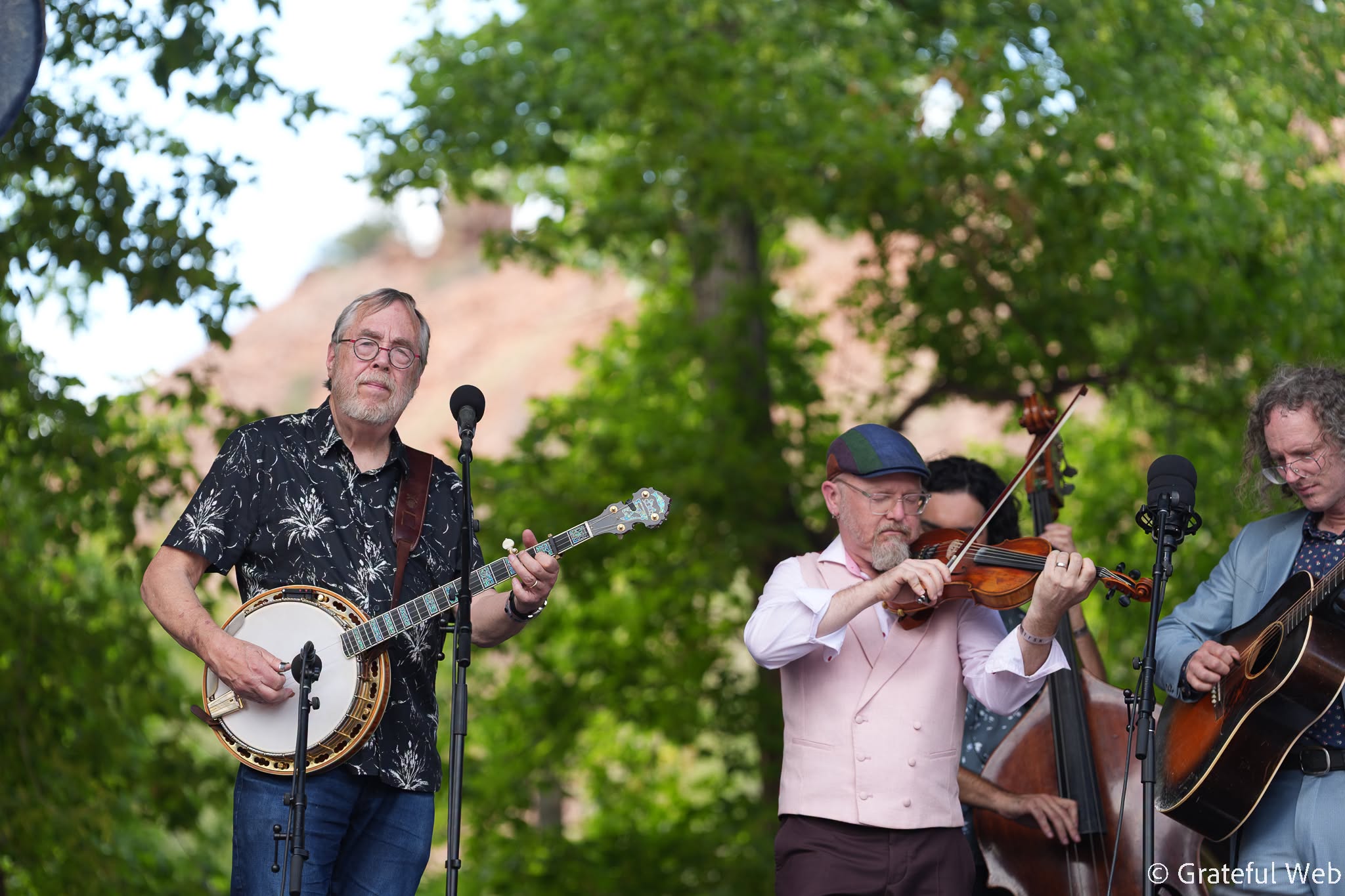
The following afternoon, I watched Tony Trischka’s EarlJam set up close. It was a sweltering RockyGrass afternoon, and the North St. Vrain River was filled with festivalgoers cooling off. Joined by lead singer and guitarist Michael Daves, fiddler Casey Driessen, mandolinist Jacob Jolliff, and bassist Jared Engel, Trischka took the stage for a set built around music from Earl Jam and Earl Jam 2.
The 3:45 to 5 p.m. set opened with “Lady Madonna,” showcasing Trischka’s versatility and musical wit. The set also included “Brown’s Ferry Blues,” one of the cornerstone pieces from the project.
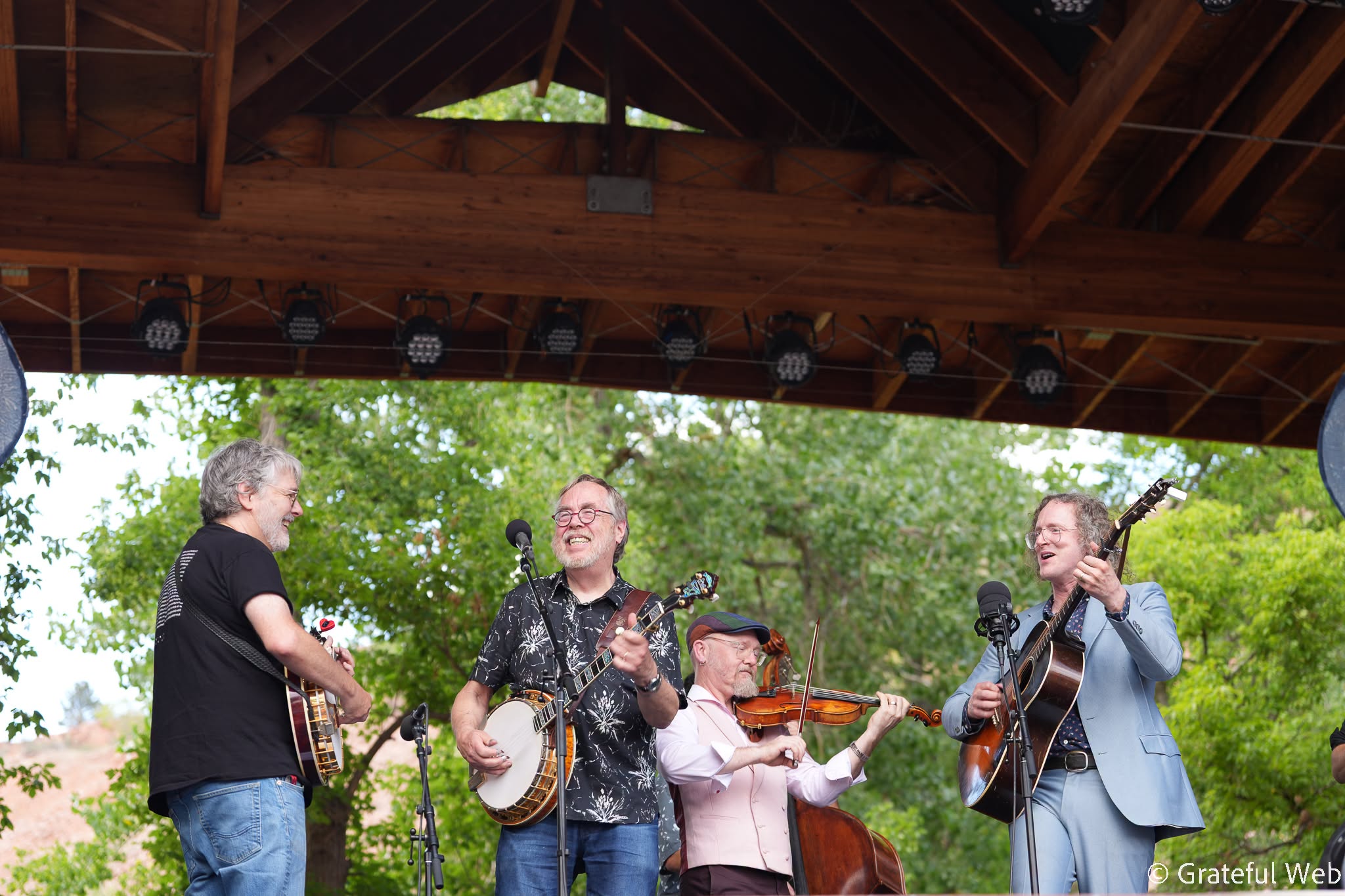
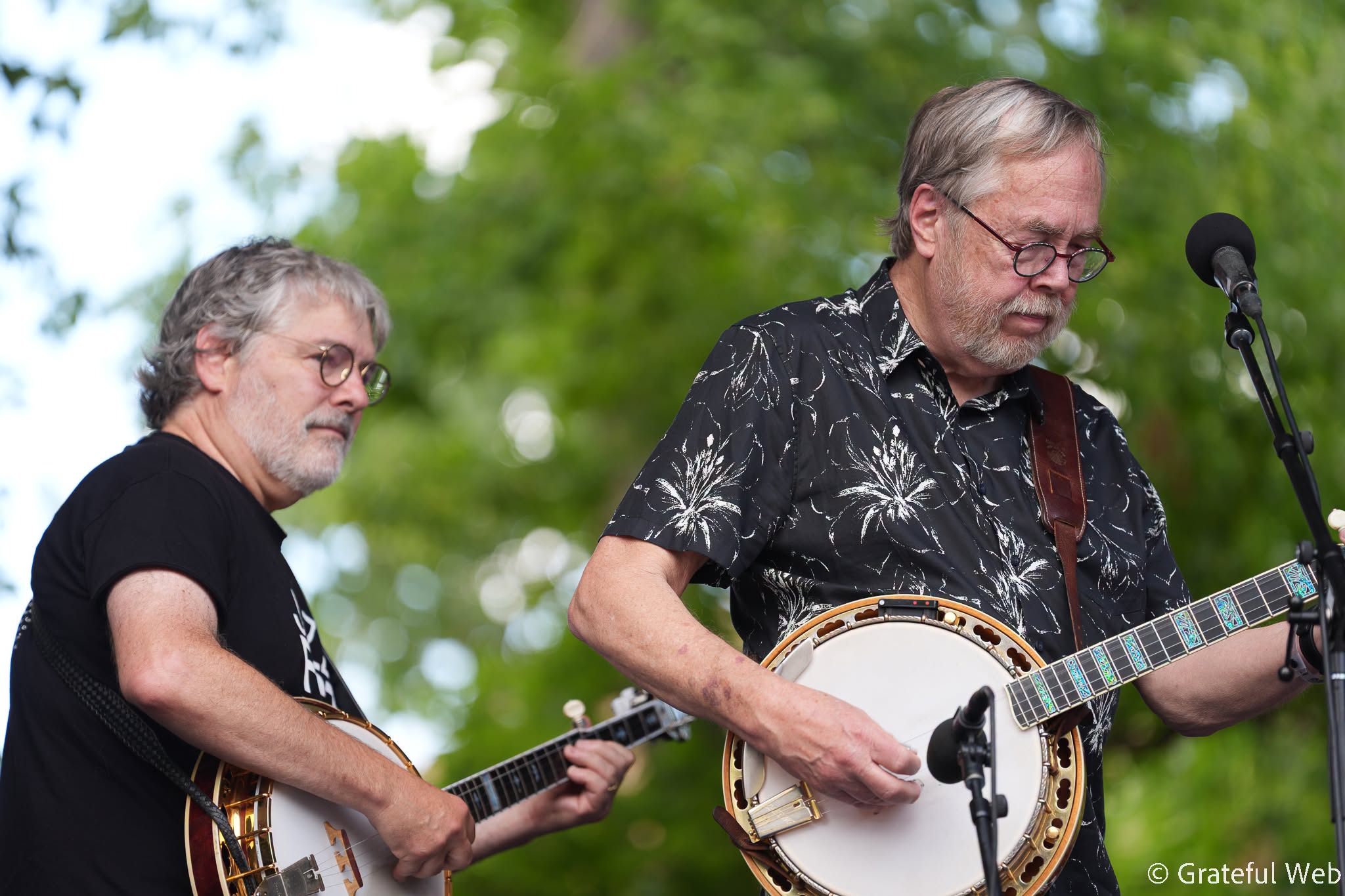
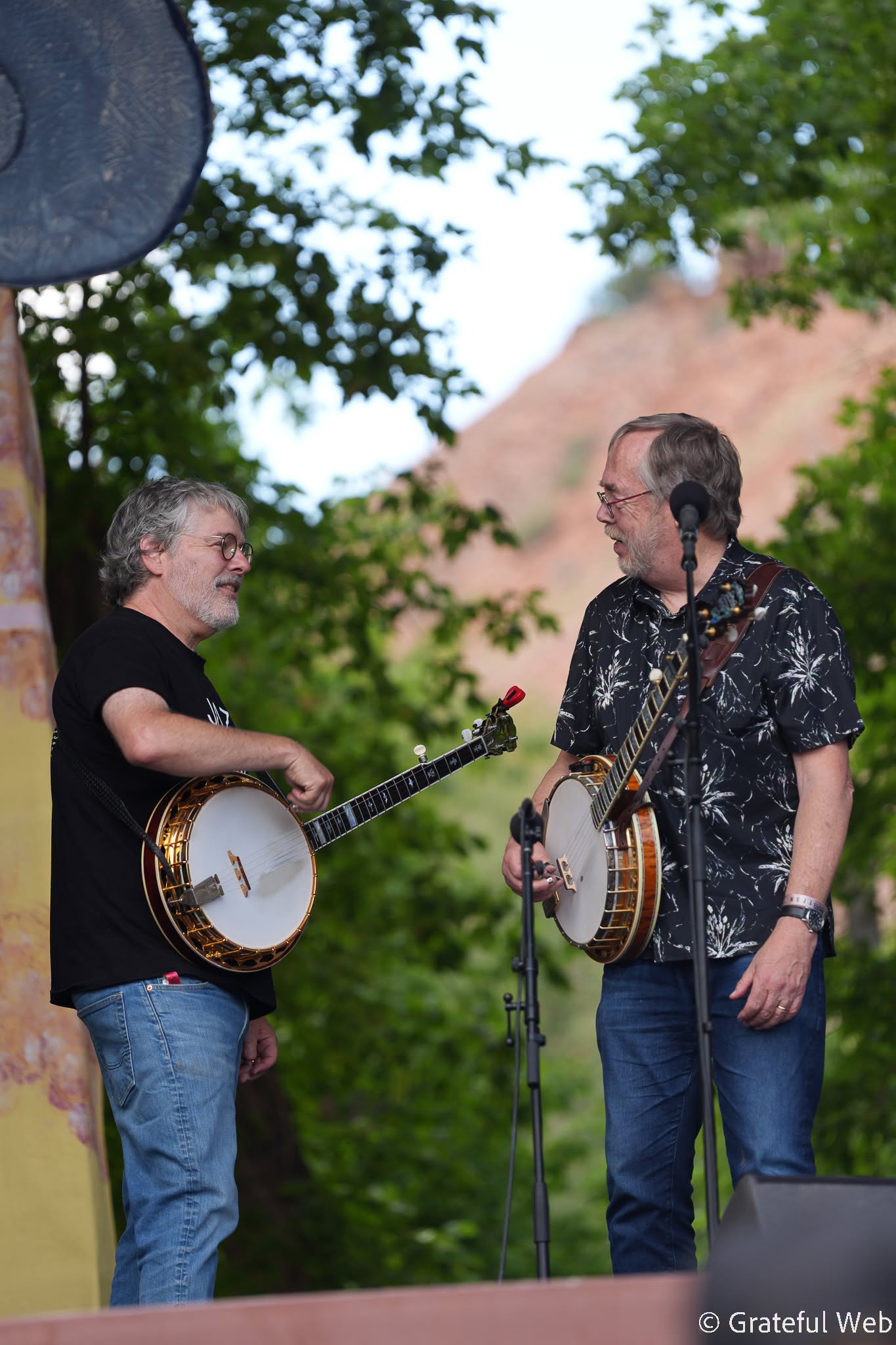
Tony had told me there would be special guests, and I had a pretty good idea who one of them might be. It was a delight to see his longtime friend, former student, and now musical collaborator Béla Fleck join him onstage. The easy rapport between the two was unmistakable—the way they leaned into one another, the smiles they shared, and the relaxed joy of making music together.
They were later joined by mandolinist Harry Clark and fiddler Michael Cleveland, adding even more firepower to an already talented band.
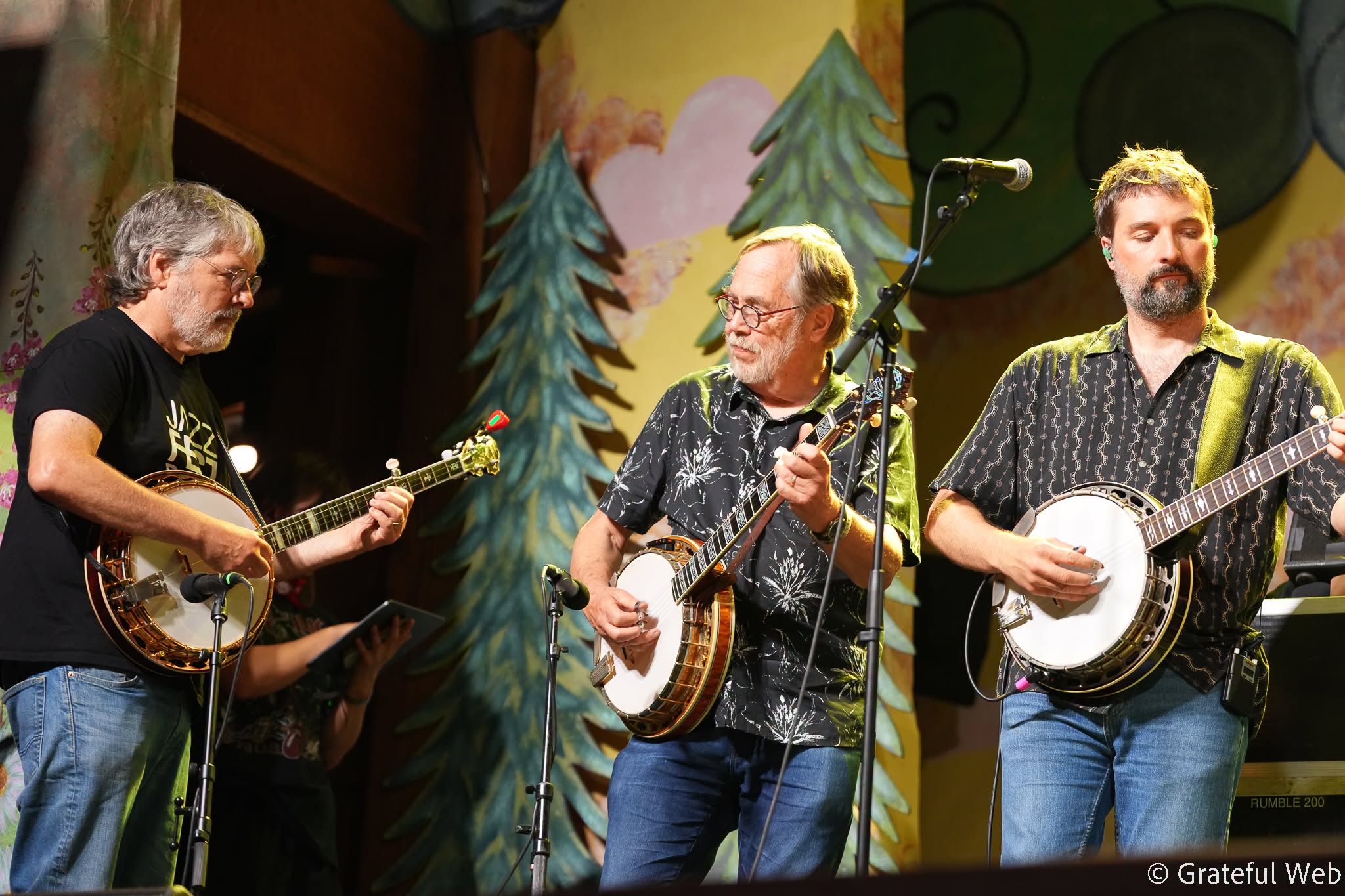
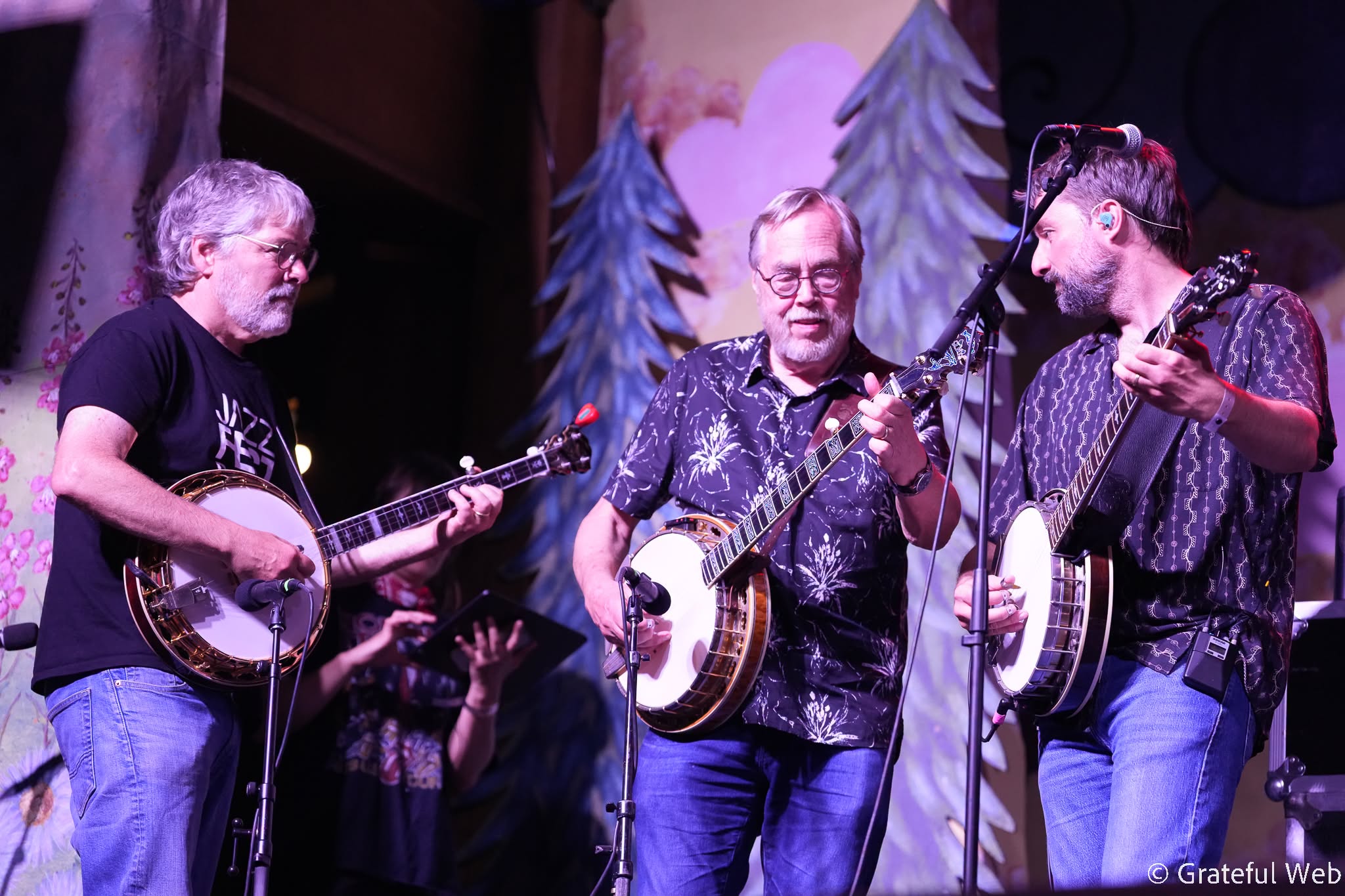
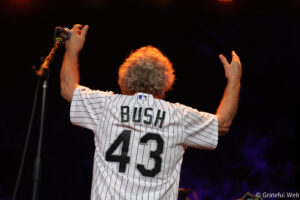
Saturday night brought Sam Bush’s Bluegrass Band, one of RockyGrass’ most beloved—and rocking—traditions. The set closed with its traditional all-star finale, and Trischka returned to the Planet Bluegrass stage, joining fellow banjo players Béla Fleck and Wes Corbett for “Shuckin’ the Corn,” one of the musical highlights of the festival.
Standing alongside Fleck and Corbett as part of that big finale, Trischka’s quiet joy and easy manner were right at home. Six decades into his career, he is clearly still hooked on the instrument.
As those final notes of Saturday night echoed off the Lyons cliffs, a deep appreciation remained for everything Trischka brings to bluegrass—not just as a master picker, but as the generous teacher who has guided so many along the way. His journey with that “exciting sound” is still entirely wide open, and the music simply rolls on.