Article Contributed by Gratefulweb
Published on 2026-11-03
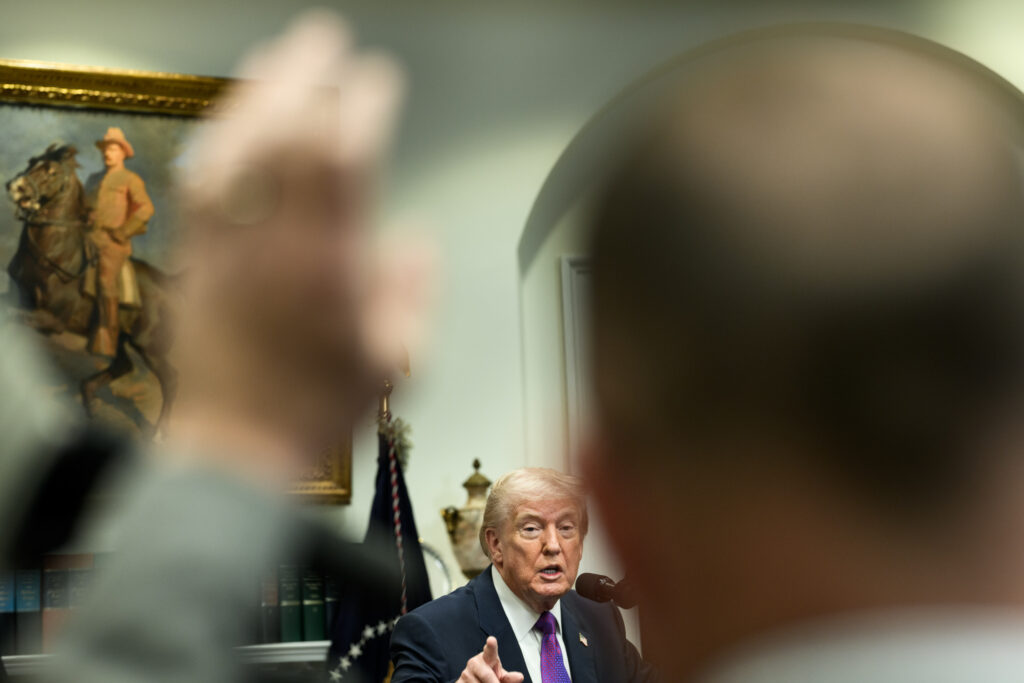
President Donald Trump and EPA Administrator Lee Zeldin announce the repeal of the EPA's greenhouse-gas endangerment finding on February 12, 2026. Photo: Daniel Torok / The White House (Public Domain).
The administration argues that these changes lower costs, improve energy reliability, speed construction, and reduce unnecessary regulation. Environmental and public-health organizations argue that the changes increase pollution risks, undermine climate protections, and shift more of the costs of pollution onto communities.
One important distinction for today's election: Donald Trump is not on the November 3, 2026 ballot. Voters are choosing congressional, state, and local officials whose authority over laws, budgets, oversight, and enforcement can affect the direction of federal environmental policy.
Here are ten documented actions worth understanding. This is a selection of significant decisions, not a ranking of which caused the most harm.
Ten environmental decisions from Trump's second term
1. Repealing the greenhouse-gas endangerment finding
Finalized February 12, 2026
EPA rescinded its 2009 scientific and legal finding that greenhouse gases endanger public health and welfare, removing the foundation for its vehicle greenhouse-gas regulations.
Why it matters: The repeal reduces federal authority to require reductions in climate-warming pollution from vehicles. EPA argues that its previous interpretation exceeded the Clean Air Act. The decision does not erase the underlying scientific evidence about climate change.
2. Rolling back carbon-emission rules for power plants
Partial repeal finalized September 14, 2026
EPA repealed most of the 2024 greenhouse-gas requirements for fossil-fuel power plants and separately proposed repealing the remaining standards.
Why it matters: Power plants are major sources of carbon dioxide. Weaker carbon limits can allow higher emissions than under the previous rules, although EPA projects significant compliance-cost savings. The remaining repeal is a proposal, not a completed action.
3. Repealing tighter mercury and toxic-air-pollution protections
Finalized February 2026
EPA repealed the 2024 amendments to its Mercury and Air Toxics Standards for coal-fired power plants, including tighter mercury and particulate requirements and continuous particulate monitoring.
Why it matters: Mercury is a neurotoxin, and airborne particles can damage respiratory and cardiovascular health. Earlier mercury standards remain in place, but the newer protections have been withdrawn.
4. Proposing to remove drinking-water limits for several PFAS chemicals
Proposed May 18, 2026
EPA proposed rescinding federal drinking-water limits for PFHxS, PFNA, GenX chemicals, and certain PFAS mixtures.
Why it matters: These persistent chemicals are associated with immune, liver, developmental, and other health concerns. EPA has retained the limits for PFOA and PFOS, so it would be inaccurate to say all PFAS protections have been eliminated. The broader rescission remains a proposed change in the cited agency record.
5. Eliminating the federal methane waste-emissions charge
Legislation signed March 14, 2025
Trump signed legislation nullifying the implementation rule for the federal methane waste-emissions charge on certain oil and gas operations.
Why it matters: Methane is a powerful climate-warming gas. Removing the charge weakens a financial incentive to control large releases, although other methane rules may still apply. The administration argues that eliminating the charge reduces costs for domestic energy producers.
6. Blocking California's stricter vehicle-emissions programs
Congressional resolutions signed June 12, 2025
Trump signed resolutions aimed at ending California's federal waivers for its Advanced Clean Cars II and Advanced Clean Trucks programs.
Why it matters: These programs were designed to accelerate the adoption of zero-emission cars and trucks. Their removal can slow the transition to cleaner transportation. The administration describes the programs as costly mandates that restrict consumer and business choice.
7. Removing longstanding federal environmental-review regulations
Rescinded in 2025; reaffirmed January 2026
The Council on Environmental Quality removed its government-wide regulations implementing the National Environmental Policy Act.
Why it matters: Environmental reviews help identify the consequences of major federal projects and create opportunities for public participation. Streamlining could speed construction, but critics worry that removing consistent rules will weaken scrutiny or make meaningful public participation more difficult. NEPA itself remains law.
8. Dismantling EPA environmental-justice offices and programs
Announced March 12, 2025
EPA announced the termination of its environmental-justice and diversity, equity, and inclusion organizational functions and canceled related grants and contracts.
Why it matters: Environmental-justice work examines whether pollution and hazardous facilities disproportionately affect low-income communities and communities of color. The administration says the restructuring restores equal treatment and concentrates resources on core environmental duties. Critics argue that it removes specialized capacity to identify unequal pollution burdens.
9. Withdrawing the United States from the Paris climate agreement
Withdrawal ordered January 20, 2025
Trump ordered the United States to withdraw from the international agreement coordinating national efforts to limit global warming.
Why it matters: The decision reduces U.S. participation in a major framework for international climate cooperation. The administration argues that the agreement imposes unfair economic obligations. Critics say withdrawal reduces American influence and makes coordinated emissions reductions more difficult.
10. Moving to remove protections for undeveloped national-forest areas
Roadless Rule repeal proposed in 2026
The administration proposed rescinding the Roadless Rule, which limits road construction and timber harvesting across large areas of national forests.
Why it matters: Roadless areas provide wildlife habitat, protect watersheds, and preserve relatively undisturbed landscapes. Supporters of repeal argue that more management flexibility can improve access and some forest-management activities. A proposal is not the same as a completed repeal.
Three additional areas are especially relevant when evaluating the administration's broader record.
Climate science: In April 2025, the administration dismissed nearly 400 contributors to the National Climate Assessment, a congressionally mandated report used to understand climate risks and plan responses. The administration said it was reevaluating the report's scope. Scientists and research organizations raised concerns about the disruption of federally coordinated climate research.
Scientific research institutions: In December 2025, the administration announced plans to dismantle the National Center for Atmospheric Research in Colorado, saying important weather-research activities could be transferred elsewhere. Researchers warned that changes to this institution could disrupt work on severe weather, wildfires, climate modeling, and other hazards.
Civil rights and unequal pollution exposure: A Congressional Research Service analysis updated October 27, 2026, documents the administration's retreat from environmental-justice initiatives, including the Justice Department's termination of an environmental-justice resolution agreement. These changes raise questions about how federal agencies investigate discriminatory effects of environmental decisions. Importantly, Title VI of the Civil Rights Act has not been repealed.
What this means for voters today
Congress has the authority to write environmental laws, allocate funding, conduct oversight hearings, and change the legal authority of federal agencies. State governments also regulate pollution, implement federal standards, and make decisions affecting energy infrastructure, public lands, and water.
For voters concerned about these issues, useful questions for candidates include whether they support enforceable air and water standards, funding for independent climate research, public participation in environmental reviews, and civil-rights protections in pollution permitting.
Two perspectives deserve consideration. Supporters of the administration's regulatory changes emphasize lower compliance costs, domestic energy production, reduced permitting delays, and consumer choice. Critics emphasize the health and climate benefits of pollution controls, the financial costs of environmental damage, and the importance of scientific evidence in government decisions.
An Institute for Policy Integrity analysis estimates that the environmental and energy regulations targeted for rollback could put substantial annual public-health and economic benefits at risk. Those estimates include effects of proposed changes that have not all taken effect, so they are projections rather than measured harm already caused.
For an Election Day editorial, the distinction between what has been finalized, what remains proposed, and what is being challenged in court is essential. The ten actions above provide an evidence-based starting point for examining the administration's environmental record without overstating what has legally changed.
The broader question for voters is how much weight to place on near-term regulatory savings compared with long-term environmental protection, public health, independent science, and government accountability.