



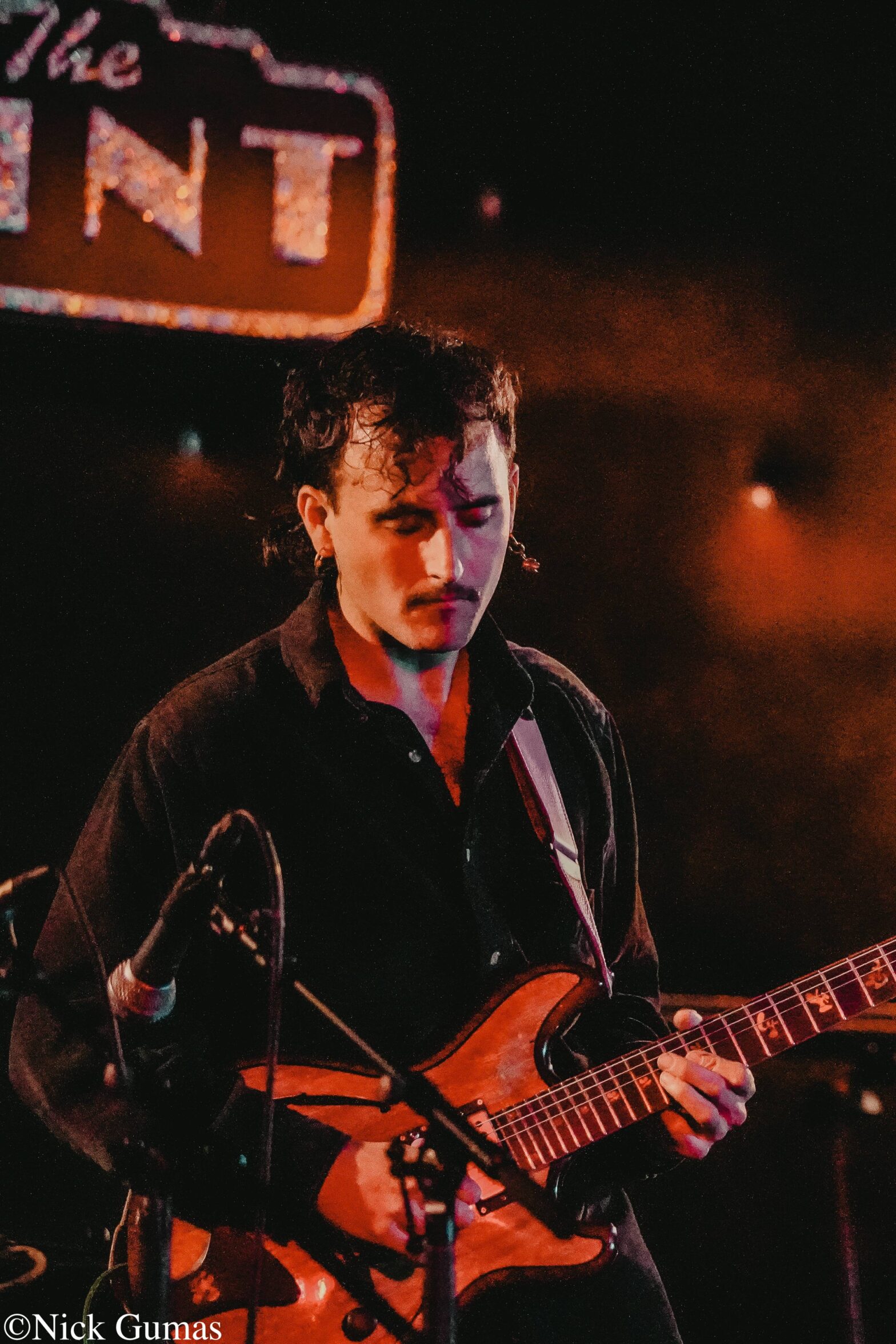
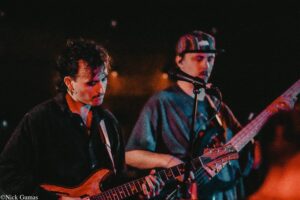
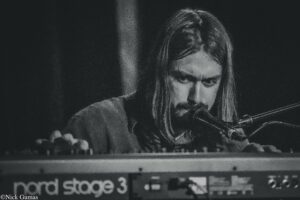
Gaining traction among the fastest growing projects in the jam band community, Denver-based indie psychedelic outfit Sqwerv recently played a much anticipated first ever performance in Los Angeles at The Mint in Mid City. Already well into their latest tour promoting their recent EP, Wonder, fans packed the house full for the night defined by the artists’ commitment to their onstage craft as well as the ambiance they cultivated.
A show that featured instrumental sit ins from musicians known for their work alongside nationally touring acts including ZHU and The Marias, the added layer of a brass section demonstrated the extravagant proclivities of this emerging project and the larger than life aura they bring to each and every set.
After their multi-hour performance, Grateful Web met with the artists backstage to talk about their recent success, their ever-changing process, and sentiments on the past, present, and future of their genre.

Grateful Web: It’s still pretty early in the tour promoting the Wonder EP, how’s the tour been going and how has the reception been to the new release?
Zach Bulgarelli: Reactions are up, and the tour is also up. It’s been going well.
GW: It clearly went well tonight. You were joined onstage by some members of some pretty high profile groups. How did those friendships and collaborations happen and what did it feel like to play with that esteemed brass section?
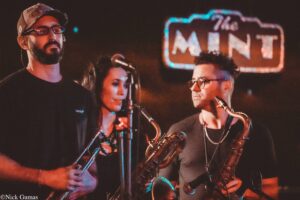
Jack Marty: Yeah, the horns players, it came about because our manager, Oz, put us in touch with them. We had horns players come and sit in during our show in San Francisco and tonight. Honestly, Guy was the one who orchestrated the songs and picked which ones we played with them. It was pretty awesome, we got a lot of high reviews on the horns players. People want them back.
Caden Kramer: The baritone sax player is also our booking agent’s cousin, so that was the connect with her, and she rounded out the whole thing to have trumpet, tenor sax, and baritone.
GW: You guys have really shot up in all the jam band forums over the last couple of months as more fans continue to find your music. How do you feel you’ve been able to get a hold on your fanbase, and what has this community meant to you?
JM: We love this community.
CK: Yeah, since the beginning, that’s been a huge part of the band, but that’s a huge question. I think Guy has done a huge job of marketing us on social media, he’s done really, really well at that, and I think we write songs that resonate with people. I think people that come and see the show really like watching us not take ourselves too seriously, that’s something that we’ve worked on a lot. It’s authentic, we’re just being ourselves and people really resonate with that. We’re not trying to fit any sort of mold. But us popping up in the channels, I think that has a lot to do with the utilization of social media and having good music.
ZB: There’s that thing Jim Carrey said when he was doing Andy Kaufman, where he was doing stand up and did the whole “How’s everybody doing tonight? Alrighty, then!” And he said then that he realized that they didn’t want to see somebody who cares, they want to see someone careless and worry free, so I think that goes with what we’re saying about not taking yourself too seriously. Everybody wants to be worry free, and I think you can help people achieve that by doing it onstage.
GW: I think my favorite thing you’ve ever said is something that really encapsulates what it means to be a jam band. You’ve spoken about trying to not be too cerebral in your extemporization. How do you guys agree on when to go into that flow state and balance the set out with tracks we’ve all heard before?
Guy Frydenlund: We typically have sections like that built into songs, so that part remains decently consistent, overall. Like, certain songs have sections in them where they are open to go wherever they’re going to go, but that’s not always a hard rule. Like tonight, we did, I guess a type two sort of jam on a song we don’t always do it on, Keep On Moving, but we have planned and unplanned sections. Otherwise, we have sections where we recognize which of us is leading that section and its more of a solo, but then we have other times where its just a full group improv, and those are consistently in the same parts of certain songs.
GW: Are you pro or anti hand signals?
GF: Neither.
ZB: Anti.
GF: Anti? Really? I’m not even against it.
ZB: I think the goal is to communicate through the music as much as possible. It’s not like we’ll resist doing anything like that, we’ll give looks and stuff, but I think at least the illusion of communication through music is the goal. But I think we do that really well and communicate through the playing. Sometimes we’ll give a look if someone’s finishing a solo or something, but there’s no hand signals in our shows.
CK: I’m anti talkback.
ZB: Oh, I don’t want to do talkback either, but we do now sometimes to call the next song for whatever we’re doing that night, but we have a rule, no talking into the talkback during the jams.
GW: Anything you would like to say about the recent passion of Bob Weir given everything he meant to the jam band community?
JM: That hit me hard. I probably saw him close to 100 times. My dad would take me to his shows growing up. I saw RatDog at Red Rocks, and Fare Thee Well shows, and a bunch of Dead and Co shows. He was someone I didn’t realize just how much he meant to me until he was gone. He definitely meant a lot to me, and we’re still very sad. We were actually all at his shows at Golden Gate Park last August in San Francisco, and they ended the whole weekend, Bob’s last show that he ever did, with Touch of Grey, and we opened up this tour in Frisco, Colorado with that same song, so that was pretty special to do.
CK: R.I.P. in peace, Bob Weir.

GW: You guys have been touring consistently for a while now. With all that time on the road, how do you balance out the attention you have to give to work and the attention you want to give to family and loved ones back home?
ZB: They just don’t get the attention.
ZM: Ok, seriously. We either bring them along, like we have, but way back when I had a girlfriend, I just had to call her a lot. We, honestly, are each others’ best friends. When I go back home, I think, things are way more copasetic with these four guys on the road than I am with anyone else. But we really to keep in contact with everyone back home with the telephones and the text messages, and the pictures, and the social media.
GF: Jack has a weekly meeting with his family.
JM: I do. My family has weekly FaceTimes every Sunday. I try to make as many as I can. But my girlfriend, Aliyah, she actually comes on the road with us, and she’s in the van, takes photos, and does merch. She crushes it for us.
GF: I will say, none of us have kids or families at home yet. I mean, we’re all about 30 now, and that’s not super common for bands at this age. Thankfully, we’re a part of that generation where families are getting pushed further and further back because it’s so hard to make it and do this thing with families and kids. It’s expensive, so we just don’t. It’s not like a rule or anything, but I think we are all pretty aware of what this involves, and so nobody’s had kids or tried to live at home too much. We’re trying to make this thing happen for us on the road.

GW: Anything coming up you’re excited for?
GF: We’re going to be on the road. Denver in May, we’re going to tour the SouthEast in March and April, and Northlands music festival in June. And a new album in May, maybe June.
Check out more photos of Sqwerv at The Mint.
