Article Contributed by L. Paul Mann
Published on 2026-09-20
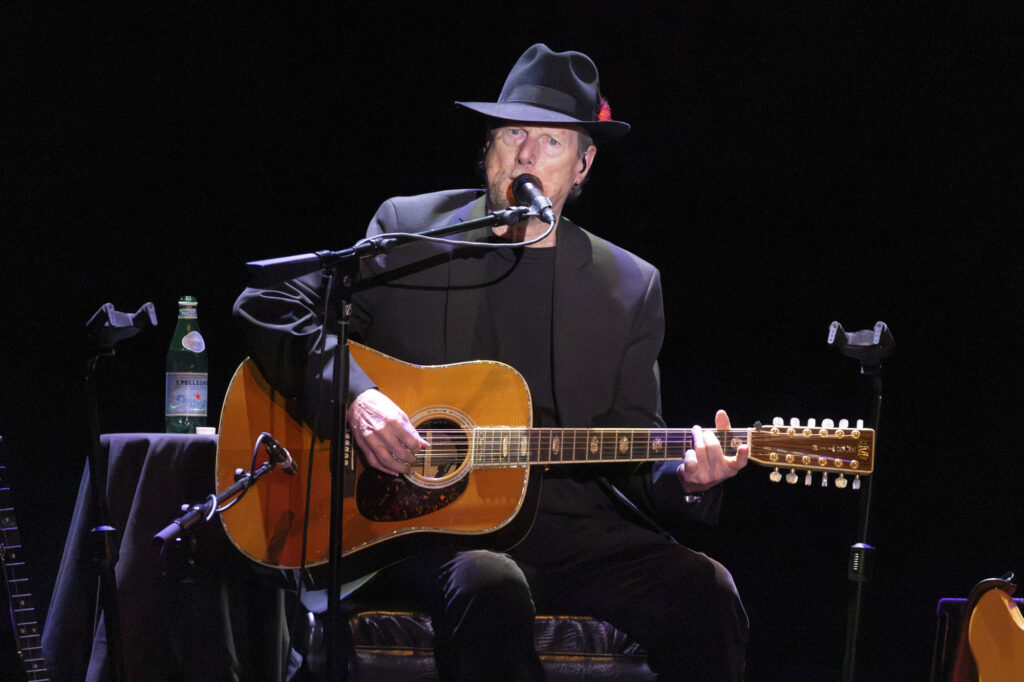
Roger McGuinn | Santa Barbara, California | September 12th, 2026 - photos by L. Paul Mann
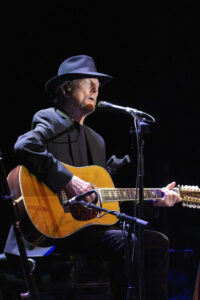
The Lobero Theatre has an inherent reverence—an intimate, historic sanctuary tucked into downtown Santa Barbara that rewards pure acoustic resonance. On Saturday night, it proved to be the ideal chamber for rock royalty. Roger McGuinn stepped onstage framed by his signature setup: a center-stage chair, a side table, and an array of acoustic and electric 12-string guitars that felt less like instruments and more like historical artifacts.
Dividing the evening into two distinct sets separated by an intermission, McGuinn created a performance that functioned as both an exemplary lesson in American roots music and a profoundly personal living autobiography.
Set I: The Roots, Folk Den, and the Spark of Folk-Rock
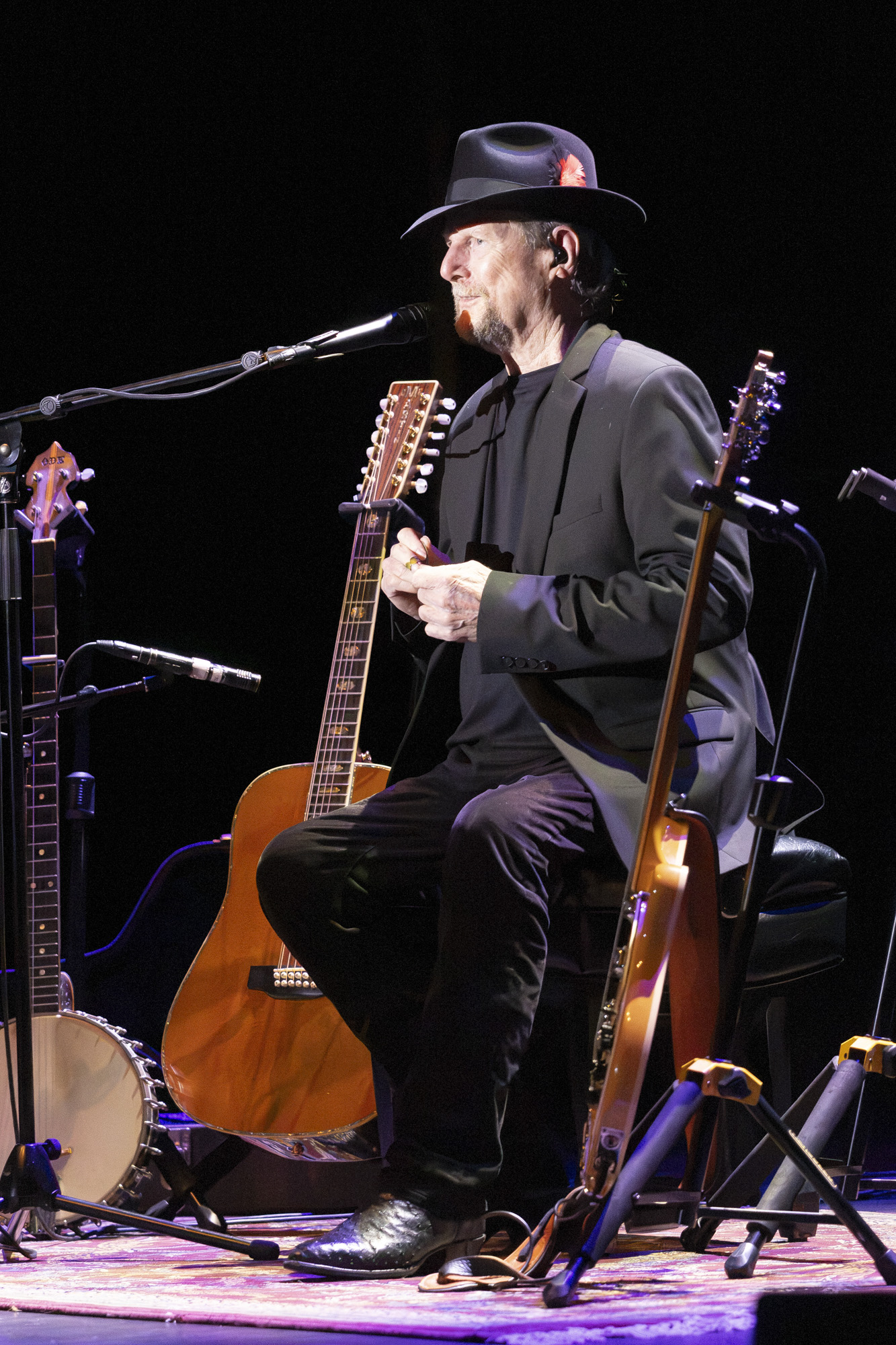
The first set focused heavily on origin stories, traditional song-capturing, and the fundamental elements that built folk-rock. McGuinn proved himself an engaging, charismatic raconteur, pairing virtually every song with rich narrative backstories.
McGuinn walked the audience through his early days at the Old Town School of Folk Music in Chicago, backing Judy Collins and performing in Greenwich Village coffeehouses. He spun vivid tales of working alongside giants like Bobby Darin, Earl Scruggs, and Gene Clark, explaining how listening to The Beatles inspired him to pair Bob Dylan’s poetic lyrics with an electric drive.
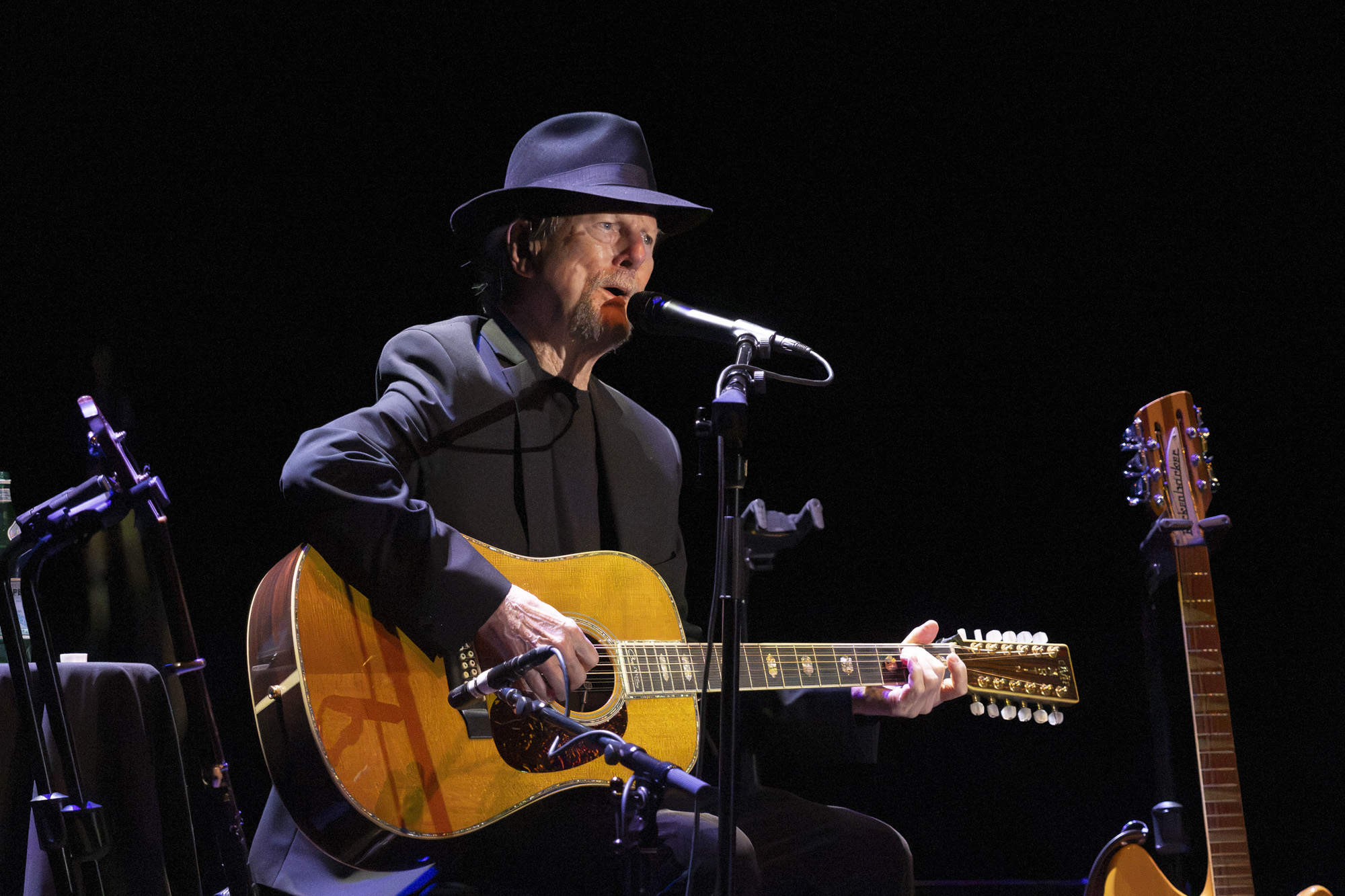
The emotional anchor of the first half came with “Mr. Tambourine Man,” as McGuinn recounted taking Dylan’s sprawling track into the studio with The Byrds and session legends The Wrecking Crew. When he hit the iconic opening jangle on his electric 12-string Rickenbacker, the Lobero’s acoustics allowed every cascading overtone to ring crystal clear.
Closing out Set I, McGuinn embraced early country-rock roots with selections from Sweetheart of the Rodeo, detailing his collaborations with Gram Parsons and Chris Hillman on tracks like “You Ain’t Goin’ Nowhere.”
Set II: Stories of Icons, a Show Tunes Detour, and Psychedelic Peaks
The second set opened up the narrative lens to encompass McGuinn’s long career collaborating with some of rock’s greatest luminaries, though it hit one unexpected bump along the way.
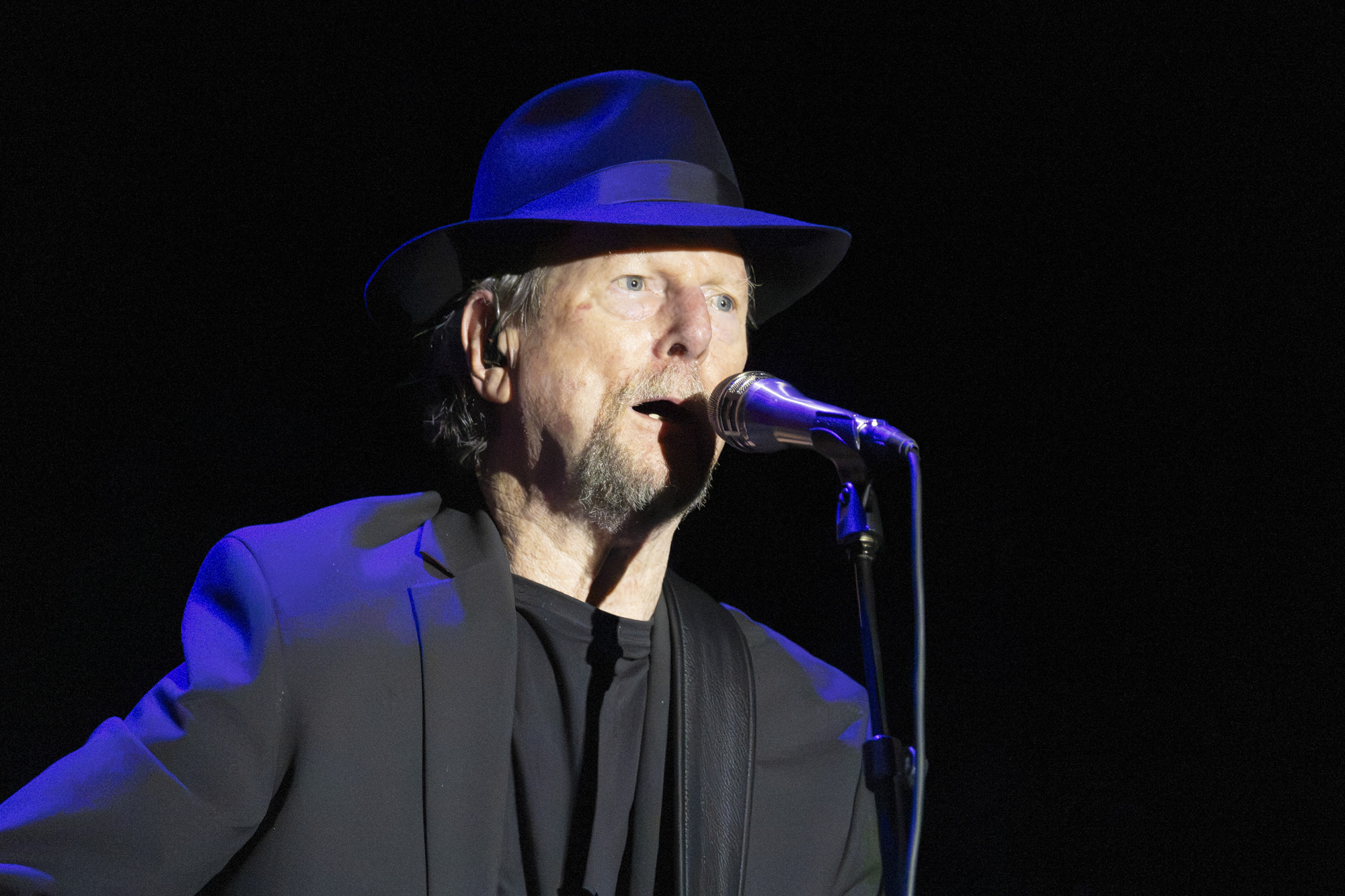
McGuinn enthralled the room with first-person accounts of touring with Tom Petty and the Heartbreakers on Bob Dylan’s True Confessions tour, as well as his close ties to the Traveling Wilburys constellation of George Harrison, Bob Dylan, Tom Petty, Roy Orbison, and Jeff Lynne. He detailed how his signature jangle influenced Petty’s sound and shared affectionate memories of his late friends Petty and Harrison.
Midway through Set II, McGuinn made a surprising pivot into an extended medley of classic Broadway show tunes and theatrical standards, attempting to frame them through his acoustic fingerpicking style. While technically pristine, the segment ran far too long—stretching through three or four numbers—and proved to be the night’s main misstep.
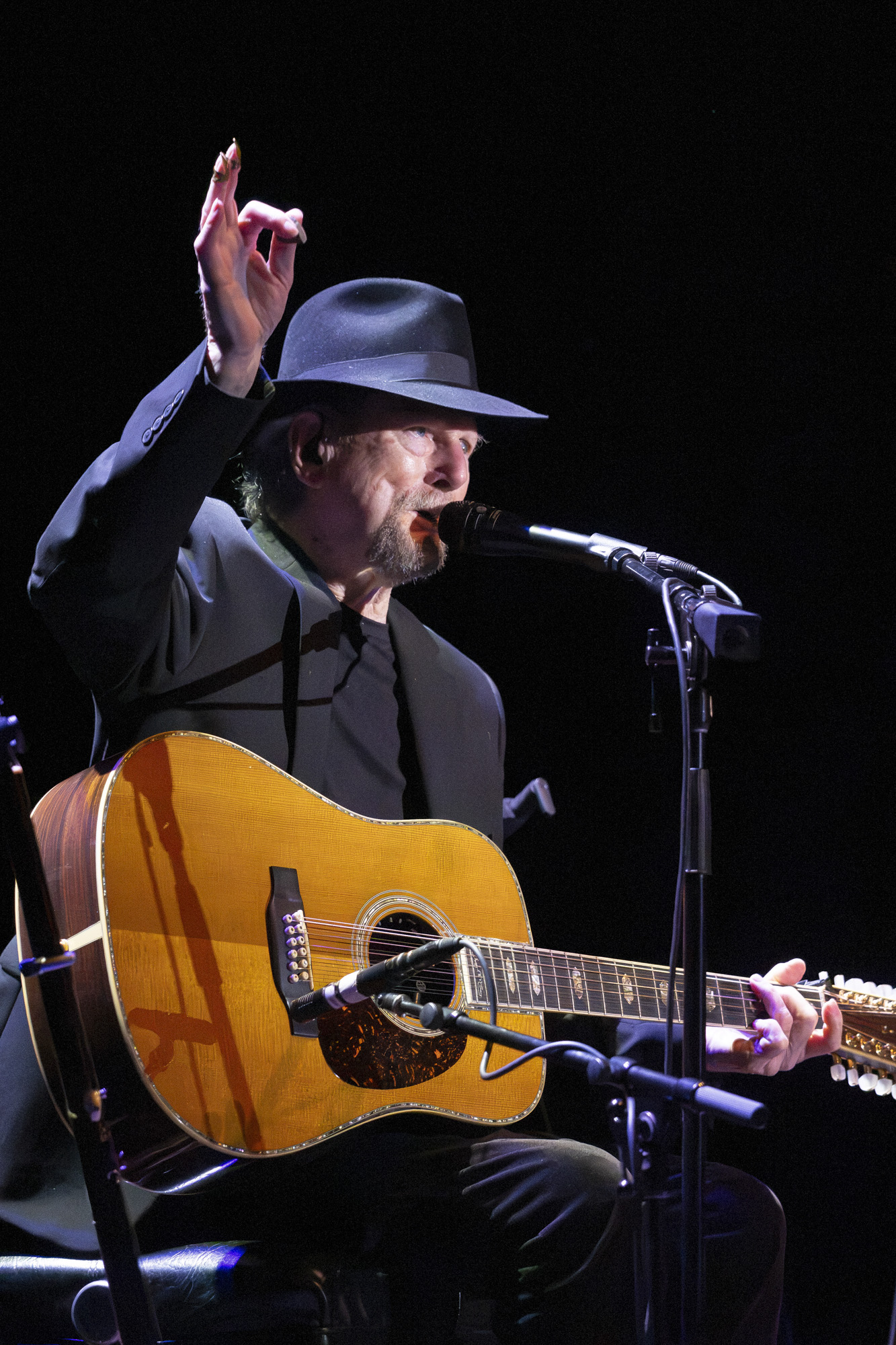
For an audience primed for folk-rock, country twang, and psychedelic Rickenbacker chimes, the abrupt shift in genre felt out of place and noticeably dampened the room’s energy. Polite applause replaced the enthusiastic cheers that greeted his earlier rock classics, with restless shifting visible across the orchestra level until he steered the set back on course.
McGuinn fully re-engaged the audience when he returned to his landmark material. He dove into a searing, jazz-infused solo arrangement of “Eight Miles High,” explaining how he translated John Coltrane’s free-jazz saxophone runs onto the 12-string fretboard.
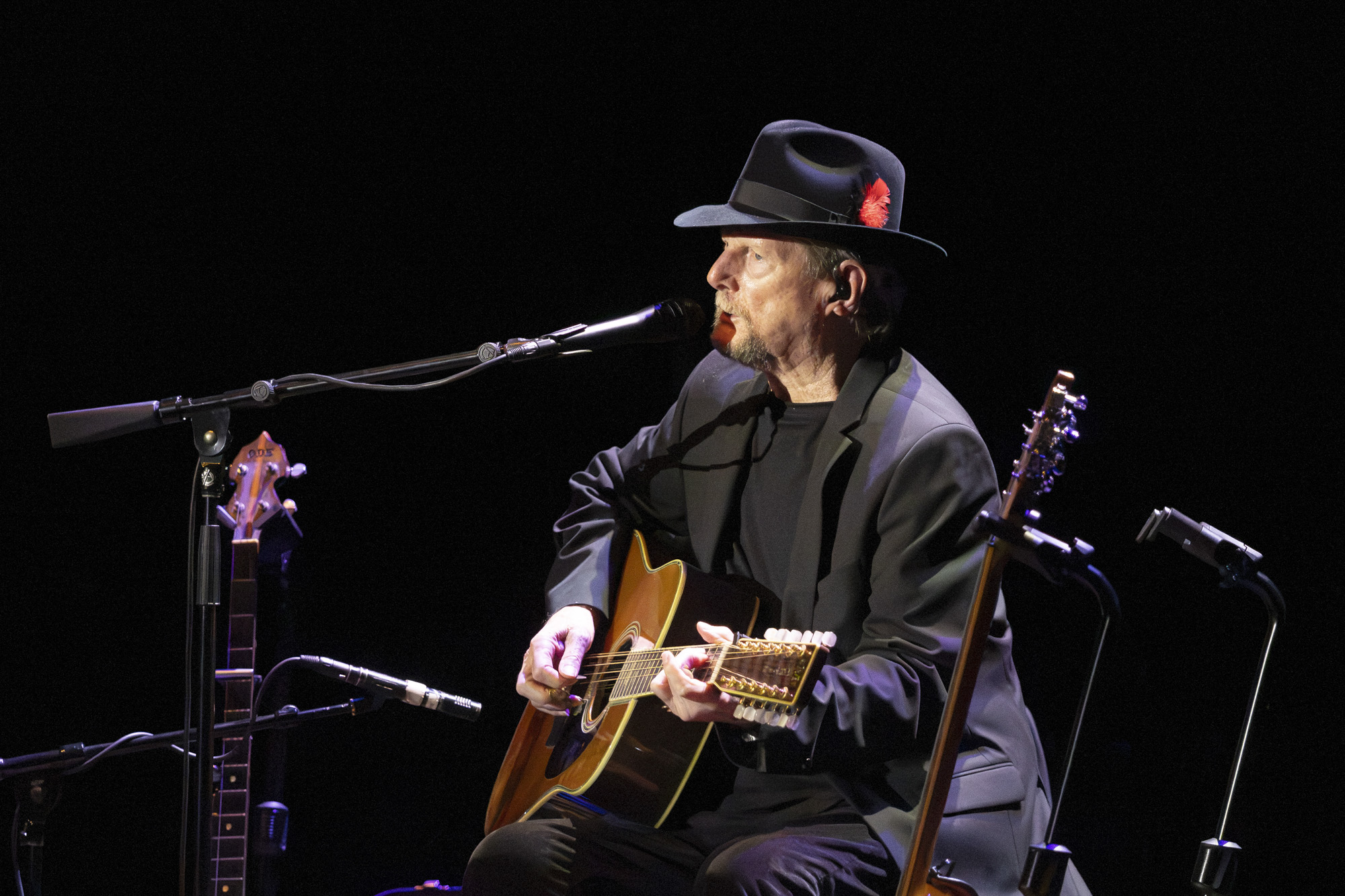
Delivering “So You Want to Be a Rock ’n’ Roll Star” with a sly, knowing grin, McGuinn closed the night with a theater-wide singalong of “Turn! Turn! Turn!,” generating a passionate standing ovation.
Despite a self-indulgent show tunes segment in the second set that briefly stalled the show’s momentum, Roger McGuinn’s appearance at the Lobero was a deeply rewarding evening. His warmth as a storyteller, combined with the unmatched sparkle of his 12-string Rickenbacker, provided a rare, intimate portal into the making of American rock history.